

Alexander Grabovetskiy, woodcarver, School of Woodcarving · Published 2022
Why is there a tulip in a Grinling Gibbons carving?
Quick answer: The tulip in a Grinling Gibbons carving is the hero of the design and the highest point on the board. Alexander reads it as a Dutch born carver showing off his home country, where a single bulb once cost the price of a house. Everything else on the panel drops away below it.
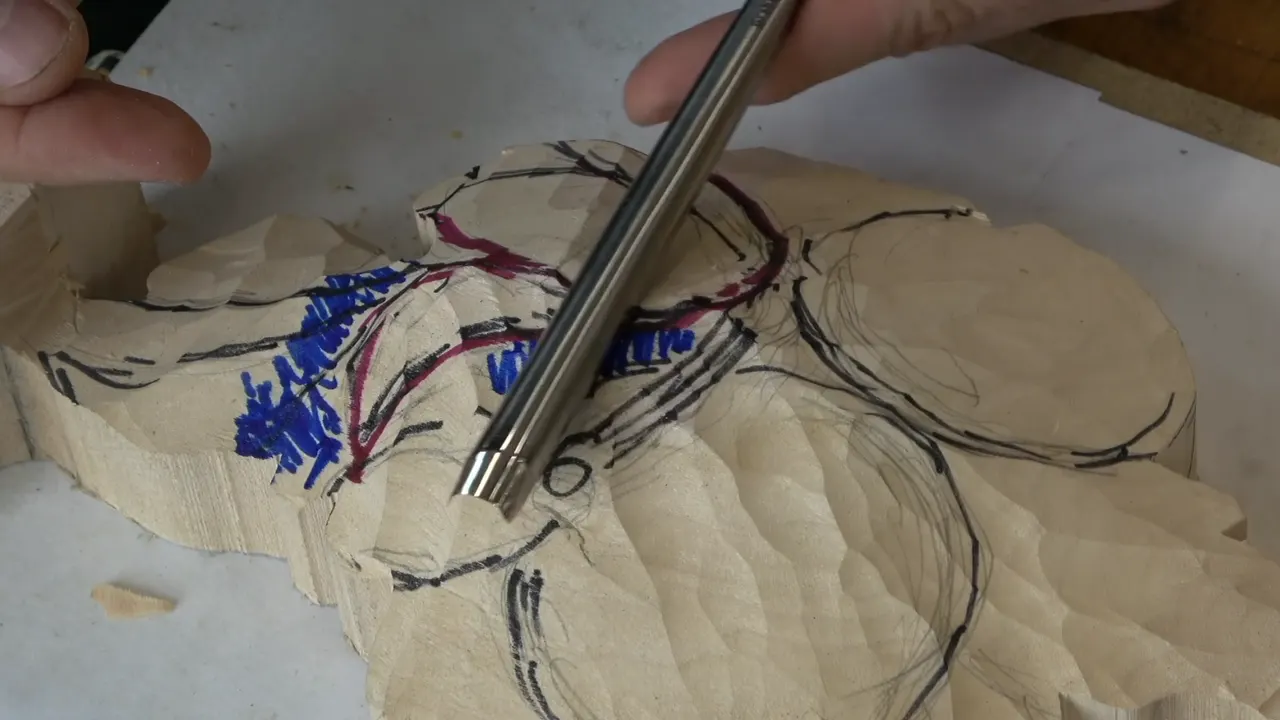
One flower runs this whole panel, and it is a tulip. Grinling Gibbons grew up in Holland, where a tulip was worth serious money, and he set one at the middle of his design. On the bench it turns into the highest thing on the board. Everything else drops away underneath it.
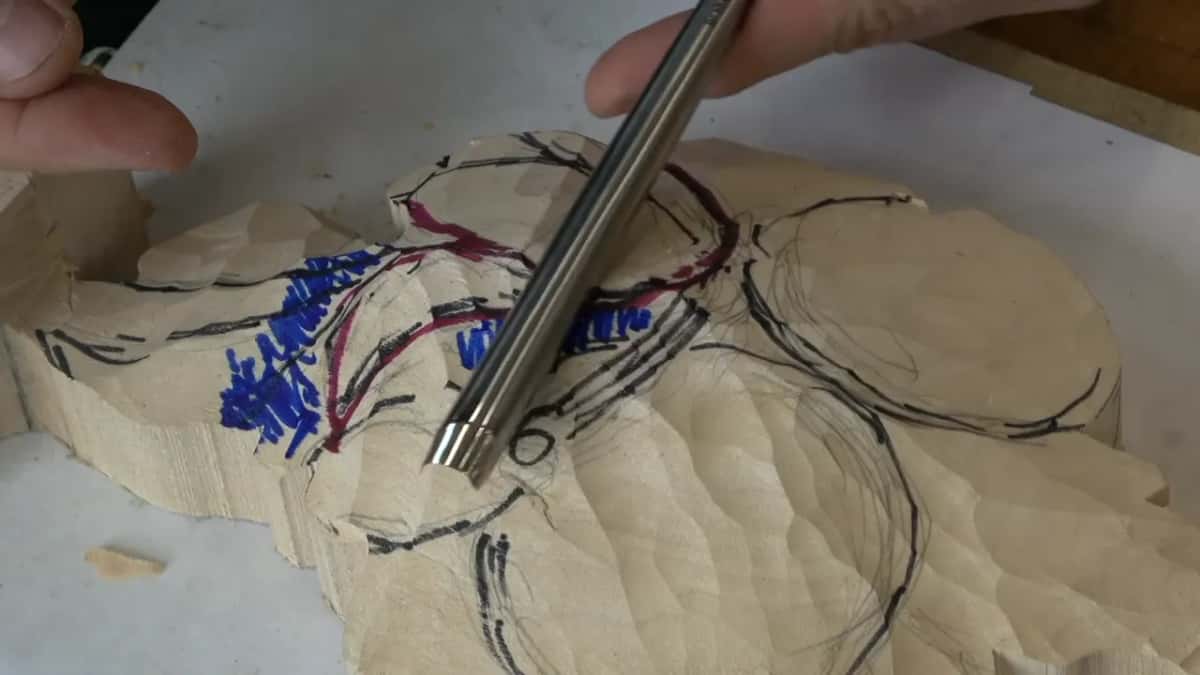
Ever roughed a flower out and watched it go flat on you? Or stood back from a panel and found there was nothing your eye wanted to land on first? Both of those get settled in a single morning, and they get settled before any petal has detail in it at all.
Class seven in Maine was the session where the tulip finally came up out of the blank. I outlined it, dropped the ground beside it, then spent the rest of the morning rolling the thing round with the flattest chisel on the bench. It does not matter what the other flowers think about that, and I said so out loud.
By the end of this page you will know why a Dutch flower took the top spot in a seventeenth century English panel, which tool rolls it round without flattening it, and what to do with the one petal that turns over on itself.
What the tulip decides
- The tulip is the highest point on this panel, and nothing else competes with it.
- Everything around it drops to 6 mm first.
- Round it properly or it reads as a pancake, and no later work repairs that.
- Outlining the neighbouring shapes while the tool is already out saves more time over a morning than any single pass does.
- One petal turns over, and that petal is what makes the flower look alive.
- Two shallow hollows inside each petal carry the shadow.
- The second bloom on the board is Venetian, built like an onion.
Why a tulip and not some other flower?
Gibbons was Dutch, and in his lifetime no other flower carried that kind of weight. He was born in Rotterdam and grew up in the Dutch Golden Age long before he ever worked in England. My own reading is that he was showing off where he came from, and I cannot prove it, and I am going to keep saying it anyway.

Holland in the 1630s had gone through tulip mania, when single bulbs changed hands for the price of a house. The Semper Augustus is the famous one. By the time Gibbons was carving, that fever had passed, but a tulip still meant something to a Dutchman in a way an English rose never would.
Call it the hero of the design. Every panel needs one, and the other flowers are there to hold it up. We sorted that out in the first class of this course, long before any wood moved, and class seven is where the decision finally shows up in three dimensions.
How high does the tulip sit?
Higher than anything else, and the way you prove it is by lowering everything else. I outlined the flower with a number 9 at 10 mm, then dropped the whole area round it to a quarter of an inch. The leaf next door went down with it.

The stem comes in at about half an inch below the flower for now. Our tulip is roughly an inch and a half wide, so the finished connection lands near three quarters of an inch, right in the middle of the back of it. I take half that depth today and hold the rest in reserve, because the flower is going to go deeper before the class is over and I would rather have wood left than wish I had.
That habit is worth stealing. Carve to the depth you are sure of and leave the rest standing. The design course goes through how a hierarchy of heights gets planned on paper, which is where this 6 mm really comes from.
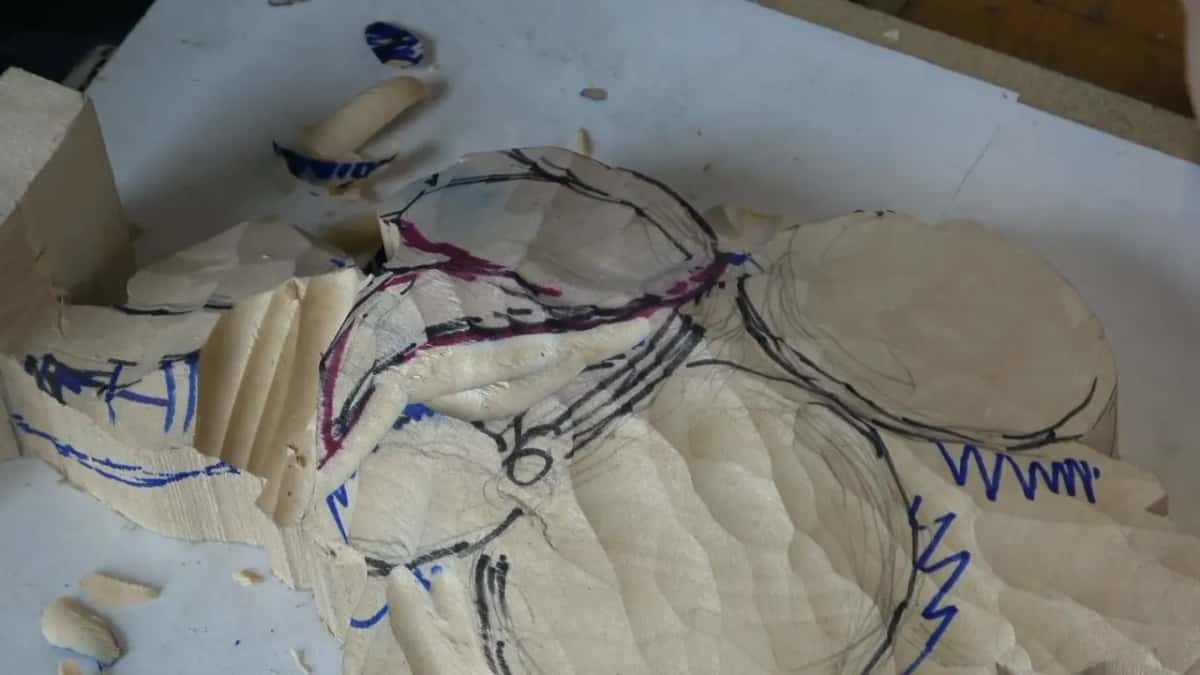
Why outline the neighbours at the same time?
The tool is already in your hand and already set to the right depth. I had the nine out for the tulip, so the two shapes either side of it got their outline in the same few minutes, and the leaf beside them went down while I was there. Putting a tool down and picking up another one costs more of a morning than the passes do.
Order of work is half the craft. Nobody notices it in a finished panel, and everybody feels it at the bench. A whole session goes to it in the furniture panel course, where the order of passes decides whether a shape survives at all.
Should you draw on the wood with a marker?
Please do not. I used one in Maine so the camera could pick the lines up, and you can watch the ink get on my hands and stay there. It soaks into basswood and it does not carve out cleanly. Pencil, or a pen at worst.
The ink is permanent. That is the whole objection, and it is enough of one. You can see the red and the blue still sitting in the grain three passes later, which is three passes after I wanted them gone.

Which tool rolls a tulip round?
A number 2, the flattest chisel in the roll, worked chamfer by chamfer. You take one chamfer off an edge, then another beside it, then another, and the flat disc starts turning into something with a back to it. Roll the tool as it goes.

Hold a real flower in your head while you do it. A tulip is a barrel. It goes round the whole way, it does not stop at the side you can see, and the moment you carve it as a shape sitting on a board rather than a thing standing in air, the eye catches you out.
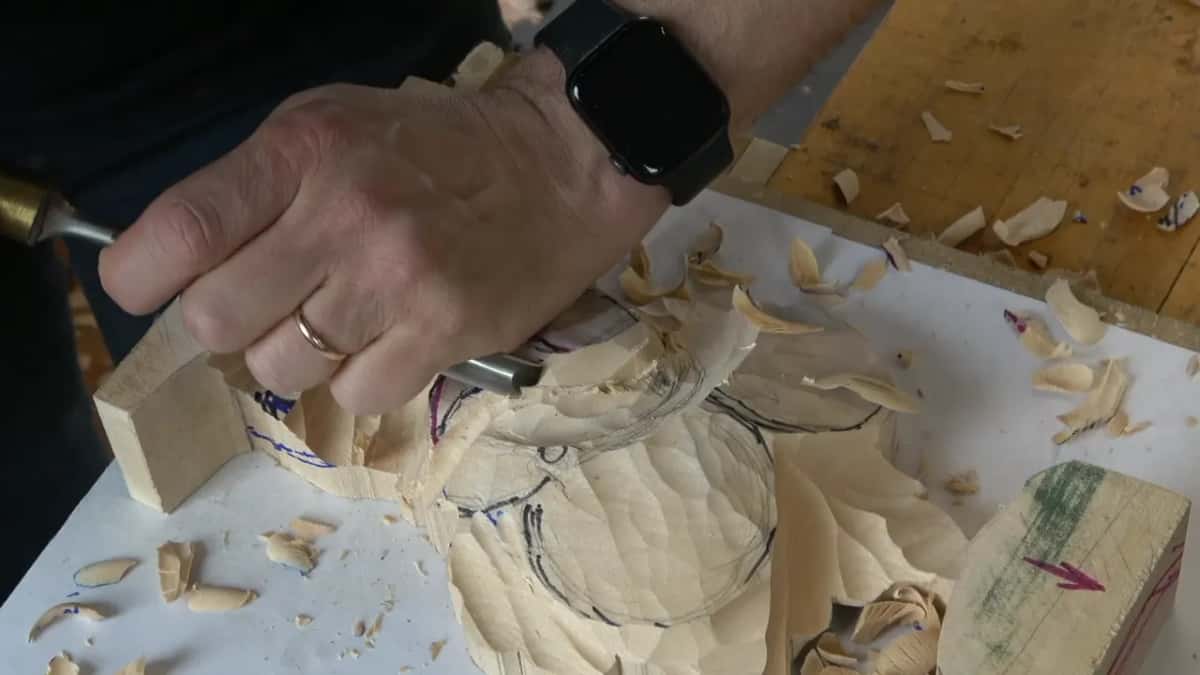
What happens if it comes out flat?
You get a pancake, and a pancake is the one mistake on this panel that nothing later repairs. Every other error here can be carved around. A tulip taken down too far has no wood left to roll, so it sits on the board like a coin somebody glued there, and the design loses its hero in one afternoon.

This is where I slow the room down. Two operations at a time, everybody carves, nobody moves on. The same care shows up in the Venetian rosette course, where a single bloom carries a whole panel and a flat one ruins it.
Why take the two triangles out straight away?
Waste sitting in those corners hides the direction the petals travel in. I take both of them off with the nine and then go further in with a 3 mm eleven. Taking them away this early looks premature and it is not.
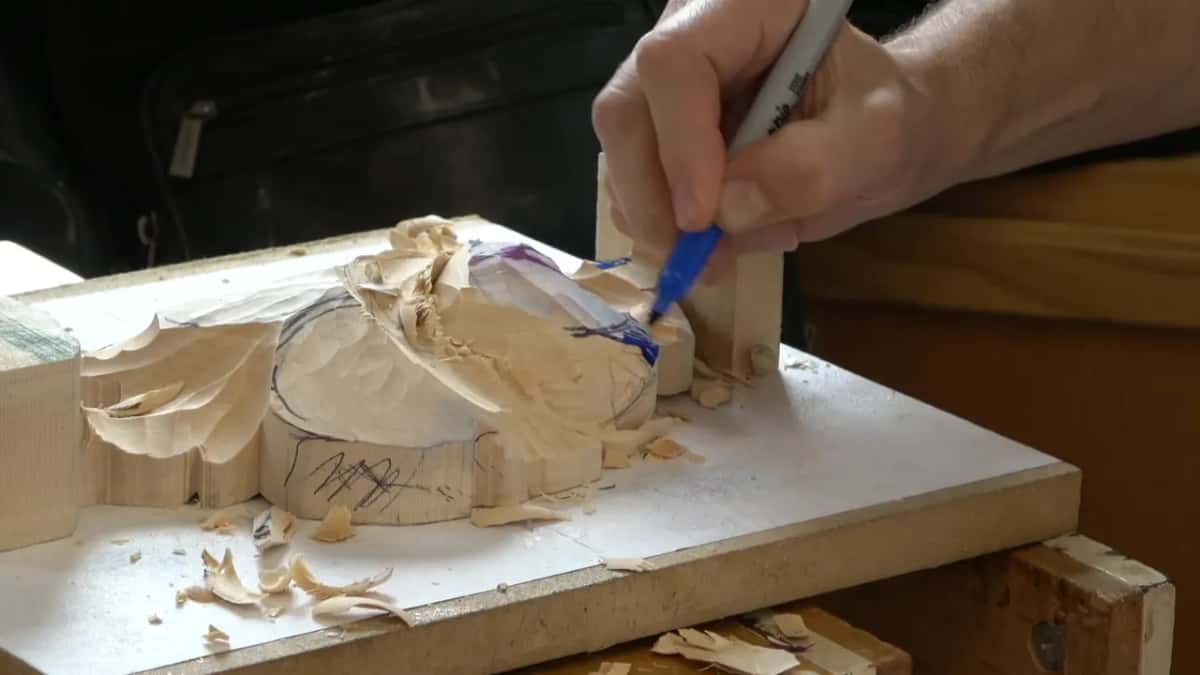
Leave them and you keep carving a shape you can no longer read, which means the movement you drew on the plastic sheet at the start of this course slowly stops matching the wood. Then one morning you notice, and by then the depth you needed has already gone off the bench in chips.
Where does the flute of the tool point?
Eleven o'clock for nearly all of this, twelve when a petal runs over the top of another one, and three when the undercutting starts. The flute is the hollow of the gouge. Tip it over and one corner runs deeper than the other, which is exactly what throws the dark line you are after.

Clock positions sound fussy until you try explaining a lean over a camera to a room of carvers who cannot see your wrist. It stuck. More of the same sits in the techniques course, and the narrow eleven is where a clock position matters most, because that blade is slim enough to go either way without you noticing.
What do you do with the petal that turns over?
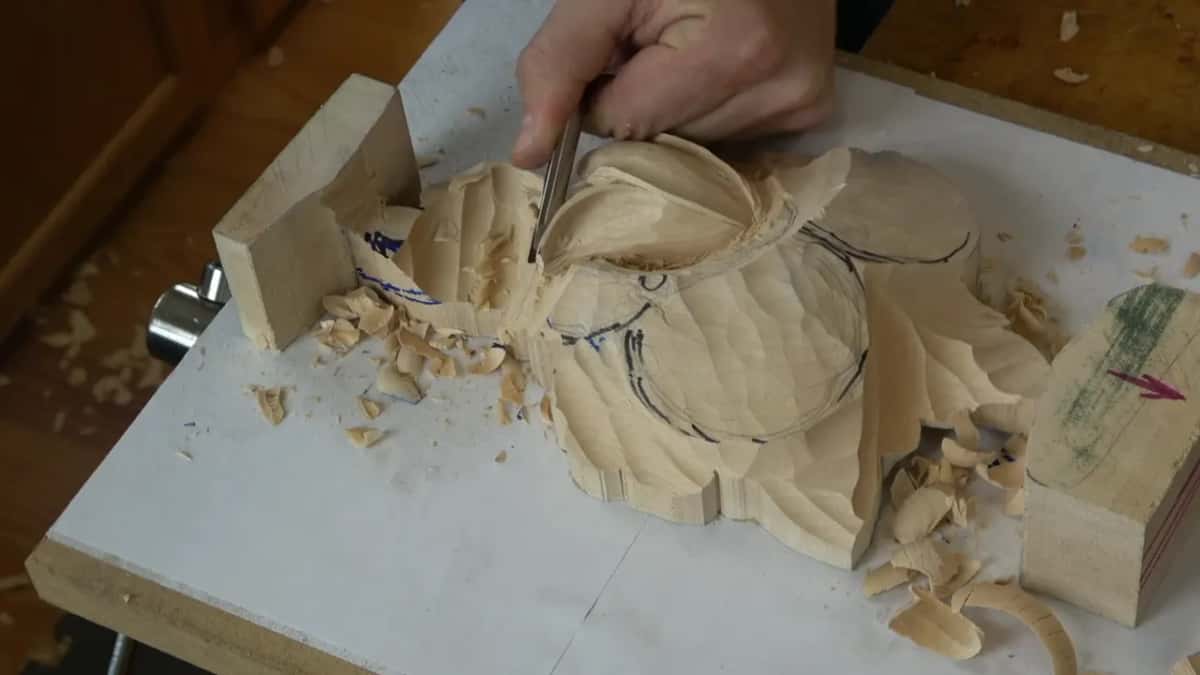
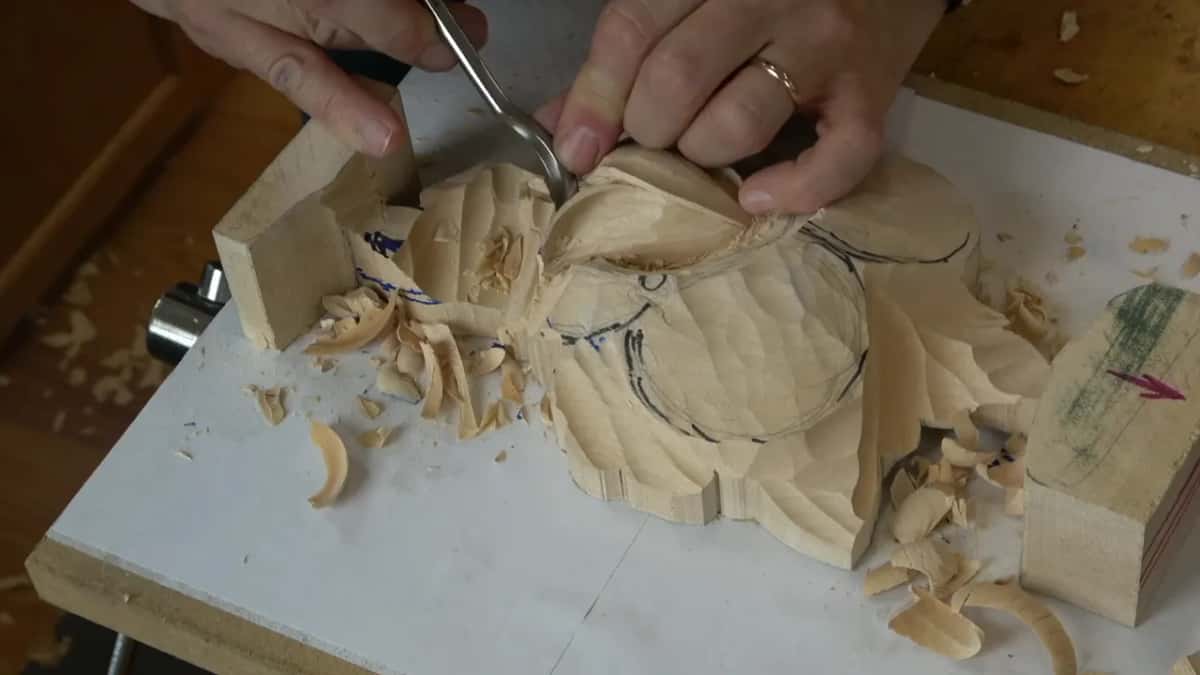
Hollow underneath until it is free. I open the area first with the nine, then reach for a spoon. Mine is a bent veiner at 7 mm, and the room's other carvers used a 10 mm spoon that did the same job.

Go carefully. You are working across the grain here, and if you force it, the petal breaks and the morning is over. My thumb sits on the work as a leverage point and my middle finger holds the far side, so the hand doing the pushing never has to push very hard.
We are releasing the petal from jail. That is what I said in the room and nobody came up with better. The shadow that opens under it is the whole reason for the exercise, and you watch it arrive.

What goes inside a carved petal?
Shadow, and it gets there through two shallow hollows running to the point. A petal carved as a plain dome looks like a thumbprint. Carved flat, it looks like cardboard. Two soft concaves with a number 7 at 14 mm, carried all the way out to the tip, and the thing finally reads as something that grew.

Then the ridge between them has to go. The wider flat chisel, laid across the two hollows, blends them into one surface without losing either. Leave that ridge standing and you have carved a valley instead of a petal.

Work like that on relief and the surface comes off the tool clean enough that sandpaper has nothing left to add. Nothing clever about my hands is involved. It is what a blended concave does, on any wood, for anybody who blends it properly.

How sharp can the edge of a petal get?
Knife edge, and the nine gets it there held upside down. I run the tool into the plug hole at the middle of the flower and carve outward to the rim, slicing rather than pushing, attacking from every side in turn because no single direction reaches all of it.
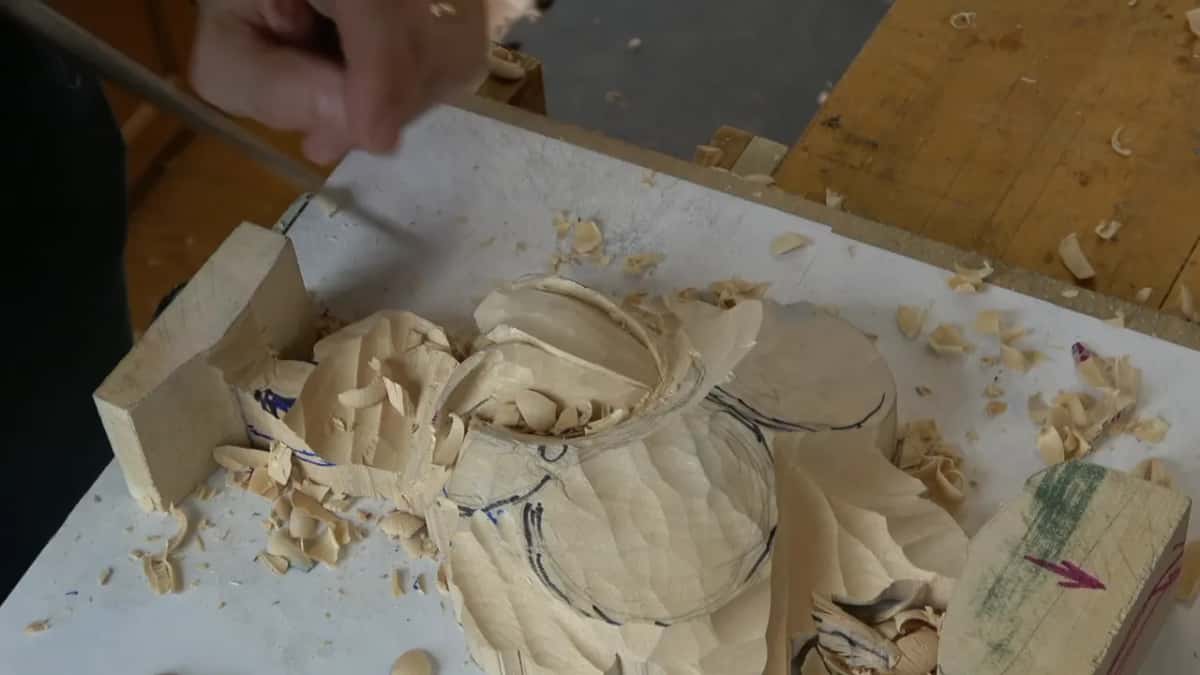
Sharpness at the rim is what sells the illusion that a lime petal is thin. The wood behind it can be an inch thick. Nobody looks at the wood behind it, and that trade is what the whole carving craft runs on.
Whatever shape the outside of a petal has, the inside repeats. Points on the outside mean points on the inside. Carvers get the visible face right and then leave the hidden face rounded off, and your eye picks that up as wrongness without ever working out why.
Turn the board while you work, too. Not for comfort, though it helps. A shape you have only ever seen from one angle is a shape you have only half carved, and the low side of this tulip carries its own set of divisions that never show from straight above. I turn the panel round whenever the carving stops being convenient, which is often.
| Where | Tool | Result |
|---|---|---|
| Outlining the flower and dropping the ground | The 10 mm nine | A quarter inch of fall |
| Rounding | A flat chisel, wrist rolling through every pass | A barrel instead of a disc |
| The two triangles | The narrow eleven | Movement you can still read from across the bench |
| Under the turning petal | A bent veiner, 7 mm in my case | Shadow |
| Inside each petal, once the outside is settled | The 14 mm seven | Two hollows and a ridge |
What is the second flower on this board?
Venetian, and it is built like an onion. The middle gets excavated with a plug cut, the inner leaves close over it the way onion skins close, and five petals open out around the whole thing. You can do it in a single layer or a double, and the double takes far longer.

Look at how uneven the edges are on the old ones. That unevenness is the point. Our whole flower rosette course turns on it, and the Hashemi flowers take the same idea somewhere else entirely.
There is a third bloom on this board that looks like nothing in particular. I call it a carver's flower, since it is not any flower you could put a name to. Still a flower, though, and somebody has to fill that corner.
Is one flower really worth a whole morning?
Three hundred years of evidence says it is. Go and stand in front of his work at the Victoria and Albert Museum, or in the Carved Room at Petworth House, or at Hampton Court Palace, and the thing your eye goes to first was worth somebody's whole morning.
If that sounds like your kind of trouble, the way in is the tuition page. All eighteen Maine classes sit inside it, next to the Byzantine acanthus and the course on choosing tools. Sharpening lives in its own course, and you will want that long before you want a spoon gouge.
How it's done
- Outline the flower before anything else. The 10 mm nine goes round the shape first, since the tulip sets every height on the board and nothing else can be judged until it exists.
- Drop the ground beside it. Six millimetres of fall under the neighbouring leaf. Half an inch comes off where the stem will land, and the last quarter inch waits.
- Roll it round chamfer by chamfer. The flat chisel held almost level, wrist turning through each pass. Picture a real tulip standing in air, not a shape stuck on a board.
- Take the two triangles out early. The nine first, then a 3 mm eleven to reach further in. Waste left there hides the direction the petals travel.
- Free the turning petal with a spoon. Excavate underneath until the petal is clear of the wood behind. Across the grain, gently, thumb braced on the work as a leverage point.
- Hollow the petal twice and blend. Two soft concaves with the 14 mm seven, carried out to the point, then the wider flat chisel to take away the ridge between them.
Frequently asked questions
How big is the tulip on this panel?
Roughly an inch and a half across, which puts the finished connection at the back of it near three quarters of an inch. Half of that gets carved in this class and the last part stays in reserve, since the flower will be taken deeper later.
Do you need a spoon gouge for the flipped petal?
Something bent reaches in where a straight tool cannot. Mine is a bent veiner at 7 mm, and most of the room in Maine used a 10 mm spoon instead, which did exactly the same job on exactly the same petal.
What makes a carved tulip look flat?
Taking the top down too far before rounding it. Once the wood is gone there is nothing left to roll, and the flower reads as a disc lying on the board rather than a shape standing off it.
What to carve next