
Alexander Grabovetskiy, woodcarver, School of Woodcarving · Published 2019
How much detail does a small carved flower need?
Quick answer: Detail on a small carved flower is set by how close the viewer stands. A filler far above eye level can stay simple. One on a box handled every day earns petals with movement, a shadow dug beneath it and no saw walls left, and the time you have decides when to stop.
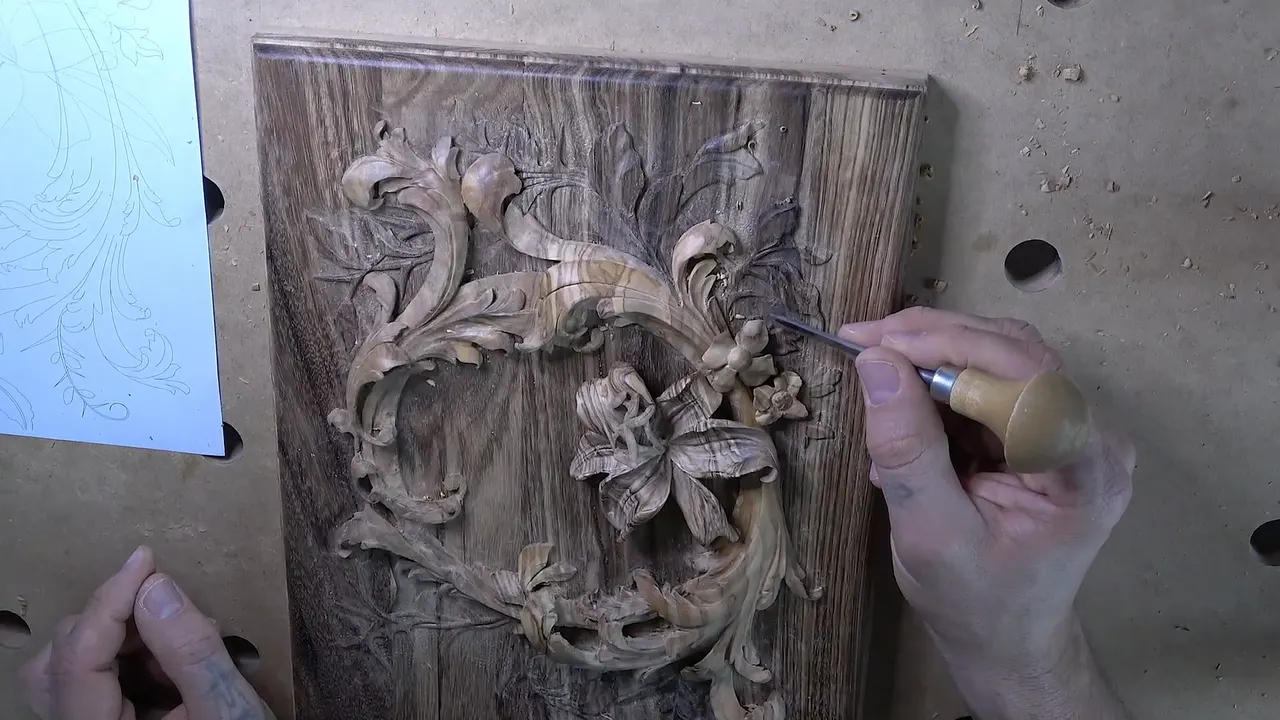
The detail a filler flower needs on a small box is far more than many carvers give it, because a box is seen from close. Up high on a wall the same flower could stay plain. On a lid you open by hand, every petal still gets its own curve, and you keep going past good until it looks excellent.
Do you look at the biggest flower on a carving first? Does your eye slide right past the little ones around it? A lot of carvers around the world leave those little ones plain, and I understand why.
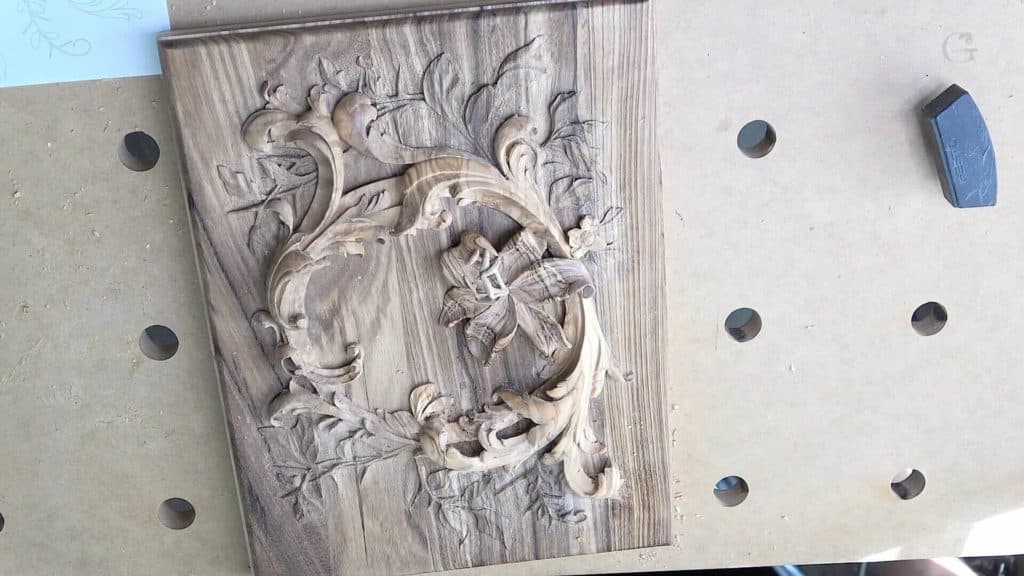
On the olive wood lid of my lily box I carved two small filler flowers, the first one so small that my finger covers it, and both of them got real work. What follows is how far I took them, where I would stop on another kind of piece, and why some of the old carvers stopped early.

What decides how far a filler flower goes
- How near the viewer stands decides more than how big the bloom is.
- Gibbons detailed the front, even high up.
- A hollow in one petal gets answered by a rounded petal on the far side of the flower.
- Deep shadow comes from hidden wood you remove.
- An everyday box keeps a little thickness at its edges, while a wall piece is free to go paper thin.
- Stopping early is about time and pay, and some old carvers stopped for bread.
Why do so many carvers rush the small flowers?
Most of them have a reason that holds up, at least for work hung far away. Filler flowers were never the point of a design. Wood carvers had space to fill and needed something to fill it with, so they put in a small flower, and you see them all over French furniture from the 18th and 19th centuries. A separate page covers what a filler flower is, so this one stays with the carving.
When a flower is only there to fill a gap, it is easy to treat it like one. You watch the big details and get careless with the small ones. There is a logic to that, and I will not pretend there is not. If a carving will hang really high above everybody, no one will stand close enough to read a small flower on it, and there is no reason to give that flower much.
The trouble starts when that habit comes down to a piece people hold. Carvers all over the world do exactly this when they reach the small flowers. They just do not give them detail. Put that on a box and it shows.
Did Grinling Gibbons bother with flowers that hang way up high?
He did, on the side that faces you. Grinling Gibbons really loved to carve flowers, and I love it too, and a lot of his work sits really high above the floor. He still worked the details on the front. The backs he did not worry about, and he left them really rough.

Travel to England sometime and visit the places where his carving hangs. It looks beautiful. People take pictures of it now, they zoom in on work that hangs way over their heads, and the detail is still there for them to find. He really took care of it.
His wood was different too. Other carvers in England were working brown oak, a really nice wood and one of my favorites, better for me than American white oak. Gibbons carved limewood, which is pretty much the same thing as basswood if you are in the United States. My Grinling Gibbons class in Maine goes into his style, and a short page covers the wood he carved too.
What changes on a box you can pick up?
Everything moves closer to the eye, and rough carving has nowhere to hide. This lily box will hold a Bible, and it is still a fairly small box. I hope it becomes a piece somebody uses every day. On a big piece you could get away with rougher carving. Not on this one.
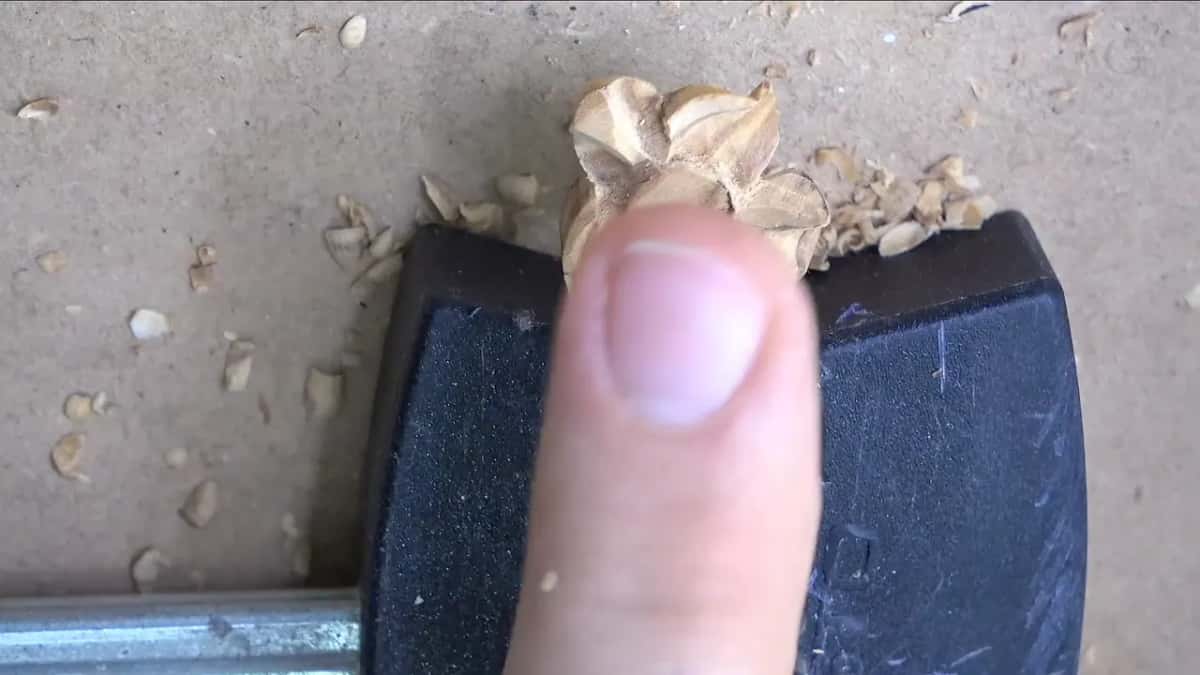
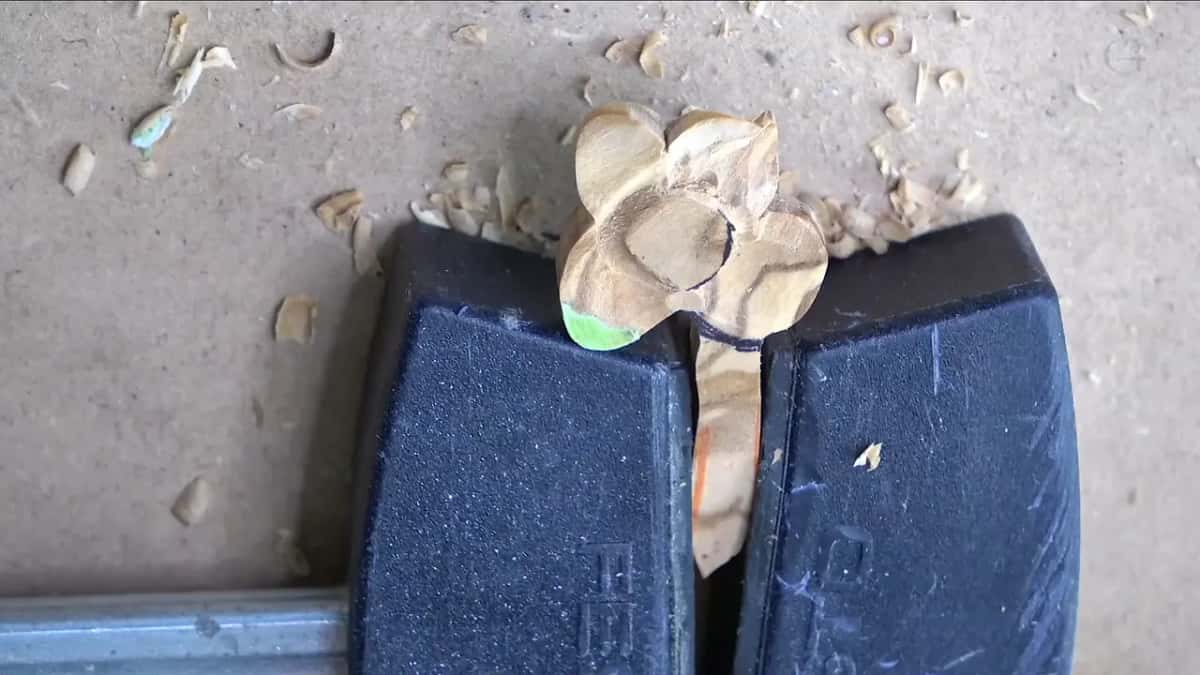
So every little flower on that lid counts. The first filler is small enough that when I put my finger on it, the finger covers the whole thing. I left that blank only about 5 mm thick, 3/16 of an inch, since it goes on the side and did not need a lot of material. The second flower is bigger and goes close to the first, so I left it thicker. Neither one is the focal point, and I still did not let either of them go rough.
Do the small flowers make the lily look bigger?
Small details around a focal point make it read bigger, and on this lid I lean on that. The lily is a little smaller than a real one. What makes it look bigger is the law of space, which says you surround the main focal point with smaller details, and on this box those details are the fillers. My butterfly plate works the same law with curls and little flowers packed around each butterfly.
Each filler tucks partly under the lily. The second flower also has a section I lowered and a part that wraps around the acanthus. When I set the first one on the lid, it went under the lily exactly the way I had planned and rose on the far side, and I was really, really happy about it.
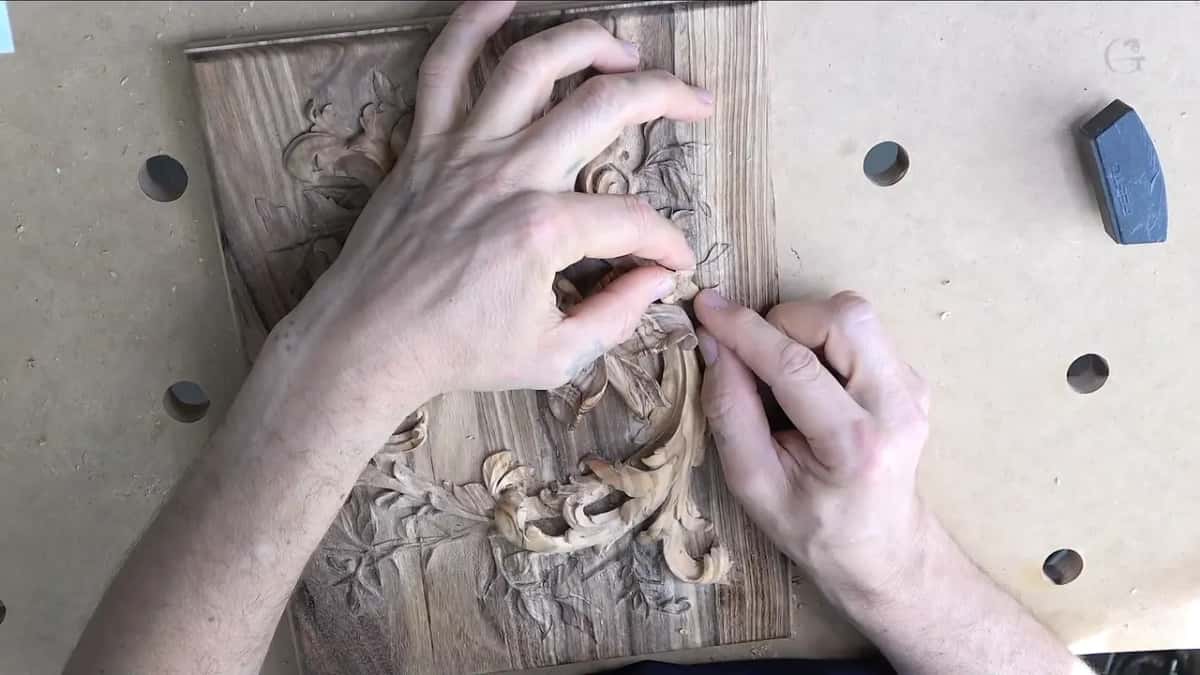
My design lesson on how much detail is too much draws the limit from the other side. Detail that pulls the eye away from the main movement is too much, and so is detail no gouge can reach. That lesson is about drawing a panel. This one is about carving a flower you will hold close, and the two rules sit together fine. The fillers stay low and minor, and the V cut around the center of the first one is no wider than a hair.
What does detail look like on a flower this small?
Movement, most of all. You see it best from the side, and I never keep the outline of a small flower at one height. It gets some waviness, a ridge left higher in one place and a slope going down in another. From above, a filler like this still reads as a plain oval. Turn it to the side and it has a really nice, interesting movement, and I can exaggerate it even more when I have to.
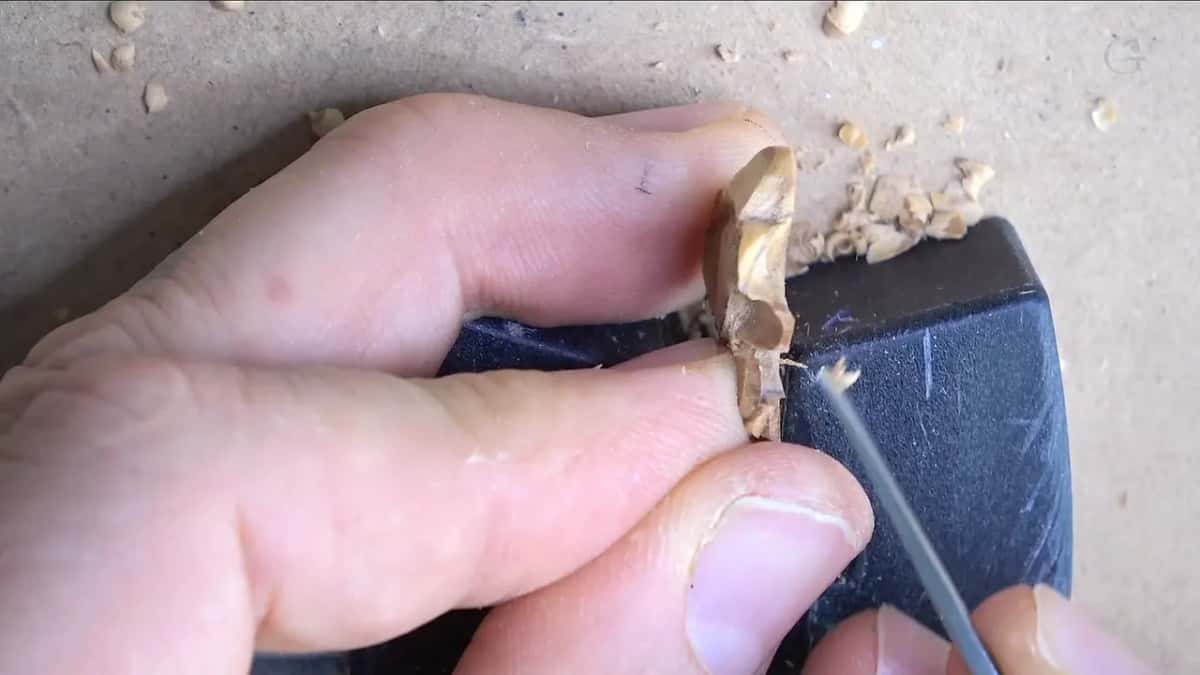
Each petal gets its own shape too. I did not want a uniform hollow anywhere, so where one petal has a concave right in the middle, the petal across from it gets a convex in the middle with two concaves on its sides. To me it is plus and minus, a hero and an antagonist in every little movement, and the two sides complement each other. Both fillers have four petals. You rarely find that, since most flowers carry five, and with five one petal always falls short of a partner, so you have to get creative.

One part of the second flower rose up by itself while I was carving it. I did not plan that. I loved it anyway, and there is more on letting petals come out uneven in why carved petals should not be perfect.
The center gets work too. Many of you would leave the little dome in the middle simple, and I could have. On the first flower I carved a tiny golden spiral into it with a number 11 and a couple of small gouges, under a magnifying glass. You almost cannot see it. I believe you still feel it.

Why dig shadows under a flower nobody will turn over?
For the shadow. I excavate under a petal, like the inside of a dome, and no human eye will ever see that wood from the front. The shadow it casts gets a lot deeper anyway. I do it for that shadow and for nothing else, the same reason I give for undercutting work nobody will ever look at.

It counts even more on a dark wood. On darker woods the shadows are harder to see, so the more you exaggerate them, the more beautiful the carving looks and the more the shapes separate. Olive is exactly that kind of brown wood. All about lights and all about shadows, that is wood carving.
The same thinking goes for walls. A wall is whatever the saw left standing, the flat face with the saw marks on it, and I want every one of them gone. Some are micro walls you can barely see, especially on this brown wood, and they still bug me. While working on the second flower I found some orange stuff on the side of the wood, and I still have no idea what it was. Most walls come off with a knife, working from the opposite side and blending into the edge. I know nobody is going to look underneath. Still.

How thin can the petals go on a box that gets used?
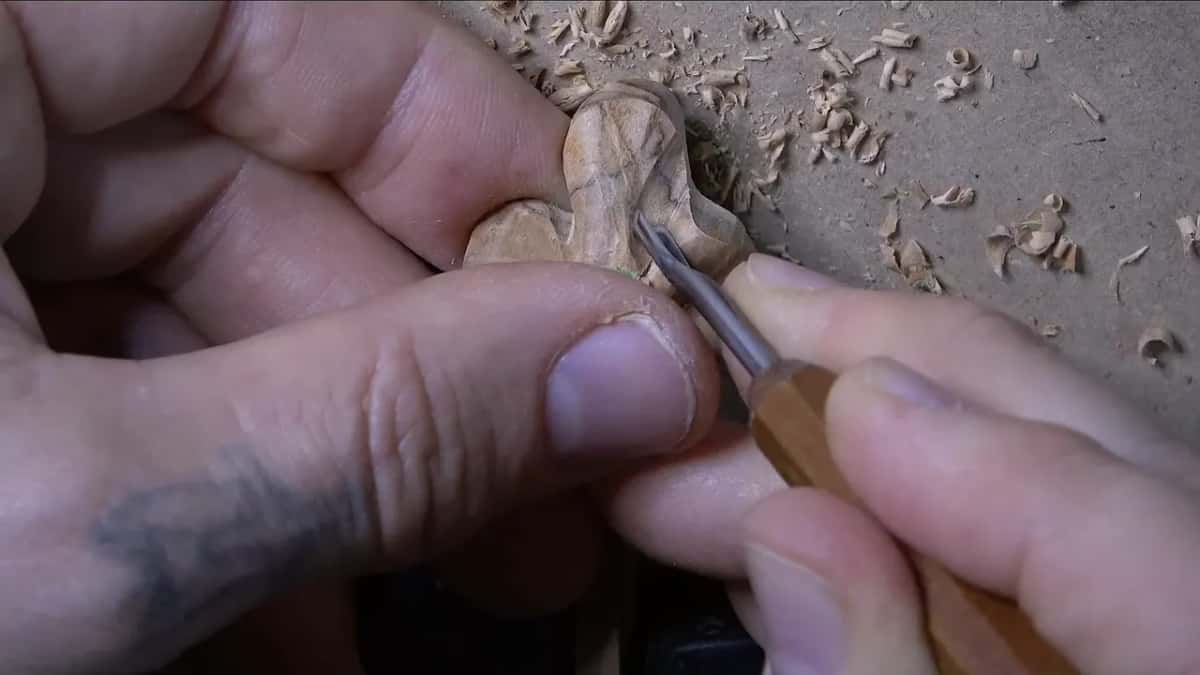
Thin enough to feel light, with some thickness left at the edges. I have a tendency to make petals paper thin, and I always have to stop myself. A box for everyday use cannot be too fragile. Some spots have to be fragile anyway, like the middle of the lily, which is the most fragile spot on the whole lid. The fillers do not. For a wall decoration I could take them paper thin, and I love doing that.

Go too far and the wood tells you. On one petal of the second flower I could see light coming through a spot, so one more pass would have opened a hole, and I only touched the edge with a knife. I still made a mistake there. The piece stayed in place, and I put a small amount of super glue on the inside right away, where nobody will see it. A little stupidity is allowed, otherwise you never learn.
For that repair I use the Gorilla super glue gel. I have used Krazy Glue and other super glues, and for some reason they do not hold as nicely. Furniture keeps its edges for a similar reason, and the panel course explains why furniture carving avoids sharp edges.

Which tools get into a flower this small?
Sharp ones first. Please make sure your tools are really sharp on work like this, or it gets dangerous. A dull tool makes you push with a lot more force, and that force is enough to go into your skin. It is dull for the wood and not dull at all for your skin. Ask me how I know.
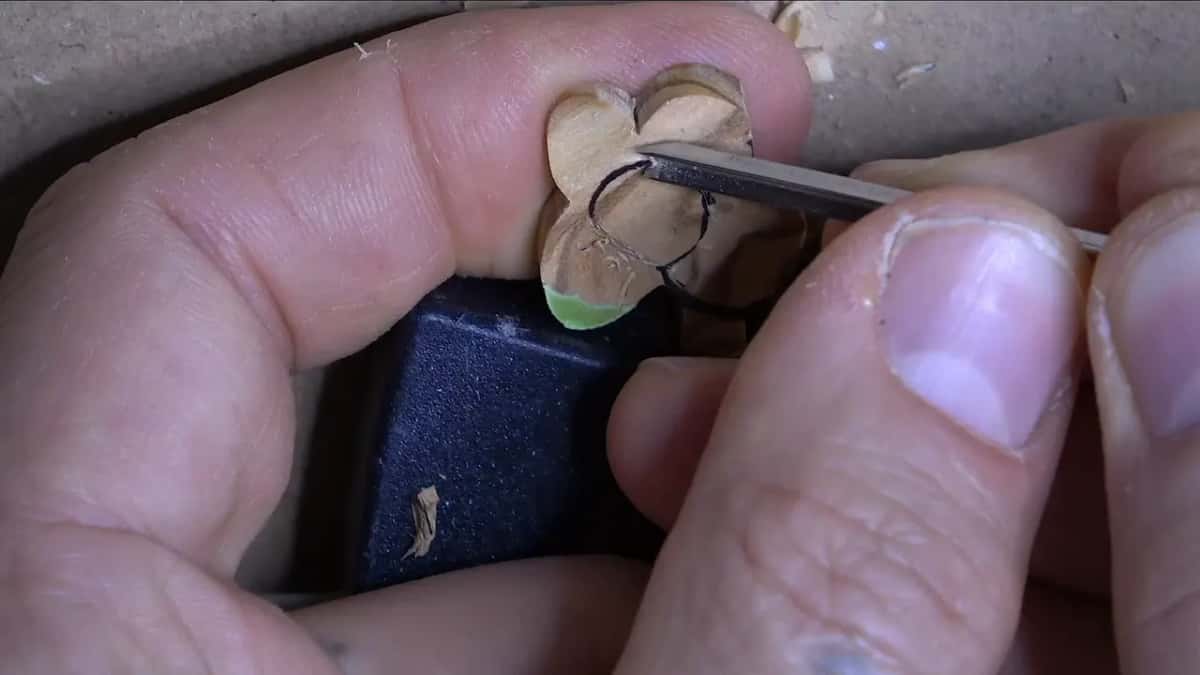
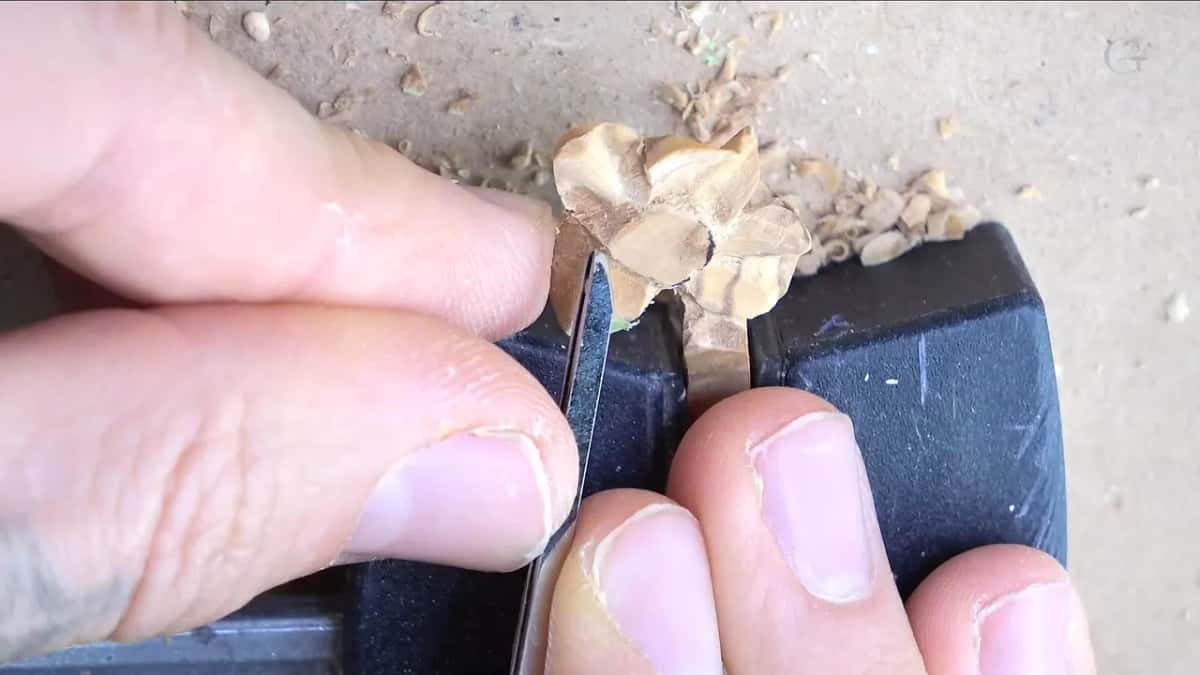
A really handy tool on these fillers was a small number 7, a palm tool with a short handle. It is supposed to be a quarter inch, 6 mm, and it measures closer to 5.5 mm (7/32 in). I hold it upside down, the handle sits in my palm, and I can get my hand right down near the edge and carve tiny details, even with one hand. It feels like part of my hand. Full size tools work on these flowers too, no problem, but with fragile work you want to be close to the detail and in control.

Ashley Iles even makes specialty tools for work this small, V tools with a twist in them. The micro tools need sharpening like any gouge, only smaller. Near your fingers, a knife can still give you micro cuts. They are not deep, but they hurt, and at a certain age they are really hard to stop bleeding. Safety is really important.
How far I take a small flower, depending on where it lives
The table sets the same small flower in six places.
| Place | Detail | Reason |
|---|---|---|
| High up, like Gibbons | Front in full detail, and the back left rough | Seen from below |
| A decoration that hangs on the wall | Paper thin | It never has to survive being handled every single day |
| A small box like this | Full movement and shadow, no walls, some thickness left on each edge | Seen from close |
| A standalone piece that is glued to nothing | The whole way | No main piece exists to finish the last details on later |
| A client's deadline job | Compromise, then a stop wherever the hours run out | The bills |
| A piece made for history | Far more of my time, and those pieces come out much, much better | It has to show well |
Where do you stop on a small flower?
At excellent, if the job gives you the time. If you do not feel like giving a small flower all of this, do not do it. It will still look good. There is a huge difference, though, between looking good and looking excellent or great.
A tendency to overdo it says something good about you. Every true artist, in wood or in any other art, always finds something more to fix or finish on the piece in front of him. To an artist a piece always looks unfinished, so the moment a carving is finished is always your own call. Look at your own work, and if it looks finished, most likely you are not an artist anymore. Underdoing is a different story. It usually means you have not understood yet what makes a piece beautiful.
Sometimes you underdo on purpose, which is absolutely okay. If you carve for a living, you trade your time and skill for wages, and the bills still come. The classical carvers of the 17th, 18th and 19th centuries knew that. Some of them did not undercut deeply and stopped without finishing. That was not a classical idea at all. They got paid exactly the same either way, and they needed bread. Some clients never understood deep undercutting or the shadows it casts.
I face the same choice. When I carve for a client, the time is sometimes limited, and I have to compromise and stop somewhere. For something made for history I spend a lot more time, and those pieces look much, much better. On this box I went to the extreme, because I really love this project, the wood I picked for it and the idea of a box that holds a Bible.
Both flowers are carved on camera in this lesson, more than two and a half hours of it, mistakes and all. Monthly or yearly Access opens it along with the rest of the course. The next lesson moves on to the olives.

Some of you have sent me the Hashemi flowers you carved along with me, and I am really, really proud of what you did. Is there a small flower sitting on your bench right now? Were you about to rush it? Hold it up close before you decide.
How it's done
- Dome the middle first. Bring every petal down a little below the center so the flower rises to a soft dome. Then run a 2 mm (5/64 in) number 11 around that dome to set its edge.
- Break the rim. Leave the rim high in one place and let it fall in another. Judge it from the side.
- Pair the petals. Where one petal gets a hollow, round the petal across from it.
- Split with a hair. Use one corner of the tool for a V around the center no wider than a hair, then a half millimeter (0.02 in) veiner between petals.
- Dig out the dark. Hollow the underside of any thick spot like the inside of a dome, and pare every saw wall away until nothing flat is left.
- Stop at the light. Watch each petal against the light. Where light shows through, stop digging there and only skim the edge.
Frequently asked questions
Should filler flowers on a box be carved in full detail?
Give them full detail whenever the piece will be seen close, as a small box is. Rough work on a minor flower is easy to spot at that distance. Simplify only for carving that hangs far above everyone, and even there the front deserves care.
Did Grinling Gibbons carve detail on work people could not reach?
He did. Much of his work hangs high, yet he finished the fronts of his flowers carefully and left the backs rough. Pictures taken today and zoomed in from below still show that care. He worked in limewood, close kin to American basswood.
How thin should petals be on a carved box?
Leave a little wood along the edges of any box meant for daily use, and save paper thin petals for wall pieces. Once light starts to show through a petal, quit digging there, or one more pass opens a hole. A drop of super glue gel inside can rescue a small slip.
What to carve next