
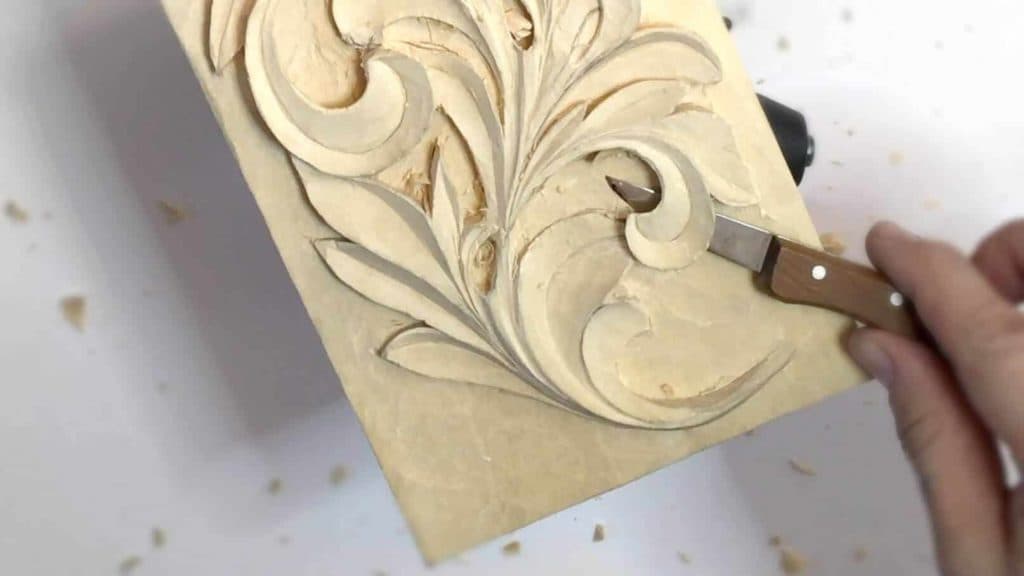
Alexander Grabovetskiy, woodcarver, School of Woodcarving · Published 2017
Why can you not undo a mistake in wood carving?
Quick answer: Wood carving is an art of deduction, so wood you take off can never be put back on. Some slips can be lowered away and some breaks glued, but many times you really can't. That's why I work slowly, take micro cuts, and leave extra wood above the background in case I dig too deep.
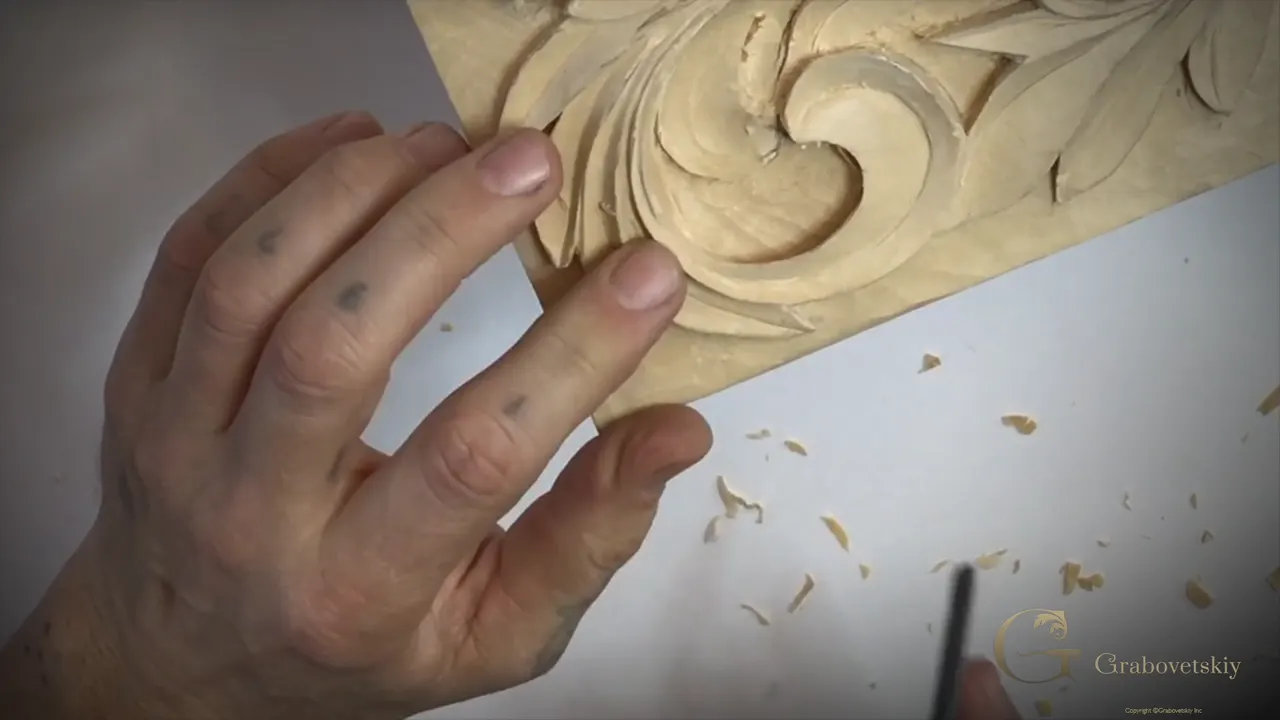
Wood carving is an art of deduction. Once you deduct, you can't add that back. I said those words in lesson 11 of my Greek acanthus course, a few minutes after a pass with my own little V tool went where I did not want it. Some stuff you can fix, and some stuff you can glue back, but many times you really can't.
Is a chip on the bench still a chip on the bench tomorrow? Does a hollow you dig stay dug? Then every pass is a decision, and you make it before the tool goes in.
This page is that lesson, with the slip, how I fixed it, and why I keep saying slow down while I undercut this acanthus relief. On top of it you get what I said about the same thing on a Venice Room panel, a lily box, a Greek acroterion and in a livestream about clay.
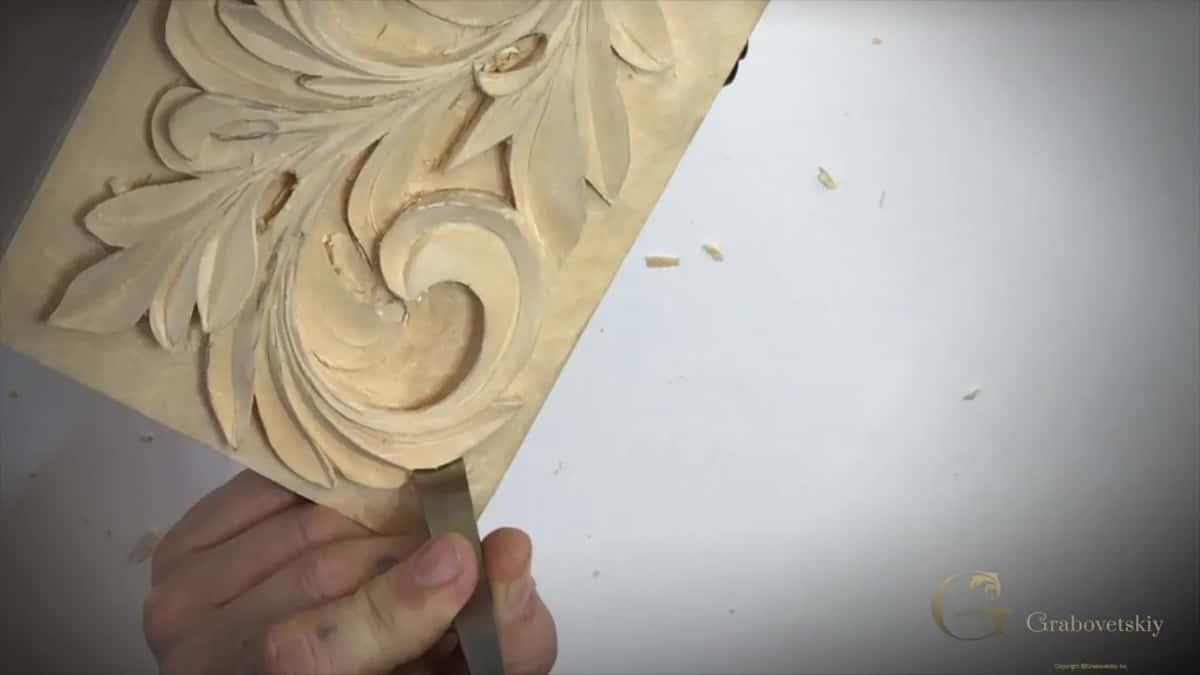
What lesson 11 says about mistakes
- Once wood comes off, it does not go back on.
- Rushing gives you a lot more mistakes, which take a lot longer to fix.
- Micro cuts beat big bites.
- At the start, keep spare wood over the ground in case one hollow goes too deep.
- A small slip can sometimes be fixed by lowering the spot, but some mistakes become unfixable.
- Hone a new knife before you trust it.
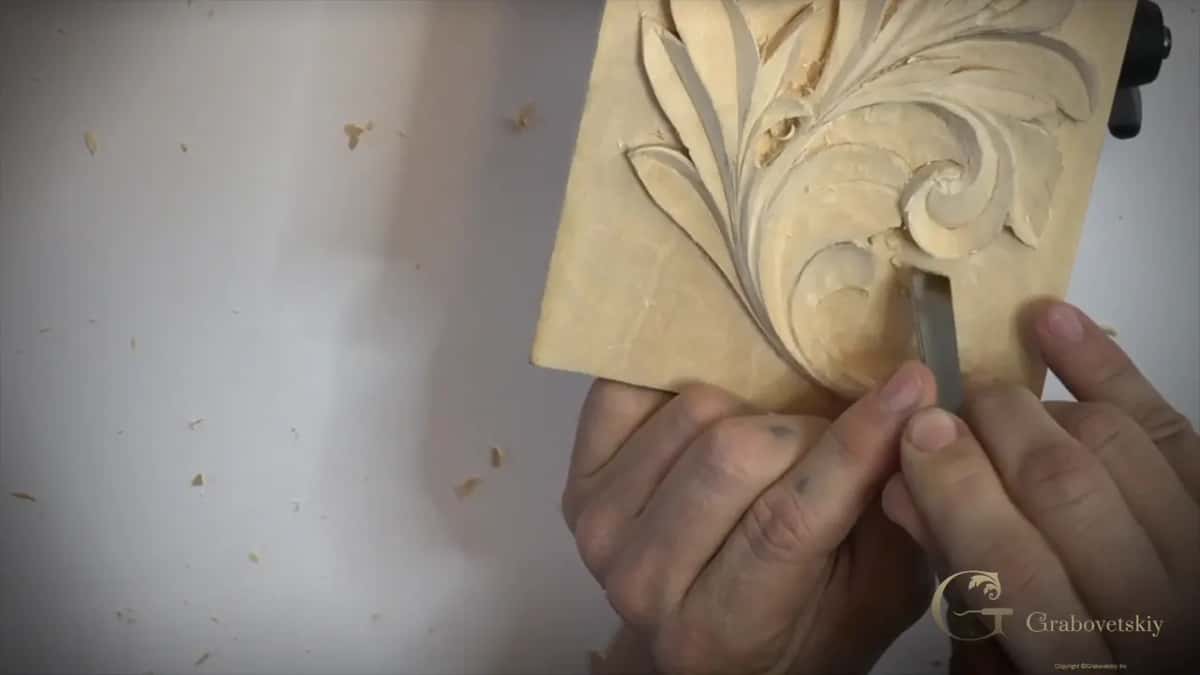
What does deduction mean for a wood carver?
You only take away. In workshop 55 of the Venice Room I compared it with modern day sculptors. They add clay or other media, chop some out, add again, and build up the form that way.
A wood carver does not add stuff on, and neither does a stone carver. You chop, chop, chop. You take away what doesn't belong in that particular piece. It was the Michelangelo example I had told before: he would take a big marble stone and just chop, to reveal what is inside.
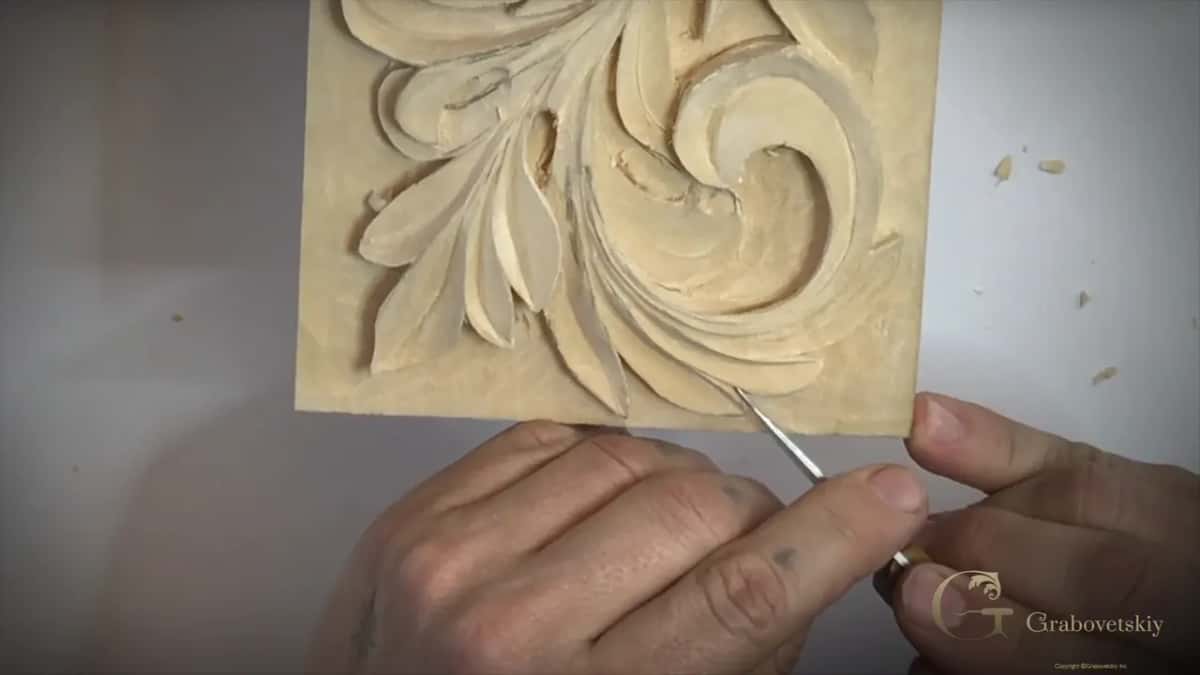
Clay works the other way, and for a long time I did not use it. I was young, I was ignorant, and I thought that because I was able to take a gouge and bang, I could develop. And yes, I've done a lot of work without any modeling. Did I make mistakes? Yes, absolutely, I did.
In a livestream in April 2020 I told people the truth about it. Bang a little harder on your gouge with the mallet, and you took a little too much. That is why I started using clay. With clay, I said later in that stream, you add on, you take out, you add on, and if you made a mistake you don't worry about it.
What happened when my 3 mm V tool went too far?
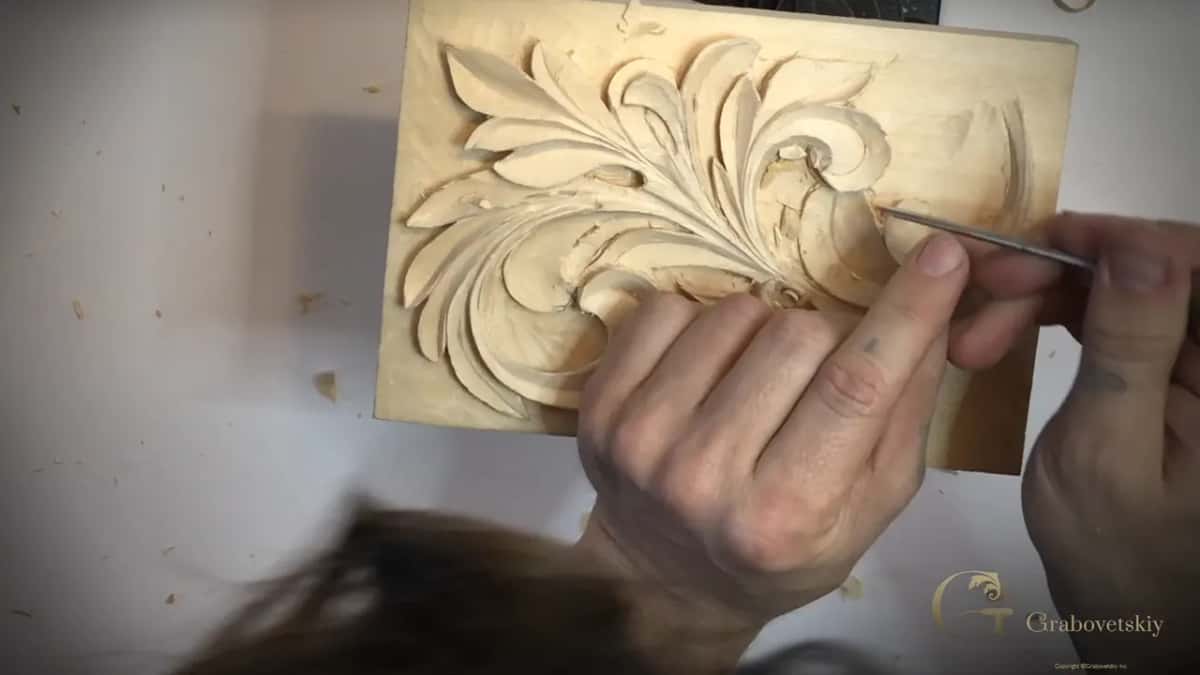
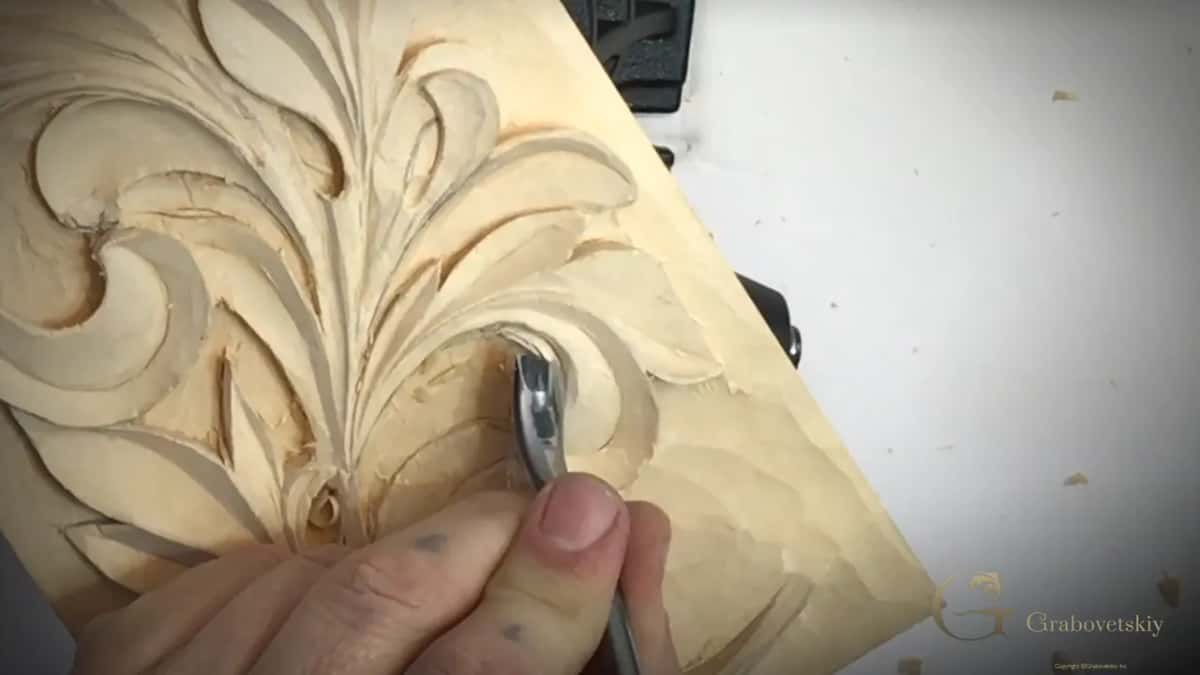
A little past three minutes into the first part of lesson 11, I took a small V tool, also a number 15 but only 3 mm, an eighth of an inch. It was there to remove whatever was left. With the same tool I made a separation line in one spot, then did the same in another.
Just be really careful, I said. You can see what happened actually just now. I wasn't too careful.
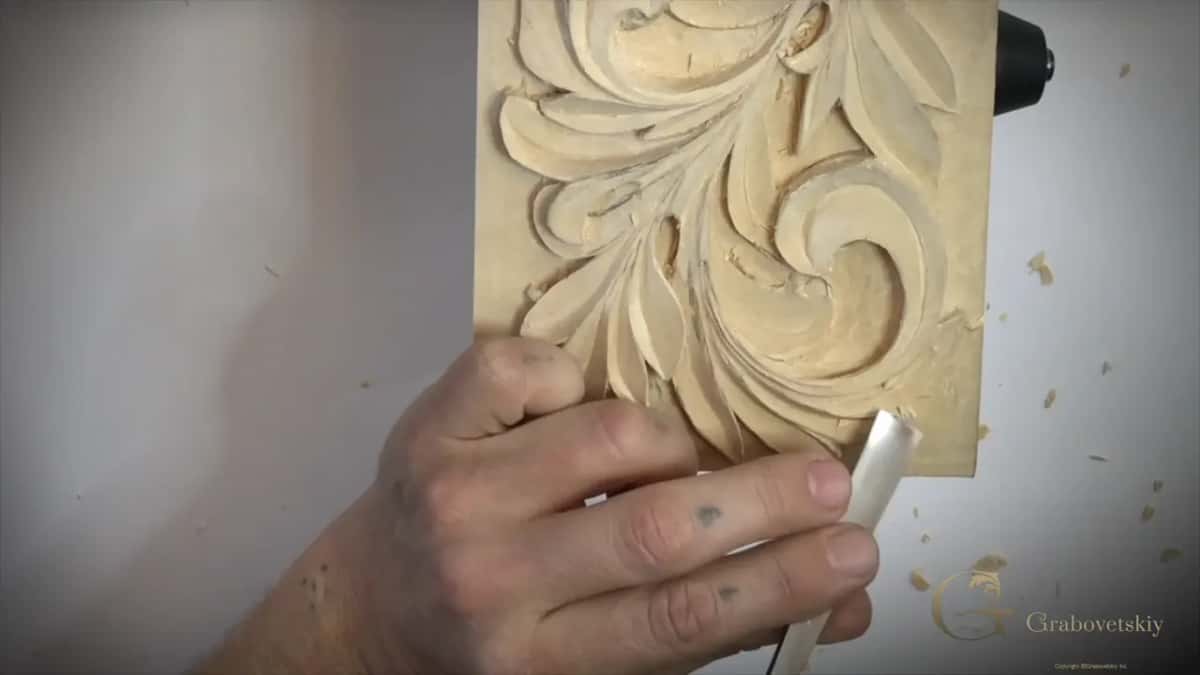
So I needed to lower that down a little bit. I picked up my number 3 and carefully lowered the spot, to fix that mistake. Sometimes mistakes do happen. Then I took the number 15 V tool again and made my separation line once more.
Notice the fix. Nothing went back in, and to make it right I took even more wood away from that spot.
Why does rushing cost you more time?
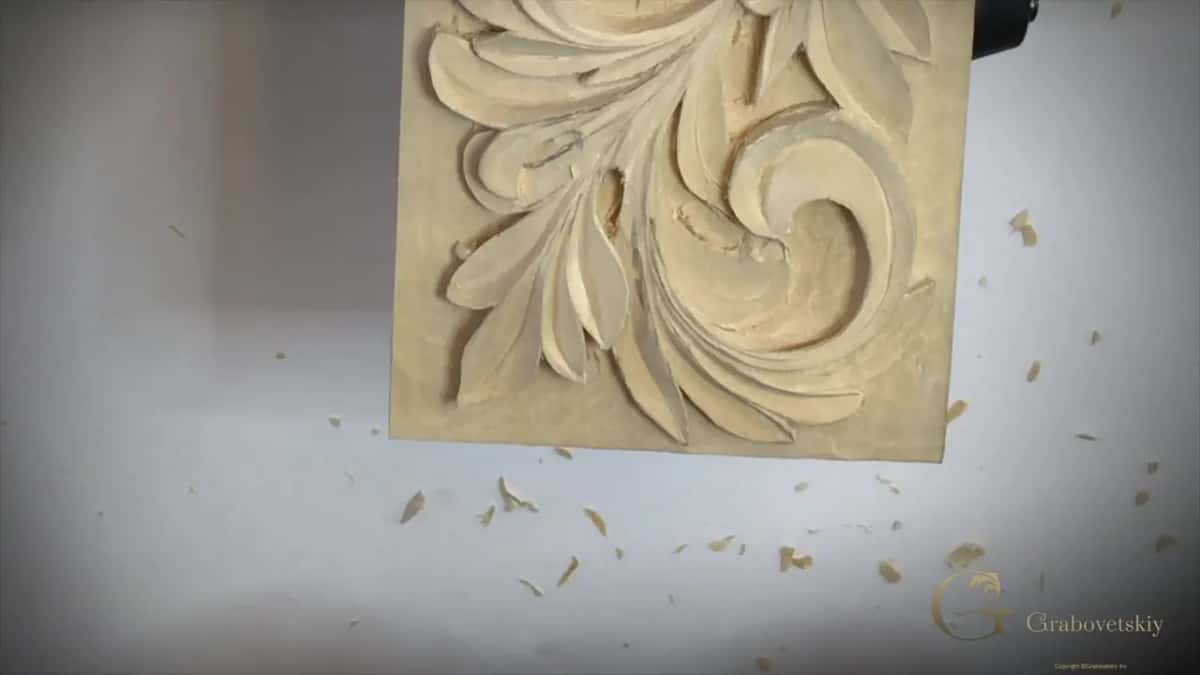
You pay for rushing later. Further into that first part, still with the knife, I was taking a section slowly, both directions, without forcing. Forcing it and rushing it is probably the biggest mistake some people make, I said, and they think if they rush it, it's going to be quicker.
But believe me, when you rush something in wood carving, you can make a lot more mistakes, and it's going to take you a lot longer to fix it. And sometimes some mistakes you make can become unfixable.
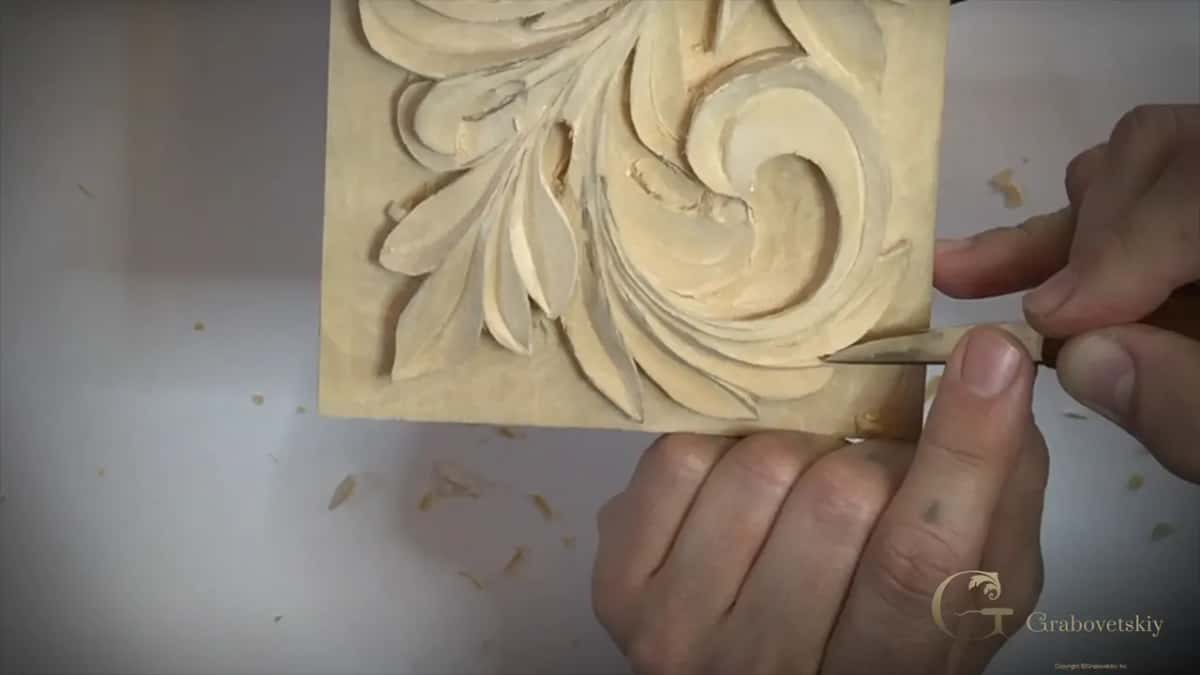
I am not above it. Earlier in that part, with a number 3 of just about half an inch, about 13 mm, I said try not to take too much at once, because you can make a big mistake if you do. I know it's tempting. I'm guilty also, when I'm trying to do it too fast, too quick.
My floral and molding panel, lesson 2, got the same warning, said plainly. I don't want to rush it. There is no reason. Even if there is a deadline, rushing is not really a good thing, and once you take too much, you can't put it back.
Over on a Greek acroterion, I put it like this. The main idea is not to rush anything, because I can slip up if I'm trying to do my moves too quickly. In some cases a mistake is fixable, but sometimes you can't fix it. Once you deduct, once you minus it, then it becomes a problem.
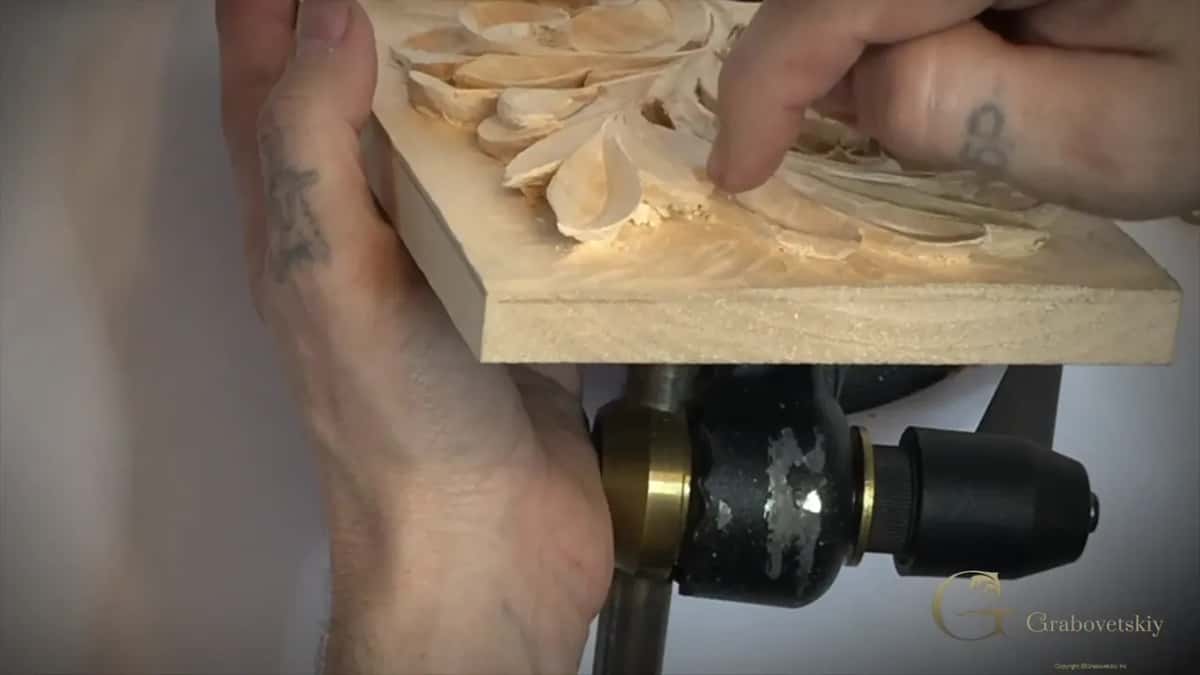
Can a broken piece just be glued back?
Sometimes, and many times no. People have asked me before what happens if you break something, and in this lesson I told them it's better not to break.
Back on my Roman acanthus, lesson 6, I gave the same caution. Yes, I do make my cuts really deep, but be careful, because if you subtract too much, that's going to be a problem. If you wish to be authentic to a carving like that, you can't glue that back. Whatever you cut is going to stay there.
When a piece does break, my Greek lesson 13 shows what I do with it, and keeping a thin edge from breaking in the first place is in Roman lesson 11.
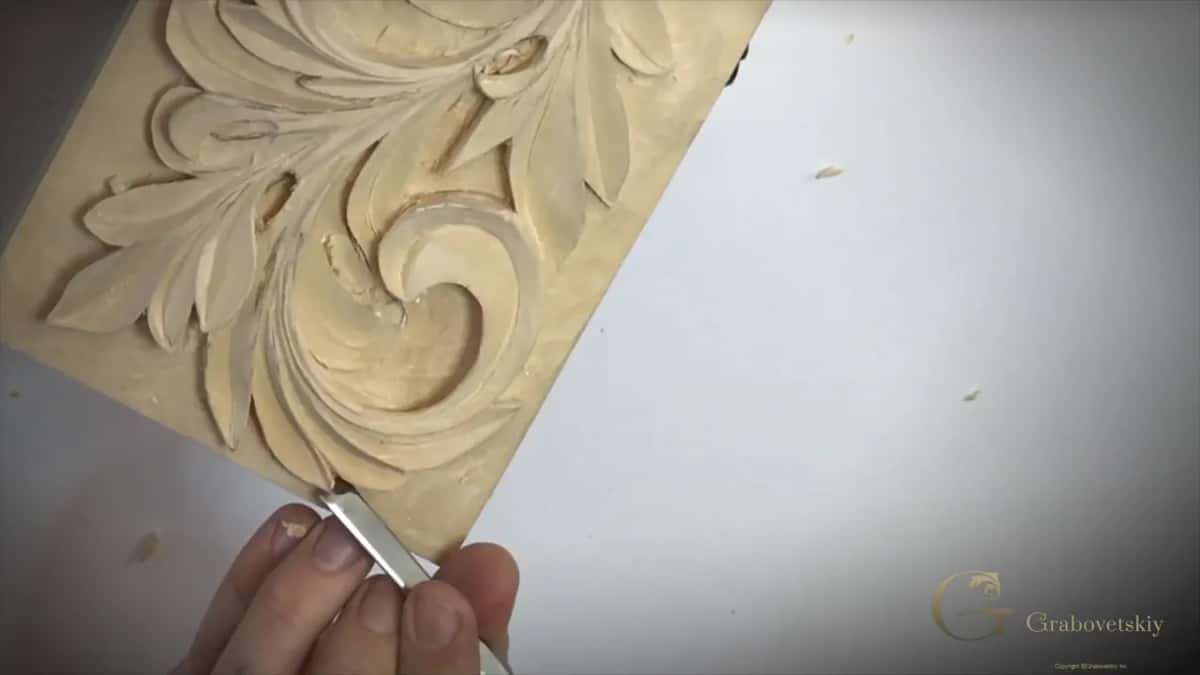
Why leave extra wood over the background?
Extra wood is what lets you even things out if you dig too deep somewhere. In the last part of the lesson, I was undercutting with a short bent V tool, a number 12 at 3 mm (1/8 inch), taking that material out in small bites.
There was still plenty of material before I hit the background, which has to be on the same level as the main background. Between 1/16 and 1/8 of an inch (1.6 to 3 mm) was left that I could lower.
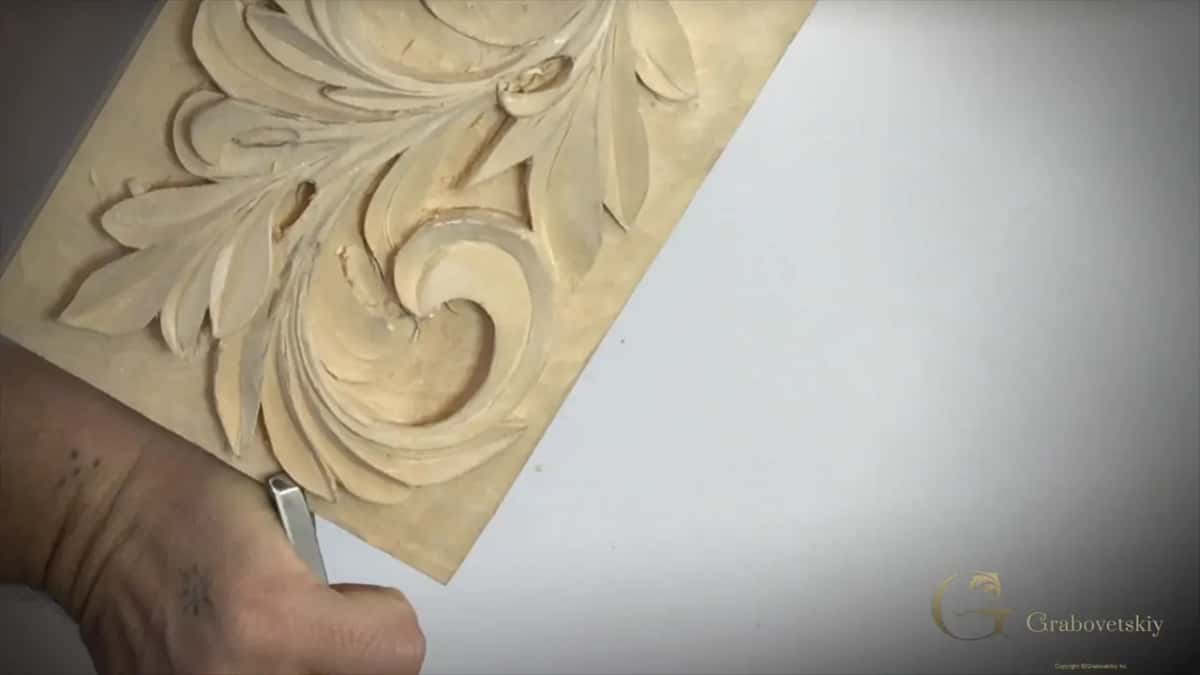
That's why at the beginning I'm always leaving extra, just in case I dig somewhere deeper, so I can always make it even all the way.
The same habit shows on a rough cut in the third part. A back bent number 25 at 13 mm (about 1/2 in) was next, and I used just the right corner of the tool. I stayed approximately a 16th of an inch (1.6 mm) from the rib. Later I can bring it up, I said, but for now it's a rough cut, and it is safer to stay a little higher.
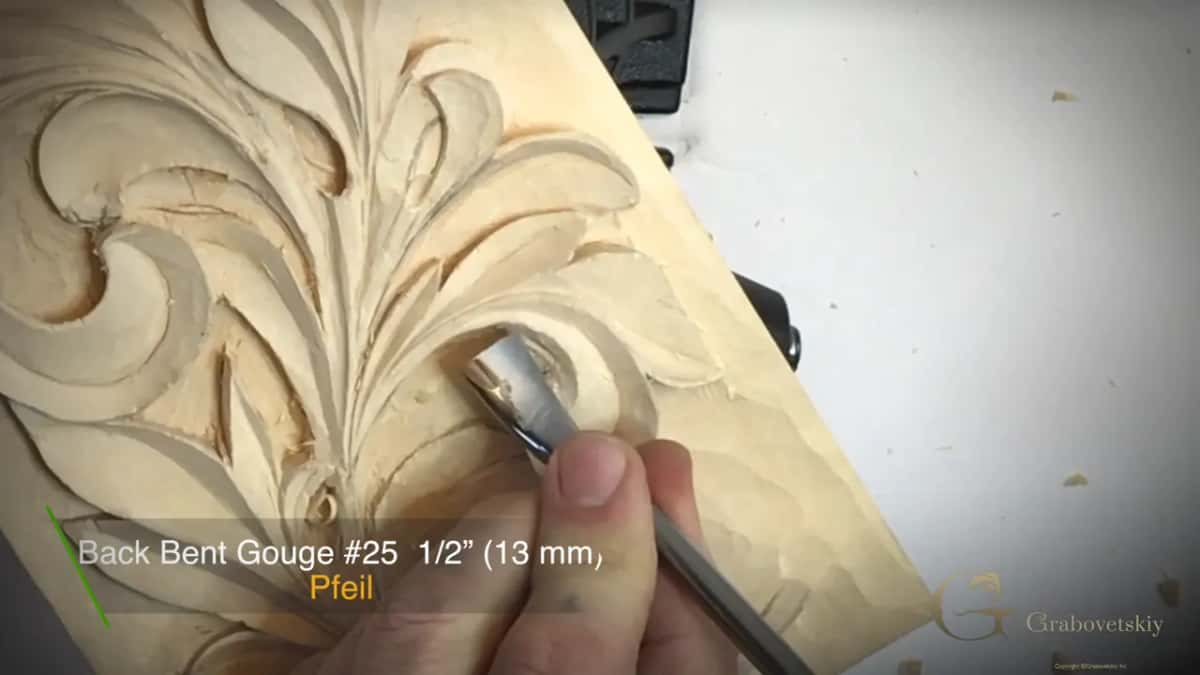
On the floral and molding panel I said the same about depth. I don't want to be too close to my final depth, I said, because too much off there can create a problem.
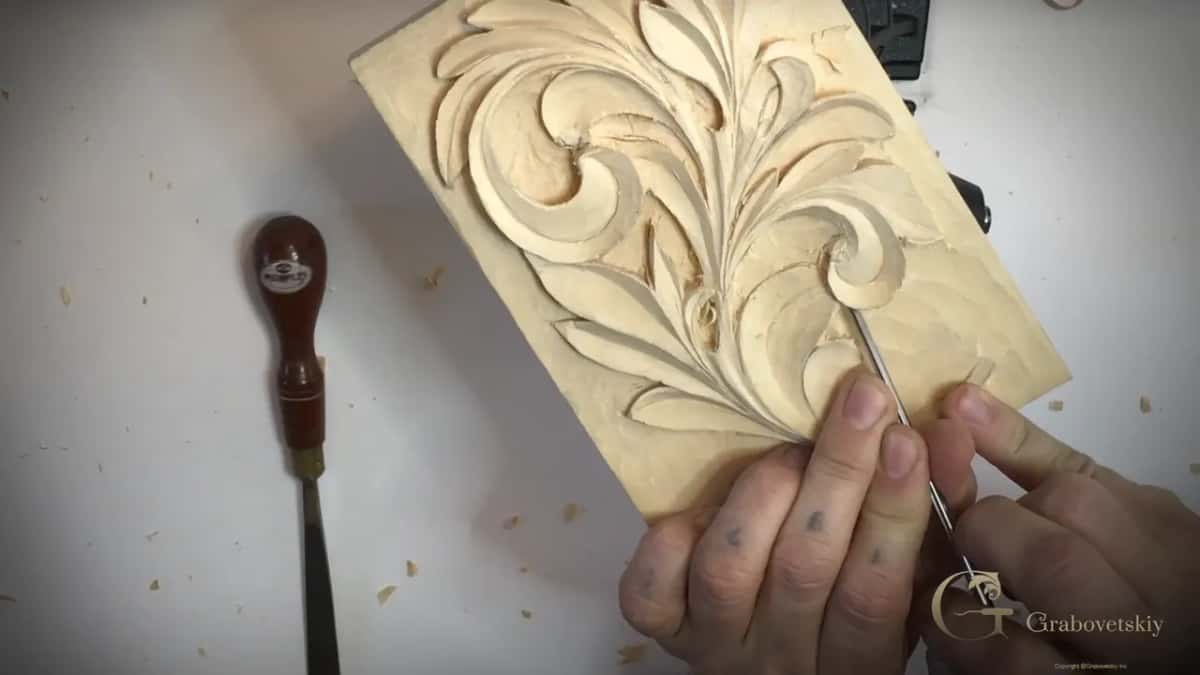
In Venice Room workshop 81 I apologized for having to think before I cut. If I make a cut and it's a wrong cut, that would not be nice. So I made a shallow one first, not that deep, and only then went looking for the high spots.
Should you decide before every carving pass?
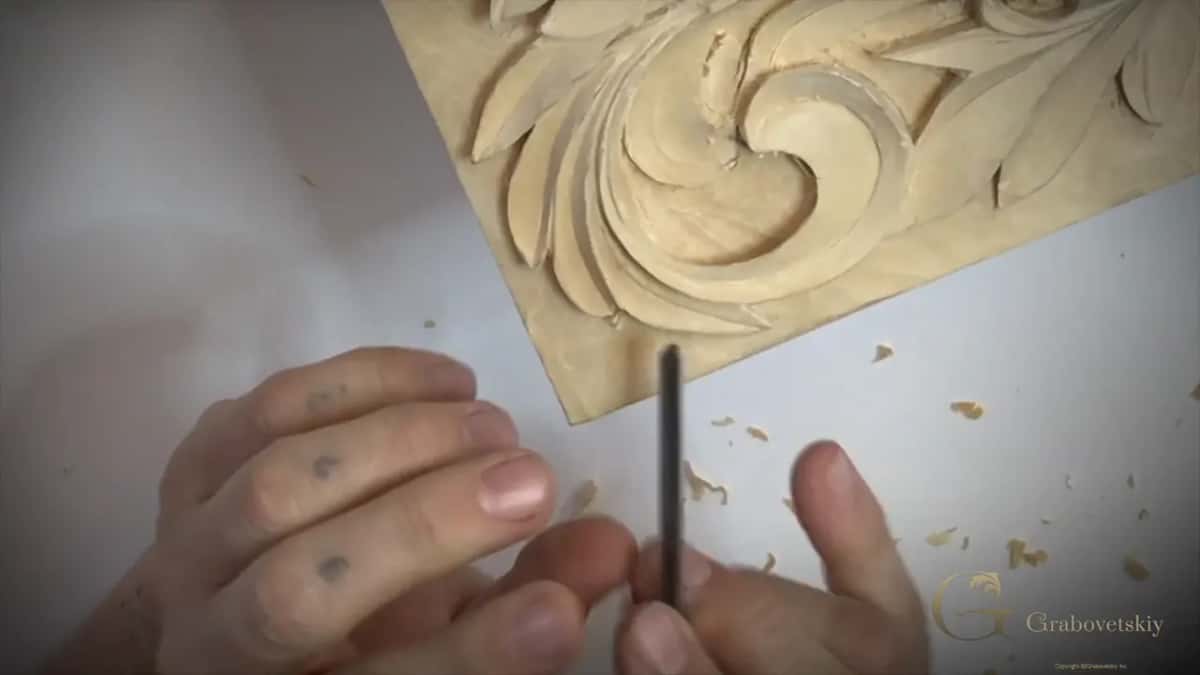
Make the decision first, then carve. On my lily box, lesson 4, I was digging underneath one part and said I got to be careful. Before you make a cut, make the decision if you really want to do that cut. And it looked like I made the right decision.
In lesson 5 of the same box I stopped to take a look at the reference, because I didn't want to make a mistake that later on I can't fix.
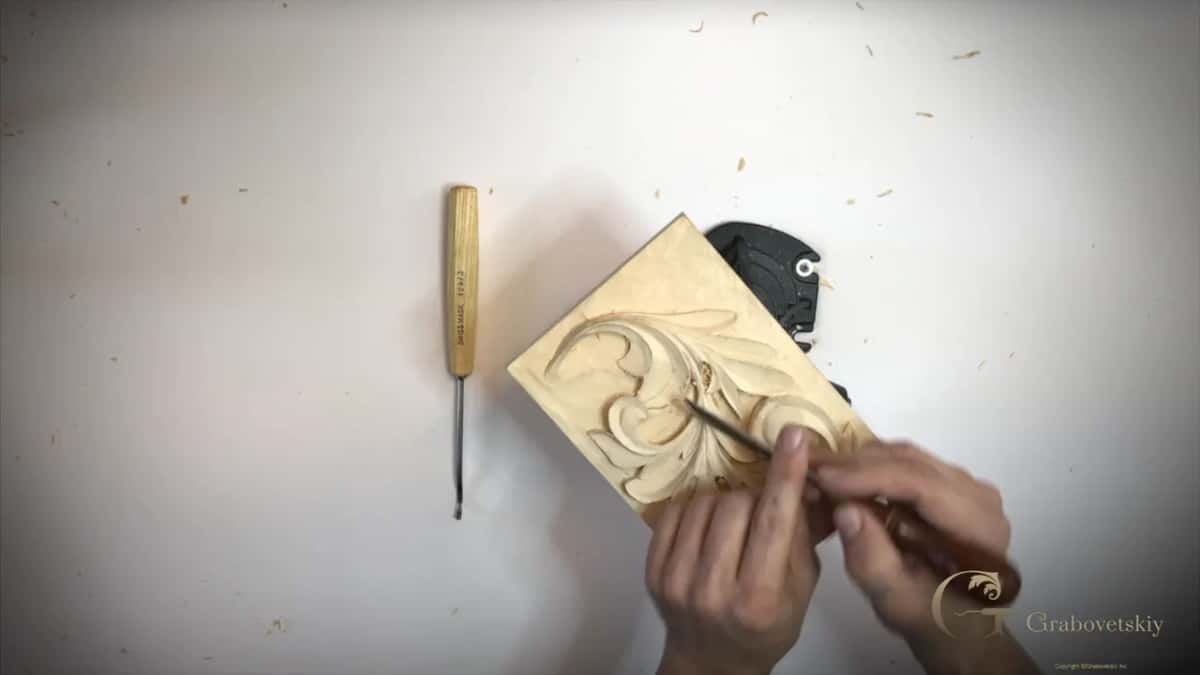
During workshop 29 of the Venice Room I cleaned only a little, using a number 7, because I still had to think what development I was going to do on that side. I didn't want to take so much material that it would be too problematic to restore. And yes, it's still possible to go too far.
And in workshop 32, blending with my number 7, I said it to myself. Check and check and check again. Can't afford a mistake.
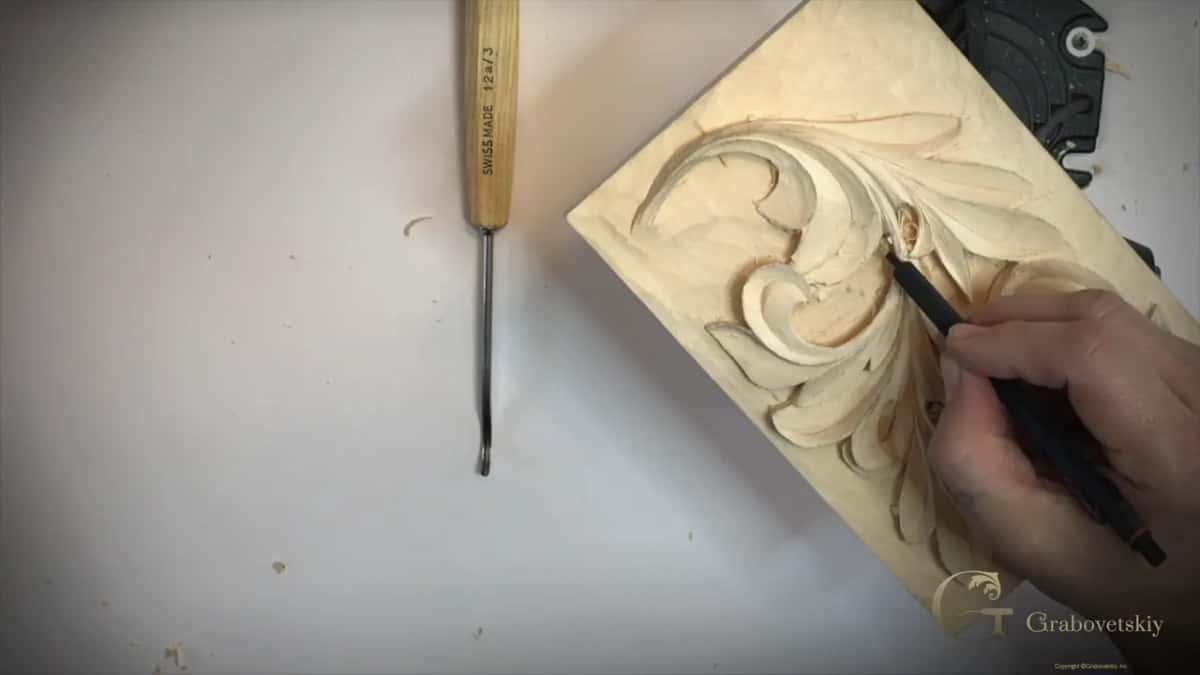
Sometimes the decision is a big one. Workshop 152 had me unsure whether to open up one section or create another division. I chose to open it up and make a shadow effect, and if I don't like it, I said, nothing I can do. That section is somewhat a focal point, right in your eyes. I made a really good decision to open up.
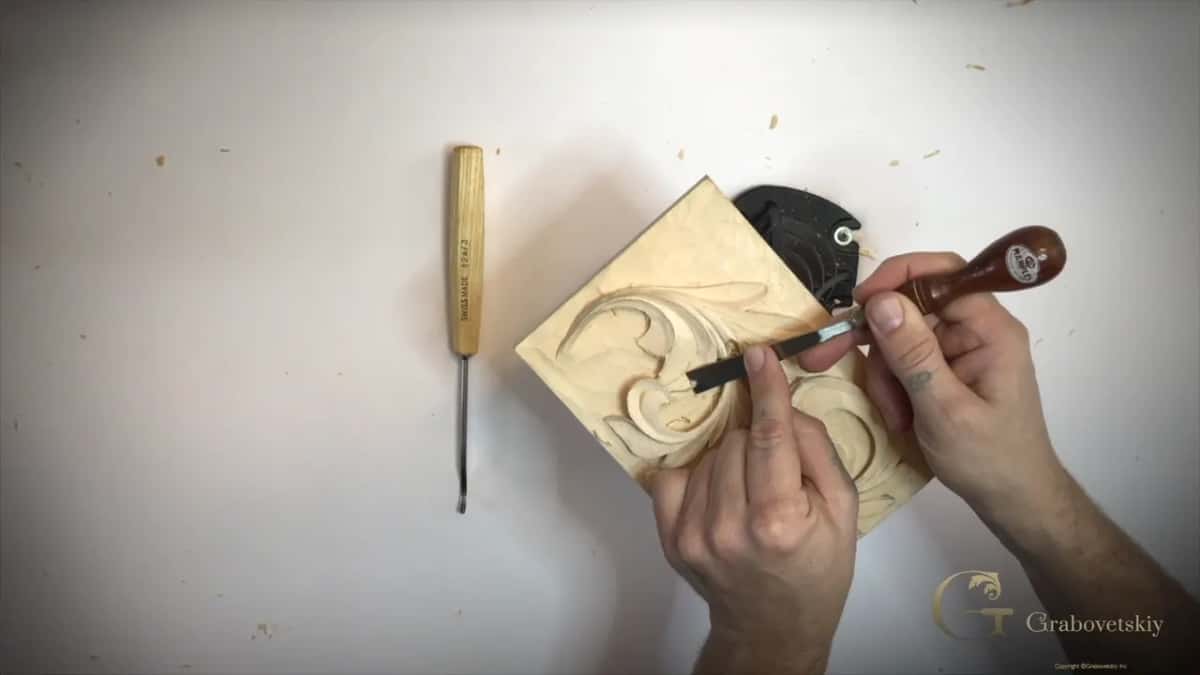
How big should each pass be?
Small. During the second part I took a number 3 by Marples and said the goal is not to take a lot of material at once. Just make micro cuts, and then it will look beautiful.
Early in part three I said to go without forcing, because your carving becomes weaker and weaker.
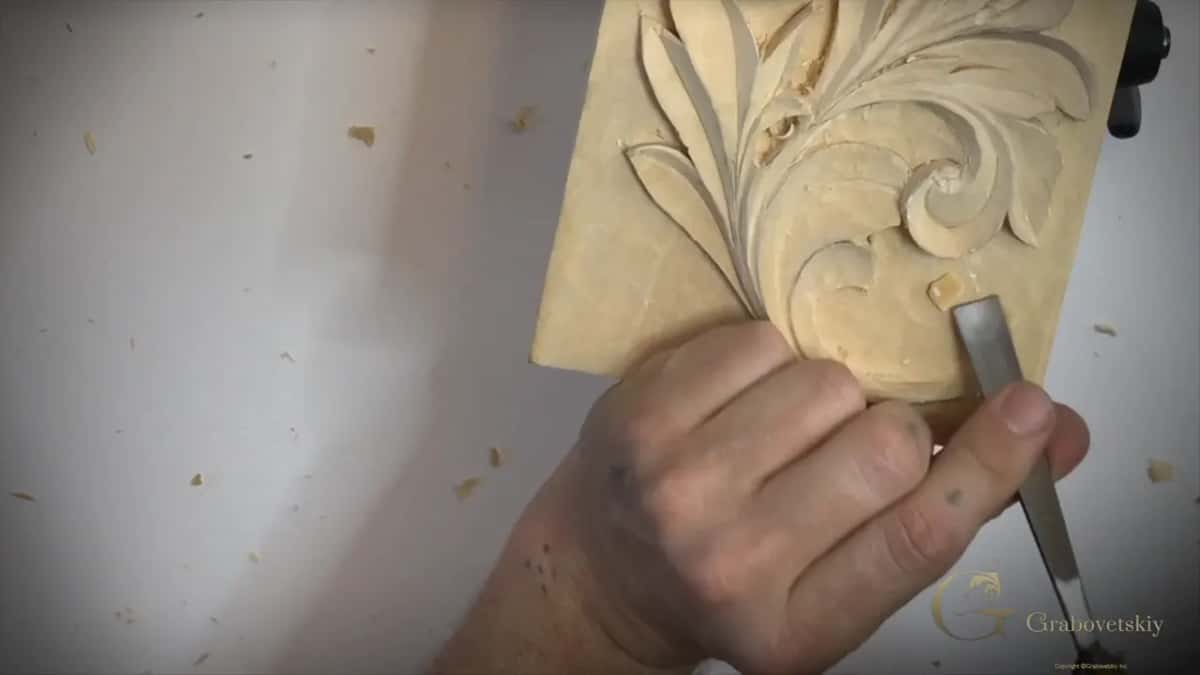
With my Hashemi flowers, I asked you to make sure you don't overdo it, especially in tiny spots like that, where it's easy to overdo it.
At the Grinling Gibbons class in Maine I reminded everyone about the dome underneath. If you just deduct too deep and you have a hole, then that's a problem. I should remind myself of that too.
And in lesson 12 of this course, with a 1 mm number 16 V tool, I said it once more. I'm deducting what I don't need, but you sometimes can deduct the wrong stuff, and you can't put it back.
What if a tight spot will not let you slice?
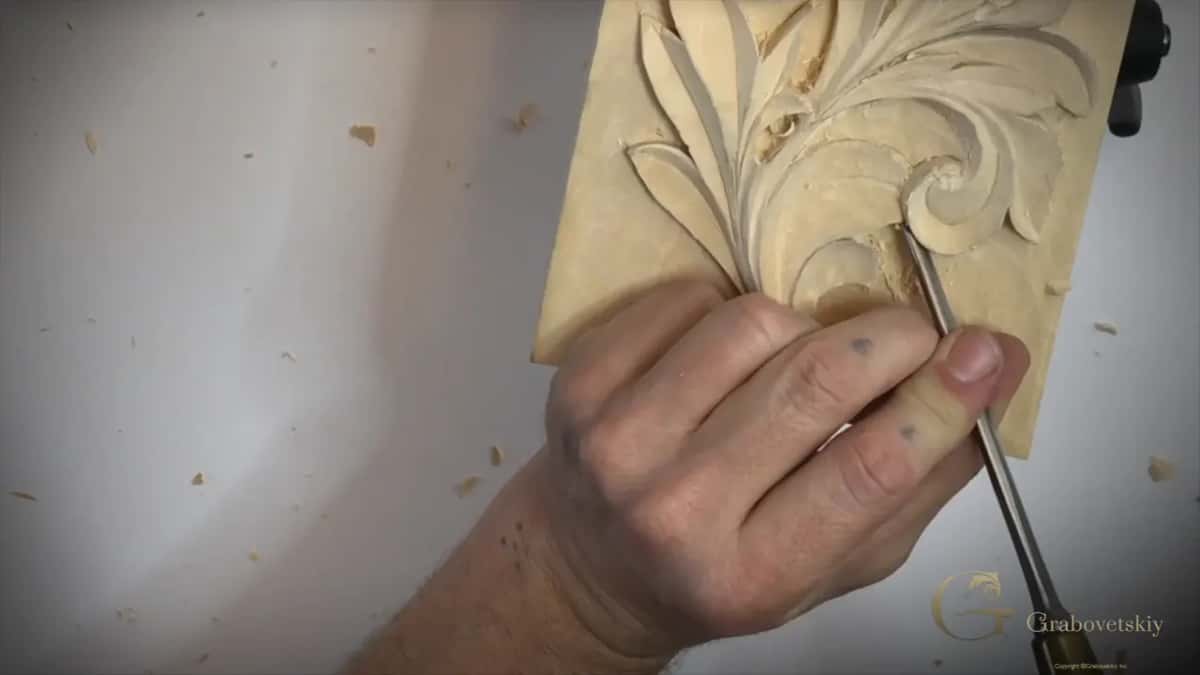
Then you push, and the edge had better be sharp. Part three also has a straight number 5 of about 3/8 of an inch (10 mm), and I worked around one area with it, piece by piece. It does not have to be a number 5, I said. It could be other tools, as long as it's small enough to get into an area like that.
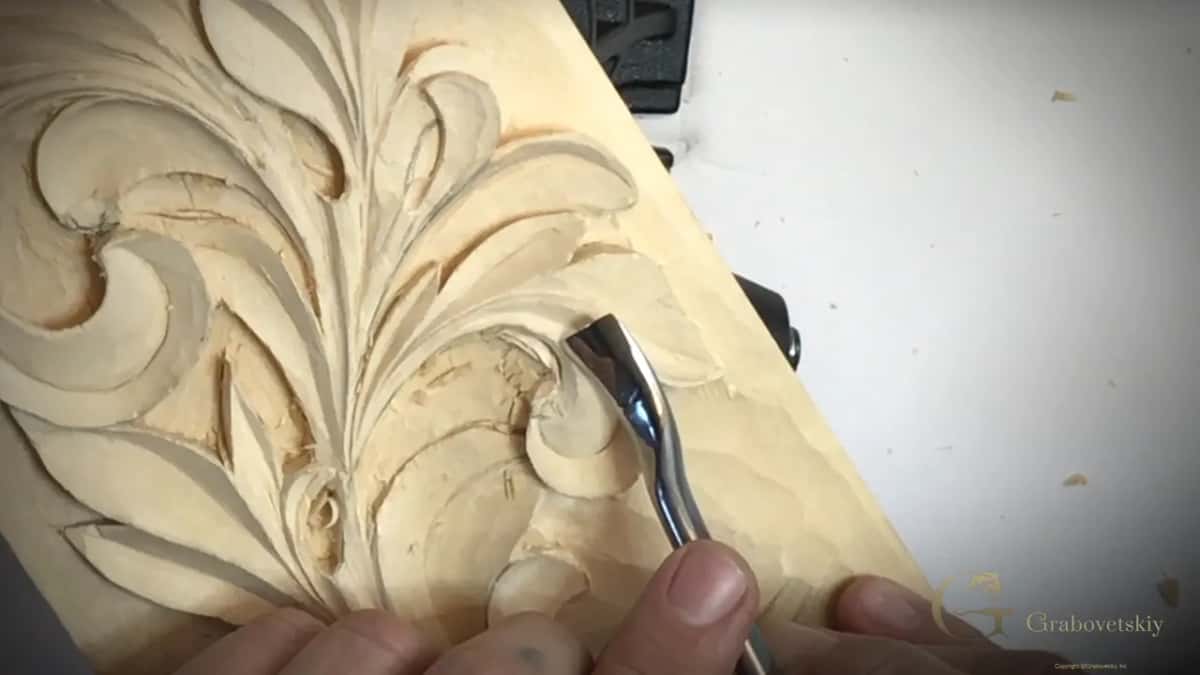
I'm just making slicing cuts there, as you can see. I'm not just pushing. Sometimes I do push also. I try to slice as much as I can, but to be honest with you, it's not always working like that, especially when you're working on complicated pieces. Sometimes you just have to force it and push it, and that's why you got your tools sharp.
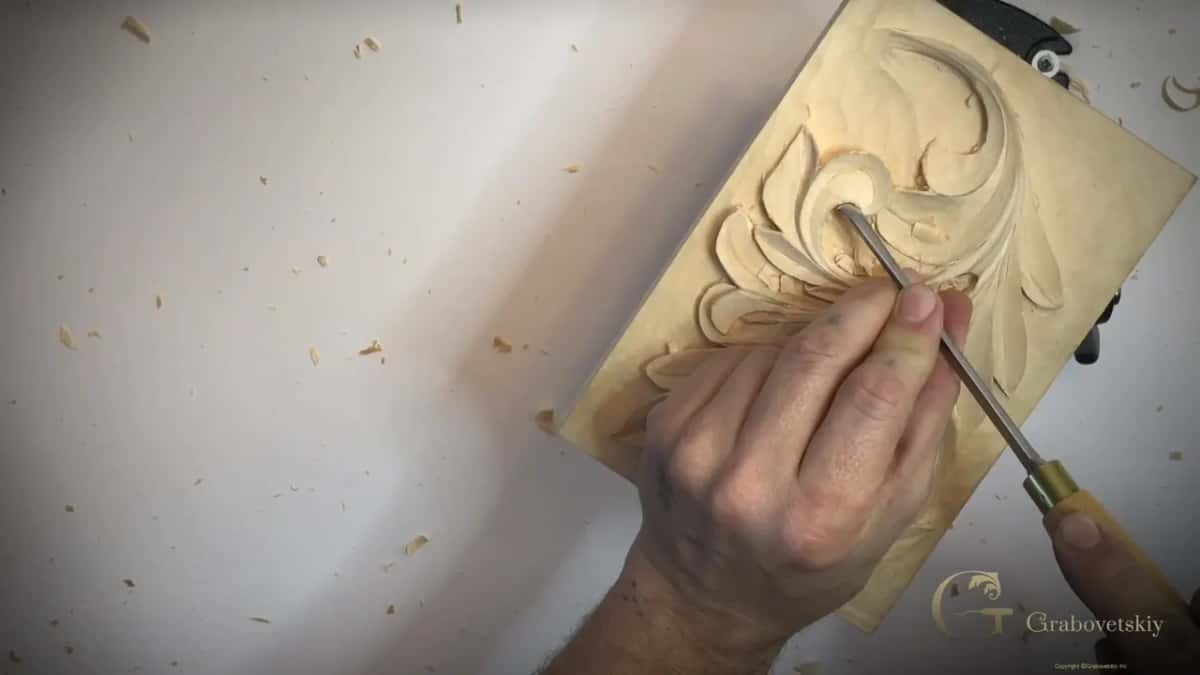
Why hone a new knife before you trust it?
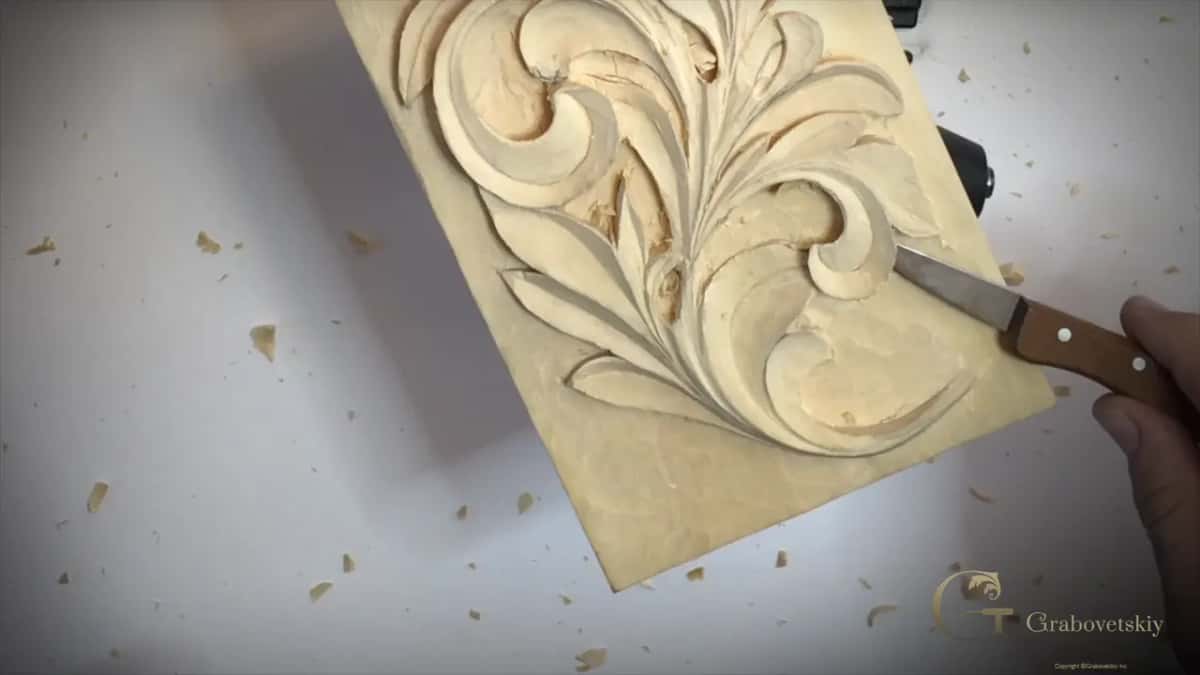
Out of the box, that number 12 knife is just not going to work as nice. It's one of my favorite knives, and on camera I said I know some of you already ordered that knife and still can't get a grip of it.
Well, first of all, you really do have to hone it. Mine is just like a mirror, and that's what your knife should look like. So resharpen and re-hone it to make it work for you. Sharpen it and make the right honing until it looks like a mirror, and you shouldn't have any problem. Absolutely no problem.
Sharpening has a whole course of its own on this site.
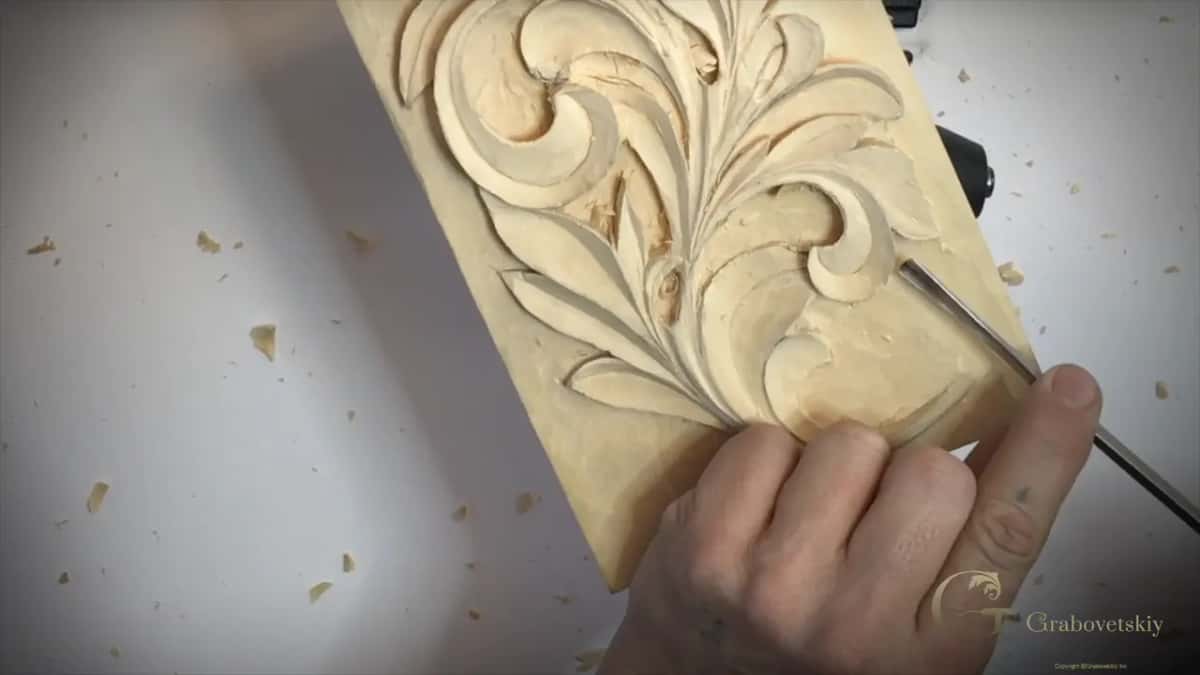
Is extreme undercutting a mistake?
Not to me, though it does break more easily. Back in part two I said I am on the more extreme side of undercutting. I know some of the wood carvers would not approve. They say I'm making my carving too weak and easy to break, and that's true. Absolutely true. It breaks easily.
My question is, why would you break it? Anything can break, even without extreme undercutting. It depends who's going to touch it, and how you're planning to use it.
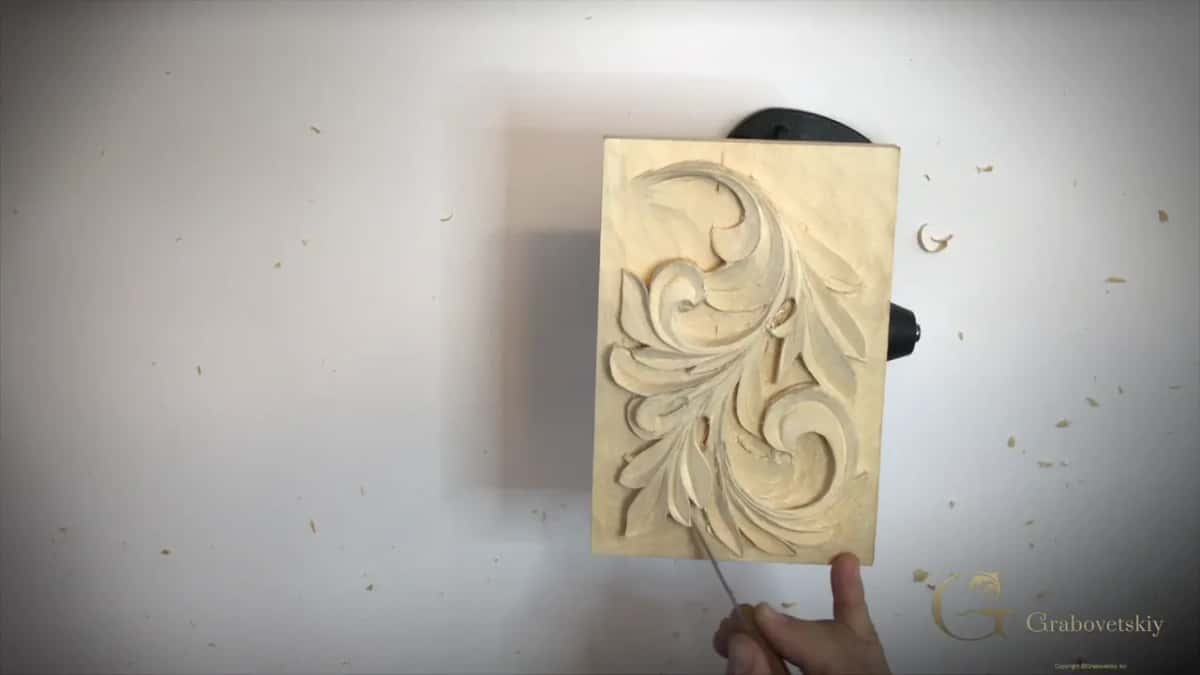
Most of the people, once you've done undercutting, are still going to look straight at the carving. They are not going to look underneath. The only person who knows what is underneath would be just you.
One section went right through the board in part four. You don't have to do that. I just like that extremism, I would say. I like when the light hits and you can see it actually go through. It just creates a beautiful thing.
Does flow matter in depth as well?
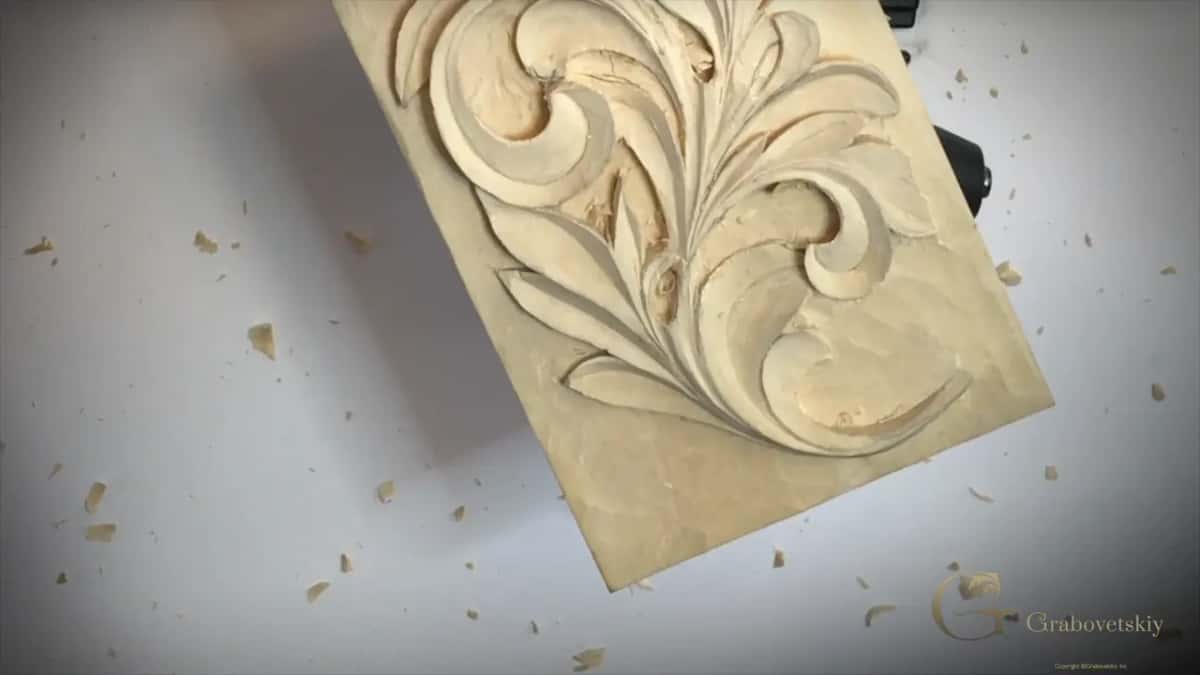
It does, and in the fourth part I stopped to fix a line the camera doesn't really show. It's not too visible in real life either. But the flow, I said, applies to more than the main form in this plane. It also applies in the 3D plane.
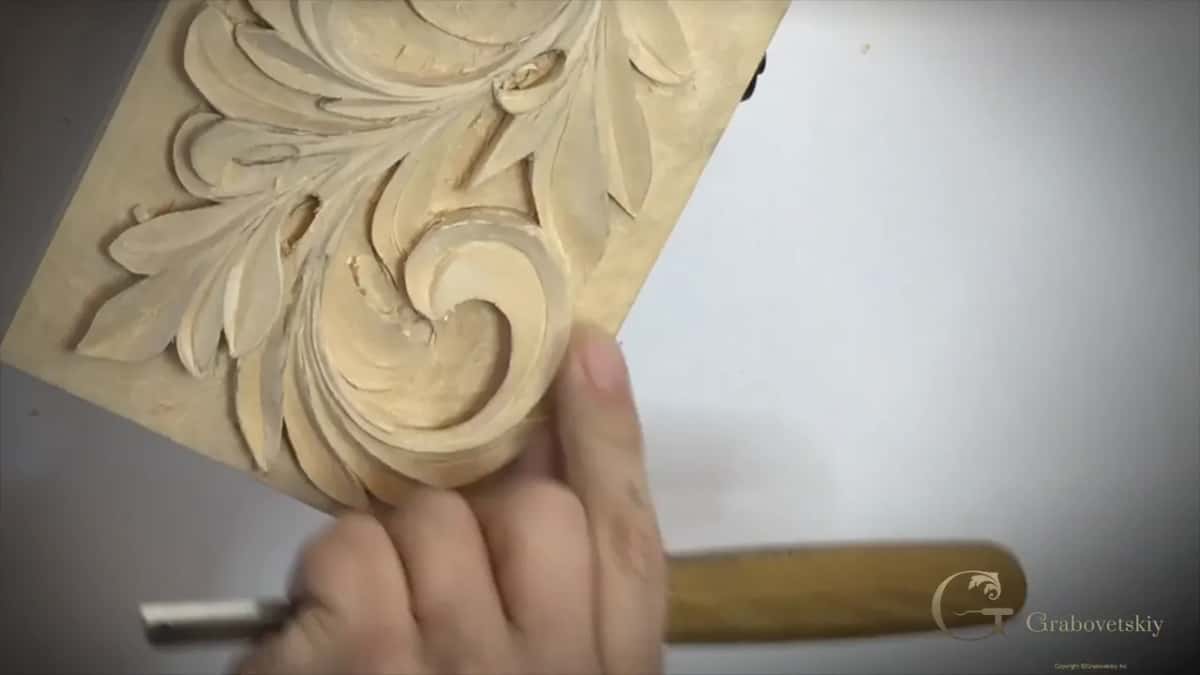
One line was not too even, somewhat wavy, and that's not good. With the number 3, slowly, I worked against the grain, which I'm not supposed to, but I had more control on the flow that way.
The section that was taken out is easy to see, which means there was not an even line, and now there is. Even that repair took wood away. The panel is lime wood, as I said in lesson 5, and I really love lime.
The tools I used in lesson 11
| Tool | What it did on this Greek leaf | My words |
|---|---|---|
| Pfeil V tool #15, 6 mm (1/4 in) | Laid on one side with a small mallet, and the shadow started forming | Just dig in |
| Half inch number 3, about 13 mm | Went deeper where nothing at all stood in its way | As deep as I wish |
| Smaller V tool #15, 3 mm (1/8 in) | Took what was left, made the separation lines, and made one mistake | I wasn't too careful |
| Number 12 carving knife | Took a section with just a knife, then angled in to undercut | One of my favorites |
| Back bent #25, 6 mm (1/4 in) | Went deep underneath before the waste was dug out or hooked | Dig it out |
| Marples number 3 | Small passes, not much material in any one go | Just make micro cuts |
| Tiny V tool #16, 1 mm | Removed what was left after I needed something smaller than the 3 mm | As deep as I want |
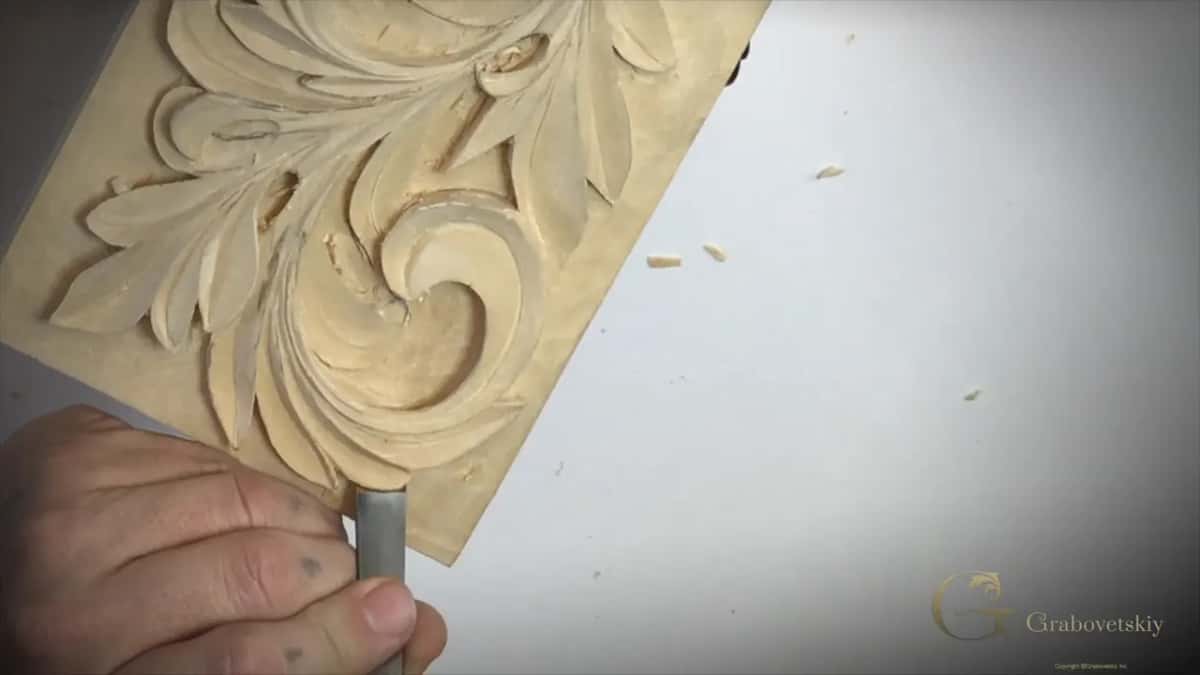
The card on screen for that first V tool reads Pfeil, 45 degrees.
Where lesson 11 leaves the panel
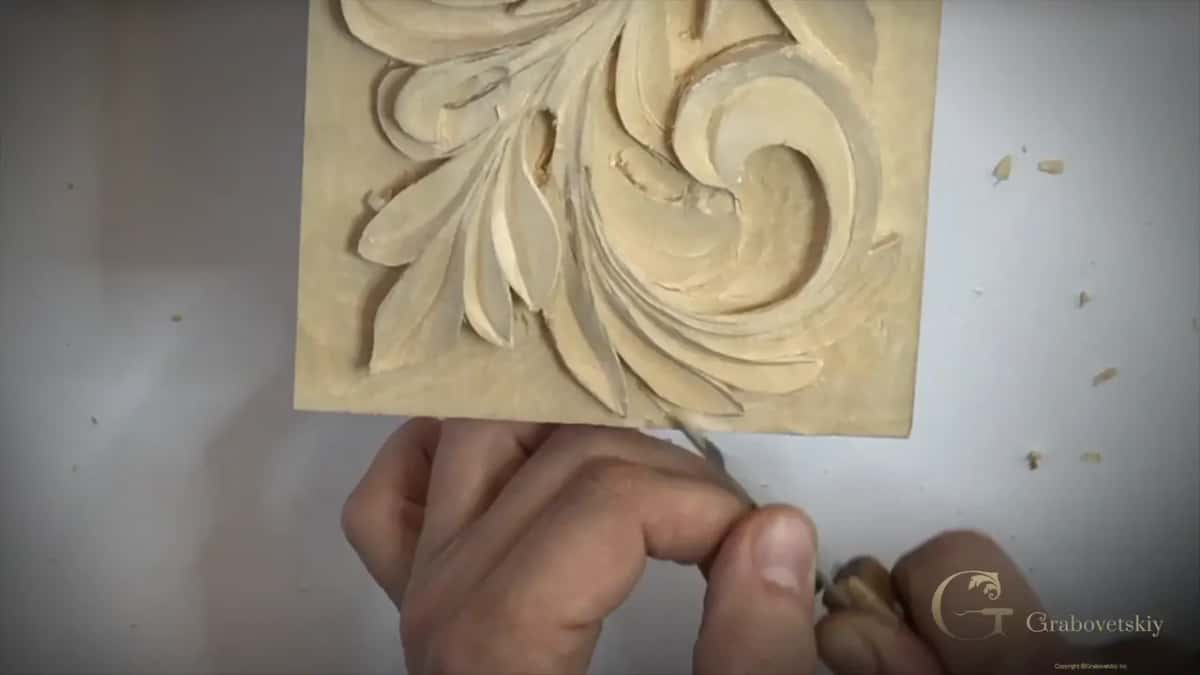
In the fourth part I said I do like what I see, and then moved on to undercut one more area. Lesson 12 goes on from there.
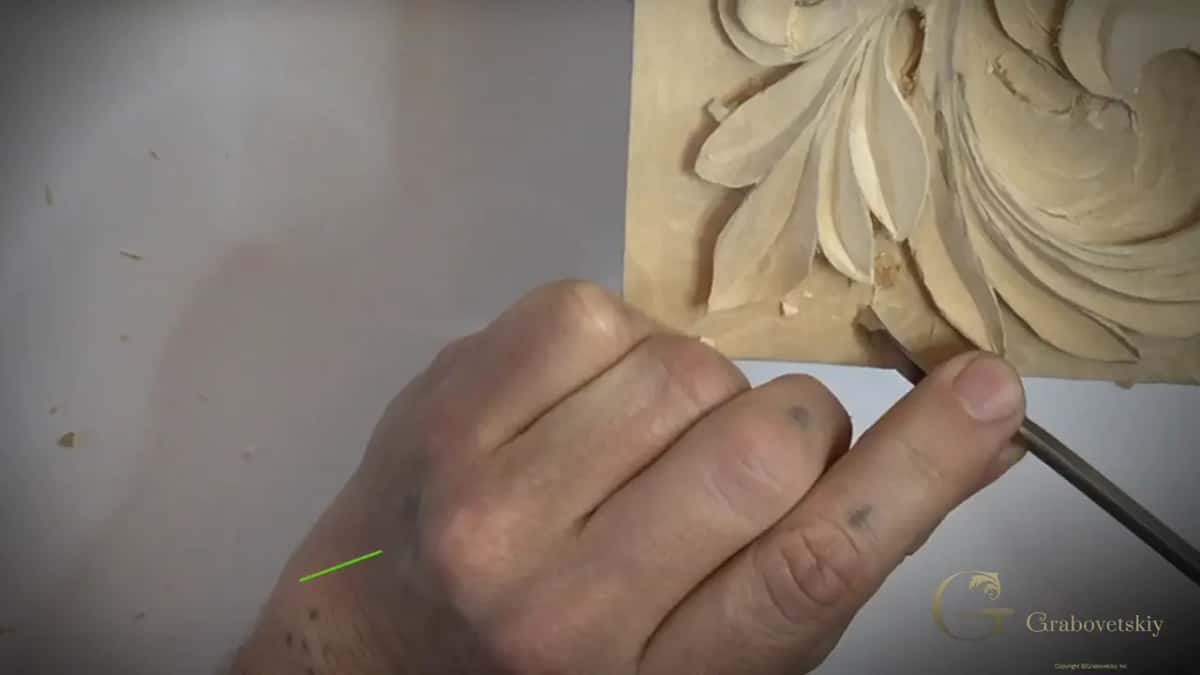
Can you take one small pass and stop? Would you look at it before the next one goes in? Then you can carve this leaf with me.
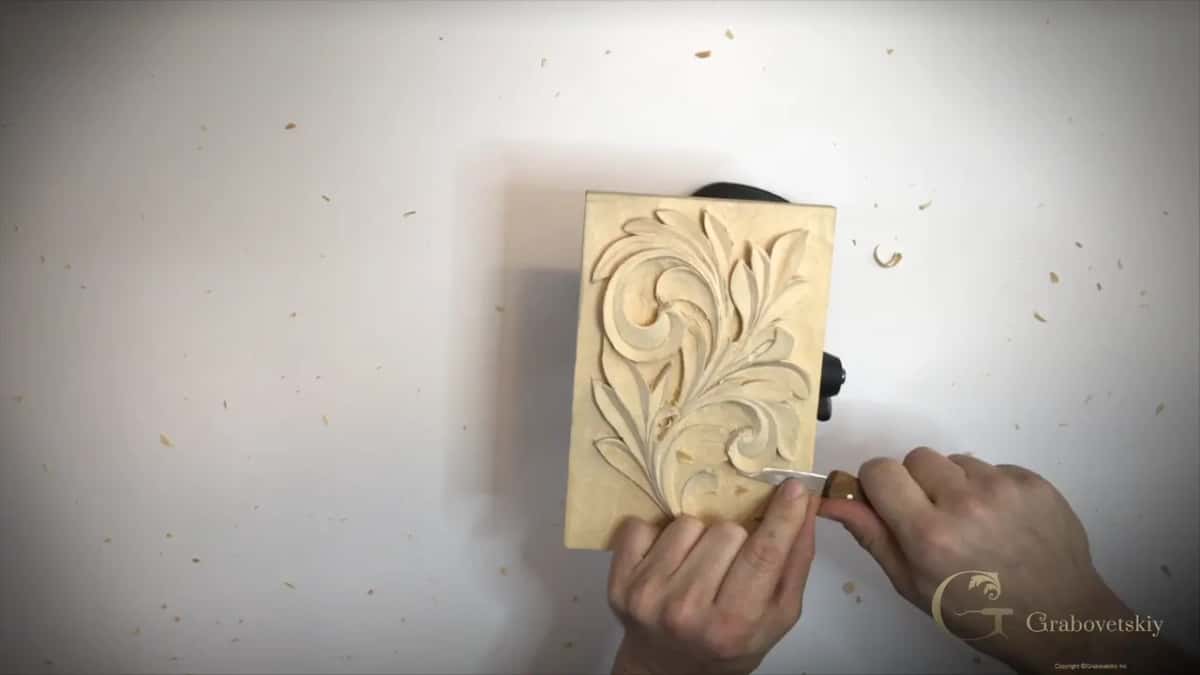
Every lesson of this Greek acanthus course is open with tuition, all four parts of this one included.
How it's done
- Decide first, then carve. Ask yourself if you really want that pass before the tool goes in.
- Look at the reference. Check it again before you go on. On a lily box I did it to stay clear of a mistake I couldn't fix later.
- Stay a little high on rough work. Keep about 1.6 mm (a 16th of an inch) from the rib. Come closer later.
- Take micro cuts. Never too much at once, and no forcing.
- Hone the knife first. Resharpen and re-hone it till it shines, and only then put it to the leaf.
- Lower a slip, then recut the line. Bring the spot down with a gouge and make the separation line again, as I did, first a number 3 and then the V tool again.
Frequently asked questions
Can you fix a slip with a gouge in wood carving?
Sometimes you can lower the spot. In lesson 11 I wasn't careful enough with my 3 mm V tool, so I brought that spot down with my number 3, then recut the separation line. Some mistakes become unfixable, though, which is why I go slowly, without forcing.
How much wood should stay above the background?
Enough to level things later. Near the end of this lesson I still had a sixteenth to an eighth of an inch above the main background. I leave extra at the beginning for the day I go deeper somewhere, so the whole ground can be made even.
Why model in clay before you carve wood?
Clay forgives. You add on, take out, add on, and a mistake is nothing to worry about. Wood is the other way round: hit the gouge a little harder with the mallet and you took a little too much. For a long time I carved without clay, made mistakes, and then started using it.
What to carve next