
Alexander Grabovetskiy, woodcarver, School of Woodcarving · Published 2020
Are diamond discs worth it for sharpening carving tools?
Quick answer: A diamond disc is the flat abrasive that replaced water stones on my machine, and for carving tools it earns its keep. Twelve dollars buys a Chinese one that I have never had to replace. What it will not do is beat plain sandpaper by enough to matter.
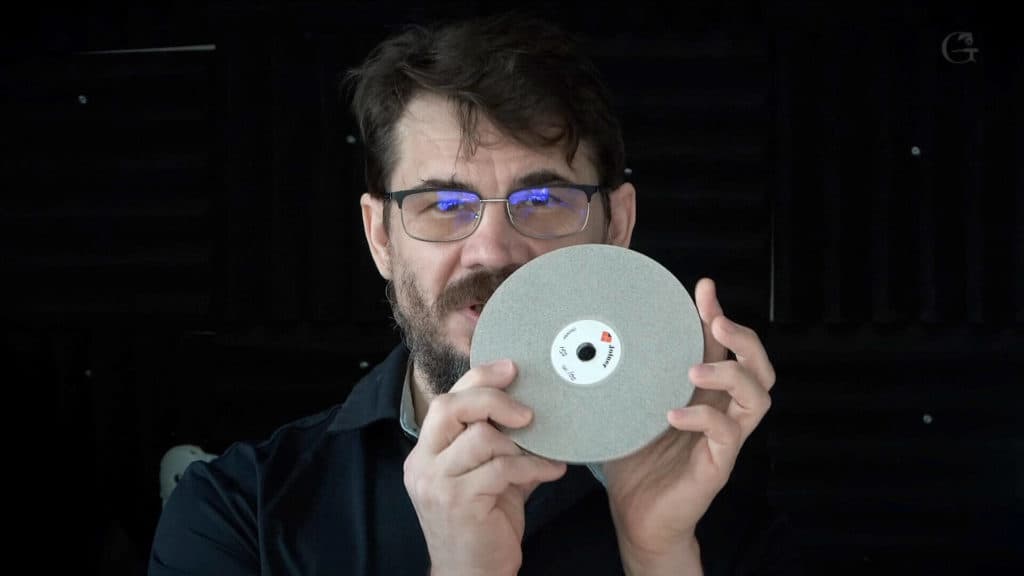
Buy the twelve dollar diamond disc before you buy anything else. Mine are Chinese, none has ever needed replacing, and each one puts a dead flat face on a bevel. That is the whole job. The three hundred dollar wheel beside them does it no better.
Have you been told you need an expensive stone? Did the price stop you? Is there a stone in your drawer you paid far too much for and hardly ever touch? Let me save you some money, because I have wasted a great deal of my own on exactly that shelf.
What follows is what sits on my bench, the price each piece cost me, and what I would buy a second time. By the end you will know where diamond earns the money, and where it does not, and the almost free alternative that reaches the same edge.
What decides whether the money is well spent
- Flatness, because a flat face is what leaves a flat bevel and a point that is not weak.
- Cost per grit, which here is twelve dollars against two hundred.
- How long the bonding holds before the grit gives up.
- Speed, since cutting 25 mm of fresh bevel by hand takes an afternoon you will not get back.
- Whether you need any of it, because plain sandpaper arrives at the same place.
What does a diamond disc do for a carving tool?
Flatness is the thing you are paying for. Sharpening on a stone gives me an absolutely flat bevel, and the point behind that edge is then not as weak. Brand names on the box change nothing about this.
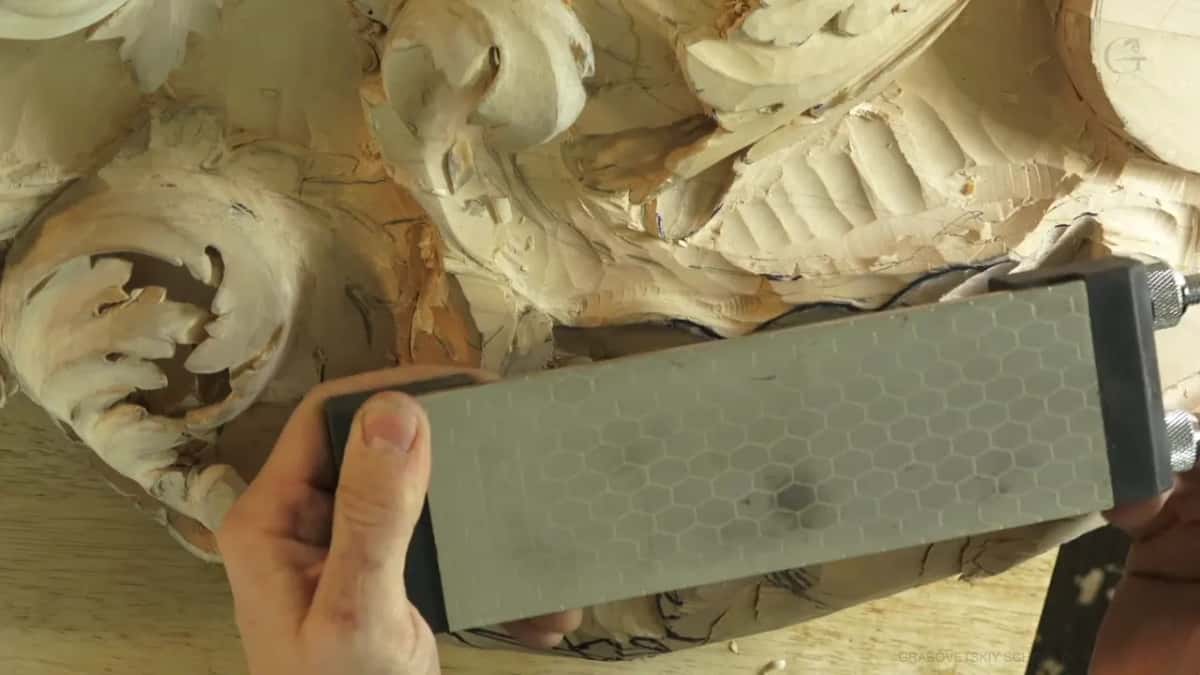
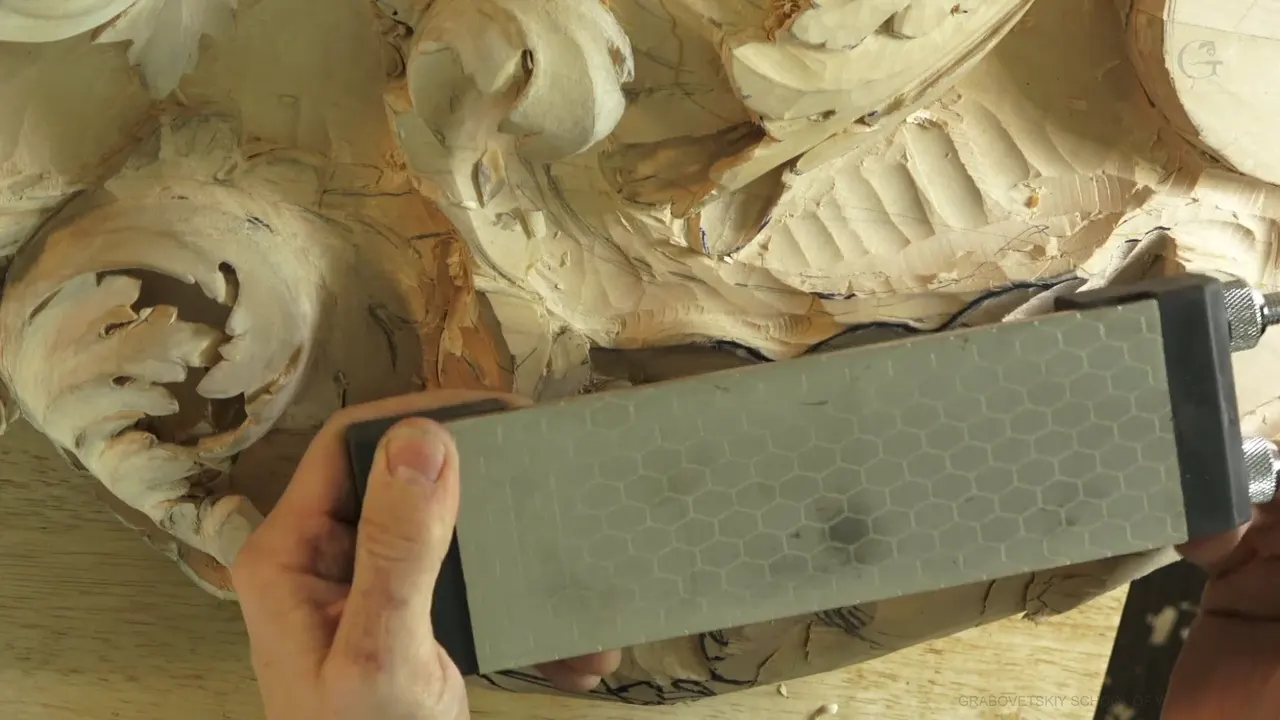
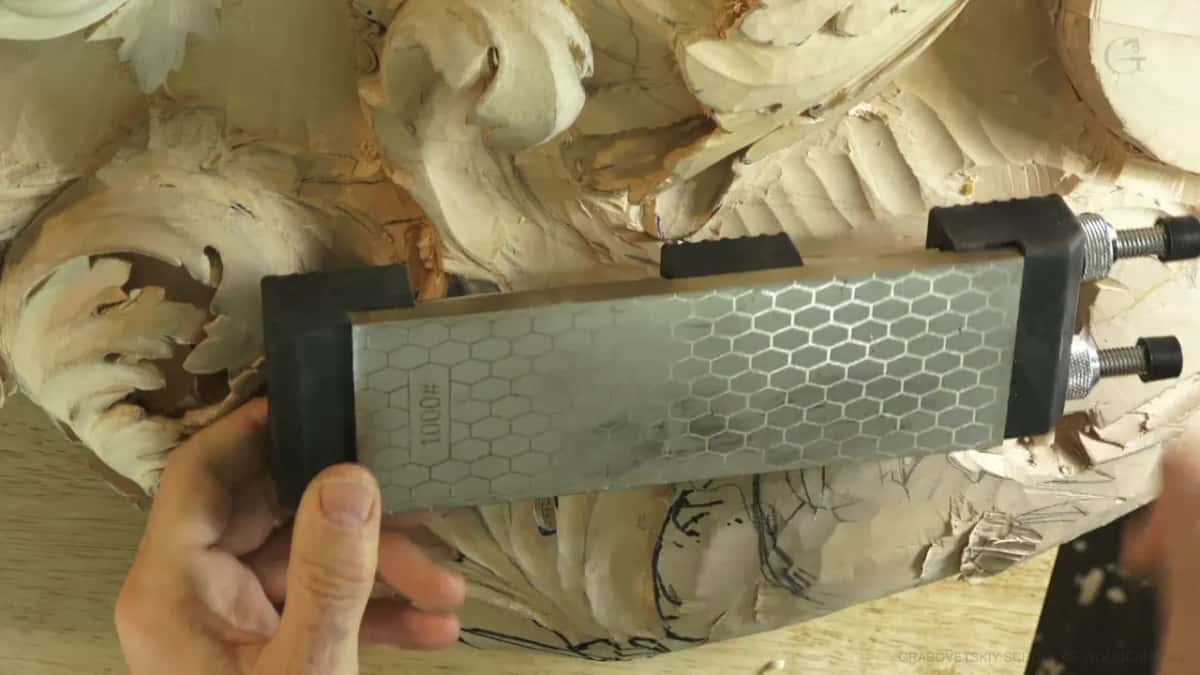
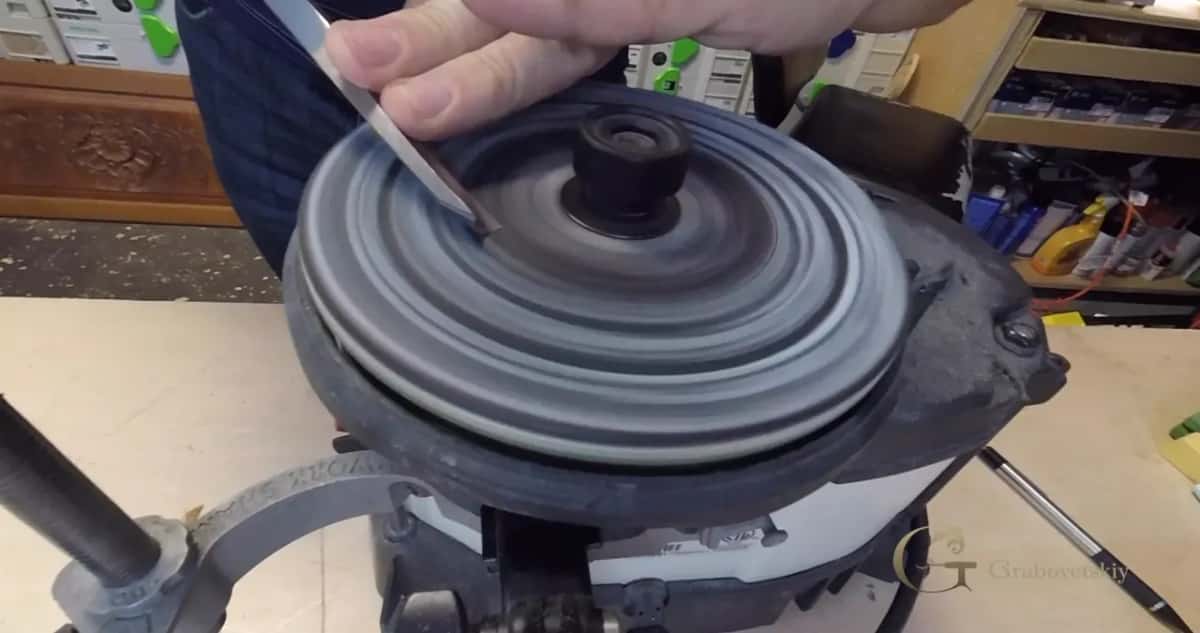
Look at the face of one. Little hexagons of bonding hold the grit, and that surface stays flat while it works. Ordinary stones dish in the middle instead, and once a stone has dished you are grinding a hollow without ever deciding to.
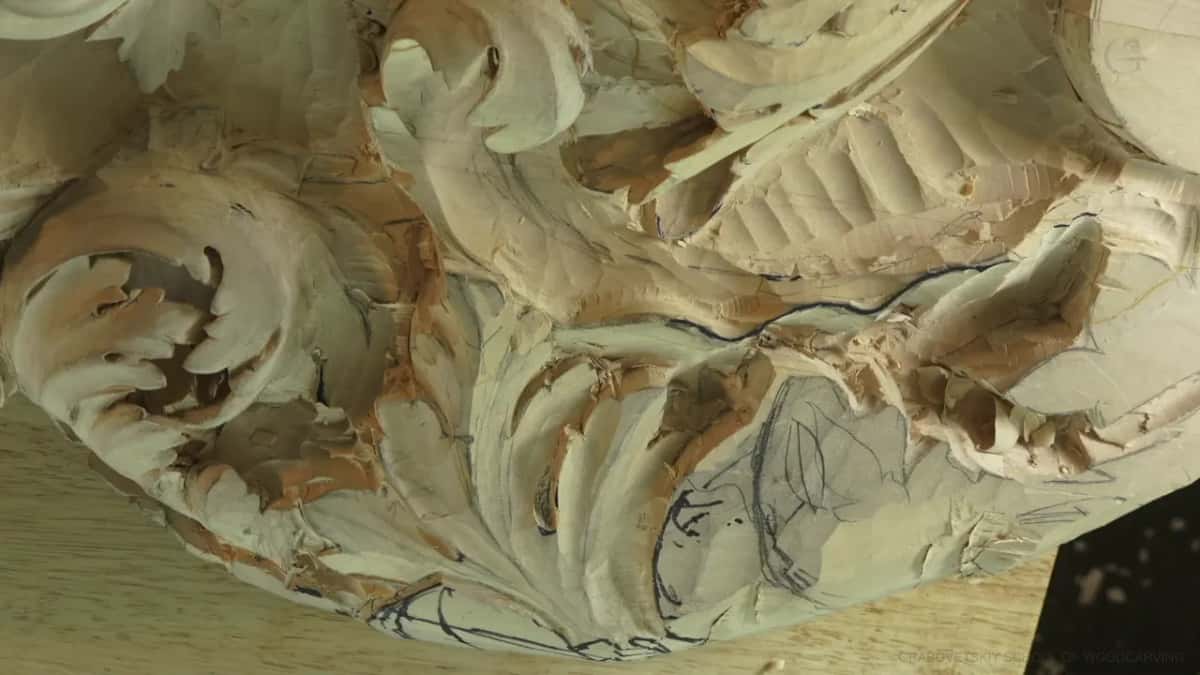
And this is what all of it is for. Not the bench. That acanthus.
What does a grinder do that a flat plate does not?
Curvature, and curvature is what breaks tools. Every grinder is wheel based, so the wheel leaves an arc in the face of your bevel. The steel right behind the edge then becomes really, really weak, and you can break a tool very easily indeed.
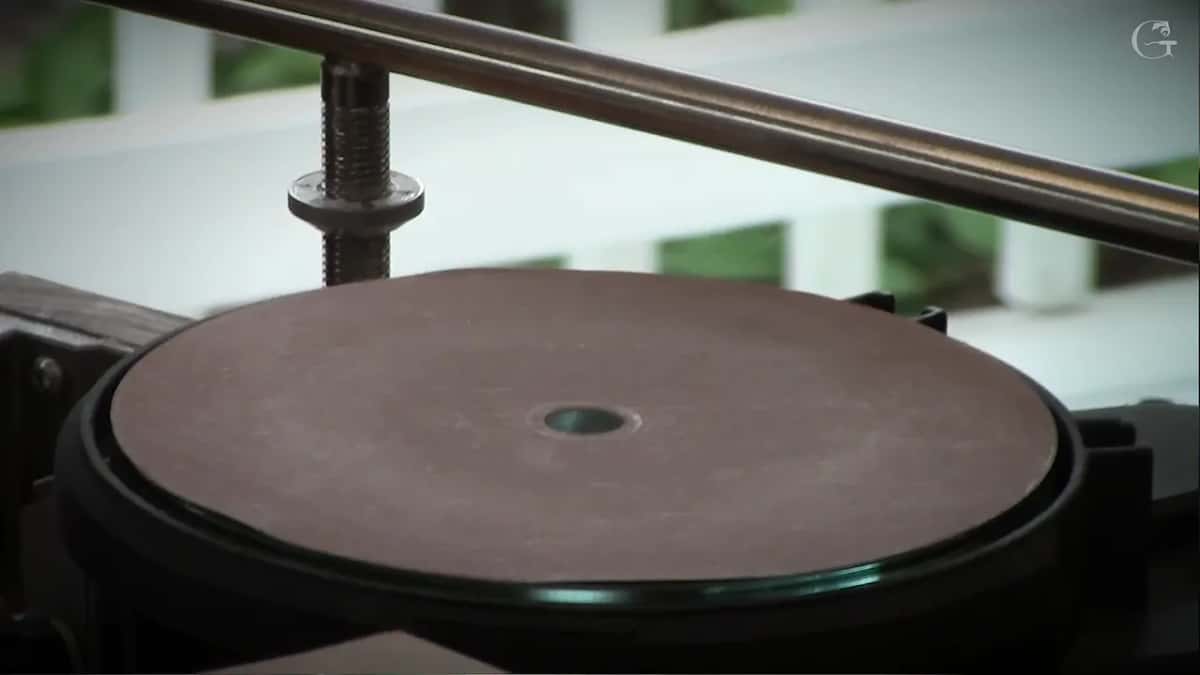
On a short high bevel, the kind turning tools carry, the arc does no harm at all. My bevels are long. Some run to 25 mm, near an inch, and over that distance the hollow eats the strength out of the tip. I own half a thousand gouges, chisels and veiners. Destroying them slowly was not a plan I could live with.
What did the stones actually cost me?
Eight hundred dollars, near enough, and I want that number said out loud. One good water stone on my shelf cost about two hundred, and it is a beautiful stone. Using four of them, which is what a full ladder needs, puts the pile somewhere around eight hundred dollars.
Then the work starts. Stones have to be trued to stay flat, they take up real space, and they want water on hand the whole time. My Tormek wanted feeding constantly for the same reason. Moisture in a shop, standing next to steel tools, is not an idea I ever liked.
| What you can buy | What it leaves you with once the money is gone | Cost |
|---|---|---|
| Cheap diamond disc | A flat face that has never once needed replacing here | About twelve dollars |
| Four good water stones | A full ladder of grits, plus truing, plus water, plus the space on your bench | Around eight hundred |
| CBN wheel | The hardest grit after diamond itself, and nothing you can see in the wood | Around three hundred |
| Plain sandpaper | The same result, and one sheet lasted me five years | Pennies |
Is a CBN wheel better?
Three hundred dollars, and it does not earn that. CBN wheels sit in my shop. They are the second hardest thing after diamond, and in all the years since, that difference has never once shown itself in the wood. Diamond does the job.
How many grits does a water wheel really give you?
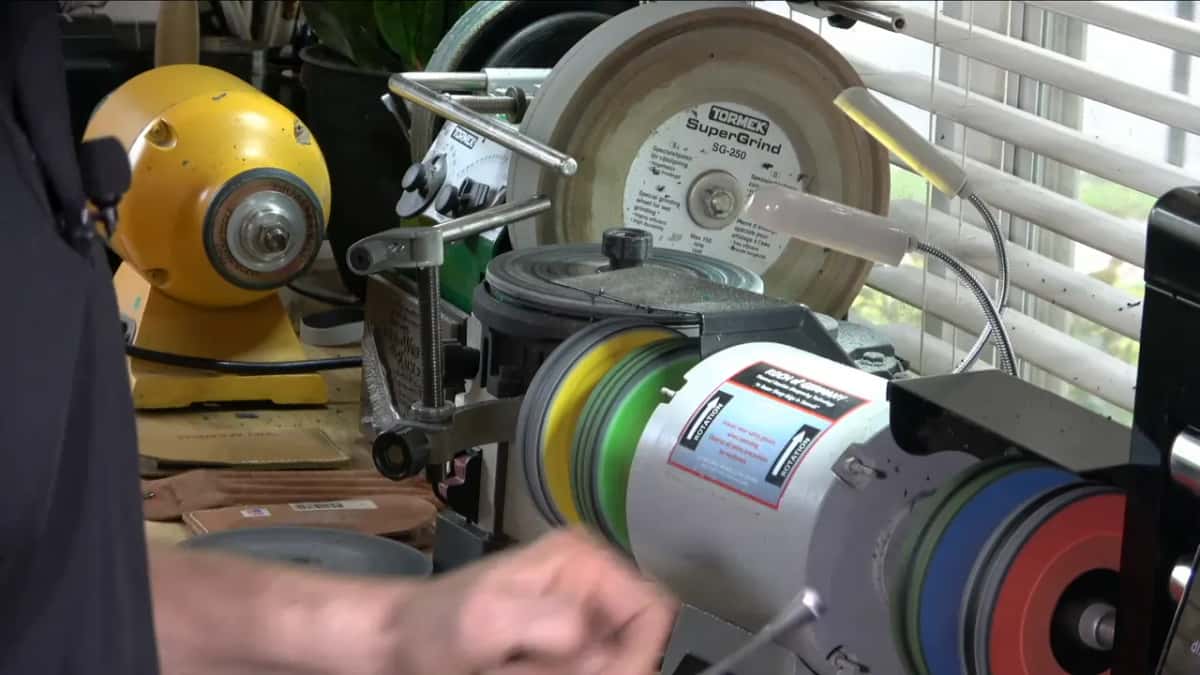
Two. A Tormek carries one wheel, and the truing stone that comes with it has a rough side and a fine side. So the whole machine offers really rough and semi fine, and nothing in between or beyond.
I still love the Tormek and I still own it. The jigs are the work of genius. The water part I gave up on years ago, and a diamond stone runs on it now.
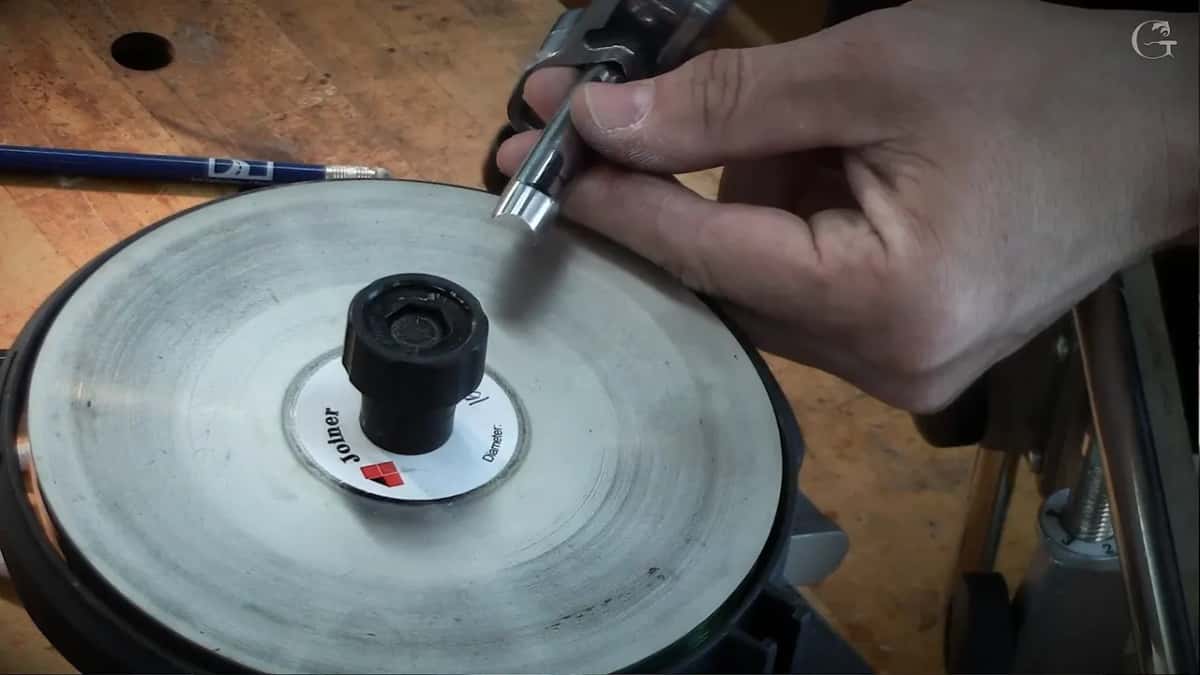
Do diamond discs wear out?
Mine last a long time. They probably do not last as long as they once did, because of the way the grit is glued on, and that is still Chinese work. Long enough, though. Replacing one is not something I ever plan for.
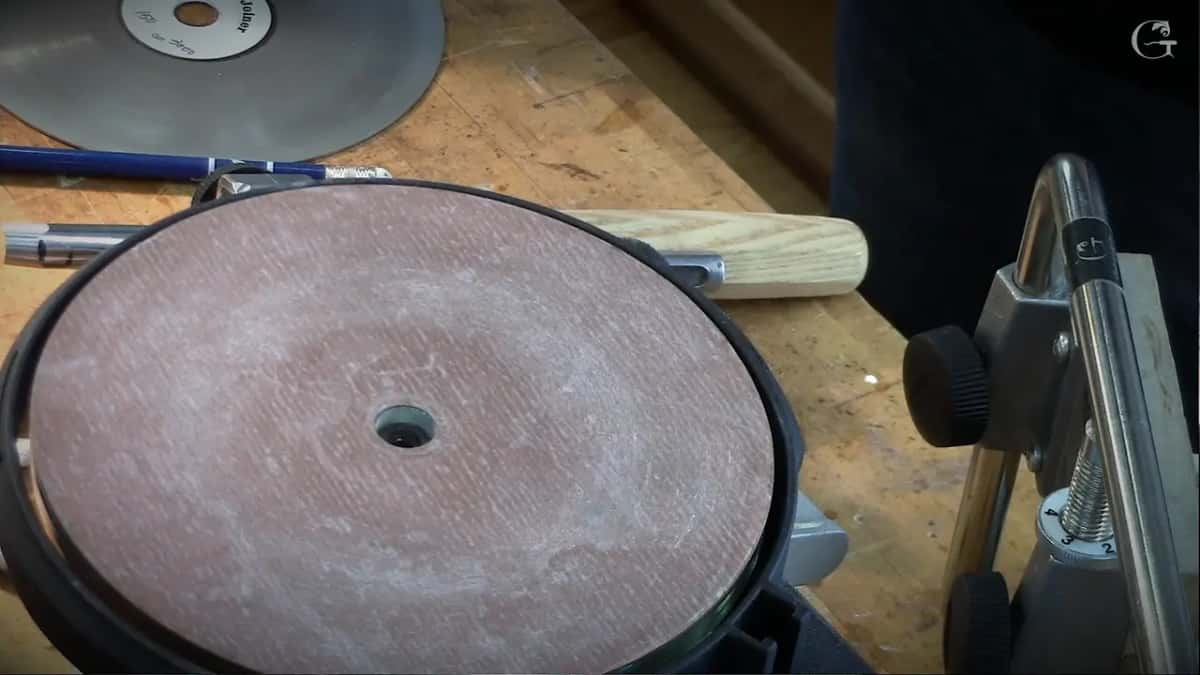
Twelve dollars each is what they cost, and I buy the cheap ones on purpose. Chinese, yes, and I have no problem with that, because they are cheap and they simply keep working. Everything I use sits on my Amazon shop page, and I make no money from any of it.
What grit do you actually need?
Fewer than any catalog wants to sell you. I climb 100, then 180 or 220, then 320, then 600, then 1000, and those five steps cover nearly everything that reaches my bench.
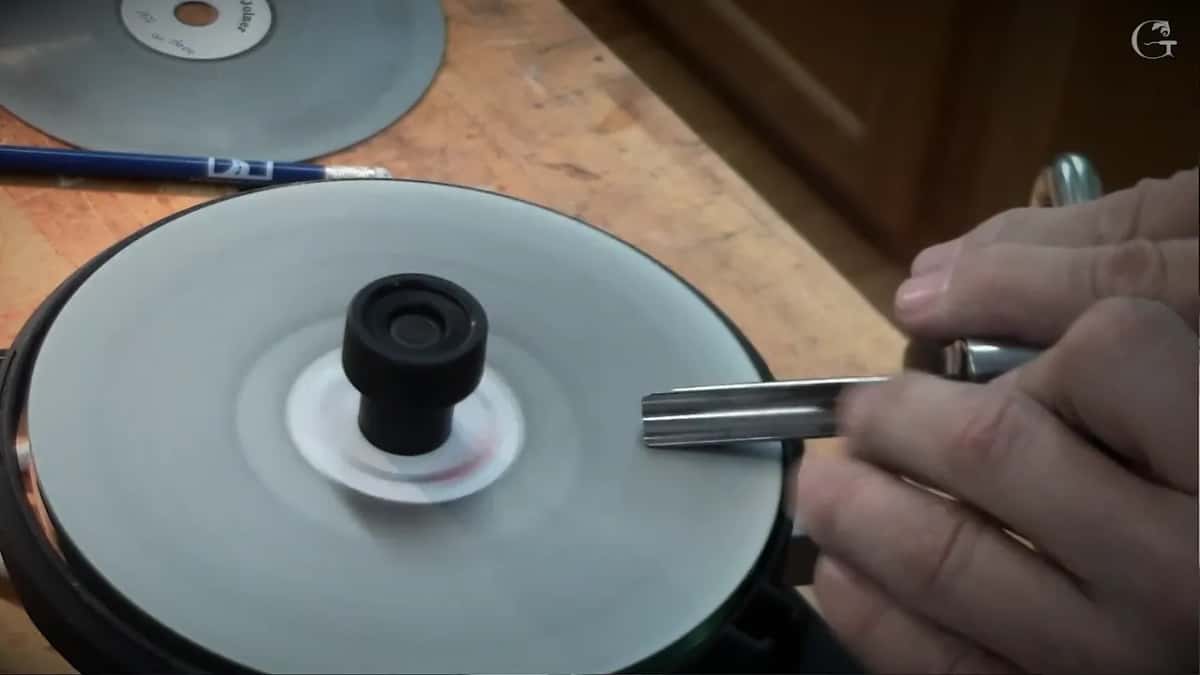
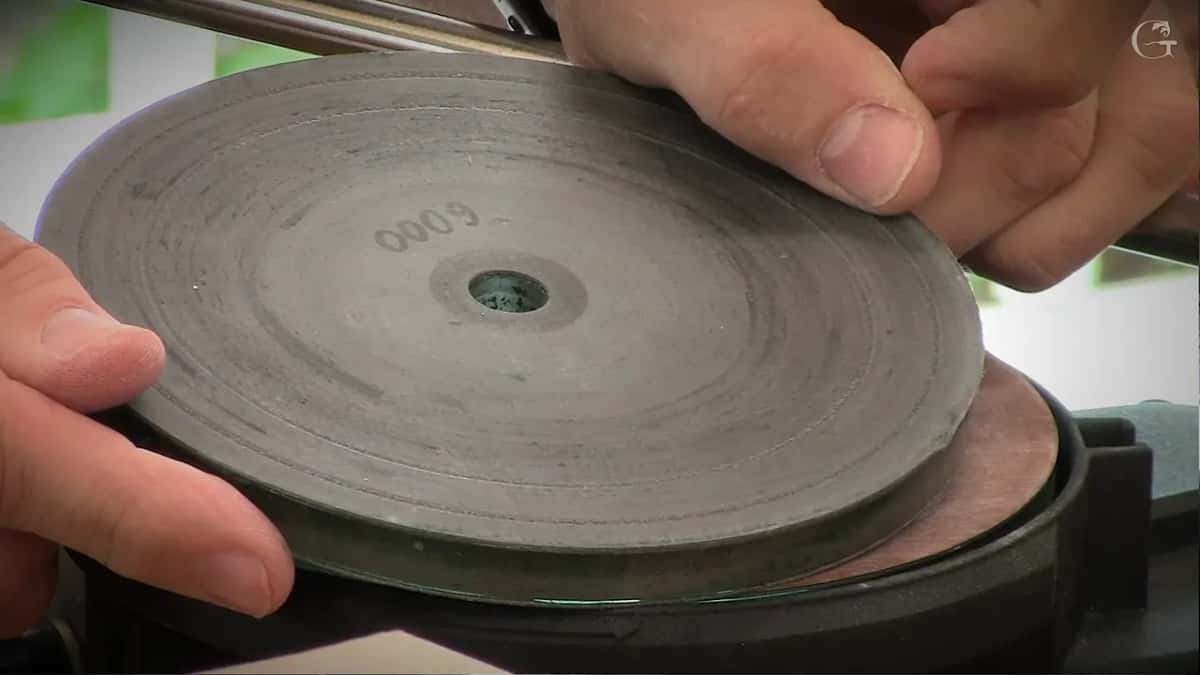
Above that I keep a 3000 diamond, and the glass wheels reach 3600 and 6000 when a bevel is going to a mirror. Pressure is where people go wrong, not grit. I do not lean on the disc at all. You do not have to.
So the honest shape of it is one cheap flat abrasive, a short ladder, and no costly stone anywhere in the story. The sharpening course walks it through tool by tool. Shall we carve?
Then why do I still reach for sandpaper?
Sandpaper gets the same result. Flat surface, used exactly as a stone, and that is how hand sharpening works anyway. You throw it away when it dulls, and you never buy a stone at all.
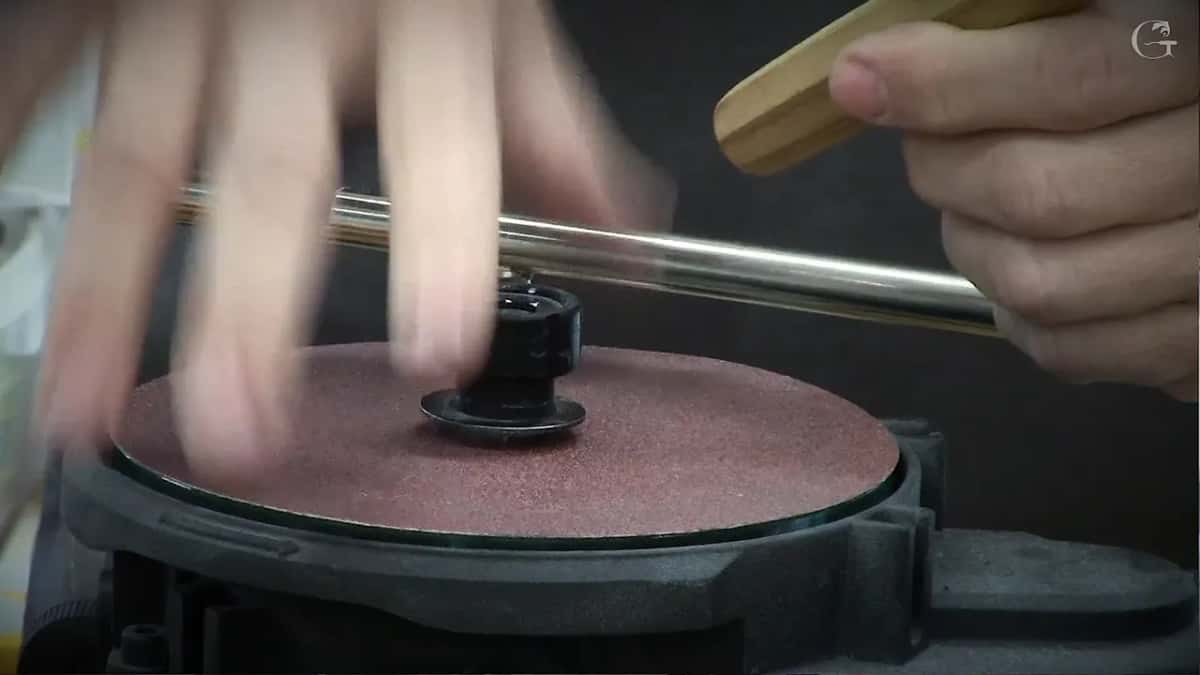
My 6000 grit sheet went five years before I changed it. Five years. Hold that beside two hundred dollars for one stone in one grit and the arithmetic stops being an argument.
I once put that to the test on camera. A set of inexpensive tools, straight out of the box, no reshaping at all. I carved a whole panel of grapes with them and did nothing to the edges but buff them a little on leather. They held. No stone touched those tools at any point in the project, and the grapes came out the way grapes are supposed to come out.
What is the cheapest diamond stone worth having?
Shaaf sent me one as a gift, and it surprised me. China made, double sided, 1000 grit on one face and 400 on the other, and it is not expensive at all. Flat and nice, and it works really great.
The part that tells you something about pricing in this trade comes next. Buy a different brand and the same money gets you the holder on its own, empty, with no stone in it. The Shaaf price includes both. For a hobbyist that is the cheapest semi professional answer I know of.
Their steel runs Rockwell C62, a little harder than Ashley Isles at 58 or 59, which is the hardness I actually prefer. Slightly softer steel takes an edge more kindly. Both carve.
Does stropping round the edge?
A little, it does, and a student of mine gave up stropping over exactly that. He was not wrong about the cause. Leather is soft, felt is softer, and no hand holds a blade perfectly still, so every pass rocks the steel a hair and the edge slowly turns over.
A rounded edge means resistance. You feel it the moment the tool tries to dig into the fibers, even when the thing is screaming sharp.
Here is what I do about it instead of stopping. Strop the outside, then flip the tool and strop the inside. Rounding both faces leaves the edge far closer to where it started, and what resistance remains is small enough to ignore. I strop daily and I have done for years.
Look at old tools on any second hand table and every one of them is rounded over. Nobody did that on purpose. Hand sharpening is simply limited, and jigs that fix it take longer than I am willing to spend, because carving is my living and time is money.
Which leather, and which side of it?
Any leather at all will do. A chunk from a leather supply works, so does an offcut, and so does an old belt out of a wardrobe. You can find that anywhere in the world, which matters, because not everyone reading this can buy an expensive stropper.
Some woodworkers glue two or three pieces onto plywood and charge each with a different paste. Sensible enough for a straight chisel. A gouge has a sweep, though, and a board only ever reaches the outside of it, so I leave my leather loose and fold it to get at the inside.
Pick your side deliberately. The rough face takes paste far better, and being softer it also rounds more. The shiny face holds less and rounds less. Neither is wrong once you know which one you are holding.
What about diamond paste?
Paste is the other half, and it is the half most people skip. Two live on my bench. A green one that cuts a little harder, and a fine diamond paste beside it. Neither is cheap, and both last forever.
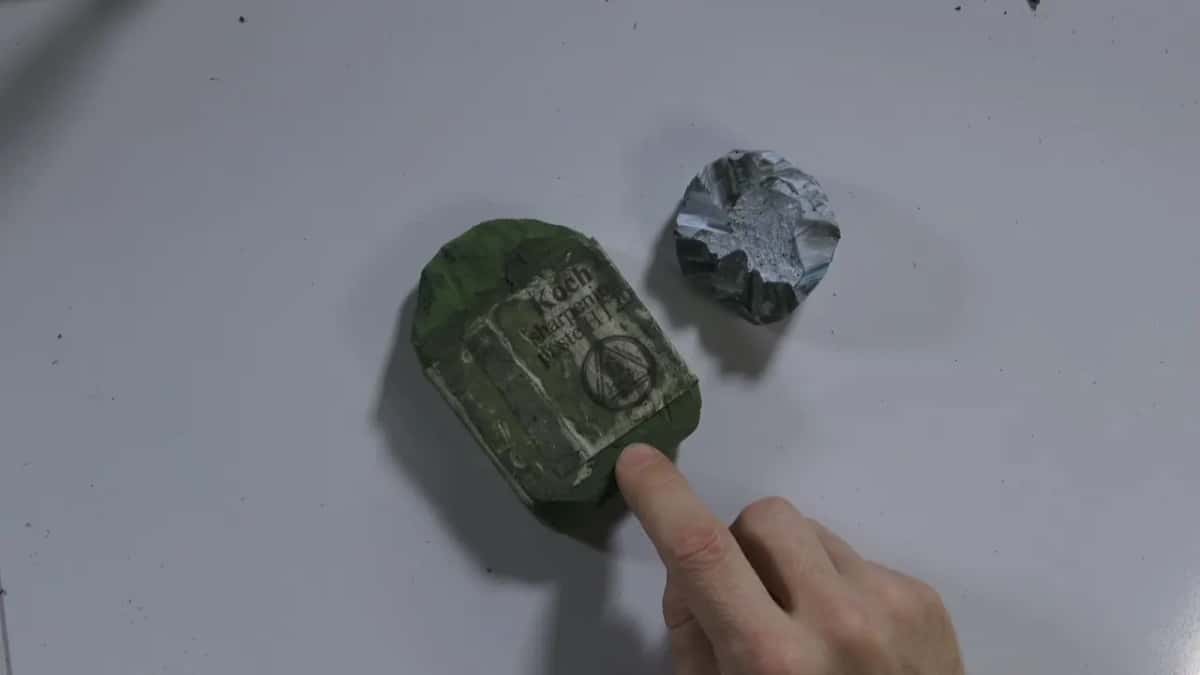
A favorite of mine comes from Ukraine, made by BeaverCraft, and it quietly pushed the others aside.
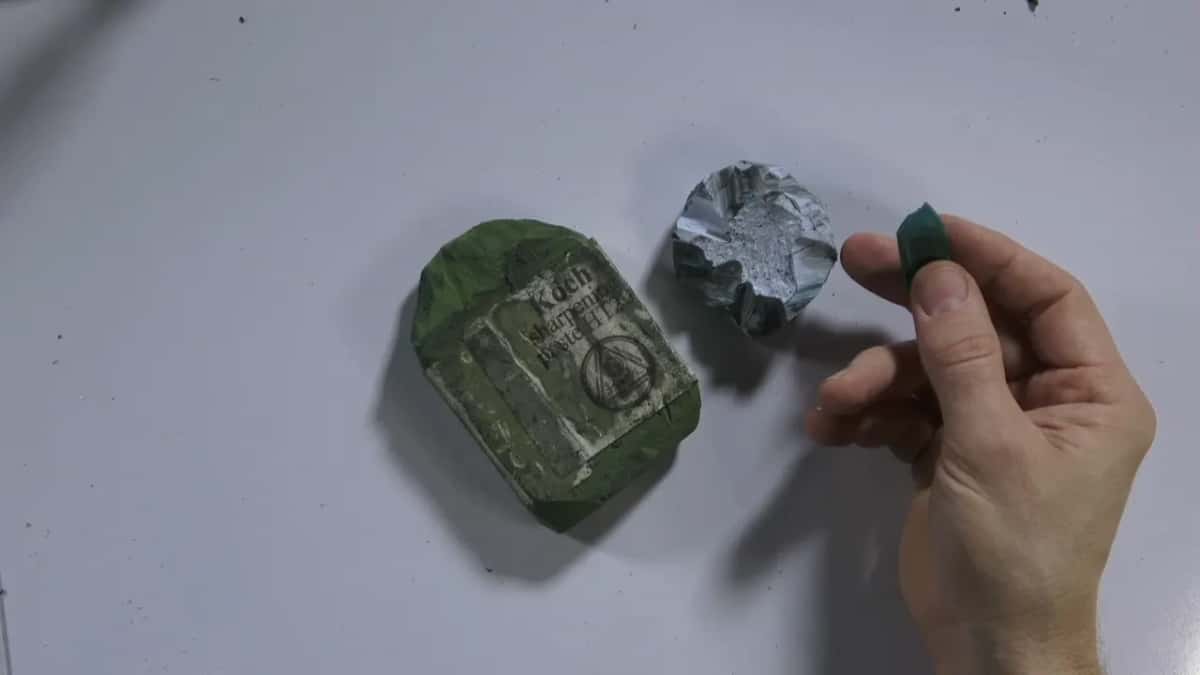
Koch make the two I keep coming back to. Dark green is the most aggressive of them, light green a step gentler, and the blue is really, really super fine. That blue is hard as a rock, so charging leather with it barely works at all unless you rub it on the back side first.
The red wheel gets charged with the blue, and together they give a super sharp edge. Super sharp.
One more reason I hold on to that blue bar. Used on a machine it actually cools the tool down instead of heating it. Flexcut sell yellow and white and several others, and they all work, yet Koch throws far less mess around a shop, which matters once you hone with a motor rather than by hand.
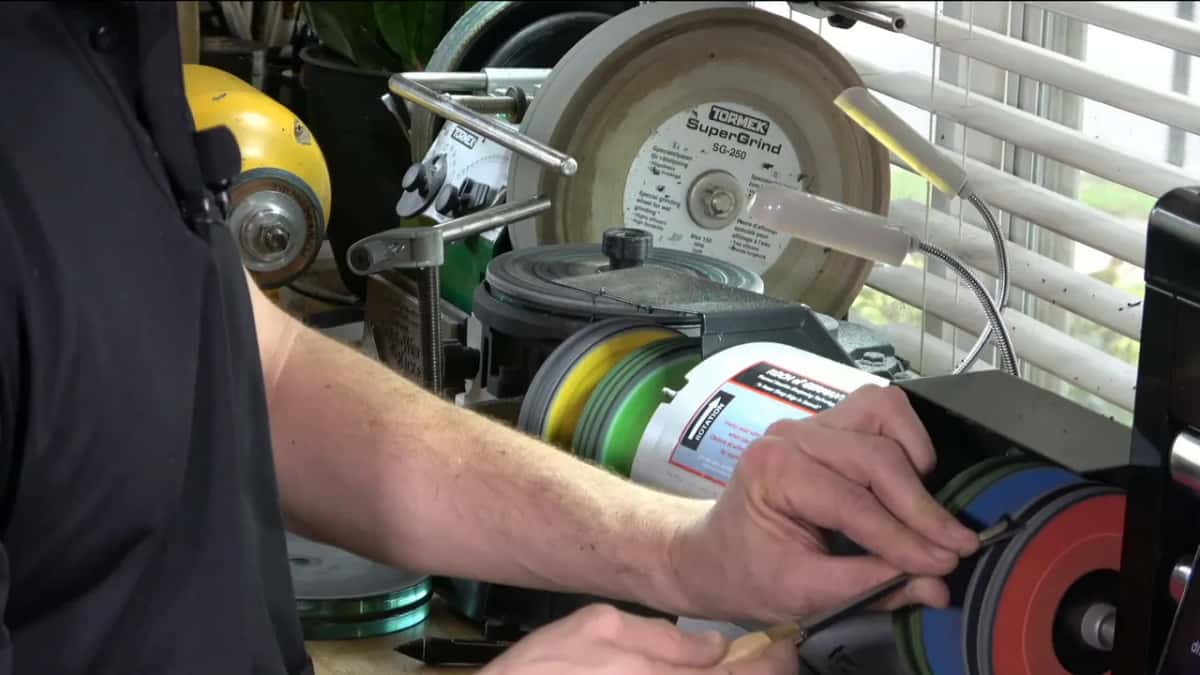
Watch the strop as you work and you will see it turn black. Metal is coming off. Paste is not a polish whatever the packet claims, it removes material, and the stropping lesson shows how much.
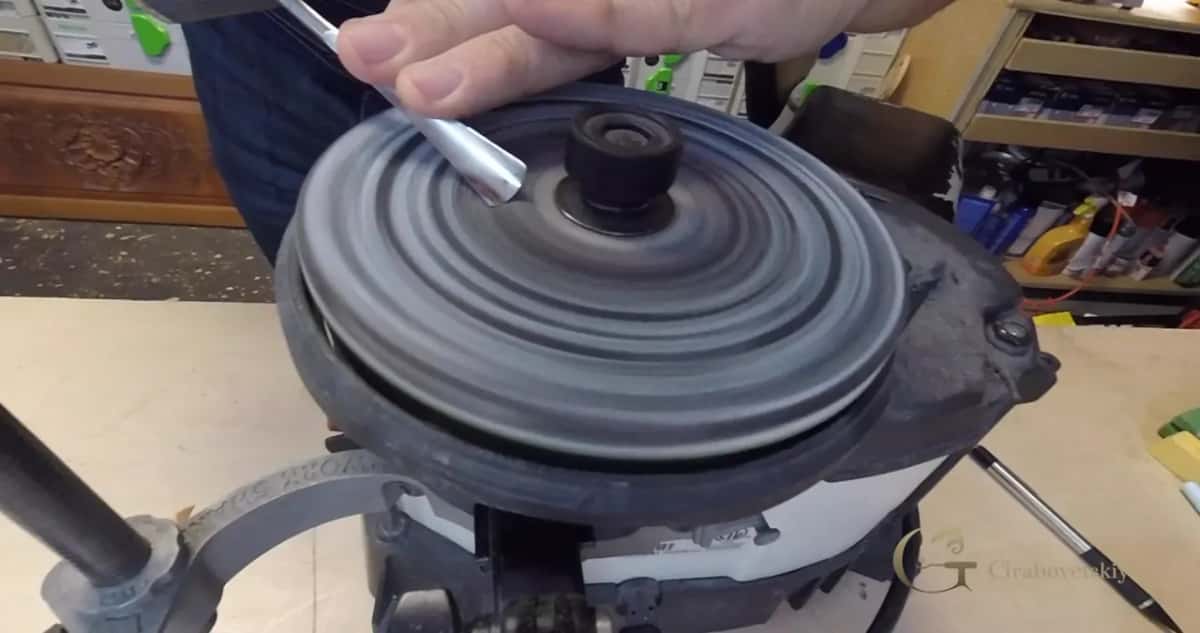
Every scratch the discs leave behind goes at this stage. Nothing else in the shop does that job as cleanly, and honing on felt is where it finishes.
What if you will not spend anything at all?
Cut your own wheels. MDF in 10 mm stock, scrolled out into discs and stacked on the same screw. Glass wheels run about twenty dollars and even that is avoidable.
Walk into Home Depot or Lowe's, buy six inch sandpaper, stick it down, and you have saved a very large amount of money for an edge that nobody could tell from mine. I once set myself the exercise of pretending I had spent everything on tools and had nothing at all left over. Stropping alone carried me all the way through that exercise without a single stone.
So where should your money go?
Into steel and into wood, not into stones. The spending was never the thing that made my tools sharp. A flat face, five grits and paste on leather did that, and the whole lot together costs less than one boutique stone in one grit.
There was a time when I carved with one knife and one gouge. That was all I had, and I carved anyway. You do not need a wall of tools to begin, though professional work does eventually ask for more than one, because a single gouge will never reach down inside a deep cavity and make the movement live.
Small tools go the same way on micro tools. The straight gouge and large gouge lessons take the ladder slowly, the V-tool has its own along with the notch that arrives on so many of them, and a spoon gouge, a back bent and a fingernail gouge each want a slightly different approach. The bar and jig holds every one of them at whatever angle you chose.
How it's done
- Start with one cheap disc. A twelve dollar diamond disc is the first thing to own. Flat face, long life, and nothing fragile about it.
- Leave the CBN wheel alone. Paying three hundred a wheel buys a grit second only to diamond, and no difference you will ever see in wood.
- Set a short ladder. Open at 100, move to 220, then 320, then 600, and finish at 1000. That ladder handles nearly everything.
- Ease off the pressure. Let the abrasive do the cutting on its own. Leaning on the disc burns the very edge you are trying to build.
- Go finer only for a mirror. A 3000 diamond, then glass at 3600 and 6000. Past that you are polishing for your own pleasure.
- Charge the wheel with paste. Blue on the red wheel, the fine diamond one. Green cuts a little harder when the work asks for it.
- Watch the leather go black. The black is metal, leaving the bevel and staining the hide. Paste removes material rather than simply making things shine.
- Spend nothing if money is tight. MDF cut from 10 mm stock, six inch sandpaper from the hardware store, and leather offcuts asked for free.
Frequently asked questions
Are cheap diamond discs any good?
Mine cost twelve dollars each and have never needed replacing. Cheaper bonding means they will not outlive the ones sold twenty years ago, yet for carving work they hold up perfectly well.
Should I buy CBN instead of diamond?
At three hundred a wheel you are paying a great deal for a grit second only to diamond. Mine sit on a shelf while I keep reaching past them for diamond, because the finished bevel looks the same either way.
How much do good water stones really cost?
One beautiful stone on my shelf came to two hundred dollars, and a working ladder needs about four of them. Add truing, water and bench space, and you are near eight hundred before you carve anything.
What to carve next