

Alexander Grabovetskiy, woodcarver, School of Woodcarving · Published 2022
Why does the order of cuts matter on a tiny carved flower?
Quick answer: Sequence decides everything here. The middle gets drilled first, the rim around it is worked from outside toward that opening, and petals come down last. Reverse any two of those steps and the wood propping up your next cut is already gone.
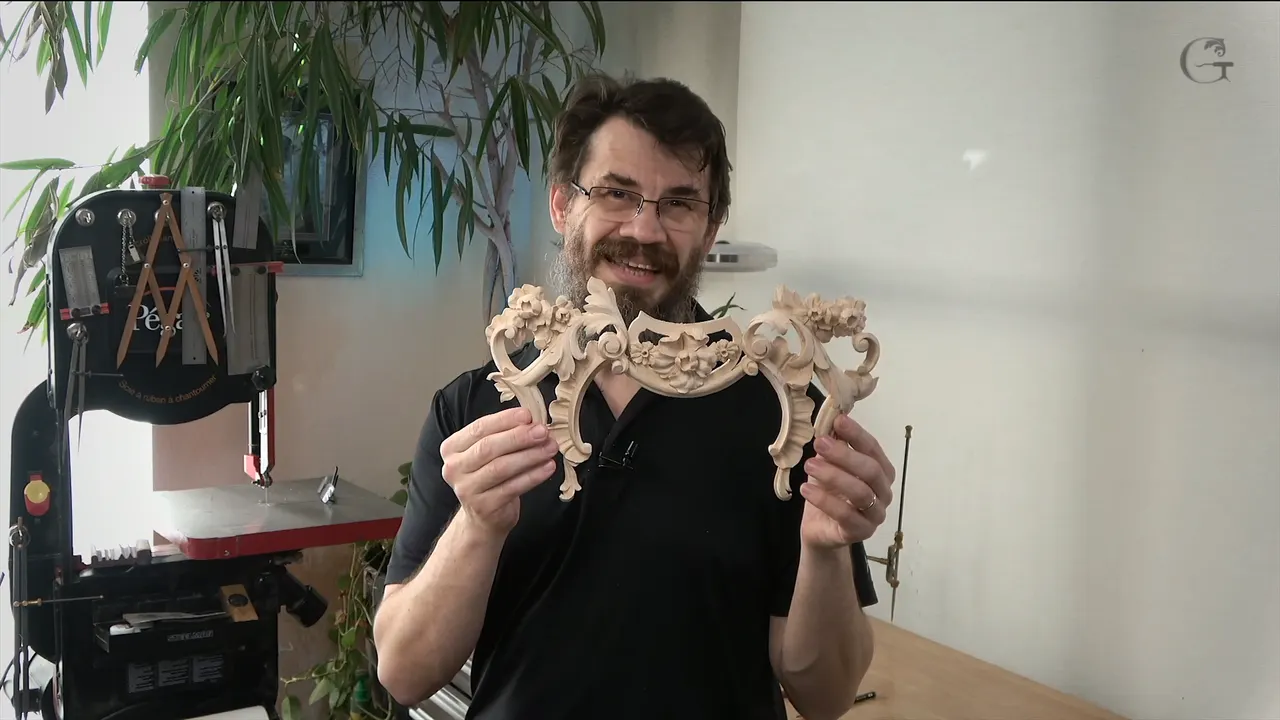
A flower centre a quarter inch wide breaks when the cuts happen in the wrong order. Hole first. Then the ring of cuts running inward toward it. Petals dropped around that, last of all. Each step takes away wood the step before it was leaning on, so the order will not survive being rearranged.
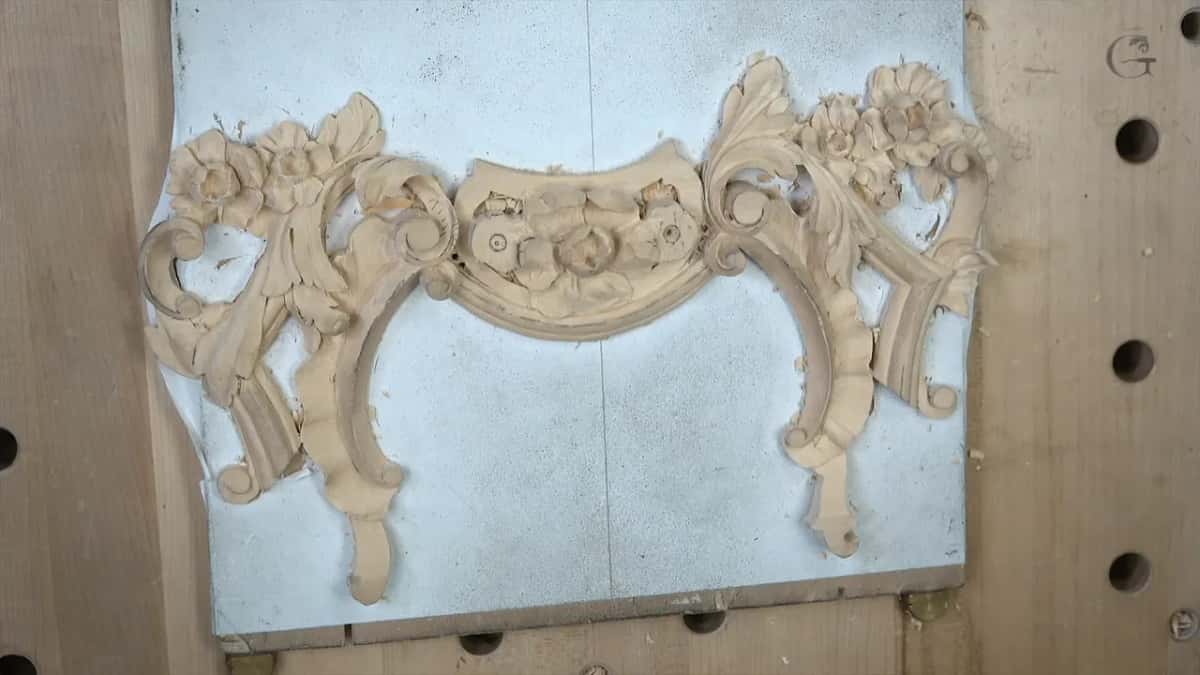
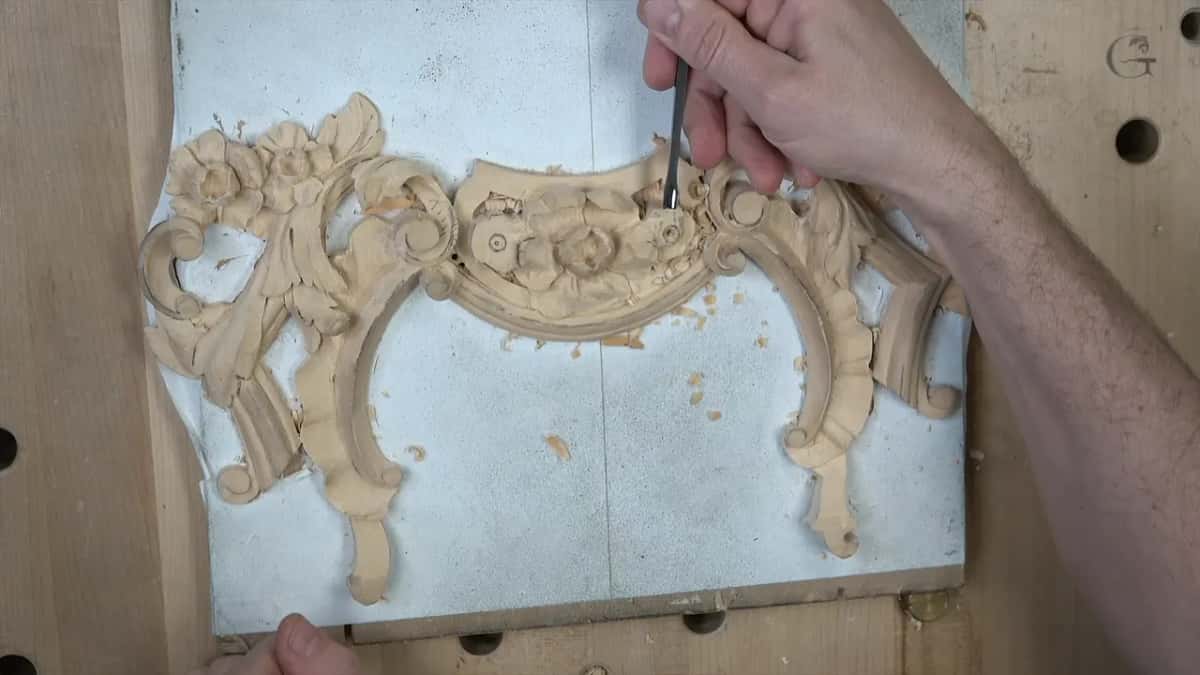
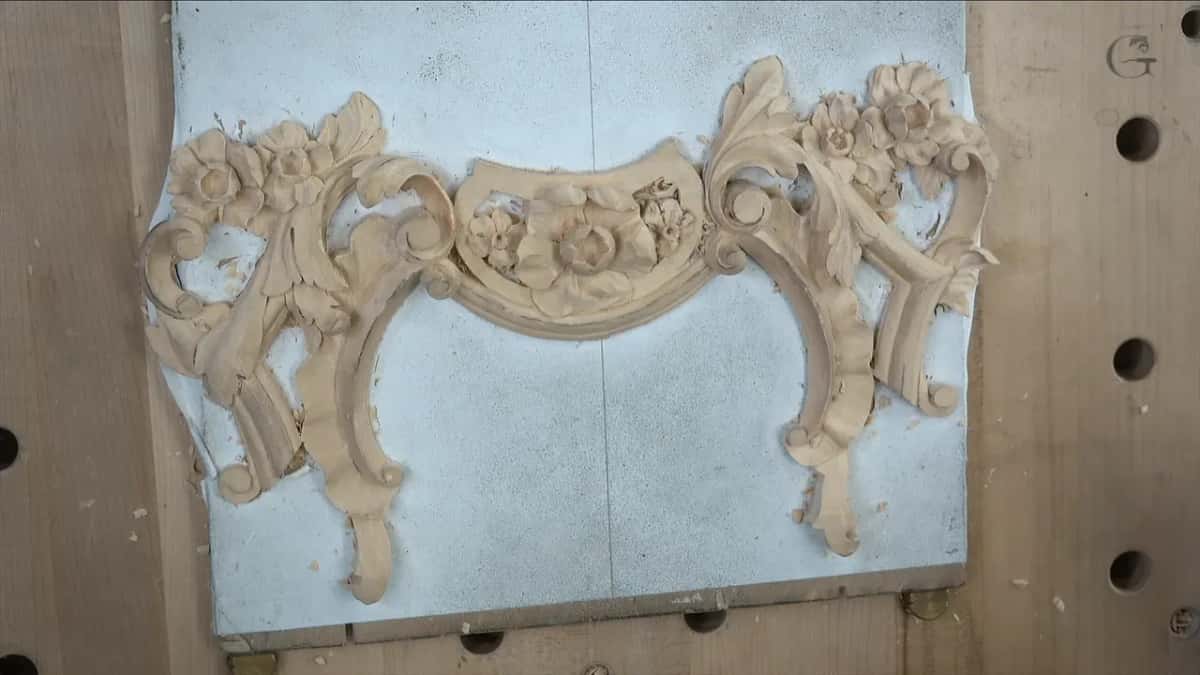
Two flowers were left on this panel when I started filming, and neither one matches the rest. Not harder to carve. Built differently, with a centre that looks plain and destroys itself the moment you rush at it.
Picture a combination lock. Every number on it can be known to you and the thing still will not open, because the numbers only mean something in one order. Carving a detail this small works the same way, and I have watched good carvers lose an afternoon to it.
Everything else on this panel is already done, and all of it repeats: one acanthus after another, flowers by the dozen, plus that molding running along both halves. Repetition turns into a gift around this point, because your hands quietly stop asking what comes next.

Three stages carry every piece I have ever made. Boasting comes first, an old word meaning the overall shape and nothing more. Carving follows, where the detail arrives. Cleaning finishes it, and that last one decides whether the work looks finished or merely stopped.
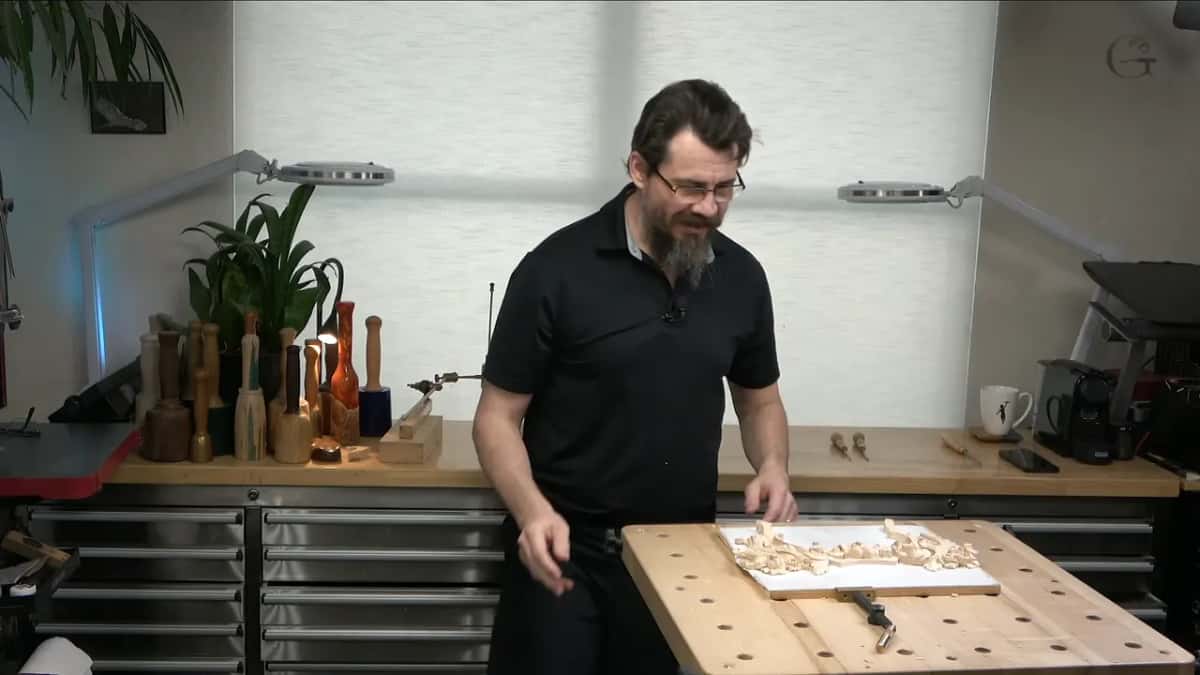
Showing you the same cut twice holds no interest for me. Where one half of a panel repeats the other, I film one of them and carve its twin off camera, spending the recording on whatever is genuinely different.
Key takeaways
- Put the hole in first, before one other cut goes anywhere near it.
- Cuts travel from the outer edge inward, never straight down, so the shape reads as something grown rather than something stamped.
- A one millimetre gouge is not a luxury here.
- Reach a line with the side of an eleven instead of chopping down at it, and nothing has to take the strain.
- Grooves begin at sixty and forty.
- Shadow is the sole reason any cut here goes deep, and without it the whole flower reads flat from two paces.
What makes a plain looking flower so easy to break?
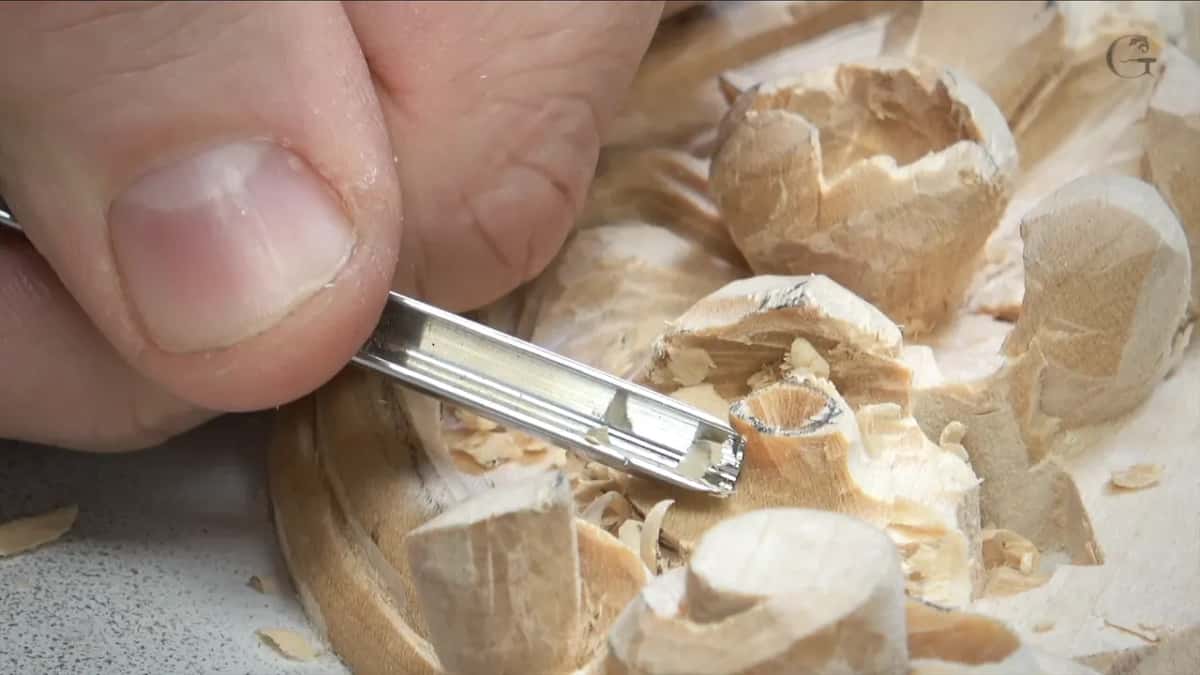
Size, plain and simple. That centre measures a shade under a quarter inch, five and a half millimetres or thereabouts, and every wall left standing inside it is fragile enough to go under a careless thumb.
Wide at the top, narrowing as it falls toward the middle, with a hole at the bottom of that funnel. Lovely shape. Also a shape with almost no material holding it together once you start hollowing.
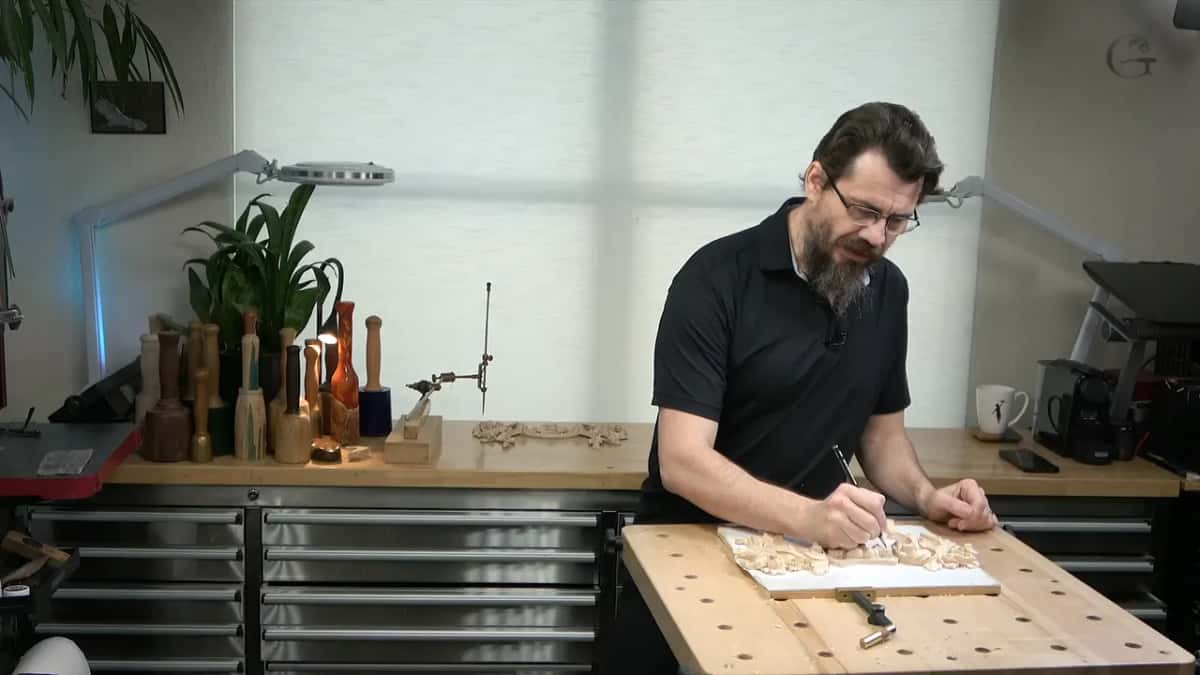
Carvers get caught here precisely because the flower looks basic. Simple to draw is not simple to cut, and this one punishes confidence faster than any acanthus on the same board.

What has to happen first?
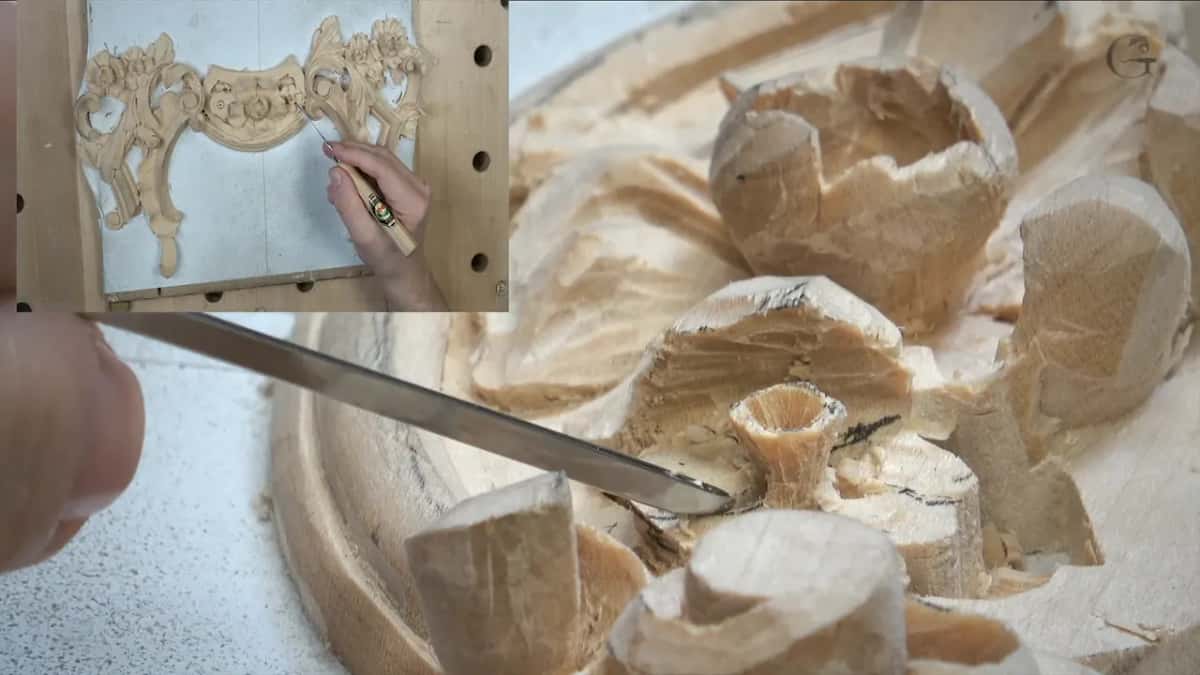
Centre hole first. Every cut in this workshop hangs off that one small opening, and no version of the job exists in which it arrives second.
My tool for it is a Dockyard micro gouge marked at one and a half millimetres, though the edge measures closer to one. Tool markings run approximate. For carving that hardly matters, and anyone waiting for a perfectly labelled set will wait a long time.
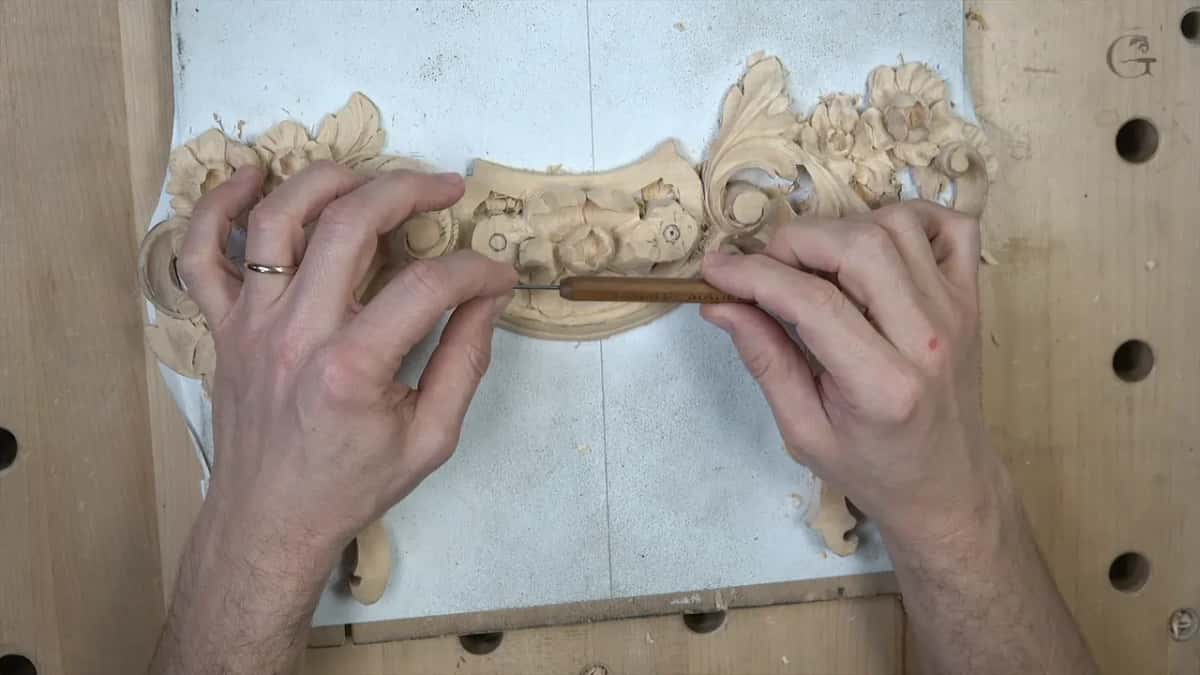
Square on at ninety degrees, then a plug cut roughly a quarter inch down. No weight behind it whatsoever. Either the edge does that work or the work does not happen.
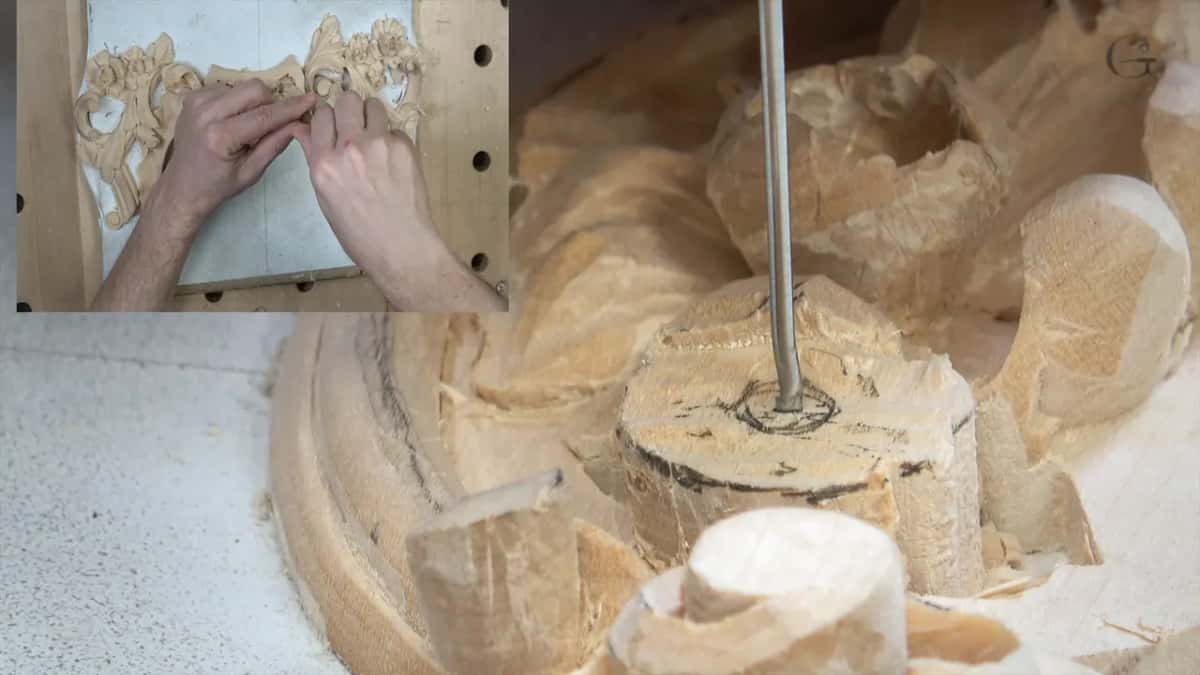
Whether the plug pops free straight away makes no difference at all, since every part of that area gets attacked again later.
Which way do the cuts run?
Inward, always. Starting wherever the rim happens to be, each cut with that same small gouge aims itself at the opening in the middle.
Faster to chop vertically, and it looks wrong every time. An angled cut makes the surface feel as though it grew outward from within, and that one impression is what separates a carved flower from a drilled one.

Obvious once said out loud. I say it anyway, in every course, because people who have never cut one of these do not see it until somebody points.
Sharpness decides how well it goes. A dull edge tears the grain instead of slicing it, you get frustrated, and the frustration is what breaks the petal rather than the tool. Surgeon sharp is the standard I keep saying out loud.

How small do the tools have to be?
Smaller than most people own. A fishtail nine at six millimetres lowers the petals around the outside, and a three millimetre nine by Ashley Isles reaches the gap where two of them meet.

Below that I move to a one millimetre spoon, which reaches under a petal where no straight blade can physically go, and a half millimetre eleven for the lines that need a hard shadow.

Micro tools cost very little. If flowers are where you are heading, buy them now rather than working around their absence for a year, which is what most people end up doing.

What is a wiggle cut?
My own name for it, and I doubt it has a proper one. In a gap too tight to push a tool through, I wiggle the gouge side to side and let sharpness take the fibres a few at once.
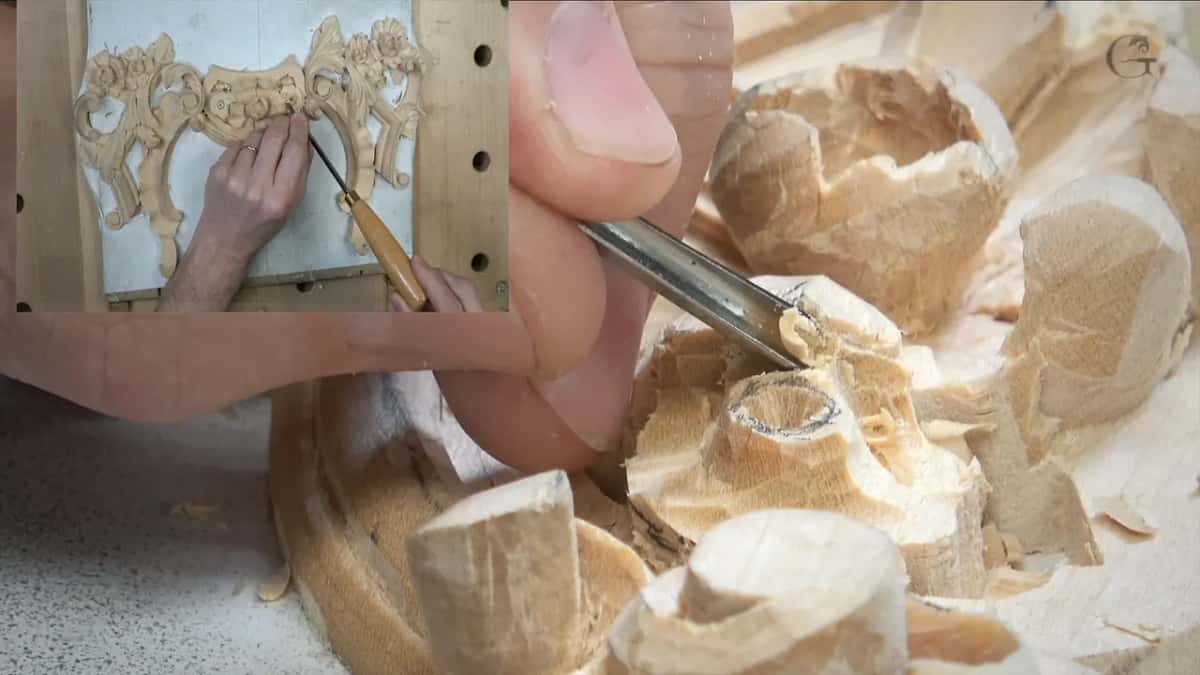
No force goes into it anywhere. Push and the petal on either side goes, which on a piece at this stage means starting the flower again.
The surface it leaves is rough, and I clean it later with something better suited. Ugly, patient, and it gets the job done, which on a fragile detail beats elegant and broken.
Where should the flute point?
The flute is the hollow running down the inside of the blade. Not every tool has one. Naming the parts out loud sounds fussy until the moment somebody has to follow an instruction about them.
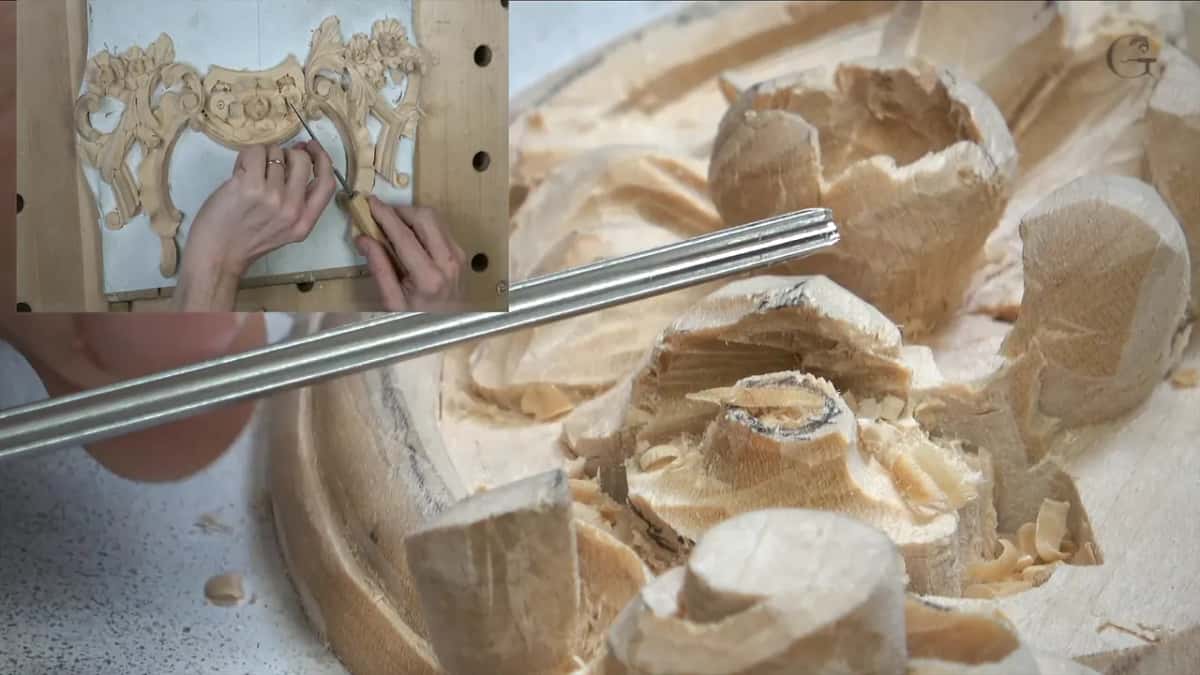
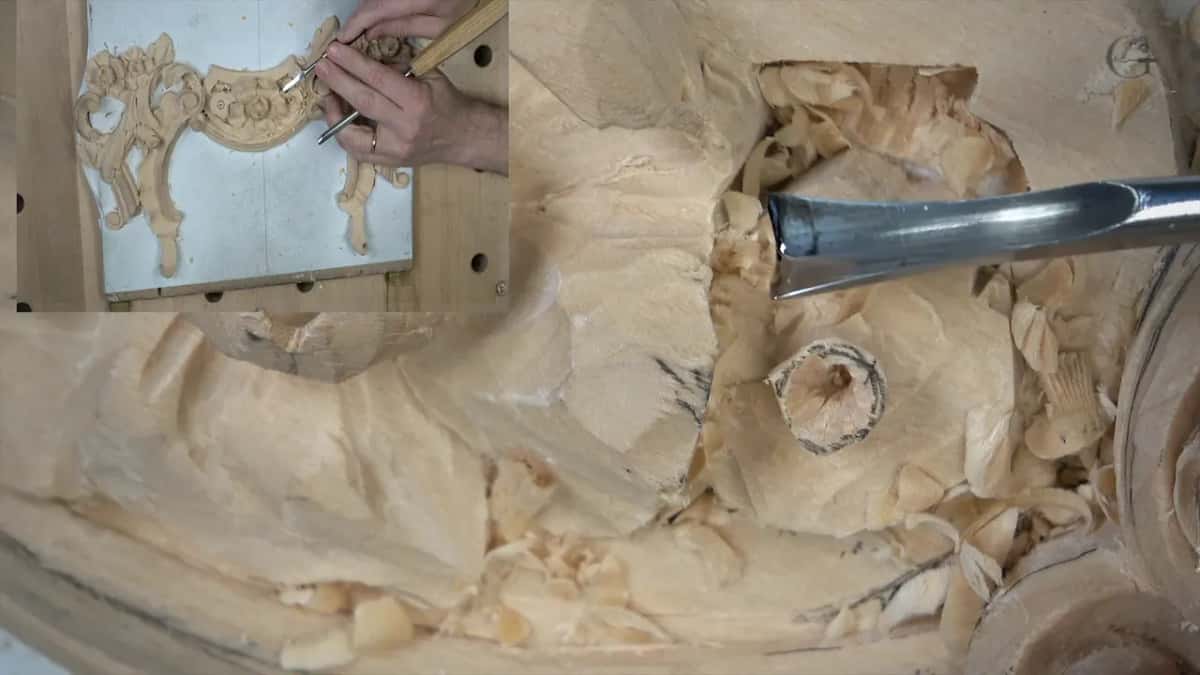
Around two o clock is where mine sits for undercutting here, which tips the edge under the petal and lets me take material out from beneath without disturbing the top surface at all.
Deep enough arrived quickly. A single clean shadow under that petal was the whole ambition, and pressing on past it would have purchased nothing at all beyond a thinner wall.

Then the hair blower, my most complicated tool, clears the chips so I can actually see what I did.
Chop at the line, or come in sideways?
Both work. A number five placed on the line and chopped straight down is the fast way, and on a solid piece I would use it without thinking twice.
Here an eleven goes in sideways instead, one flank of it climbing along the grain toward the line, a shaving per pass. Slower to describe than it is to do, and nothing like as frightening on a wall this thin.

Stress is the whole difference. A chop drives a wedge into material with almost nothing left holding it up, while a flank cut never loads the piece anywhere.
Why does an eleven leave a better wall?
Look at one side on. A number eleven carries something near a number three sweep along its flank, so the wall behind it comes out faintly curved rather than flat.
Arabesque movement is what I call that curvature. Barely visible unless somebody tells you it is there, and it matches the movement already cut inside the centre, so both surfaces agree with each other.
An eleven has been a multi tool in my hands for years for exactly this reason. One blade, several sweeps, depending which part of the edge meets the wood.
Under the rim there is room for a small dome as well. Paint will bury it on this panel and I cut it anyway, because on an unpainted piece that detail is the loveliest thing in the flower.
Where does a groove start on a petal?
Well away from the end of a petal. Mine begin at sixty and forty along the length, which is the golden ratio doing quietly what it always does, and I put them there without measuring anything, because by now my eye simply refuses the middle.

Begin at an edge and every petal comes out looking machined. Not one person standing in front of the finished panel could explain why that is, yet their eyes slide off it all the same.
What shape is a petal through its middle?
Wavier than its outline suggests. Up out of the middle, over a bulge, then down and away again, a profile you would only ever see by sawing one in half.
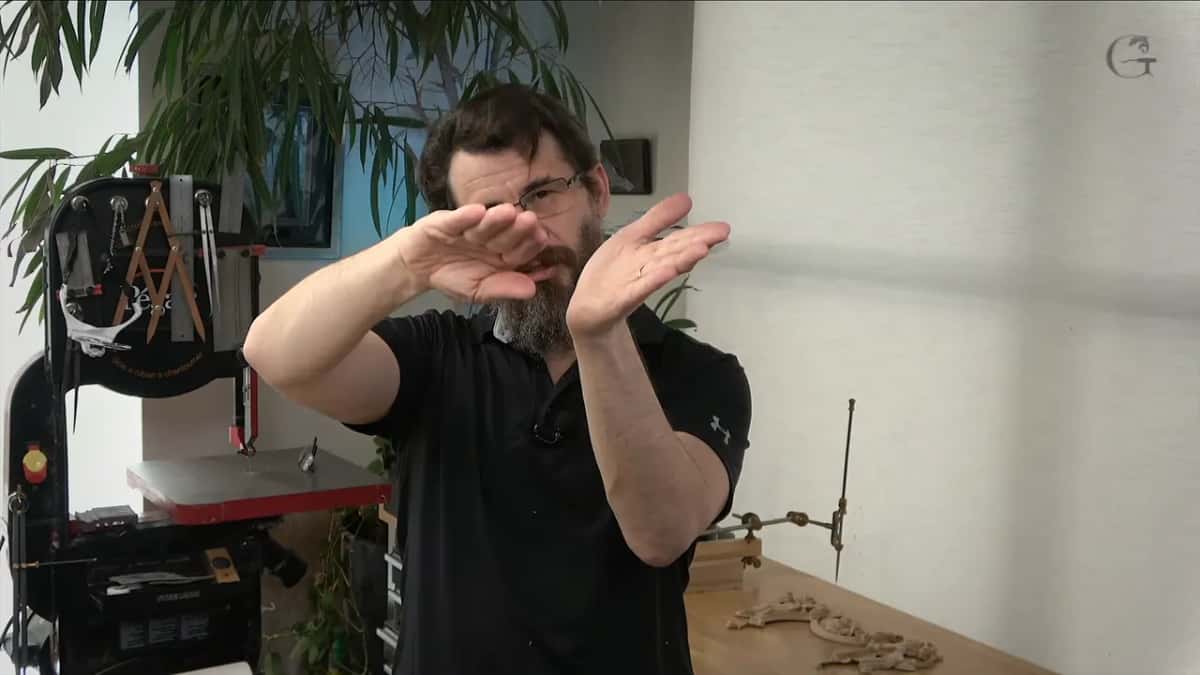
Across the width there are three changes: concave down the middle, convex along both flanks, then concave once more where the petal ends. I drew all of it on camera during a stretch where the audio had died, which annoyed me at the time and turned out to be the clearest explanation in the workshop.

| Step | Tool | What it costs you to skip this step |
|---|---|---|
| Hole in the middle | Dockyard, one millimetre | Nothing else has a centre to work toward, and the funnel ends up off axis |
| Cuts inward | Same gouge | Flower reads drilled instead of grown |
| Lower the petals | 6 mm number nine fishtail | Centre stands proud of everything and the shadows never arrive |
| Shape the wall | 4 mm eleven, side on | A chopped wall splits, usually taking a petal with it |
| Groove each petal | 0.5 mm veiner | Petals go flat and the whole flower dies from two paces away |
| Undercut for shadow | Flute rolled over | Detail sits flat on the ground with no air beneath it |
Does paint change how much cleaning it needs?
Enormously. This panel goes under a thick primer and then chalk paint, so the facets my gouges leave will fill and vanish. Taking this one to the finish I use on show pieces would be time thrown away.
Chalk is old. Whole houses across Europe were coated in it, and in Ukraine and Russia people mixed it with water and brushed it on, though the rains took most of that off again by autumn. Modern chalk paint has binders in it and stays put.
Magnifying glasses come out for the cleaning either way, off camera, once every shape has settled. Nobody has ever made that stage look interesting on film, myself included.

Where does this flower come from?
Venice first, and then north. By the eighteenth century this style had reached Northern Europe and settled into furniture there for a long stretch, which is why the same shapes turn up on baroque cabinets a thousand miles from where they were invented.
Grinling Gibbons and the carvers around him mixed several kinds of flower into one piece on purpose. Variety is what keeps the eye moving, and a panel carrying one flower repeated twelve times is a panel nobody stands in front of for long.
Put this on a picture frame. On a mirror surround, or across cabinet doors. Relief ornament of this kind was never meant to live on one object.

How does the piece come off the paper?
Easier than anyone expects. Before lifting it I carve the back away to the edge, an undercut performed from behind, and that has to happen while the piece is still glued down and solid.
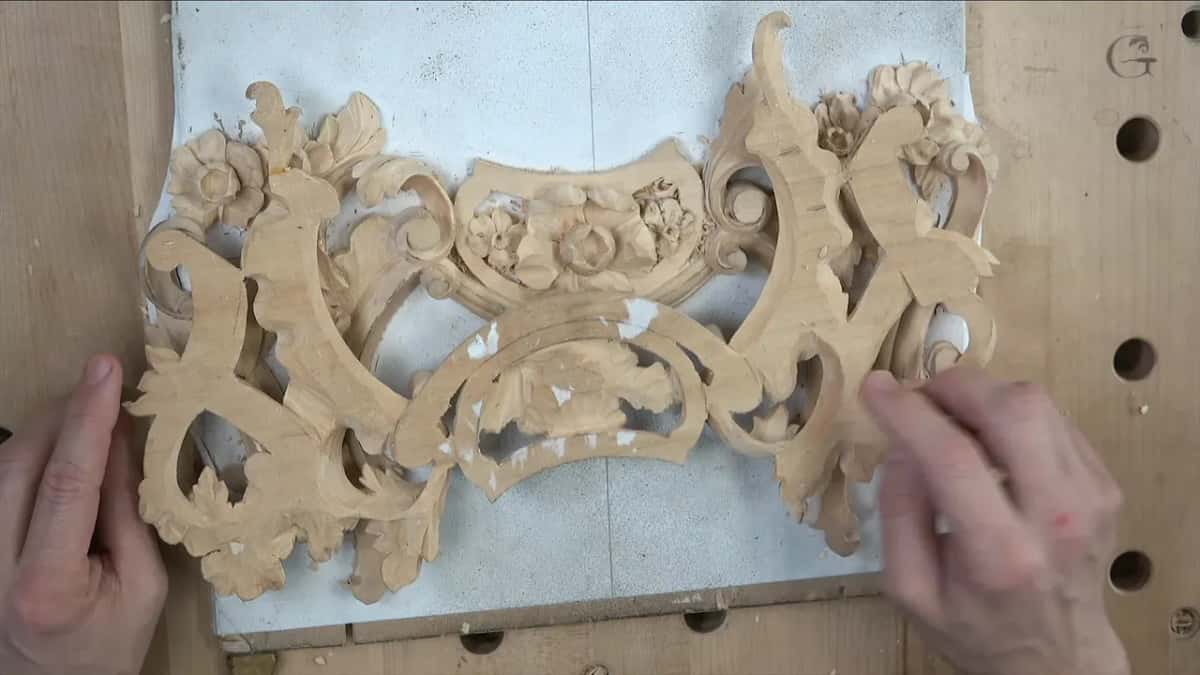
A chisel cranked under the joint pops it free after that. The paper splits along its own thickness, some of it stays on the back, and none of that matters once the flower is on the panel.
Send me a photo when yours is done. Run it through TinyPNG first, please, because I have students across the world and full size images make the server crawl for everybody. One picture is plenty.
Thirteenth of fourteen. Workshop twelve rolls one veiner through four clock positions, and workshop fourteen closes the piece. Behind those, eleven cuts the eye and raises the pipe, ten roughs this whole side out, nine raises a micro pipe and eight carves the clover molding. The flowers themselves are built in seven, the acanthus is shaped in six, crossings are handled in five and depth is set in four. A bare board becomes an opened ground across one, two and three, and the course covers every one of them. Heights come off a pointing machine, the gouges are chosen here, and none of these cuts work on an edge that sharpening has not earned. More foliage waits in acanthus over moldings and modern acanthus, the room this panel belongs to is the Venice Room, and why any ornament moves at all sits in the design course.
You have a combination lock and six numbers. Access to the school puts the rest of the panel, and every course behind it, in front of you.
How it's done
- Hole first, nothing before it. One millimetre, square on, a quarter inch down, and no weight behind the handle. Everything later needs something to aim at.
- Angle every cut at the middle. A vertical chop leaves you a drilled hole in a board. Working on the slant makes the surface look grown, and looking grown is the entire reason anybody carves one of these by hand.
- Lower the petals with a fishtail. Six millimetres of number nine, always travelling from outside in, stopping a millimetre or two above whatever sits underneath.
- Roll the eleven over for the wall. Walk its flank along the fibres until you meet the line. A chopped wall splits on something this thin and rarely goes alone.
- Begin grooves at sixty forty. Half a millimetre of veiner. Even spacing is the single thing that reads as machine made from clear across a room.
- Cut under it only until shadow appears. Roll the flute over and take material from beneath the edge. Stop the moment a shadow shows up underneath, because extra depth only buys you a weaker detail and nothing whatsoever to look at.
Frequently asked questions
What tools do I actually need for a flower this small?
A millimetre gouge, a half millimetre veiner and a small nine will carry most of the work. Micro tools cost very little beside everything else in a carver's drawer, and improvising without them wastes far more time than buying a few would.
Why not cut straight down at the line?
Wedge action is what splits a piece with almost nothing left supporting it. Rolling a gouge over and slicing with its flank takes material away while loading nothing, and that starts to matter enormously once a wall gets this thin.
How deep should an undercut go?
Until shadow appears, then stop. Going further weakens what you just made and alters nothing a person could see standing where people actually stand.