

Alexander Grabovetskiy, woodcarver, School of Woodcarving · Published 2020
Can you make a living from wood carving?
Quick answer: Full-time wood carving is a real way to earn money, and it has been my work for years. The switch from building homes and cabinets cost me a little at the start, then paid back within a few years. How far it goes for you depends, in my words, on your brains and your mindset.
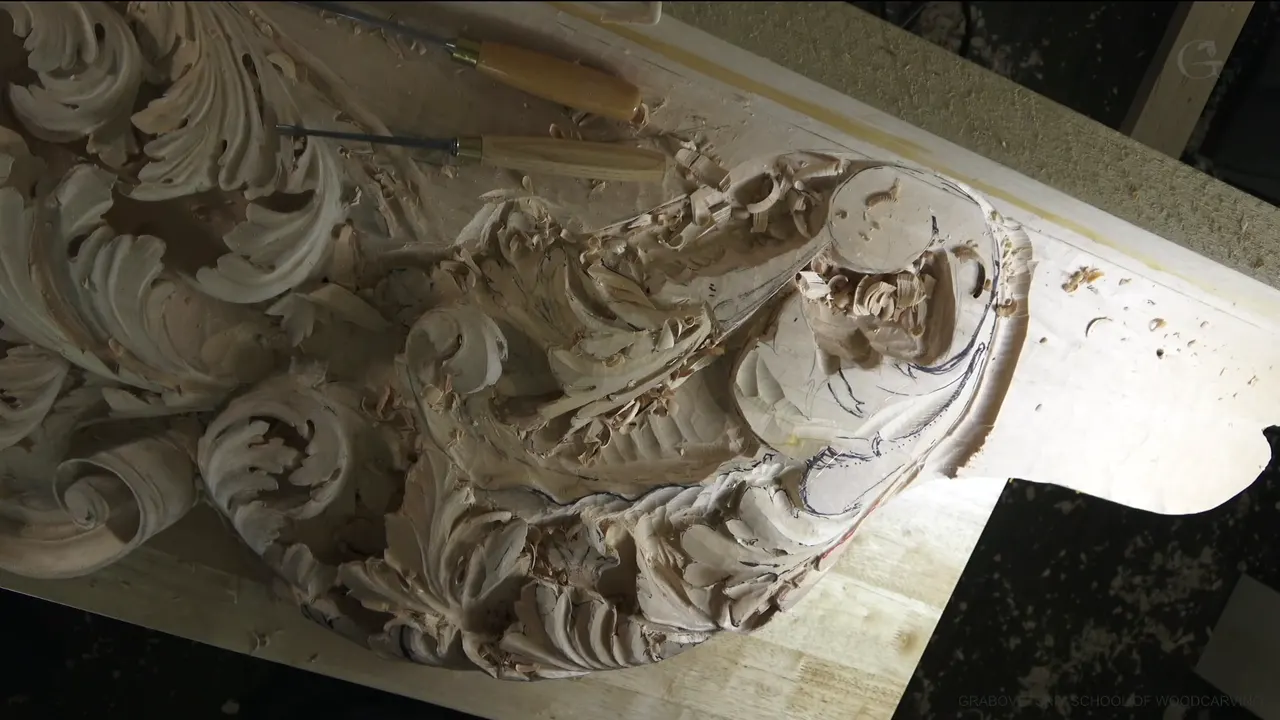
Carving for a living is real work that can pay, and I've done it full time for years. If you're wondering whether you can make a living wood carving, my answer in this workshop was absolutely yes. No doubt. In the same breath I said it all depends on your brains and your mindset. Before this I built houses and ran a kitchen and bath company, so I know the other kind of work too.
It's a fair thing to ask before you give years of your life to a gouge. I'll tell you what going full time cost me, and what one paid panel asked of me while the camera was running.
Would you like the hours with a gouge in your hand to pay for themselves? Would it help to hear what the change cost a man who made it? Then watch workshop 56 with me, because the panel on my bench that day was a paid job with a date on it.
What carving for money has looked like for me
For about nine years I was a builder of custom homes, mostly high-end ones, and I ran a cabinet company at the same time.
I took carving commissions on the side through all of it.
When I switched, it cost me a little at first, and after a few years I'd gained.
The panel in workshop 56 was due to go up in a month or so, overseas, once the wood settles into a new climate.
I carved with a flu in some videos.
The carving itself is peaceful, but talking to a camera while I work tires me.
Is wood carving profitable, or is it a hobby?
For me it's both, and I said so out loud while I carved. It isn't a hobby, and then again it is one, because I love it with all of my heart, and that hobby became my main business.
It doesn't matter what you do for work right now. If you're asking whether carving and custom woodwork can earn you money, I'd say yes, of course you can.
I know a man who used to be a lawyer, a big one, and now he does woodworking. Not because it pays better. Maybe it pays less and maybe more, depending on the project you take. He does it for the peace.
I didn't put a dollar figure on any of this in that workshop, and you won't find one on this page.

What did I do for work before carving full time?
I built houses, and for years I ran more than one business at once. Building high-end homes was my work for about nine years. I also had a kitchen and bath company that was really a cabinet company, with a big shop for cabinets, furniture and bathrooms.
People worked for me in that shop for years. And the whole time I still carved, because I'd take custom work and commissions while I ran the building side and the cabinets. So I had to run a business, and I had to carve too.
How much does switching to full-time carving cost?
I lost a little money at the start, and a few years into that work I'd lost nothing and gained. Carving is a different kind of business in the beginning. So I'm blessed, I guess.
Let me tell you a story. A man I'd known for a long time came to my shop one day. He runs one of the biggest woodworking companies in the world, and we had talked about me working for his company. He said, why don't you just concentrate on wood carving? Plenty of companies can do cabinets and plenty of people can build, he told me, but not too many people are left in the world who can actually carve.
I said yeah, why don't I do that, and I switched to carving full time. The longer story, with the machines I sold, is on the page where I introduce myself.

What does a paid carving job ask of you?
A date you have to meet, and on this panel it was about a month off. The piece is going overseas, so it gets shipped there and conditioned, and that matters, because it has to get used to a new climate and weather, and to new humidity and temperature.
The science of wood and moisture sits in the Forest Service wood handbook. So I knew when it had to be done, and I had to work really fast. Partway through I even told the camera that I had to go a little faster.
You'll also see me sick in some of these videos. I had a flu, and I kept going because people wanted to see the work, and because I really have to finish it. I can't stop. I try not to stop for anything, and to those of you who emailed to say you were thankful the school kept going, that means a lot to me.

Filming costs time too. If I weren't filming this for the school, I'd probably be much quicker. Talking while I carve wears me out a lot faster, and when I get tired my tools start piling up on the bench, which I usually don't let happen. I even strop on a quieter machine while the camera runs.
| Demand | Details | Response |
|---|---|---|
| The install date | About a month away, with the panel going overseas | I worked faster |
| Another country's climate | Shipped, then conditioned to the climate where it goes up | Counted into the date |
| A flu | You can see it on camera in places | Kept carving, since the work must get finished |
| Filming it all | Talking tires me faster, and my tools pile up | Slower, but real |
| A live stream later that day | A set hour to hit, so one eye stays on the clock | Watched the time |
| School email | Hundreds a day back then, and some slipped through | Comments work better for questions |
Who are you carving for on a paid job?
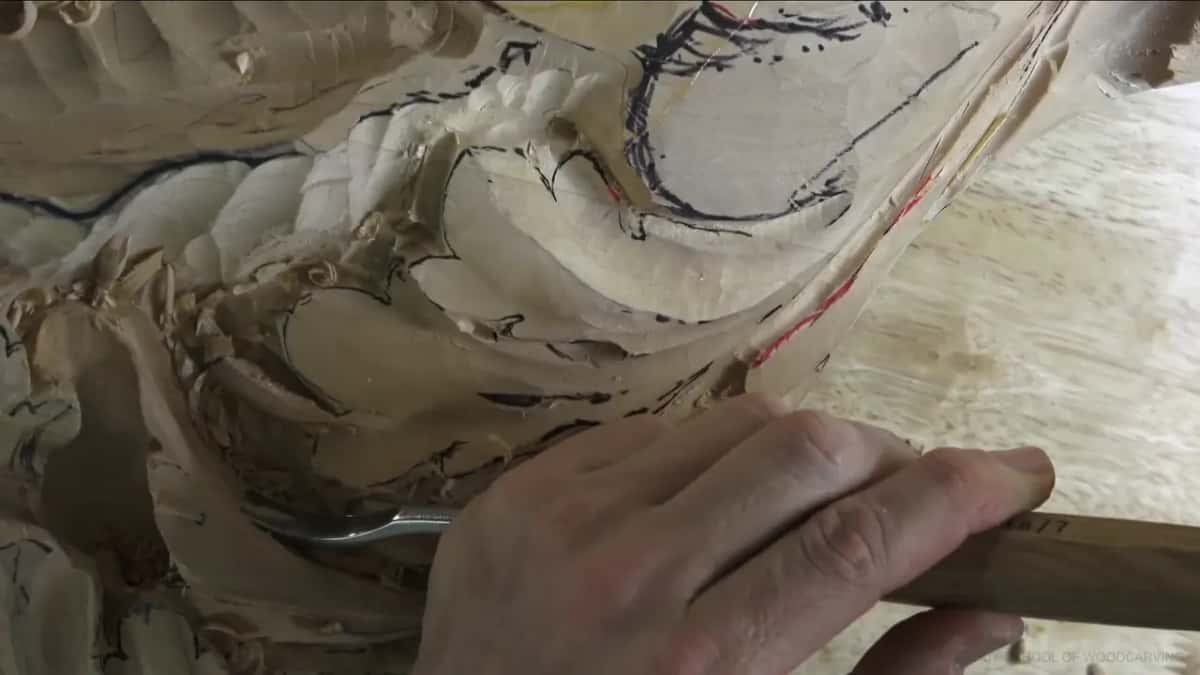
For the people who will stand in that room. Early in the workshop I planned an eye you can't see on the video. From the side it hides, but from the bottom it shows, and I said it was really important for me to show it to the people who will see it in real life, not to you watching.
Every piece has to read in the whole design. People standing there should understand what is going on and what that piece is. Later I planned one movement that's invisible from below, and still catches the eye from the far side of the room.
A small slip doesn't scare me much. I dug into one spot a little and said I'd fix it, and where I still have some material, I can. What I worry about is making a really beautiful convex. On a panel headed for somebody's home I don't want to make a mistake, and I said that twice in one breath.
Does carving stay relaxing when it pays the bills?
It does for me, and I'd call it one of the most peaceful ways to earn a living. I carve all day long, every day, and it's so peaceful.
You concentrate on the work, your hands start moving like a machine, and you're doing it all automatically while your brain stays free. You can listen to audiobooks if that's what you like. I went a step further and took university courses while I carved, some of them without credits, just to fill my brain. Some had tests and some didn't, and I didn't earn a degree from them.
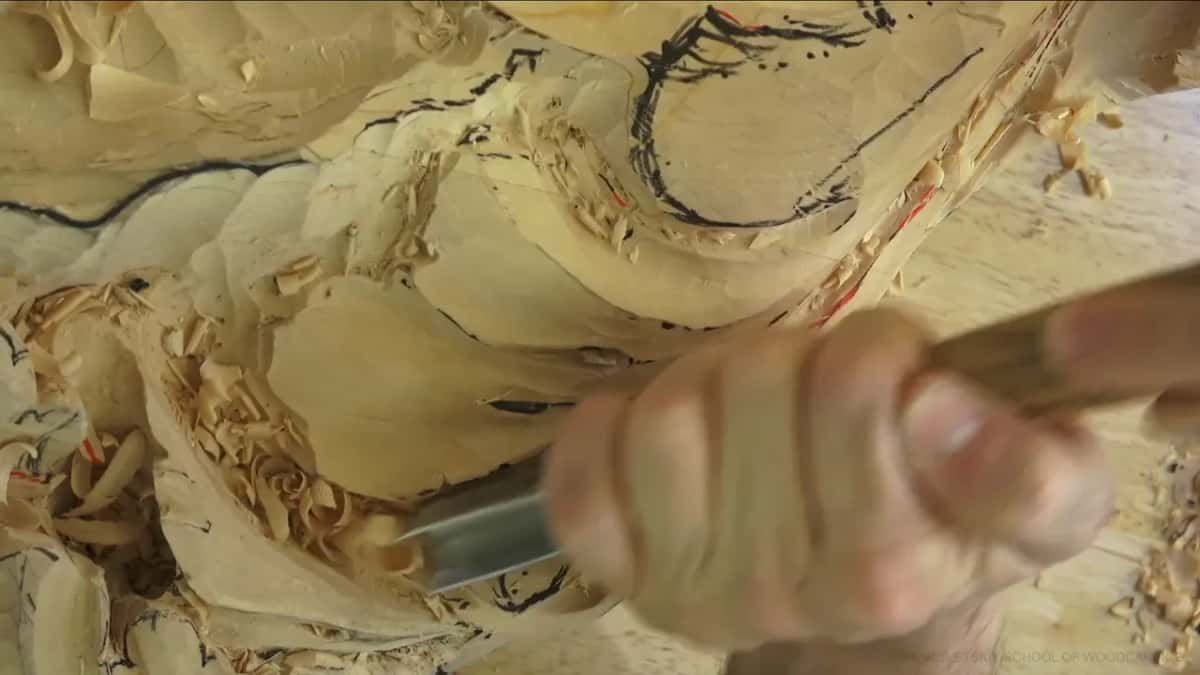
Hands busy, head working. I think that's a good thing. In this workshop I even said I kind of love it, the way the whole thing was coming along.
I'm going to be honest with you about the limits. Talking is what wears on me, because explaining what I'm doing and why to a camera tires me out, and once, while I was starting a story, I carved in the wrong spot and said so right away. Talk too much.
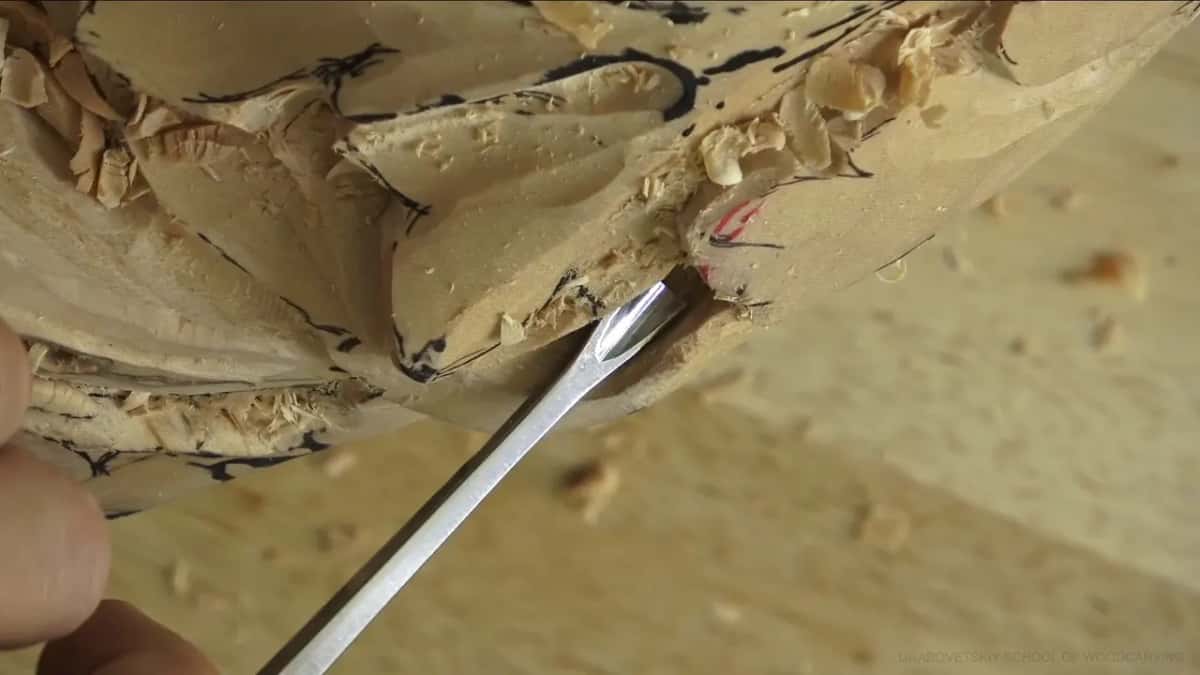
The deep holes in this workshop come out plug by plug. There's no big secret to them. You practice your patience, and that's the biggest secret.
What did my college degrees have to do with carving?
They weren't in carving at all. My first college degree was in computerized gauging systems, and I never worked a day with it. Later I took some marketing at a university in Scranton, Pennsylvania, and I never became a marketer, so that didn't help me either. After that came a theological university, and I'm keeping its name to myself.
What happens on the bench in workshop 56?
This is workshop 56 of Part 5 of the Venice room, and it picks up the board where Part 4 left it. It starts on the middle line of an acanthus leaf. I raise a micro ridge along that line, since the eye catches a ridge and it casts a shadow, and even on the video you can see the change in color.

A number 1 back bend shaves the area, an 18 mm (three-quarter of an inch) veiner opens the concave I almost forgot, and the back bend comes back for the convex. My number 3 needed sharpening partway, and I said so.
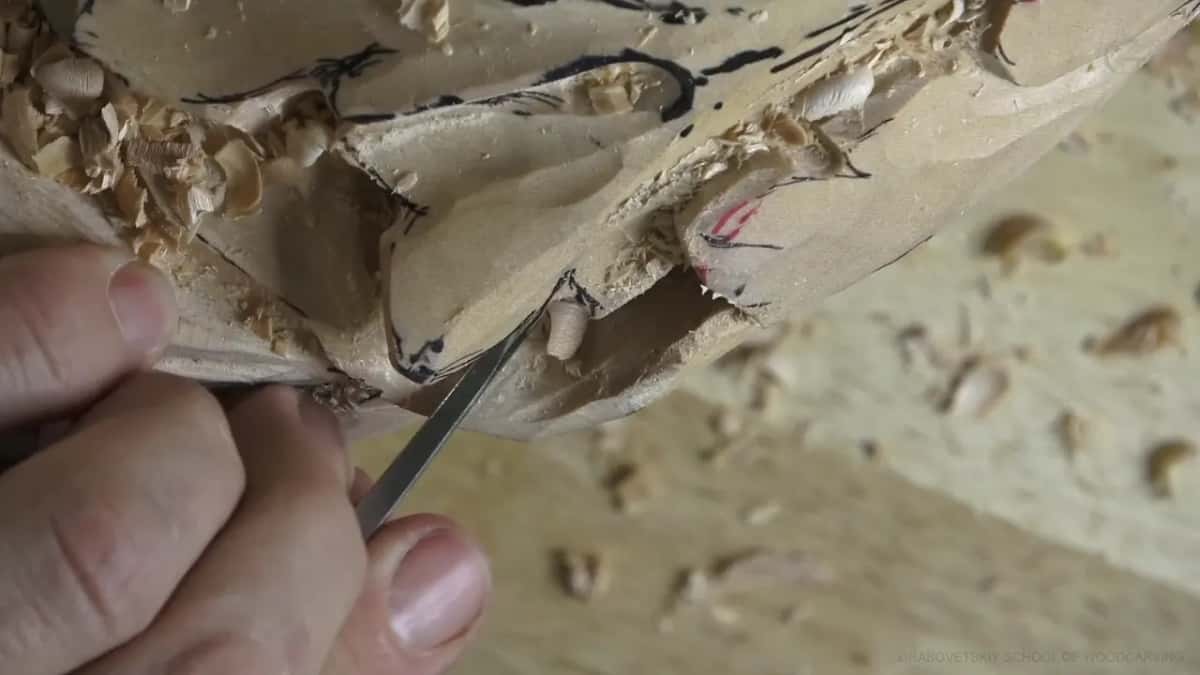
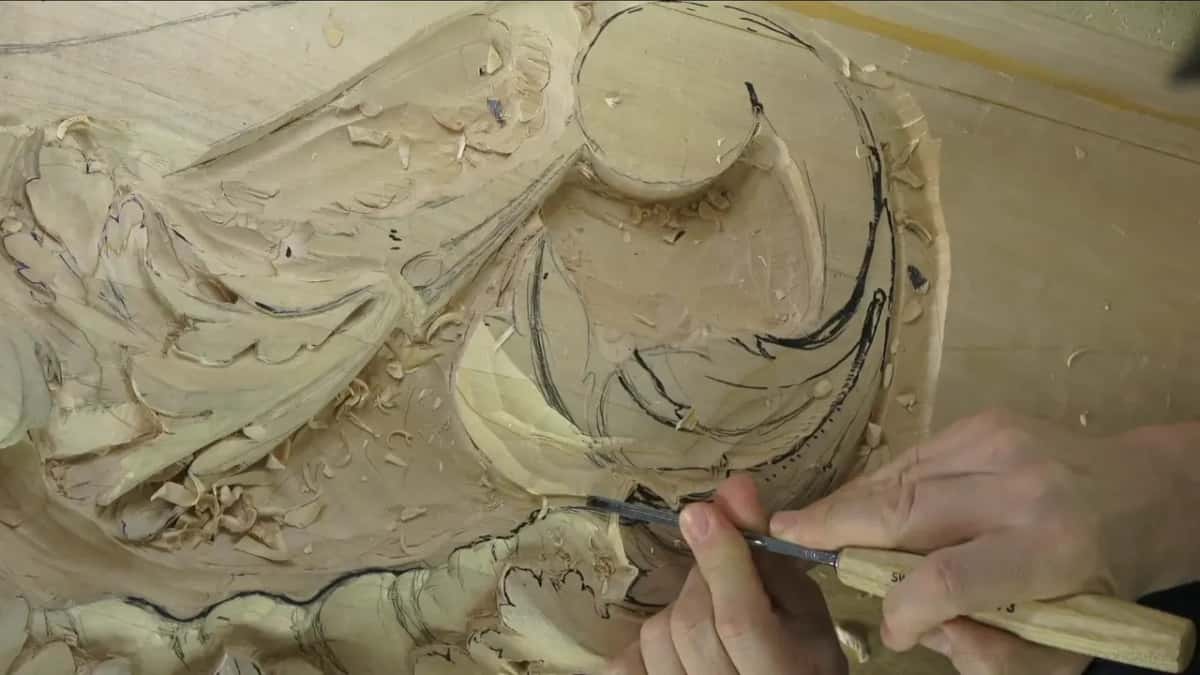
Then comes a deep hole in the relief, dug for shadow, and a quarter-inch number 9, 6 mm, takes it out plug by plug. That tool is an Auriou with a narrow neck, so it can turn inside the hole without breaking the walls. At the beginning the idea didn't make much sense on the wood, but I had it in my head already and I knew how it would look.
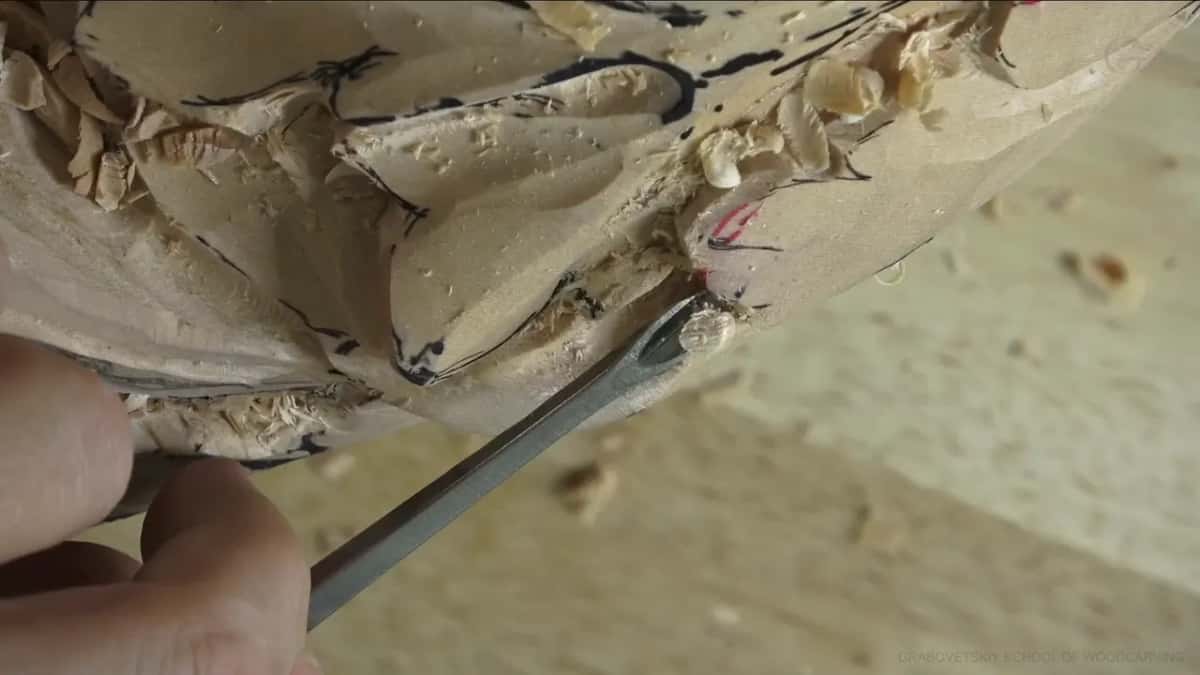
After it, a 14 mm Auriou number 7 of about half an inch cleans deeper and nicer. That same size of 7 sits at the center of workshop 54, and if you want the whole kit for this room, workshop 50 lays it out.
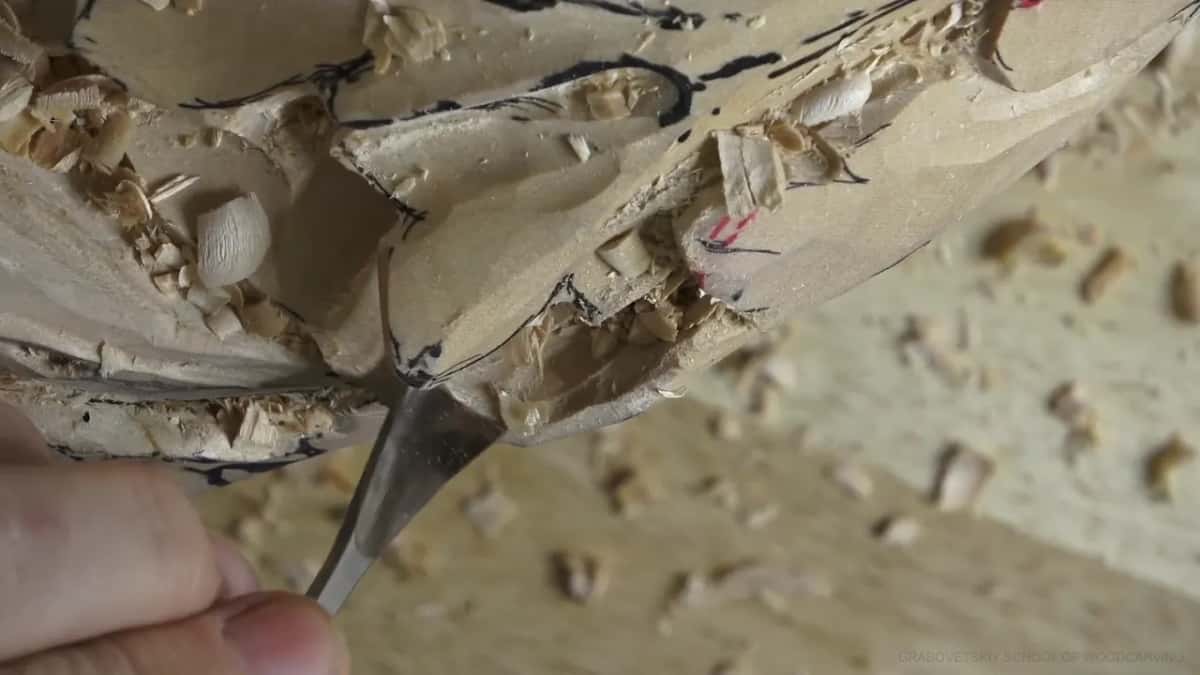
A number 4 long bent, 10 mm (3/8 in) and then a 20 mm of about three-quarter of an inch, cleans around the spot where a shell will go later. A big 80 mm number 7, three and one eighth inches, lowers one area in two chops. One tool I grabbed to save time didn't save any, so I went back to a small number 11 of about one-eighth of an inch, 3 mm, and even that was a little big for the spot. When the chips pile up I blow them out with a hair dryer, my trusty new tool, and I warn you to cover your ears.
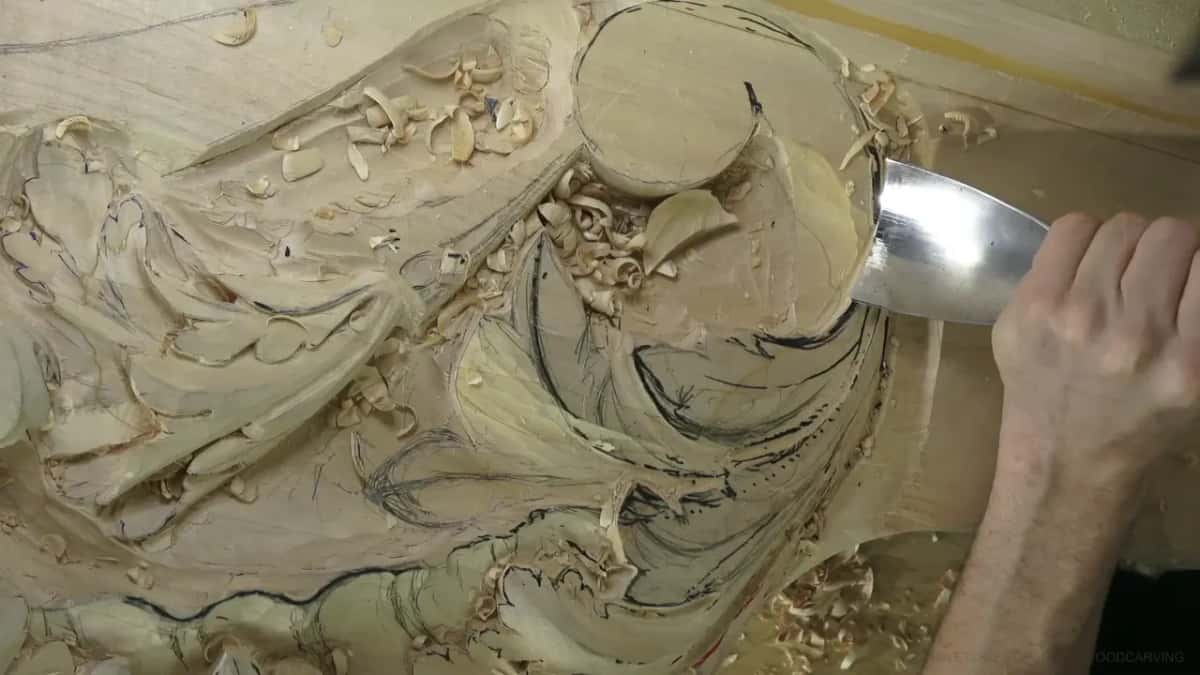
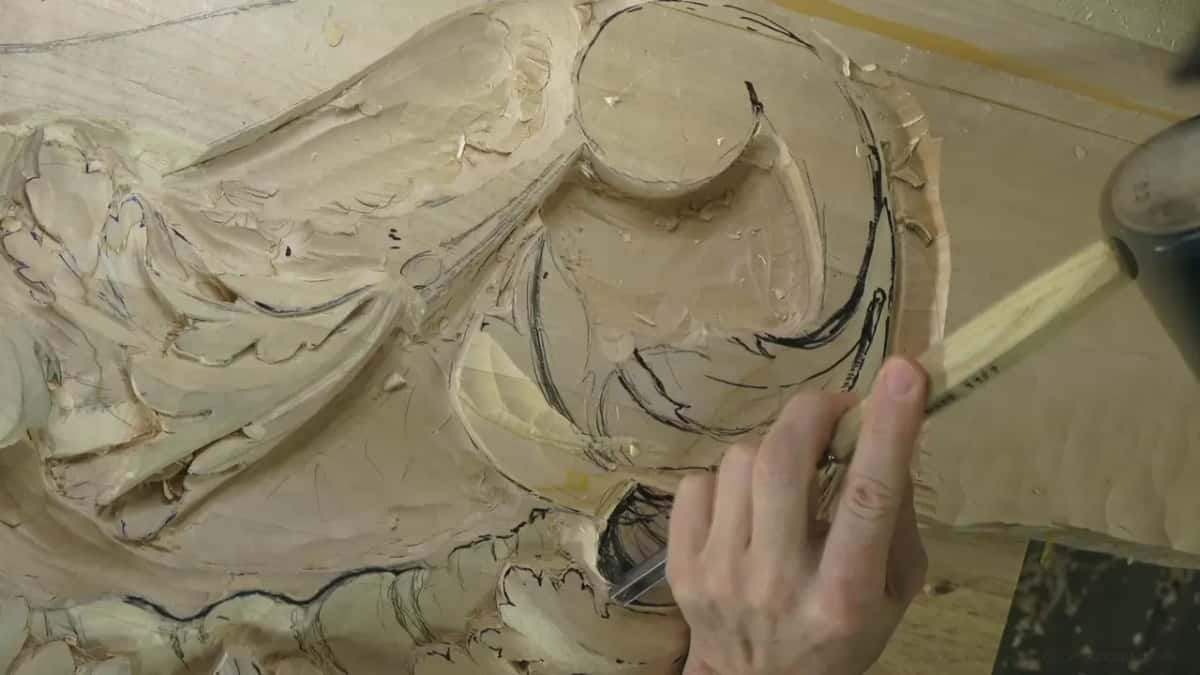
I change my mind on camera too. One piece still looked off, so I carved it free with a number 11 and made it a movement of its own, growing up from underneath. On the inner part I tried a mallet to see if it would damage anything, and it held, and I was really happy about it. I thought about drilling through it for light. Then I said no, because I'd lose the idea of rolling.
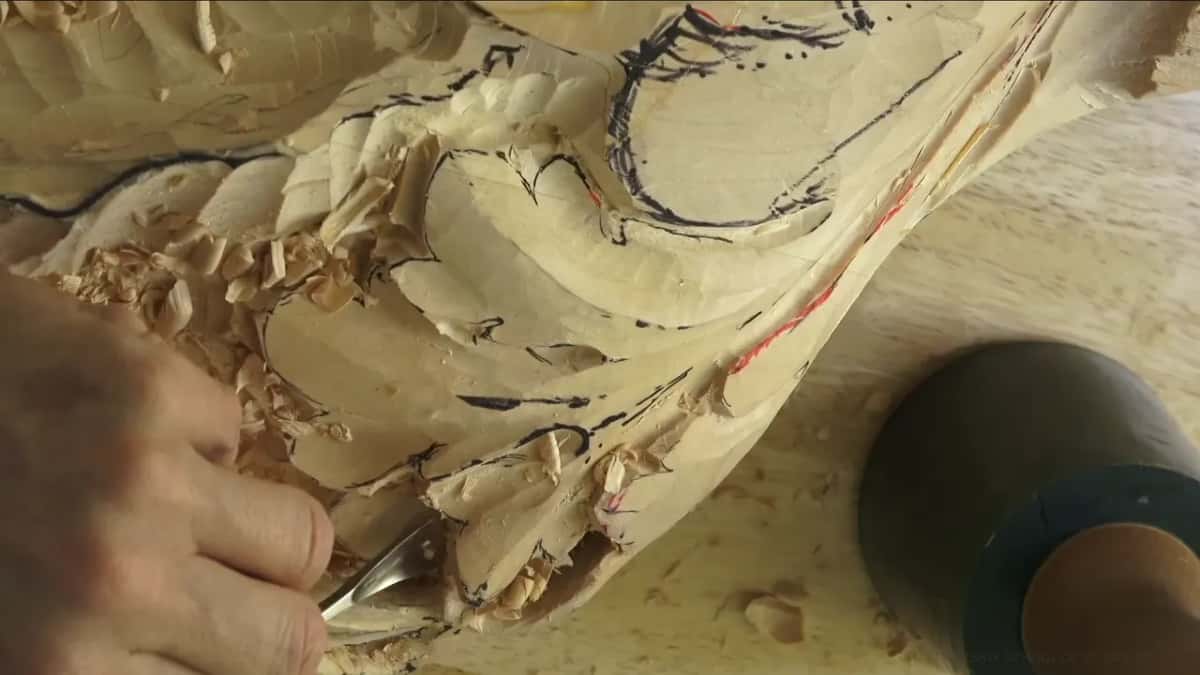
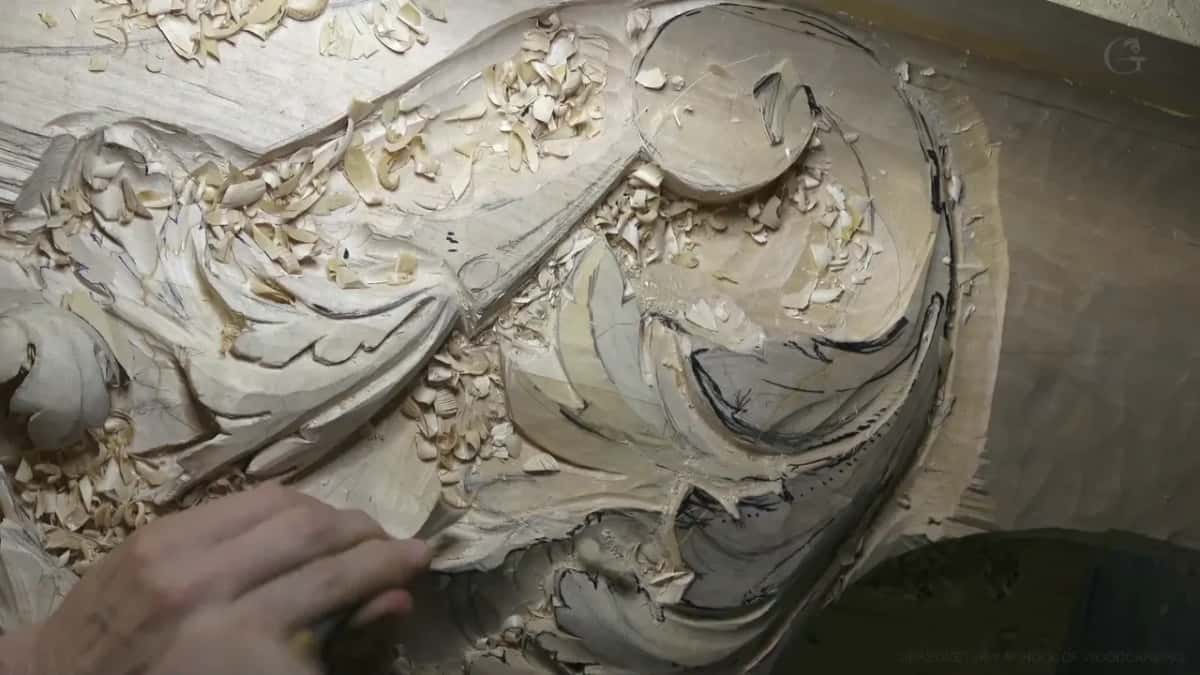
Near the end I find where a leaf should stop by picking a middle spot and drawing an invisible arc, and a gouge follows the new line. The side of that section gets flowers later, so there I only clean up. I also show how almost any leaf of mine starts, from a shape like the front of a fishing boat, even when it's grapes. Don't mind the junk on the board halfway through, because workshop 53 explains why it looks that way.
Why did I film a paid job for the school?
You get to see the real life of this trade that way, on a job that has to ship. I decided it was a good thing to do, slower or not. The school videos show the whole process without shrinking or editing anything out.
Around then I started live streams too, which you'll find under livestream events, but they don't replace the school videos. A live stream gives me a chance to hear what questions people have.
Students watch from all over the world, so I try to give every tool size in millimeters and in inches. An American student once asked me why I bother with all that metric stuff, and I told him he was wrong, because most of the world still uses the metric system.

Would you like to watch a paid panel come along, deadline and all? Your tuition opens all twelve workshops of Part 5, and the lessons map shows where this one sits, right between workshop 55 and workshop 57.
One more small thing. Veiner is still a word I struggle to say right.
How it's done
- Fix what makes no sense. A chunk on the right side made no sense to me, so it came off with a 7 mm number 11 veiner, just over a quarter inch, and a mallet. That corner now opens toward the future shell.
- Make room before you rotate. In a tight gap, carve in from both sides first. Turning the gouge too early can shift it and break the wall beside it.
- Leave wood under a thin part. About one-eighth of an inch, 3 mm, stays under the small section, because closer to the edge it gets too fragile.
- Switch to a long bevel on weak wood. One raised part was getting weaker, and the way I was carving it was a little too dangerous. A tool with a really long bevel puts a lot less stress on the fibers.
- Hit hard only where it's strong. Strong wood takes a harder blow. Over the spot where the shell will sit deeper than the leaves I'm less careful, though still careful.
- Keep the tool out of the background. Dig too deep into the ground and you'll have to clean it all later, and that can take longer than the first idea did.
- Ease off when you feel rushed. Mine have broken before when I got aggressive with them, and that's no good.
Frequently asked questions
Is it possible to carve for money and keep your other work?
I did it that way for years. While I ran a building company and a cabinet shop with people working for me, I still took custom carving work and commissions on the side. The switch came later, after a man I'd known a long time told me to concentrate on carving.
Did going full time as a carver cost you money?
A little bit of money in the beginning, I'd say, because it's a different type of business at first. After a few years of doing that work full time, I hadn't lost anything, and I'd gained. So I'm blessed, I guess.
Why does a carved panel need conditioning before it goes up?
Mine is going overseas, so it gets shipped there and conditioned before anyone puts it in place. The wood has to adjust to a new climate and new weather, plus the humidity and the temperature there. I count that time in when I figure out how fast I have to carve.
What to carve next