
Alexander Grabovetskiy, woodcarver, School of Woodcarving · Published 2021
Are Henry Taylor carving tools good?
Quick answer: Henry Taylor gouges are English carving tools I like for their light feel and slightly thinner handle, and I use them on real panels. During lesson 121 of the Venice Room I took their number three and a number 11, then said the name need not be theirs and picked up a Pfeil.
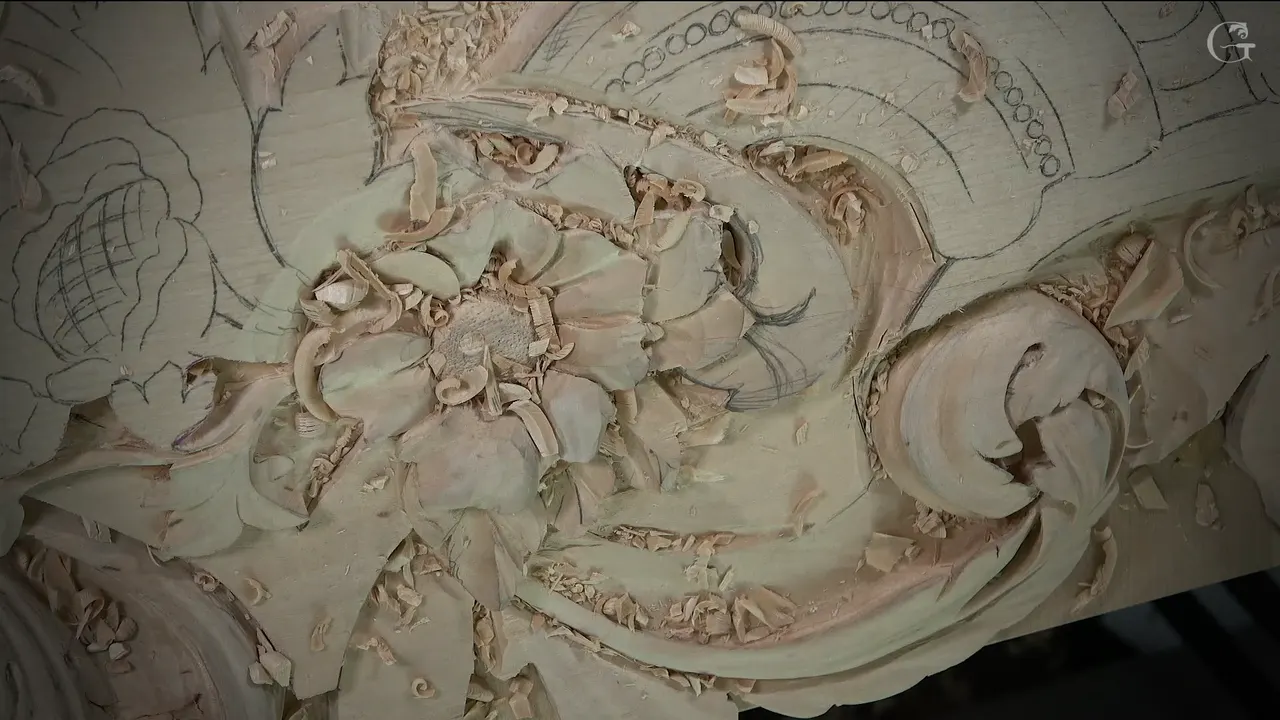
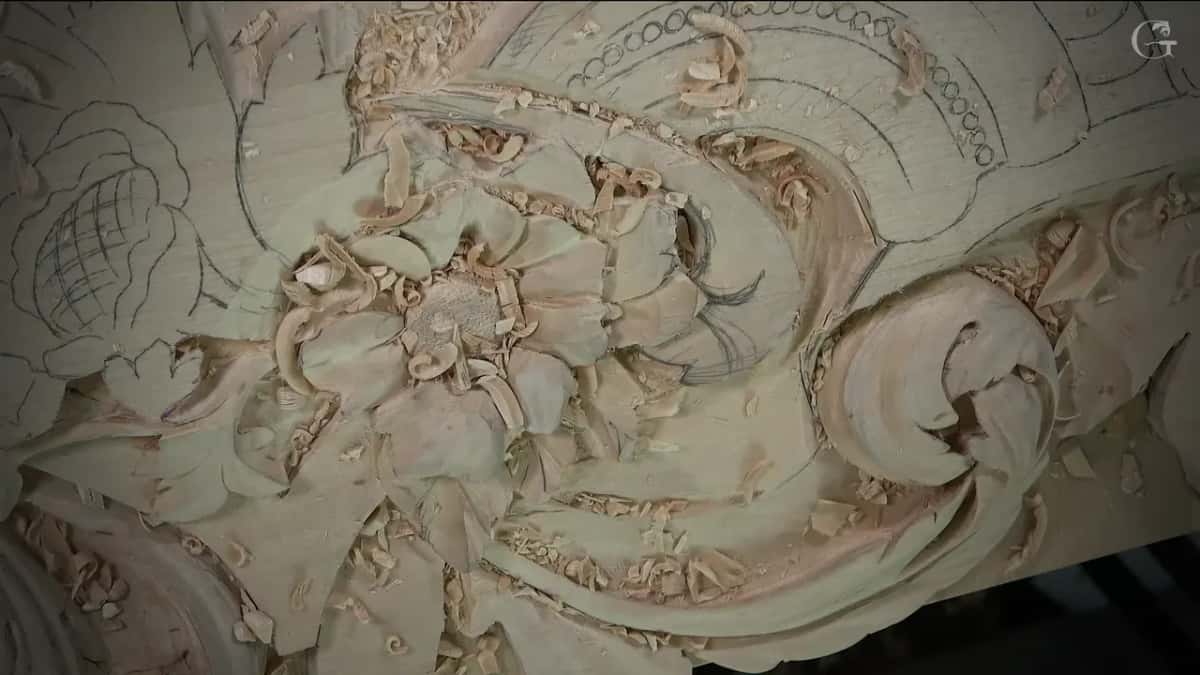
Henry Taylor carving tools are English gouges I like and use on real work, and twice on camera I said a job did not need to be done with one of theirs. In lesson 121 of the Venice Room, the last workshop of Part 10, I picked up three of them. A number three went straight down on a line. A spoon veiner cleared waste. A plain number 11 opened a concave. Right after, I set that maker aside and reached for a Pfeil.
Have you looked at a boxed set of these on a shop page and held back? Do you want to know how those gouges behave in a real board before you spend the money? Here is what they did on my bench, told in my own words from the lessons, with links to the lessons I quote.
A good name on a tool is easy to want. I get it. So this page stays with what I said and did on camera in my wood carving lessons: what I use them for, how they feel, the odd number stamped on one of them, and where another maker took over halfway through a leaf.
Five things my lessons show about them
- Three of their tools went into one acanthus leaf in lesson 121, a spoon veiner among them.
- A Pfeil took the second concave.
- They feel light in my hand, and the traditional English handle runs a little thin.
- My veiner from them is stamped 48.
- Here in the United States I found it almost impossible to get all their sweeps and profiles.
What did Henry Taylor woodcarving tools do in lesson 121?
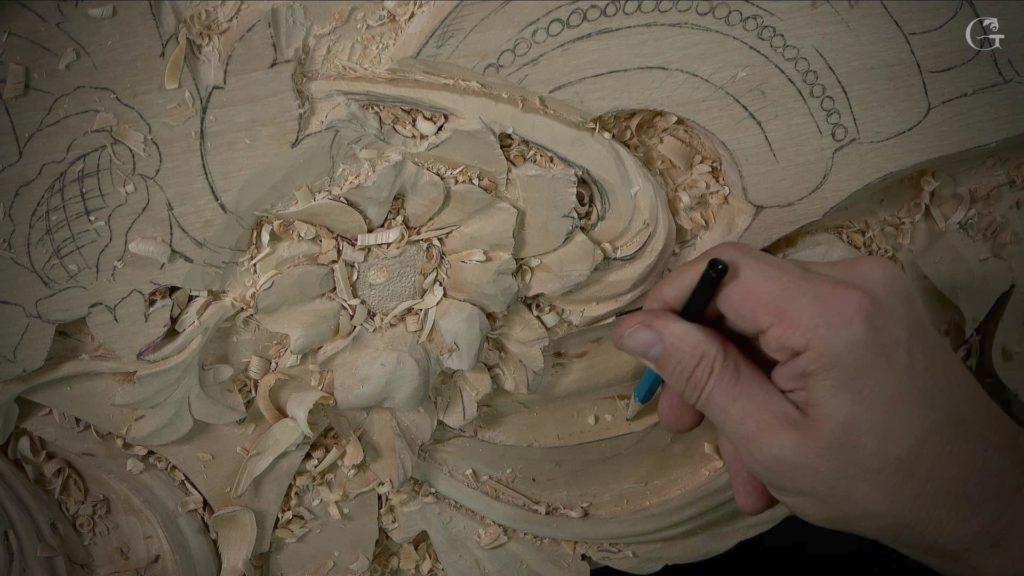
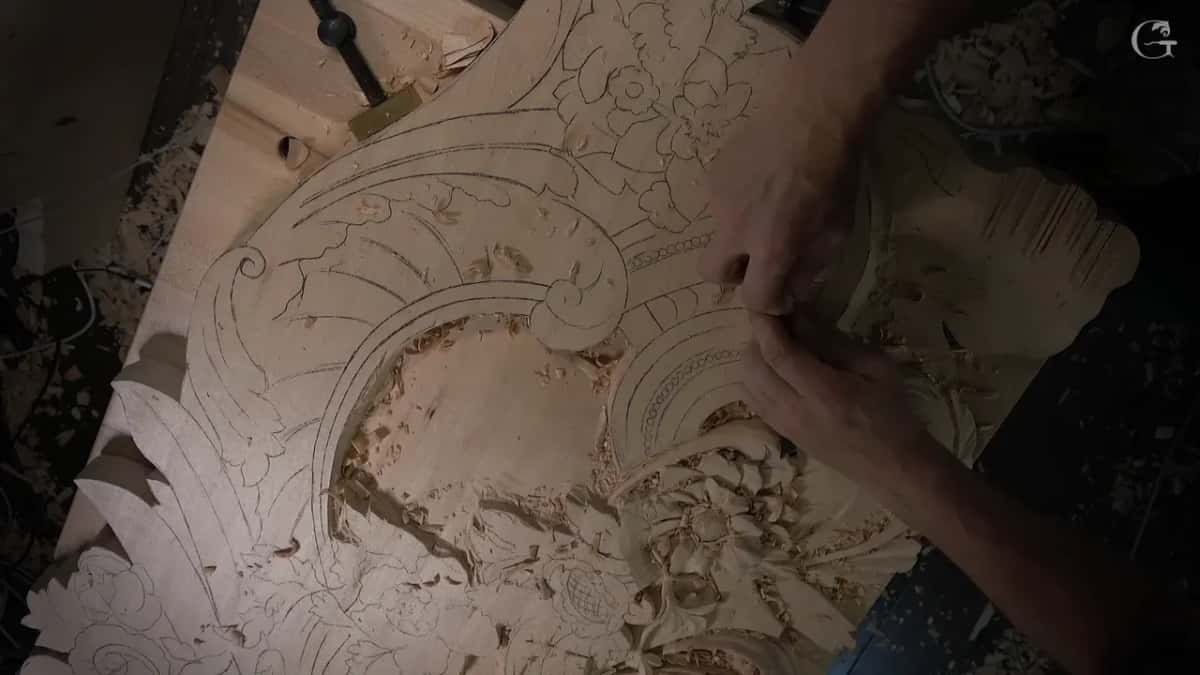
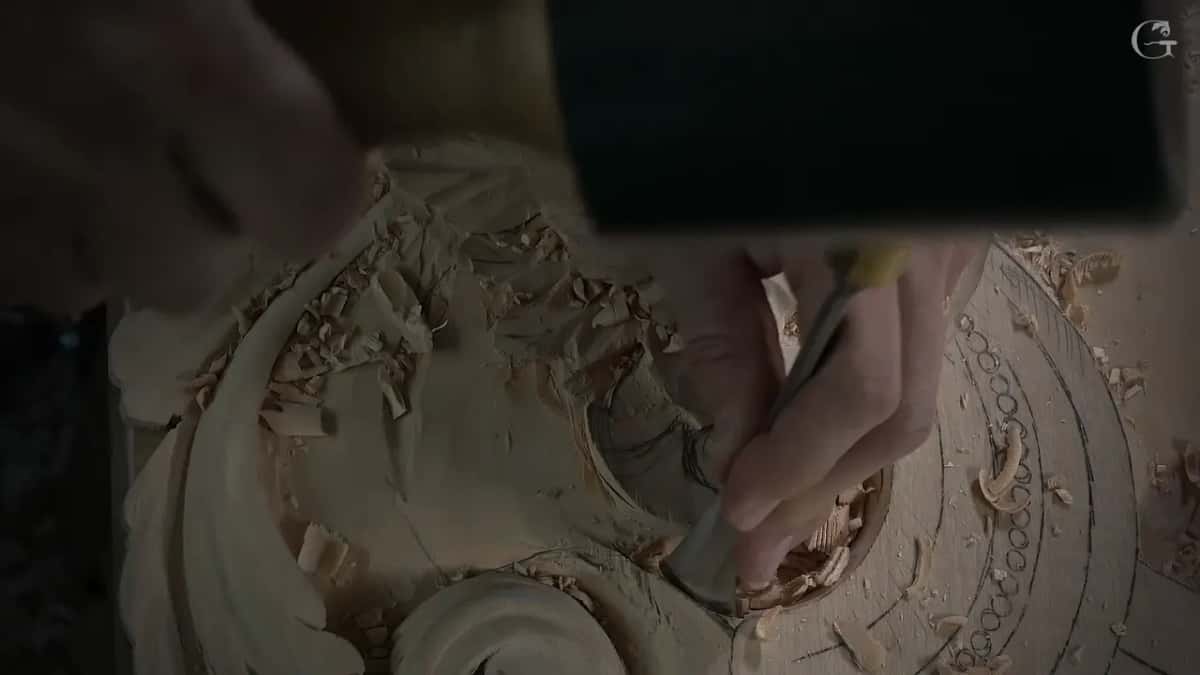
They did three plain jobs on one leaf of this acanthus panel. First I took a number five by Ashley Iles, set it right on the line and went straight down. The only thing I had to worry about was not to undercut, so I had to position my tools the right way. The other side of this design is the same, just flipped, and the Part 10 page tells why the lines must not move.
A number 11 came in next for a preliminary cleanup, and only preliminary. There is no reason to make a final, final cleanup yet, I said, because some details inside still had to be set. There was a little triangle to take care of, and a part there would sit lower, with those details lying right on top of it.
Then I said, "again, number three. Or number two if it would be Pfeil, but I'll take number three by Henry Taylor." It went down really, really, really 90 degrees. I gave the reason on camera in plain words: for the sake of keeping line, that's the only reason.
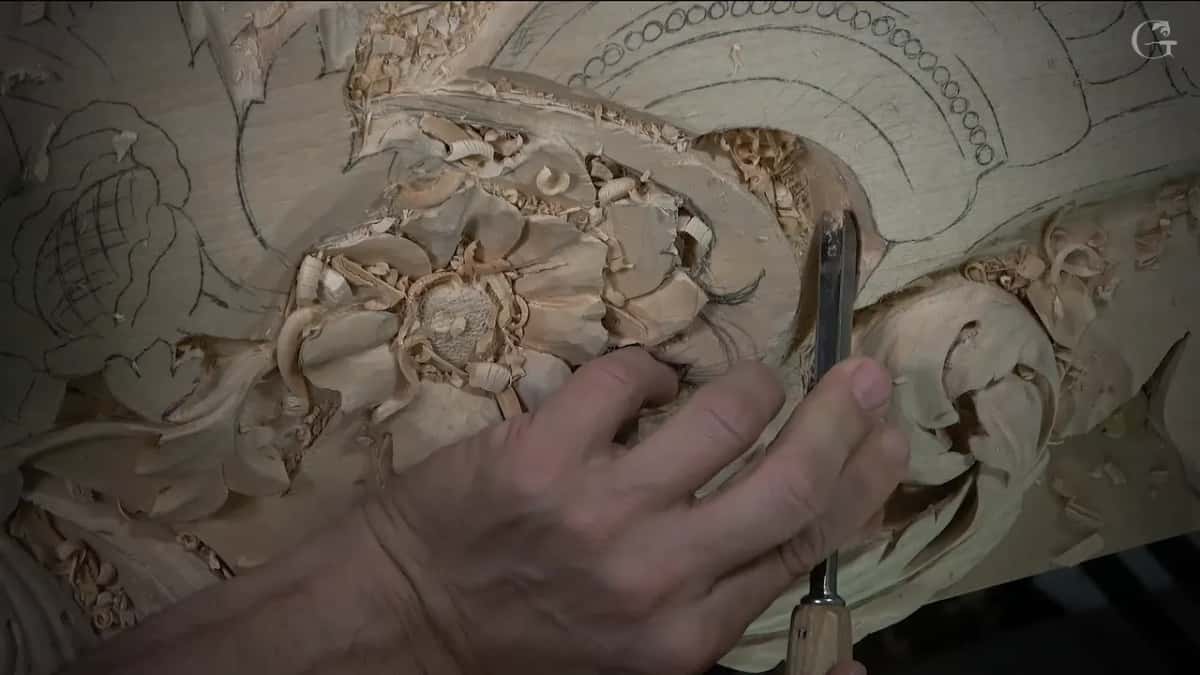
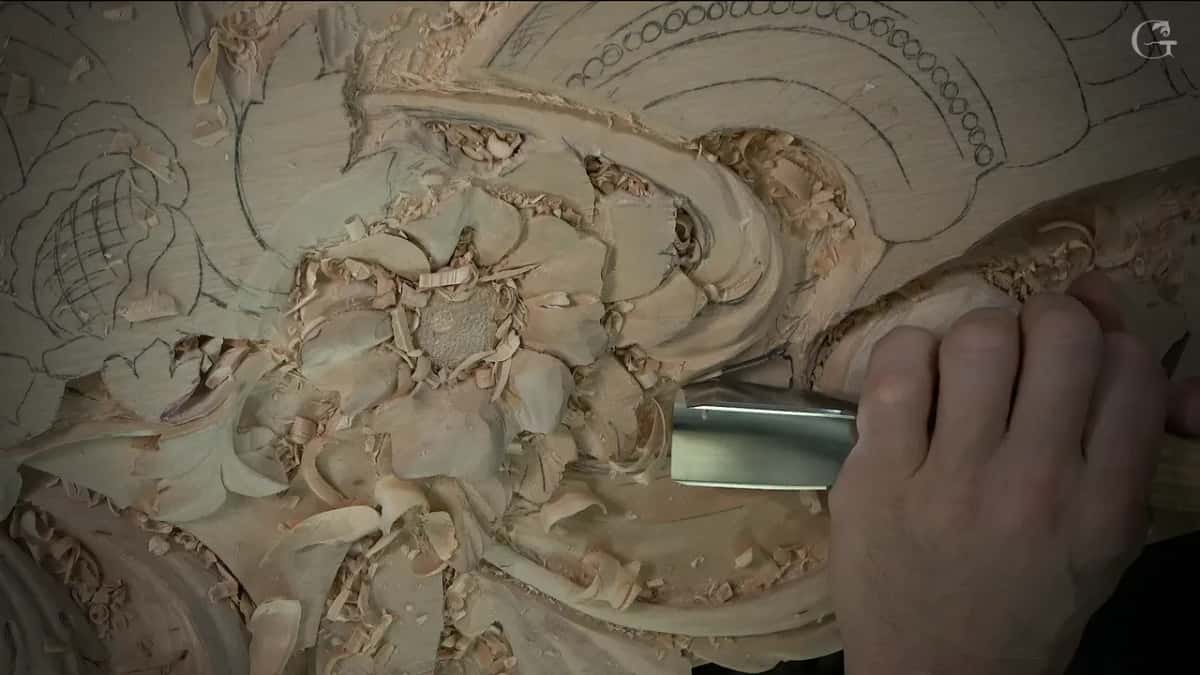
Next came a spoon number 11 veiner, from the same maker, to get rid of waste and outline a little. With that extra depth in, I turned one of the lights off so the camera could see how deep a shadow it cast. A little later I stopped and called the spoon the wrong tool. "I shouldn't use spoon in this case. I don't need it. I need just a straight tool." So a straight number three took over, and I worked from the opposite direction.

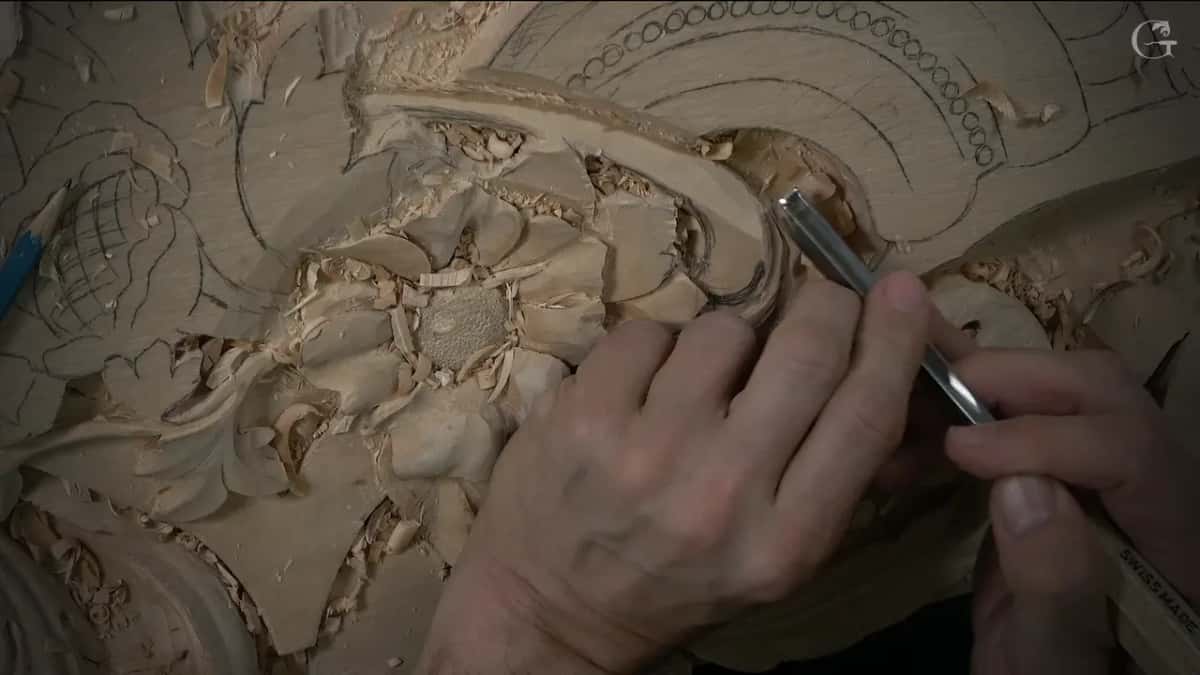
Video two starts with a center line and two planned concaves, one going each way, all the way down. The first one went in with a number 11, "same as always," only this time a Henry Taylor. A little after that came the line: "Still the same. Doesn't have to be Henry Taylor." What I picked up was what I called the normal one, seven millimeters, a number 11 by Pfeil, and I added that Pfeil does a much better job with elevens. Why I reach for their elevens is a separate lesson.
What did the other tools do on that leaf?
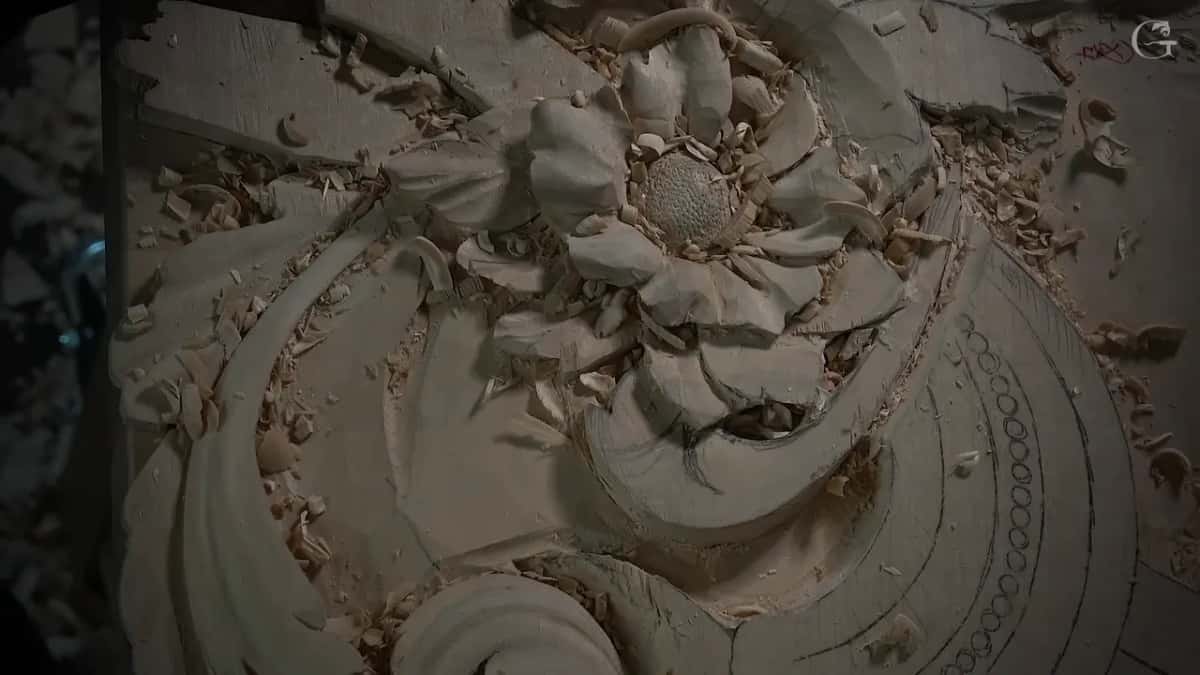
They finished the shapes, and in that lesson I named no maker for any of them. The eye of the acanthus came from a number 11 of about three millimeters (1/8 in). "Not my eye," I told the camera, "but the eye of Acanthus." Because there would be a possible eye, I had to move one movement a little closer to the line. The distance between one point and the next had to shrink, and then shrink again, so the shape would taper that way and look like it was rolling from underneath.
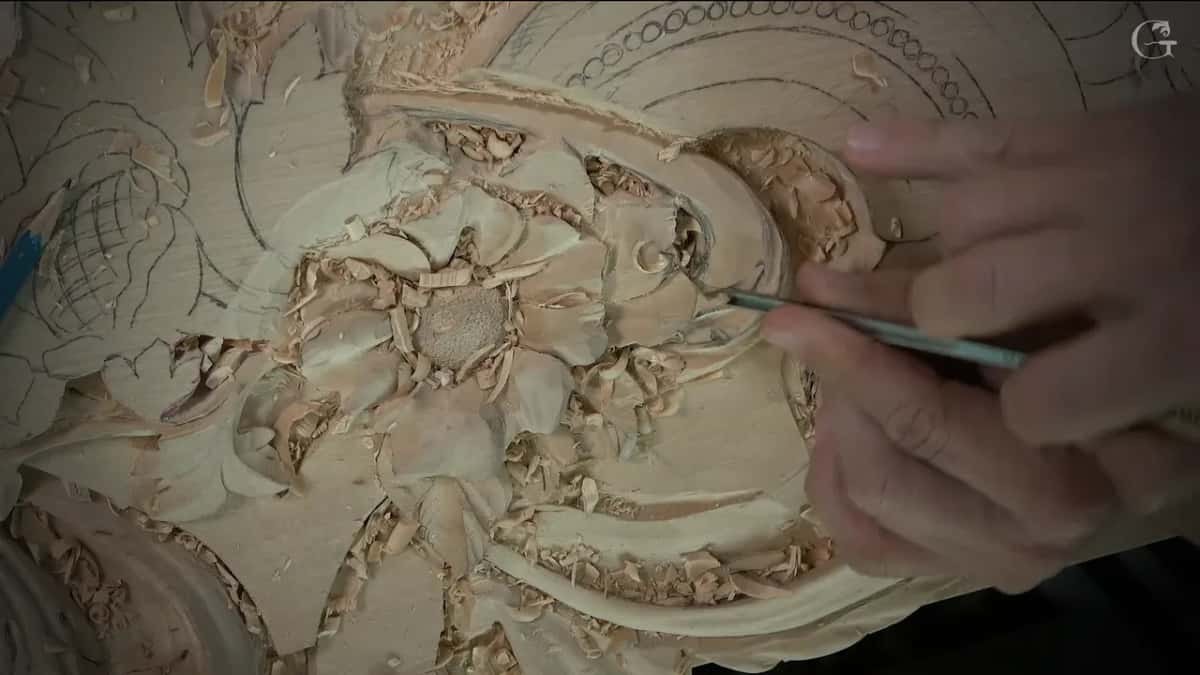
Then a number three of about 10 mm (3/8 in) blended away a sharp ridge I did not want to see. The pipe got a small concave from a 5 mm (3/16 in) tool. Halfway through I admitted it did not look too appealing yet. "But it will," I said, twice.
Video three brings out a big 30 mm (about 1 3/16 in) number 11 to start the concaves inside a shell. I tried it first to see if it was too big, and it turned out to be a great tool. I thought I could go deep there, just for the sake of shadows. I was working along the grain, though, and really had to be careful not to break it, so I did not force anything; a smaller tool could take care of the rest later.

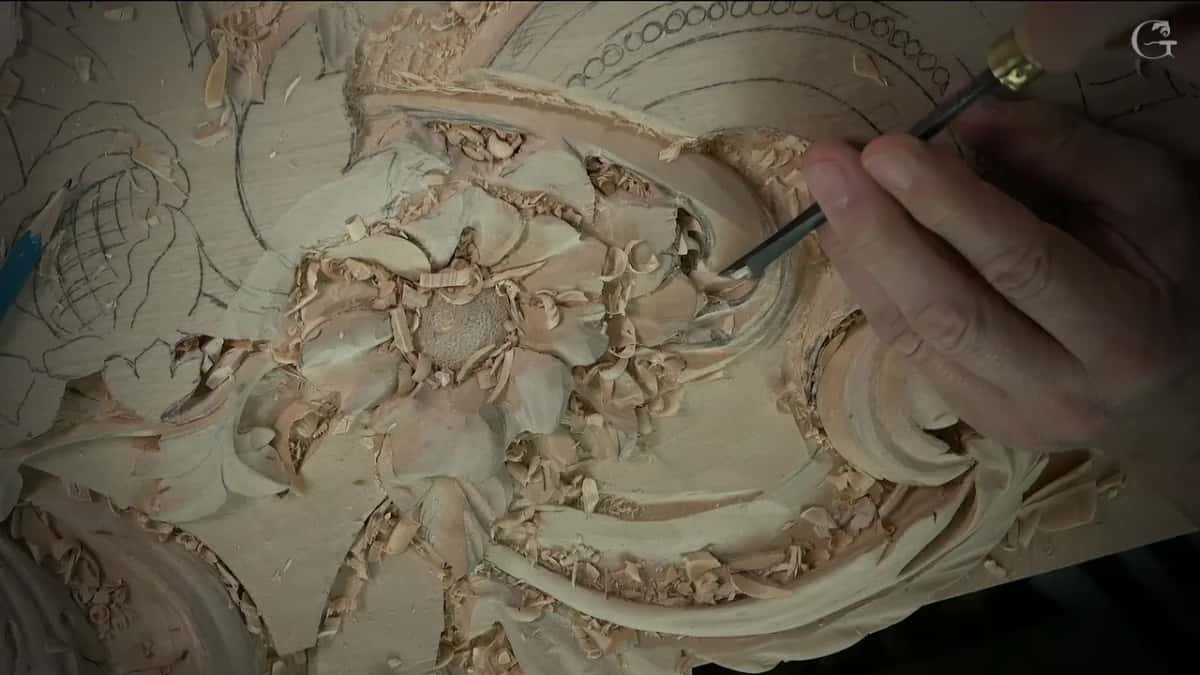
Right on top of the future convex went a number seven back bend, and it blended beautifully. Last came an undercut under one edge. I could have gone the other way, but I thought the shadow would look much better cast from that side. I started it carefully with a 5 mm number 11. It did not have to go really deep. At the very start of lesson 121 I had told the camera it was going to look awesome.
Does a carving need the Henry Taylor name on the handle?
In two of these lessons, with one of their tools in play, I said the job did not need that exact tool. The first time is the Pfeil moment above.
The second is in lesson 8 of Floral and Molding for the Panel, the course named for its flowers and its molding. There I took out a really interesting back bent, an antique Henry Taylor with a really short hook that gets into the tiniest spots. Back bends, I said, are always the best tools for that operation. Then: "Doesn't have to be that, okay? Any back bent will work." I even said I could probably get by with straight tools there, and that the back bent just felt safer.

In Grape Onlay lesson 3, carving grape shapes, I grabbed a bigger number three from them, about 19 millimeters, three quarter of an inch, just to prove a point. Even with that tool, I said, it's not about the tool matching the exact profile you are trying to get.
How do Henry Taylor gouges feel in the hand?
Light for the most part, with a slightly thin handle, and the steel is not shiny. In Hashemi Flowers lesson 23 I said I really like their tools also. They are absolutely not shiny the way a Pfeil is, but the metal is absolutely gorgeous. The tools are really light, you can resharpen them, and they feel really good. The handle is about the same as Ashley Iles, a little thinner, and it is a traditional English handle.
In the second Lily Box lesson I was talking about the toolmakers in Sheffield, England, and I said Henry Taylor is the other really good brand. When I hold one, I like how it feels in the hand while I carve, and even how the metal feels. It's not too heavy and it's not too light. Well, it depends on the tool, because some of them are lighter than others.
Workshop 140 of the Venice Room needed a preliminary convex. I chose a back bend of theirs for it and said, "I kind of like Henry Taylor tools, how it feels and so on." Then, I said, another tool would get rid of the edges.

In workshop 61 I said I love one line of theirs because it is super light, with really thin walls, a really good tool for softer wood like lime wood or basswood. In harder wood a thin tool like that can break easily, and that warning sits on the Part 5 page.
Why does a Henry Taylor veiner say 48?
The 48 is their own number for what the rest of the world mostly calls a number 11 veiner. In Furniture Panel lesson 25 I outlined with one and said that tool would be number 48 on the Henry Taylor scale, while most of the world would call it a number 11.
In workshop 69 of the Venice Room I picked up a number 11 of three millimeters, one eighth of an inch, and said that in this case it's number 48 because of the maker. I had done a live stream the day before on that very issue, the marking. "Every company marks differently." Seconds later I said it was a little too small, and I took a 20 mm (about 3/4 in) Pfeil number 11 instead.
Workshop 60 has the same stamp on a 3 mm veiner, and that page already tells it.
Back bends carry their own numbers too. In class 11 of the Grinling Gibbons class in Maine I took a Henry Taylor back bend and said it would be number four in London pattern and number three in European pattern, which is about the same. A back bend, I said, gives me the ability to just get in. I said I would use it upside down there, because I did not want to lose that roundness of the flower. The whole class was about carving in the style of Grinling Gibbons.
Which of their gouges show up in my lessons?
For this page I pulled lessons where I named the maker, and they are mostly number threes and back bends, plus a veiner and a few odd ones. Here is each one with the job it did.
| Tool | Where | Job |
|---|---|---|
| Number three, straight down pass | Venice 121 | Kept the line at 90 degrees, the only reason I gave |
| Spoon eleven veiner, same maker | Same lesson | Cleared waste, and then I called it the wrong tool |
| Eleven stamped 48, 3 mm | Workshop 69 | Carried the number 48 that most people call 11 |
| A back bend, London four | Maine, class 11 | Turned upside down, I said, to keep roundness |
| Antique back bent, short hook | Molding panel 8 | Reached the tiniest spots, though any back bent works |
| Big three, about 19 mm | Grape Onlay 3 | Grabbed to prove a tool need not match |
| Back bend seven, quarter inch | Grape Onlay 7 | Cleared what had to go, attacking from one side |
| Skewed gouges, slightly bent | Corinthian acanthus 5 | Handy in really tiny spots, sometimes scarce on the market |
| Number three near 10 mm | Furniture Panel 24 | Used by its corner, and still somewhat flat, I said |
The back bends in Grape Onlay lesson 7 were two of theirs: a number seven of about a quarter inch, then a number three back bend of about six millimeters, a quarter of an inch. In Furniture Panel lesson 24 I used just the corner of a number three, about 10 mm, and remarked that, although it's a Henry Taylor, a different brand, it's still somewhat flat.

Can you still get every Henry Taylor profile?
In the United States, I said, it's almost impossible to find all their sweeps and all the profiles. I think that's the limitation for them, otherwise I would buy a lot more. I do have some really good tools by them.
Skewed gouges can be hard to get too. In Corinthian acanthus lesson 5 I cleaned with a skewed gouge on a Corinthian acanthus leaf and said I have several, a right angle and a left angle, slightly bent ones from Henry Taylor. They come really handy in work like that, and the one in my hand was actually just a number three. Sometimes it's hard to find those on the market, and I said you can easily make one yourself: buy just a normal gouge, then reshape and resharpen it.

In Venetian Flowers Rosette lesson 3 I showed a really short bend, extremely short, and it was a Henry Taylor. On that rosette I mentioned that ones like it sometimes turn up on a site like eBay, and that they are really handy to have.
How many makers sit on my bench?
Several. In Greek acanthus leaf lesson 8 I said I have German made tools, some Swiss made, and three brands from England: Ashley Iles, original Marples and Henry Taylor. In my tools selection lesson Henry Taylor was one of the names I had to choose between, and what I would buy first lives on that page.
Three makers were named in lesson 121. More tools were used with no name spoken at all, on one relief leaf of a Venetian style panel. After my arrest at eighteen I carved furniture with a handmade knife and a gouge made from a nail.
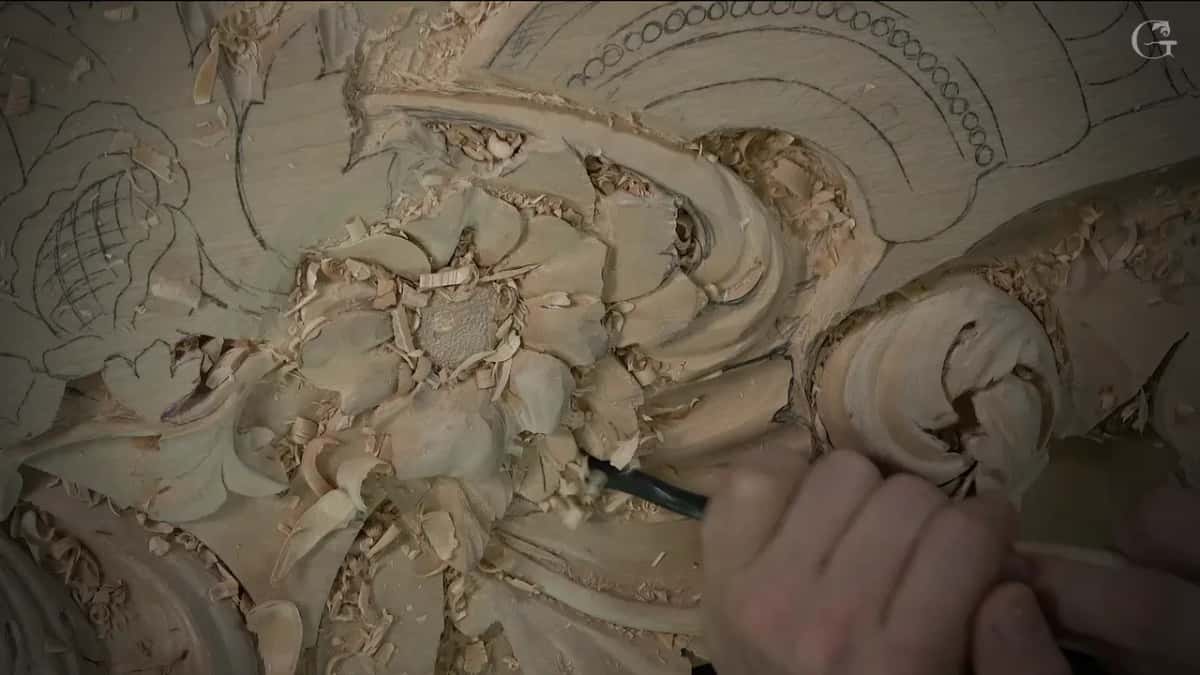
Do you already own a gouge or two from any maker? Would you like to watch a drawn line turn into a leaf that rolls under? Part 10 has twelve workshops, lesson 121 among them, and full access to every workshop opens all of them.
How it's done
- Name the job before the maker. For lesson 121 I needed a straight down pass on the line, so a straight number three went in, and the spoon veiner went back once I saw it was the wrong tool.
- Read the number stamped on the steel. The marking said 48 in workshop 69, and I called it what it was, a 3 mm number 11.
- Switch makers when another tool fits better. For the second concave I set their number 11 aside and took the 7 mm Pfeil.
- Turn a back bend over on a round shape. In class 11 of the Maine Gibbons class I said I would use their back bend upside down, so the flower would keep its roundness.
- Make a skewed gouge from a normal one. When a skewed gouge is scarce, I said to buy just a normal gouge, then reshape and resharpen it.
Frequently asked questions
Are Henry Taylor tools any good?
On my lily box project I called Henry Taylor the other really good brand, and I have some really good tools by them. I like the feel in the hand, even the metal. For a number 11, though, lesson 121 shows me picking up a Pfeil.
Why does a Henry Taylor veiner say 48 instead of 11?
That 48 is the maker's own number, and elsewhere the same tool is usually called a number 11. Workshop 69 has me saying each company has its own marking, right after I read the 48 off a 3 mm veiner, one eighth of an inch across.
Do the Venice Room lessons need a Henry Taylor set?
You can follow them without one. My lesson 121 has one concave opened with their number 11 and the next with a 7 mm Pfeil, and I said out loud that the name need not be theirs. That single workshop names three makers: Ashley Iles, Pfeil and Henry Taylor.
What to carve next