
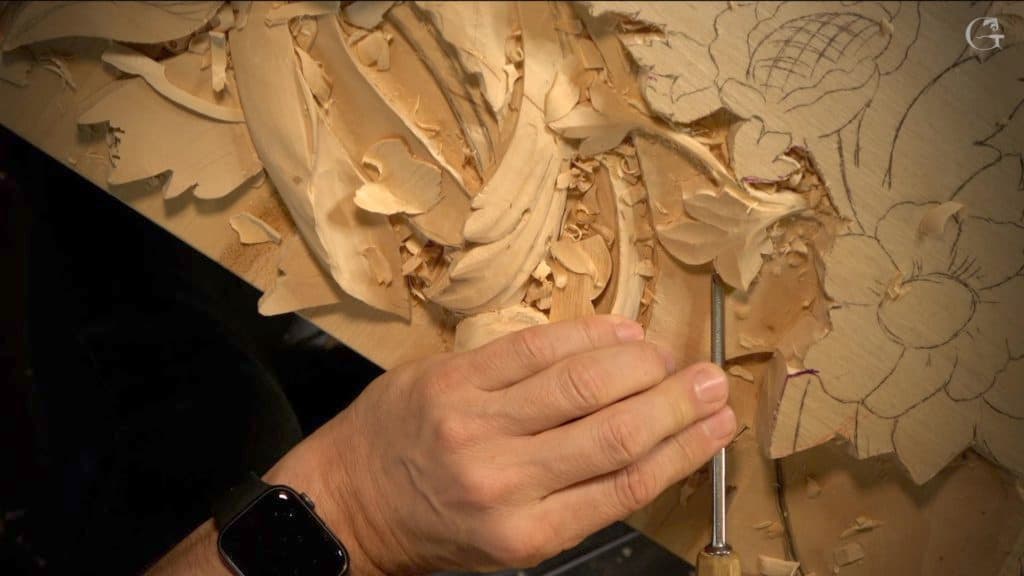
Alexander Grabovetskiy, woodcarver, School of Woodcarving · Published 2021
How do you clear wood chips out of a carving while you work?
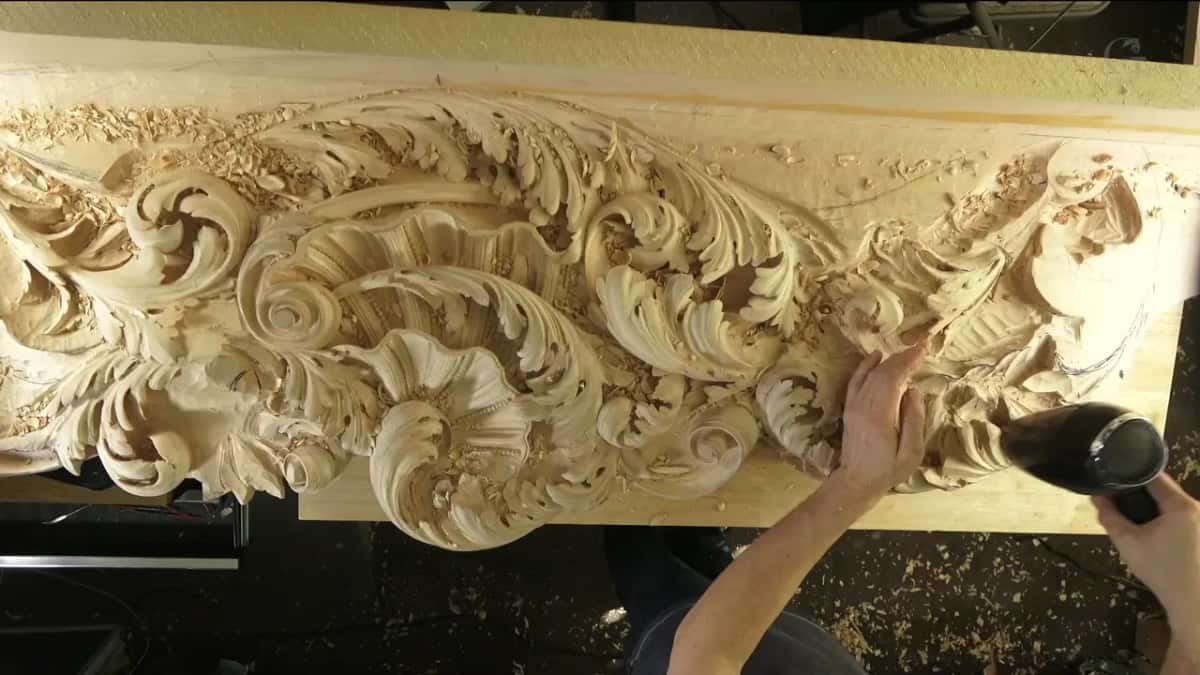
Quick answer: Clearing a carving as you work is a quick stop with a brush, a hair dryer or now and then a vacuum cleaner, so you can see the shape and the shadow you just made. In my Venice Room lessons I said I would rather skip the air compressor, since water can collect in it and it is loud.
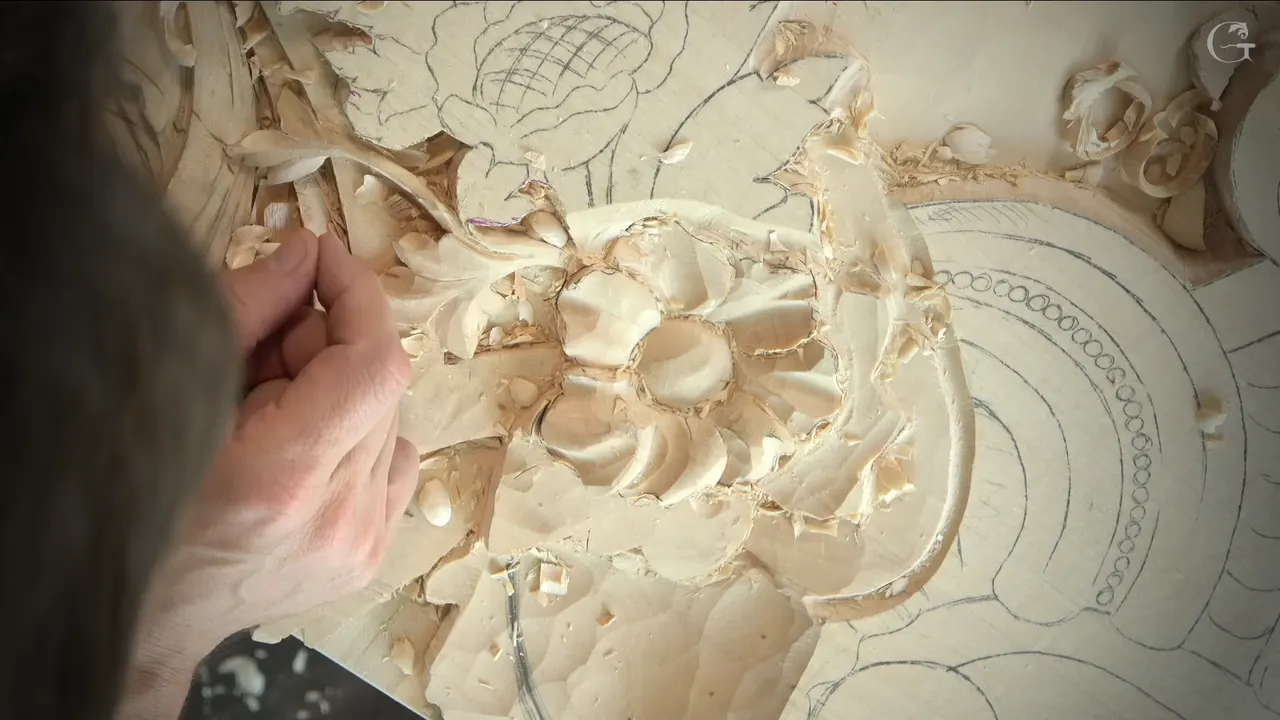
Clearing wood chips out of a carving is a small job I do many times in one lesson, and mostly I do it so I can see what I just carved. In workshop 115 of the Venice Room I talked about using the hair dryer, changed my mind, and swept a flower clean with a brush. A few seconds later I said, "And you already see we created a somewhat nice, simple, but still nice-looking flower."
That is how to clean a wood carving while it still sits on the bench, at least in my shop. Dusting a finished piece on a shelf is another subject. Here it is the chips and junk that pack into every hollow while the gouge is still in your hand, and how fast they hide your work.
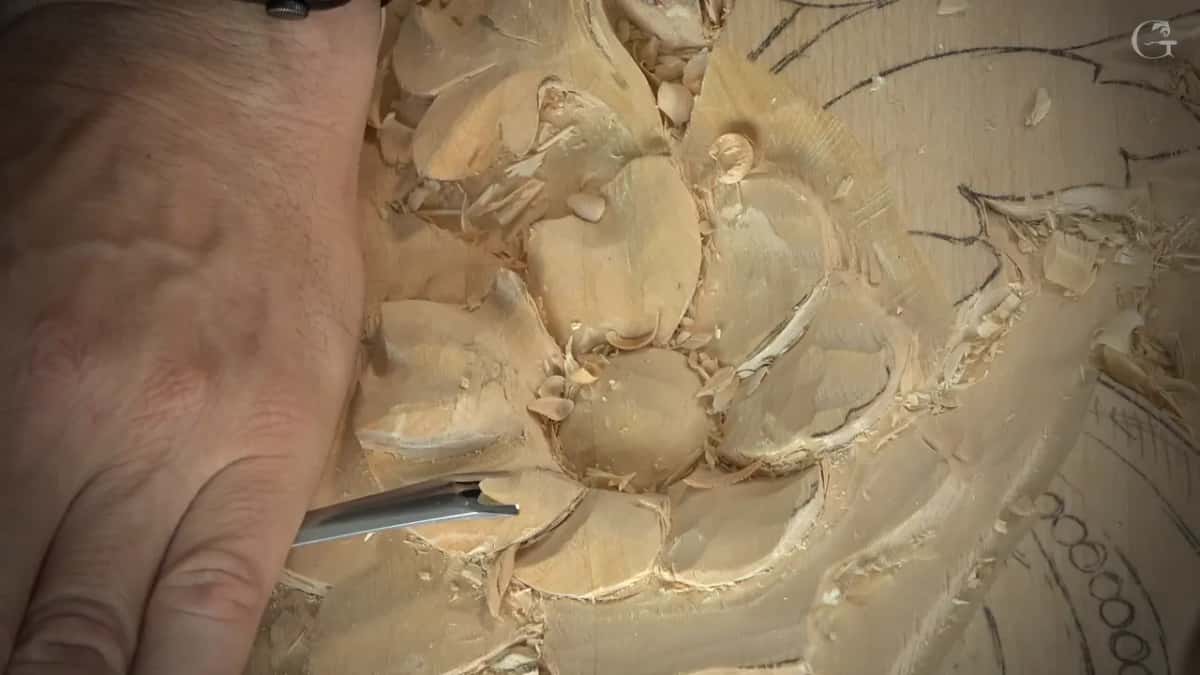
Have you ever carved a deep hollow and lost sight of it? Did you lean in close to check it and find nothing but a heap of chips sitting right where the shadow should have been? Take the chips away first, the way I do in these lessons, and then look again.
Chips get into everything. You know that already. Below is what I said about them in fifteen moments from my lessons. They come from Venice Room workshops, two other carved panels, a lily box and one livestream. You will read what I cleared them with, why I would rather leave my air compressor off, and what I saw once a hollow was empty.
What I reach for when the hollows fill up
A brush, which is all I needed on the workshop 115 flower.
The hair dryer, an old one, which I showed on a livestream when the subject came up.
Now and then a vacuum cleaner, though not on camera.
Plain blowing, which plenty of carvers just do.
The air compressor I would rather skip, since water can collect in it and it makes a lot of noise.
One look at the whole piece right after, since seeing it is why I stopped.
What did I clear away in workshop 115?
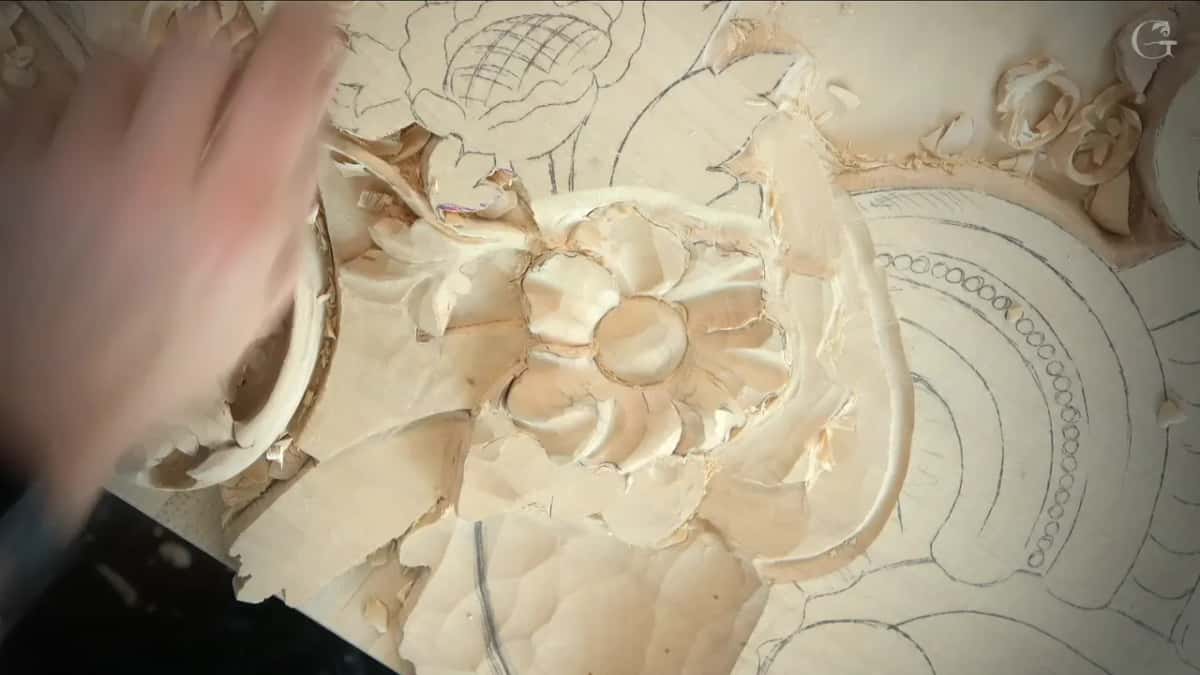
Petal chips, mostly. Workshop 115 is three short parts of about eight minutes each, all on one small flower of my Venetian panel and the leaves around it. In the first part I dug concaves into the petals, one of them with a big number 11, 20 mm (3/4 in) wide, "to create a deep concave." Later in that part I said, "I've got too much mess going on around, which is okay," and in the same breath I said I could not go any deeper, because I was pretty close to the final depth.
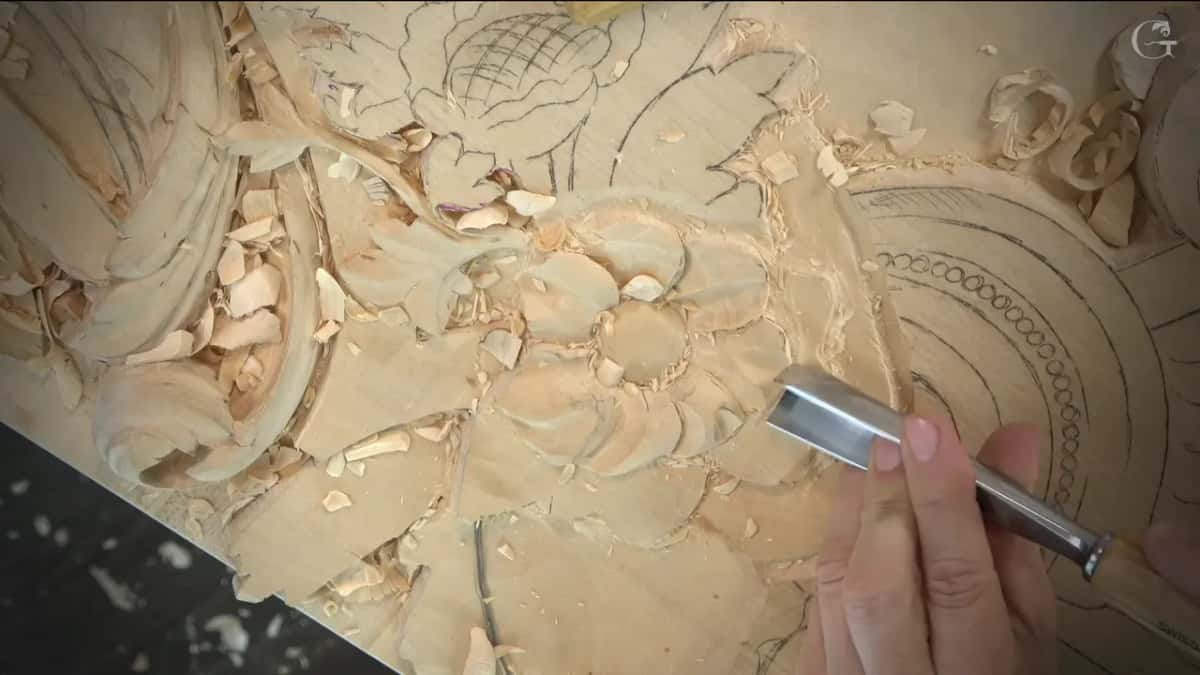
I kept carving with the mess in place. The second part opens with the flower almost shaped. "Let me use my hairdryer," I said, and right after it, "Or maybe not. I'll just brush it out." The recording shows the brush sweeping for a few seconds, and then there it is, a flower where a heap of chips had been. I give no reason on camera for skipping the dryer.
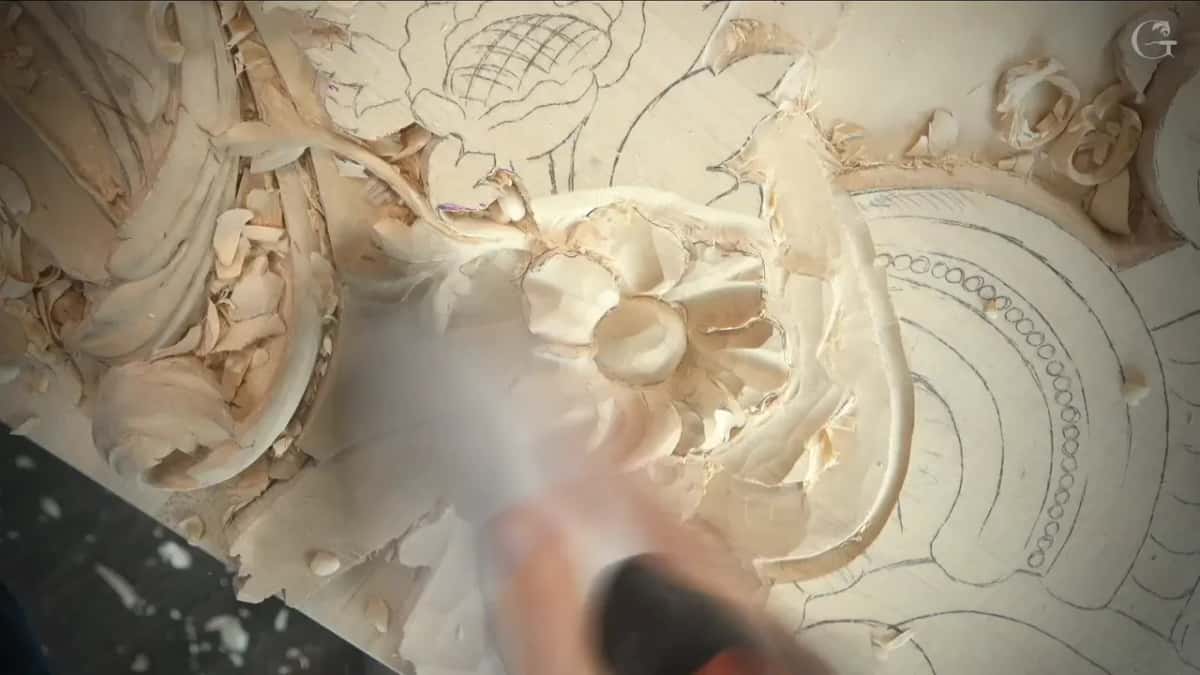
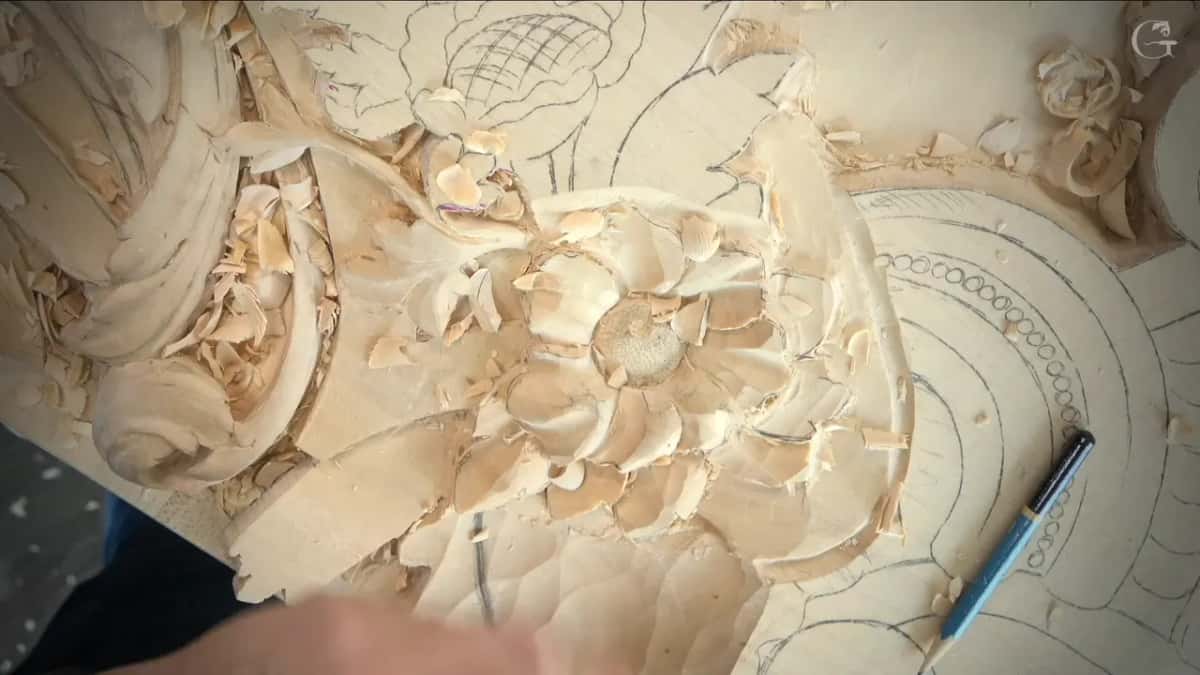
Later in that part I showed the flower from above and said, "It's not final. It still needs to be cleaned, remove some of the mess." Next I planned to clean and soften it a little by going around with upside down tools, and after that the leaves and the undercuts would come.
The third part moved on to those leaves, and what I did with them is on the page about the small details I only indicate.

Why clear the chips before you judge a shape?
Shadow is what I carve for, and I said it plainly in workshop 115 while I dug the petals: "So that's all about the shadows and exaggeration of real life." Every stop on this page ends the same way, with me looking at what the empty hollow shows.
Over in workshop 56 of the Venice Room I reached for what I called my "trusty new tool, my hair dryer." The moment the hollow was clear I asked, "See how deep and nice shadow I created?" I called it a gorgeous shadow. Next I pointed out some glue down there, since I had dug inside the first layer, and said I had to excavate really nicely around it.
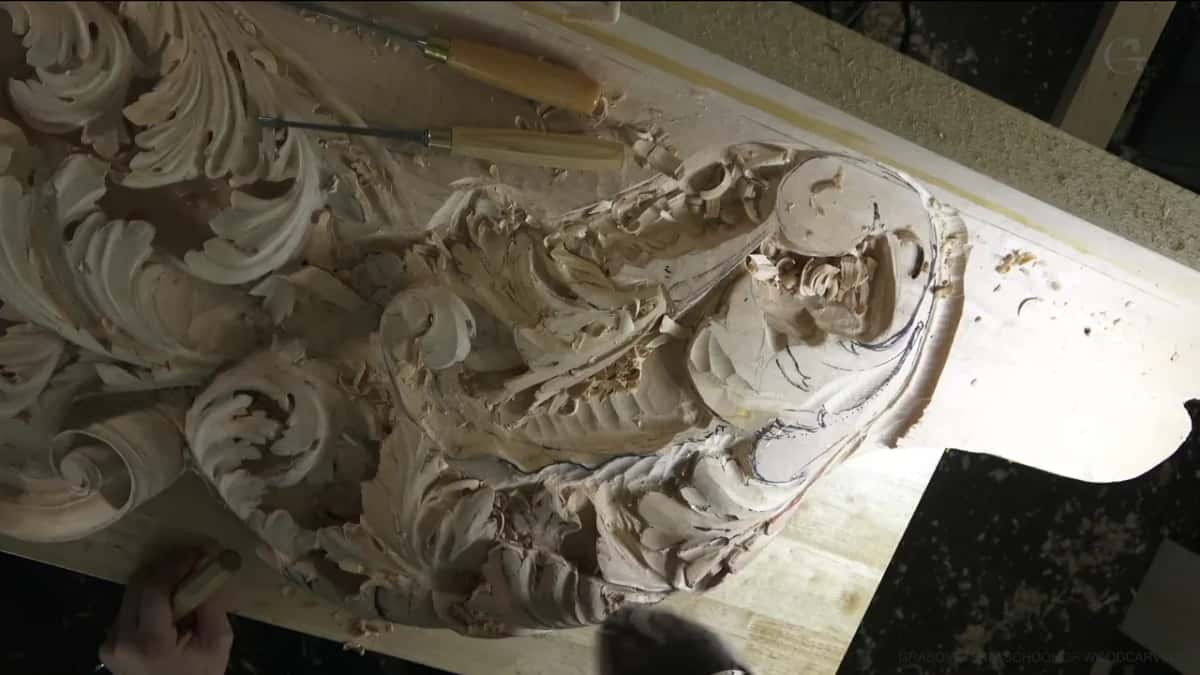
Two workshops later it was the same moment in fewer words. I called for a hair blower, a hair dryer, and said, "And you can see how beautiful it already becomes." That was workshop 58, and I said the same was going to happen everywhere, off camera.
Workshop 51 had it twice. The first time came after a one inch (25 mm) number 3 had made what I called a "preliminary clean canvas." I used my fan or hair dryer on the chips, said, "hopefully, you can already see," and showed you the whole thing. There was a hot spot from my lamp on the wood, and I said that was okay. Before that workshop was over, the dryer came out again, and my words were almost the same: "And here you go, how it looks in overall design."
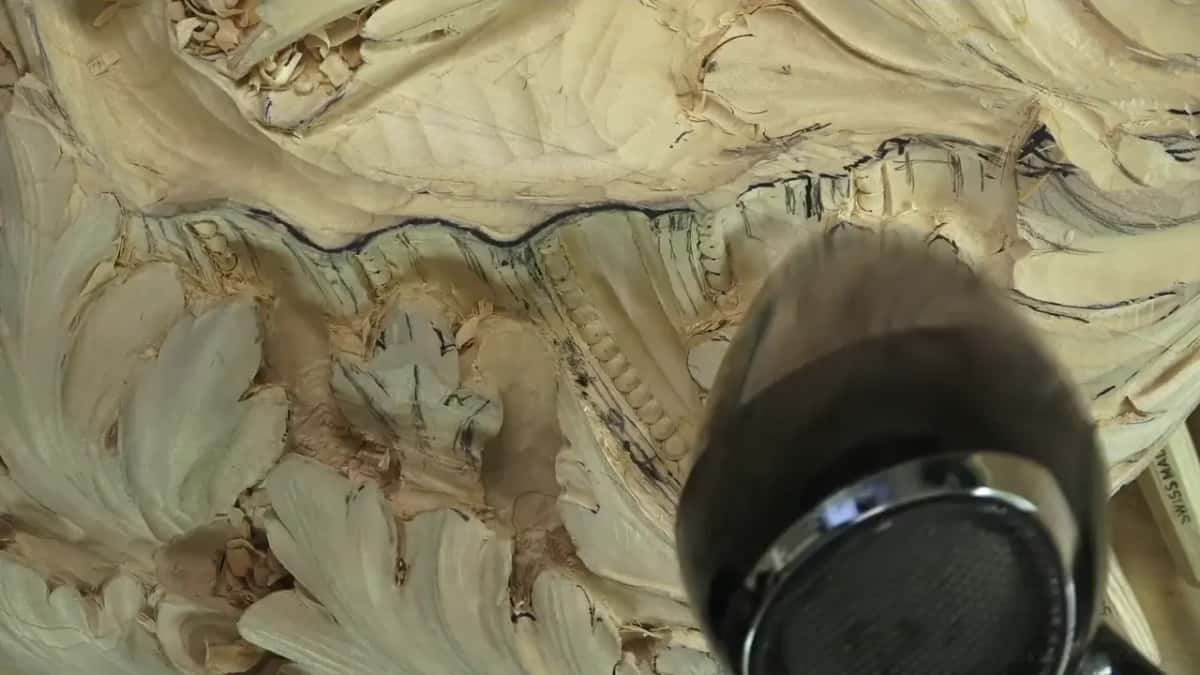
Over in workshop 53 I carved from the opposite direction and undercut toward the inside first. Only then did I say, "now all the junk is free, not connected," and pick up my blower. After it came, "Beautiful development. I love it. Look at the overall picture, how it just flows nicely."
On my furniture panel the brush showed me something to fix. I had just gone over a spot with reed rush and taken the paper off, and I said, "Now I need to brush it. And looks like this spot also needs to be touched." This little high spot, I called it, and I went back to the edge right there.

How to clean a wood carving's hollows as you go
Plain blowing is the usual way. In the Venice Room's workshop 50 I showed you the junk piled on my board, "a lot of chips," and said, "usually the wood carvers, they just blow on it, and it's flying away. But there's another trick."
The trick was a hair dryer, "if you have an old hair dryer and if you don't like the noise of just the air compressor." Then I used one. "Couple seconds, and it's all gone," I said, and went straight back to the big chunk I was about to develop.
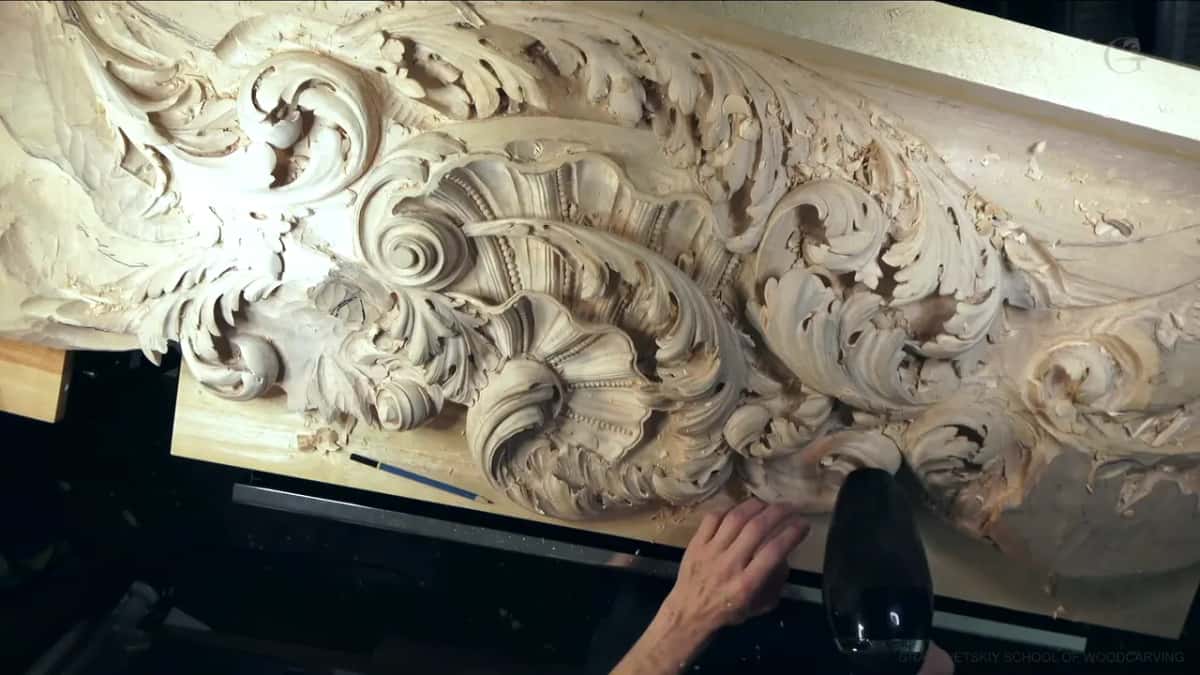
The floral and molding panel got a small joke. "Just too much mess," I said, and then, "Need to take that mess out, and you'll understand what I'm doing." I did not want you to hear the blowing. And I warned that when I say "blow this piece," it doesn't mean I'm going to create an explosion. It means a hairdryer, a hair fan. Then the dryer did its work, and after it I said, "Now it looks clean, and I can continue working."
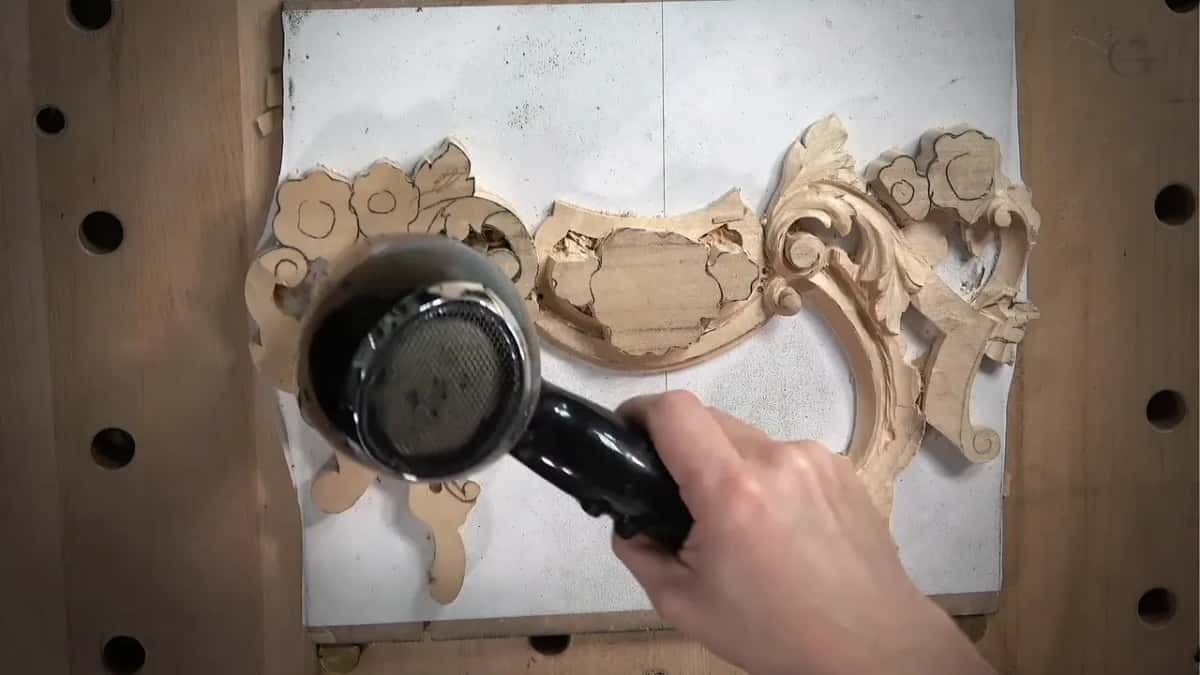
Why would I rather not use the air compressor?
Water, first of all. Back in Venice workshop 54 I said, "I like my hair dryer technique actually much better than air compressor," because an air compressor "accumulates some water, and I don't really want the water on my piece."
Even if you're going to drain it once in a while, I said, there's still a possibility there's going to be some water. Then I was fair about it. "You could use air compressor with no problem, but I feel much safer not to."
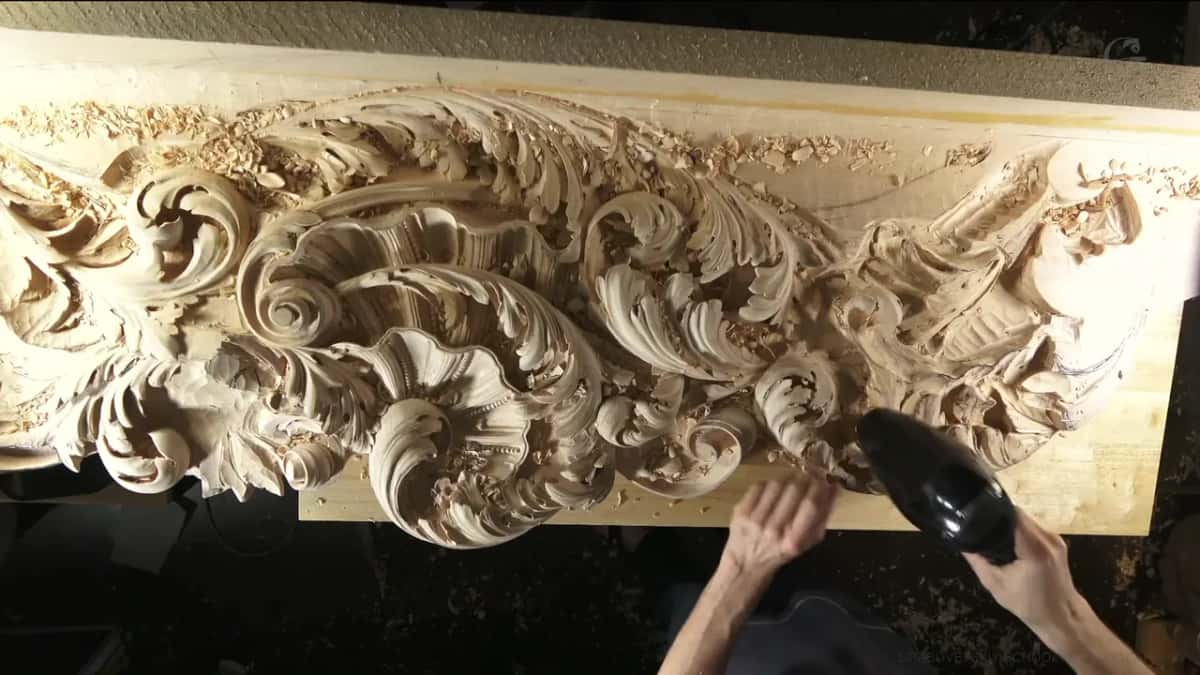
On a livestream in April 2020, someone watching wrote that they use shop air to blow the chips away, and sometimes a vacuum. My answer was to show my old hair dryer. It just doesn't spit any water, I said, and with a compressor it depends what kind you have: "If you don't have a dryer, it actually can spit some water on that." The dryer in that line means one fitted to the compressor, a compressed air dryer, and not the one for your hair.
Why does the noise matter?
My second reason was the noise, and I gave it more than once. Workshop 54 put it this way: "Air compressor gives you a lot of noise. It's also downside of air compressors." The livestream got the same answer: "And also it's noisy." Even the dryer counts: on the floral panel I said I did not want you to hear it.
And back in workshop 50 I offered the dryer to anyone who finds the compressor too loud.
When is a brush all you need?
The brush did the whole job on the workshop 115 flower, and on my lily box it came out again and again. In lily box lesson 11 I was working inside a concave where one side was in my way, and I said, "let me brush it out, some of the waste." With the waste gone I said I really, really, really like that extreme concave, and went back in with a 1 mm (about 1/32 in) number 11 to undercut it again.
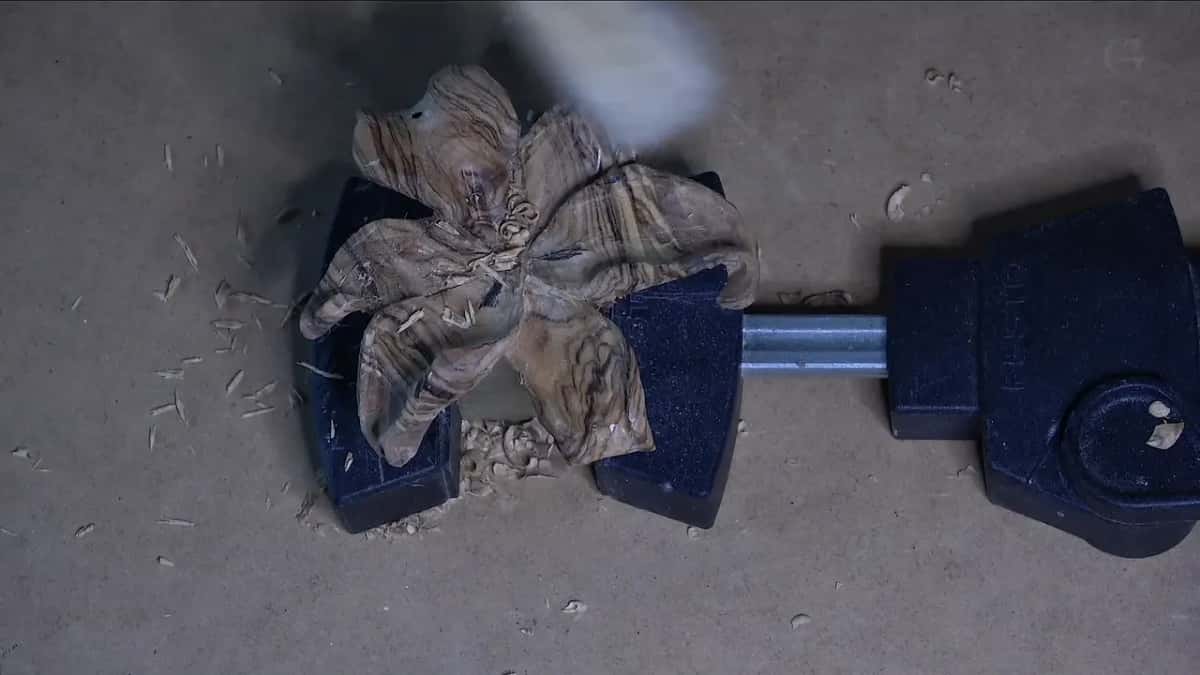
In lesson 6 of the same box the brush was a question as much as a cleaning. "Let me brush it and see if I can go." After one look I said, "Maybe I can attack that from opposite side."
Does a vacuum cleaner belong on a carving bench?
A vacuum cleaner has a place in my shop too. A few seconds after those words about my compressor, in the same workshop, I said, "Yeah, you could vacuum it. Use a vacuum cleaner. And I do that sometimes also." On the livestream I said I use a vacuum cleaner too, but on a camera I don't want to use it. I gave no reason there.
Do the chips have to come out before you carve on?
Plenty of times I carve on with the mess in place. Workshop 115 is one, and workshop 54 is another: a couple of minutes after the dryer I was carving what I call an escape movement with a bigger number nine, and I said, "Although it's messy, but it's okay. It's still beautiful."
Other times the junk stops me. Earlier in that same workshop I said, "I've got so much junk inside of this hole. Maybe I should use my hairdryer and clean it little bit." With the hole clear I thought out loud about bringing one part a little farther and adding detail inside, "not the easiest part to do," and then about a deeper excavation instead.
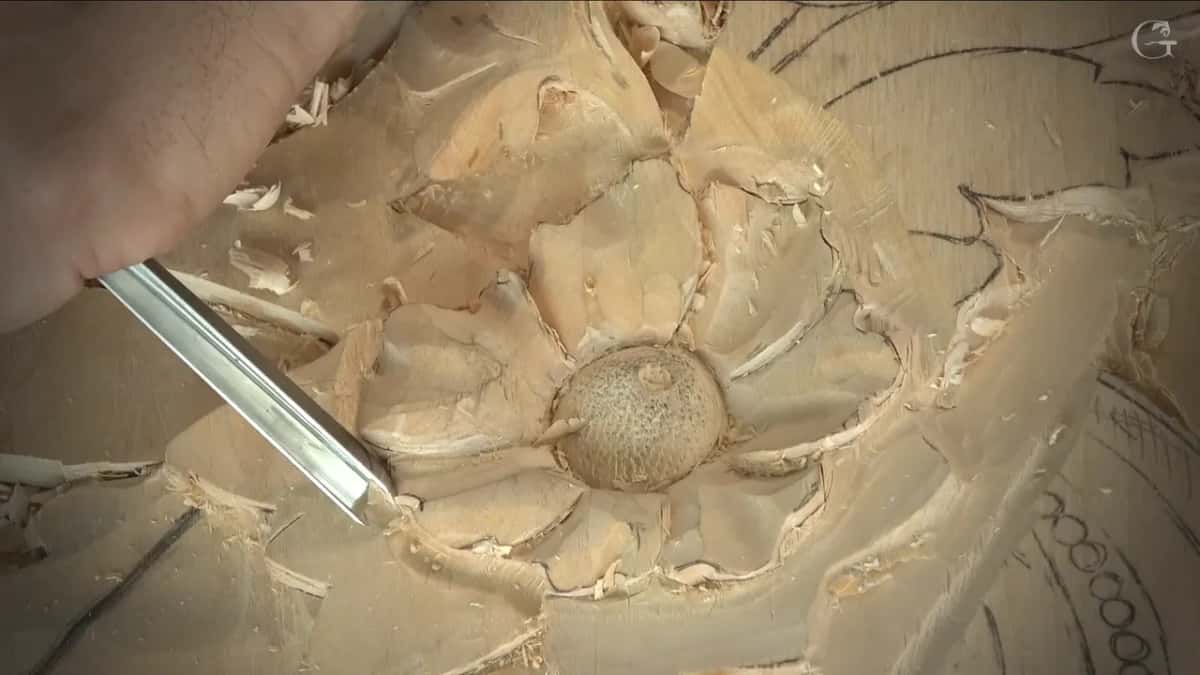
Then there was workshop 45, where the dryer showed me a lot of junk inside and a really good result, except for one part that still wanted cleaning, "which not a big deal at all." All it took was a number nine and some excavation underneath.
Fifteen stops to clear a hollow, side by side
Here they are in one place. The middle column is what came out of my hand, and the last one is what I said when the hollow was clear.
| Lesson | Tool | Said |
|---|---|---|
| A small flower, workshop 115 | Talk of the dryer, then a brush instead | Still nice-looking flower |
| Before the chunk, workshop 50 | Dryer in place of blowing, which carvers usually do | Couple seconds, and it's all gone |
| Venice Room 54, a hole | My hairdryer, and then a thought about more detail inside | Not the easiest part |
| Same workshop 54, later | Dryer over compressor, which I like much better | Water on my piece |
| That April 2020 livestream | The dryer I showed on camera, plus a vacuum cleaner off it | Just doesn't spit water |
| The floral and molding panel | Hairdryer, or hair fan, and a joke about an explosion | Now it looks clean |
| A framework in workshop 56 | My trusty new tool, which is the hair dryer | Gorgeous shadow |
| Two parts of workshop 51 | Fan or hair dryer, once after a one inch number 3 | You can already see |
| Undercut first, workshop 53 | Blower, after an undercut had set the junk loose | Beautiful development |
| Hair blower in 58 | Hair blower, with the rest left for off camera | How beautiful it already becomes |
| Deep hollow, workshop 45 | Dryer, then a number nine for what it showed | Not a big deal |
| Furniture panel 22 | Reed rush, then the brush, which found a spot to touch | This little high spot |
| Lily box 11 | Brush work inside the extreme concave, one side in my way | I really like it |
| Box lesson 6 | The brush, to see whether the tool could get in | Attack from opposite side |
Which lessons show the dryer and the brush?
Every lesson named above opens with full access to the school, and workshop 115 sits in Part 10 of the Venice Room, between workshop 114 and workshop 116, on the same relief panel as the rest of this carving. The acanthus on the furniture panel, the molding on the floral panel and the livestream are there too.
Is there a hollow on your bench right now with chips lying in the bottom? Take a brush to it, the way I did on that flower, and look again.
How it's done
- Free the junk first. First I undercut toward the inside in workshop 53, until the junk was free and not connected, and only then picked up the blower.
- Brush a small spot. On the flower of workshop 115 I changed my mind about the dryer and brushed the chips away.
- Blow out deep hollows. When junk had piled up on the board in workshop 50, a hair dryer cleared it in a couple of seconds.
- Check the whole carving. Right after clearing, I showed the whole piece on camera and looked at how it flowed.
- Fix what the clean wood shows. Brushing the furniture panel turned up a high spot that needed another touch, and I went back to it.
Frequently asked questions
Can you use a hair dryer to blow chips off a wood carving?
A hair dryer, an old one, is exactly what I use, and I have shown it on camera. In one Venice workshop I called it another trick for anyone bothered by a loud air compressor, and within a couple of seconds the chips were gone.
Why not blow the chips away with an air compressor?
Water can build up inside an air compressor, and even if you drain it, I said, some may still reach the piece. I also said you could use one with no problem, but I feel much safer not to. Noise is my other reason.
Is it okay to leave chips in a carving while you work?
A messy hollow is fine for a while, and I say so on camera more than once. One messy spot in workshop 54 was still beautiful to me. Once I want to judge a hollow or its shadow, I stop, clear the chips, and look the piece over.
What to carve next