
School of Wood Carving reviews come from named students, and they are printed here word for word. Doctors, an architect, a retired Navy man, an oil rig worker in India, woodworkers with twenty years in the trade. Nothing inside their quotation marks has been edited, including the parts where somebody asks me for more.
Testimonial pages usually make me suspicious. Five stars, no surnames, and every sentence sounding like the same person wrote it. So this one runs the other way. Full names where the student gave one, their job or their university where they mentioned it, and whole paragraphs rather than one flattering clause lifted from the middle.
Read the complaints too. A student wanted a sharpening demonstration that was not filmed yet, and said so at length. That stayed in.
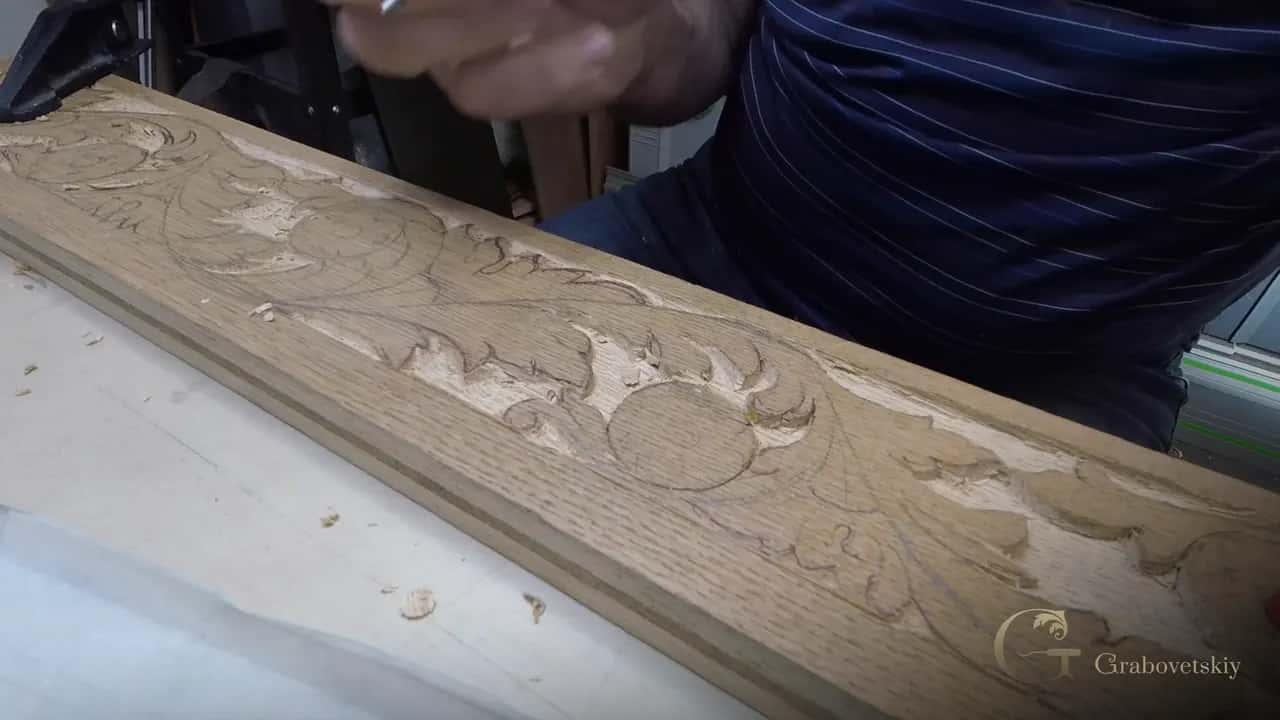
Panels like this are what make people write in asking whether they could ever get there.
What do the reviews keep coming back to?
Camera position. Several students reach for the word shoulder without having read each other.
Sharpening changes more minds than any carving project. One student got a V gouge razor sharp and called that alone worth the month.
Mistakes stay in the footage. The corrections are what people say they actually learn from.
Design surprises almost everybody, including an architect who has sat through plenty of formal design classes.
Replies come back. Email turns up in four of the reviews below, and a phone call in one.
Absolute beginners and twenty year professionals are both here, and both say the pace suits them.
Does watching a video really work like an apprenticeship?
Students keep saying yes, and they reach for the same image without comparing notes. Somebody standing at your shoulder, the way people learned this before video existed.
Mike Mason took the week long class at the Marc Adams School of Woodworking and then joined online.
There is a lot of value in watching someone carve, without the use of time lapse or heavy editing. As Alex says, it is a lot like being an apprentice, watching the master closely in order to learn the techniques involved. It helped me to see the pace of the carving, how the design is developed as things progress. Many of the students left with very nice pieces, including Tom, who had never carved anything before the class and was using his late father's carving tools for the first time.
Marc Adams School of Woodworking, Carving with a Classical Flair
That detail about Tom is the one I remember from the whole week.
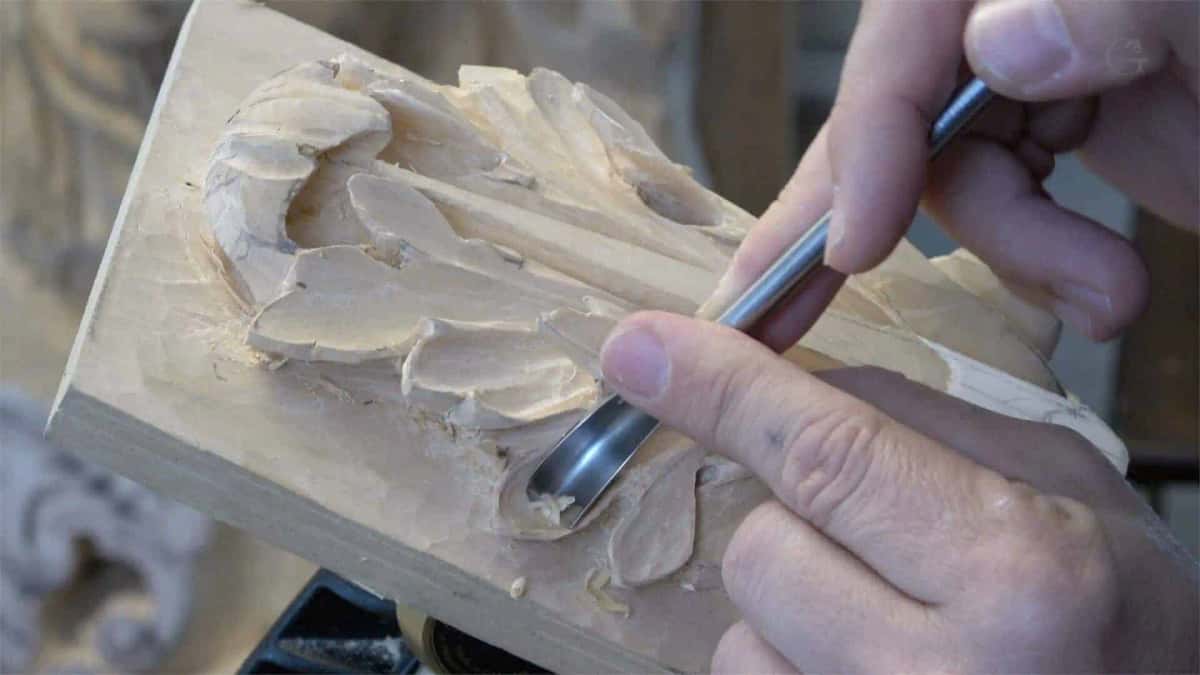
The camera sits about eight inches from the steel, and that distance took two years to settle on.
Ten inches across, 254 millimeters. Every beginner project starts with a number like this.
Can somebody who has never carved start here?
Two reviews below were written by people who had never held a gouge. Both finished the beginner course anyway.
Bradley Apelgren wrote his in March 2018, a couple of months after joining. He had never touched a carving tool before that winter.
Alex's model of apprentice watching a master works surprisingly well online. The camera angles are great, the courses are taken with every step explained, Alex chats away about carving history, his life, his thoughts and his opinions while he is carving, just as if he is chatting to an apprentice watching over his shoulder. He makes the odd mistake which is quite refreshing, but more importantly Alex shows how he corrects these mistakes and that is super valuable to a beginner like me.
Written 21 March 2018, after completing the beginner course
Paul Decker came in after a year of piecing it together from free clips.
I had only been carving for A year when I came across Schoolofwoodcarving.com, up until then I was relying on limited videos from YouTube to learn how to carve. Needless to say my progress is slow but once I join the school my skills have greatly improved.
Retired Navy, woodworking hobbyist
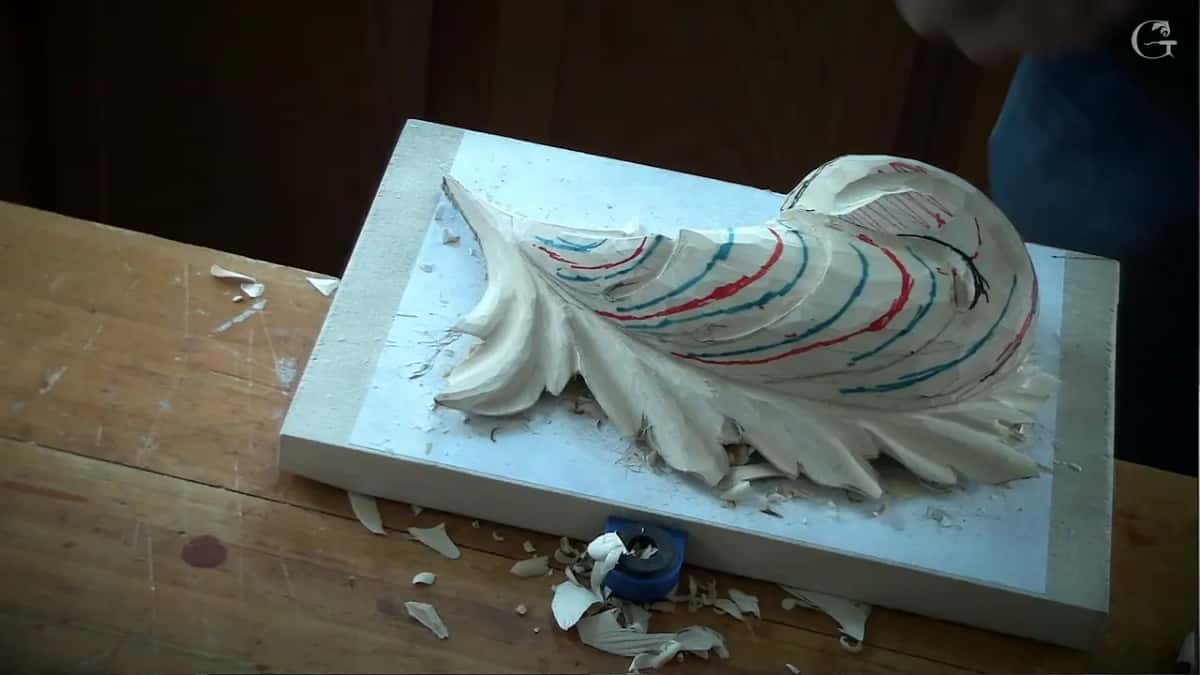
Red and blue marker. My own teacher used chalk and thought marker was cheating.
What if you can only practise half the year?
Alwyn Suares works twenty eight days on an oil rig and twenty eight days off, and joined anyway. His English is his second language and I have left every word of it alone.
I just joined the course but right now as I work on oil rigs and work 28 days on and 28 days off, I can practice only in my off days, still happy when watching videos and learning basics. As I am a DIY hobbyist and want to be a carver. Very very impressed with the overall quality of your teaching I decided to buy 1-year membership even though I can practice only for 6 months in a year.
Oil rig worker, India
Six months of carving out of twelve, and he still counted a year of tuition worth it. That one stuck with me for a long time.
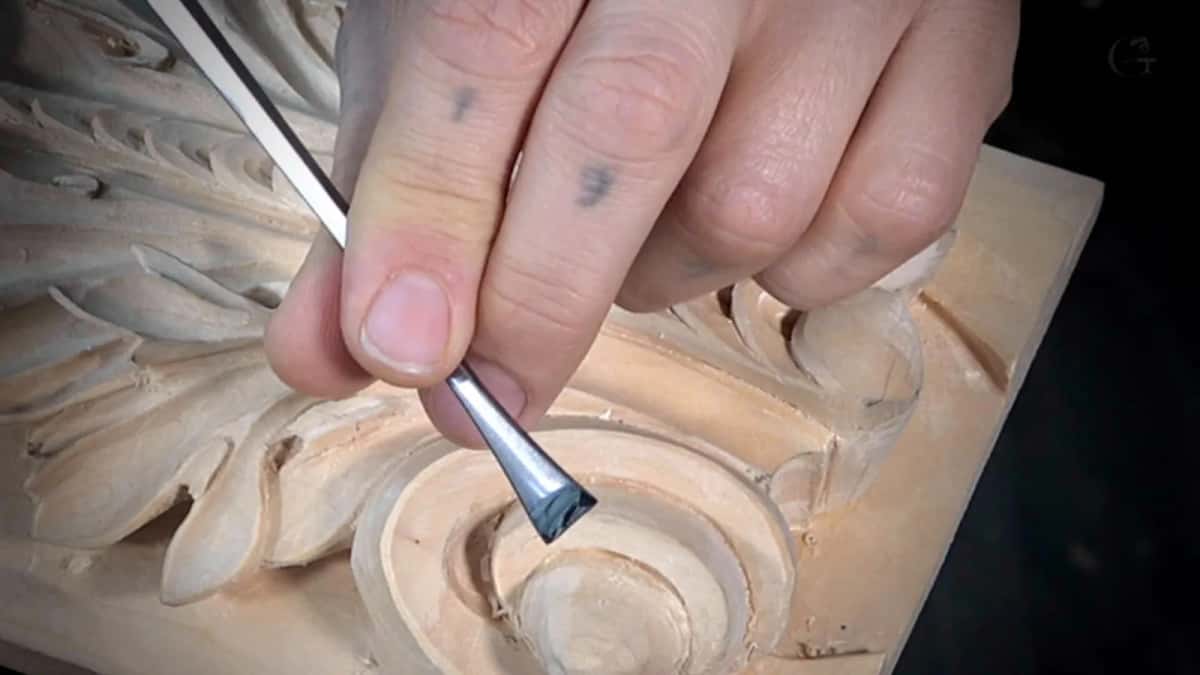
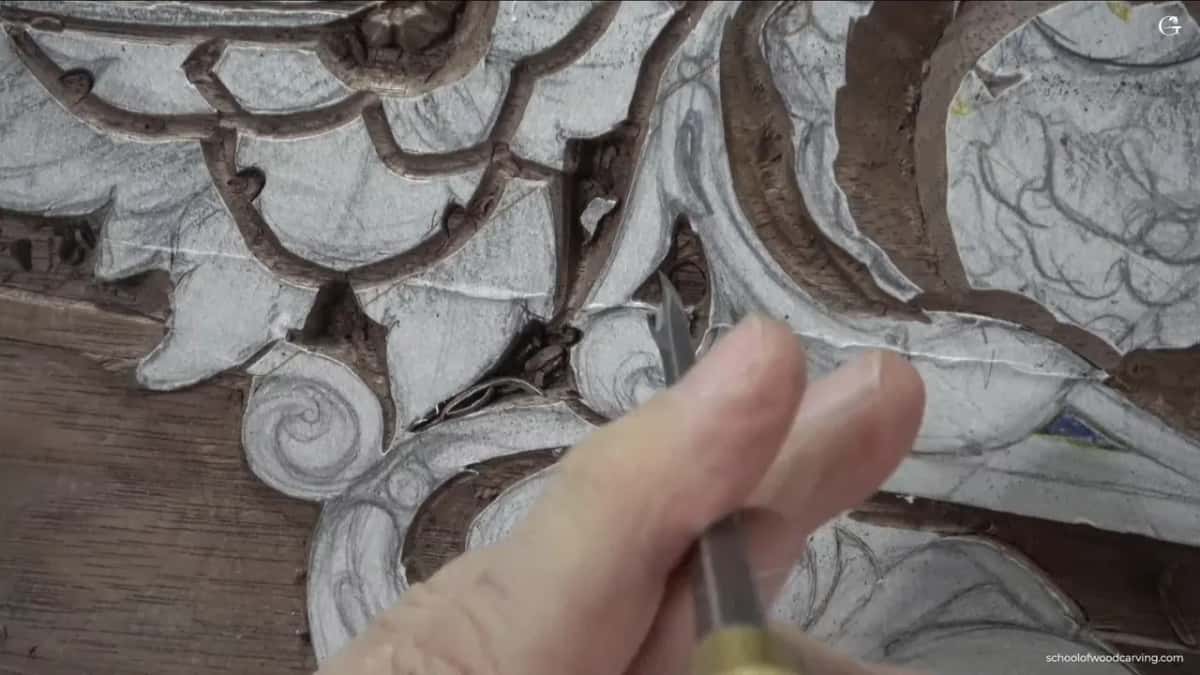
A dull tool cannot make this shape. It tears the middle away and leaves a crater in place of an eye.
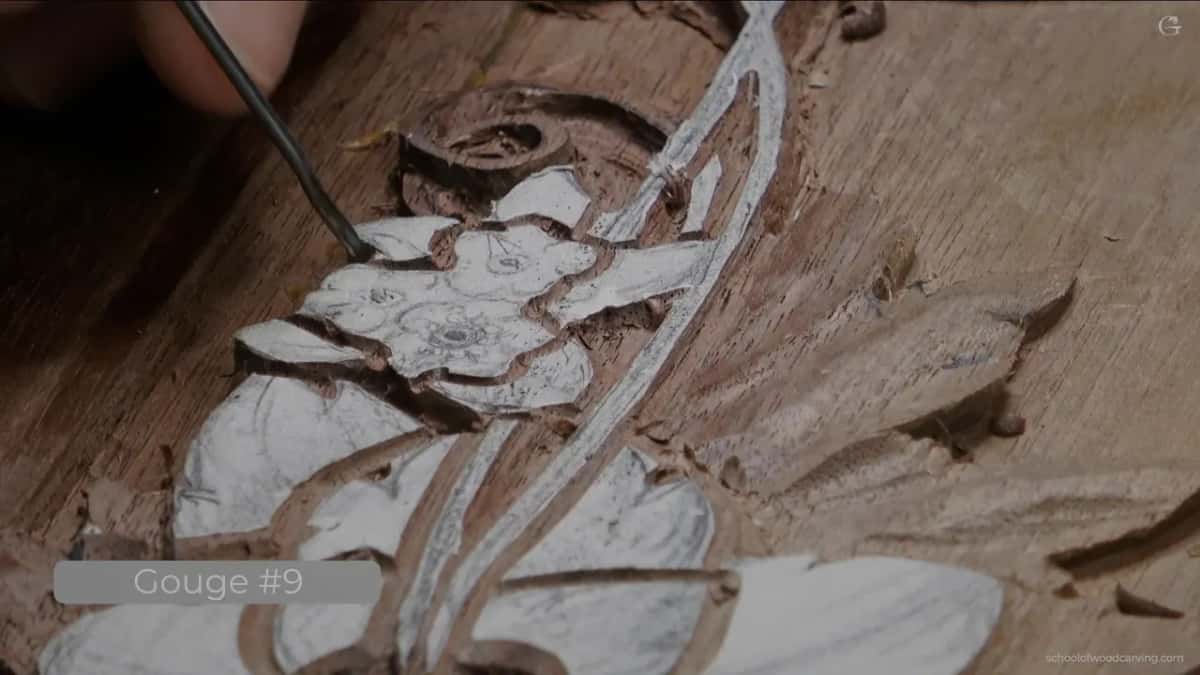
Number 9, straight down. The caption on screen names it because students always ask.
What does a working woodworker get out of this?
The ones with decades of shop time come for ornament and for relief work, not for technique. Two of them started selling carving to their own clients afterwards.
Nate builds custom furniture and houses, and had been at it about twenty years.
After 11 months of being a member of your school, I have realized that there is so much to learn, but am enjoying learning it! You have definitely helped me to understand what it takes to be a successful woodcarver. I am enjoying it so much that I have added it as a service that I offer to my clients.
Custom woodworker and carver, twenty years in the trade
He also described what he had on the bench that week, a plastalina model for a fireplace mantel with pine boughs and pinecones. That sentence told me more than the compliment did.
Steven Winters is fifty nine, and came to floral relief through a book.
I fell in love with high relief floral carving while reading The Lost Carving: A Journey to the Heart of Making by David Esterly. While reading that book I found out that he was leading a class at Marc Adams Schools of Woodworking, took that class, completed my fist piece of high relief floral carving and was hooked. Your videos are complete showing nearly every stroke, the whats, whys and how-tos are all explained.
University of Missouri-Columbia
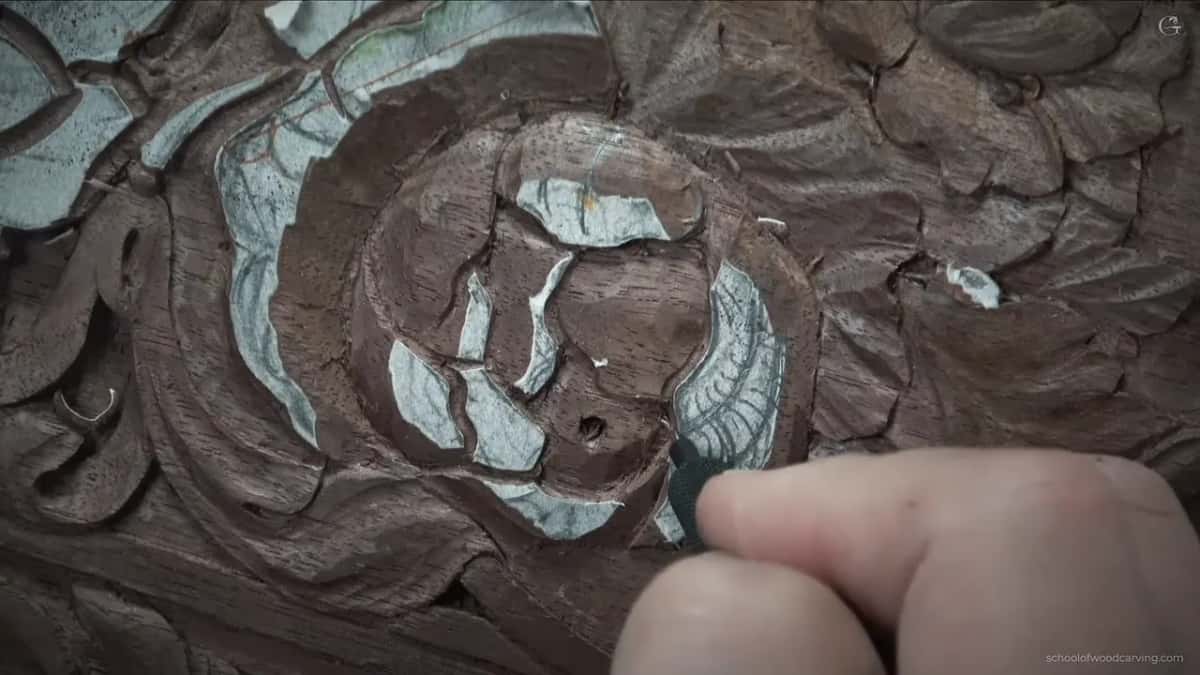
Esterly wrote about this exact problem and never quite settled it to his own satisfaction.
Why does sharpening come up in so many reviews?
Sharpening turns up in more reviews than any single carving project on the site, whichever brand of steel you own, Pfeil or Ashley Iles. It is the skill most carvers have quietly given up on.
Rhonda Morris put it in one line.
By the way, after his demonstration of sharpening, I was even able to get the essential but much dreaded V-gouge sharpened to a razor fine edge. This was worth the cost for the whole month!
Beginner in traditional carving
Autumn Doucet had been carving a while and wrote about the same tool.
Still trying to sharpen that V-tool correctly? Alex shows us his approach, and I'm happy to say it takes much of the mystery out of the process.
Carver, on the sharpening series
Alan Golichowski went furthest of anybody, and told me what was missing. I have kept that on the page because he was right.
These course segments, however, deal mainly with changing the primary bevel on tools that already have a keen edge. I would like to see in addition a detailed demonstration of when to switch power grits in gradually diminishing the line of white of a dull or damaged tool.
MD, PhD, Indiana University-Purdue University Indianapolis
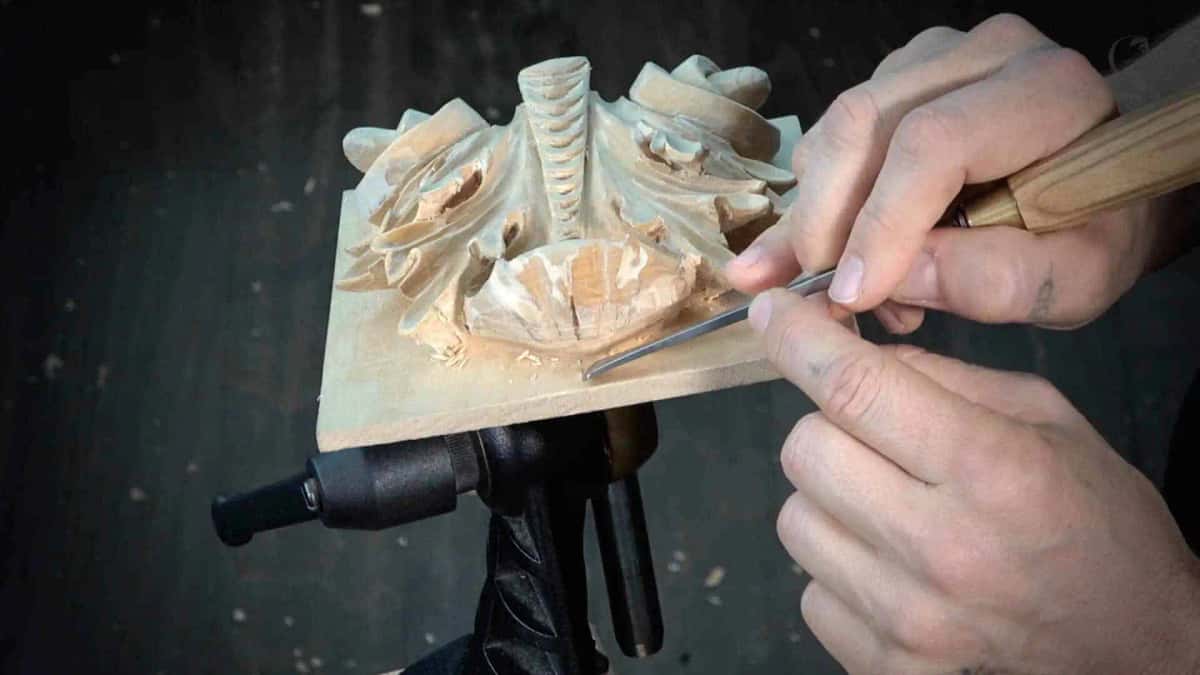
Students photograph this stage and email it to me more than any other, usually worried.
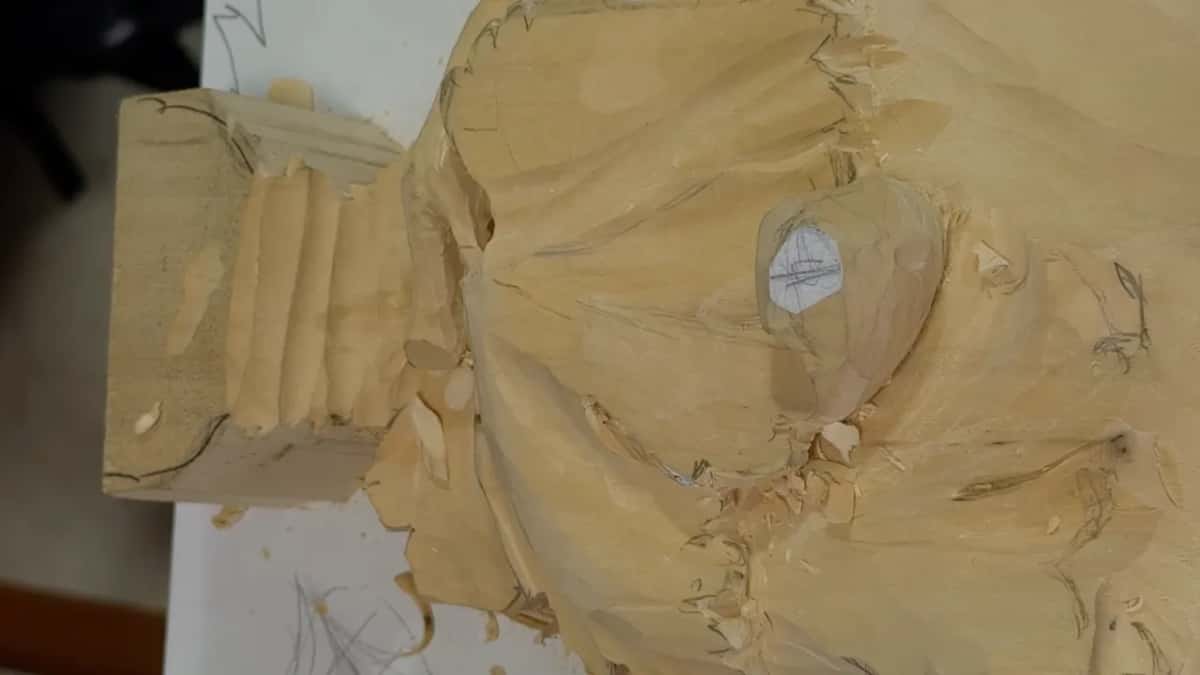
No two of these grooves are the same depth, and that is what makes a leaf look alive.
Was the design teaching a surprise?
Almost every long review mentions design, and most say they did not expect it at all. Design comes first here, ahead of carving and ahead of sharpening.
Judith S. is a working architect who has sat through many design classes.
Although I have had many general design classes in the past, I have never had anyone delve into it beyond the general aspects of the rule of thirds and the golden ratio. I learned more on this subject from the small amount of it that you taught in your MASW class than in any other design class that I have taken.
Architect
The same conclusion arrived from the bench rather than the drawing board, in a review by Alan Golichowski.
What you get for your efforts is not just another clunky carving but an object of joy and beauty that inspires and encourages you to come up with your own designs. It's clear that to be a good carver one must draw, draw, draw, erase, throw away, draw again before even picking up a gouge.
On the design etudes
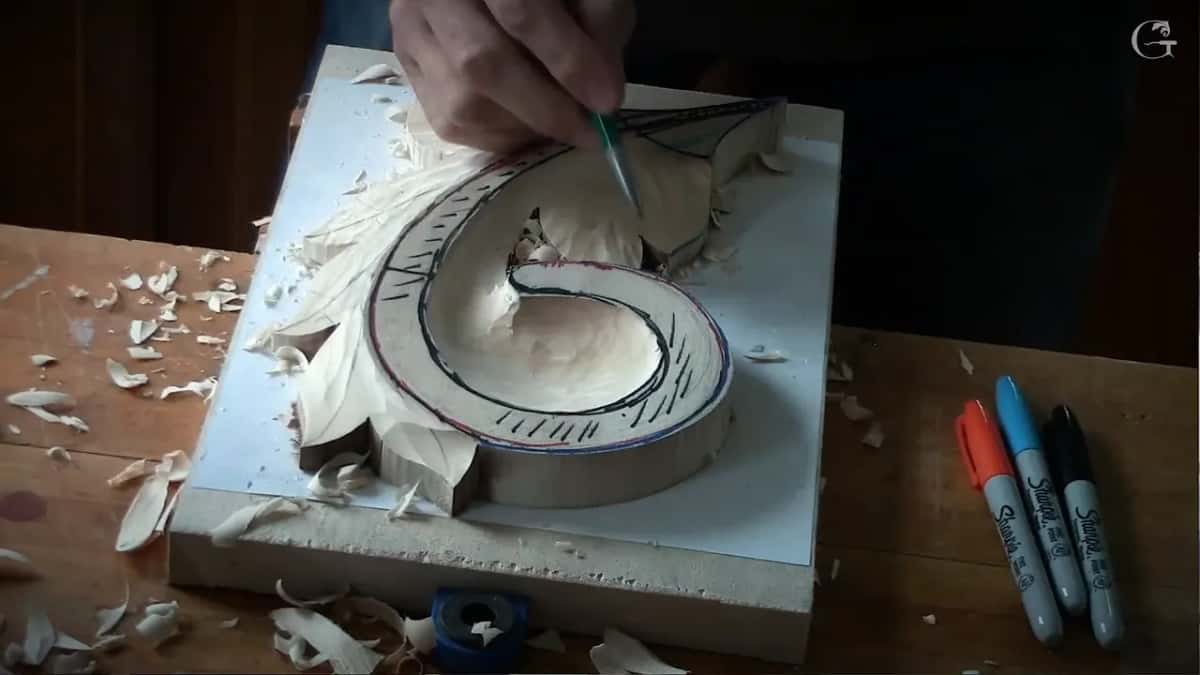
Everything else on that leaf gets measured off this one line, so it had better be right.
Does he actually answer when you write to him?
Four of the students below say so without being asked. I read everything that arrives, which is either reassuring or alarming depending on your view of me.
Rhonda Morris again, on what the money buys beyond video.
It is not just a collection of videos but is an interactive course in which he is very responsive through email. He faithfully posts new lessons and resources that are above and beyond what I had expected.
On joining as a beginner
Dave Fobert spent a long time looking before he chose.
He has an easy and sincere teaching style, which belies preternatural skill and a deep understanding of his craft. Under his tutelage, anyone may become more than competent if not a master of wood carving. If you are serious about learning this art, get to know Alexander Grabovetskiy.
After sampling several schools
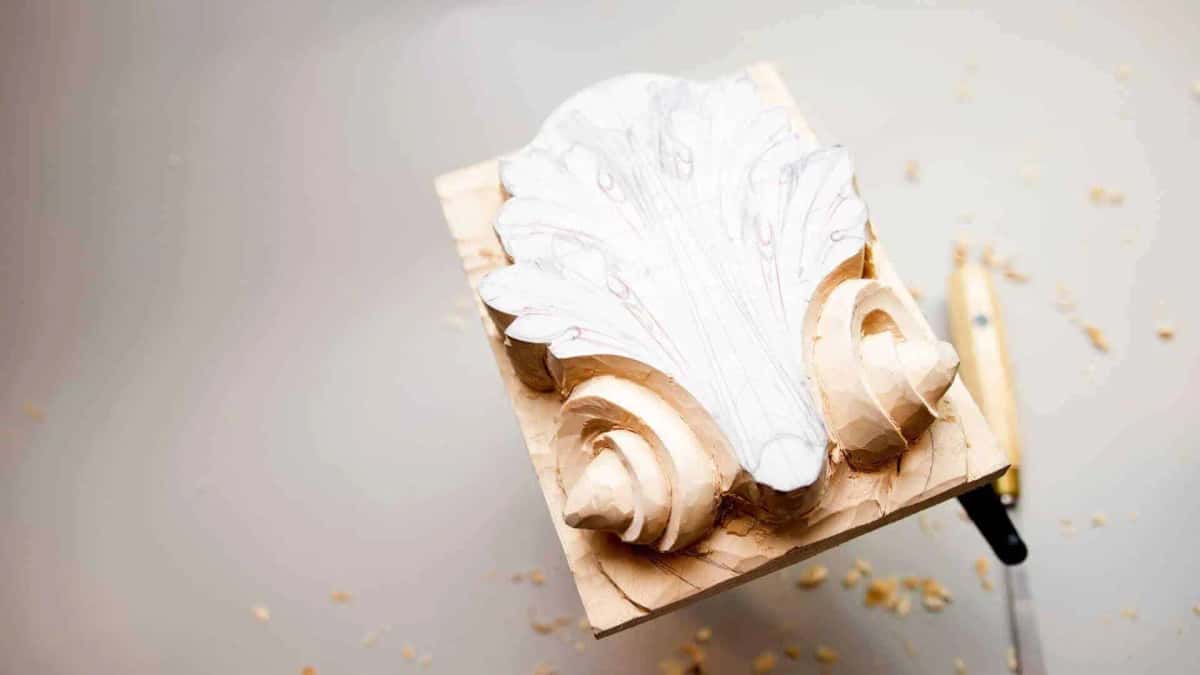
Paper stays on until the last minute so nothing above gets bruised.
What does a week in the room add?
One thing no video can do, which is watch you. Dan Currie did both and described the difference better than I would have.
The online experience is great for watching how the master does it, but the in-person experience allows the master to watch and interact directly with YOU, one-on-one, to provide feedback to further develop and refine your techniques and skills. As a class group, Alexander walked us through the design process, applying the laws and rules of proportion that all the great historical works of art are based on for determining focal points and flow that are pleasing to the eye.
Austin, Texas, May 2018
Robert Stokes was in one of those rooms as well, learning the acanthus the same week.
As an Educator, Alex brings foresight and a wonderful sense of humor in addition to his Incredible Carving skills to the classroom. I am honored to receive his tutelage.
Classroom student
I teach those weeks at Marc Adams in Franklin, Indiana, and at the Sam Beauford Woodworking Institute.
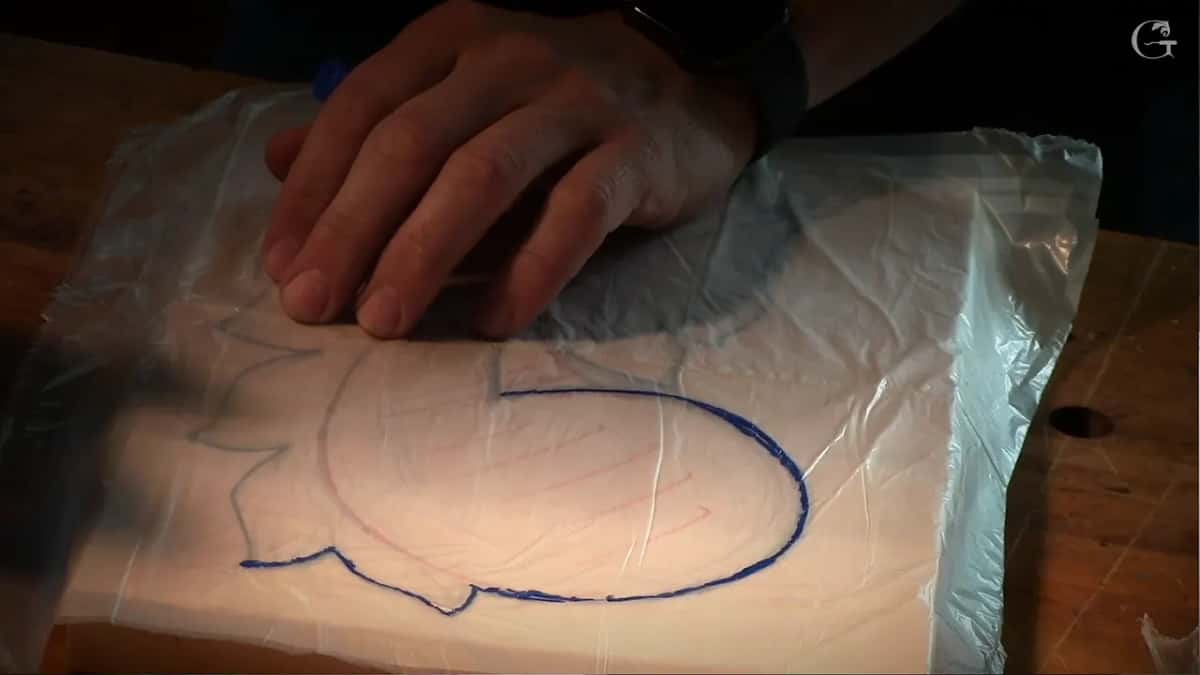
Plastic drop cloth from the hardware store, cut into squares. Two dollars a roll.
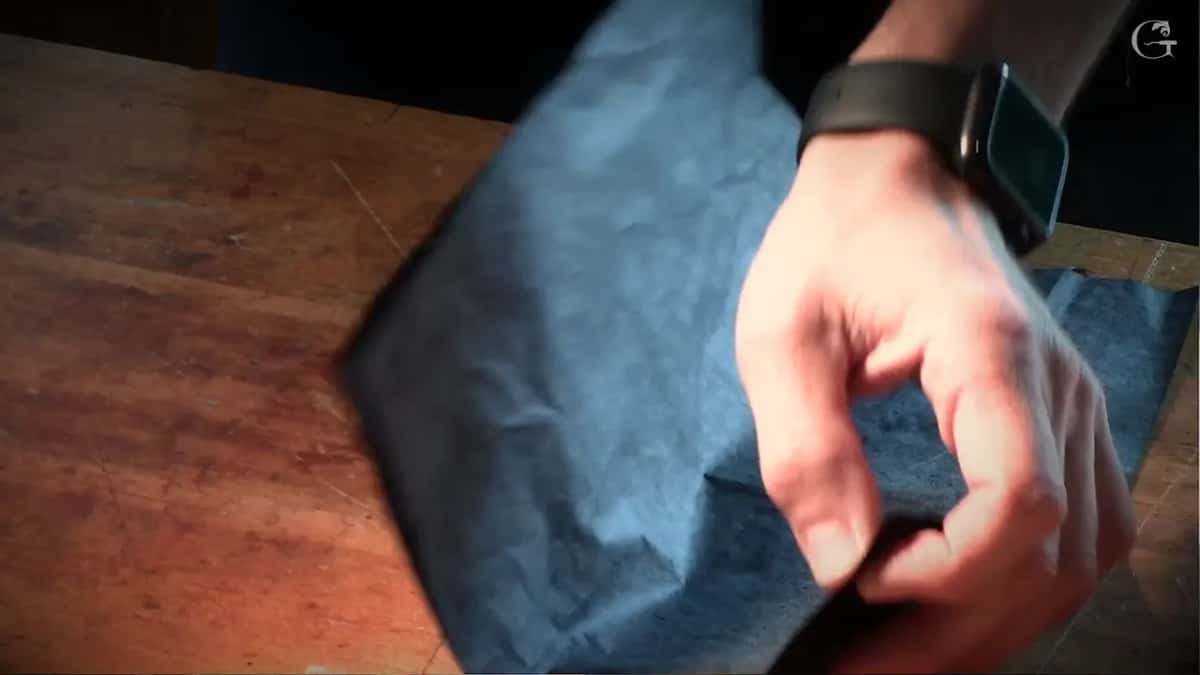
Hardware store plastic. It beats tracing paper because you can see the drawing through it wet.
How should you judge any online carving school?
Four checks, and every one can be run before paying anybody, including on a hand tool school like this one. Mine included.
Step 1, watch for the pass you are not shown
Time lapse and heavy editing hide the hard parts. Find a moment where a tool enters a tight corner and see whether the camera stays on it or jumps to the finished result.
Step 2, look for a sharpening lesson before a project lesson
A school teaching projects while skipping edges is selling results you cannot repeat at home. Sharpening is the slowest skill of the three and it belongs early.
Step 3, check whether design is taught at all
Pattern packs work fine until the day you want something nobody has drawn for you. Ask whether drawing, proportion and tool reach get covered.
Step 4, send a question and time the reply
Write to whoever teaches and ask something specific about a tool or a wood species. What comes back, and how fast, tells you exactly what a year of learning at that school is going to feel like.
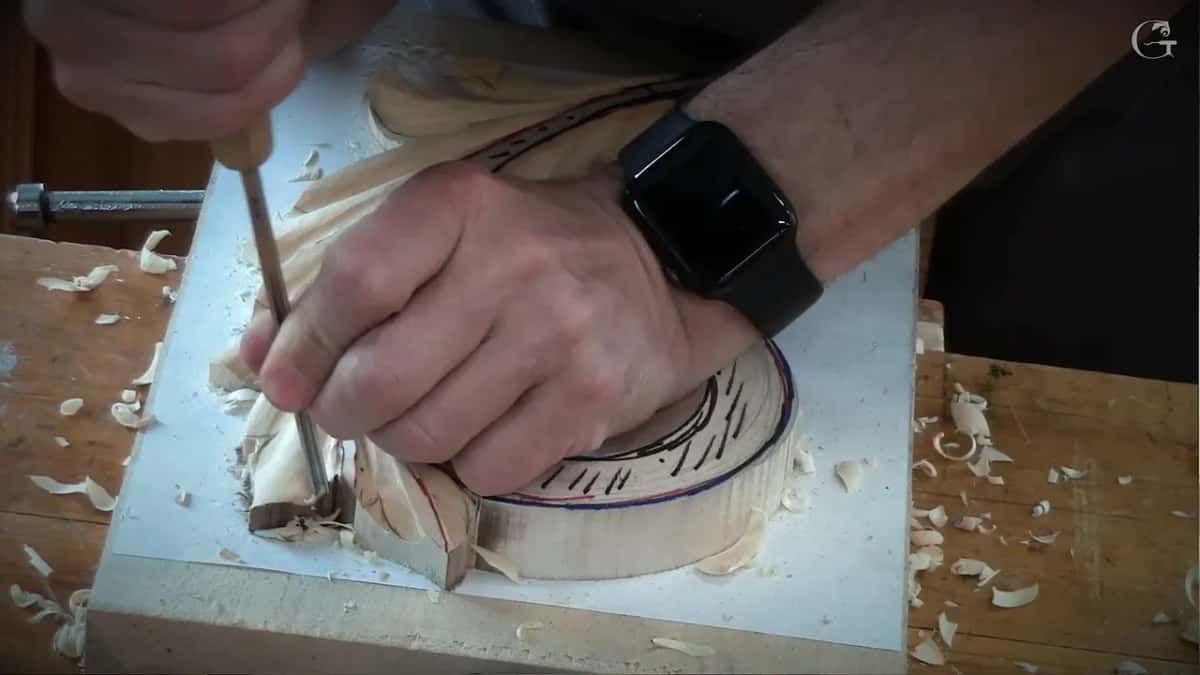
Three millimeter veiner, and it is the tool my students snap first, every single time.
How does this compare with the other ways to learn?
Every route on this list teaches somebody something, and the real differences are narrower than the marketing suggests. Side by side, then.
| How you learn | Who ever looks at your actual work | What it costs | Where students say it falls short |
|---|---|---|---|
| Free carving clips | Nobody, unless you count a comment thread | Free | Progress crawls, in their words |
| A week in a classroom with the teacher | The teacher, beside you | Tuition, travel, and a week booked off | It ends on Friday |
| Lessons you rewind | You, plus email when you ask for it | Monthly or yearly | Nobody corrects your grip in the moment |
| A book | No one | Thirty dollars, give or take | Esterly's reader still needed a class |
Honestly, the best carvers I know did several of these in some order. One student read Esterly's book, took a class, then joined online. Another did it backwards.
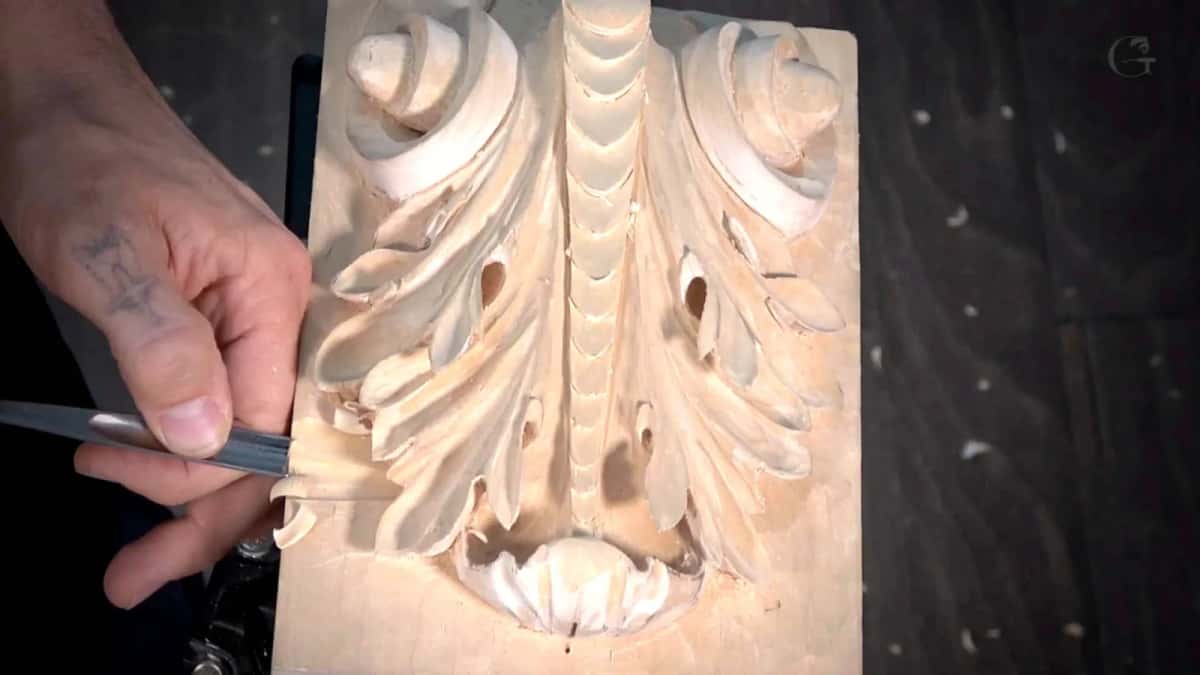
Twenty minutes of work that decide whether the whole month was worth anything.
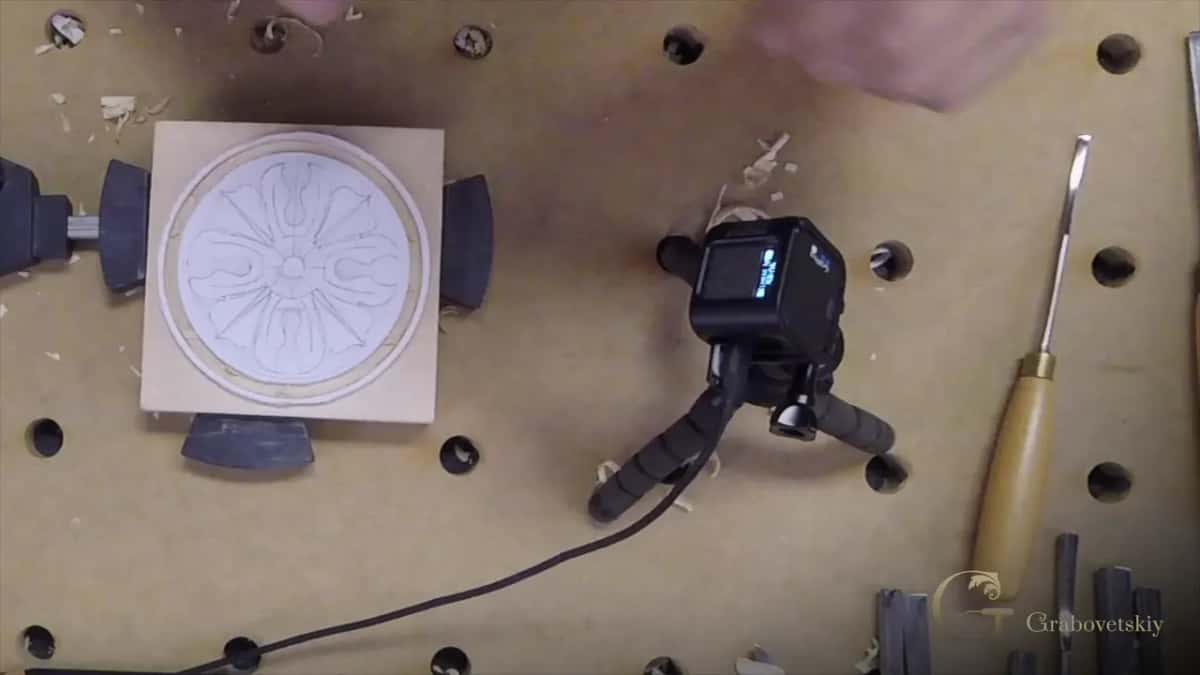
Two passes, then stop and look at it in raking light before touching anything again.
Who is teaching, and what is that worth?
I trained as the only apprentice of the Russian master carver Vladimir Tokarev, from the age of sixteen. One review mentions the 2012 International Carver of the Year award, which still catches me off guard when a student brings it up.
The work has been written up by Fine Woodworking in 2011, by Highland Wood News in 2013, and by Revista din Lemn in 2017. The Lewiston Sun Journal covered a Maine class in 2021.
My training sits on the page about the Russian apprenticeship, the life behind it is on my own account of how I got here, and where your money goes, right down to the public charity filing, is set out on the non-profit page.
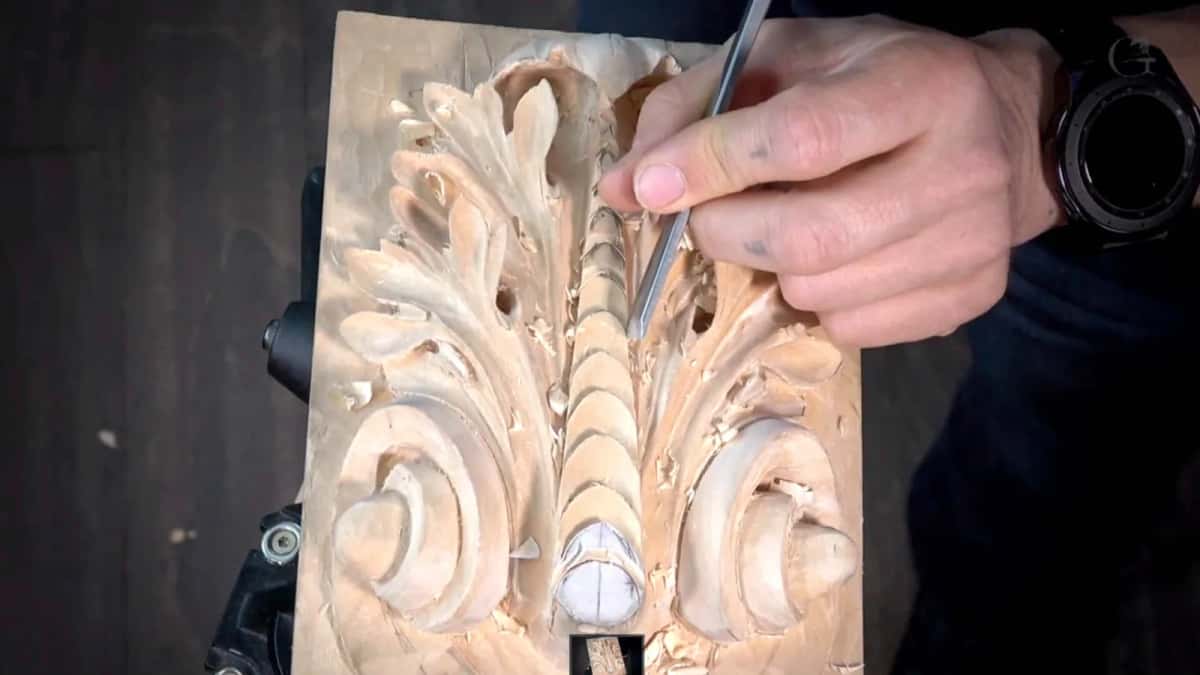
Straight down is the only angle that shows whether a rib is actually straight.
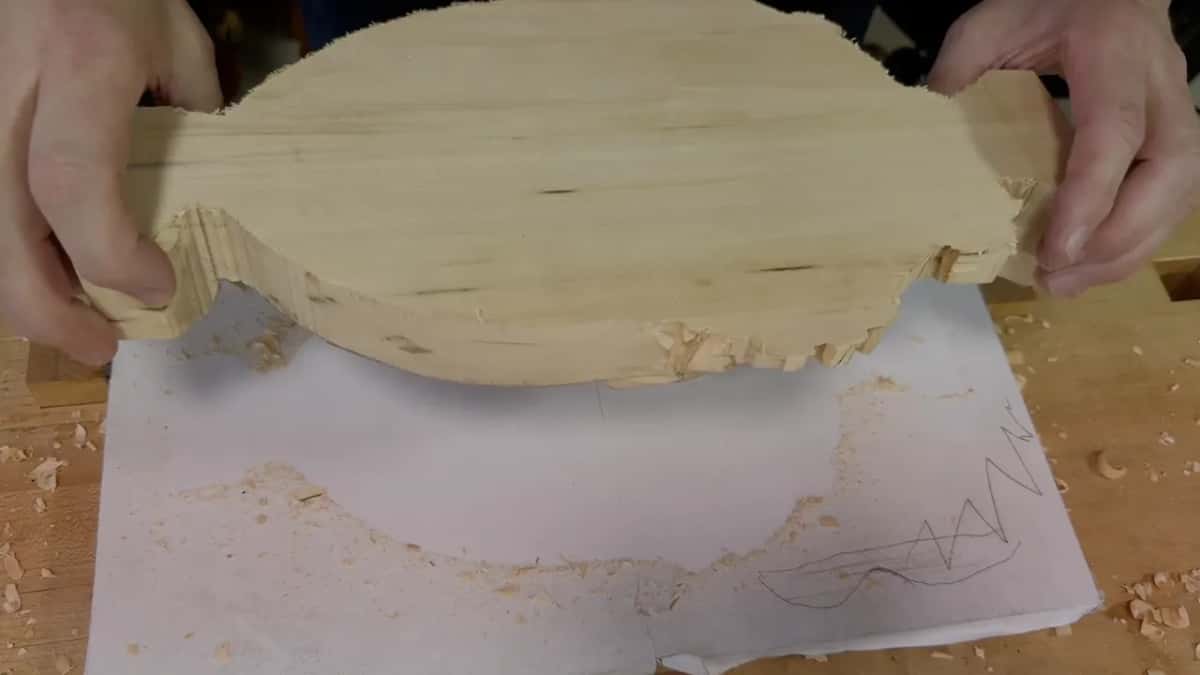
The moment a piece stops being a board.
What is on the site?
Thousands of lessons across roughly forty courses, starting at a first knife and ending in Grinling Gibbons ornament. Dan Currie described the range better than my own course list manages.
You will find courses that require only a few tools, or even just a single knife, if you do not have a larger selection of tools available to you.
Joined shortly after the school opened
Places to start. The beginner path and a first project worth choosing ask for a knife and one board of basswood. Drawing an acanthus leaf comes before carving one, and the Greek and Roman kinds differ. Sharpening has a free class of its own, and the tool set piece will stop you overspending on shapes you never use. The whole course list reads without an account.
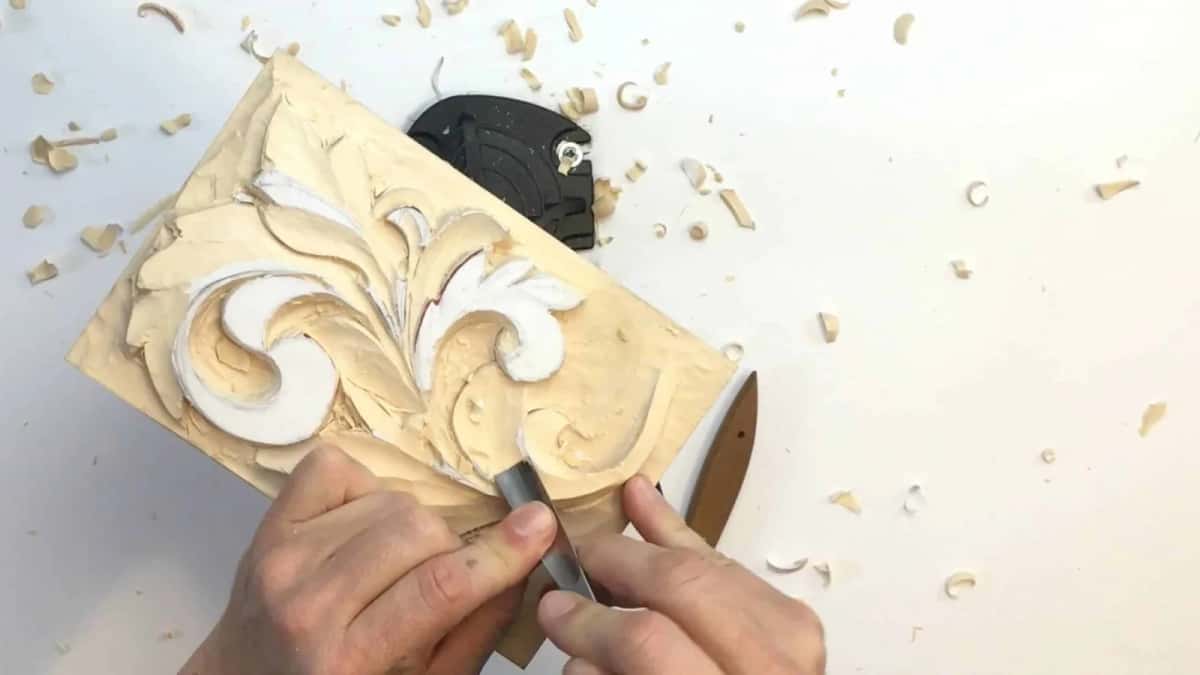
Somebody told me once this curl looks easy on video. It does look easy.
Would you rather hear the honest answer on camera?
Somebody asks me every week whether carving is too hard to pick up, and here is the long version. Thirty four minutes, real questions, no script.
Weighing this against a room with a teacher in it? I have written about the in person week and about what online lessons can and cannot do. When the doubt is whether you personally could learn this at all, that question has a page of its own.
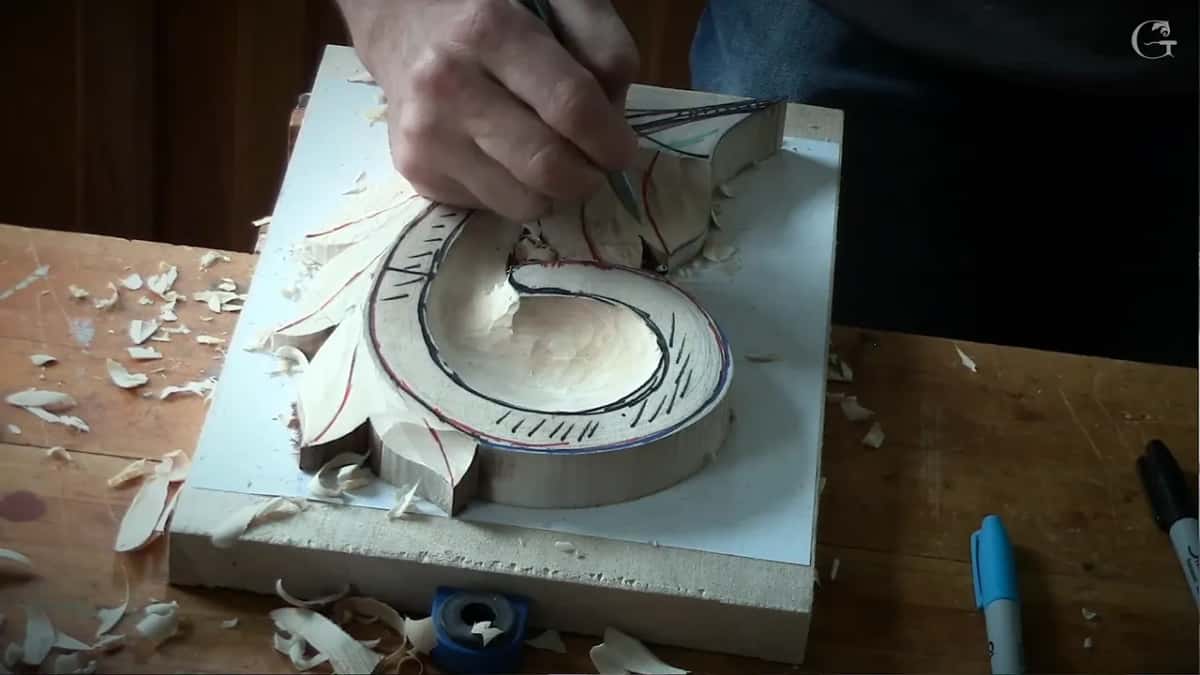
Five millimeters across. I say the number out loud in the lesson so nobody guesses.
Frequently asked questions
Are these School of Wood Carving reviews real?
Yes. Every quotation was written by a named student and appears unedited, including their spelling and their criticism. Several give a profession or a university, and two carry the date they were written.
Do beginners actually manage the lessons?
Bradley Apelgren joined having never carved and finished the beginner course. Paul Decker arrived after a year of self teaching and reports much faster progress since. Starting projects need one knife and one board.
What do students complain about?
Alan Golichowski asked for a sharpening demonstration covering damaged edges, which was not filmed at the time. Alwyn Suares can only practise half the year because of his work rota. Both remarks stayed on this page.
Does Alexander reply to questions personally?
Several students say so unprompted, and one mentions that phone calls are welcome. Messages are read by Alexander rather than by an assistant, which is also why answers sometimes take a day.
Is design taught separately from carving?
Design runs through the courses and is also taught on its own. Students with formal training, including a practising architect, say it goes further than the rule of thirds and the golden ratio taught elsewhere.
Can you learn this without buying many tools?
Some courses need a single knife, and several need only a handful of gouges. Anybody on a tight budget is better served by three good tools than by a boxed set of thirty cheap ones.