
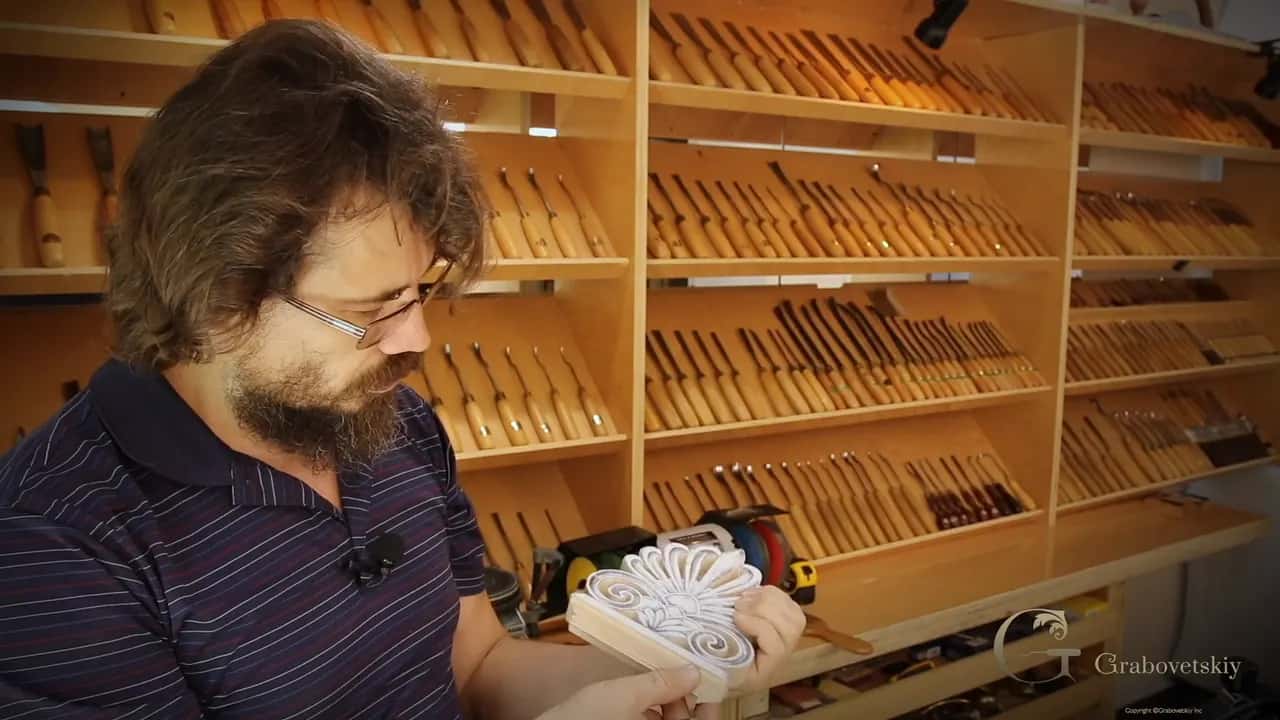
A non-profit wood carving school is a carving school that legally cannot pay a profit out to any owner. Every dollar has to go back into the work or out as giving. Mine is registered in Florida under the name School of Wood Carving, Inc., and I want to show you exactly where your tuition lands.
Most schools will not tell you this part. You pay, you get videos, and where the money went is nobody's business but theirs. Fair enough. I would rather open the books, because a lot of people who join here are retired, or saving up, or carving on a fixed income, and they deserve to know what their eighteen dollars is doing.
So here it is. The legal facts you can check yourself, the giving, and the honest answer to why a working carver with paying clients bothered to build a school at all.
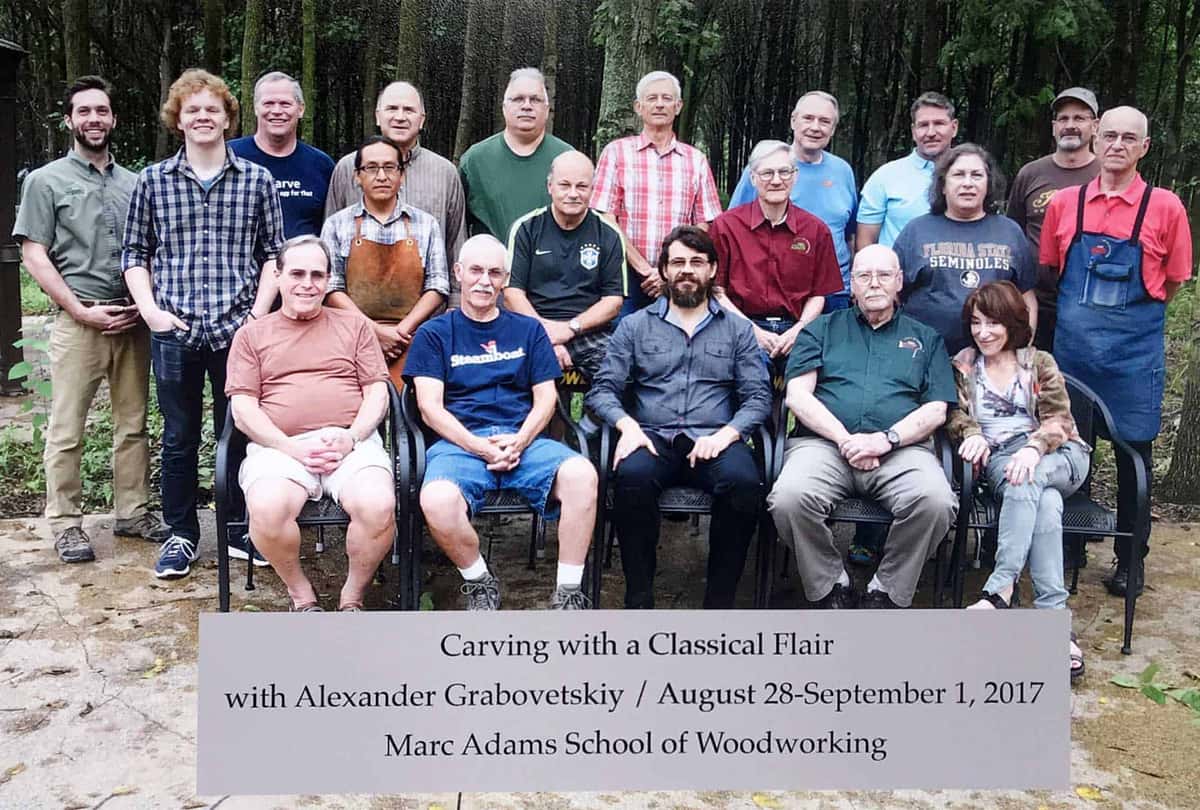
Nineteen people, one week, and a photographer who made us all squint into the sun.
What should you know before reading further?
The organisation holds federal tax exemption as a charity. Its EIN is 88-0521972, and the IRS granted that status in June 2022.
Nobody takes a profit out of it. That is the whole legal point of the status, and it is checkable in a public database.
A slice of tuition funds equipment, because bad filming teaches nobody anything.
Another slice reaches orphans and widows, sent through a group that has done that work far longer than I have.
We also hunt for gifted children in families with no money for art school. I grew up as exactly that child.
The address on record with the IRS is 4781 N Congress Ave, Boynton Beach, Florida 33426.
What does non-profit status actually mean here?
It means no owner, no shareholder and no director may take the surplus home. That code section is the American tax category for a charitable or educational body, and the rule that matters to you is the one against private benefit.
Plenty of businesses call themselves a school. Very few file for this, because filing means the money stops being yours in the ordinary sense.
None of this needs my word for it. Our record sits in the public nonprofit database that mirrors the IRS file, carrying the name, the EIN, the address and the NTEE code B90 for educational services. Look it up before you join.
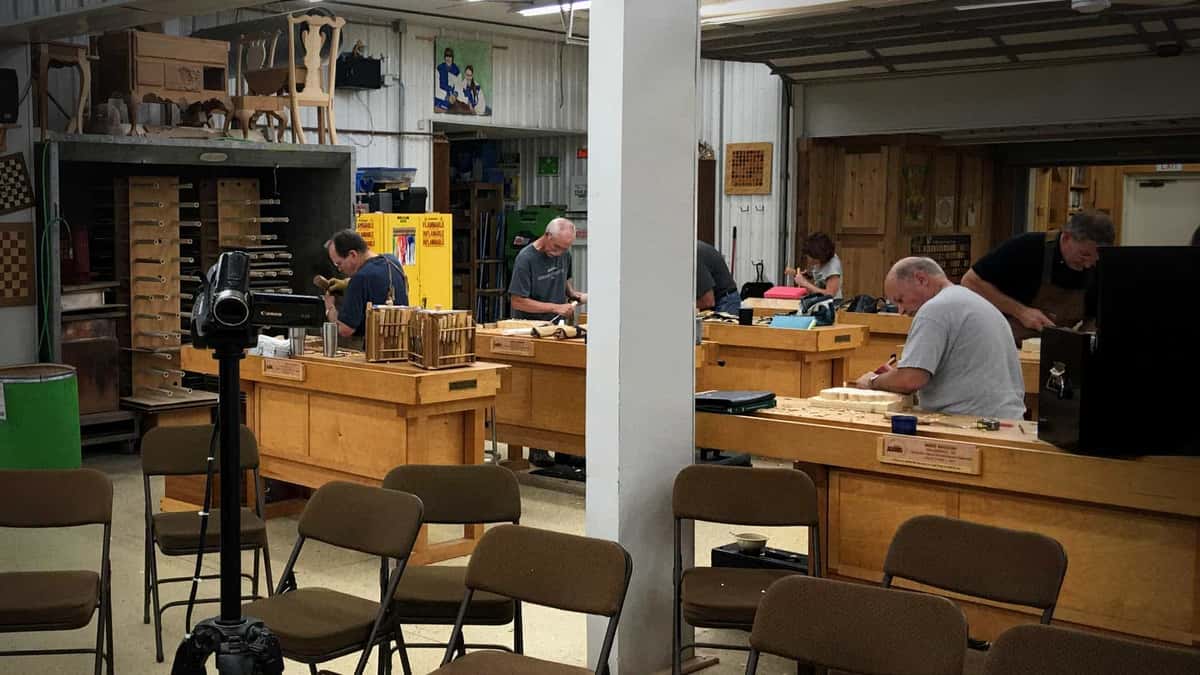
Twenty minutes before the room fills up and gets loud.
Why did I start this school at all?
People kept writing in from every corner of the map asking me to show them how I work, and eventually saying no felt worse than saying yes. I carve for a living, and I carve for some of the wealthiest people on this planet. That already pays.
Let me be honest about the name, because it makes me laugh. Schoolofwoodcarving.com is not really a school. It is closer to a community of people who share the same obsession with carving and sculpture and art in general.
And I called it school because of Google. You cannot type virtual apprenticeship into a search box and land on page one. Put those three words in there instead and you will find me. That is the whole reason, and it is a silly reason, and it is true.
Eleven filming days went into this one, and nobody watching it has ever asked how long.
Where does the tuition go?
Three places, and only one of them is me. I will take them in order of size.
First, equipment. A lot of it. Filming a carving properly means good cameras and good light, because you have to see the bevel meet the wood or the lesson is worthless. Sound matters too. One year the site nearly went down when five thousand people logged in for the same video and I had to move the whole thing onto its own server.
Second, the giving. Donations go out through a worldwide group that supports orphans and widows. Join, and you are part of that without doing one extra thing.
Third, the children. Gifted kids grow up in homes with no money for any education beyond school, and we try to find them and help.
That one is personal. When I was eight my father divorced my mother. He had spent a long stretch in prison himself, and once he was out he just left. The talent was there. What my mother did not have was a single rouble toward art school. Should it work out for even one child, good. Should nothing come of it, at least we tried.
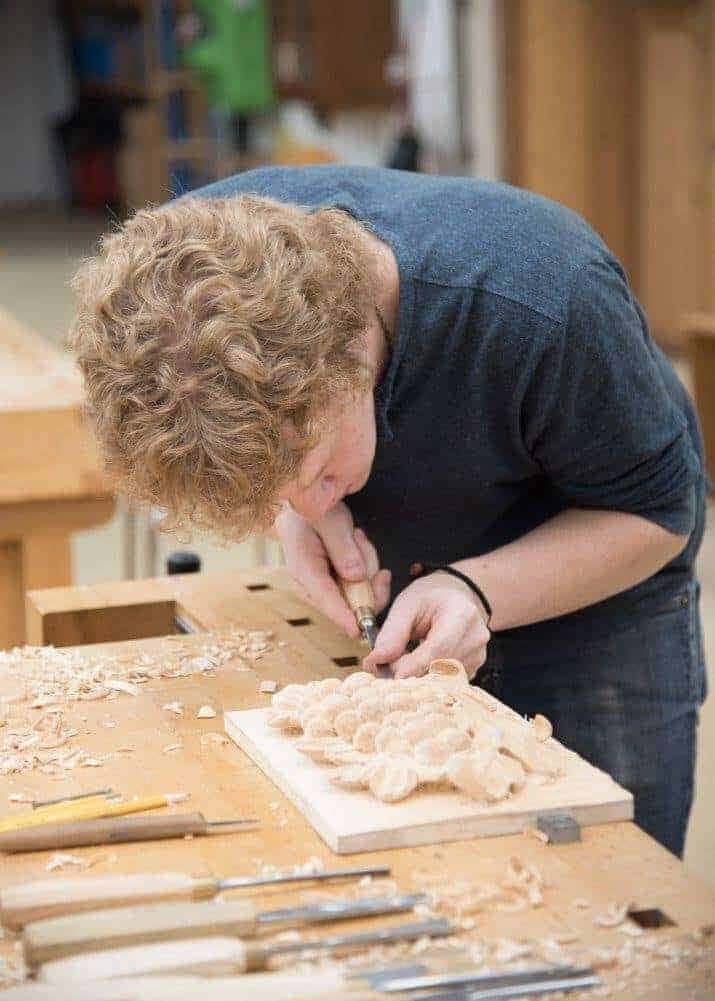
Nobody in this photograph had carved anything a year before it was taken.
What is actually taught here, and in what order?
Three things in a fixed order, and the order is not negotiable. Design first, then carving, then sharpening.
Design is the geometry. The laws of space and rhythm and repetition, plus the hard part almost nobody covers, which is knowing whether your tool can physically reach the corner you just drew. My own teacher spent months making me think that way before he let me near good wood.
Carving is the middle, and it is the part people imagine when they picture a carving school. The acanthus leaf, high relief, ornament for furniture, panels in the Grinling Gibbons manner, and who still teaches that style.
Sharpening is last on the list and hardest of the three. It takes years. Everything else you can fake for a while, but a dull edge shows up in every single pass.
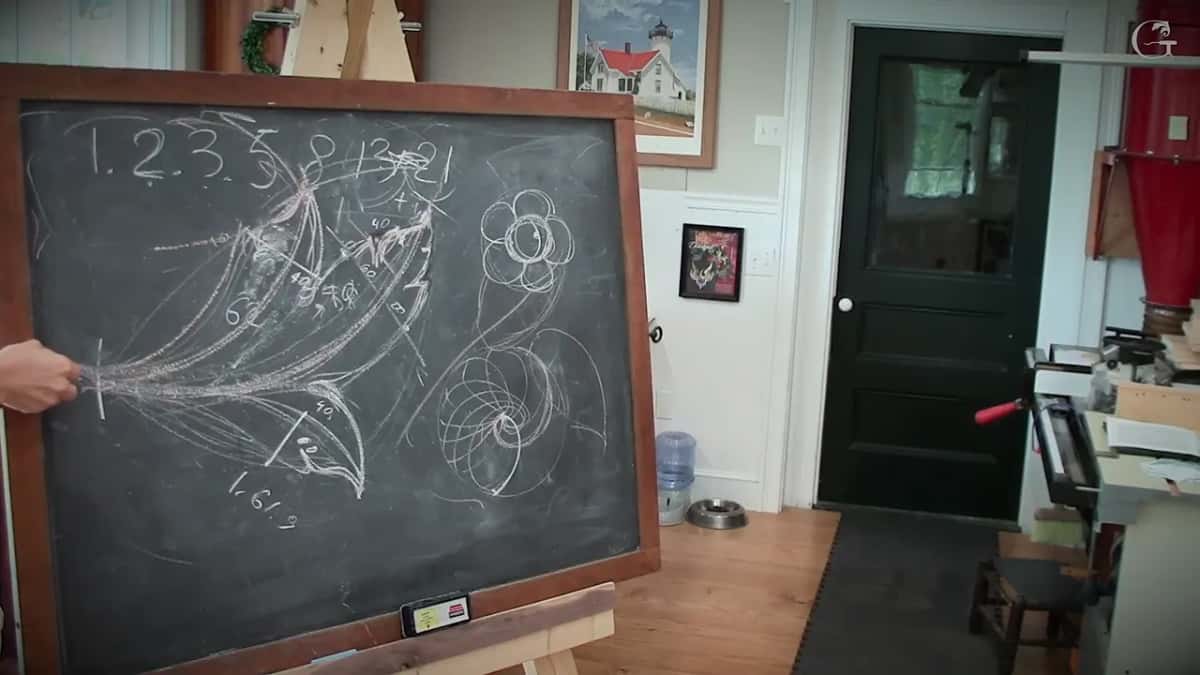
Sixty and forty, marked across the whole drawing. I rub it off and redraw it every class.
Who is this school for?
Ages fourteen to ninety, and I mean both ends of that literally. The youngest students carve alongside retired cabinetmakers with forty years in the trade, which sounds unlikely until you watch it happen.
Complete beginners are welcome and always have been. The beginner path starts with a knife and a piece of basswood, nothing exotic.
Experienced woodworkers usually come for one specific thing. Ornament for their own furniture, or a replacement part for an antique that nobody makes anymore. Those students move fast because their hands already know wood.
Students write in from more countries than I can count, so every measurement gets said twice over. Six millimeters, or a quarter inch. Some lessons run half again as long because of it.
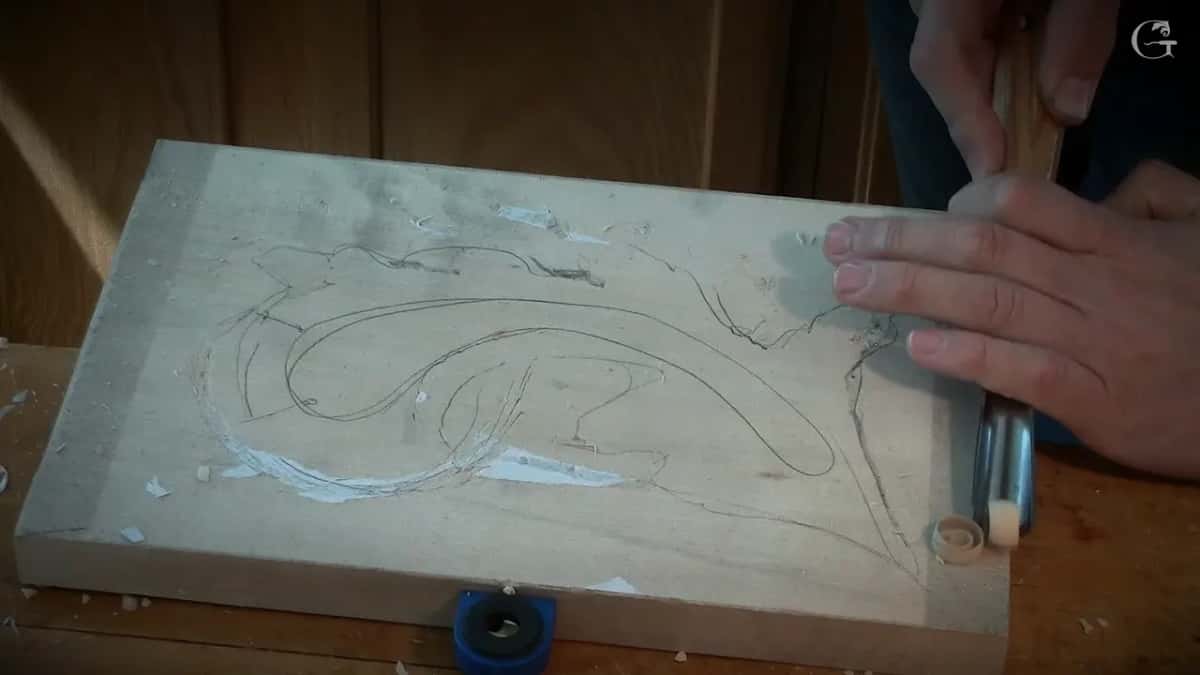
A pencil line costs nothing to erase, which I learned the expensive way.
How is a non-profit school different from a paid course?
The difference shows up in what happens to the surplus, and in what nobody is under pressure to sell you. Compare it honestly rather than taking my word.
| What it is | Where any surplus is allowed to go | Public record | What tends to drive the content |
|---|---|---|---|
| A registered charity | Back into the filming, or out as giving | Filed yearly with the IRS | Whatever students still cannot do |
| A course | Straight to whoever owns it | Kept private | Launch dates, and then the upsell after that |
| A site run for profit | Owners, plus whatever advertising it happens to carry | Rarely public | Whatever keeps people paying month after month |
| A free channel | Nowhere, because a surplus never appears | Exempt | The algorithm |
I am not saying paid courses are wrong, and some of them are excellent. I have bought a few myself. The point is narrower than that. When nobody can pocket the surplus, the only thing left to do with it is make the teaching better or give it away.
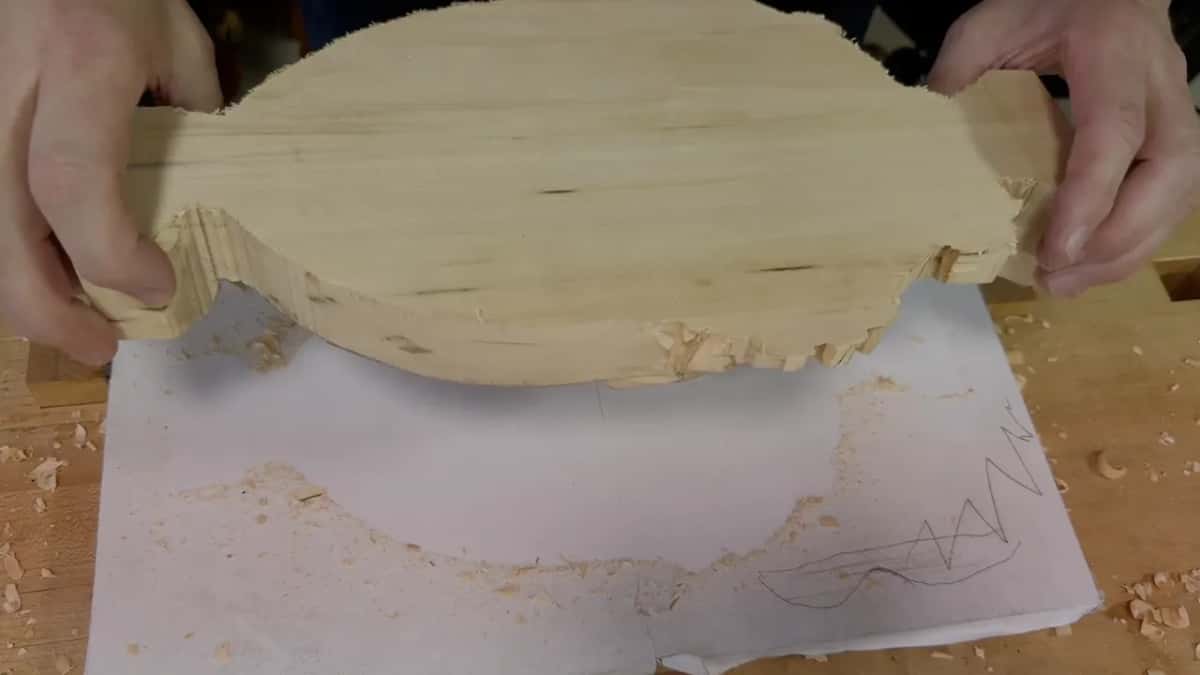
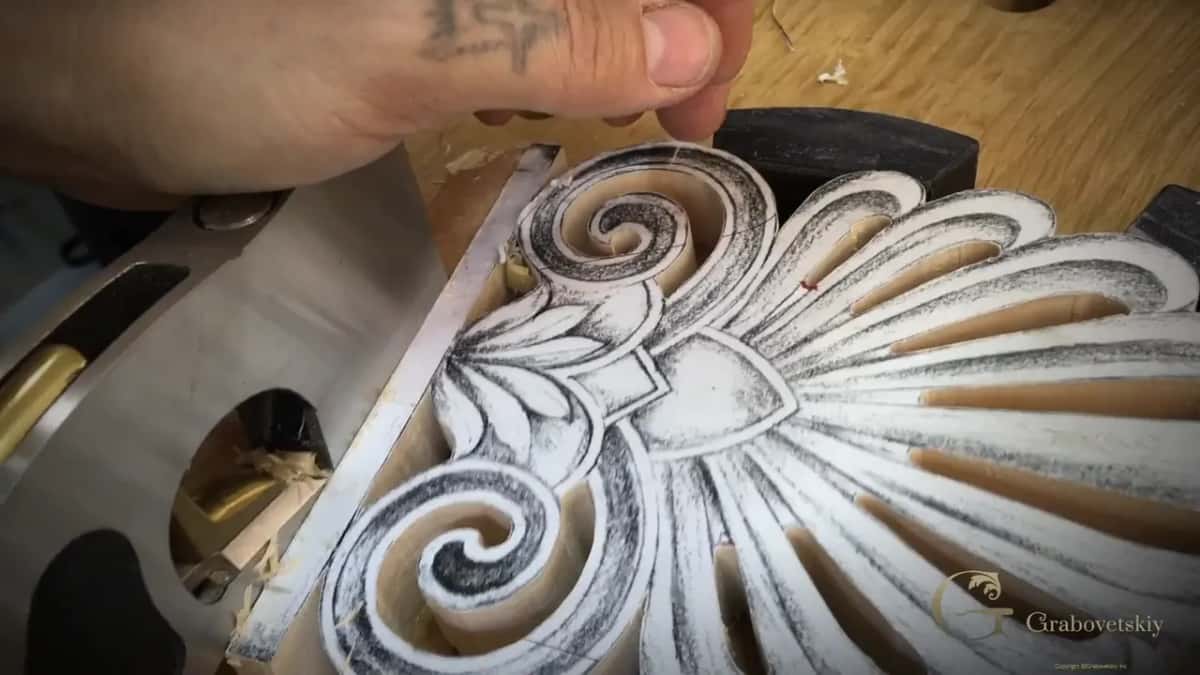
The paper drawing underneath survived the whole job, which almost never happens.
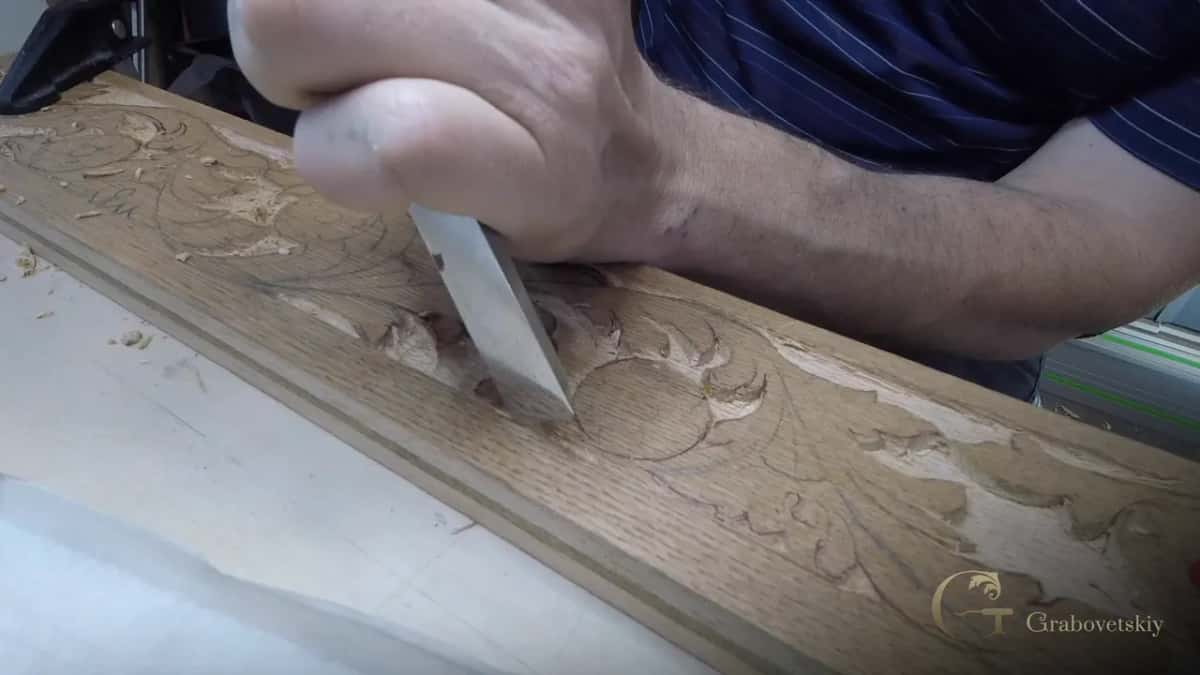
That rail is for a dining table that seats twelve. The client counted.
How can you actually support this?
Four ways, and the first one is the only one I would push. None of them involve a donation button, because I have never put one on this site.
Step 1, study here and let the tuition do the work
Joining is the simplest support there is. Your tuition already splits between the filming, the giving and the children, so you do not have to think about it again.
Step 2, tell one person who would love this
Word of mouth built this whole thing. Somebody told somebody, and that is how most of our students arrived, not through advertising.
Step 3, take a class in person if one lands near you
I teach at the Marc Adams School of Woodworking in Franklin, Indiana, and at the Sam Beauford Woodworking Institute. A week like that pays for a camera.
Step 4, teach somebody yourself once you can
Here is the support that outlives every one of us, and it costs nothing. A craft only survives when the person who learned it hands it on, and there is no legal structure that can do that job for you.
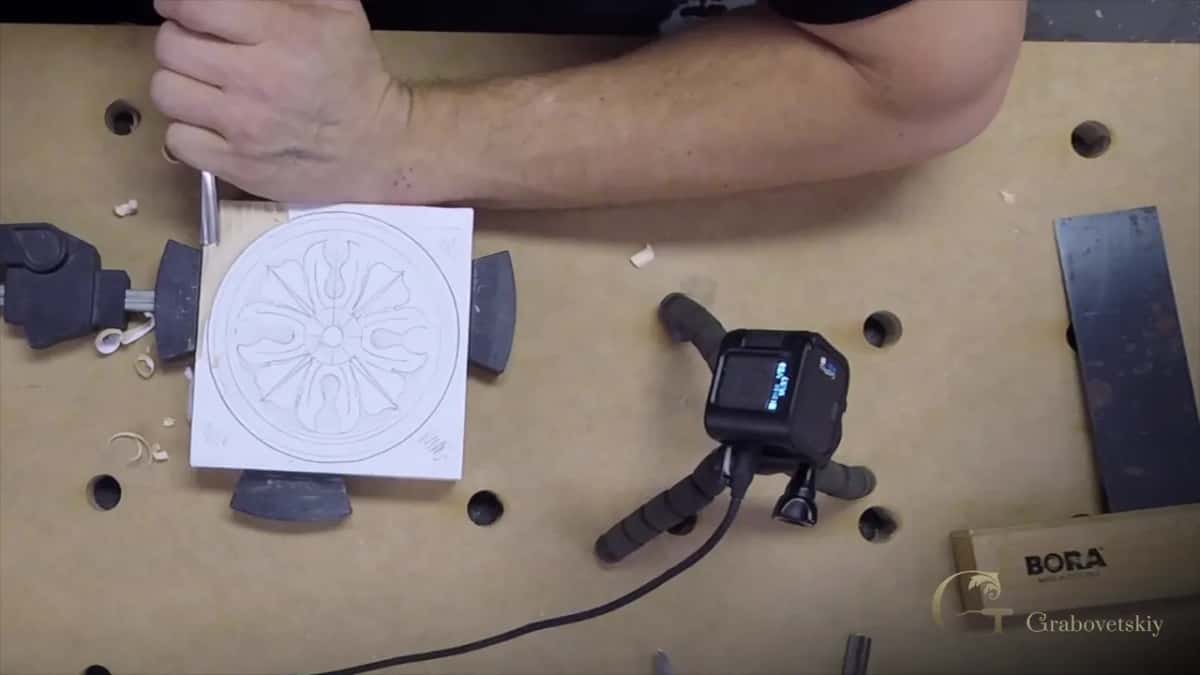
That clamp on the right cost more than the wood under it.
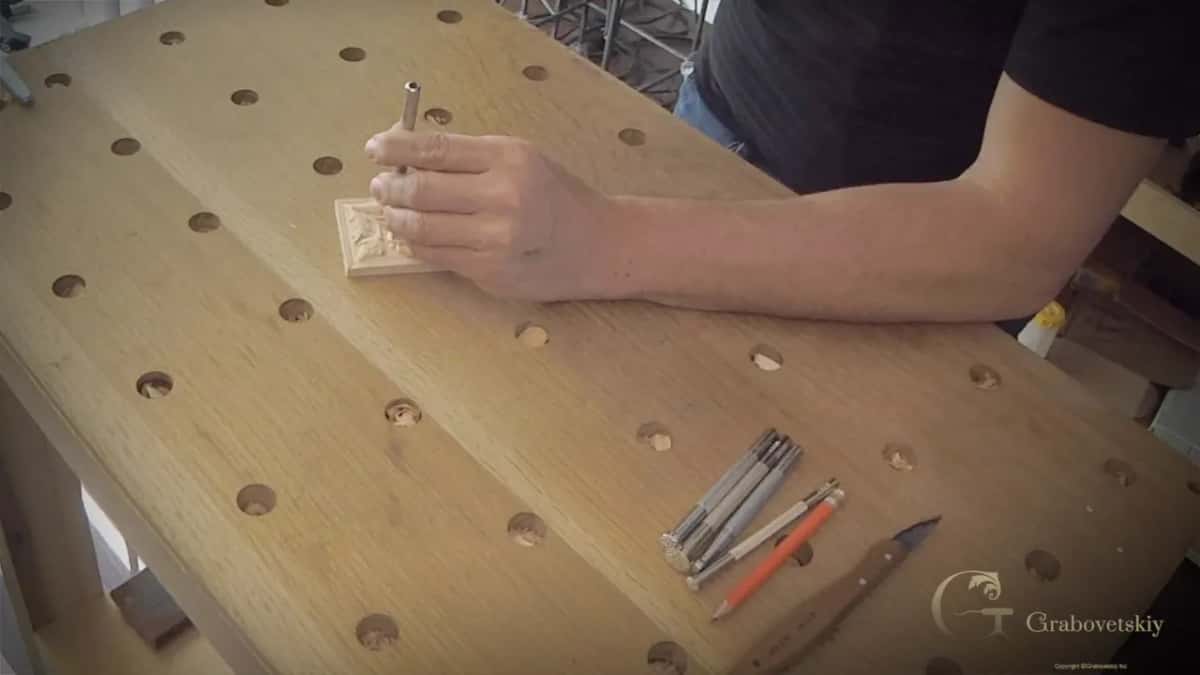
Leather punches. Nobody sells the carving version anymore, so I went to a saddlery.
What has this cost me?
Time, mostly, and a working shop that now has cameras in it. Filming changes how you work. You cannot skip the boring pass, and you cannot quietly fix a mistake off camera.
That last part turned out to matter. I leave my own mistakes in the footage. When a hazelnut husk ends up too close to its neighbour and the spacing is wrong, that goes in, along with the repair. Students tell me the repairs are the most useful lessons on the site, which was not my plan at all.
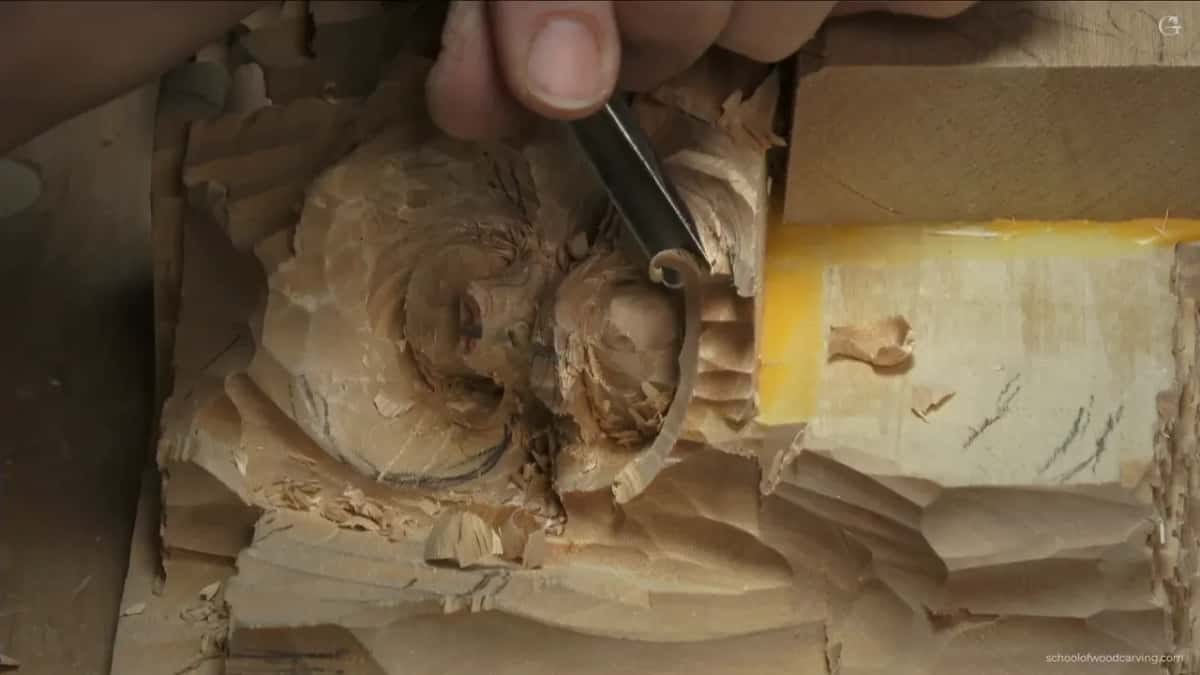
The version before this one was chopped off square and looked like a thumb.
Is any of this working?
By the measure I care about, yes. People who had never held a gouge are carving rosettes and acanthus and replacement parts for furniture older than their houses.
By the measure of money, plenty of people are doing better. That comparison stopped bothering me a long time ago.
What I can point at is a craft that was quietly dying in most of the world and now has students working at it on six continents. Hand carving nearly vanished when machines arrived. It did not, quite.
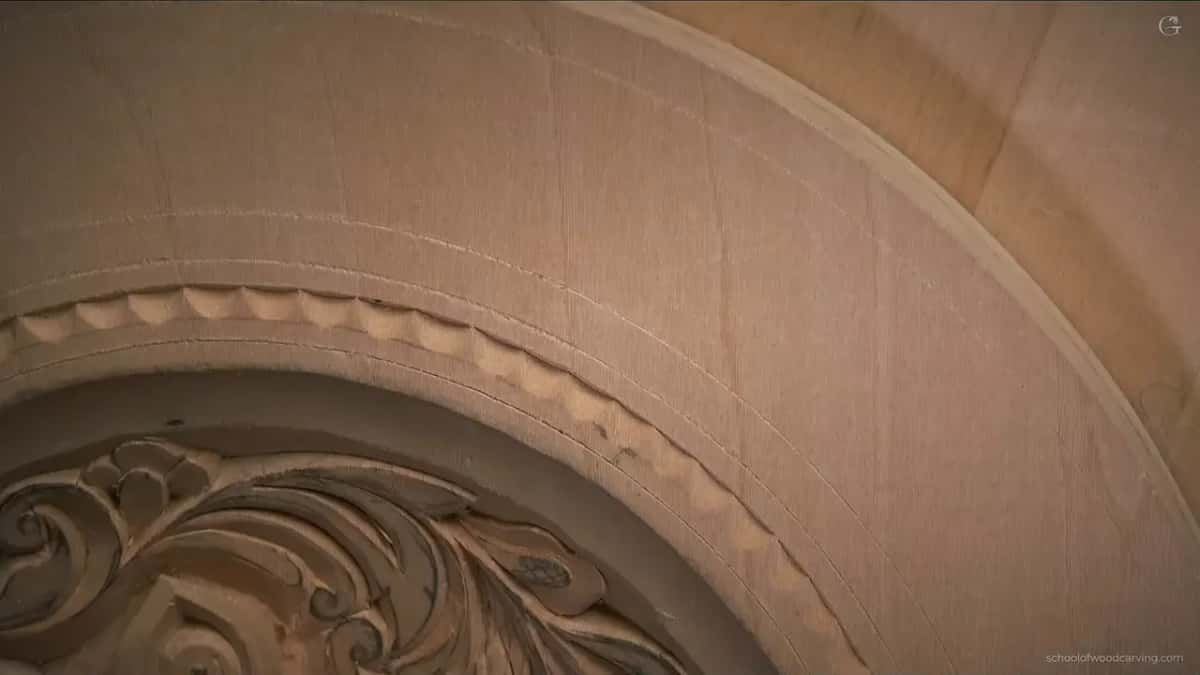
Forty two of them around one plate, and the last four are always the worst.
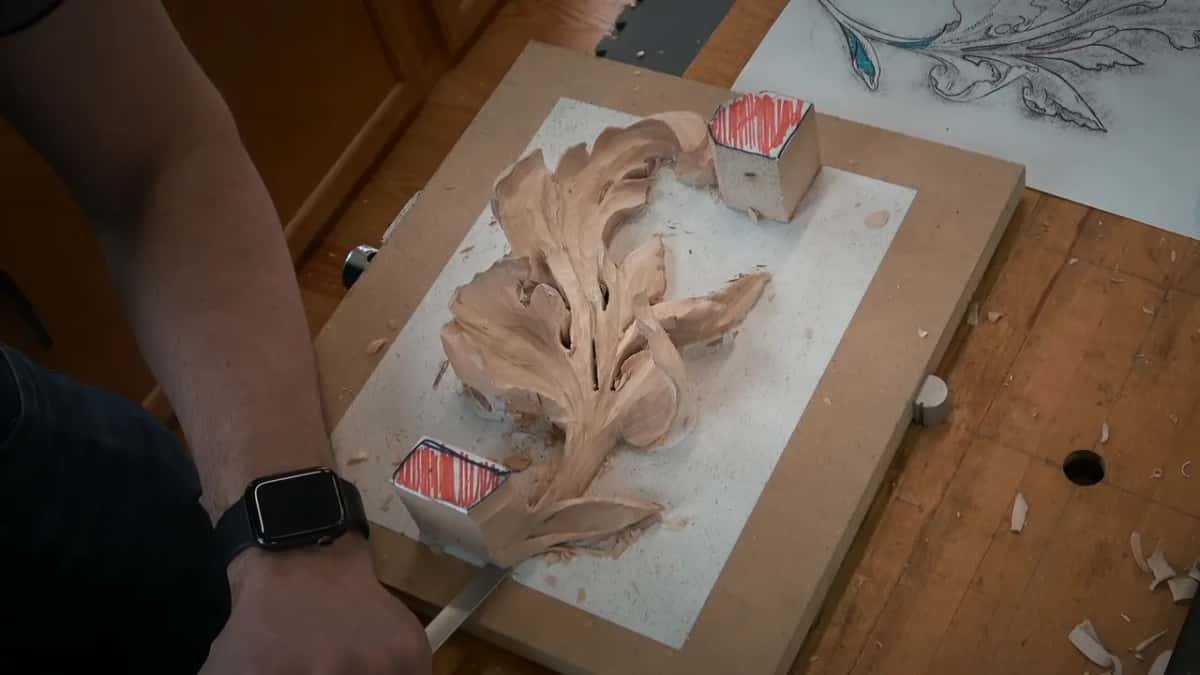
The drawing propped behind it is the same sheet from six weeks earlier.
Where has the work been covered?
A handful of outlets have written about it, and I would rather you read them than me. Revista din Lemn ran a long interview in 2017. Fine Woodworking published the architectural work in 2011. Highland Wood News covered it in 2013, and the Lewiston Sun Journal wrote up a Maine class in 2021.
My own training is a longer story and it sits on the page about the Russian apprenticeship, and the life behind it is on my own account of how I got here.
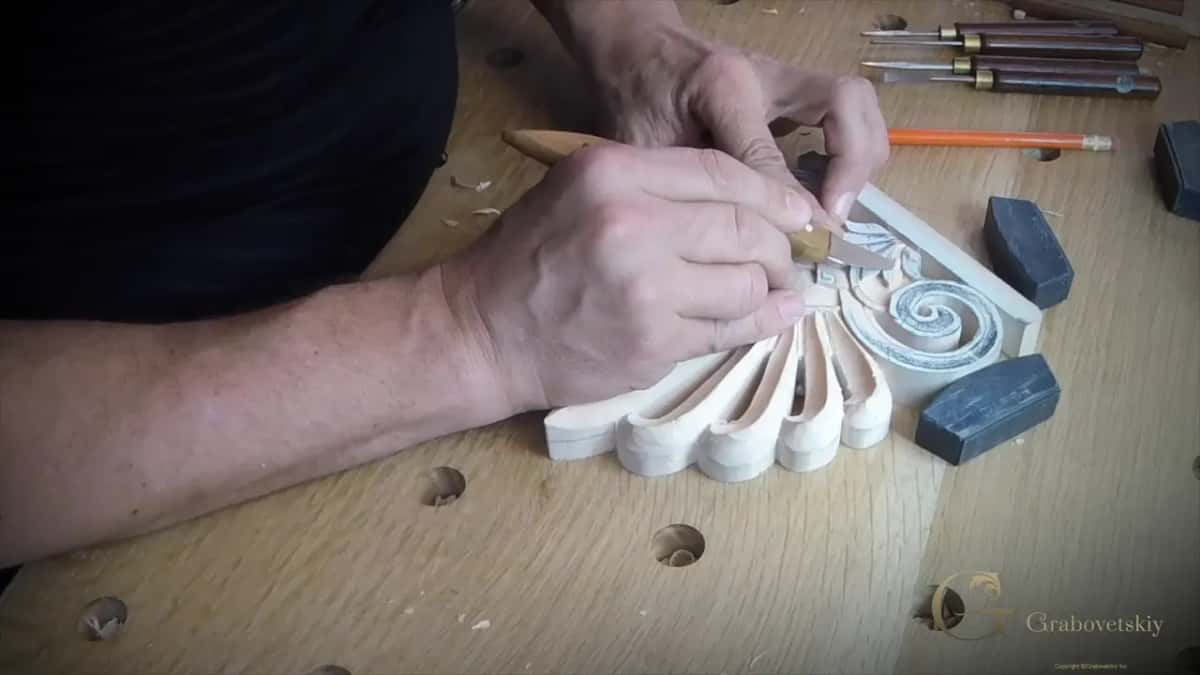
Those tools are laid out in the order I need them, left to right.
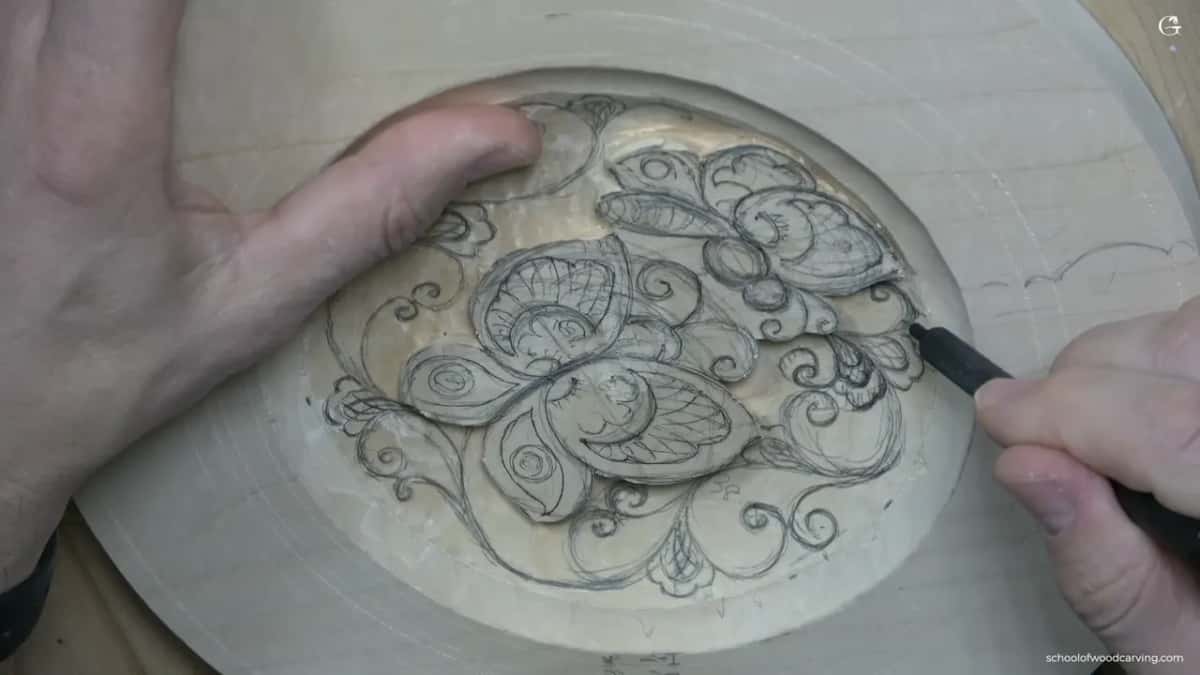
Thirteen curls. I counted them out loud on camera and got it wrong twice.
Would you rather hear me say it?
This one is thirty three minutes on why carving is worth anybody's time, which is the closest thing to a mission statement I have ever recorded. He talks straight into the camera without a script.
If you want to see what the lessons look like before deciding anything, the course list is open to read, and this piece answers the question most people ask first. For anyone weighing online against in person, I have written about both, and about why everything here is hand work.
Frequently asked questions
Is School of Wood Carving really a registered non-profit?
Yes. The corporation holds charitable tax exemption with EIN 88-0521972, granted by the IRS in June 2022, filed under NTEE code B90 for educational services. That record is public and searchable by name or by number.
Does Alexander Grabovetskiy take a salary from it?
No owner or director may take the surplus out of a charity like this one, and that restriction is the legal core of the whole arrangement. Alexander earns his living from commissioned carving and from teaching weeks at other schools.
Where exactly do the donations go?
A worldwide charity working with widowed families and children without parents receives part of it. Another part goes toward talented children whose families cannot pay for art education. The rest is spent on filming equipment and hosting.
Is the tuition tax deductible for me?
Tuition paid in exchange for lessons is generally not a deductible gift, because you receive something of value in return. Ask your own tax adviser about your situation rather than relying on a carver for that answer.
Which subjects come first at the school?
Design comes first, then carving, then sharpening. Design covers the laws of space, rhythm and repetition, plus whether a tool can reach what you drew. Sharpening is placed last because it is the hardest of the three to master.
Who can join?
Students range from fourteen to ninety years old, and beginners arrive with no experience at all. Measurements come in millimeters and in inches, since the audience is scattered worldwide.