
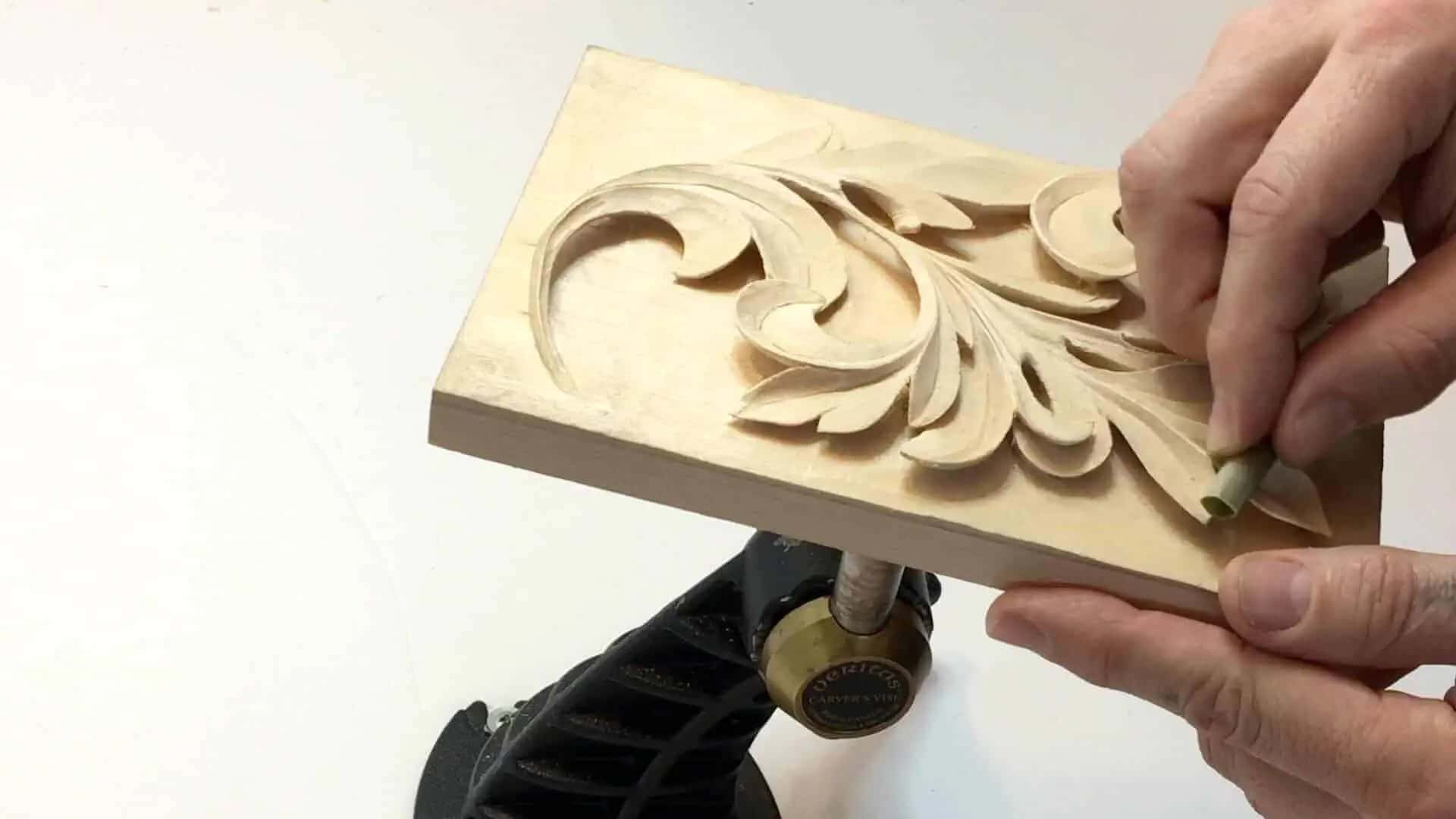
Russian wood carving is the old trade tradition I came up inside. One master, one apprentice, and before a gouge is ever put in your hand, more than a year of nothing but a knife. I was sixteen when Vladimir Tokarev took me on, and what he did to my head still runs every panel I carve.
People hear I am a Russian wood carver and they picture bears and spoons. Wrong tradition. My teacher handed me the classical European ornament, the same acanthus that runs across a Corinthian capital, and he was a trained fine artist who taught art in a school before he ever took an apprentice. He is alive today. I will not give you his address, and honestly, you could not find him anyway, because the country I learned in was locked shut and the men who taught inside it never went on any list.
So this page is not my life story. The prison years and the crossing to America are already written out over on my own account of how I got here. What follows is about the training instead. A real apprenticeship, why mine started with paper rather than wood, and what came out of it that no machine has managed to copy.
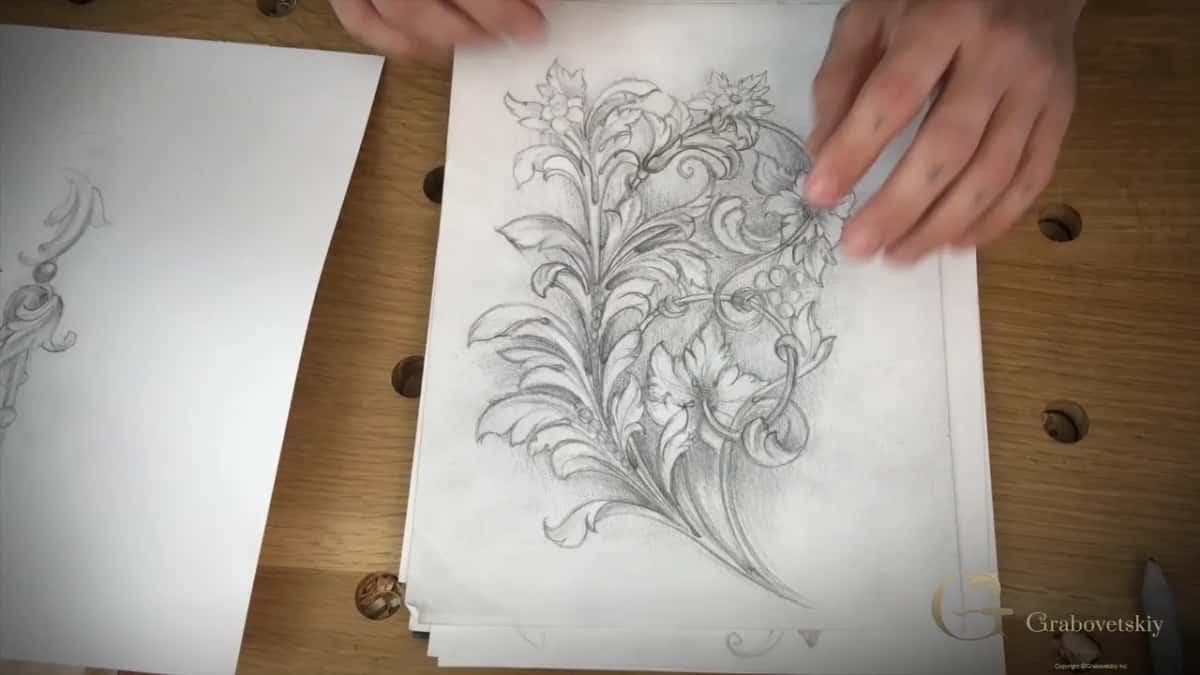
Paper is where the argument gets settled. Wood only records the verdict.
Which parts of that training still run my bench?
Vladimir Tokarev took me as his only apprentice at sixteen, and I held one knife for over a year before a gouge was handed to me.
The early lessons had no wood in them at all. Paper, a pencil, and a man walking past every hour saying the same word. Think.
Three laws got drilled into me and he never wrote them down: space, rhythm, repetition. Those same three run my design class now.
Sharpening came before carving. His method was sandpaper laid flat on a bench, not a shelf of 200 dollar waterstones.
My first gouge from him was a number 7, roughly 20 millimeters, unbranded. Nobody sells it. Forty years later I still reach for it.
Russian training in my case had nothing to do with folk carving. Classical European ornament, taught the way a guild taught it.
How does a Russian apprenticeship actually start?
It starts with a man showing you his own work, so you can measure exactly how far away you are from it. I had been carving on my own for years by then.
At six I got hold of my grandfather's chisel and took it to brick, and I carved a face into that brick, some face, I still could not tell you whose. The chisel did not survive the experiment. My grandfather was not thrilled about it, though he never made me pay.
Then Tokarev brought one of his own pieces over and set it down in front of me.
My jaw dropped. That is the honest word for it. You can teach yourself a great deal, and I had, but the moment your work sits next to a master's work the gap stops being a theory and becomes a measurement. He looked at me and said I was talented, and that he would show me how to really carve. Sixteen years old, and I did not know enough to be nervous. I said yes.
He took one student, and only ever one. The old European way, which means the teaching is not a lecture. It is a man standing behind your shoulder for years, watching your hand on the tool, stopping you in the middle of a pass.
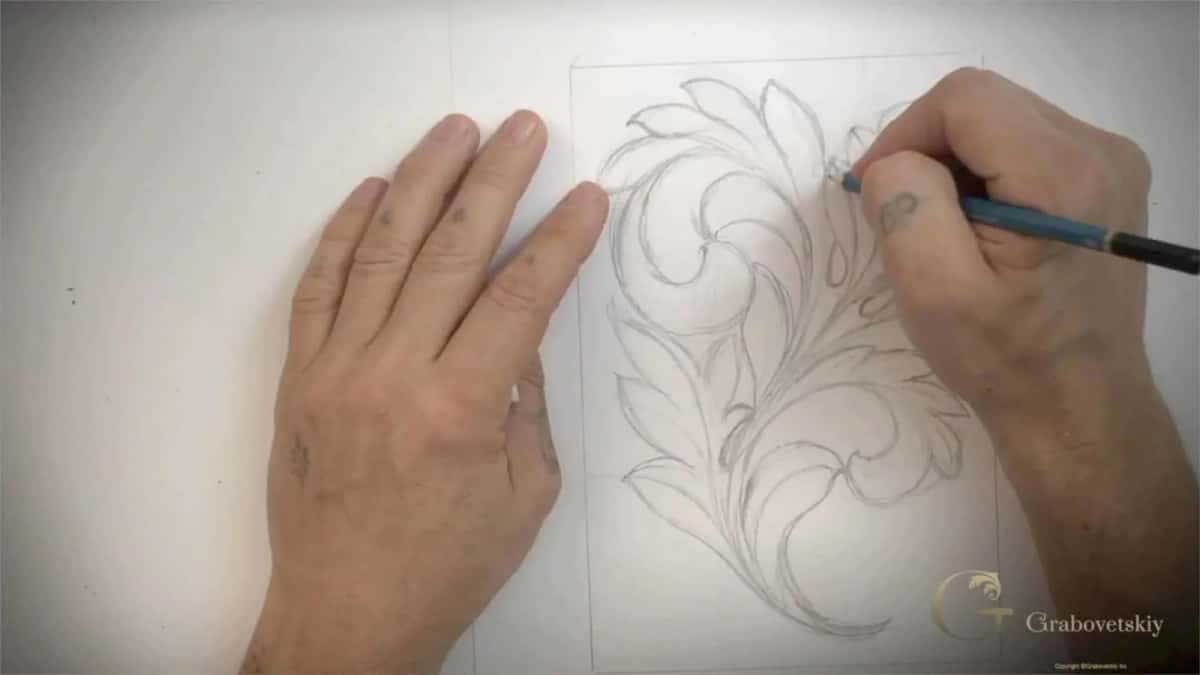
Every hour spent here bought back a whole day at the bench later on.
Why did my teacher give me only a knife?
Knife control is the one skill every other tool borrows from, and he refused to let me hide behind a gouge until I owned it. A year of that, at the very least. One knife. No number 9, no V tool, nothing with a sweep to bail me out of a bad angle.
A knife punishes you honestly. Come at the grain wrong and it tears, right there, while you watch. A gouge lets a beginner fake a clean surface for a while, and then the whole leaf reads mushy and nobody can say exactly why. So he made me earn the sweep.
I hated it. There is a stack of ruined basswood somewhere in my past that would embarrass me today.
What did he mean by think like a tool?
He meant that a drawing is only real when a piece of steel can physically get into every corner of it. Of all the training, this is the part I use every single day, and almost nobody teaches it.
He would hand me paper and say, sit and draw something for carving. A whole day would go into it. Beautiful acanthus movement, in my opinion, and I was proud of the thing. Then he would walk over, look for maybe four seconds, and say the same sentence he always said.
Think. Think how you are going to carve it. What tools will you use. How will you get in there.
And a fresh sheet of paper would land in front of me. Think like a wood carver, he said. A tool has one shape, and that shape decides what you are allowed to draw.
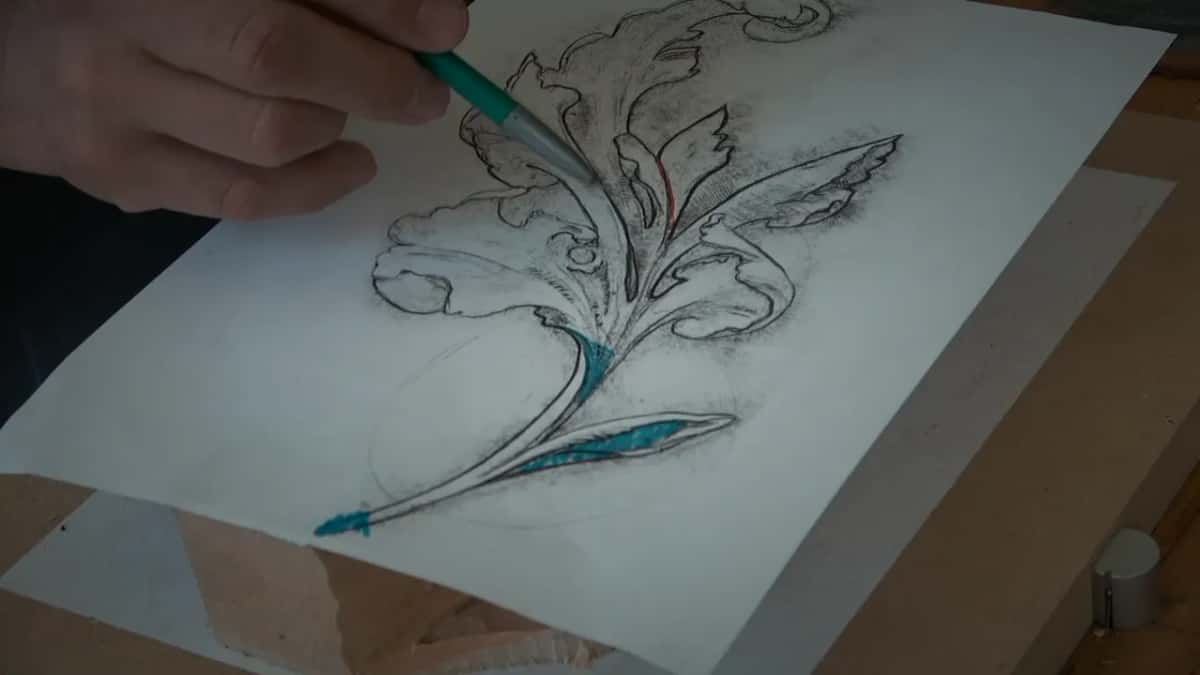
Teal means lower. I mark the depths on paper so my hand already knows them.
Right now there is a corner on the panel at my bench where the ceiling meets the front, and a smooth transition has to run all the way up into it. Had I drawn that corner without knowing which gouge reaches it, I would be standing here holding a beautiful drawing and no way to carve it. Design rules for ornament are not decoration theory. They are reachability.
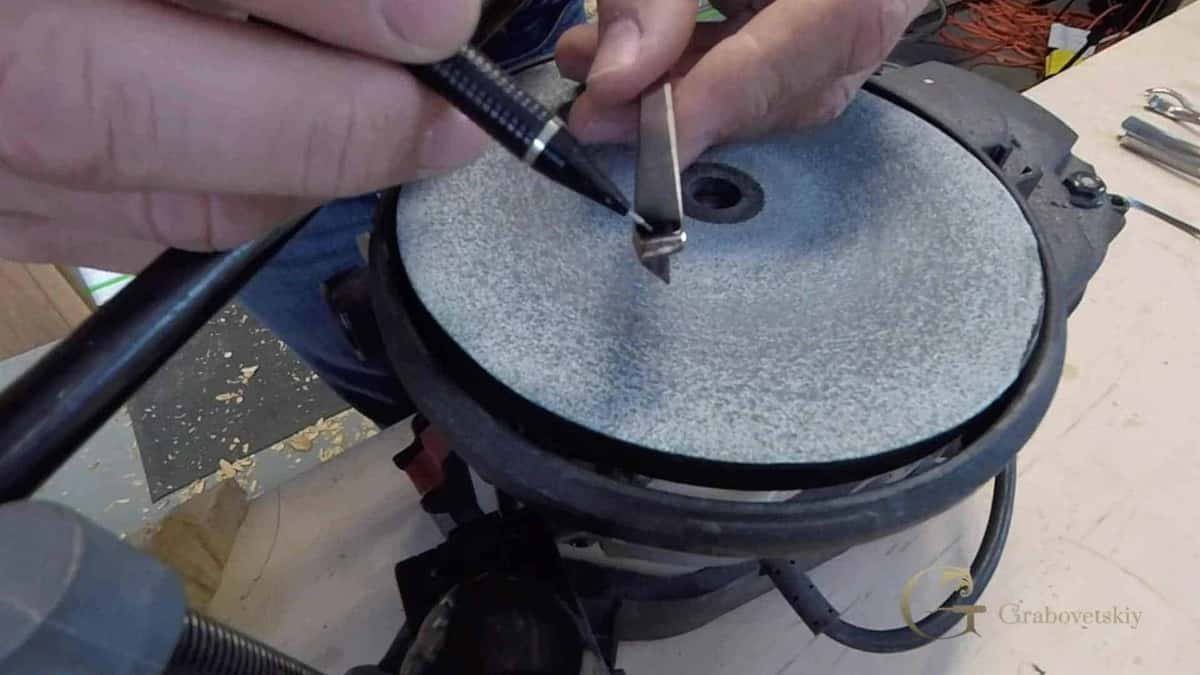
Ten minutes at the disc, or a whole afternoon of tearing grain and blaming the basswood for it.
Why does sharpening come before carving?
Sharpening was literally the first thing Tokarev taught me, before any project at all. And his method was cheap, which disappoints people who expect a Russian master to hand down some secret.
Do not overcomplicate it, he told me. Go buy sandpaper in different grits for five dollars, lay it flat on the bench, and sharpen. One good waterstone runs 200 dollars. If you have that money, wonderful. Without it the sandpaper still works, and it always did.
I do it that way still. When my wife asks me to sharpen the kitchen knives I keep sandpaper right on the countertop, and she has the sharpest knives of anybody I know. Nothing complicated in it.
He said one more thing I repeat to students who write to me angry at their wood. No such thing as bad wood exists. When it tears, your edge is dull. Now, I know what he meant, and I also know a board can carve like butter on Monday and like a wet sponge on Thursday, because wood is alive and it drinks water and gives it back. Both things are true at once. The edge is still usually the problem.

Cheap grit on a flat surface is the whole secret he ever gave me about edges.
What are the three laws he drilled into me?
Space, rhythm and repetition, and he never once wrote them on paper. He explained them at the bench, over and over, until they stopped sounding like rules and started showing up in the board.
Space is where an element sits and what surrounds it. I have one leaf, fine. Now where does it go, and what holds it there so the eye does not fall off the edge of the panel. Rhythm is the beat elements make when they repeat, and how that beat speeds up or slows down across a frieze. Repetition is what makes ornament read as ornament instead of as a pile of separate carvings.
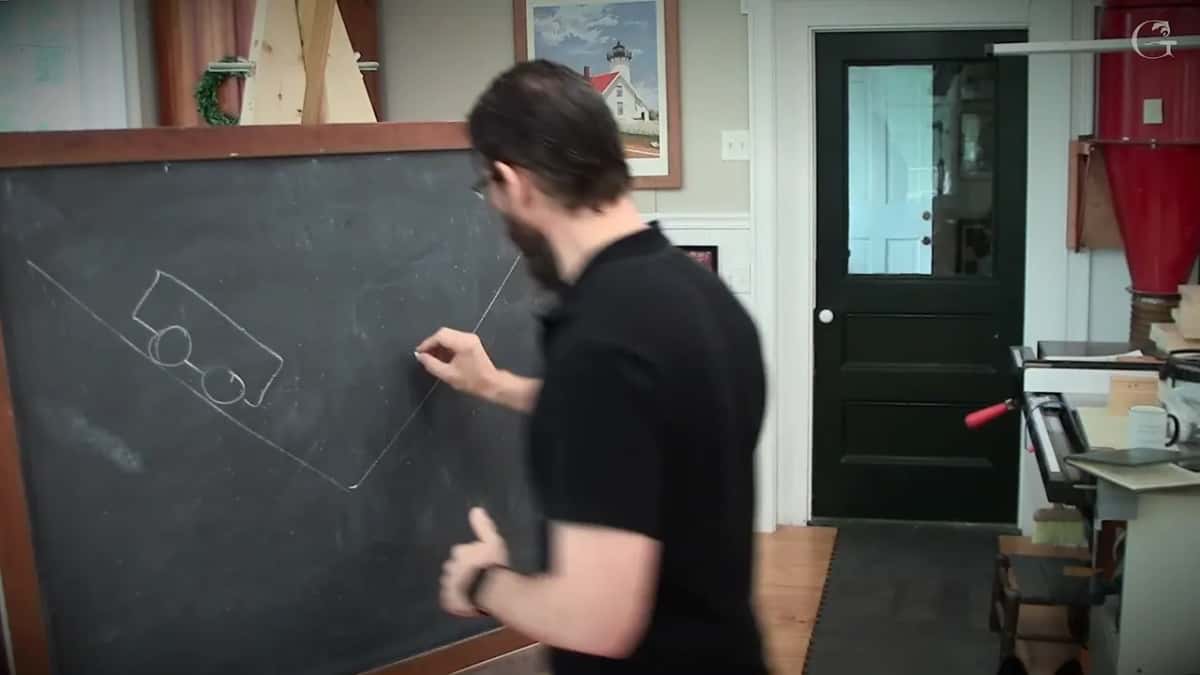
English readers see it rolling downhill. A student of mine from Israel saw it climbing.
Those three are also why I teach a design class at the Marc Adams School of Woodworking in Indiana, kept separate from any carving class. Most people believe design means drawing something pretty. It does not.
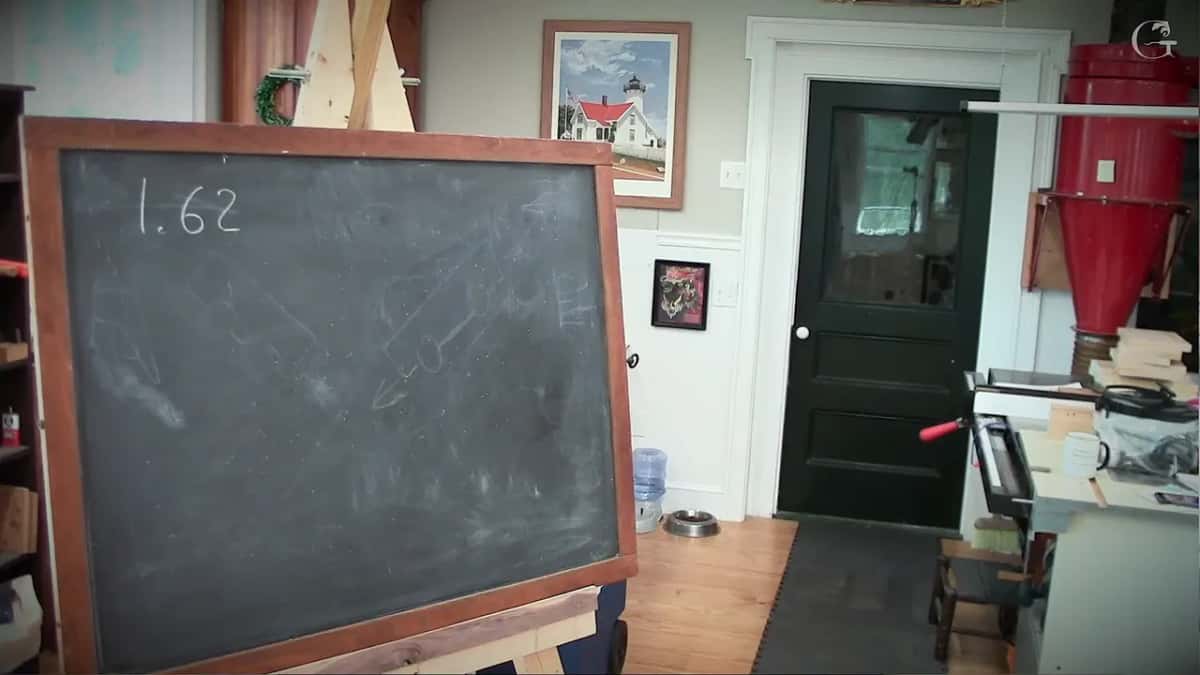
Students photograph this board more often than they photograph my carvings, which I find funny.
How do you carve a drawing your tool can reach?
You settle the fight on paper first, in this exact order. Here is the sequence he beat into me, and I still work a commission this way.
Step 1, draw the whole ornament before any wood is touched
Full size, on paper, finished. Not a sketch of the idea. An unresolved drawing produces an unresolved carving, and you end up improvising with a gouge in your hand, which is an expensive place to improvise.
Step 2, walk the drawing and name the tool for every corner
Go around the whole thing. At each tight spot, say out loud which gouge or veiner enters it and at what angle. A corner you cannot name a tool for is already a problem.
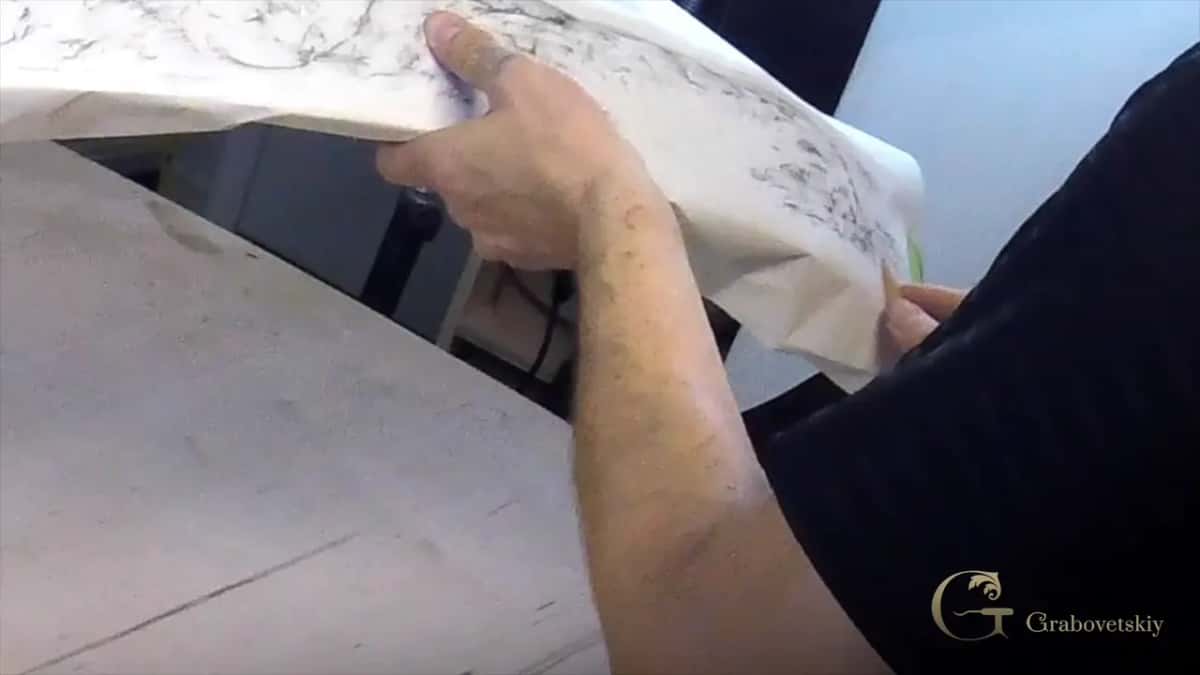
Somebody carved this flower two hundred years ago, and the rubbing hands me their pattern for nothing.
Step 3, redraw any corner no tool can enter
Change the drawing, never the wood. Open the angle, widen the eye, move the overlap. A corner no steel reaches is not a design decision, it is a mistake you have not made yet.
Step 4, sharpen everything you named in step 2
All of them, before the first pass, not when one starts tearing halfway down a leaf. A dull edge halfway through costs the run.
Step 5, rough out and let the shadows tell you the truth
Take the waste off around the outline first and get the whole thing standing before refining anything. Then look at it in raking light. Shadow is the only honest reviewer you have.
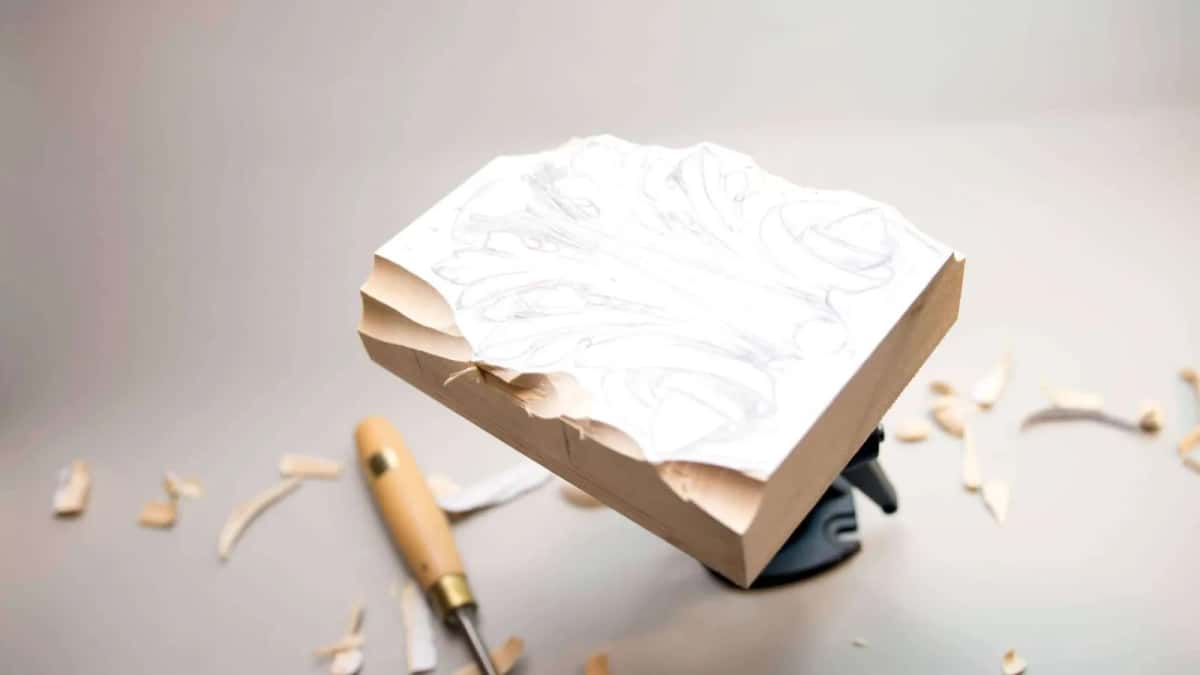
Nothing inside the leaf has been touched yet, and holding off is deliberate.
How is that different from a class you can buy?
An apprenticeship costs you years and buys you a pair of eyes on your hand, which is the one thing a video cannot hand over. A man who sells video lessons is telling you that, so weigh it accordingly.
What you get | How the training actually moved you along | Time needed | What that choice costs you later on |
|---|---|---|---|
A named master | He watches your hand and corrects it mid pass | Years, always plural | Nothing, except every waking hour you own |
A single weekend class | You carve one project beside strangers | Five days | Travel, lodging, and a week booked off |
Clips you find for free | Nobody anywhere ever looks at your own work | Ten idle minutes | Two years of quietly repeating the mistakes |
Lessons you rewind | You watch the same pass ten times | Your pace | Money, plus the discipline to keep showing up |
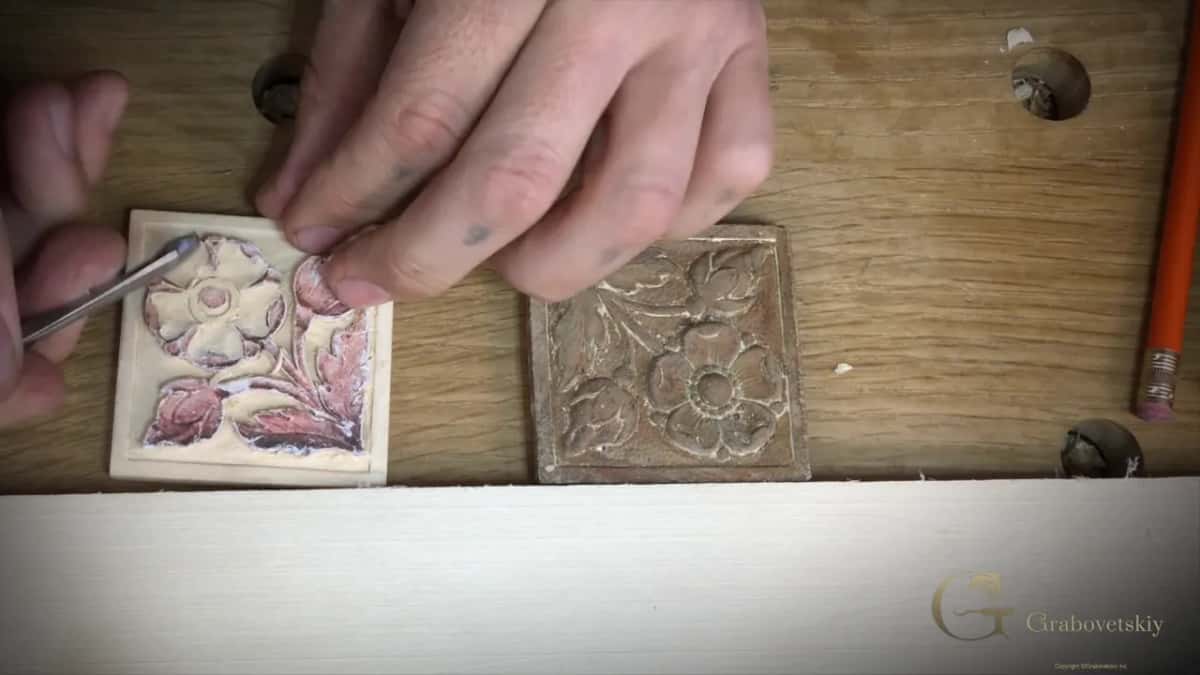
Copying a real antique is the closest thing to a dead master correcting you.
The rewind is the part people underrate. Tokarev showed me a pass once, maybe twice, and then it was gone and I had to carry it in my head. A student of mine can watch the same three seconds forty times at two in the morning. Not the same as a master's eye on your work, no, but not nothing either, and it is the trade I chose when I put the whole library online.
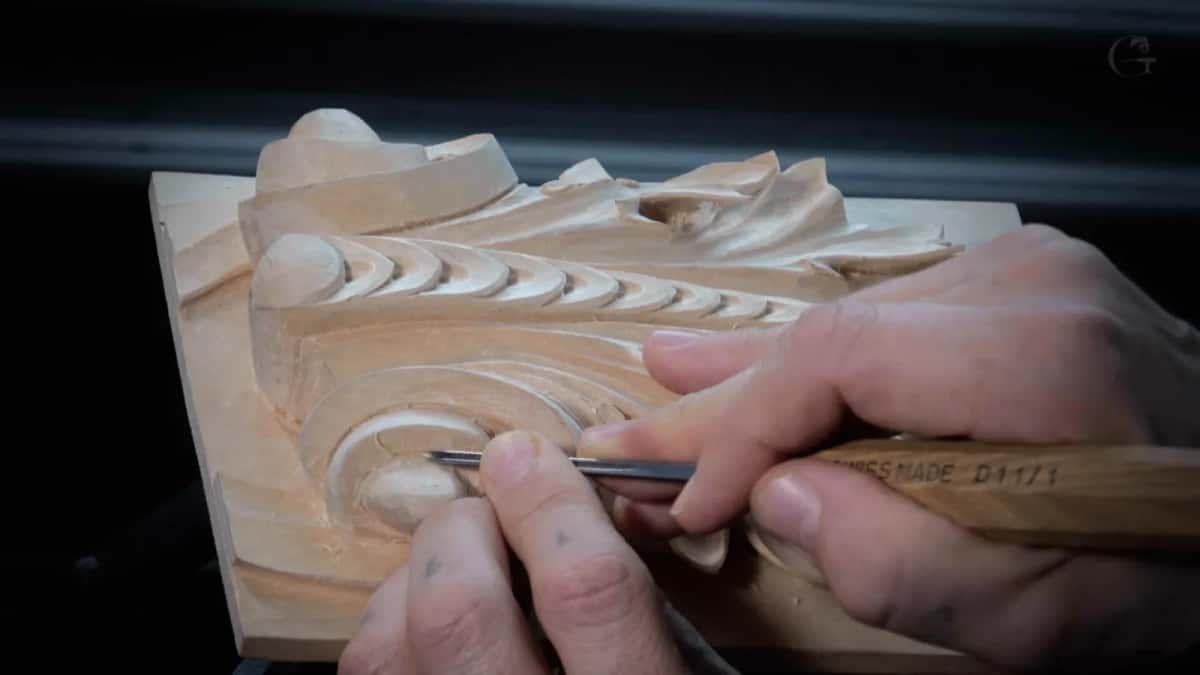
The handle is Swiss. The motion is thirty years old and it has not improved much.
Did Russia have its own carving style?
Yes, and I was not taught it. Real Russian folk carving exists, house boards and window frames and spoons, honest work with rules of its own. My training went a completely different direction.
What Tokarev handed me was the European classical vocabulary. The acanthus in its Greek and Roman and Byzantine forms, volutes, rosettes, and the scrolled forms that run across furniture and architecture from antiquity forward. It travelled into Russia the way it travelled everywhere else, through pattern books and churches and men who had seen the real thing with their own eyes.
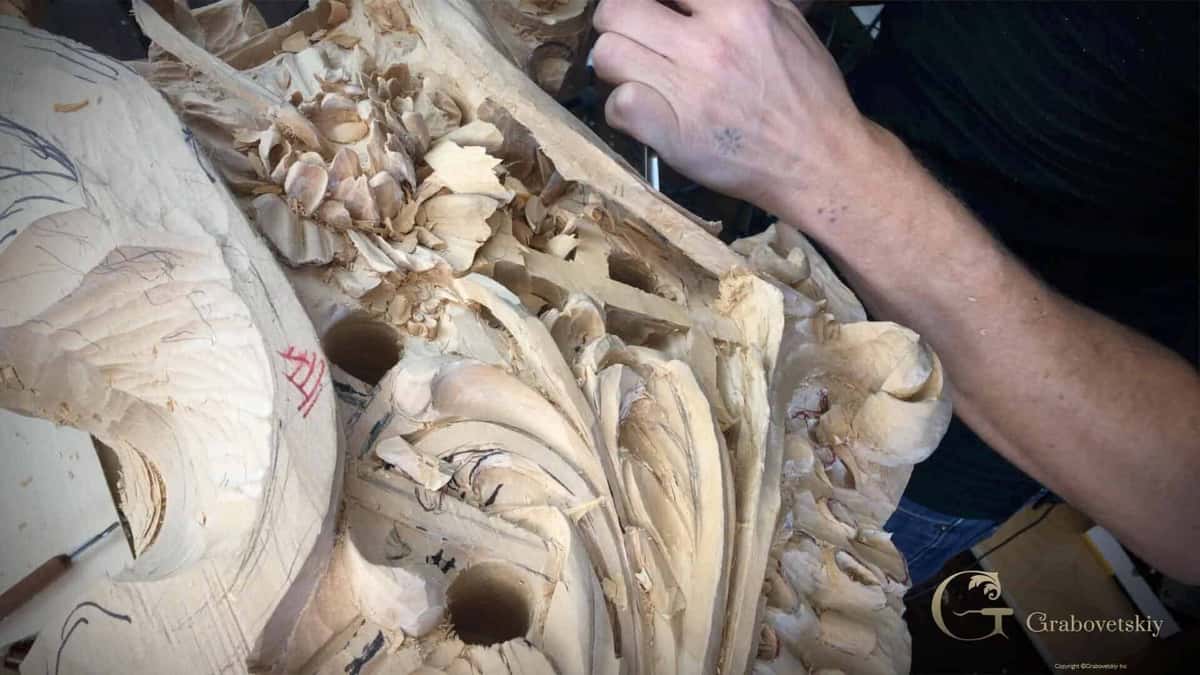
Three layers deep here. The bottom one is carved almost blind.
That vocabulary is why my work sits comfortably beside Grinling Gibbons and beside Chippendale furniture. It also explains why a Greek acanthus and a Roman one are not interchangeable, and why I get irritated when somebody calls both of them just a leaf.
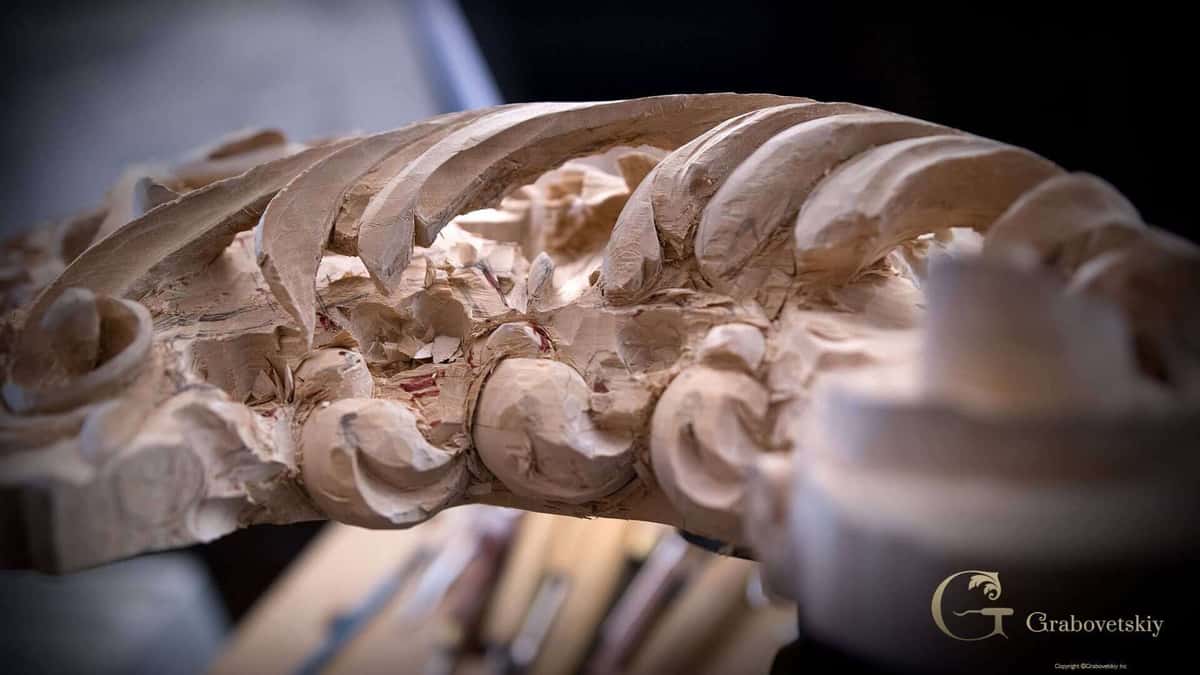
My great grandfather worked mahogany in the Chippendale style, so this is the family end of the road.
What did I bring to America that a machine cannot copy?
The habit of deciding everything before the first pass. A router follows a path that somebody else already resolved, line by line, in advance. Resolving is the part it cannot do, and it never asks whether a corner is reachable, because reachability is not its problem.
I sold my machinery. All of it. That decision is a longer story and it lives on the page about coming to America, but the short version is that hand work and machine work leave different surfaces, and only one of them was going to get my whole attention.
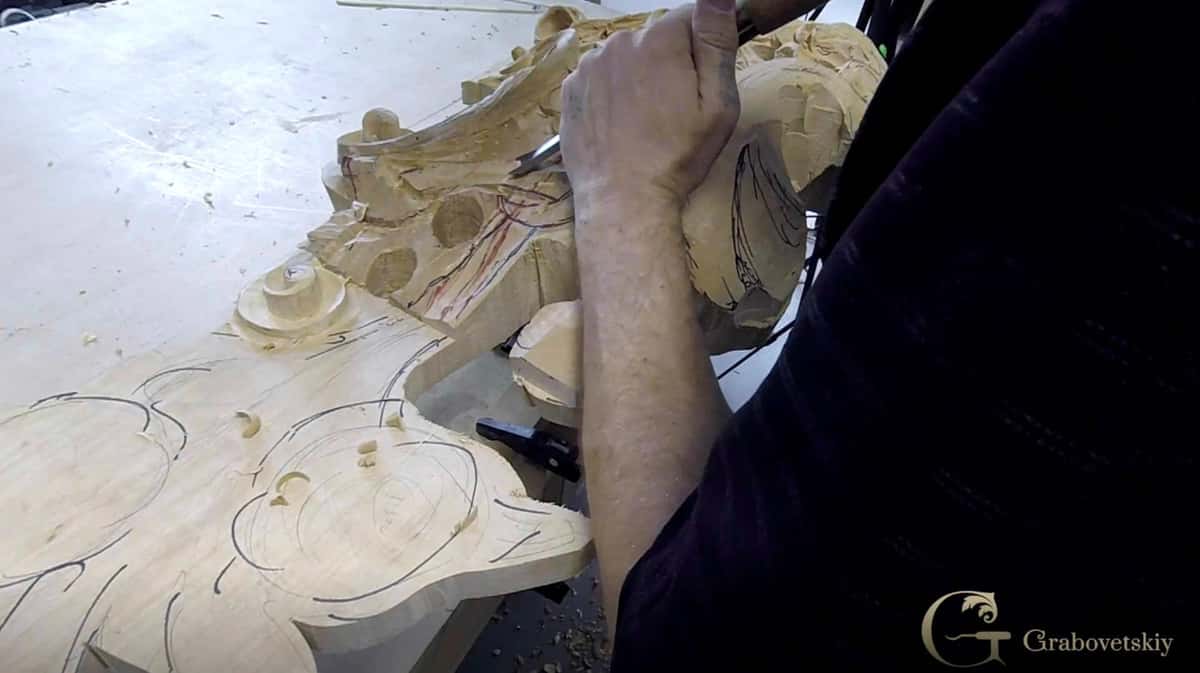
No router touched any part of this, and you can tell from the tool marks inside the hollows.
The other thing that came over with me was patience for the slow part. A year with a knife teaches you that the boring stretch is where the skill actually lands, and nobody who skipped it ever caught up.
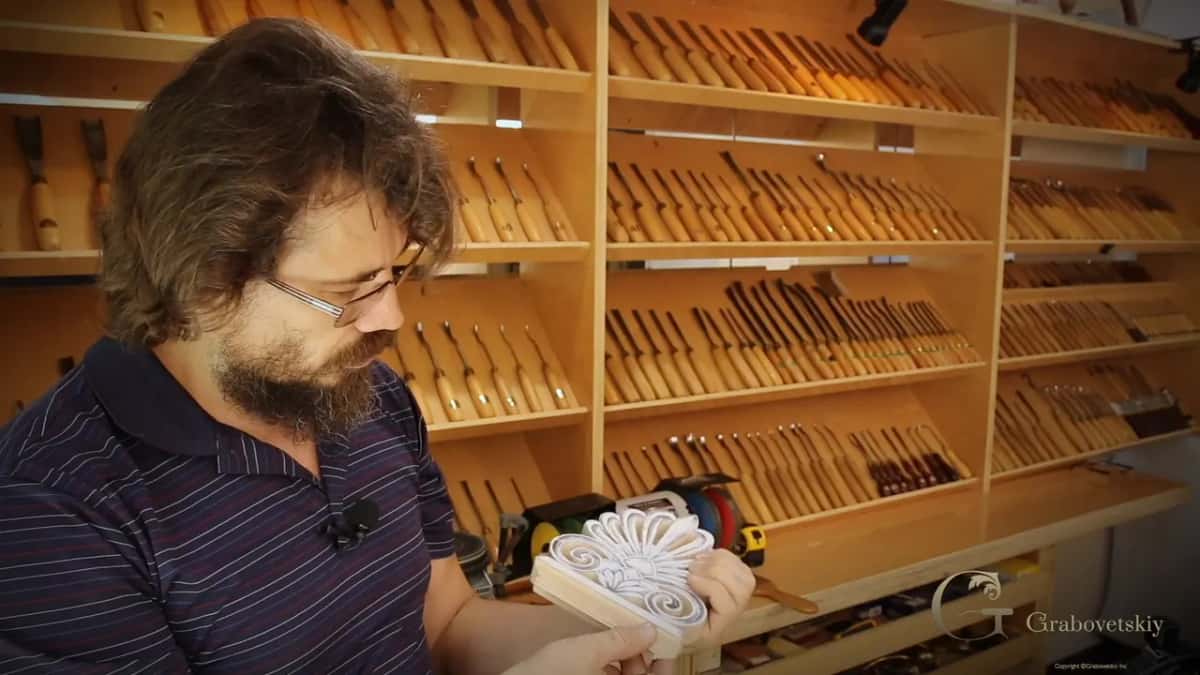
Most of those handles were bought one at a time over about fifteen years.
Can you still get an apprenticeship like that?
Almost certainly not, and I would rather be honest with you than sell you a replacement. The guilds that ran real apprenticeships are gone across most of Europe. Masters who trained under them are old or dead, and the country they worked in kept no register of any of them.
What remains is uneven. A few schools run genuine week long intensives, and I teach at some of them. Individual carvers still take somebody on quietly, the old way. There are photographs of my work in the Grinling Gibbons Photos archive, and I have taught at the Sam Beauford Woodworking Institute as well. It happens. It is rare, and it usually begins with a long stretch of unpaid grunt work in somebody's shop before anybody teaches you a thing.
So I built the closest thing I could. Not the same, and I will not claim it is. Three thousand lessons where you watch the whole pass, mistakes included, at whatever hour you have free.
My school is a registered 501(c)(3), by the way. Part of your tuition goes to orphans and widows through an international organisation, and part goes to finding talented children whose families cannot pay for art school. I was one of those children myself, and my mother had nothing to send me with.
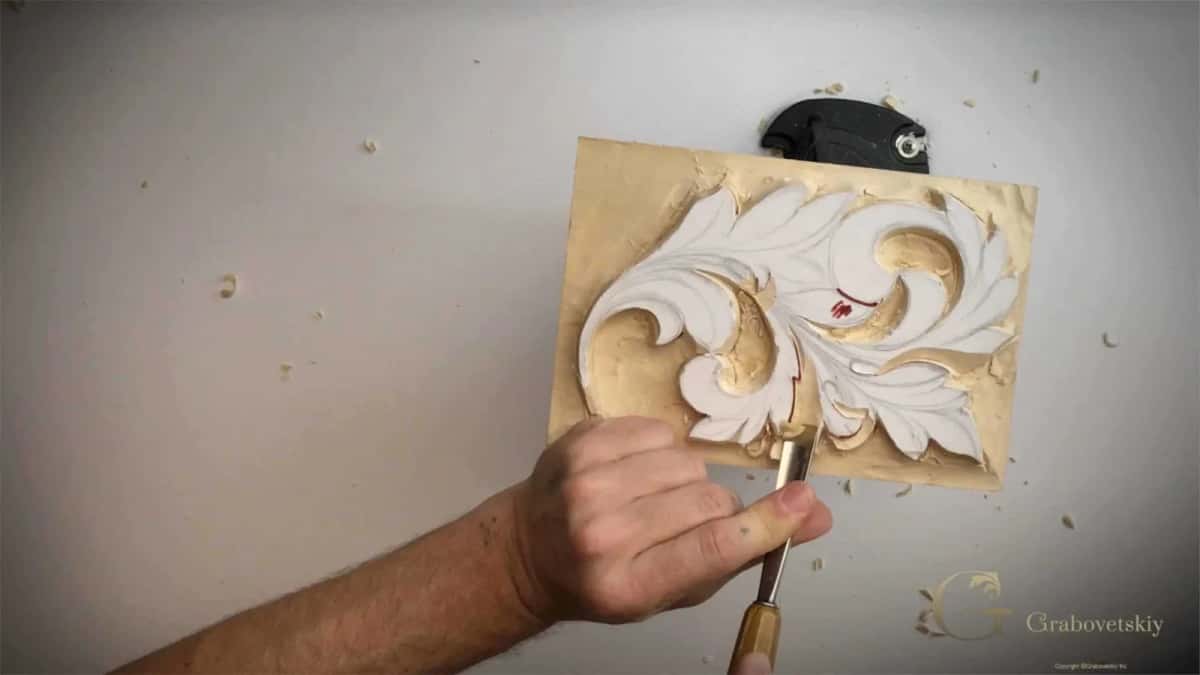
Red for the eyes, always. I have used the same colour code since the nineties and I forget why.
What does the training look like in a finished leaf?
It shows up in the shadows rather than the surface. Anybody can produce a leaf shape. Training lives in how deep you dared to go, in where the eyes sit, and in the way whole sections drop downhill so one curl stays the highest thing on the board.
Look at the beads running down the middle rib of a Roman acanthus. Each bead is a separate decision about how much light it catches, so get them even and the rib reads as a spine. Uneven, and the whole leaf goes soft on you.
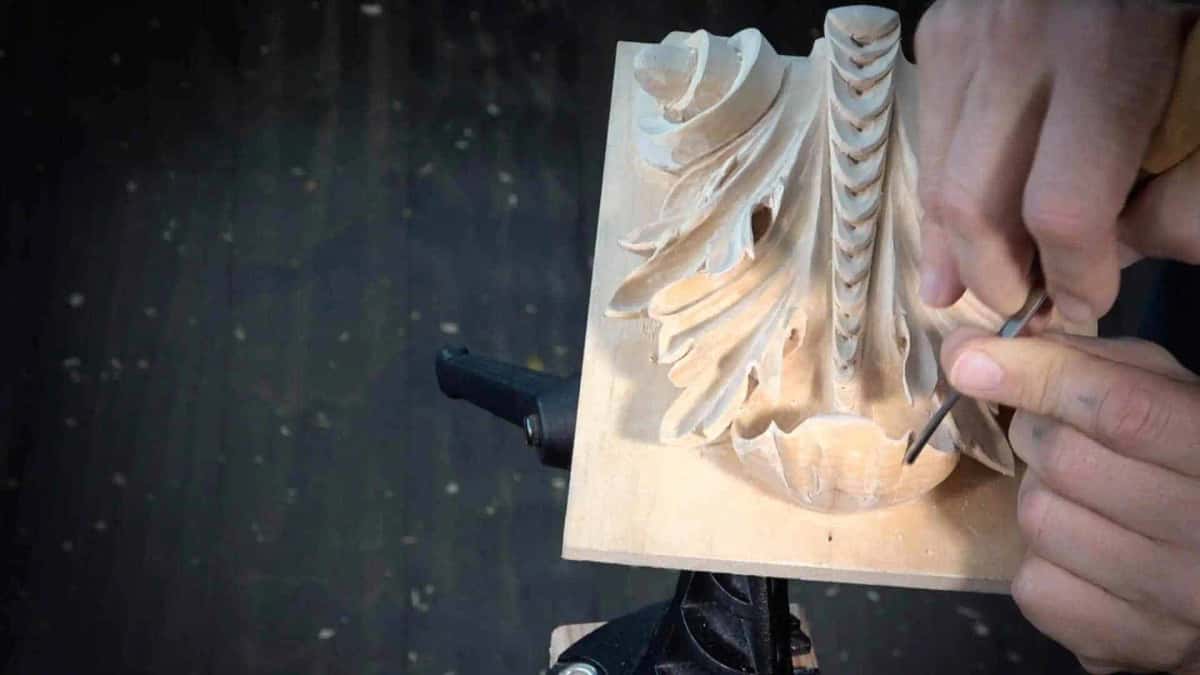
Twelve beads on this one. I walked them off with dividers before starting.
The same thinking runs the whole board. Lower the planes so the design has somewhere to go, then open the deep eyes at the top where the shadow needs to be blackest, and only after that does the leaf stand up off the ground with a clean wall around it.
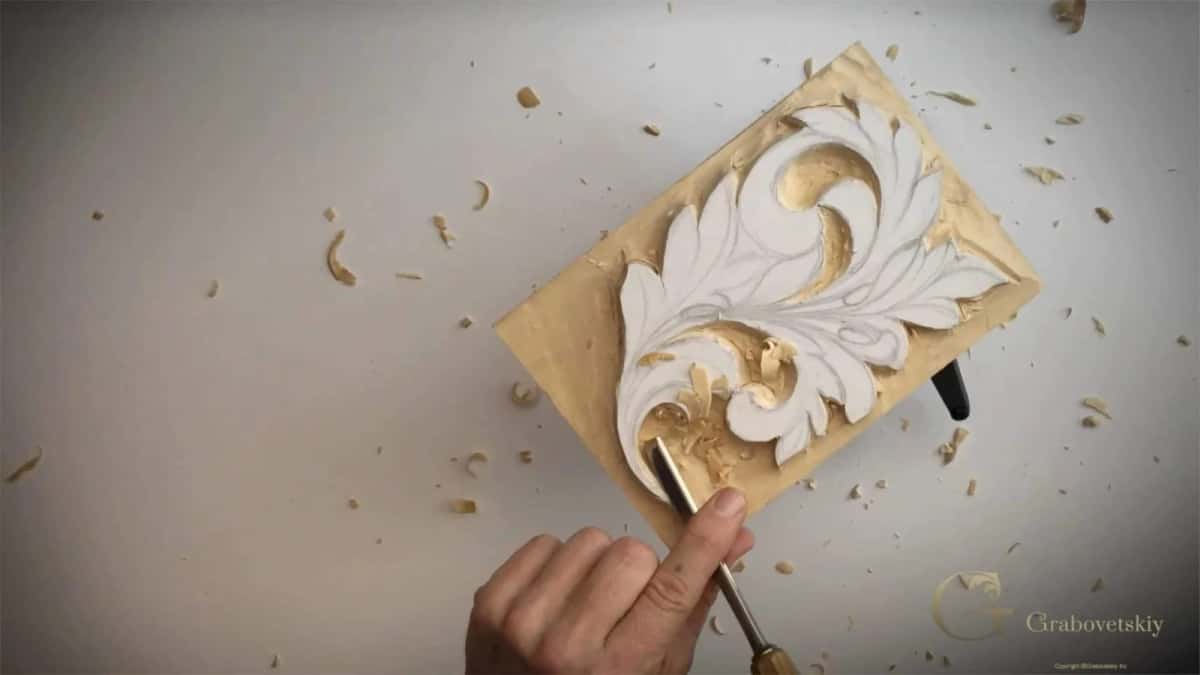
The board looks worse at this stage than it did an hour ago, and that is normal.
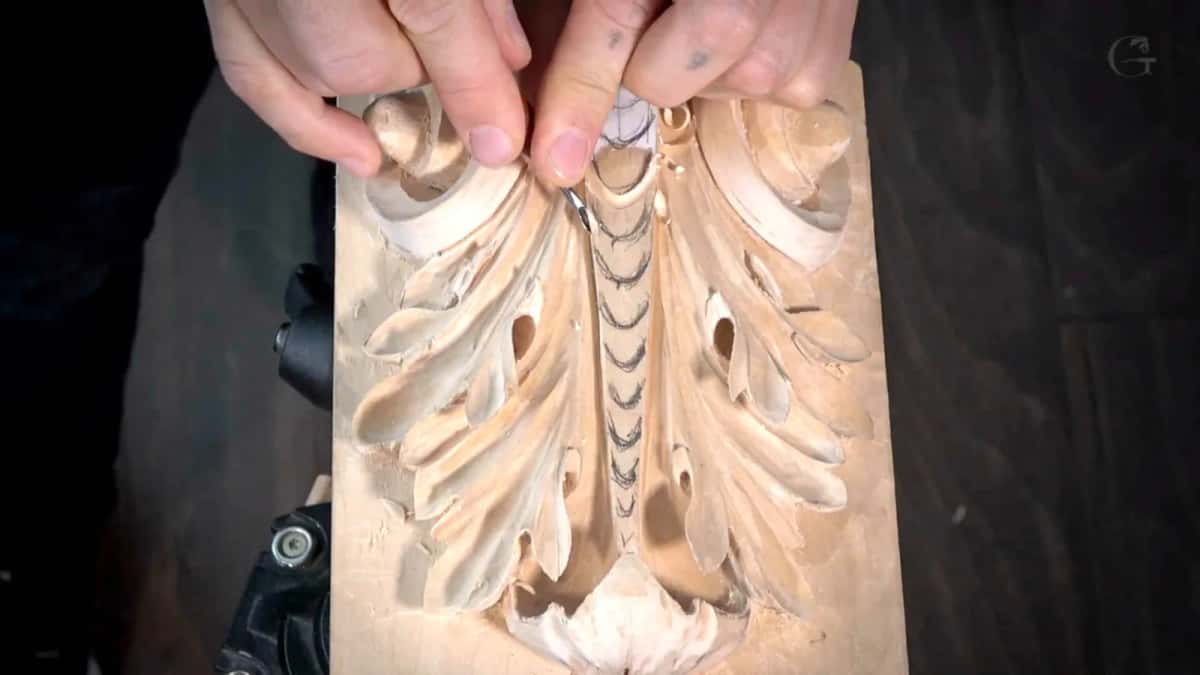
Beginners stop too early right here, every single time I have watched it happen.
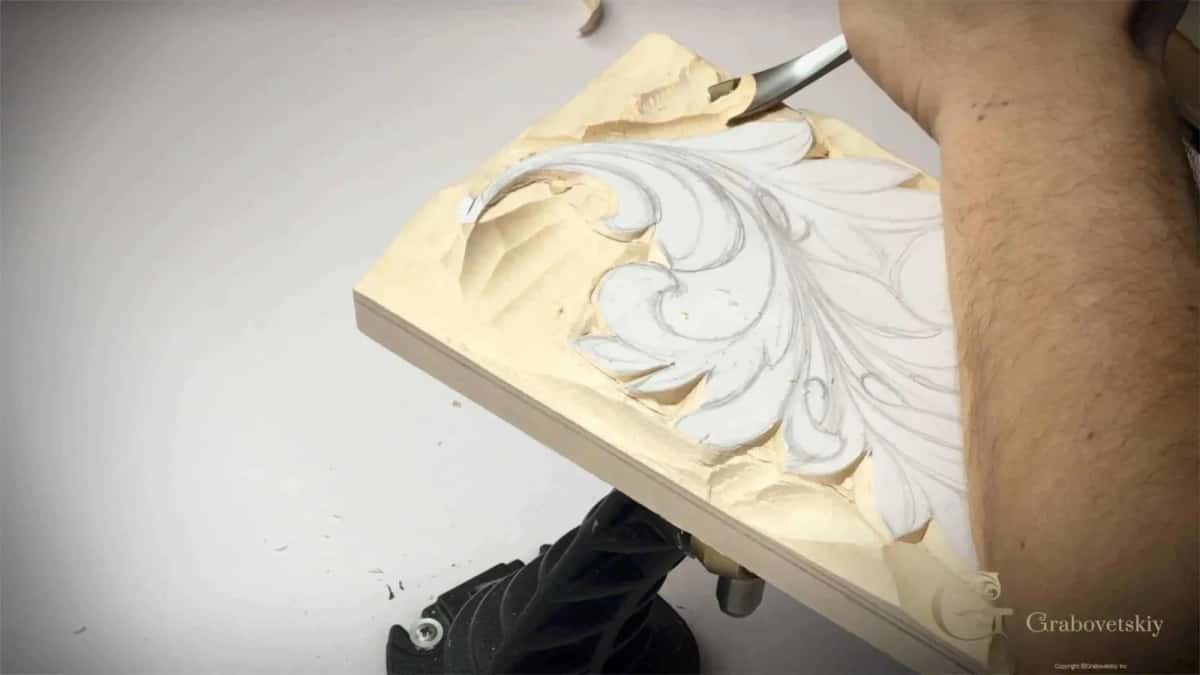
Chips everywhere. I sweep at the end and never during.
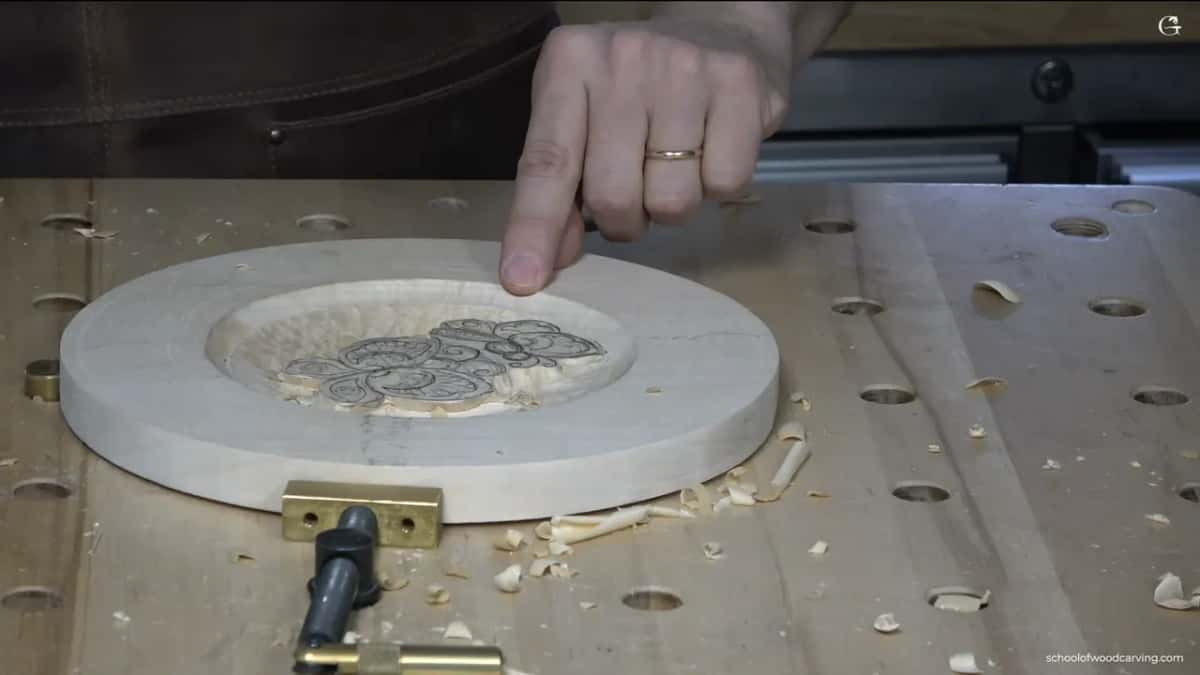
Undercut a quarter inch and the shadow does the rest of the work for you.
A Byzantine leaf asks for something else again, thinner at the edge, almost paper at the outer curl, and the Gibbons school pulled the same trick, and the training is what tells your hand when to quit taking material off.
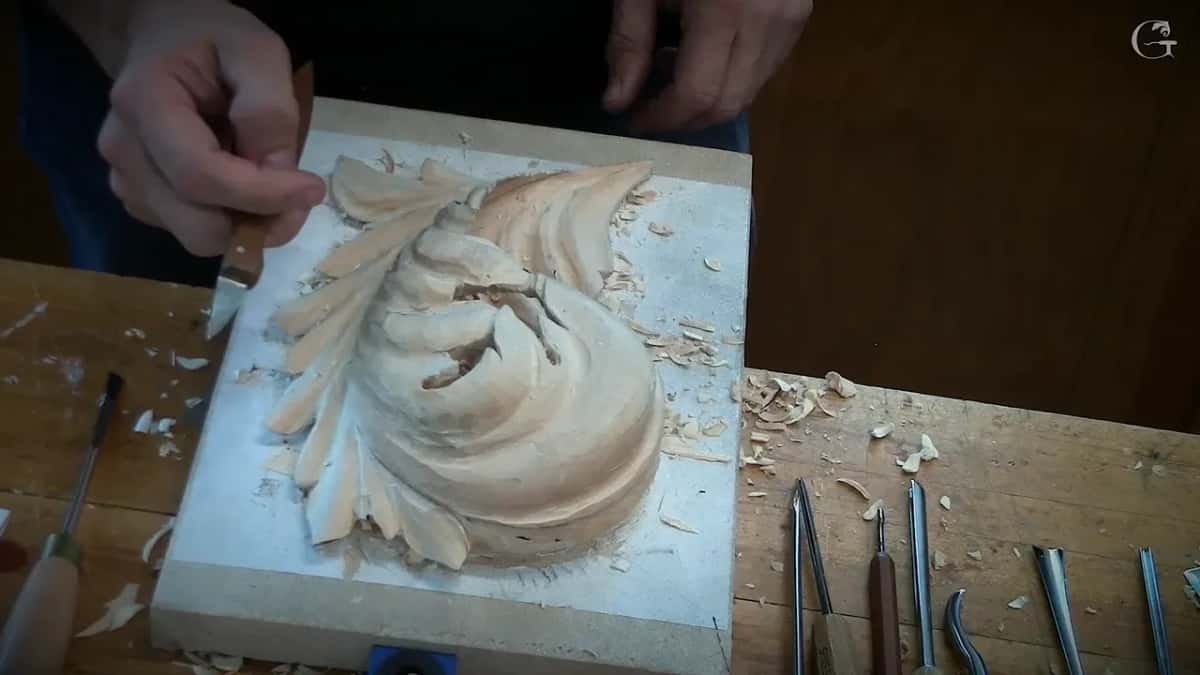
That board came out of a skip behind a cabinet shop in Goshen.
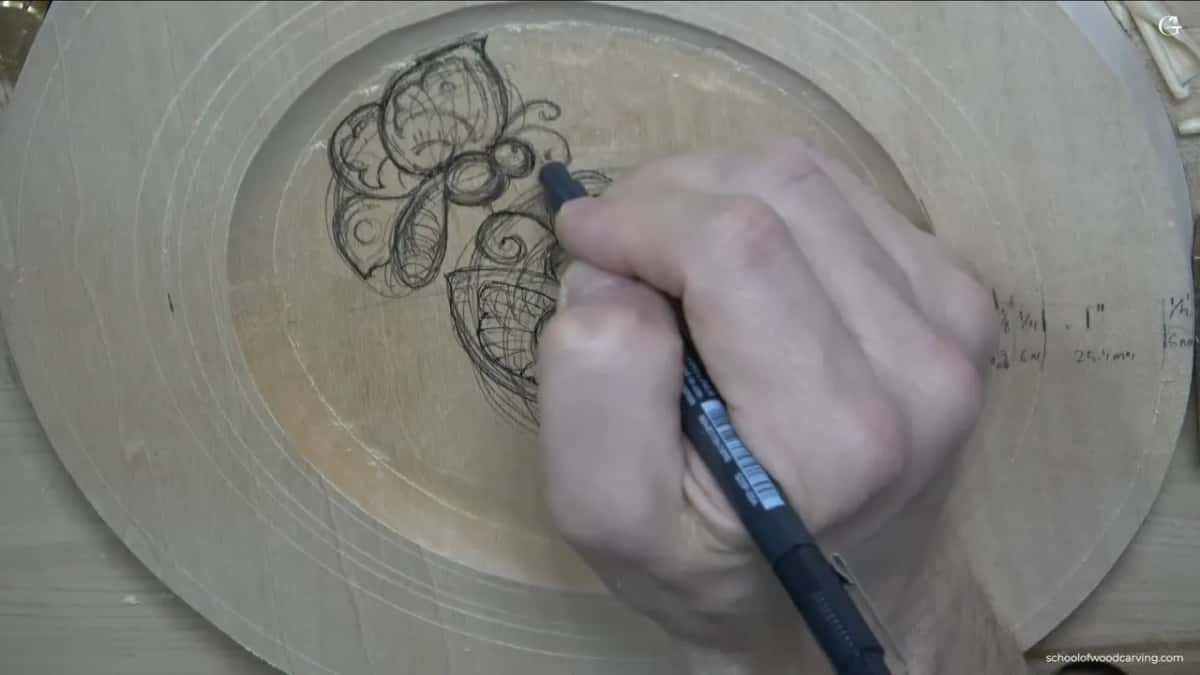
No pattern taped down. After enough years the drawing goes on the board directly.
Where has the work been written up?
In a handful of places, and I would rather you read them than take my word for anything on this page. Revista din Lemn ran a long interview in 2017. Fine Woodworking published the architectural work in 2011, and Highland Wood News ran a piece in 2013. The Lewiston Sun Journal covered a class I taught in Maine in 2021.
Tools, since people always ask. My teacher's number 7 carries no brand and I cannot tell you where to find one. For what you can actually buy, Pfeil and Ashley Iles are in my hands constantly, and I have written up what belongs in a first set so nobody spends 800 dollars on the wrong shapes.
Would you rather watch me explain it?
This one is about spatial thinking, which is the skill the whole apprenticeship was quietly building. Eighteen minutes, and it covers the part of Tokarev's method I find hardest to put into writing.
For the drawing side on its own, begin with the design principles and then draw one acanthus leaf before picking up a gouge. For somebody who has never carved anything at all, the beginner path is a gentler door, and this one answers the question everybody asks first, honestly, without softening the answer to keep you reading.
Frequently asked questions
Who taught Alexander Grabovetskiy how to carve wood?
Vladimir Tokarev, a Russian master carver who was also a trained fine artist and a former art teacher. He took Alexander on at sixteen as his only apprentice. Tokarev is alive, and Alexander does not publish his location.
How long did the apprenticeship last?
The exact length is not documented in any source I can point you at, so an honest number does not exist. What the sources do carry is that it began at sixteen, and that the opening stage, knife only, ran longer than a year before any gouge was allowed.
Is Russian wood carving the same thing as Russian folk carving?
No. Folk carving covers house boards, window frames and spoons, with regional rules of its own. Alexander trained in European classical ornament instead, the acanthus and volute vocabulary running through Greek, Roman and Byzantine work.
Why would a master start an apprentice with only a knife?
A knife shows a bad grain direction immediately, because it tears where a swept gouge can disguise the same error for months on end. Build that control first and every later tool inherits it.
What gouge should a carver buy first?
A number 7 around 20 millimeters is the shape Alexander reaches for most, and it is the one his teacher gave him. Add a number 3 for cleaning up, plus a small V tool. Three good ones beat a boxed set of thirty.
Can somebody still find a traditional carving apprenticeship today?
Only rarely, and mostly by luck. Most European guild systems that ran them no longer exist, and masters who trained under those systems are elderly now. A few carvers do still take somebody on privately, usually after a long stretch of unpaid shop work.