
January 2, 2023 · Updated August 15, 2026
By Alexander Grabovetskiy — Master Woodcarver · Founder, School of Wood Carving · 14 min read
Woodcarving classes near me when the closest one is 500 miles away
Key Takeaways
- Five days away runs near 3500 dollars once hotels and airfare are counted, not the fee printed on the class page.
- A master standing beside you catches errors before they harden into habit. No lens does that job.
- Video wins on repetition. Replay a single pass until your hands finally copy what they saw.
- Practice alone buys tool control. Drawing and proportion it never buys, and self taught carvers stall right there.
- Start with one number 7 gouge, a scrap of basswood, and a drawing you made yourself.
Woodcarving classes near me is a search that fails for most people, because hand carving schools are rare and the closest one is often 500 miles off. Some weeks I stand at a bench in a woodworking school. The rest of the year I am online. Both work. They cost very different money.
You typed it, you got Boston or Seattle or somewhere in Alabama, and none of it is close. I know that search. Students tell me about it in almost every class, and the story barely changes: a spoon club two towns over, a community woodshop that does cabinets and drawer boxes, and nothing anywhere that teaches acanthus or high relief.
So let me put real numbers on both roads. The true price of a week at a bench, once everything is counted. What you get standing next to a master carver that no camera gives you. What a camera gives you that a room never can. And how to begin this week with one gouge and one board.
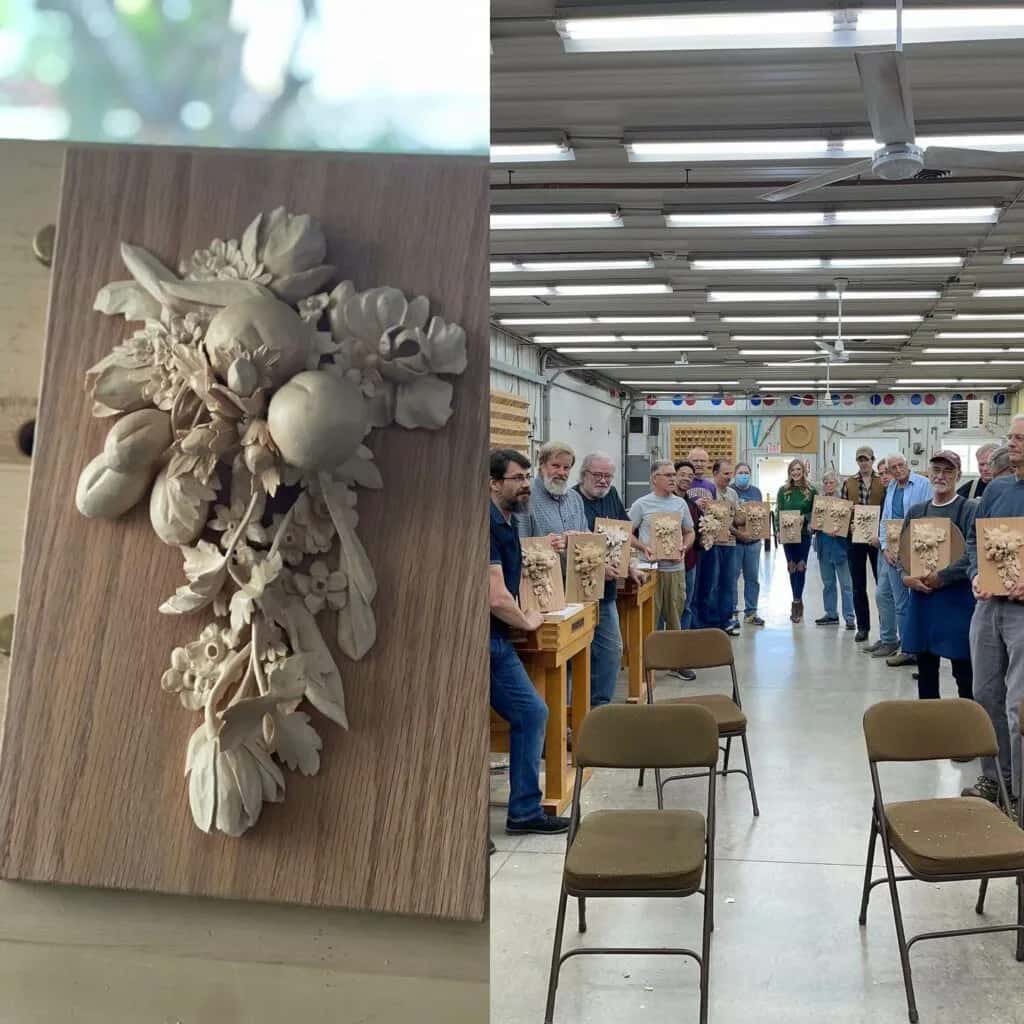
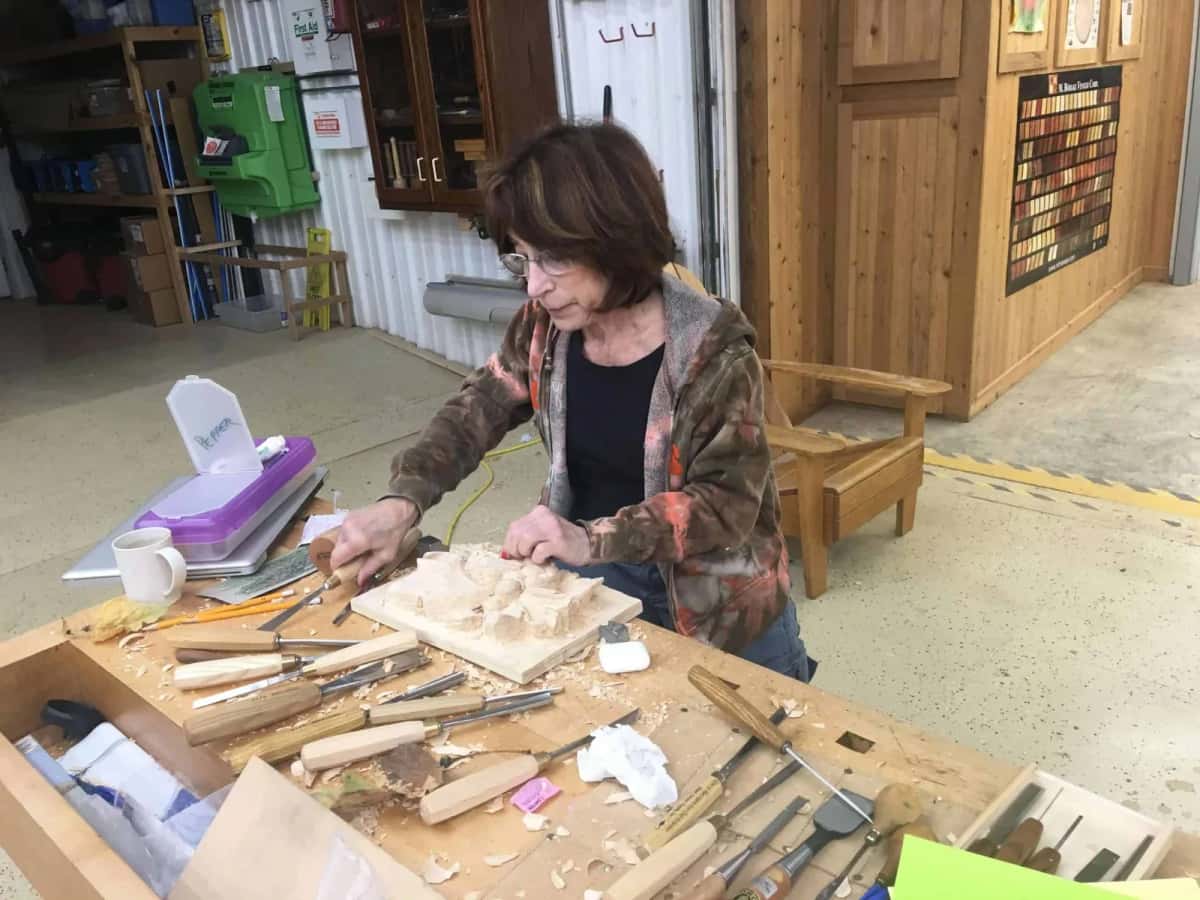
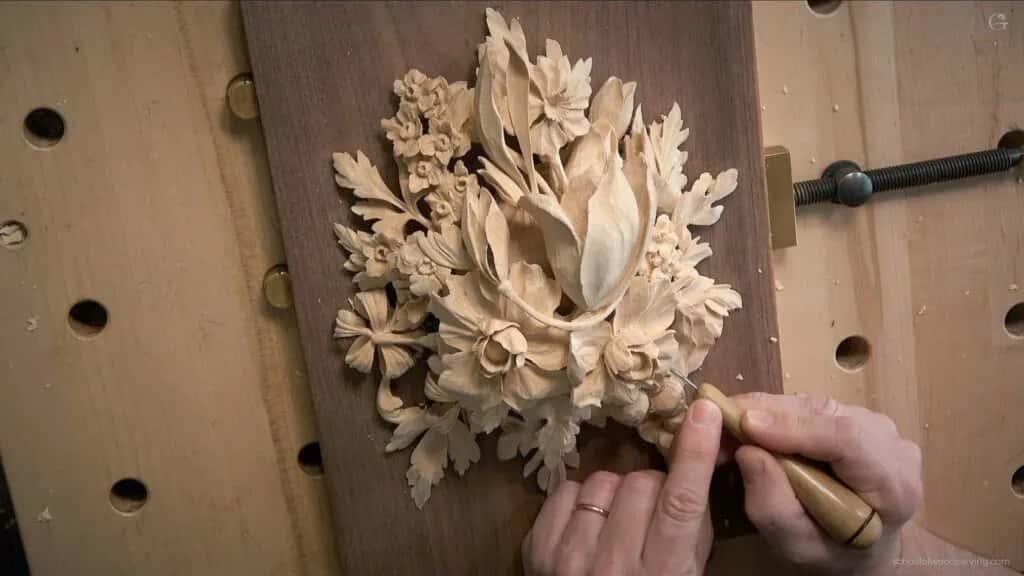
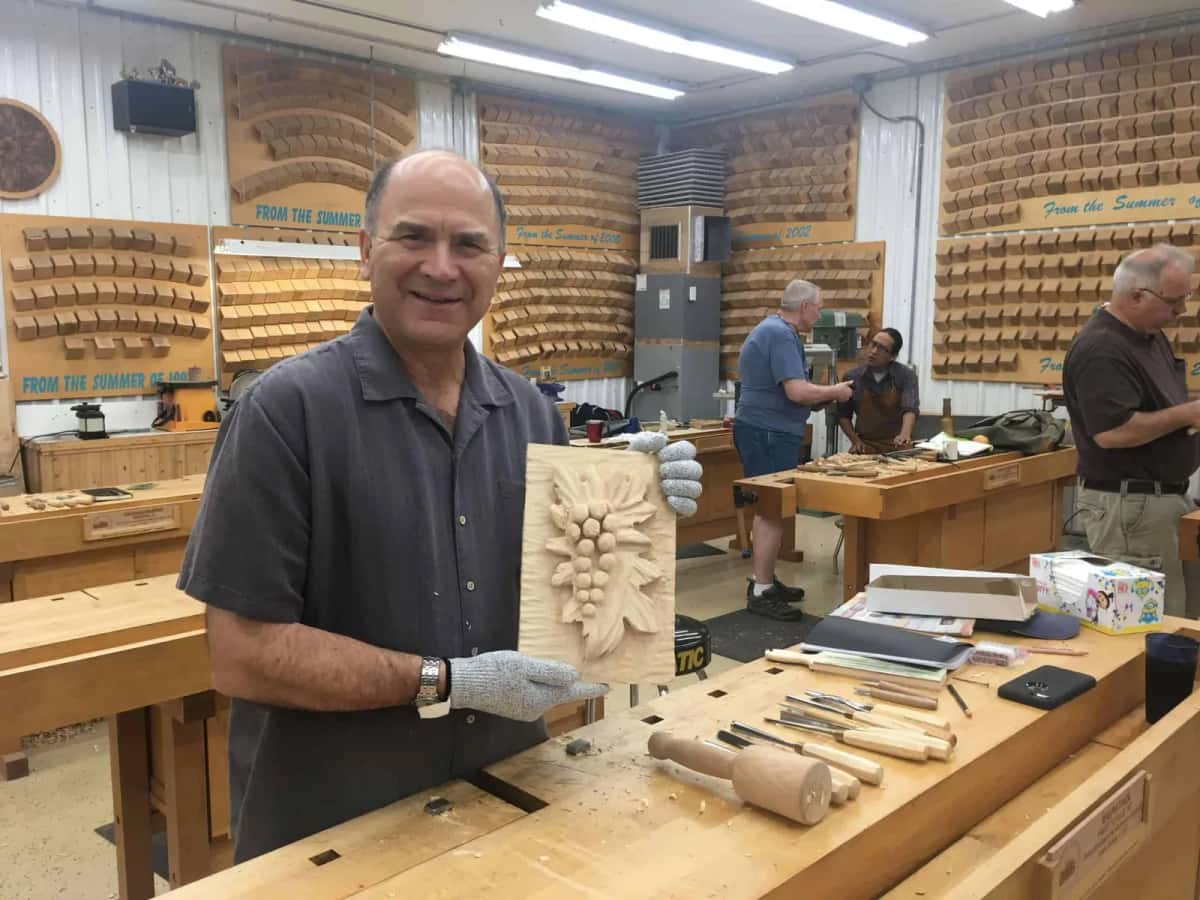
A full room, and one panel on the wall. One week, in a single photograph.
Why does searching for woodcarving classes near me turn up nothing?
Hand carving is a small craft, so the schools that teach it properly sit far apart on the map. Maybe a dozen places in the whole country will teach you ornamental and architectural work. Furniture schools are everywhere. Turning clubs are everywhere. Carving in the old European sense is not.
Look at what your search actually returns. A spoon club. A maker space with a laser cutter and a 3D printer. Somebody teaching chip carving out of a garage on Saturdays, which is honest work and I have nothing against it, but it will never get you to a carved acanthus panel.
My own start was not a school either. My grandfather handed me a chisel when I was six. I took it straight to a brick to carve a face in it and destroyed the tool in about a minute, and nobody in that house knew enough to stop me. The passion was born right there anyway.
Ten years later I got the real thing, an apprenticeship with a fine art master, one apprentice and one master and nobody else in the room. The trade moved across Europe that way for centuries. Watch, copy, repeat, and almost no talking. The word apprentice itself goes back to a Latin verb meaning to grasp, which tells you how much of it went through the hands and how little through the mouth.
What does a five day woodcarving class actually cost?
Add up tuition, then tools, then a bed and a plane ticket, and one week lands somewhere between 3000 and 4000 dollars. People read the class fee and stop there. The fee is less than a third of the real number.
| Where money goes | A five day class at a school | At home | What that money really buys you |
|---|---|---|---|
| Tuition for the week | Around 900 to 1050 dollars for the five days | Already included here | One week against a whole year |
| Hand tools needed | Another 300 to 600 dollars paid up front | Same tools | You keep the steel either way |
| Somewhere to sleep, and food | Between 1500 and 2000 dollars for a single trip | Costs you nothing | Your own bench is already there |
| Flights and gas | Another 500 to 1000 dollars for the round trip | Still nothing | This is the part people forget |
| Where it all lands | Roughly 3500 dollars by the time you get back home | Very much less | Run the arithmetic for yourself before booking |
I am not saying any of that to talk you out of a class. Those weeks are mine and I love them. Students become friends, and a good number come back to me year after year, which is the only review of a class that means anything.
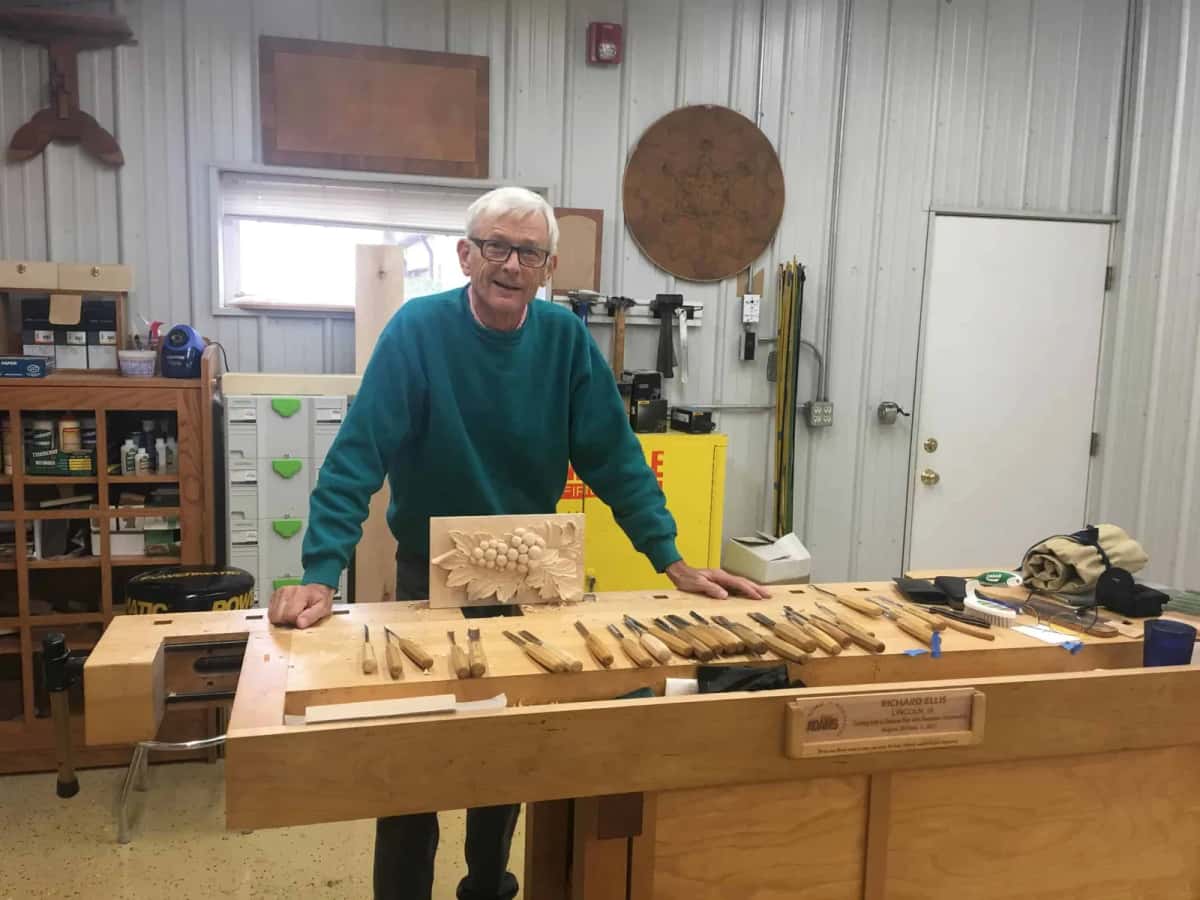
But you have to be real. If four thousand dollars is not sitting in a drawer somewhere, a class is not your first move, and pretending otherwise just makes a man feel bad about a craft that ought to make him feel alive. Buy a gouge instead. Begin.
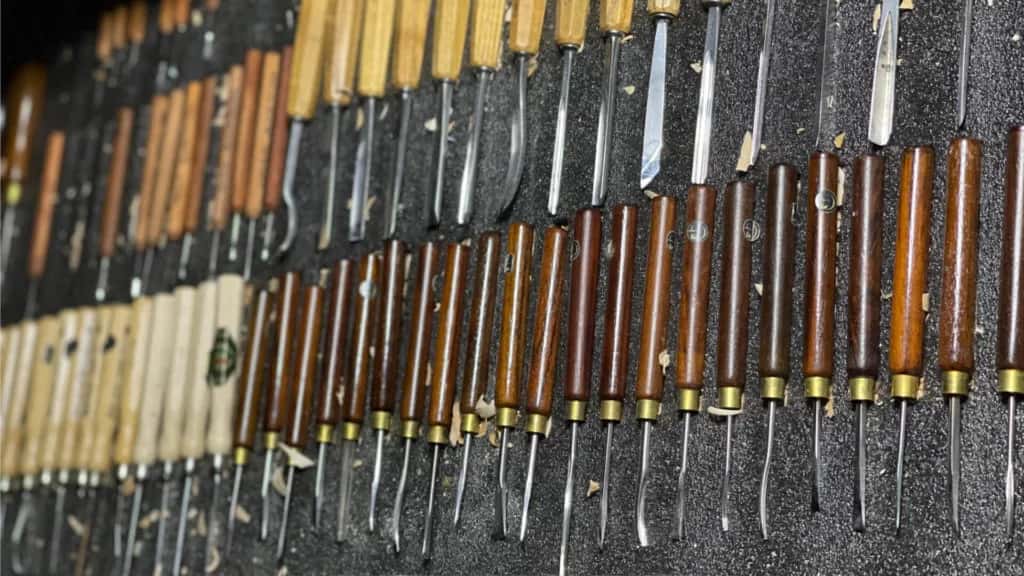
On tools, Pfeil out of Switzerland is what I hand a beginner, and both Woodcraft and Lee Valley stock them. I broke the choice down further in my post on carving knives and what each one is for.
What do you get in person that a video cannot give you?
Live correction from a man who can see what your hands are about to do wrong. A camera cannot see that. It only ever sees what already happened, after the chip is on the floor and the damage is in the wood.
Let me tell you about Trevor.
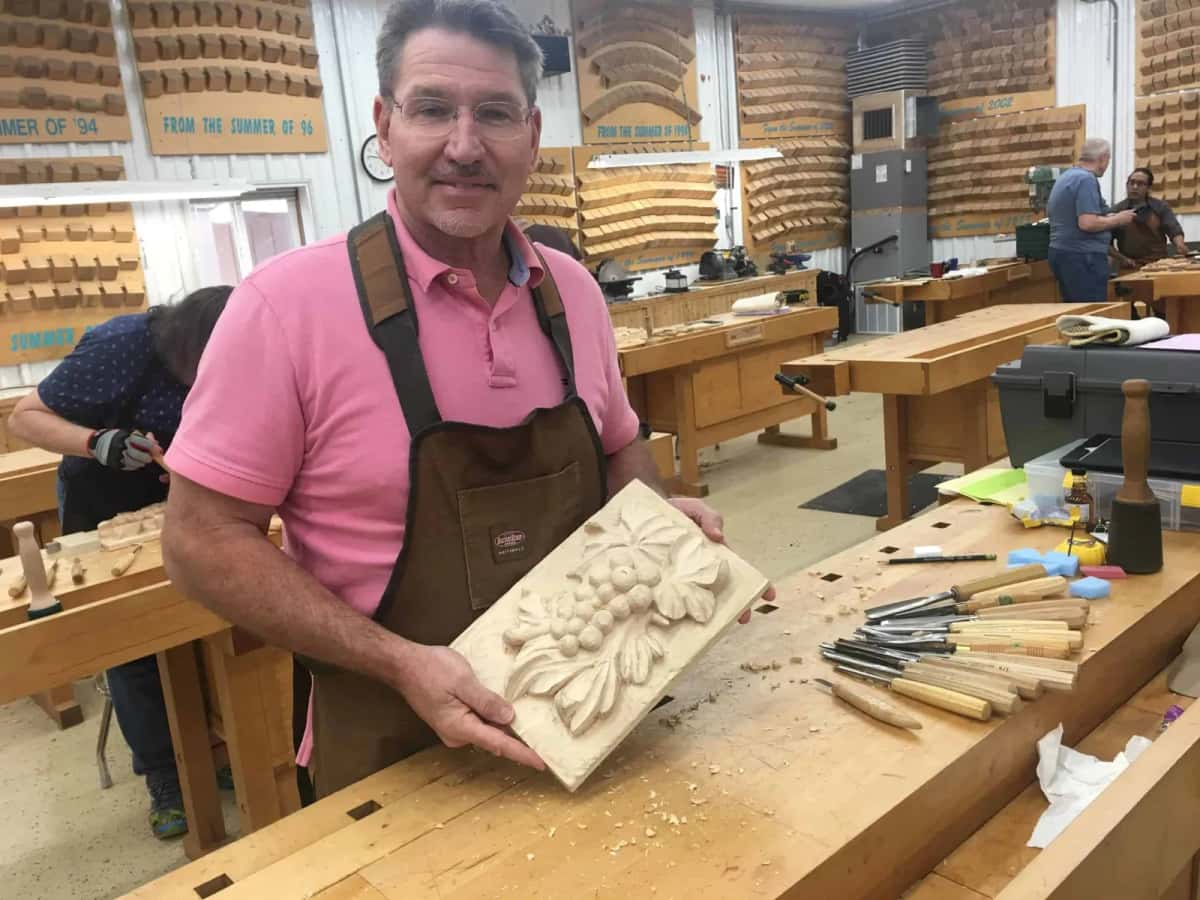
I was teaching at the Austin School of Furniture in Texas. One man in the room was clearly ahead of everyone else. He builds upright basses for a living. Trevor had read Woodcarving Illustrated front to back, probably every issue there is, and his tool control was genuinely good. Nobody would have argued.
Halfway through the week I run a session on design for carving. Afterward Trevor waved me over to look at his drawing. A few people drifted across to watch, which turned the whole thing into a small show, and I sat there red marking the board he had been working on for two days. His carving was fine. The design underneath it was not, and no amount of clean tool work rescues a shape that was wrong before the first gouge touched wood.
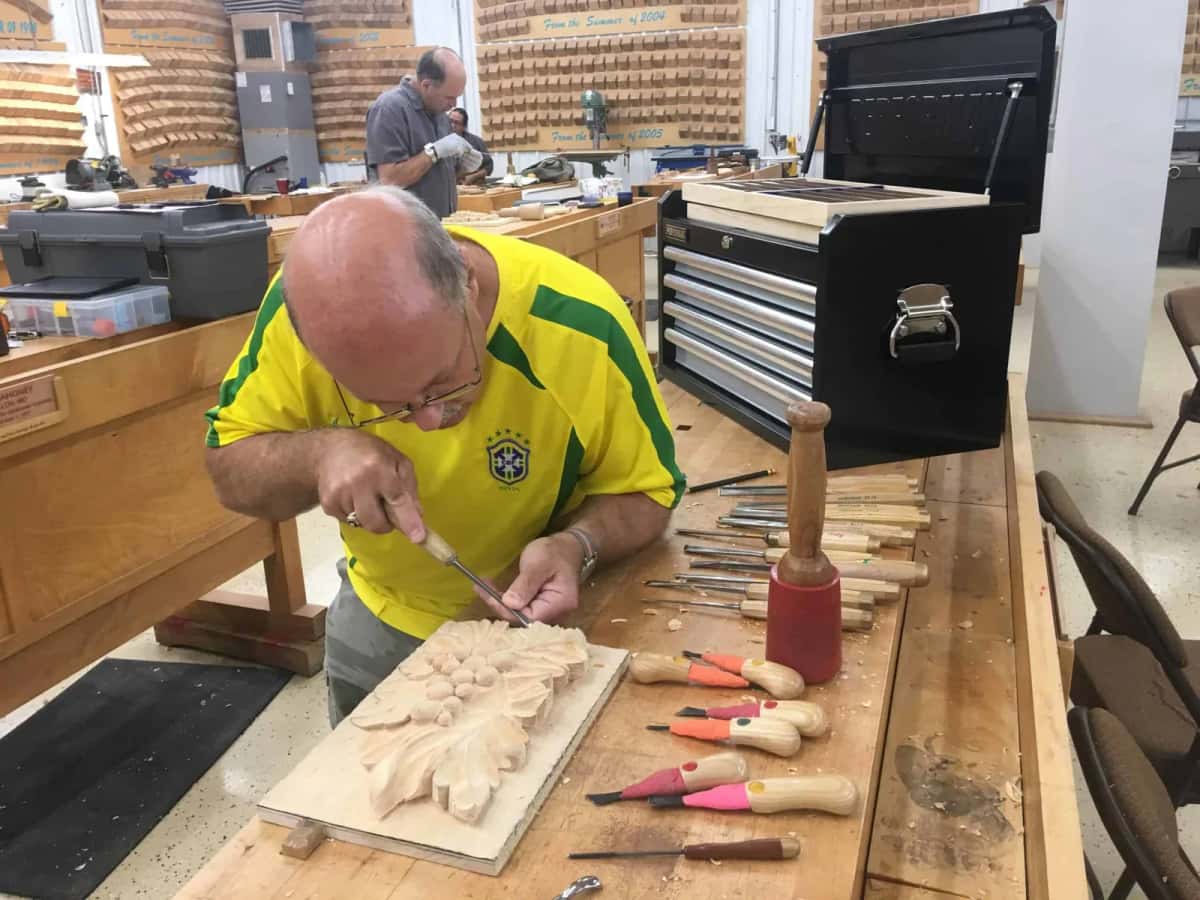
He took it well. He also, as far as I know, carried that piece home and never finished it, which happens in a five day class more often than any brochure admits.
Working alone, you do not know what you do not know. Your panel looks good to you. It looks good to your family. It would not survive ten seconds in front of somebody who carves for a living, and nobody in your kitchen is going to tell you so.
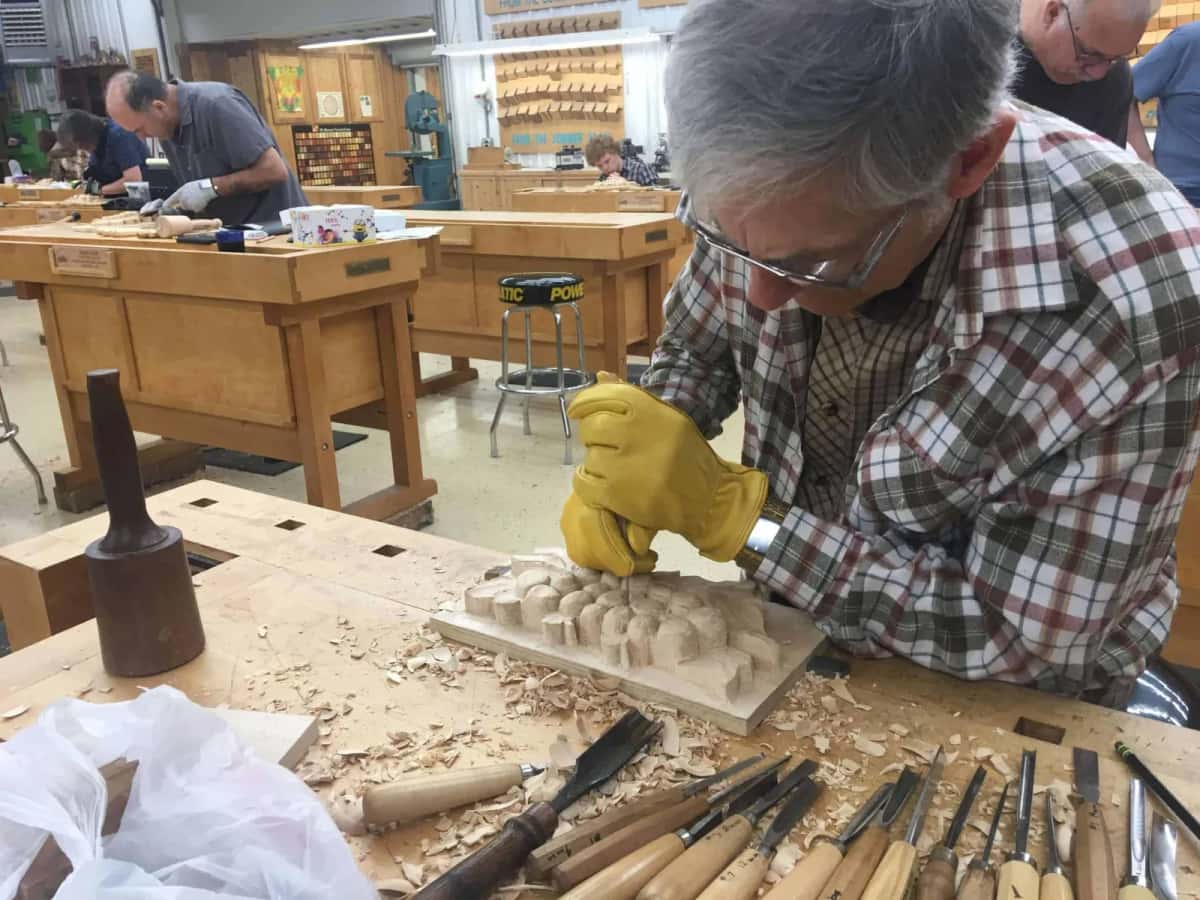
The room itself does something. You talk to the person at the next bench. You watch how she solved the corner you are stuck on. You argue a little about which gouge to reach for and you both learn something from the argument. Brains grow that way. Ten people carving in one shop is not the same as ten people carving alone.
What does online give you that a class never will?
Time, and the ability to watch the same three seconds forty times over. In a class I make one pass with the gouge. You catch it or you miss it, and by then I have moved to the next bench.
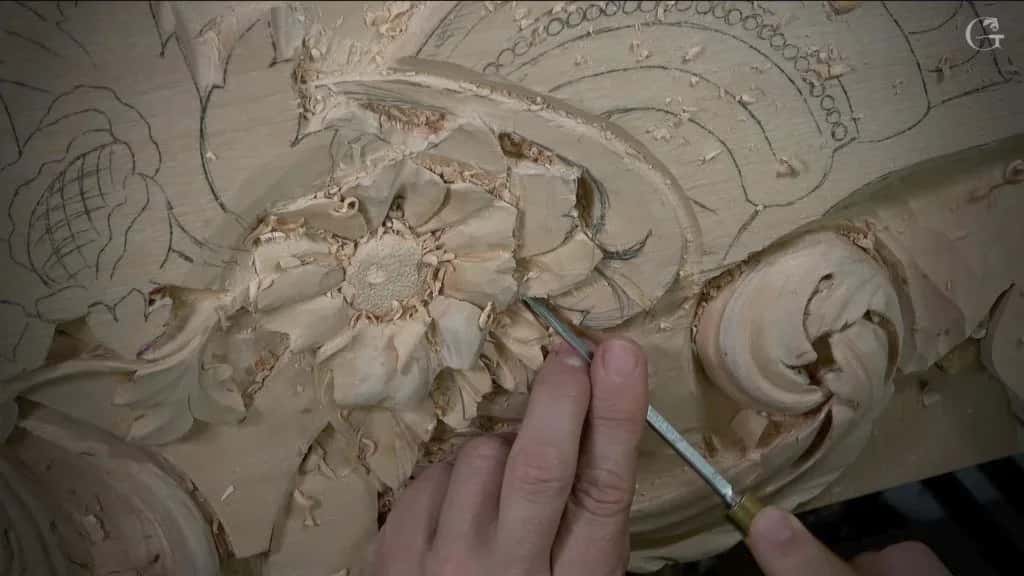
The camera sits where your eyes cannot. Right over the carving, close enough to watch the edge enter the fiber and lift the chip. Nobody gets that view standing in a classroom, because your own head is in the way, and because leaning over my shoulder for six hours is not something ten people can take turns doing.
You also get the year. Five days end on a Friday, and whatever you failed to absorb by Friday afternoon is simply gone. Lessons sit inside the tuition plan in January and they are still sitting there in November when you finally understand why I said what I said.
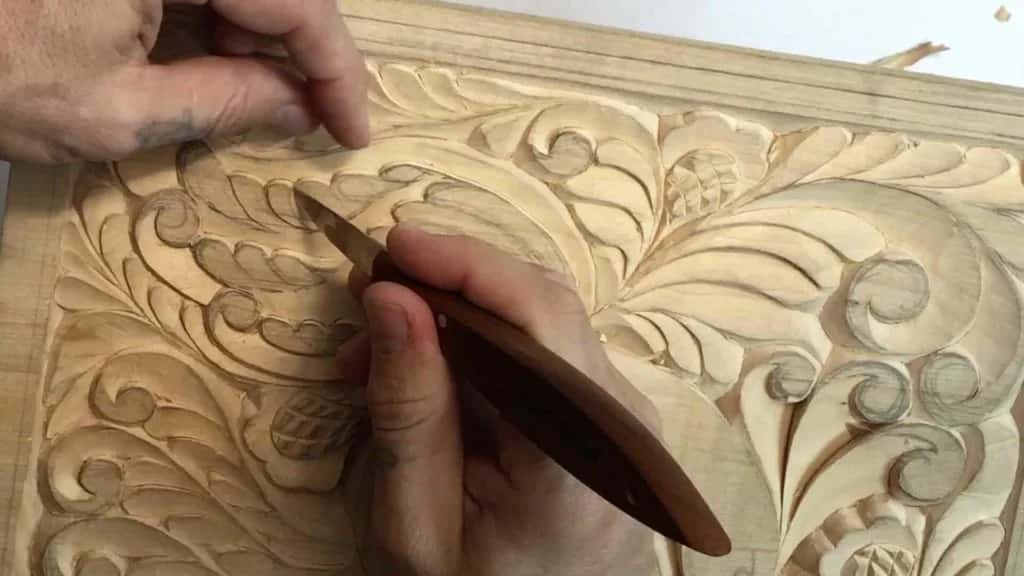
And you carve at your own bench, under your own light, in your own hours. Half my students carve once the rest of the house has gone to bed. That is not a compromise for them. For a lot of them it works out better than any classroom ever would.
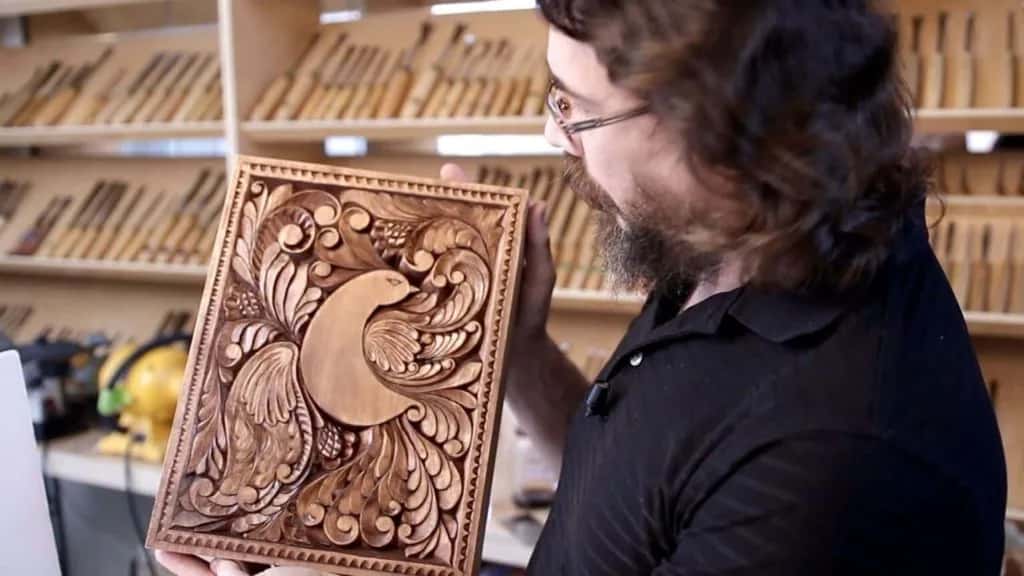
A screen cannot sharpen for you. Sharpening is the skill that takes years, the one I still film close and slow, and the one that still fills my inbox. If a beginner writes to me frustrated, nine times out of ten the tool is dull and he does not believe it yet.
Can you learn woodcarving on your own?
The craft half, yes. The art half is where people stall out. Plenty of very good carvers never sat in a class in their lives.
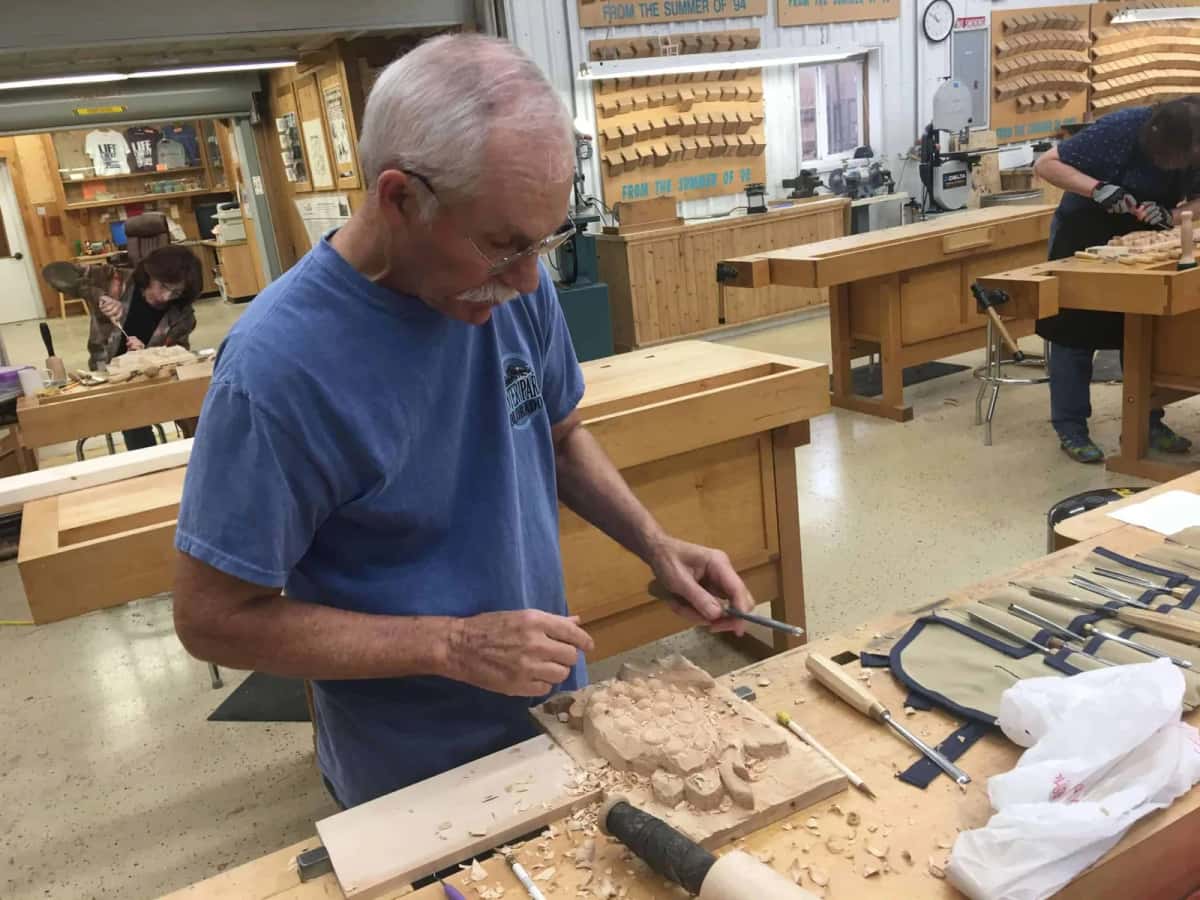
Tool control comes from repetition, and nobody has to hand you that. Carve a hundred leaves in basswood and your hands start to feel where the grain runs out before your eyes see it. No teacher alive shortens that by much. American basswood is forgiving enough to let you make those hundred mistakes cheaply, which is the whole reason I insist on it.
Design does not come from repetition at all. Design is the laws of space, rhythm and repeat, and knowing why a leaf turns where it turns instead of somewhere else. My master taught me to think like a tool before he ever let me hold one properly. Trevor was missing exactly that, with twenty years of clean tool work behind him.
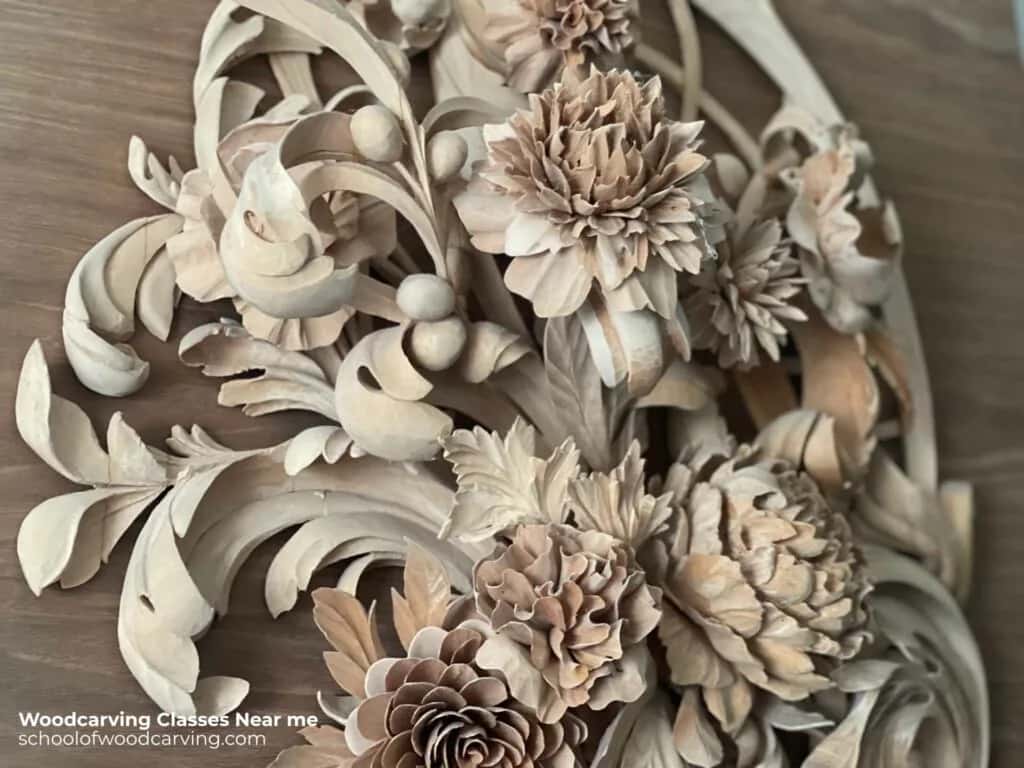
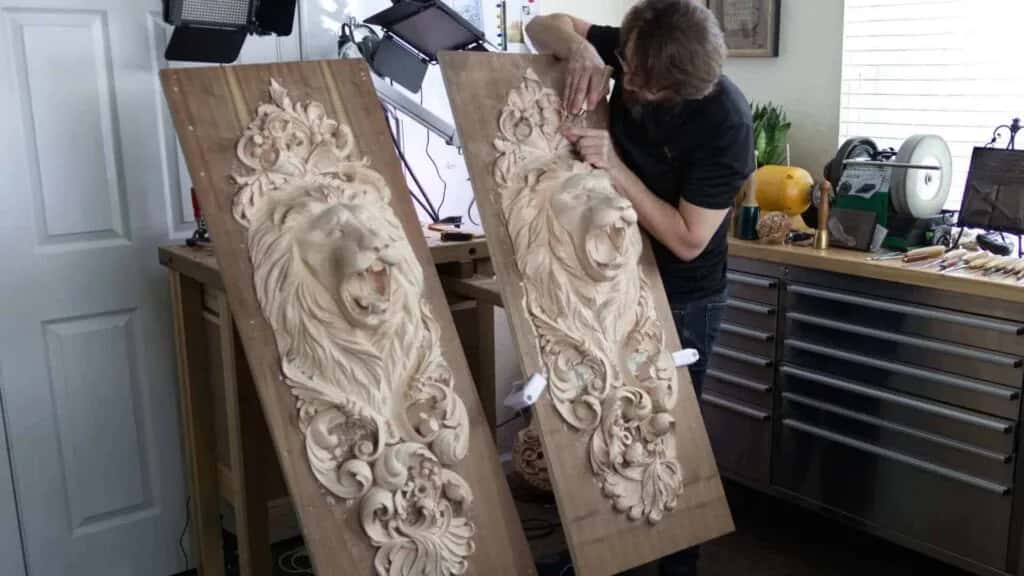
Look at what Grinling Gibbons left behind. The V and A holds a good deal of it, and it has stood 300 years without a machine ever touching the surface. That was never tool control. Those were made by a man who understood space so completely that he could afford to be careless about everything else. I chase the same thing in the Gibbons course.
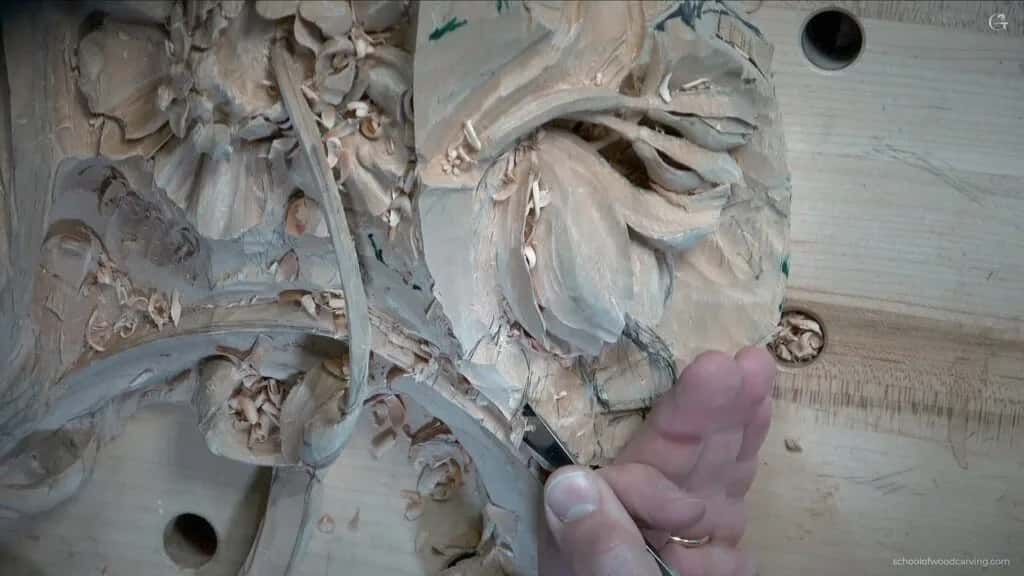
I wrote a longer answer to this over on whether carving is hard to learn, and I do not sugarcoat it there either.
What should you ask before booking any woodcarving class?
Four questions, and the answers to all four should be easy to find before you pay anybody. A good school answers them on the class page. A bad one makes you guess.
First, does the teacher carve for a living or only teach? Those are different men. Somebody with commissions in real buildings has solved problems no curriculum covers.
Second, whose tools are they, and are they sharp on Monday morning? A week spent fighting dull school steel is a wasted week, and I have watched it happen.
Third, is design taught, or only technique? This is the Trevor question. Ask it out loud, on the phone, before your card ever comes out.
Fourth, what wood is on the bench? If the answer is anything other than basswood or butternut for a beginner class, ask why. Usually there is a good reason behind the choice, and now and then a bad one that nobody volunteers.
How do you start carving this week without leaving home?
One gouge, one basswood board, and a shape that you drew yourself on paper. Enough to begin, and cheaper than dinner for two.
Step 1, buy one gouge and one board
Not a set of twelve. A number 7 sweep around 14mm covers most of what a beginner needs, plus one piece of basswood about the size of a paperback. Construction lumber will fight you and blunt the edge, so leave the 2x4 where it is.
Step 2, sharpen it before you carve anything
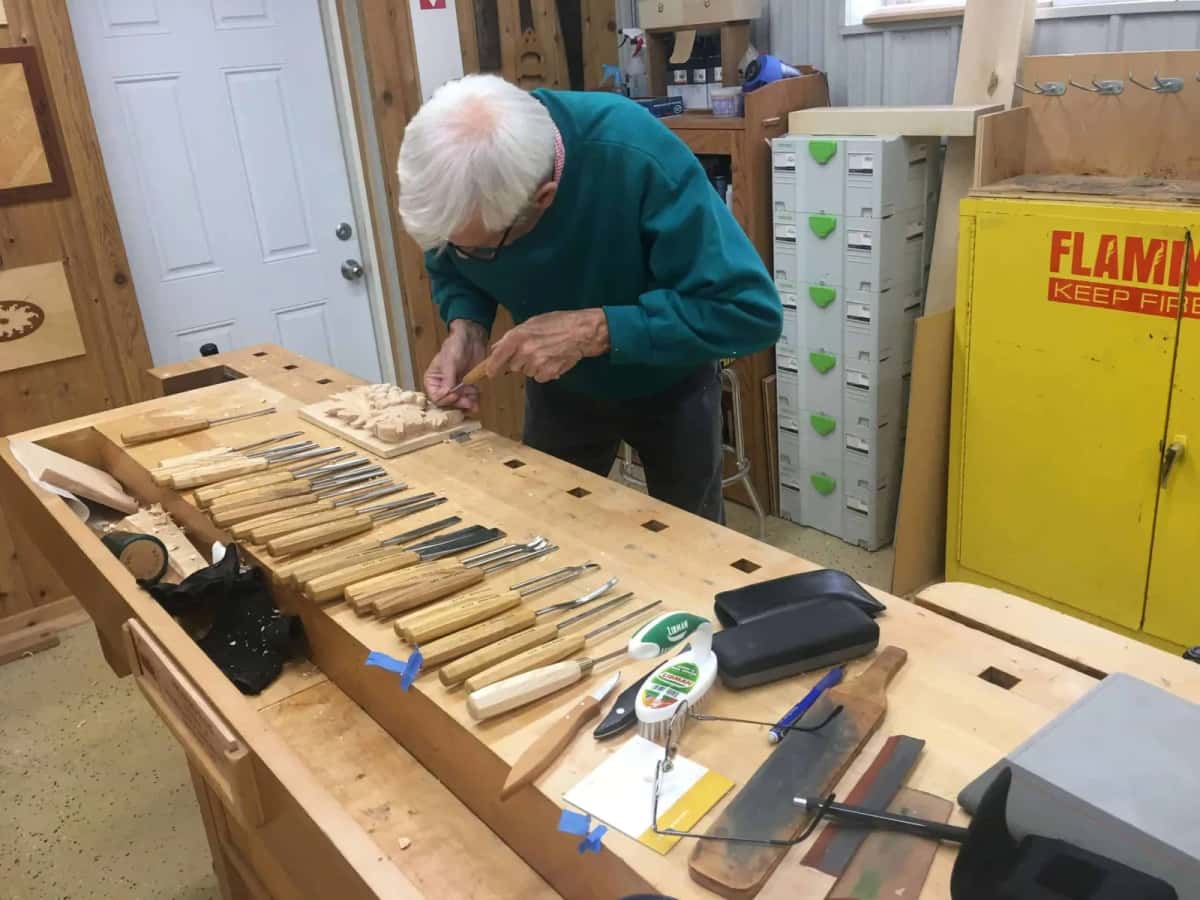
A new gouge is not sharp. It is ground, which is a different thing entirely, and it will crush the fibers ahead of the edge instead of slicing them. Strop it until it lifts a curl off the corner of the board without you leaning on it at all.
Step 3, draw the shape on paper first
Pencil is free. Wood is not. Draw the leaf, fix the drawing, then trace it down onto the board. Nearly every ruined panel I have ever seen was ruined on paper long before a gouge came near it.
Step 4, carve the outline and drop the ground
Stab the outline first, then take the background down to a flat, even floor. Flat is much harder than it sounds, and flat is what separates a clean panel from a lumpy one at ten feet.
Step 5, model the shapes and undercut last
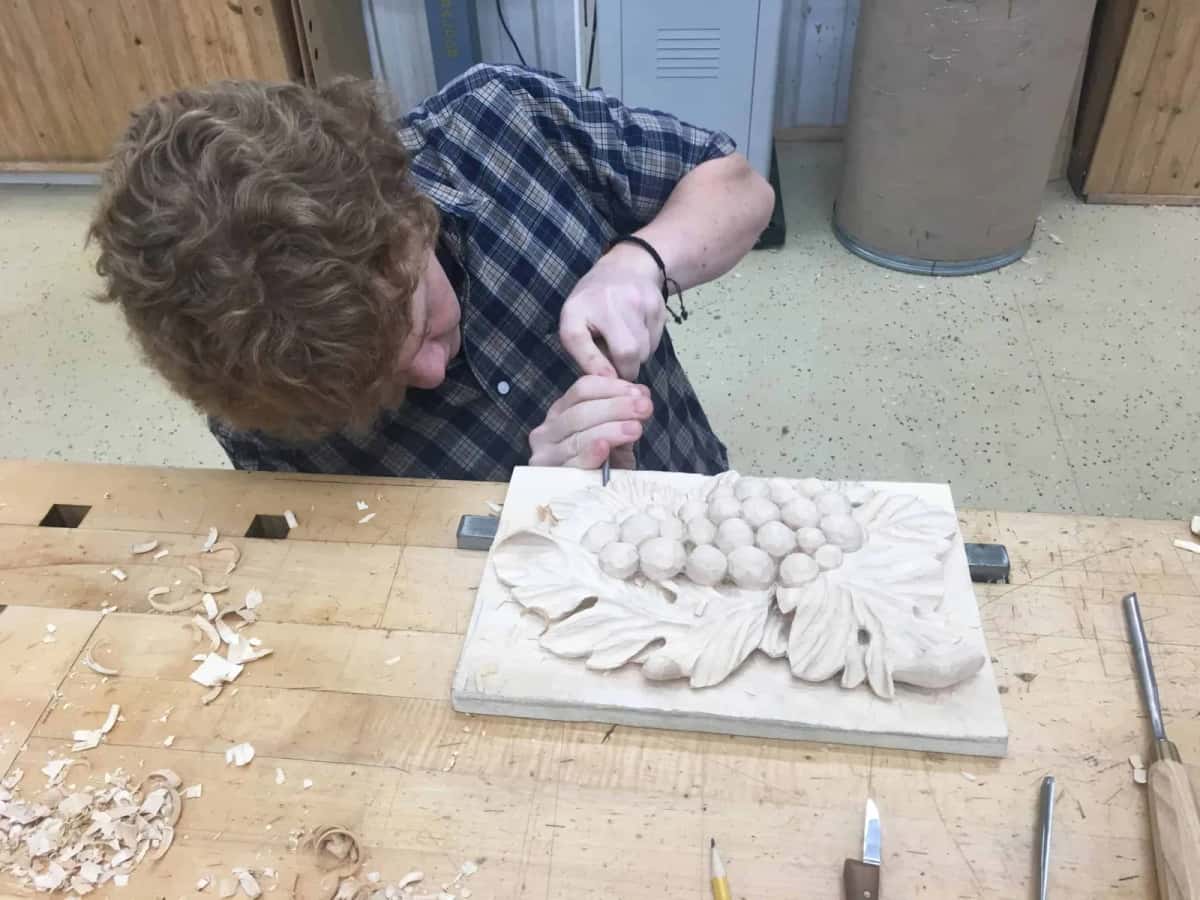
Now roll the surfaces so light runs across them and the leaf stops looking like a pancake. Undercutting waits until the very end, once everything else is right, because an undercut edge is fragile and you will snap it off if you keep working past it.
My first carvings course walks that exact path, and the butterfly plate is where I point most beginners next.
Where do I actually teach in person?
At a handful of woodworking schools that still run week long benches. Seats go fast, so watch the dates rather than plan a year around them.
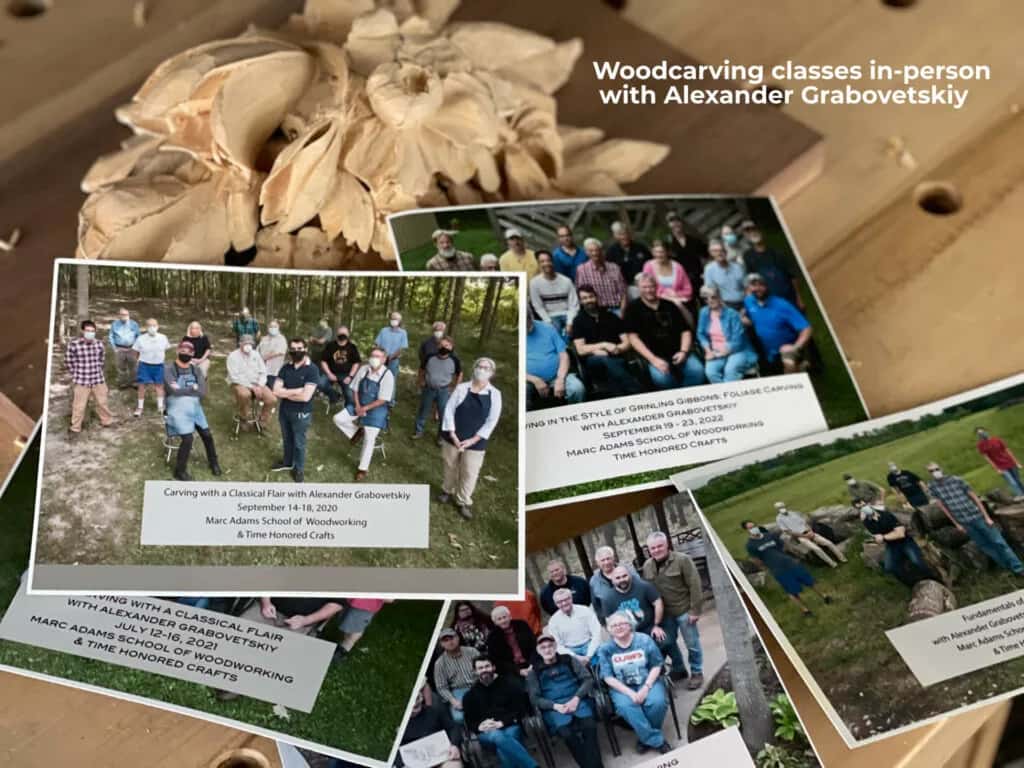
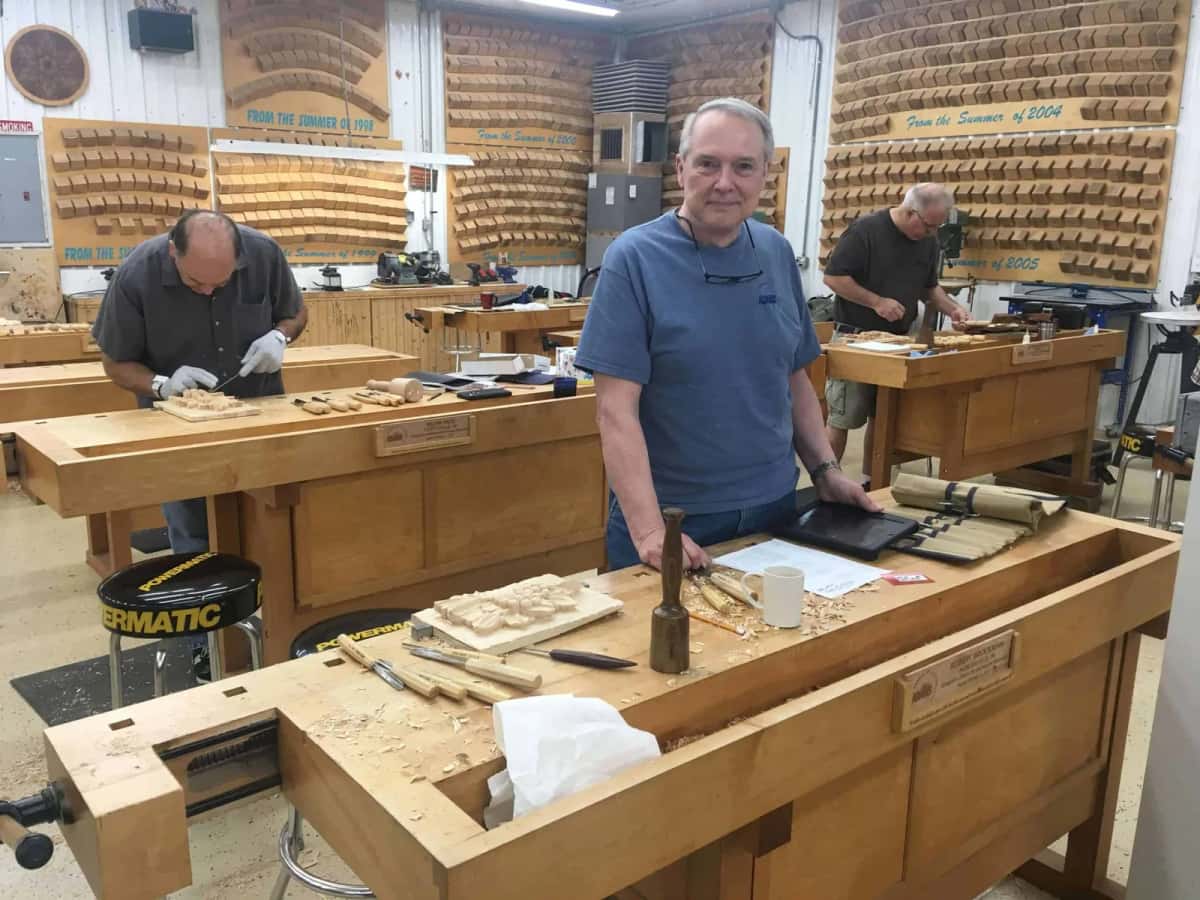
Marc Adams School of Woodworking in Indiana is where I teach most often, and it is the shop behind most of these photographs. Mark invited me to teach seven years ago, back when my English frightened me a great deal more than any commission ever had. I said yes and fell in love with the work.
There is also Sam Beauford Woodshop in Adrian, Michigan, and I have taught down in Texas and up in Maine. Every current date sits on the in person page.
If a seat is gone, or the airfare simply is not there this year, that is not the end of anything. Begin online, then come to a bench later carrying skill instead of questions. Students who arrive that way get more out of the week than anybody who turns up cold.
You can read what other people made of it on the reviews page, and there is a map showing where students are carving over on the lessons map. Some evenings I carve live, which you will find on the live page. If you want the short version of who I am first, I recorded that too.
So. Do you want to make sawdust on weekends, or do you want to carve something your grandchildren will argue over? Tuition here also feeds orphans and widows, because this is a 501(c)(3) school and that is where the money goes. Begin here when you are ready.
Frequently asked questions
How much do woodcarving classes near me cost if I have to travel?
Budget roughly 3500 dollars for one week once everything is counted. Tuition runs about 900 to 1050. Tools add 300 to 600 more. The bed and the flight together take 2000 to 3000 out of your pocket, and that pair is what people leave out of the sum.
Is there a woodcarving class for complete beginners?
Beginners are the easiest room I ever get to teach, and I mean that. No woodworking background is needed at all. You do need one sharp tool, and enough patience to sit with a single leaf far longer than feels reasonable on a Tuesday afternoon. Most schools run a fundamentals week.
What wood should I bring to my first class?
American basswood, and honestly nothing else while you are still learning. It carves cleanly in every direction and forgives a dull edge better than any other timber on the bench. Butternut makes a decent second choice. Pine and construction lumber tear, frustrate, and wreck the edge you just spent twenty minutes putting on.
Can I really learn woodcarving online, or is that a compromise?
For tool work and for design it is genuinely good. Sometimes better, because the camera sits closer than your own head ever could and you can replay a difficult pass as many times as you like. Sharpening is the weak spot. That one really wants a person beside you.
How long before I carve something I am proud of?
Three or four months of steady evenings gets you a small panel worth hanging on a wall. Two years before the work starts looking like it belongs on furniture. Anybody promising faster is selling something. Hands need the repetition and there is no way to buy your way around that.
Do I need a workshop to carve at home?
A kitchen table and a clamp will do. I have students carving on a board across two chairs in an apartment. What matters is that the work cannot move under the tool, and that the light comes across the carving from one side rather than straight down on top of it.
Filed under
- wood carving classes
- Wood Carving Classes
- woodcarving classes near me
- wood carving classes online
- woodcarving classes online
- wood carving courses near me
- woodcarving courses near me
- Wood Carving for Beginner
- wood carving lessons
- wood carving workshops
- Woodcarving Workshops
- Wood Carving Workshops
- woodcarving workshops near me