
July 31, 2024 · Updated August 15, 2026
By Alexander Grabovetskiy — Master Woodcarver · Founder, School of Wood Carving · 11 min read
What a carving knife is, and the one I put in a beginner's hand
Key Takeaways
- Tracking a pencil line is the job, not shifting bulk.
- A single well made blade will outperform a drawer holding ten you never once reach for.
- Gouges own depth.
- Judge an edge by the shine left behind it, never by whether arm hair comes away.
- Free hand stays back of the steel, and that habit outlives whoever taught it to you.
A carving knife is a short fixed blade, about an inch of edge, set into a handle you can pinch like a pencil or drive with a whole fist. It follows a drawn line, cleans an edge, and reaches corners nothing else will. One good carving knife beats a boxed set of twelve.
People write and ask which one to buy, expecting a list. I would rather hand you a single knife, then say plainly what it will never do.
Forty years at the bench. The knife is still on it every morning.
What does a carving knife actually do?
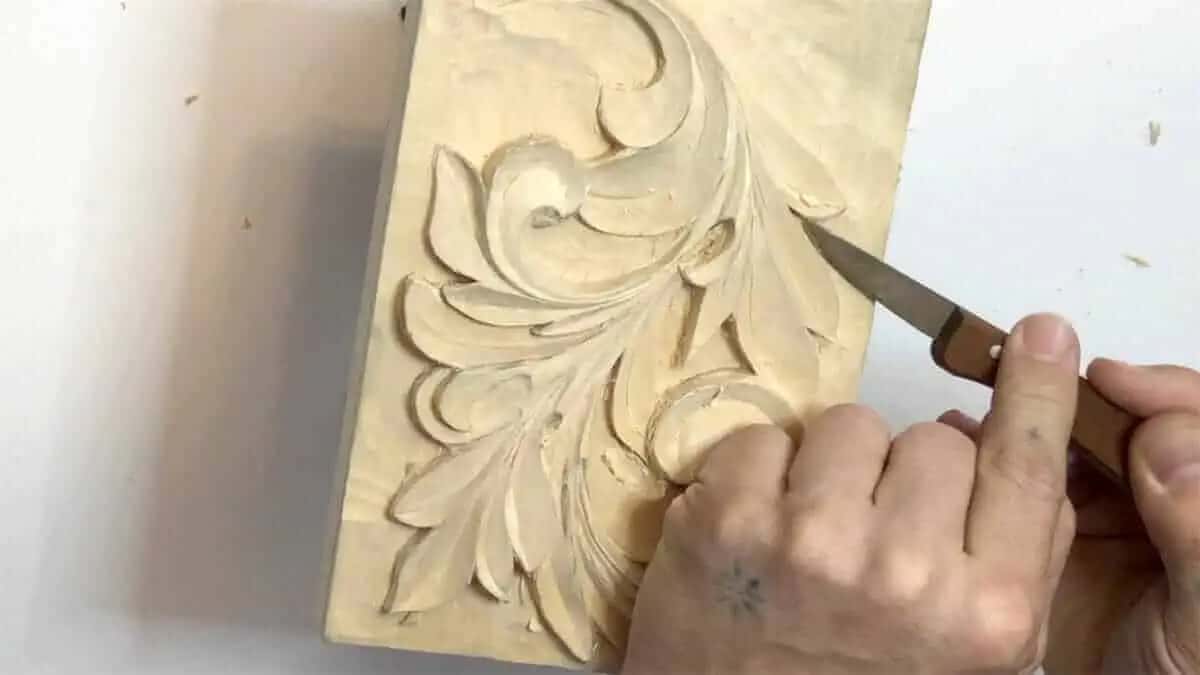
It follows a line. Nearly every job a knife is good at comes back to a line somebody already drew on the wood.
A gouge is a fixed shape. Number 3 is a shallow sweep, number 9 is deep, and the curve you own is the only curve you get. Now the knife. No sweep at all, just a point, so it travels wherever the pencil went. I put it this way during the Hashemi Flowers class:
"Just because of that sharp point of the knife, I don't have to use the same sweep gouge. I can follow any line, pretty much any sweep."
Then this, which is the part to keep:
"It's a multi-use tool. So you can do a lot of work with just a cheap carving knife."
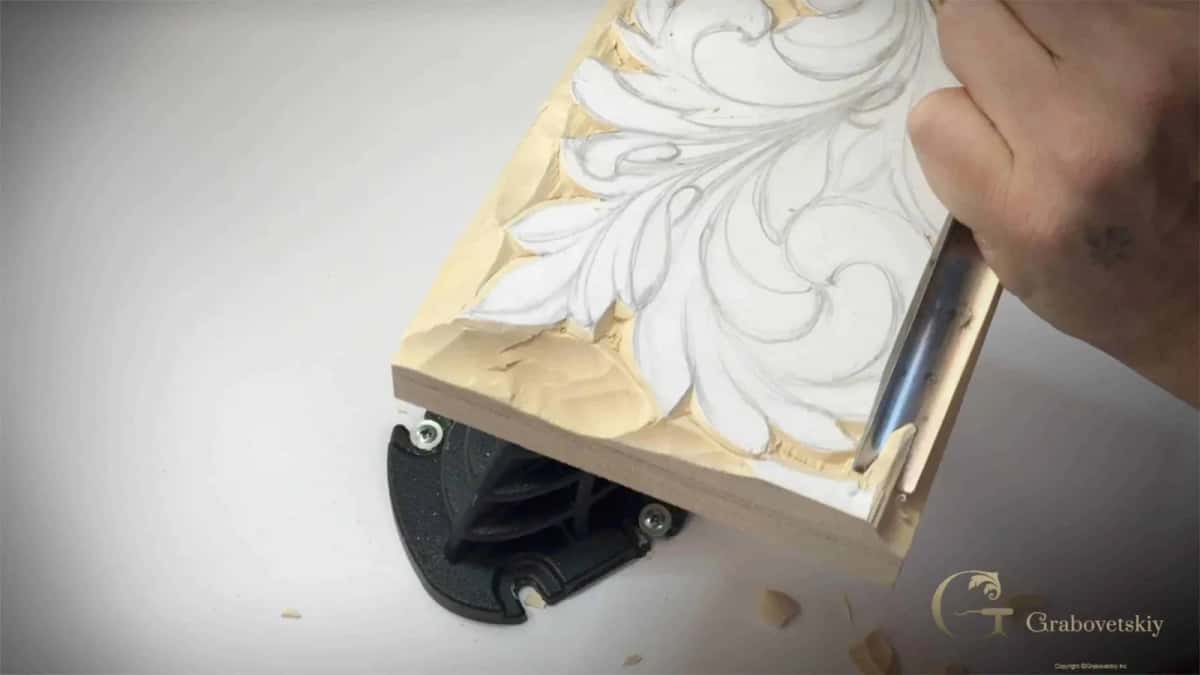
Most of my knife work is setting in an outline like that one. Then comes the stop, driven straight down so the next pass breaks off clean instead of running into good wood. Then the cleaning, because a gouge leaves fuzz standing along an edge. And the tight inside corners, where no chisel will fit.
Carvers in England mostly disagree with me. Over there the work goes on with gouges and V tools, and knives are not much liked. They are turning down an easier day.
Which carving knife should I buy first?
One chip carving knife, and nothing else for a year. Mine is a number 12, and I say that number so often that I catch myself doing it, so during the Venice Room class I made it plain:
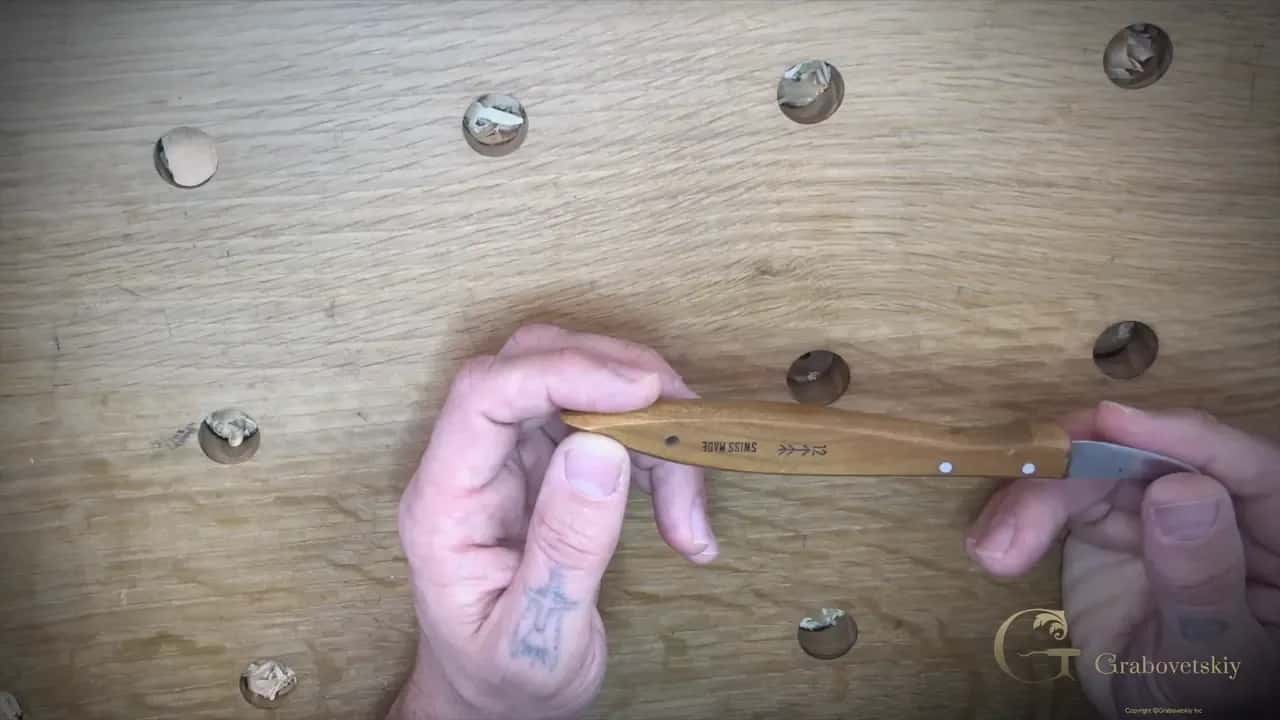
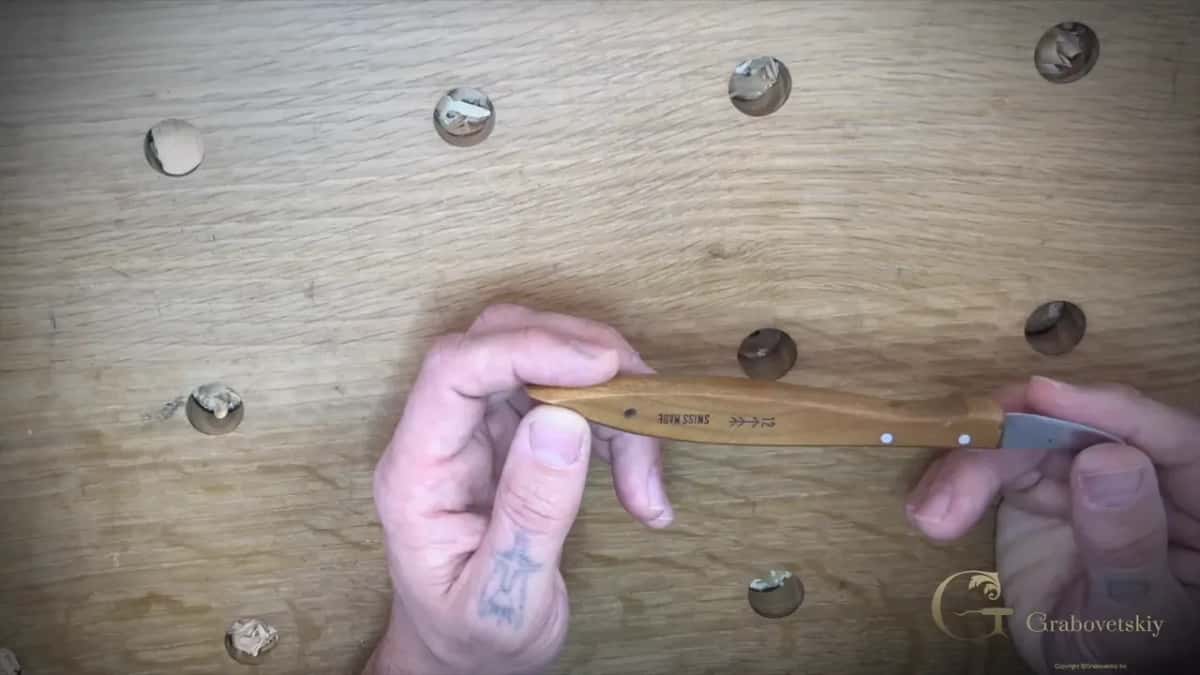
"And I'm talking about my favorite knife, which is number 12 Swiss Made (Pfeil) in this case, but it doesn't have to be this knife. It doesn't have to be this knife."
I repeated that on purpose. Pfeil began as a knife smithy in Langenthal in 1902 and still grinds its tools in its own Swiss workshop. Any honest chip carving blade teaches the same things. I send people to Woodcraft or Lee Valley.
| Type of knife | What it is honestly good at doing | Buy first | Where it will let you down |
|---|---|---|---|
| Chip carving 12 | Setting in a line, then cleaning every single edge afterwards | Yes, first | Deep hollows and heavy waste removal |
| A big sloyd knife | Roughing green wood down to a shape fast, which spoon carvers love | Much later on | Fine ornament, where it is oversized |
| A hook knife | Hollowing the inside of a bowl or a spoon | Only for spoons | Anything flat, and that is most work |
| A short bladed detail knife | Eyes and tight corners where a gouge corner cannot reach at all | Second year | Long runs, where it wanders off line |
| Kitchen or utility knife | Nothing at all that I would honestly recommend to you | Leave it | Flexes, and ground for food not wood |
| A boxed set of ten | Filling up a drawer and emptying your wallet at roughly the same speed | Skip it entirely | One gets used, nine sit there |
Wood matters more than the brand. Get American basswood and stay away from lumber yard 2x4, which fights you and takes the edge off in an afternoon. More on that here:
How do you hold a carving knife?
Three grips, and you will want all three inside the first hour. Nobody teaches this, so people take hold of the handle like a screwdriver and wonder why the point wanders.
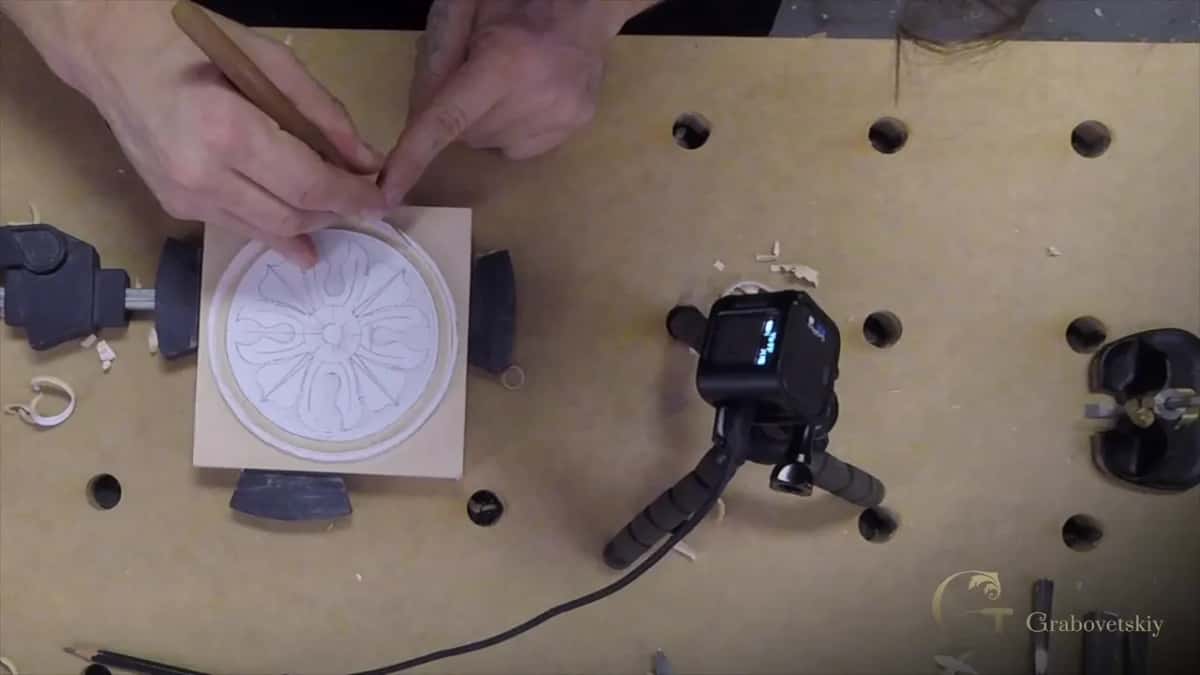
That pinch is for fine work. Drop the handle into your palm and you get the second grip, blade turned in toward your body, the thumb of your other hand pushing on the back of it.
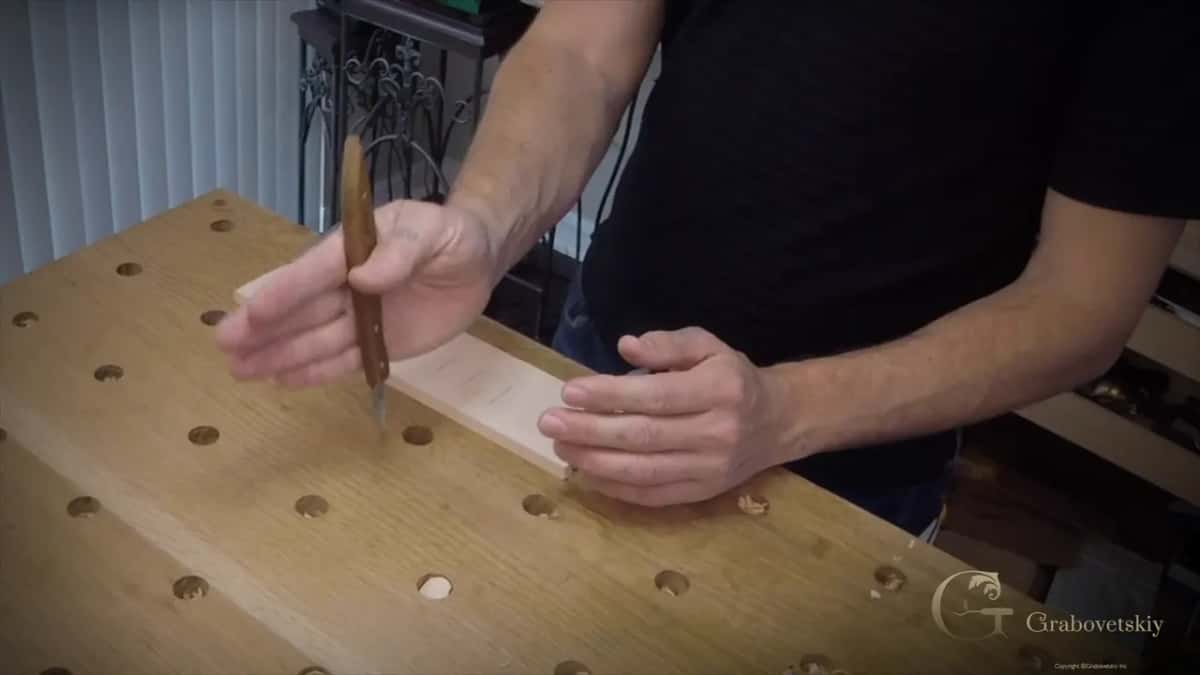
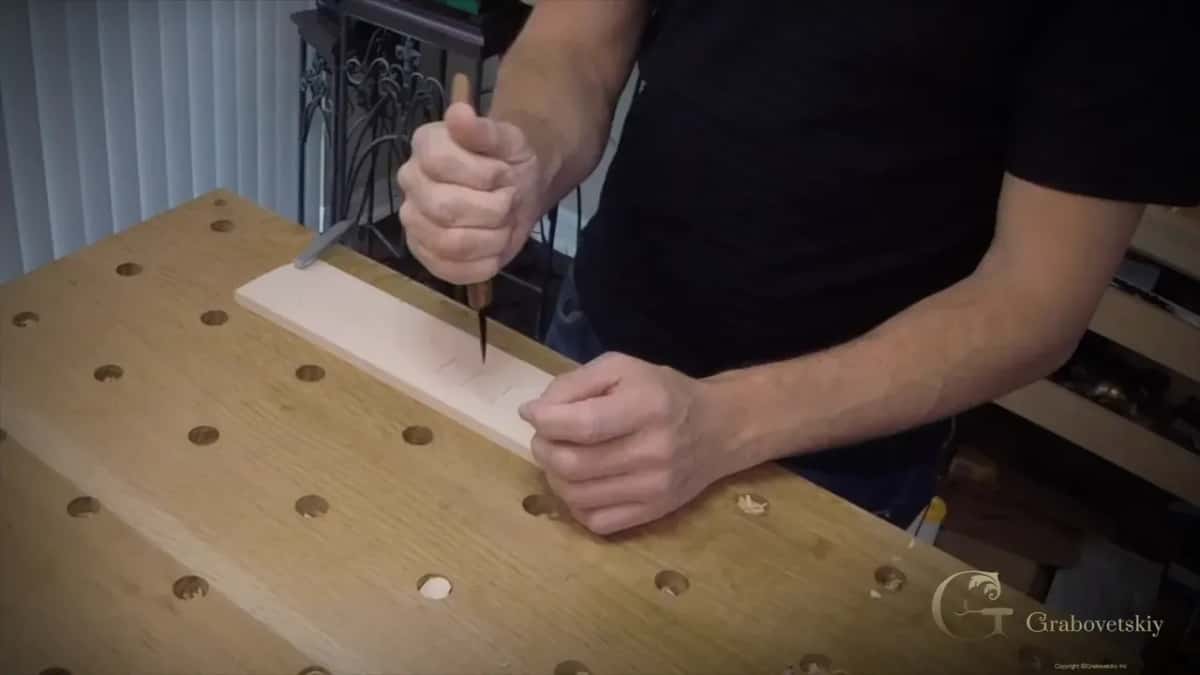
Third is both fists round the handle, blade going straight down. That is how a stop gets made in end grain, and it wants weight rather than finesse.
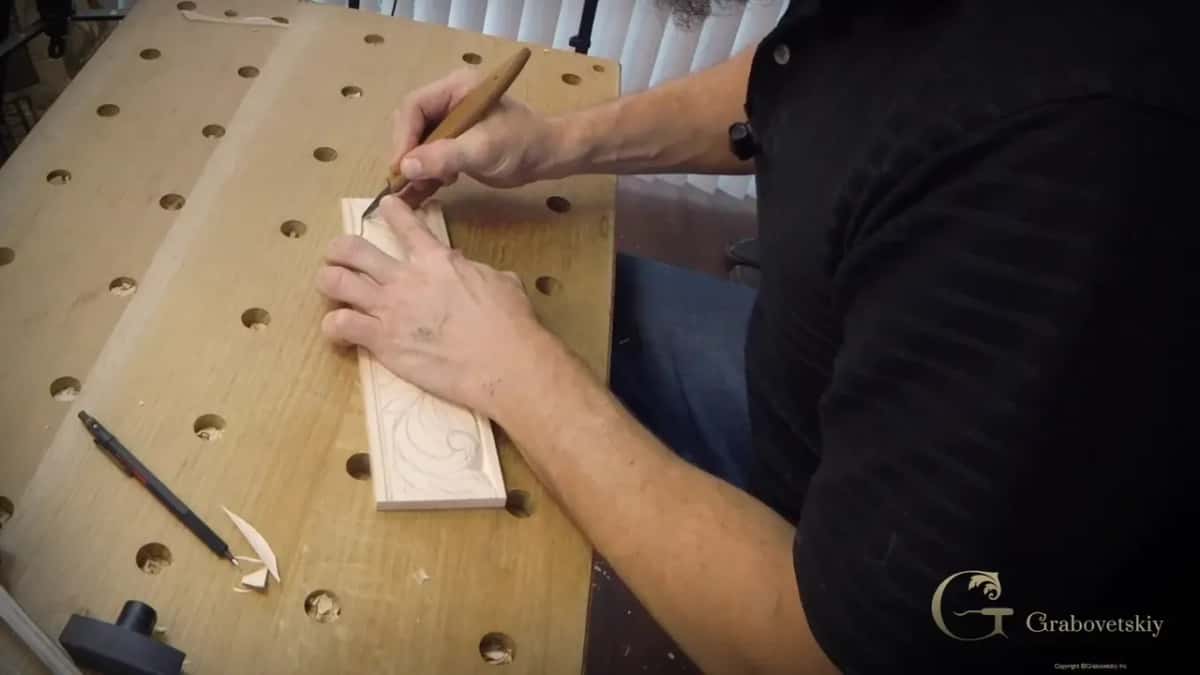
Now the part that keeps your hands whole. Your steadying hand lives behind the edge, not beside it. Anything that slips travels forward, and that is the whole reason for the rule.
What can a carving knife not do?
It cannot take mass off, and it cannot reach underneath. Both of those are gouge work, and practice will not change it.
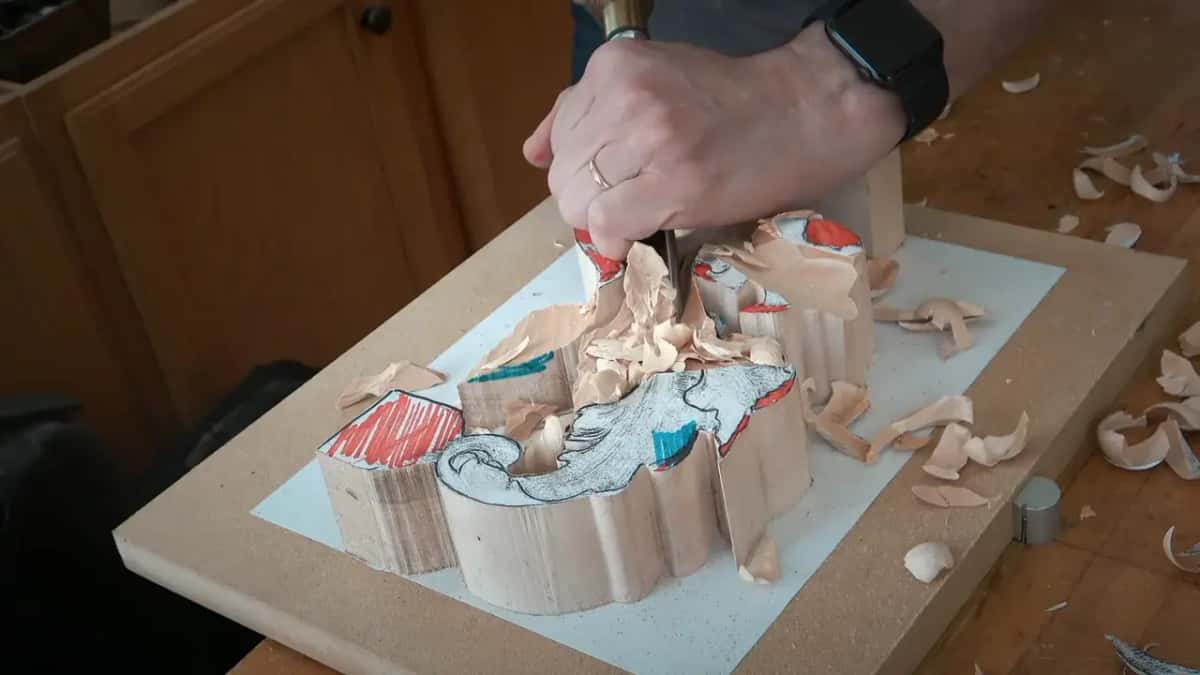
A hollow wants a curved edge. Straight steel leaves little flats you can pick out from across the room, in acanthus work especially. Undercutting, which gives ornament its black shadow, needs a tool that goes in under a lobe and comes out again.
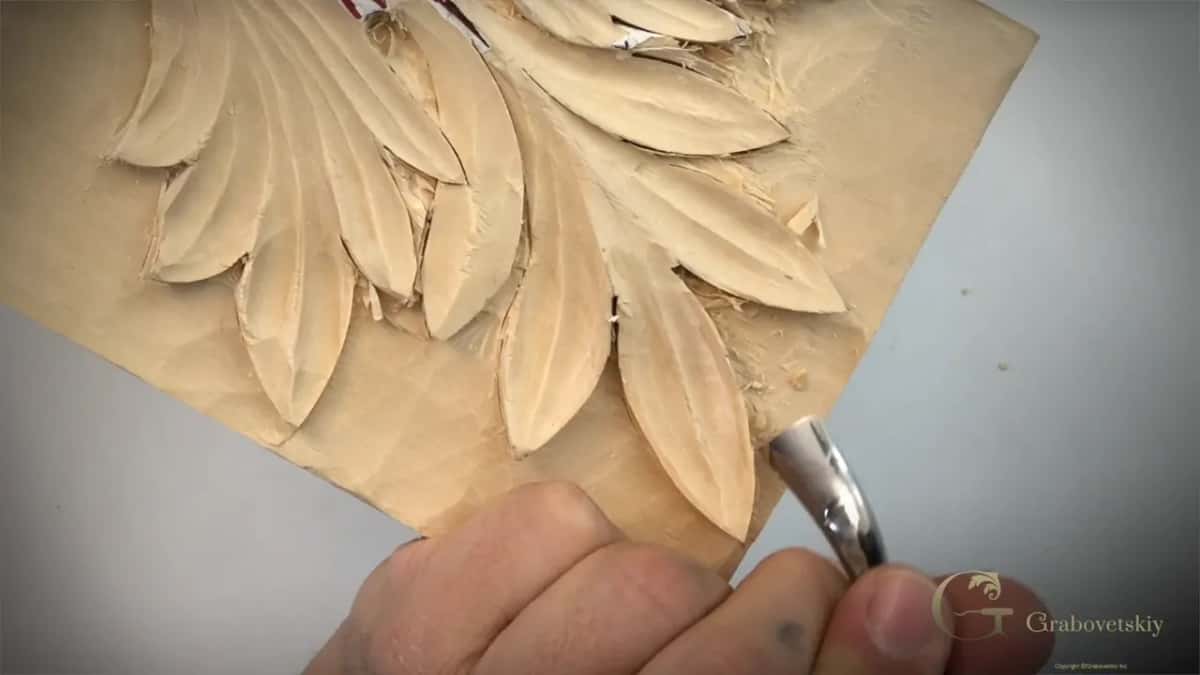
That handover is ordinary, and during the Venice Room class I narrated it out loud:
"I could use just the knife, to create the initial cut. And I can use just the knife. And then I'll just hit that with the back-bent gouge."
So a knife alone gets you flat work, lovely flat work, and stalls the moment you want depth. It does beat every gouge I own in one place, an edge rolling over on itself, which happens constantly on acanthus over a molding.
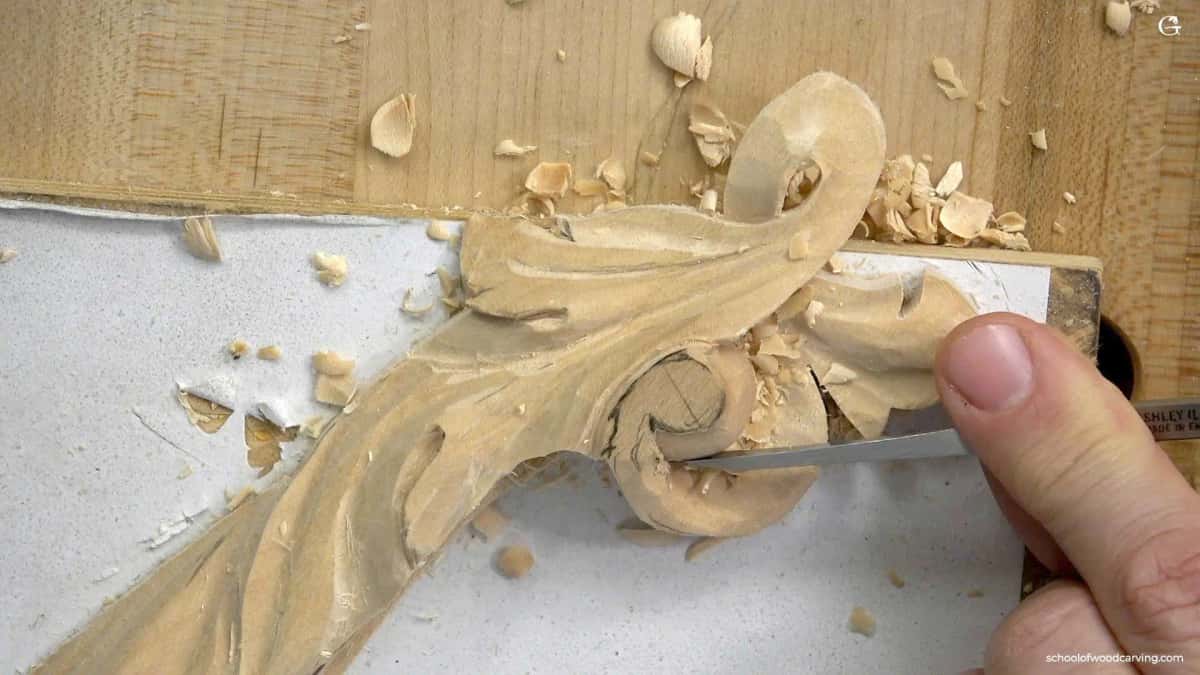
Is my knife sharp enough?
Look at the surface it leaves behind, not at whether it shaves hair off your arm. Somebody asked me exactly that on a livestream in October 2020:
"Not necessarily. You can actually see how clean the cut is, what kind of surface you're getting. Okay? So really sharp knife, first of all, you don't have a lot of resistance."
Sharp steel forgives you for going the wrong way across the grain, which a dull edge punishes hard. It is also the easiest thing in my shop to keep sharp, because a flat bevel lies flat on leather.
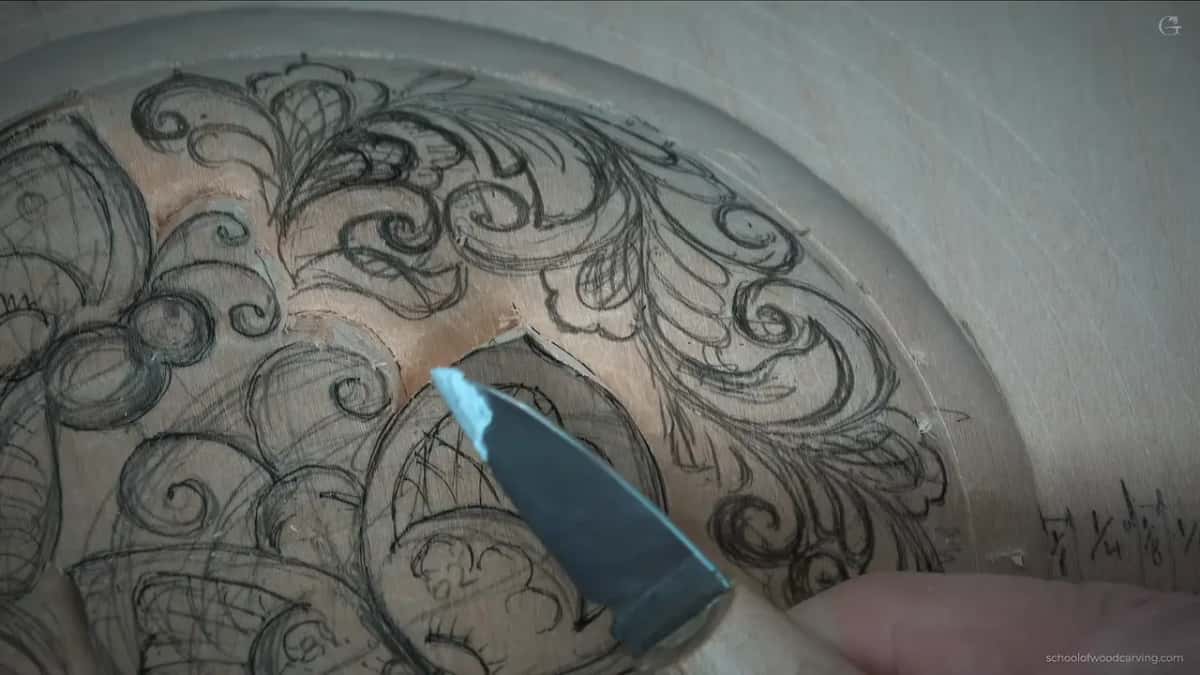
Bevel flat, pull backwards along the leather, ten passes a side. When a carved line comes up white and furry instead of dark and crisp, you left it too long. The rest lives in the sharpening course.
Can one knife finish a whole piece?
Yes, and people managed it for thousands of years before any of us had a catalogue to shop from. In the beginner cutting board class I ask students to picture it:
"Just imagine yourself if you would live a long time ago, like 9th century, and you are on a Viking boat, a long journey, and you have only one knife with you that you can use. What beautiful things you can get done with one knife."
That board runs about 10 inches by almost 13, and one cheap knife carves it start to finish. That curl in the middle has a name, and the name is older than any of us.
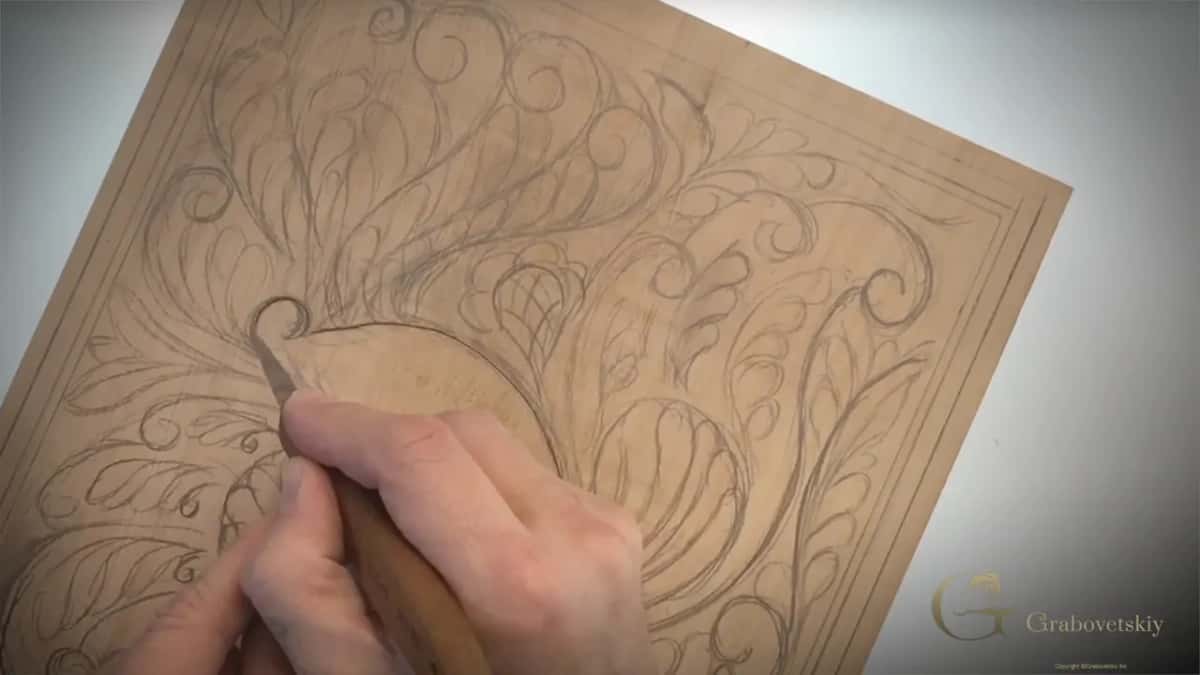
The recent name for the shape is a volute. Long before that, when King Solomon built the temple, it was already there, and some cultures call it Solomon's cucumber. Just like it sounds. Look closely and it really does.
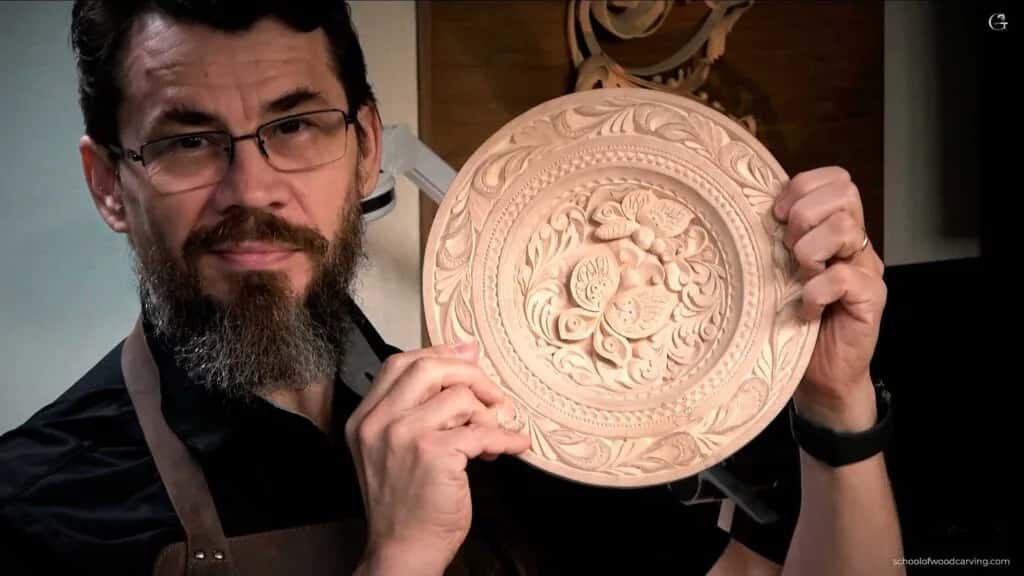
I know what one knife can do because for a while it was all I had. In a Soviet prison I carved furniture with a blade I made myself, 10mm, and a tiny gouge ground out of a nail. I stained the pieces with a method from the 1400s so they read like marquetry. A mafia boss sold them to the prison administration and paid me one boiled potato a day. One potato. I shared it with other men while we talked about God, and I went under 80 pounds that year.
Do not take the romantic lesson from that. I used one knife because I had one knife. The day gouges came back I picked them up, and the work improved.
Where do I start with only a knife?
Five steps, and the first four cost less than dinner out.
Step 1, buy one knife and one basswood strip
One number 12 knife and a strip of American basswood, about two inches wide. Skip the boxed set. Lumber yard pine will only make you miserable.
Step 2, strop it before you carve anything at all
New tools arrive ground, not sharp. Leather, a smear of compound, ten passes a side, bevel lying flat.
Step 3, draw the line and then ride it
Pencil first, always. Lean the blade over the waste side so the drawing survives, because the drawing is what you are trying to hit.
Step 4, park your other hand behind the edge
Behind it, never beside it. Build the habit in week one and it stays for life, no thinking required.
Step 5, add a number 7 gouge when flat work starts to bore you
You will know the day it happens. Depth is what you want, the knife has none to give, and that is when a gouge earns its money.
The ordered version starts with carving for beginners, and how long it takes to learn has the timeline. Projects sit in small carving ideas, the two genuinely hard parts are named in the post on what is hard, and the rest is on the course list.
So. One knife, one board, a month of evenings? Or another year of reading about it? Yearly Access is $200 and renews automatically every 12 months, monthly is $25, and one click ends either. Tuition here also feeds orphans and widows, because this is a 501(c)(3) school. If you would rather stand at a bench beside me, the weeks are listed on the in person page.
Frequently asked questions
What is a carving knife used for?
It sets in a drawn outline, stops a pass so the next breaks clean, takes fuzz off an edge, and gets into corners no chisel reaches. That is why it turns up on nearly every piece.
Is a chip carving knife good for beginners?
Best first tool there is. One blade, one bevel, no sweeps to learn yet, and a whole board can come off it. Our beginner cutting board class asks for nothing else.
What is the difference between a chip carving knife and a sloyd knife?
Length and stiffness. Sloyd blades run longer and take green wood down to shape quickly, which is why spoon carvers love them. The chip carving type is short and stiff, which is what flat ornament wants.
How often should I strop a carving knife?
Every time you sit down, and again the moment a surface starts going fuzzy. Twenty seconds. Ten passes on leather each session and you go years without meeting a stone.
Can I carve hardwood with a knife?
Oak and walnut are possible and slow, and they punish a soft edge without mercy. Stay on basswood your first year. Move up once your edge holds and your lines land where you meant them.
Do I need more than one carving knife?
Not for a long time. Something shorter becomes useful once you are carving eyes and tight corners, but that is a second year purchase. Spend the money on wood.