
Alexander Grabovetskiy, woodcarver, School of Woodcarving · Published 2021
How do you design your own wood carving instead of copying a pattern?
Quick answer: The principles of design in wood carving are ten laws that settle a panel before a gouge touches it. Movement and direction. The golden ratio. Two diagonals, a hero, and something strong pushing back at him. Space, Fibonacci, arabesque, rhythm. Answer them on paper and the wood stops fighting you.
Some carvings come off the bench alive and some come off dead, and for years I could not have told you which was which until the thing was finished. The tool work is clean on both. Same wood, same gouges, same hours behind the tool.
I am talking to you, one carver to another, because you have probably stood over a finished panel that went nowhere and had no words for the reason.
My master in Russia handed me the answer in one sentence when I was sixteen and his only apprentice. Design lives in the laws of space, rhythm and repetition, and in knowing what the tool wants to do before you pick it up. He taught me to think like a tool. Took years.
Key takeaways
- Direction settles before anything else does. A panel has one overall movement, and the owner's mindset, Eastern or Western, decides which way it goes.
- Split off the long side rather than halving. Find the middle, then shift your mark off it.
- Any rectangle hides four strong spots. Your main flower claims one, and its opponent claims the spot across the far diagonal.
- Count the way nature counts. Three divisions inside a leaf, or five. Never four.
- Sizes never repeat on one panel. Shapes do. Shift the scale each time and your hand work gets depth.
- Straight is a mistake, and dead center is another one that almost nobody will ever explain to you. A leaf rib rides at sixty to forty, favoring your bigger space.
- Brand new to a gouge? Begin with first cuts for beginners and come back to this page after.
What follows is the skeleton of those laws. All of it, given away here. Carry this to your own bench today and never pay me a dollar.
What are the principles of design in wood carving?
Ten laws decide whether a carving looks alive or dead. Movement, the golden ratio, the two diagonals, hero and antagonist, space, dynamic symmetry, Fibonacci, arabesque, repetition and rhythm. Every school used to guard its own version. The secret was in design.
Those secrets passed from master to apprentice, and almost nobody wrote any of it down. I found only a couple of books that even mention the baroque and sinister movement. And By Hand and Eye, from George Walker and Jim Tolpin, still does not show you the Fibonacci logic inside an acanthus leaf.
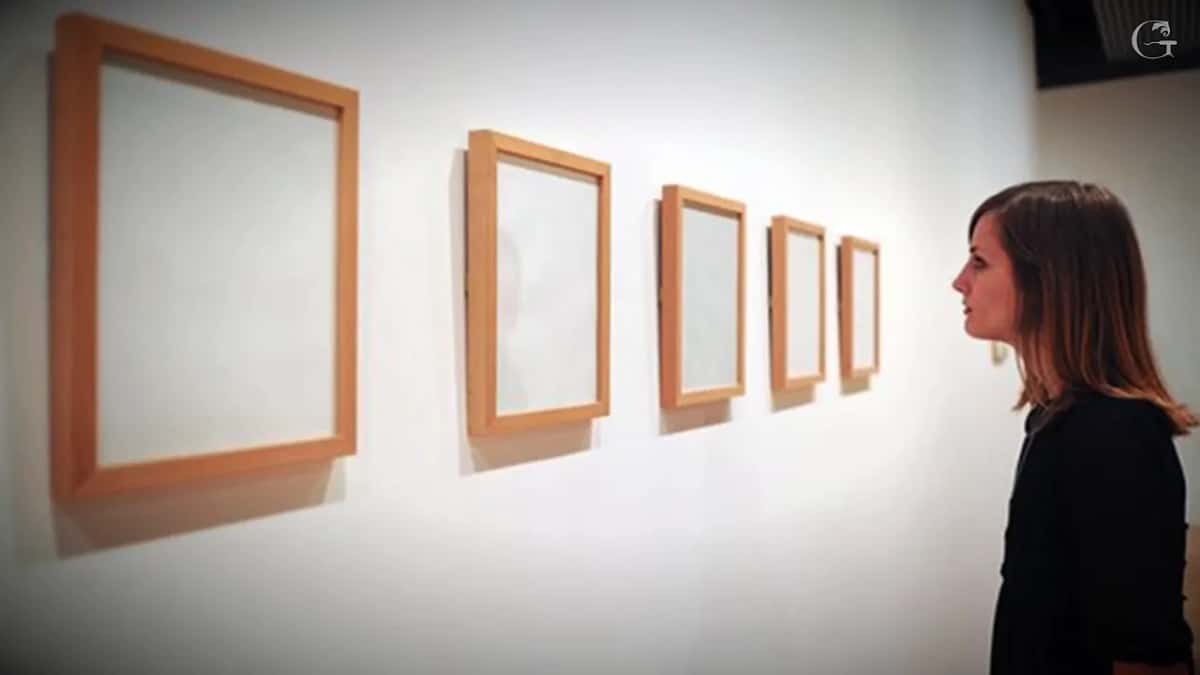
Meanwhile the art world went the other way. A banana taped to a wall sold for $120,000, and a later copy went for more. Somewhere hangs a white canvas that is officially a cow. Where is the cow? Home. So where did the grass go? The cow already ate it, so nothing is left to paint and apparently the emptiness is the art.
Why does my carving look flat and dead?
I always start with the movement. Before you draw a single line, the whole piece has to be traveling somewhere, left to right or right to left, and every element in it has to agree with that decision.
People from different parts of the world read a picture differently. It shows even in the way they write.

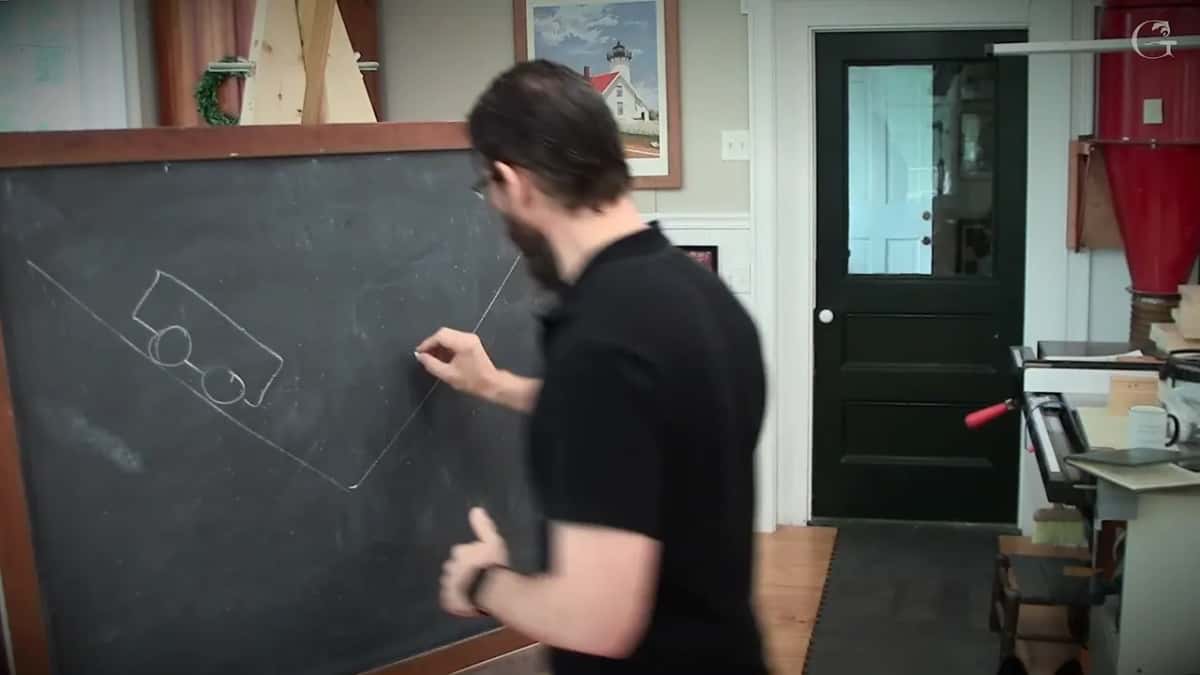
I draw a bus on a slope at the chalkboard and ask the room which way it travels. If you're American, it goes downhill. One student in that class came from Israel, where they write right to left, and he reads it another way. Nobody in that room is wrong. It's just built into the brain.
So my first question on any commission is one I ask myself. East or west? That settles which way the whole piece moves, because that is how the client's head is going to read it. Once I designed a panel for a couple, a German husband and a Chinese wife, living here in the States. Two mindsets under one roof. I ran one diagonal for him and the other for her and braided them together. They loved it. Then the builder installed the thing upside down. I saw it the moment I walked in and never said a word, because putting it right would have cost me a week I did not have. They still do not know. Now you do.
What is the golden ratio in wood carving?
The golden ratio is 1.618, and at the bench it means one simple thing. Split any line six parts to four instead of down the middle, and the eye reads the long side first and calls the result beautiful without knowing why.
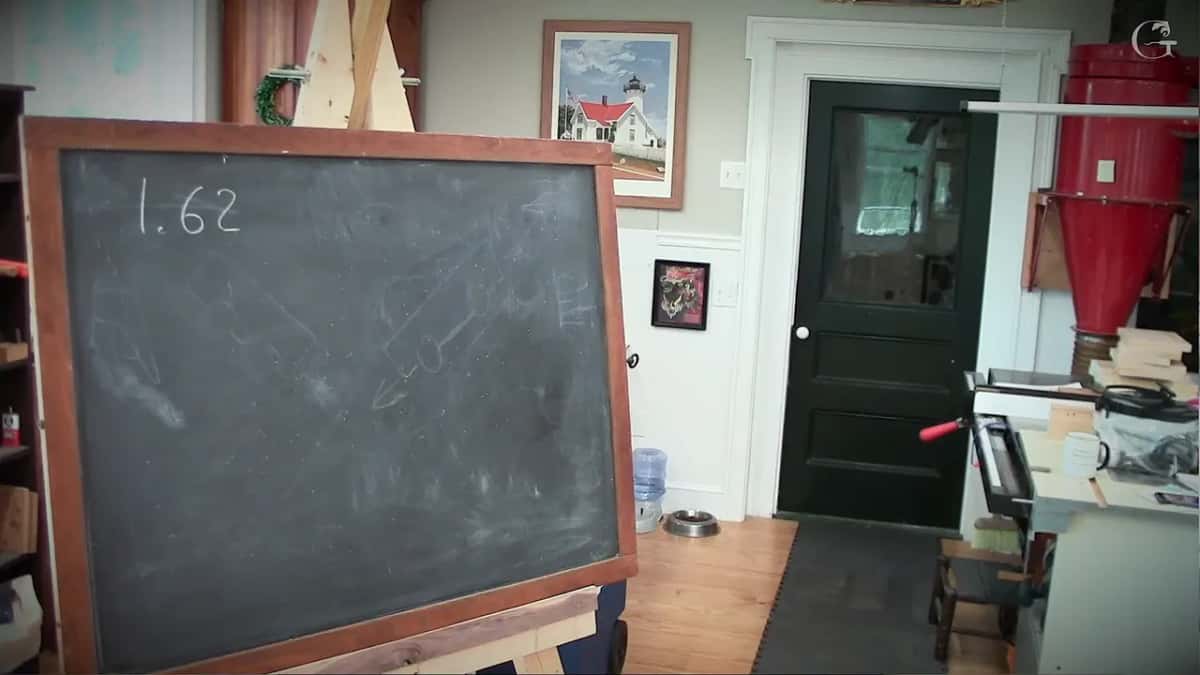
Golden ratio, golden rectangle, golden section, golden cut. Same animal wearing four names. The exact split runs 62 to 38, but six to four is near enough for wood and a lot easier to understand.
My daughter is an architect. She finished in the top three of her entire university, at $70,000 a year in tuition. Nobody there taught her the golden ratio. Not once. She came home on a Friday, which is barbecue day in my house, and asked her father to explain the logic her professors had skipped.

You need no math for this. Take the length you have to fill, say a table apron. Find the middle, then slide your mark toward one end until it sits at six parts of ten. Mark it there. Everything else you carve will be built around that mark.
Where do I put the main flower?
On one of four golden points. Every rectangle holds four, because each side you read from sets a different starting direction, and every direction produces its own golden cut.

Start at the bottom and go up, you get one point. Come down from the top instead and you land on a different one. Same again going side to side. Four points, and your brain hunts for all four whether you put anything there or not.
Draw your diagonals, verticals and horizontals over the rectangle first. We call that grid the armature, and every movement in an ornament runs point to point along it.

Pretty much all of it starts from two shapes. A circle and a square.

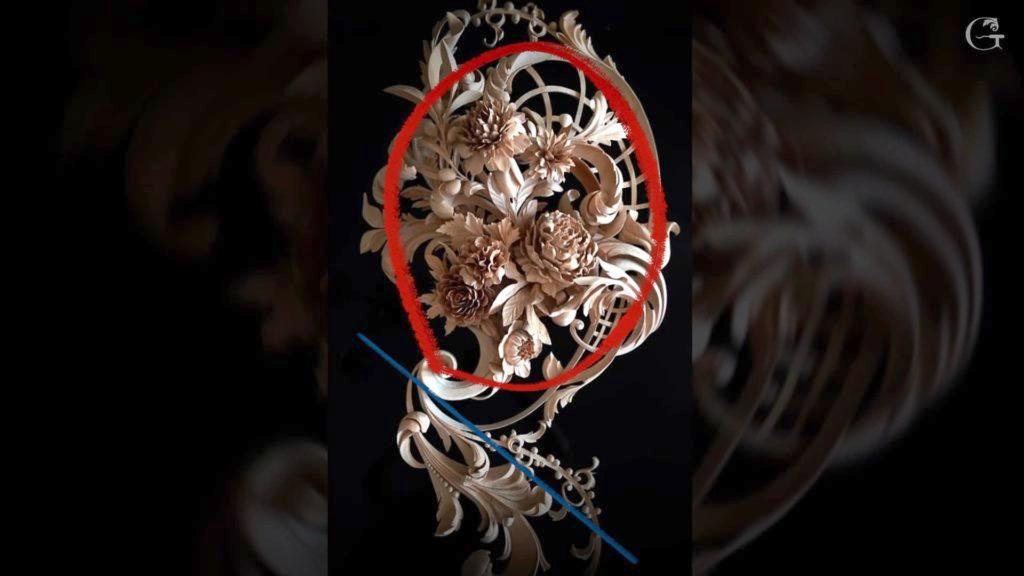
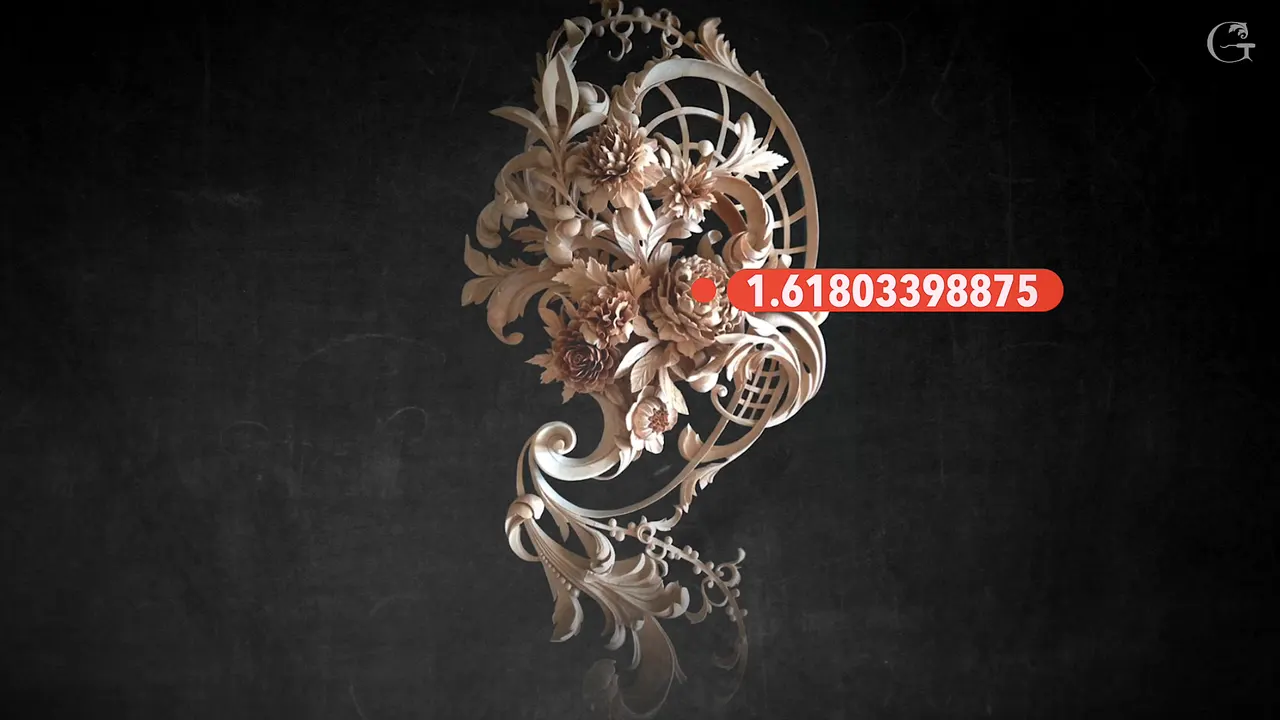
Now choose which of those points carries your big idea. On my flower panel the peony takes it. I made that call before touching the wood, and when you put golden ratio calipers on it, it falls right on 1.62.
Why does a good design need a bad guy?
With no fight there is no interest. One hero on a panel with nothing pushing back is a pretty thing nobody looks at twice.
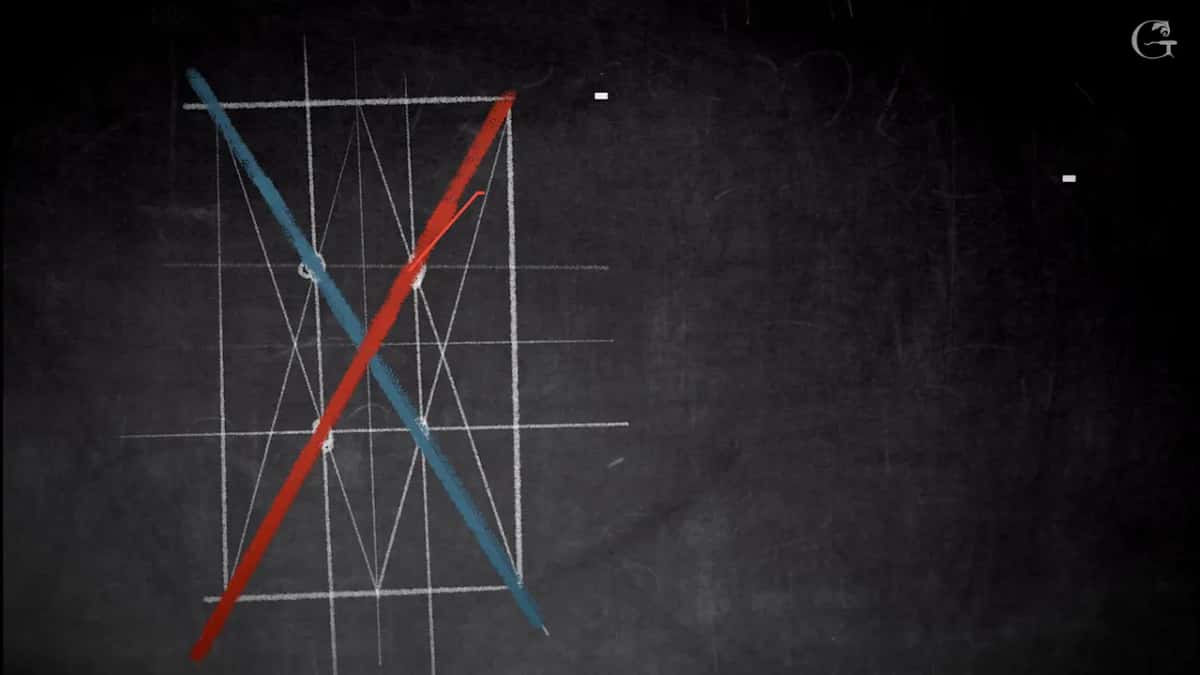
Every rectangle carries two main diagonals. One climbs to the right, and we call it baroque. The other falls the opposite way, and its name is sinister. Look up what sinister means and you will understand why I watch which line a thing sits on.
My students think I am joking about the next part. Only half. When you design something for your husband or your wife, look at them honestly first. Good person, build it on the baroque line. Not such a good person? Here you go, honey. Sinister.

Your hero sits on one diagonal and your antagonist sits on the other, and the antagonist has to be genuinely strong, never a leftover. The two remaining golden points turn into supporters, one behind each side, both smaller. In the movies the bad guy is usually Russian. Spies, mafia, hackers these days. Since I was born there, I get to make the joke.

| Role | Diagonal it sits on | Size | What it does to the eye |
|---|---|---|---|
| The hero | Baroque line, the one climbing right | Largest | Holds the eye first and longest |
| The antagonist | Sinister, falling | Strong | Pushes back hard enough to make an argument out of a pretty thing |
| Two supporters | Whichever two golden points are left over | Smaller | Back the big two and fight each other |
| Empty space | Often a golden point itself | Whatever is left | Tells a stranger how big the hero is |
Nature runs the same fight. Pick up a spalted board and look at those black lines. Those lines are a war between fungi, and one of them has taken the most ground. He is the hero of that board. The rest crowd him, hold their borders and never cross over. While the fungus lives, those borders creep.
How much empty space should I leave around a carving?
Enough that the space itself tells a viewer how big the main thing is. Emptiness works as hard as anything you carve, and it usually lands on a golden point too.

Over at the board I draw a boat and want a number from the room. How long? First guess, 25 feet, call it 7.6 m. Next one comes back smaller, 16 feet or 4.9 m. Both wrong, and they could not be anything but wrong, because I gave them nothing to measure against. Then I put one small dot on the board. Now it reads 500 feet. That is over 150 m of boat, and the whole room sees it at once.
Chinese painters have worked this way for centuries. Mountains everywhere, one tiny house, one tiny man. The man makes the mountain.
Out of that comes a hard rule for your bench. Never repeat a size on one panel. Leaves, flowers, every one of them a different size. Even your own two eyes are different sizes, the left smaller and the right bigger, and that difference is called dynamic symmetry.
What is the Fibonacci sequence good for in carving?
Counting. Fibonacci sets how many petals a flower carries, the number of leaves on a stem, and the divisions inside one leaf, because nature counts no other way.
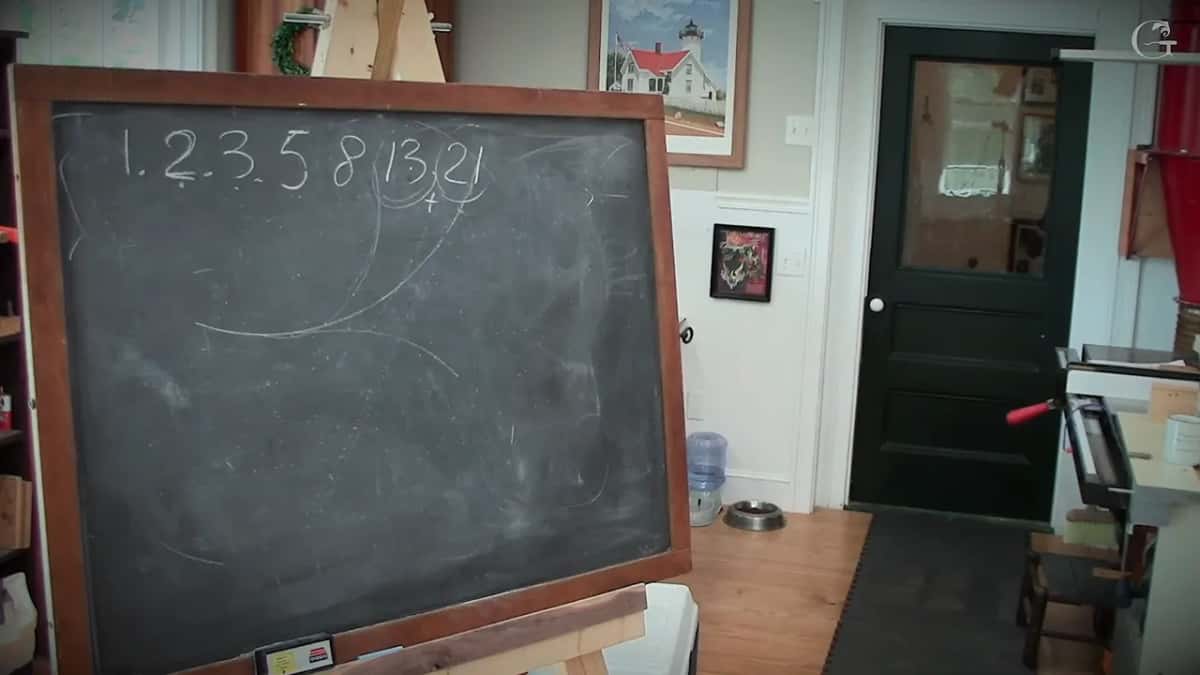
Add the last two numbers to get the next. 1, 2, 3, 5, 8, 13, 21, and on it goes forever. Count the petals on any flower in your yard and the total lands on that list.

Open a sunflower and the same thing is waiting inside. The rows spiral both directions at once, and measuring one spiral against the other gives you 1.61 again. I carved a sunflower some years back and spent most of the layout time on the seed head. Nobody has ever mentioned it.
Now bring the idea to an acanthus leaf. Three main divisions, or five, and never four or six. Inside each of those, three more. Where exactly the divisions fall depends on whose tradition you follow, because Italians put the split one way and the French push it closer to the center, and both answers stay inside the golden ratio.

Even the invisible border around that leaf obeys it. Say one line of that border runs 10 inches, 254 mm. Take the other line to the lower point and the two come out on the golden ratio. No book shows you that.
Why can nothing in the design be straight?
Straight lines do not exist anywhere in nature, so a straight line in a carving reads as a mistake even when a viewer cannot name it. Everything curves, and everything ties back into everything else.
Carvers call that law the arabesque. Follow any line in a good ornament past the point where it disappears and eventually it swirls back and meets another one. If you continue a curve in your head and it wanders off into nowhere, that curve is wrong. Fix it.

Two working tools fall out of this. First comes the letter S. Put an S curve into a leaf and it carries the main movement further along without you drawing a stem at all. I can tell whether a leaf is growing upward or falling away from the S alone, with nothing else on the page.
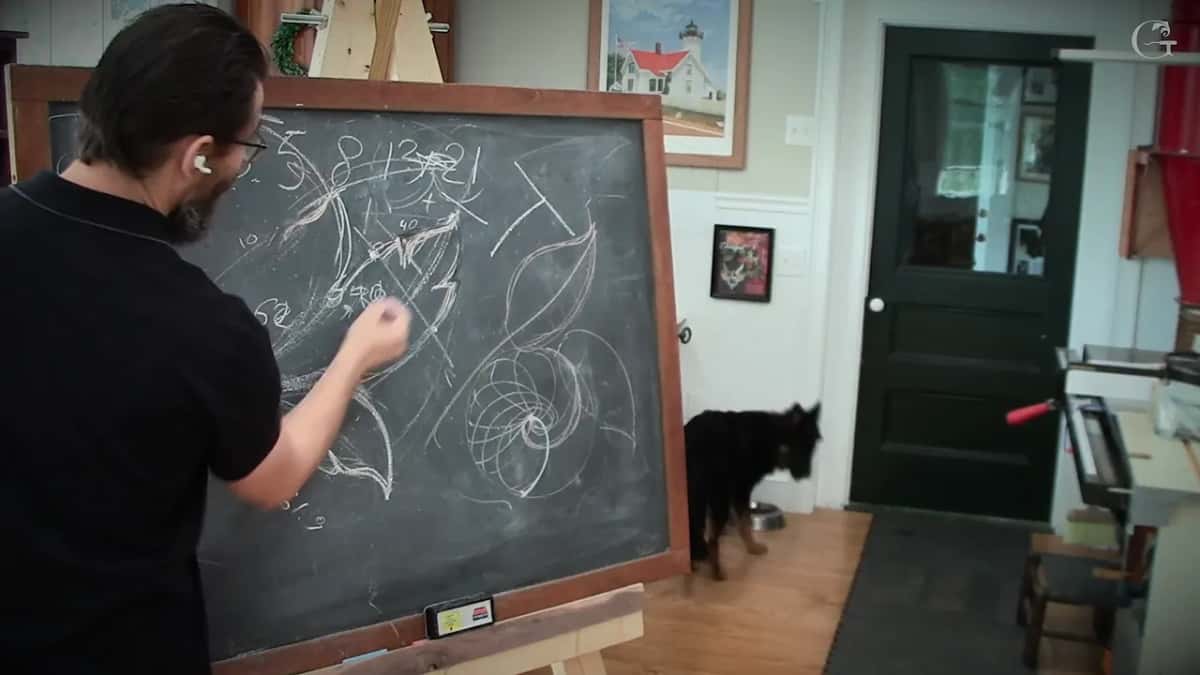
Second comes the letter T. Where two lines meet square and stop each other, the brain reads it differently. No T stops. Not in the lines you can see, and not in the ones that would cross somewhere out in the empty space if you kept drawing.
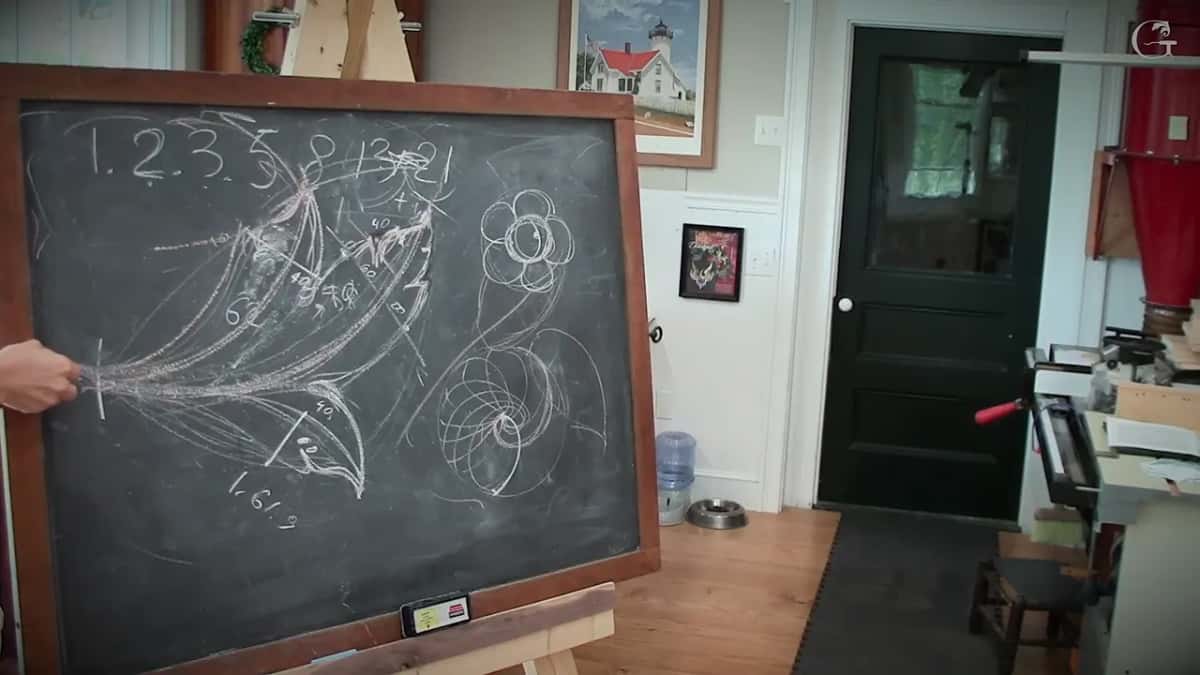
And the center line of a leaf is never actually in the center. It sits at sixty to forty, on the side that supports your bigger space. Shift it to the true middle and it looks weird.
How do I repeat a shape without it getting boring?
Repeat the shape and change the size. Those two moves are the whole law of rhythm, and they separate a carving that sings from wallpaper.
A musician plays the same phrase again and leans harder or softer on it. We do it with scale instead. One long arc, a shorter one, then shorter again, and put the calipers on any two of them and they measure out close to 60 and 40.
Flowers work the same. Three flowers, three different sizes, and sometimes I drop in tiny fillers, the first 20 mm or three quarters of an inch, the rest smaller, to make the big one look bigger. Then I take that whole group and repeat it elsewhere on the piece, five flowers instead of eight, sizes shifted again. Depth comes from exactly that.

I have worked in houses most people only ever see in magazines. Not millionaires. The other kind. I built a library for a man whose brand was printed on the shirt I happened to be wearing that morning, and carved for a family whose shampoo is probably in your shower right now. Every one of those houses is classical. Columns with 2,500 years behind them, Corinthian capitals, arches. Those lion heads are mine.
So what do you actually do with all this?
Put a blank board in front of you and answer six questions before your pencil touches it. Direction first. Diagonal second. Third, whether the thing grows or falls. Fourth, which of the four golden points takes your hero. Then where the antagonist stands, and last of all, who supports whom.
Answer those six and the picture is already there in your head before the pencil moves. After that you can carve peonies or acanthus or a coat of arms and the thing will hold together, because the bones underneath it are right.
That is the whole of the design class. Four lessons, thirteen videos, filmed at the board in a live class with real students arguing back at me. I taught this same material for a full week at the Marc Adams School of Woodworking, design every single day, and by lunchtime their brains were finished.
One warning about asking me questions, though. Years ago my youngest asked me something about the human body and I was only half listening, so I told her to Google it. Few years later she informed me that this was the single biggest mistake I ever made as a father. She was right.
I will be honest with you about one more thing. These laws were put here by somebody, in my view, and building inside them means you are agreeing with how the world was actually made. You do not have to share any of that to use them. Students argue with me about it every class and their acanthus still comes out right.
So there is a board in your shop waiting on a layout. Where does the hero go on it? Come and sit in the class, and by the end you will answer that one without me. Shall we carve?
How it's done
- Pick the direction the panel travels. Ask yourself whether the person you are carving for thinks east or west. That answer sets the way the whole panel travels, and every element in it then has to agree with the decision.
- Lay the armature over your rectangle. Rule the diagonals, the verticals and the horizontals. Every movement in the finished ornament runs along that grid, point to point.
- Choose the climb or the fall. The baroque diagonal climbs to the right while the sinister one drops away in the opposite direction. Look honestly at who the piece is for, then pick the line it sits on.
- Put the big idea on a golden point. Slide your mark off the middle until the long side reads 62 against 38. Your peony, your main leaf, whatever carries the piece goes where you land. Calipers confirm it afterwards.
- Give the hero somebody to fight. The antagonist stands on the far diagonal and must be genuinely strong, never a leftover. Two smaller supporters take the remaining points, one behind each side.
- Change every size, repeat only shapes. Three divisions in a leaf or five, never four. Drop in tiny filler flowers, each a different size, so the big flower reads bigger.
Frequently asked questions
Do I need to be good at math to use the golden ratio?
No. Six to four does it, and a pair of golden ratio calipers handles the rest. I'm not saying you have to calculate all the time. Somehow you just get to that split naturally, then the calipers check you.
Is this course for beginners or for experienced carvers?
Both, and furniture makers too. Gouges stay in the rack for these lessons. My goal is to explain how this stuff works, so you understand it instead of just memorizing it.
Does any of this apply outside wood?
Yes. The old work that survived in museums sits on these same rules, and so do the buildings of the Egyptians and the Greeks. My architect daughter uses them now. Music runs on them as well, which is why the big moment in a piece tends to arrive around the same place every time.
What to carve next