August 1, 2023 · Updated August 15, 2026
By Alexander Grabovetskiy — Master Woodcarver · Founder, School of Wood Carving · 9 min read
Online wood carving classes, and what a camera can and cannot teach
Key Takeaways
- A whole year of recorded lessons costs $200. One week at a woodworking school comes to roughly 3500 once flights and beds are counted.
- The replay is the real advantage. In a room I make the pass once; on screen you can watch it forty times.
- No camera teaches sharpening, because the change is in the sound and the resistance rather than the picture.
- Start on a flat board with one leaf. Beginners who open the Venice room first tend to stop carving.
- Ask any school four things: does the teacher take commissions, is design taught, how long is access, and can you reach a person.
Online wood carving classes are recorded lessons you carve along with at your own bench, on your own hours. Mine hold more than 3000 videos. The first is a V cut; the last are architectural panels. Yearly Access costs $200 a year, Monthly Access $25 a month, and either cancels in one click.
Two things send people looking for this. Either the nearest school is a long drive and a long bill, or the local class taught spoons when what you wanted was acanthus. Both are real and both are fixable, and online woodcarving classes fix the first of them outright.
What follows is what an online lesson actually looks like, what it costs against a week away, what it teaches badly, and the four things worth checking before you pay anyone, including me.
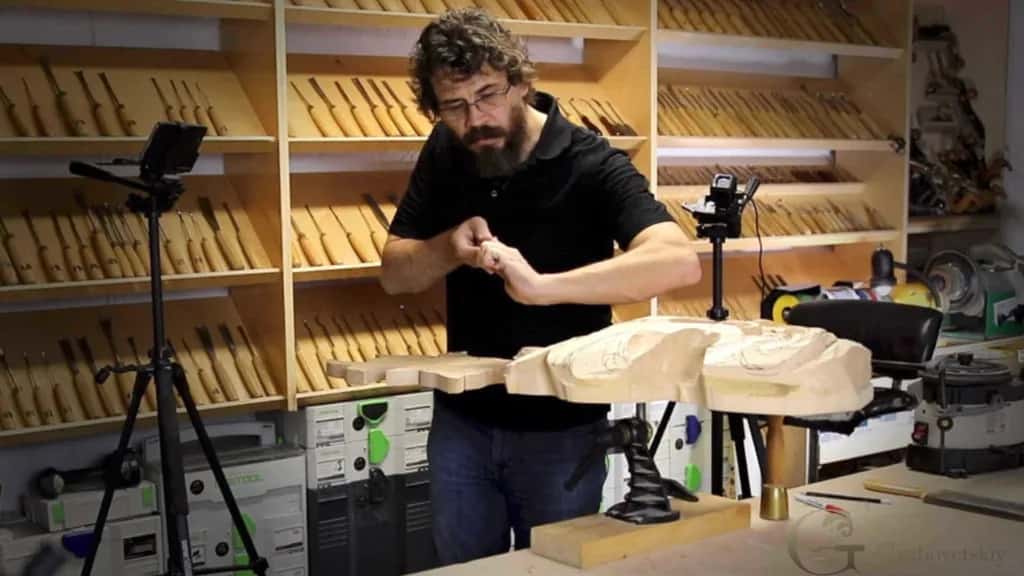
Camera on the tripod, and no students in the room. That is the trick, and the limit.
Why learn wood carving online at all?
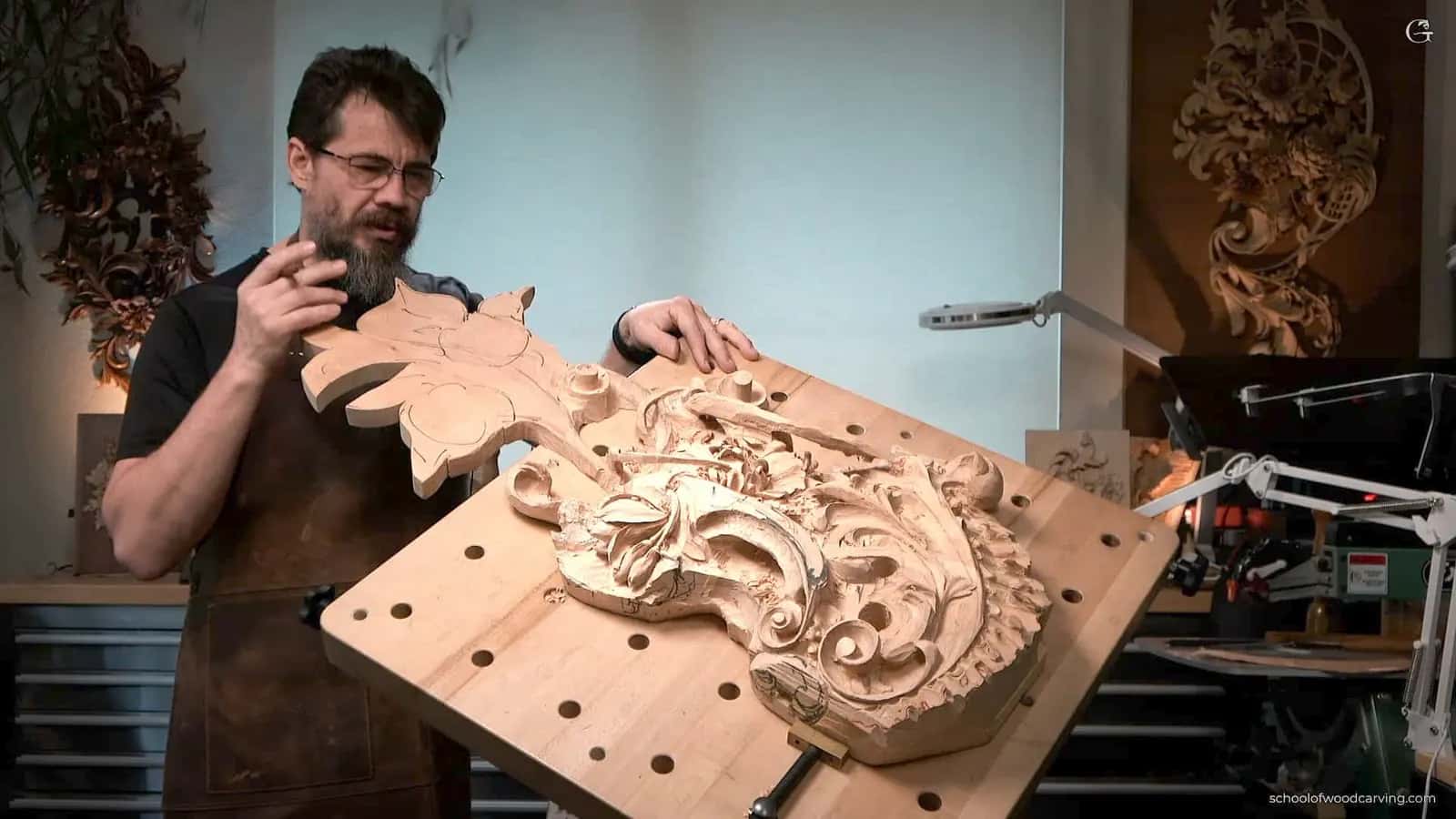
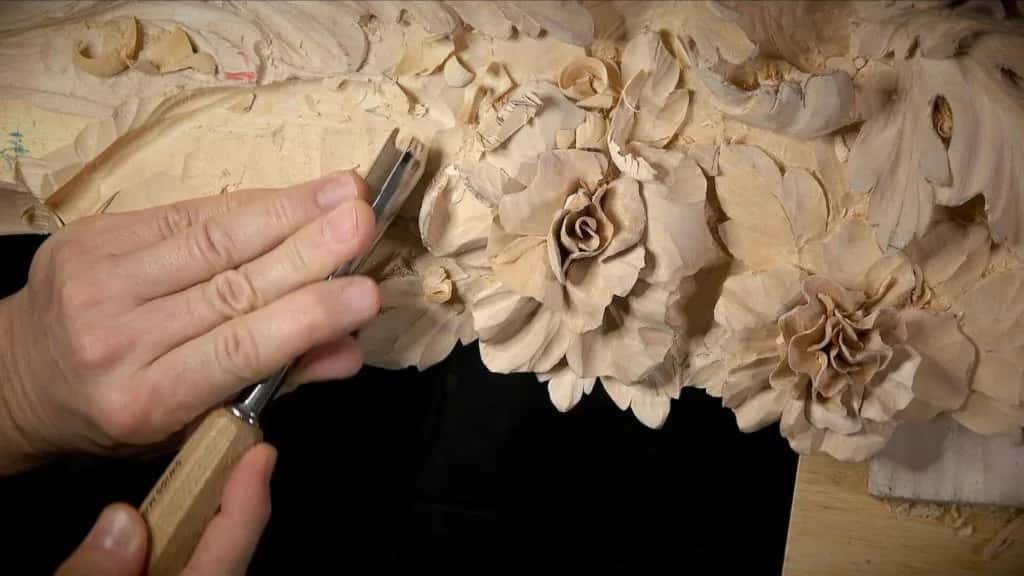
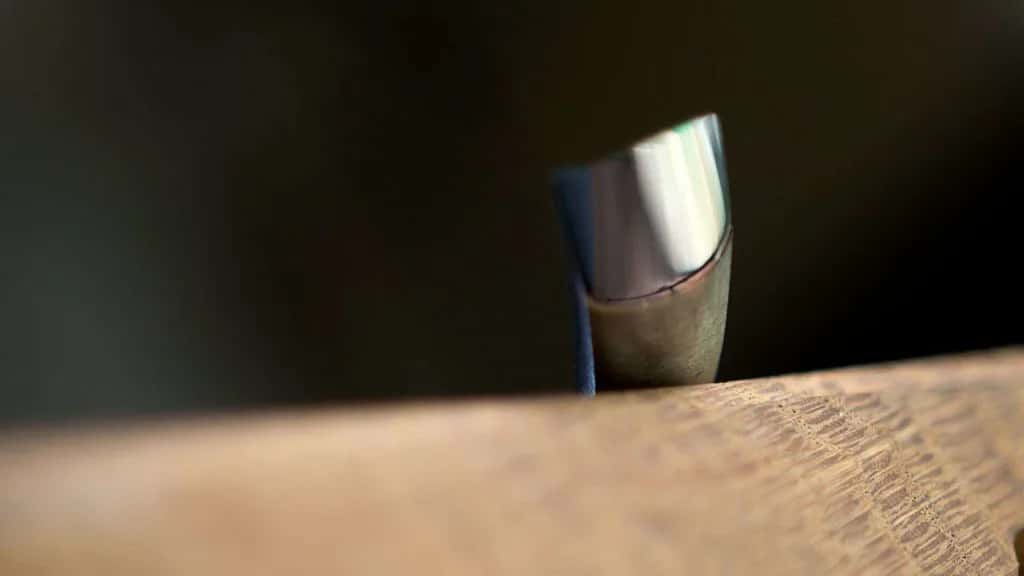
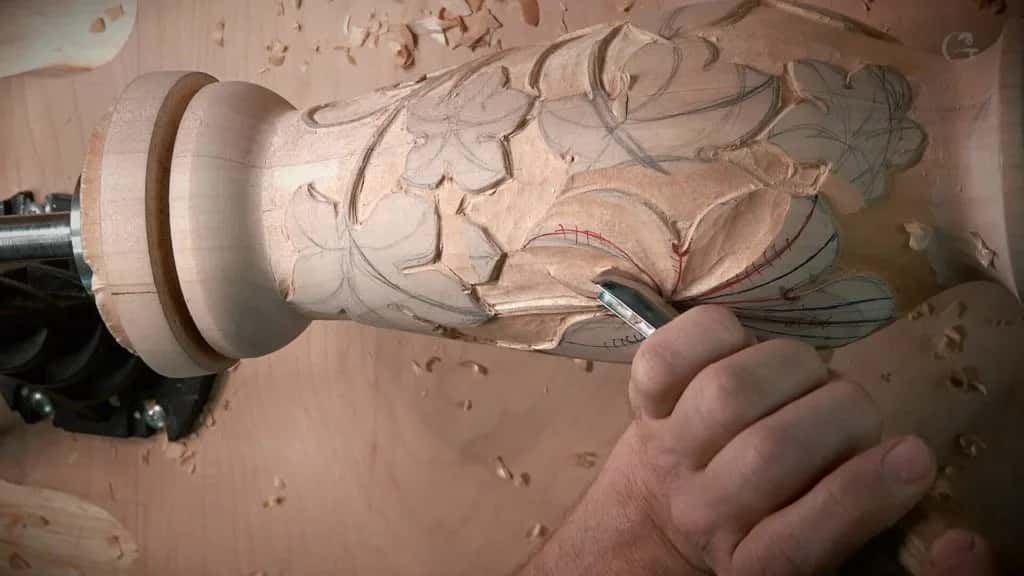
The camera sits where nobody standing in a classroom can stand. Right over the edge, close enough to watch the fibers part ahead of the bevel and the chip curl away.
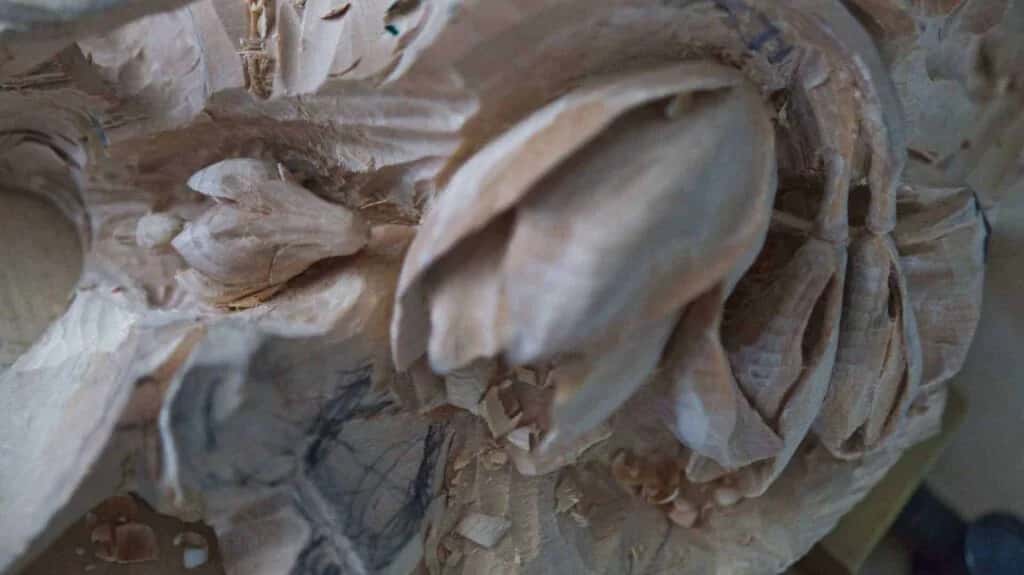
Think about what you see in a real class. Ten people around one bench, my shoulder in the way, and a single pass of the gouge that happens once. You either caught it or you did not.
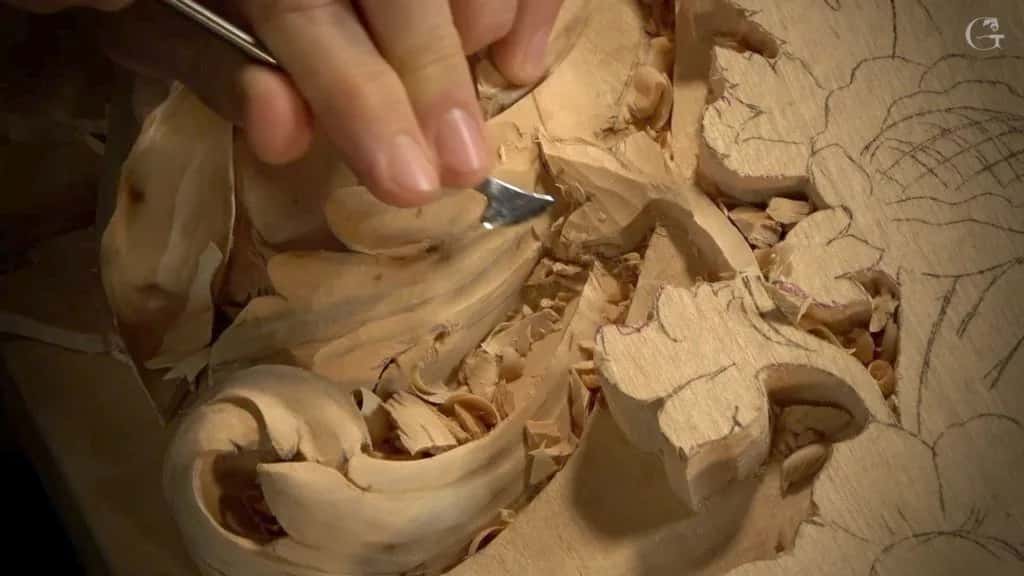
On video that same pass replays forty times. Slow it down, watch the angle of the bevel, stop it at the moment the chip lifts. Students tell me they finally understood a cut on the ninth viewing, which is nine more chances than a Tuesday afternoon in Indiana gives anybody.
Then there is the year. A class ends Friday and whatever you missed is gone. Lessons sit there in January and they are still sitting there in November.
What do online wood carving courses actually cover?
Everything a carver needs, starting at a stop cut and ending on an architectural panel, in that order. The catalogue is not a pile of tips. It runs in sequence.
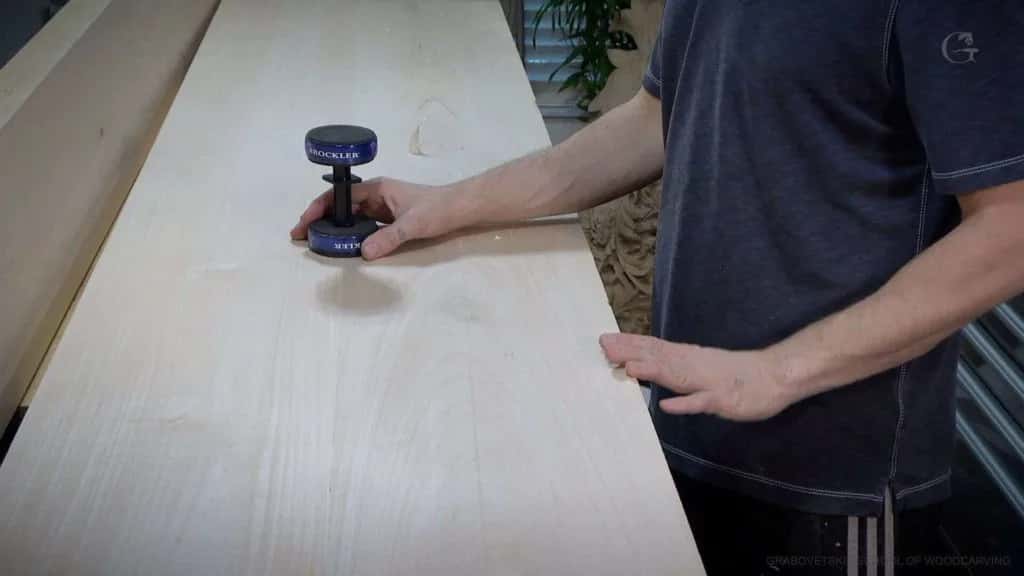
Beginners start with tool control on flat work. Then relief, where a shape has to sit above a ground. Then the classical vocabulary, which is where most carvers stall for years without a teacher.
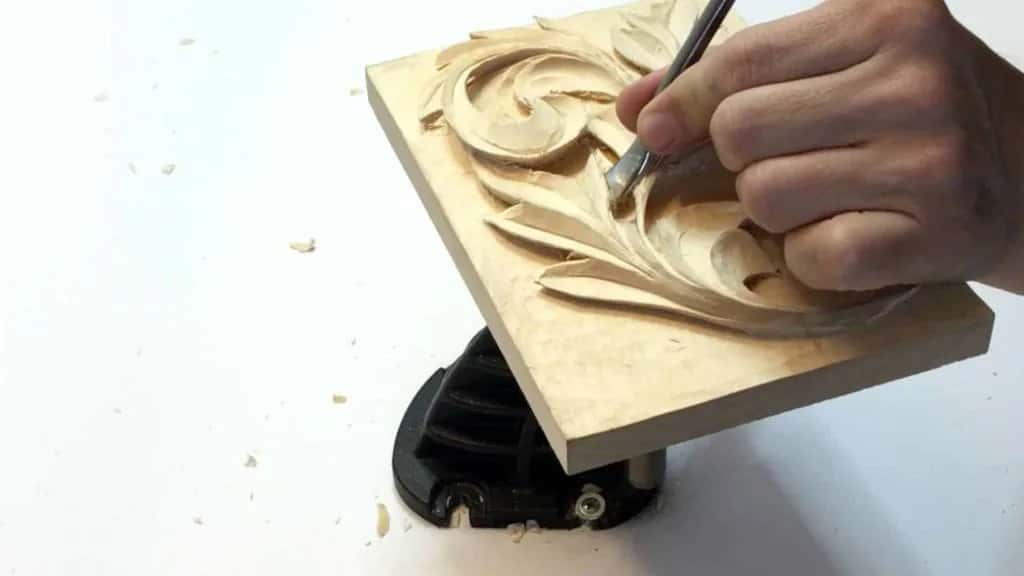
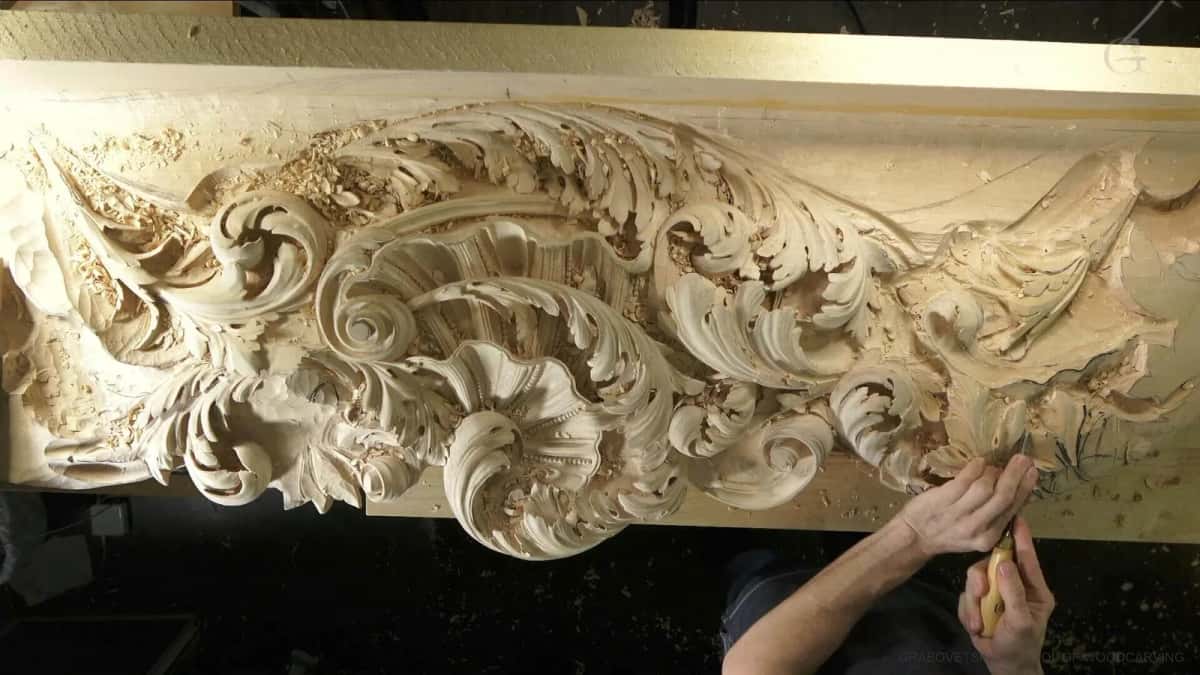
Acanthus is the alphabet of European ornament. Learn it properly and half of what you see in a museum stops being mysterious. Grinling Gibbons built a whole reputation on that alphabet, and the V and A still holds his work. My modern acanthus course takes it from a drawing, and the Byzantine version shows you how differently the same leaf behaves in another century.
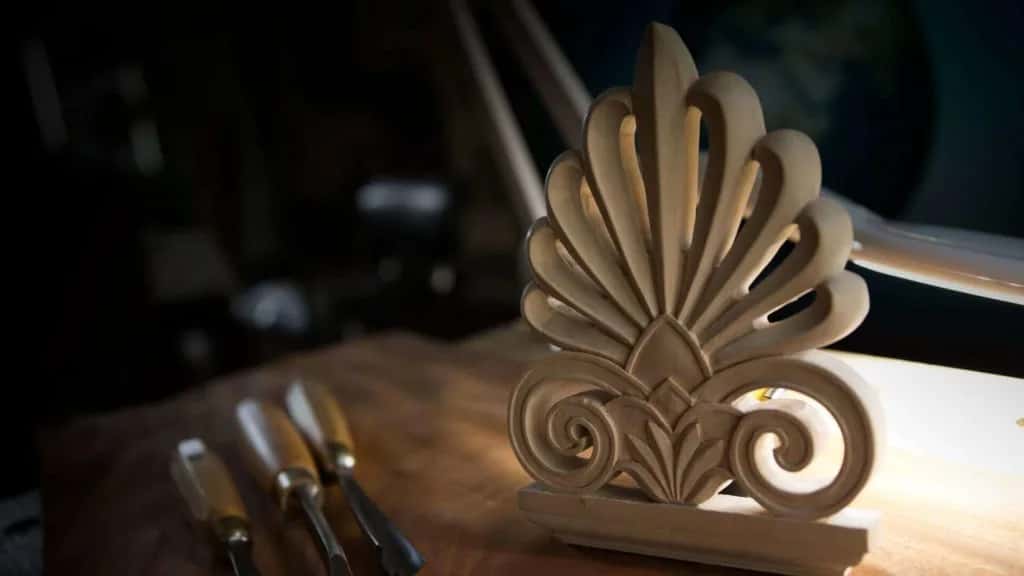
Above that sit the long projects. The Venice room runs past a hundred and sixty workshops, a real commission filmed from the first board to the last. Nobody finishes that in a weekend.
What does an online carving school cost against a class?
A year of lessons costs less than a third of what five days away comes to. Here are both, with nothing left out of the second column.
| What you compare | A five day class at a school | At home | What the difference really buys |
|---|---|---|---|
| Cost of the teaching | Around 900 to 1050 dollars for the five days | Two hundred yearly | One week against a whole year |
| Travel and beds | Another 2000 to 3000 dollars before you carve | Nothing at all | You never leave your own bench |
| How many times you see it | Once, and then I move to the next bench | Again and again | This is the whole point of a recording |
| Somebody correcting you | Immediately, which no recording can match | Not in the moment | This is what a class is for |
| How far access reaches | Five days, then Friday afternoon ends it | All year round | Slow learners gain the most here |
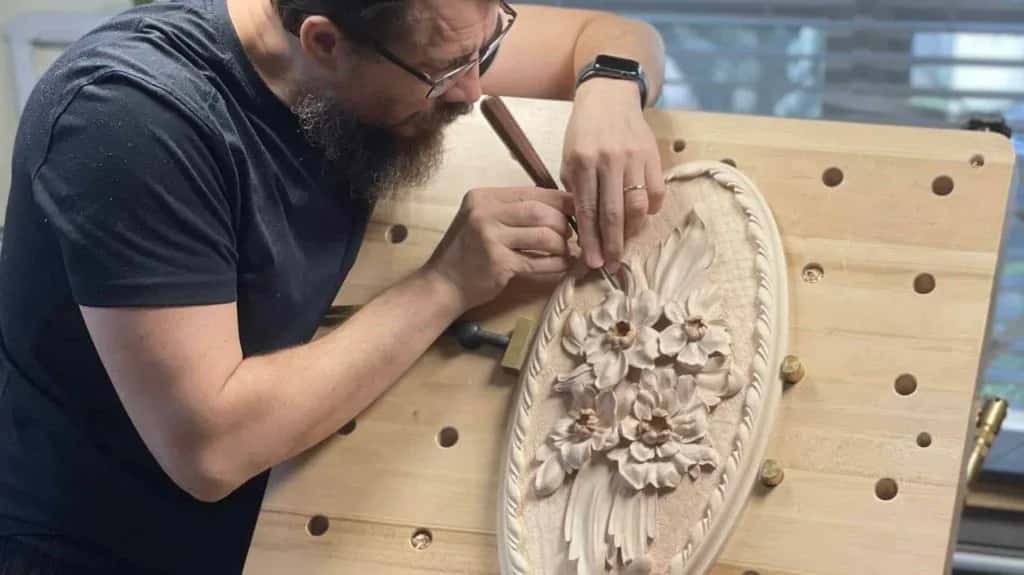
Read the fourth row again, because it is the honest one. A recording cannot see your hands. If a class is within reach, take one, and I say more about that in the post on finding classes near you.
How do you start carving online this week?
One gouge, one board, and one lesson watched twice before you touch either. Most people buy tools for a month and never make a chip.
Step 1, get one gouge and one basswood board
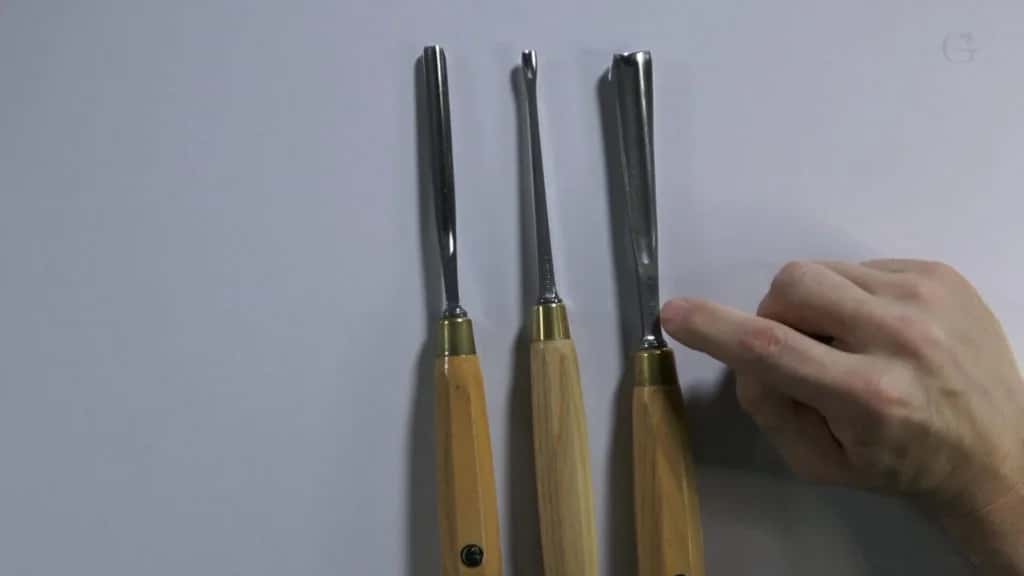
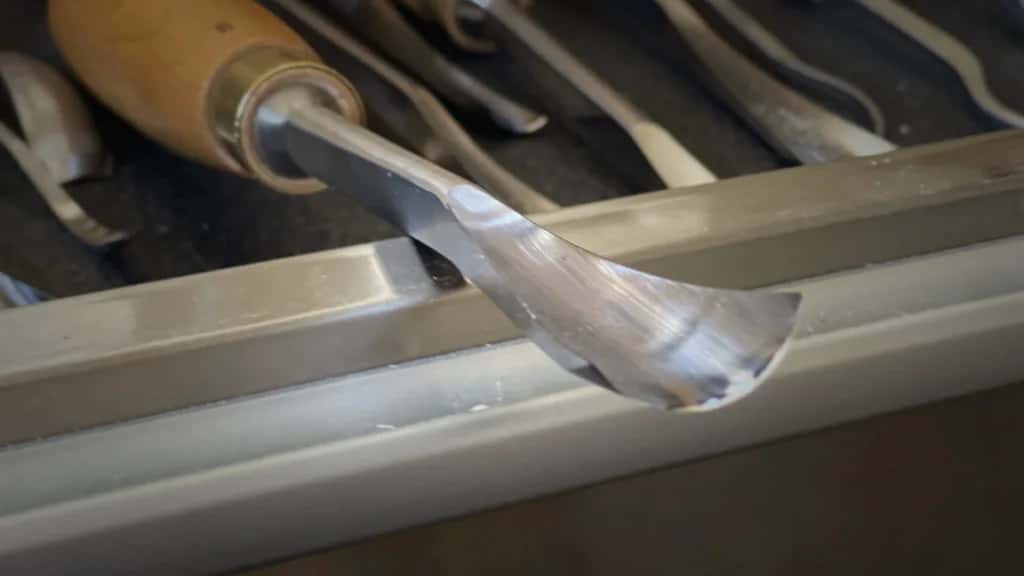
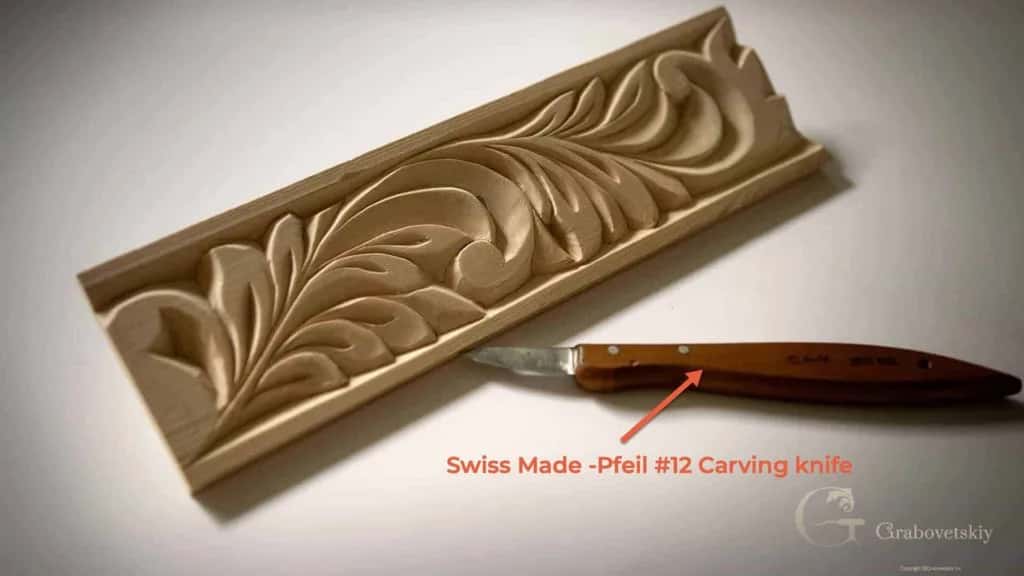
A number 7 sweep around 14mm handles most beginner work. Pfeil from Switzerland is what I hand people, stocked by Woodcraft and Lee Valley. Get basswood, and never construction lumber, which blunts an edge and tears out on you.
Step 2, sharpen before your first lesson
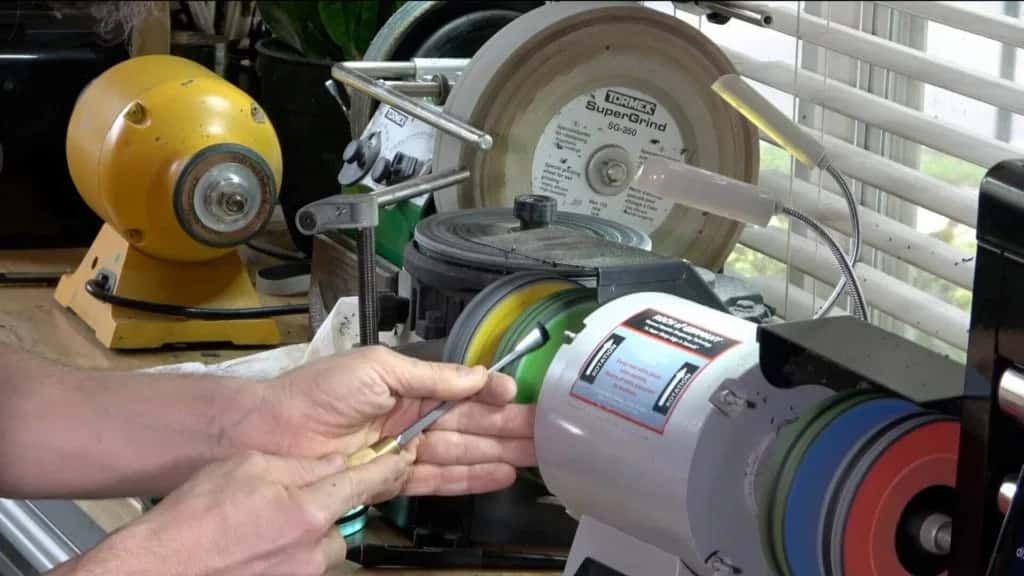
A new gouge is ground, not sharp. Strop it until it lifts a curl off the corner of the board with no pressure at all. Skip this and every lesson afterward will feel like the wood is fighting you, because it is.
Step 3, watch one lesson all the way through first
Hands off the tool. Just watch. Then watch it again with the wood in front of you, and only then start.
Step 4, carve the same exercise five times
Not five different projects. The same one, five times, and the fifth will not look like the first. Repetition is the entire craft and nobody has found a way around buying it. Old carvers learned exactly this way, by apprenticeship, watching and copying with very little said out loud.
Step 5, photograph your work and compare it to mine
Put your board next to the screen and look for what is different. Depth is usually the answer. Beginners carve everything at one level and wonder why it reads flat.
My first carvings course follows it.
Are online woodcarving lessons any good for a complete beginner?
They suit beginners better than they suit anybody else. A beginner needs repetition and permission to be slow, and a recording gives both without charging by the hour.
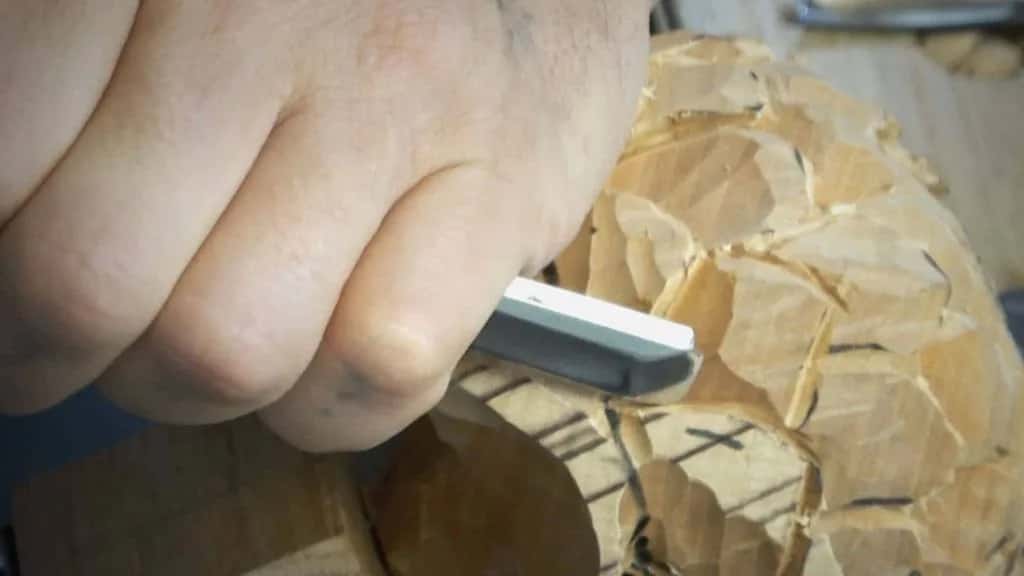
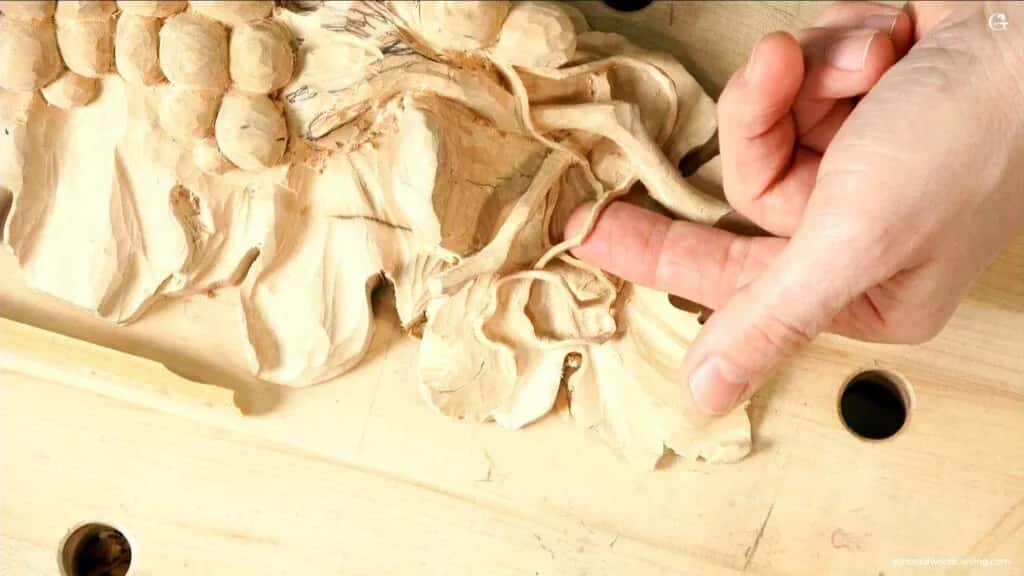
The thing beginners get wrong is starting too big. I have watched a man open an account and go straight to the Venice room, which is like reading a medical textbook to treat a splinter. Start with a flat board and one leaf.
Age has never been the barrier either. My youngest students are teenagers and my oldest are ninety, and the hands that improve fastest are usually not the young ones. There is a fuller answer in whether carving is hard to learn and in what to carve first.
What can a recording never teach you?
Sharpening, and the exact moment your wrist is about to go wrong. I film sharpening close and slow and I still get letters about it.
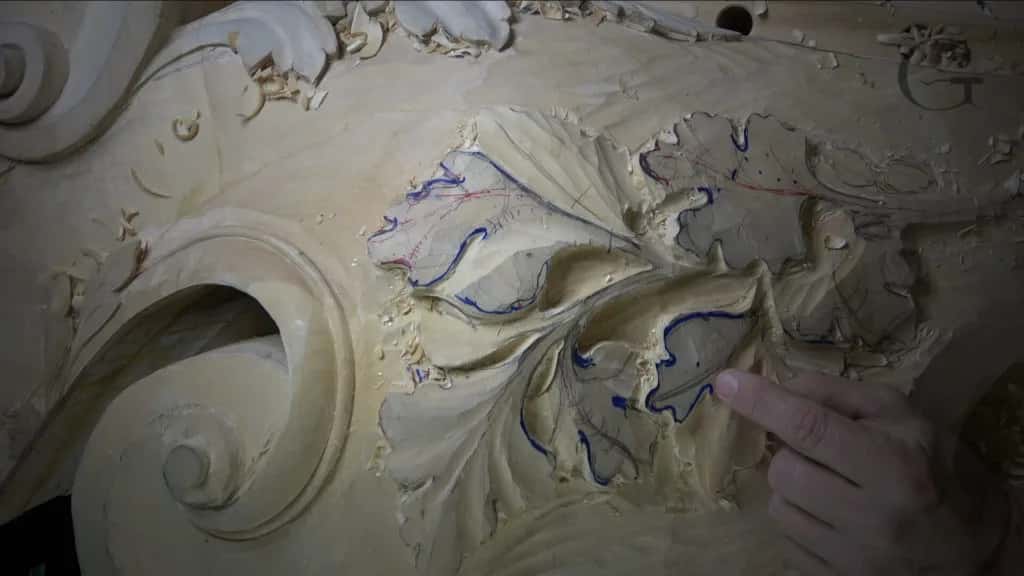
Sharpening is felt more than seen. The sound changes and so does the resistance, and a camera carries neither. Give it a year of trying and you will get there, but it is the one skill where a person beside you saves months.
The other gap is your own blindness. Working alone you cannot see what you do not know, and your panel looks fine to you and fine to your family right up until somebody who carves for a living looks at it.
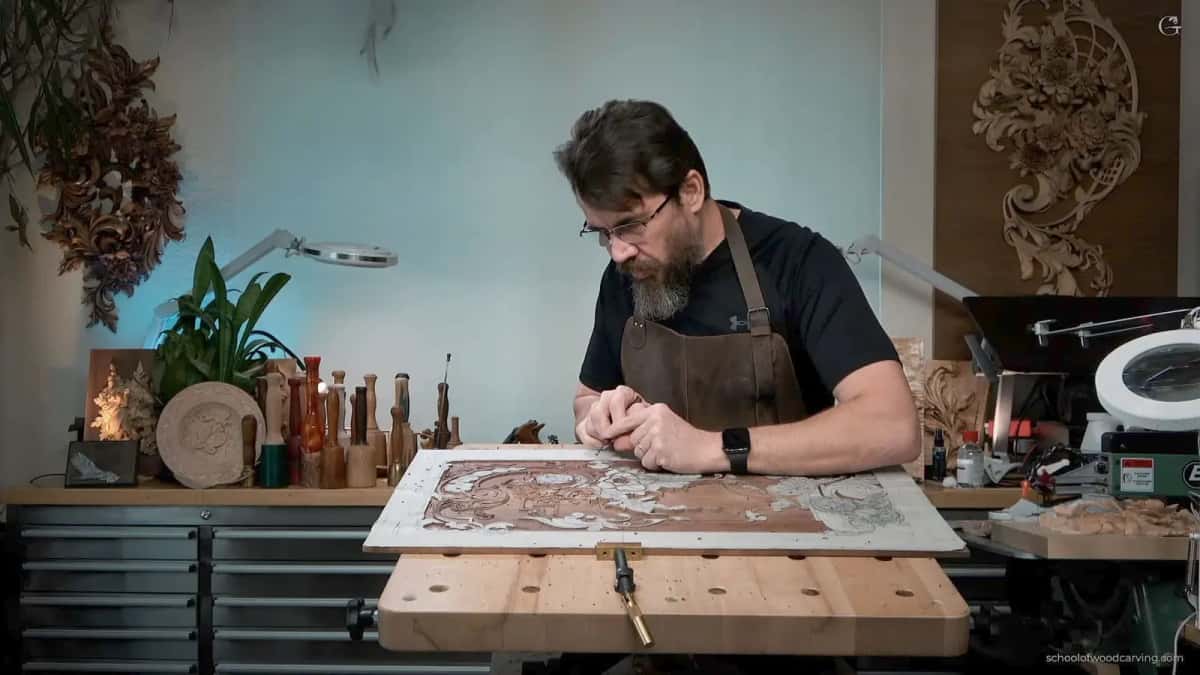
Which is why I still teach in person a few weeks a year. Dates sit on the in person page. Do both if you can, online for the year and a bench week when one comes within reach.
What should you check before paying any online carving school?
Four questions, and every one should be answerable before your card comes out.
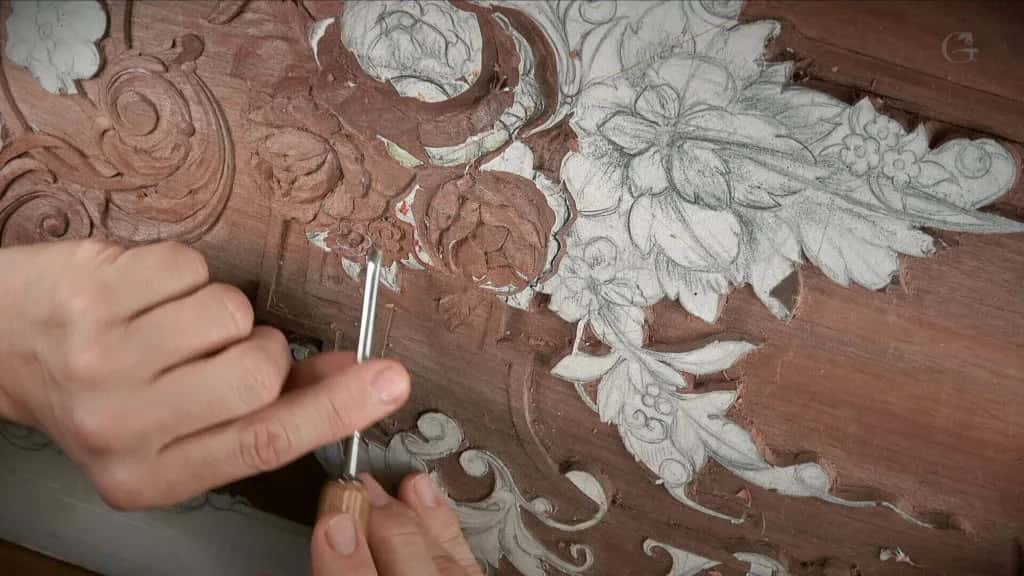
First, does the teacher carve for money or only teach? Commissions in real buildings throw up problems no curriculum ever covers, and a man who has solved them teaches differently.
Second, is design taught or only technique? Clean tool work over a bad drawing is still a bad carving, and this is where most schools quietly stop.
Third, for how long does the material stay yours? Ask, plainly, what happens on the day you stop paying, and do not settle for a vague answer.
Fourth, can you actually reach the teacher? Recorded lessons plus nobody to ask is a library, not a school.
Mine answers those four this way. I carve commissions, I teach design before technique in the design course, tuition runs while it runs and cancels in one click, and questions reach me. Read what other people said on the reviews page.
Woodcarving Illustrated is worth reading beside any course too. There is a longer version of who I am and where the craft came from in this piece somebody else wrote about me, and the whole catalogue sits on the course list.
So. Do you want another year of watching other men carve, or a year where the shavings are yours? Yearly Access is $200 a year and Monthly Access is $25 a month, each renewing automatically until you cancel, which takes one click. Tuition here also feeds orphans and widows, because this is a 501(c)(3) school. Begin here, whenever you are ready.
Frequently asked questions
How much do online wood carving classes cost?
The year here costs $200. Month by month it is $25, and each bills again on its own date unless you cancel first. Set that against roughly 3500 dollars for five days away, once flights and beds are counted, and a whole year online is a different order of money entirely.
Can a complete beginner really learn carving from video?
Yes for tool work, and yes for design. Replay is worth more to a beginner than to anybody else, because the ninth viewing of one pass is where it finally lands. The one exception is sharpening, which wants a person beside you eventually.
What tools do I need before my first online lesson?
One gouge, a number 7 sweep around 14mm, plus a leather strop and compound. Add a basswood board about the size of a paperback. That is under sixty dollars all in, and it carries you through several months of lessons.
How many lessons are there and how long is each?
Over 3000 videos across the whole catalogue. Individual workshops run from a few minutes for a single technique up to an hour for a full stage of a project. Long projects like the Venice room span more than a hundred and sixty workshops.
Do I keep access to lessons if I stop paying?
No, and any school that says otherwise is worth a second look. Tuition runs while it runs. You keep the carvings themselves, plus your notes and any certificate earned while you were studying.
Is online carving better or worse than a class in person?
Different, and they fix different problems. A room gives correction you cannot get any other way. A recording gives repetition and a whole year of it. The students who do best start online and walk into a bench week already able to carve.