
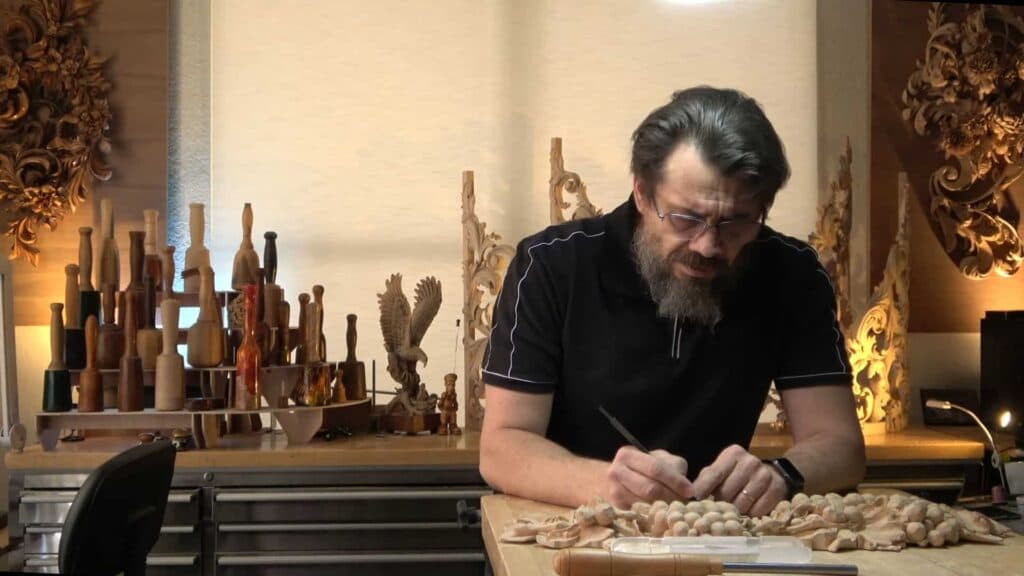
Alexander Grabovetskiy, woodcarver, School of Woodcarving · Published 2026
How do you smooth the facets left by carving tools?
Quick answer: Facets left by carving tools are smoothed with a scraper, and only when the job genuinely asks for it. Shaped spring steel cards reach into hollows a flat scraper cannot. Gilding needs that ground prepared. Most carving does not, and the tool marks are worth keeping.
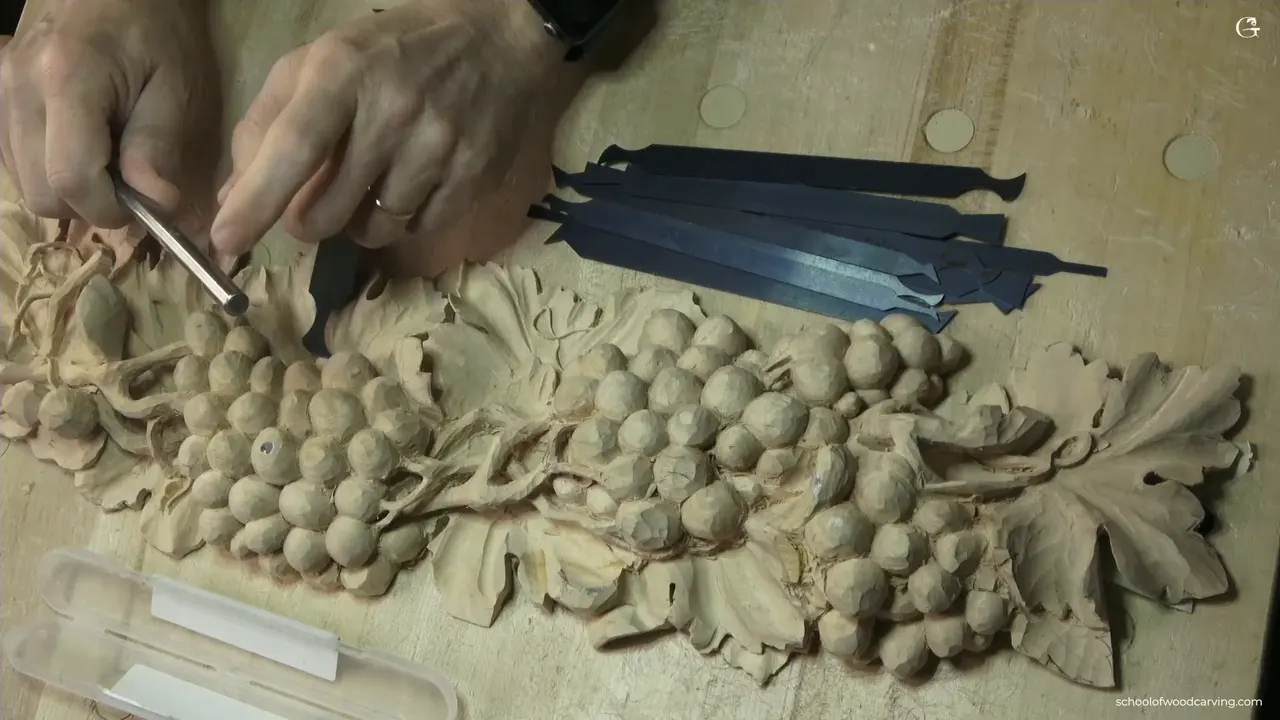
Use a scraper on carving facets, and only when the job genuinely asks for it. Spring steel cards in a range of profiles will take ridges down without flattening the shape. Water gilding needs that smooth ground under it. Most carving does not, and honestly the tool marks are usually worth keeping exactly where they are.
Look down at your last panel from directly above. Do you see those ridges running across it? Do they bother you at all, or do you rather like the look of them? Half the carvers I know want them gone and the other half would fight you for them.
I am in the second half, mostly. Those facets read as veins, they catch light the way a real leaf does, and above everything else they say a hand made this. A surface polished flat could have come off any machine in any factory.

When a carving wants scraping, and when it does not
- Facets are the small flats a gouge leaves. Natural is how they read. Hand done, which is the whole point of cutting them.
- Clients split on this. Some want a shiny smooth surface, others specifically want the tool marks left showing.
- Gold changes the answer. Laying it over water wants that ground prepared properly first.
- The steel wants to be springy, whether you buy a card or make one out of a cheap gouge.
- Every scraper needs a hook turned on it before it will cut, and a burnisher does that.
- Even then, do not take too much off. Removing every trace of the tool is its own kind of mistake.
What are facets in a wood carving?
Facets are the small flat planes a gouge leaves behind, and looking at a carving from straight above is how you see them properly. The light catches each one at a slightly different angle, which is what produces that faint corduroy across a rounded form.
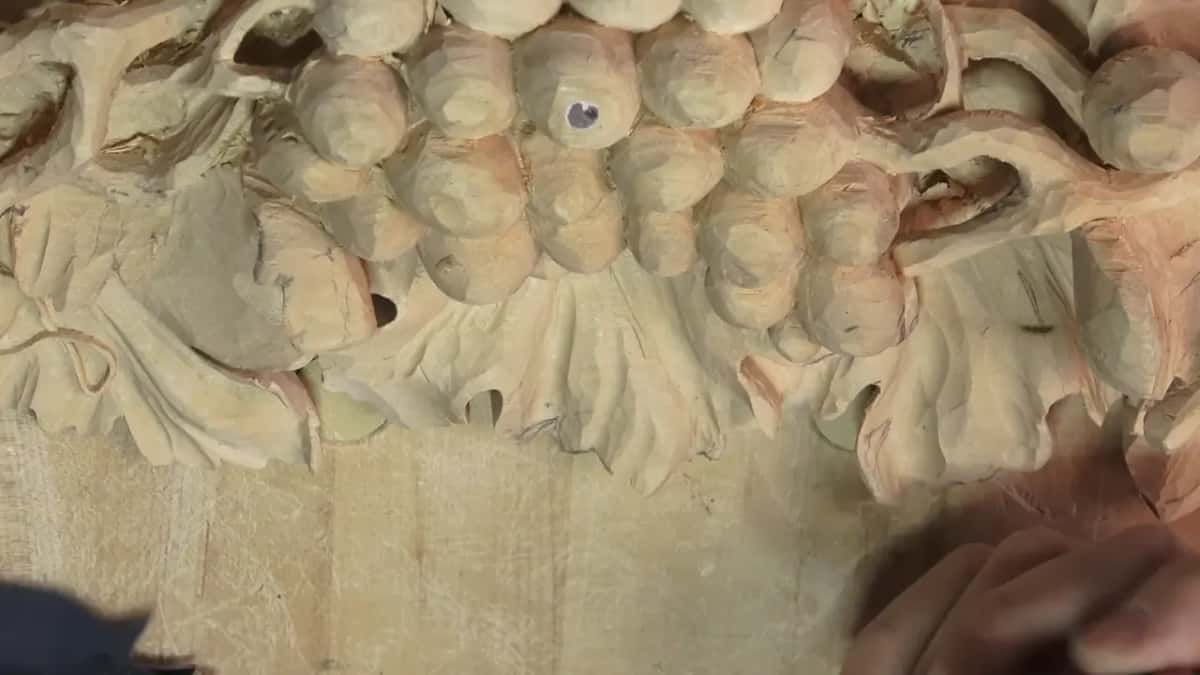
On a grape, on a leaf, on the roll of an acanthus lobe in basswood, those flats do real work. They break up the surface. They put shadow where a polished curve would give you a dead highlight. They are the difference between a form that reads as carved and one that looks moulded.
Personally I keep them. That is taste rather than law, and I want to be honest about which is which, because a great deal of carving advice is somebody's preference wearing a lab coat.
Should you remove your tool marks?
Ask the person who will own the piece, because I have had it both ways from paying clients. Some want the surface shining and smooth, with nothing to suggest how it got there. Others ask to see the tool marks, and pay for the fact that a person and not a router made the thing.
Both are legitimate. I like both, depending on the piece. What I would not do is sand and scrape a carving smooth by reflex, because once the facets are gone they are gone, and the surface underneath is rarely as interesting as the one you removed.
| The situation | Scrape? | Why |
|---|---|---|
| Grapes, leaves, the ordinary run of relief work | Usually leave them alone | Facets act like veins and keep the surface alive under raking light |
| A ground being prepared for water gilding | Yes | Gold shows every ridge underneath it, and shows it forever |
| Client asked for smooth | Yes, and stop early | Smooth to their eye, not to a machine standard |
| Client asked to see the tool marks | Leave it | They are paying for exactly the evidence you were about to take off |
Why must a gilded surface be smooth?
Gold hides nothing. That is the short version. I am working on a piece right now that will be gold leafed, and there the facets have to come down, whatever my personal taste says.

The demanding case is water gilding. That method wants a properly prepared ground, and a great deal goes into it before any leaf is laid. Ridges under gold do not read as craft. They read as ridges under gold.
Even so, I would not take every facet out. Enough to give the leaf a fair surface, and no more. There is a version of this job where somebody scrapes a carving into a bar of soap and then wonders where the crispness went.
What can you use as a wood carving scraper?
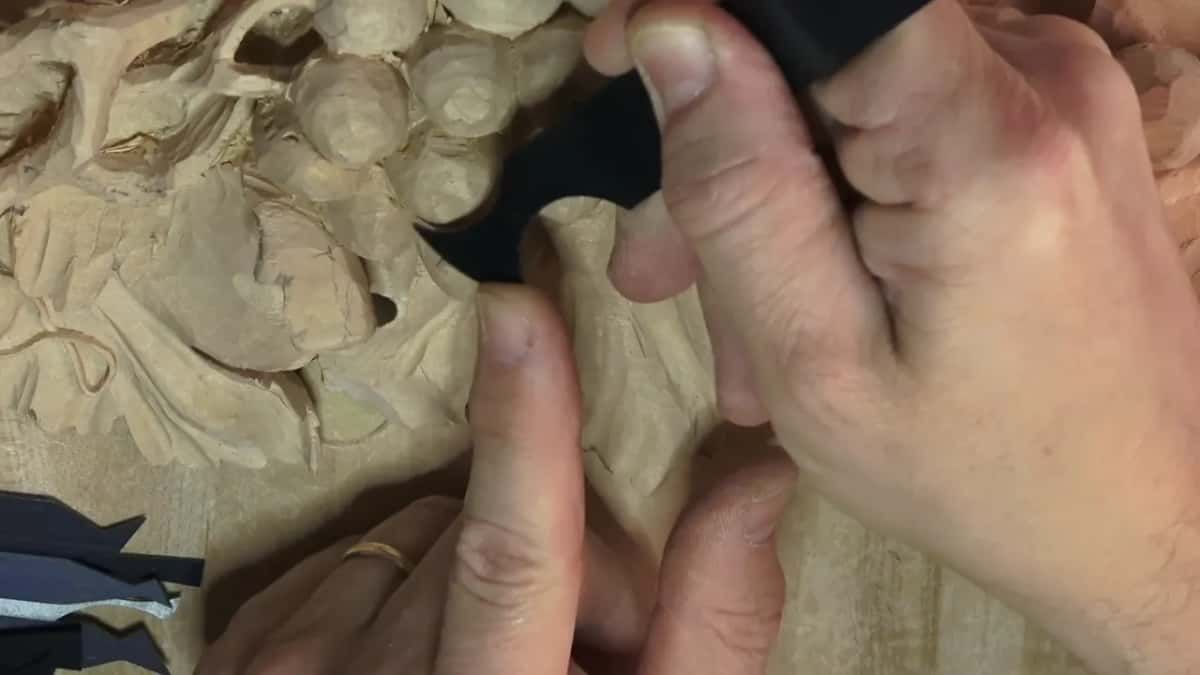
Almost any piece of good spring steel, and for years we simply made our own. My favourite trick is buying a genuinely cheap carving tool, the sort nobody would recommend for carving, and turning it into a scraper. The steel in those is often spring steel, precisely what this job wants.

Why does a cheap gouge make a good scraper? Springiness is the reason. That grade takes a burr readily and gives it back when you re-turn it, exactly the behaviour you want in a card, and the same behaviour that makes it a mediocre carving tool. The property somebody else considers a fault is the property you are buying.
Shaping one is simple work. Grind the profile you need onto the end, take the temper down if it fights you, and you have a scraper matched to a curve that no catalogue sells. I have made a great many of them over the years and never regretted the afternoon.

A cabinet scraper is the same family of tool that furniture makers have used for centuries. Where carving differs is shape: a flat rectangle is fine for a tabletop, and useless inside the hollow of a leaf.
What are scraper cards, and are they worth buying?
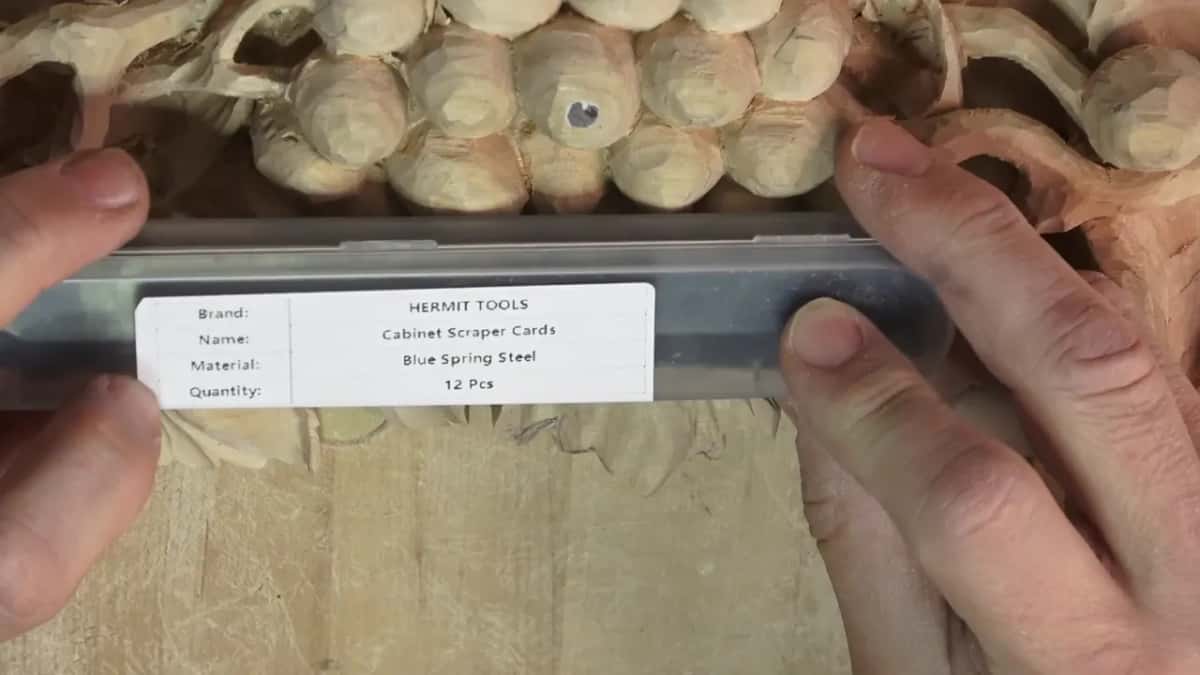
Shaped cards of thin steel, and the set I found recently changed how I handle this whole job. Hermit Tools make them, sold as cabinet scraper cards, twelve pieces to a pack, and the steel is springy, the part that actually matters. Made in China, I would guess, though the packet does not shout about it and the steel does not seem to care.

Now the disclosure, before my opinion is worth anything to you: I am not selling these, and I make no money if you buy a set. I found them, I liked them, and the relationship ends there.
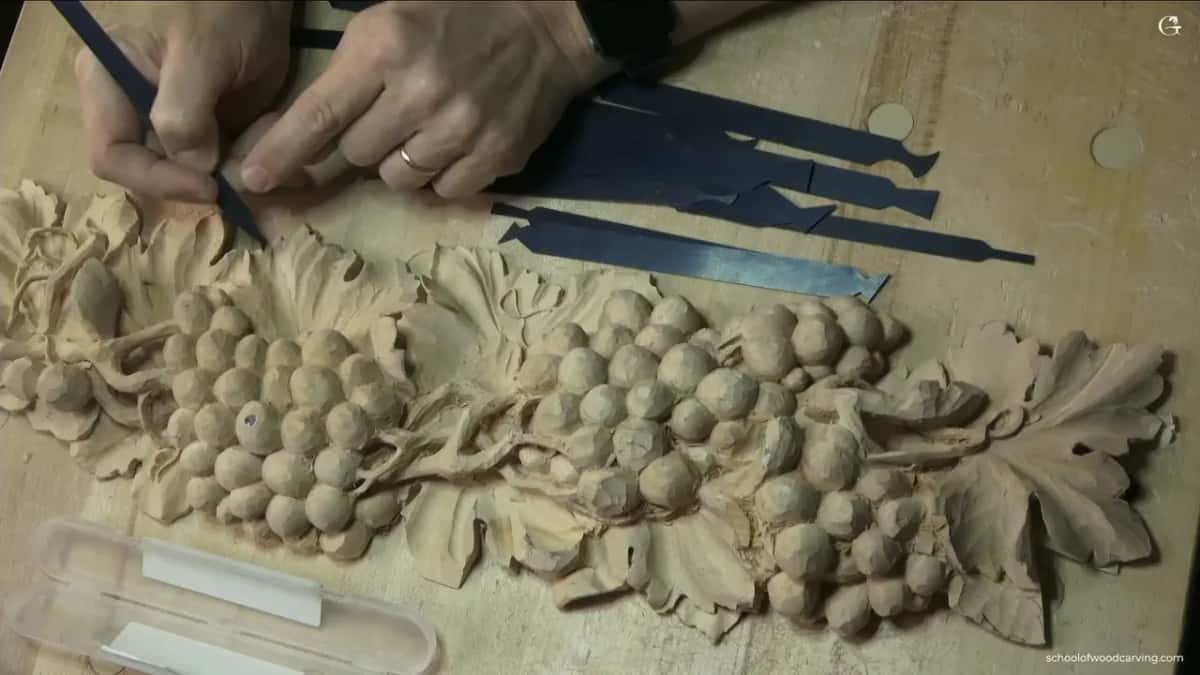
What makes them better than a cabinet scraper for our work is the profiles. Each card carries different curves on its two sides, so between twelve cards you have an edge for almost any hollow. The tiny ones reach inside areas a rectangle cannot enter. The bigger ones handle an outside curve like any ordinary scraper would.

Even on grapes, where the form is tight and rounded in every direction, one of those profiles will fit. Out of the box they are honestly not bad at all, and they do the job.

How is a scraper different from sandpaper?
A scraper cuts, and abrasive tears. One distinction, and it decides which surface you end up with. A hook slices a real shaving off the wood, thin enough to hold up to the light, and it leaves the fibres cleanly severed the way a finished surface wants before any finish goes on.

Abrasive grit does something else. It breaks fibres off at random angles and rounds over every crisp corner it touches, which on a carving is precisely the detail you spent the afternoon cutting. It also drives dust deep into open pores, and on oak that shows up later under a finish.
There is a whole separate argument about whether sandpaper belongs in carving at all, and it deserves its own lesson rather than a paragraph here. For this page the practical point is narrow: if the surface needs help, a card that cuts will treat your shapes better than a grit that abrades them.
How is the hook actually turned?
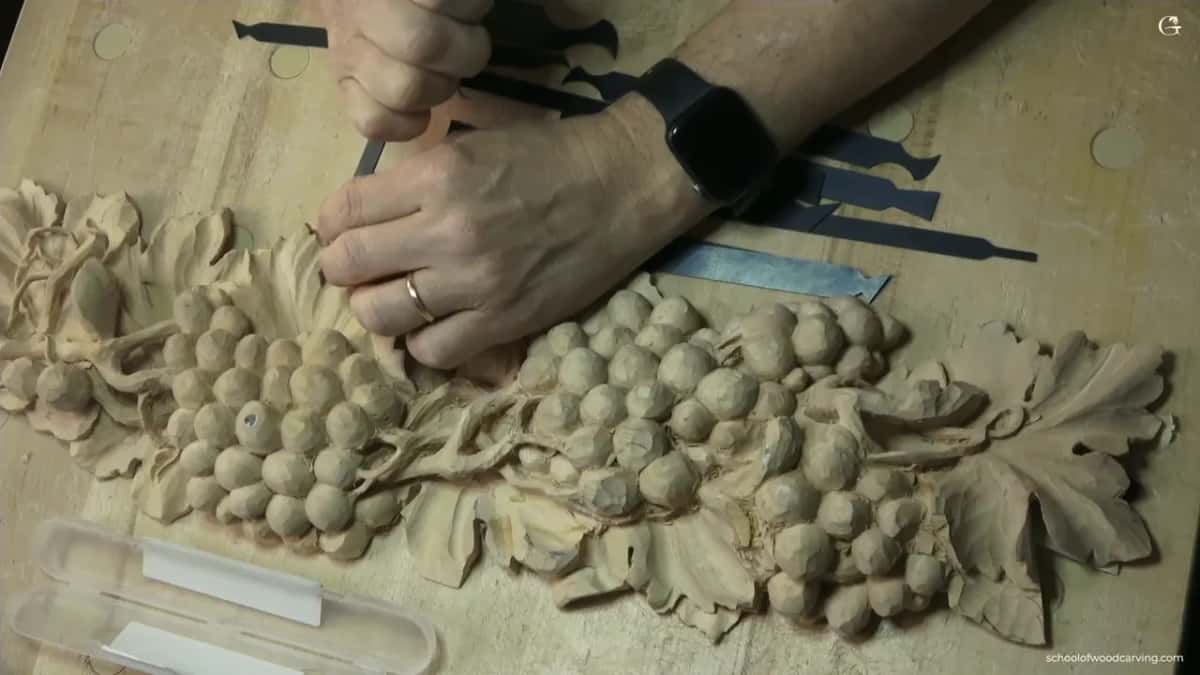
Turn a burr with a burnisher, because a scraper without a hook only polishes your patience. The hook is a fine burr rolled over so it stands slightly outward, and that lip is what actually removes wood.
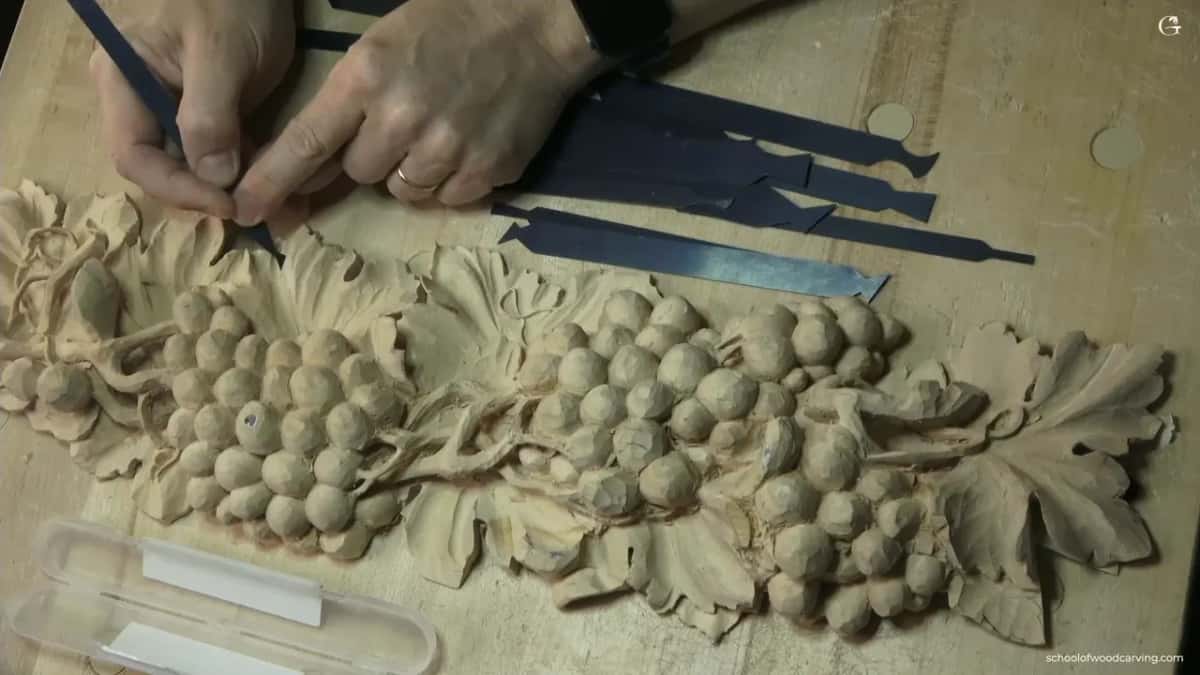
A burnisher does not need to be expensive. It does need good steel, harder than the scraper itself, or you will be pushing metal around with something softer than the thing you are trying to shape. When I have nothing better to hand I use a screwdriver shank, and it works.
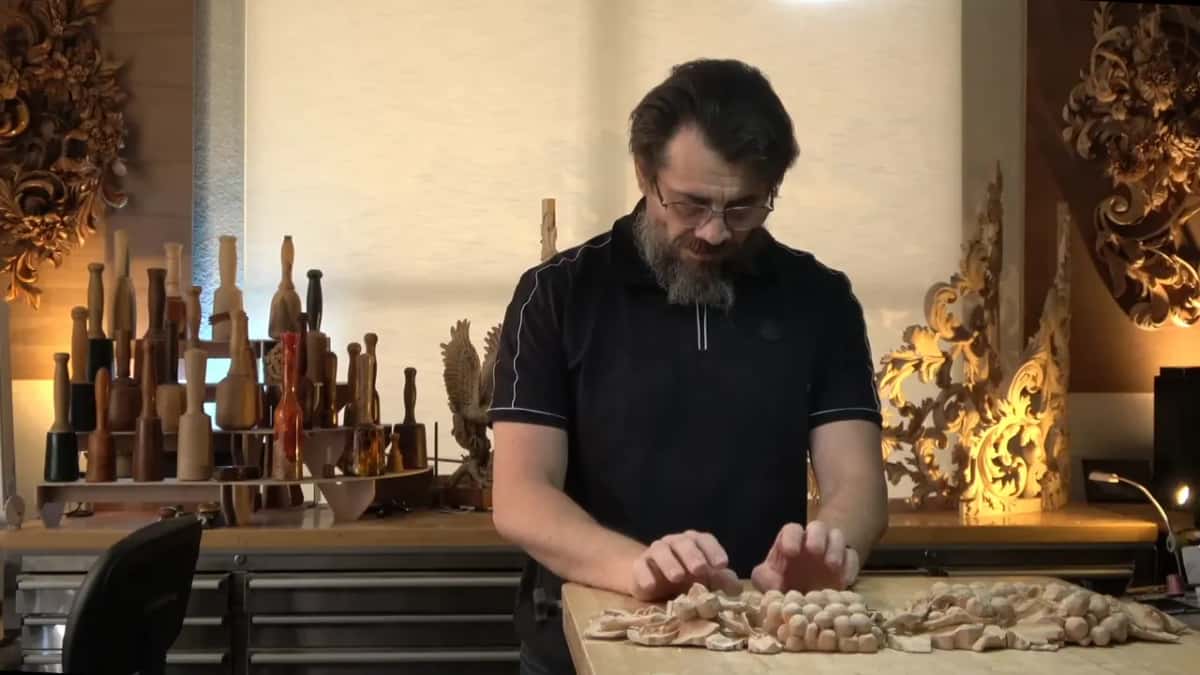
Do not hold the card in your fingers while you do it, which is what I was doing on camera and precisely what you should not copy. Put the scraper in a vise. Then push firmly down its length until you feel the burr come up under the tool.
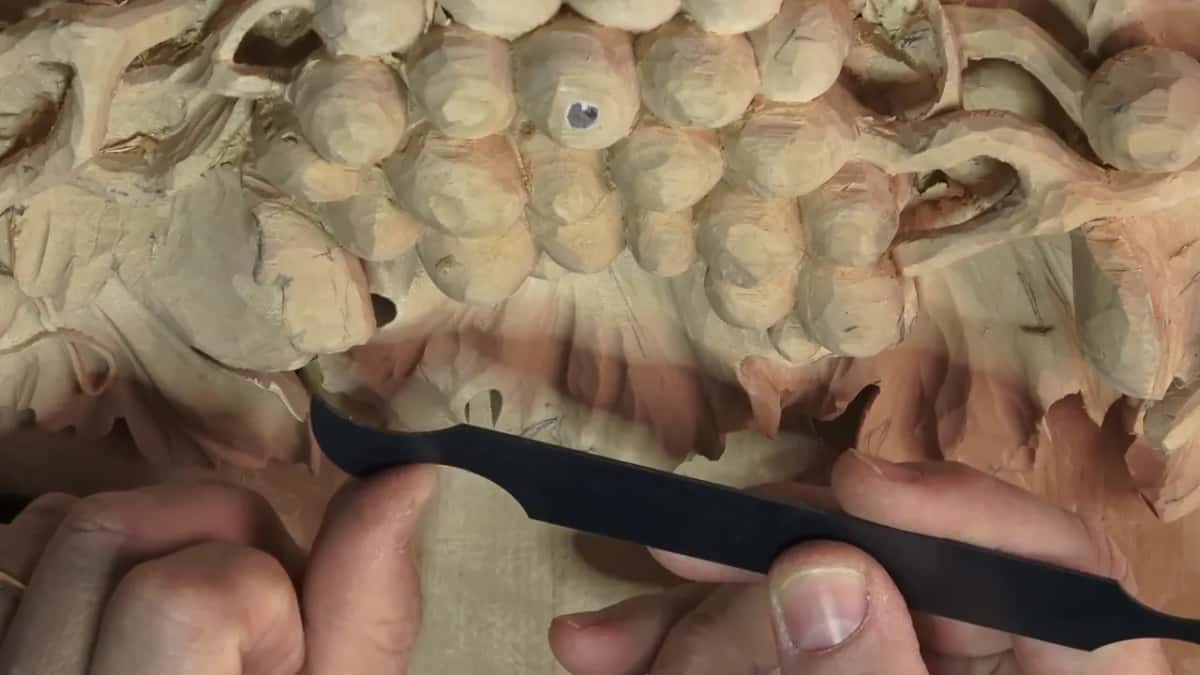
You feel it before you see it. That change under your hand is the whole signal, and it is the reason a burnisher beats any jig for this particular job.
What surface does the client actually want?
Ask before you touch anything, because I have been paid for both answers and they are not compatible. One customer wants a surface that looks smooth and finished, the sort of thing that looks like it arrived that way. Another wants to see exactly where the gouge went.

The second group is growing, in my experience, and I understand it. A machine can produce a flawless rounded form now. What a machine cannot produce is the record of a hand deciding, cut by cut, where the light should fall. Take the facets off and you have removed the evidence.
None of that is an argument against smooth work. Some pieces want it. Relief destined for gold leaf certainly wants it. The mistake is doing it by habit, on every piece, without anybody having asked.
How do you know when the hook is gone?
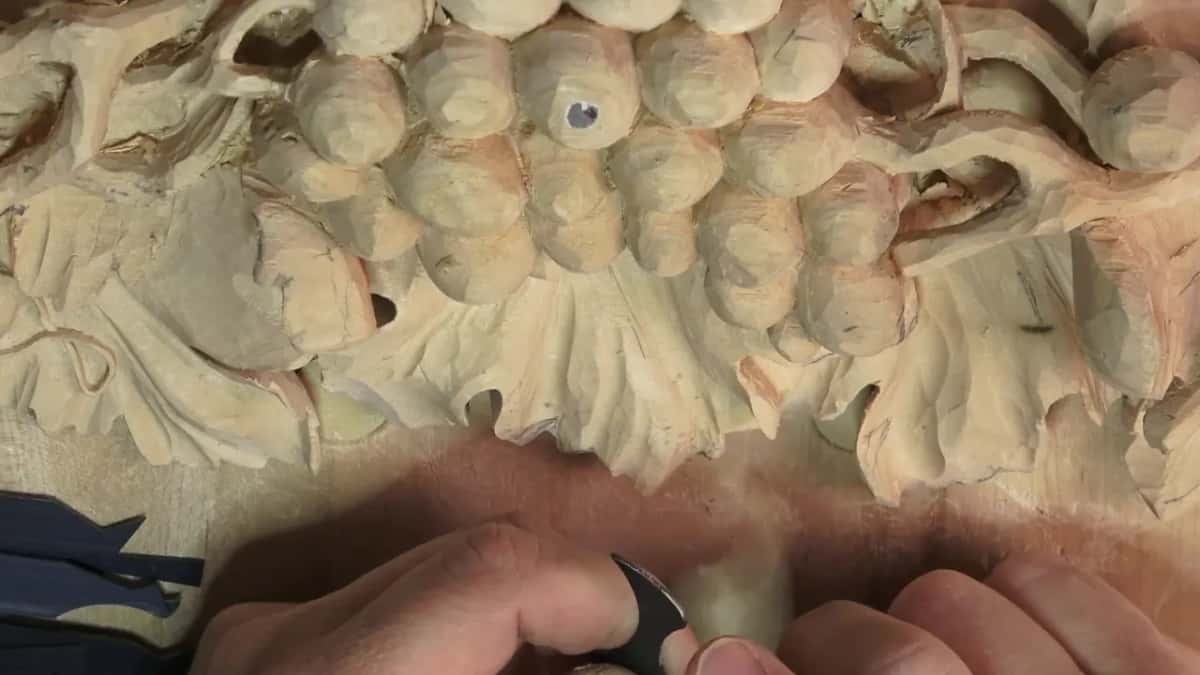
The card stops making shavings and starts making dust, and that change is unmistakable once you have felt it. A working scraper throws fine curls. A dull one pushes powder ahead of it and heats up under your thumbs.

How long a hook lasts depends entirely on the timber. Soft timber will let a card run a long time. Something hard and full of wild grain takes the edge off quickly, and there is no shame in stopping to re-turn it three times inside one session.
Re-turning is fast, and that is why the card earns its place. Back in the vise, a few passes with the burnisher, and you are cutting again in under a minute. Compare that with reshaping a bevel, which is a job you set an evening aside for and which the sharpening course covers properly.
Where does a scraper not belong?
Keep it off anything you want to stay crisp. An arris, the sharp line where two carved planes meet, is the first casualty of an enthusiastic card. So is the fine point at the tip of a leaf, and so is the edge of a rosette petal where the whole effect depends on that line staying sharp.
Undercuts are the other place to stop. Once a form has been cut back underneath to throw shadow, a scraper cannot follow it there and will only round the lip you worked to create. Leave those alone entirely and let the bent tools that made the undercut be the last thing that touched it.
Can a scraper rescue a torn surface?
Nothing replaces a sharp gouge. A card used to hide torn wood only spreads the problem thinner. Tearing comes from a dull edge, or from working against the grain. Both are fixed upstream.
Use the card for what it is: a way to take a facet down when a piece genuinely needs it. Nothing more than that, and never as a rescue. A carving that needs rescuing needed a sharper tool an hour earlier, and no amount of steel drawn over the surface afterwards puts back what a dull edge already tore out. On an acanthus over a molding, where the form runs over a curve already, that judgement gets harder and matters more. If the tool itself left that roughness, go back to the sharpening bench rather than reaching for a card, and check what the bevel is doing while you are there.
Carving is mostly a series of small decisions like this one. Leave the facet or take it down. Scrape a little or scrape none. Nobody can answer those from a distance, which is why I would rather give you the reasoning than a rule. The same judgement runs through every grape and leaf I have ever cut. If you want the reasoning taught properly, start with a course and work through a real piece.
How it's done
- Look at the carving from directly above. Facets only read properly from that angle, where each small flat catches light differently. Decide from there whether the surface actually needs work or whether you simply got used to staring at it.
- Pick the card that fits the shape. Match a profile on the card to the curve in front of you. A flat rectangle handles an outside sweep; a hollow beside a grape wants one of the small shaped edges instead.
- Clamp the card in a vise. Never turn a burr with the card loose in your fingers, which is exactly what I was doing on camera and exactly what you should not copy. A vise holds it while both your hands do the work.
- Push a burnisher along the edge. Run hard steel down the length until a fine lip rolls outward. A proper burnisher is best, though a screwdriver shank does the job when nothing better is on the bench.
- Feel for the hook. Your fingertip finds the burr before your eye does. That change under the skin is the signal that the card will now cut rather than polish.
- Take less than you think. Work the surface lightly and stop early. Facets cannot be put back, and a carving scraped into a smooth lump has lost the thing that made it look carved.
Frequently asked questions
Should you sand a wood carving smooth?
Think hard before doing it at all. Those small flats read as veins and keep light moving across a form. Many clients pay to see tool marks, so removing them can take value straight off a piece.
What is a card scraper used for in carving?
Taking ridges down. Flat cabinet scrapers have served furniture makers for generations, but carving asks for shaped edges that follow a curve instead of bridging straight across it.
Why does a scraper need a hook?
That rolled lip of steel is the part that actually cuts. Without one the card slides across the surface and burnishes it, which feels like progress and removes nothing at all.
What to carve next