
December 15, 2022 · Updated August 15, 2026
By Alexander Grabovetskiy — Master Woodcarver · Founder, School of Wood Carving · 9 min read
Is it possible to make money carving wood, and what it really pays
Key Takeaways
- Carving does not scale. A cabinetmaker builds a whole chest in the week that buys me one carved element.
- Architecture, restoration and teaching pay the rent. Shifting finished work singly feeds almost nobody at all.
- Joe builds eighteenth century reproductions for a living and still calls the carved parts the slow half.
- Price the hours, never the object.
- Work a year of paid evenings before quitting anything, and you end that year holding arithmetic instead of a feeling.
You can make money carving wood, and it will be slow. Carving eats hours the way furniture making never does, so the whole question is whether somebody will pay for those hours. One room I carved took me three years. That is the honest shape of this trade.
I am going to answer this the way I would answer it at a bench, not the way a business article answers it. There is money in carving. Not much of it arrives quickly, because carving quickly does not exist.
Below is where the money actually comes from, what it pays against the hours, the four questions to ask yourself before quitting anything, and the mistake almost every beginner makes when they try to sell.
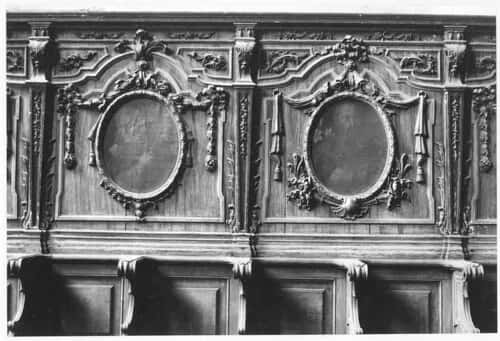
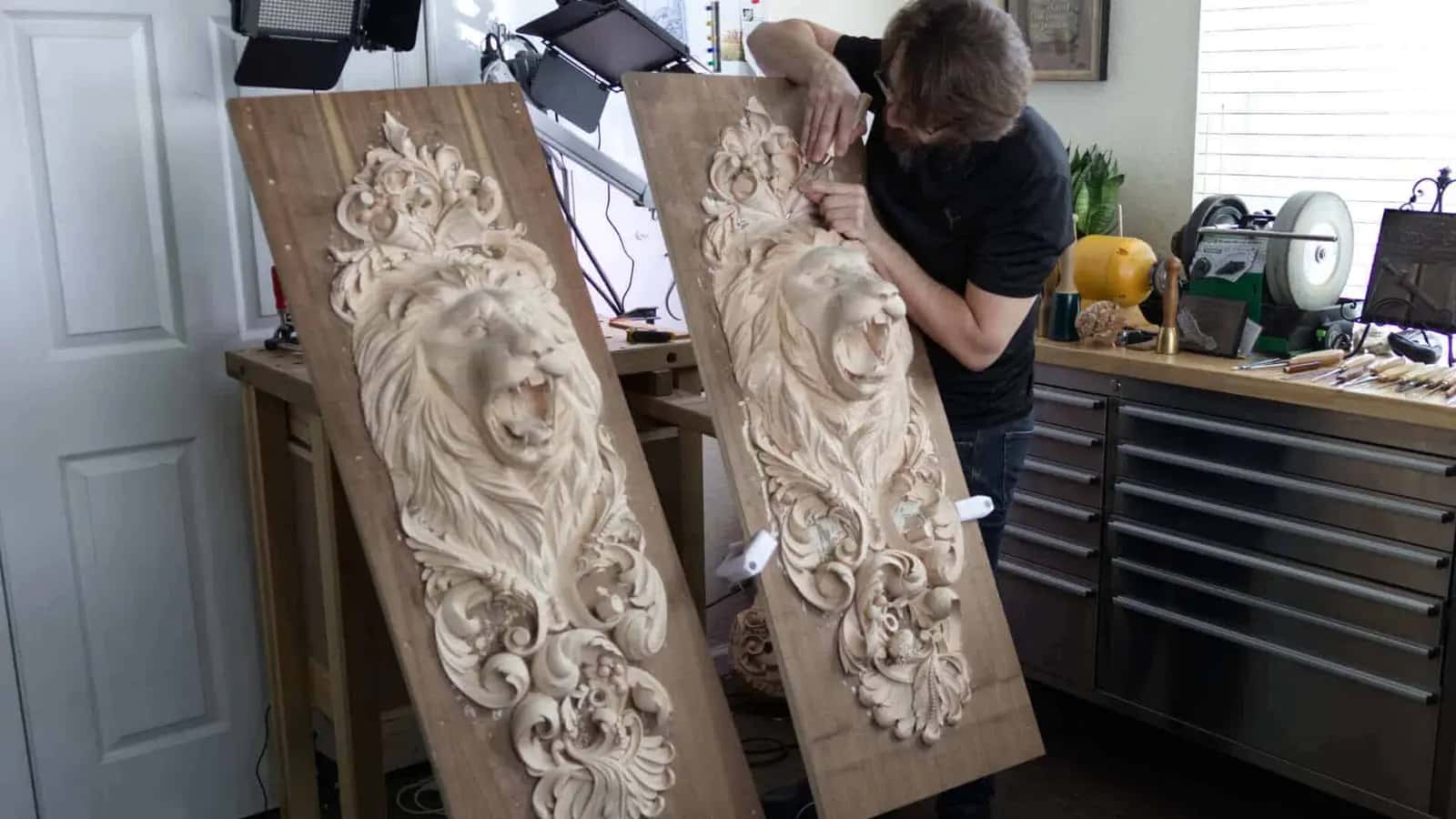
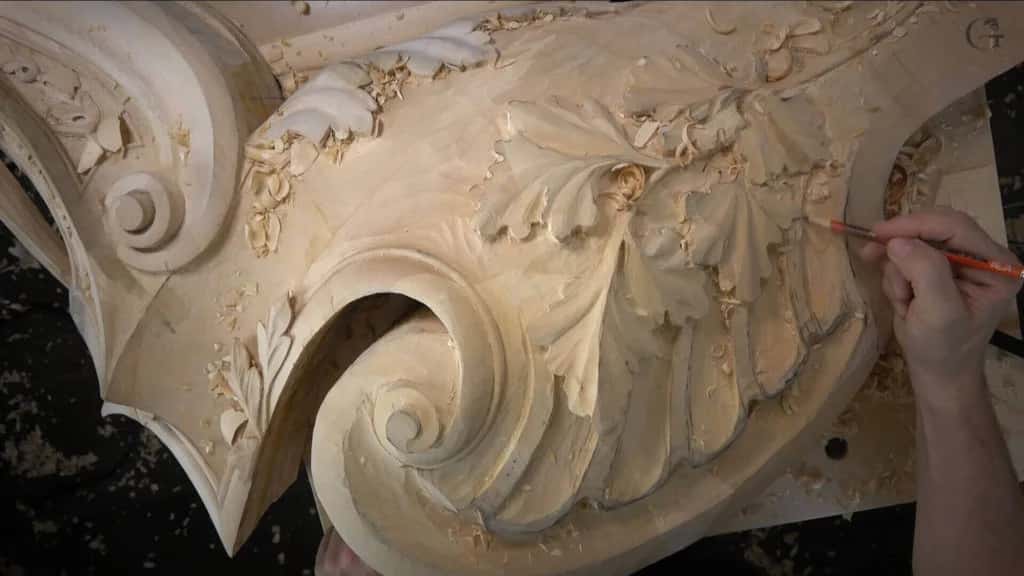
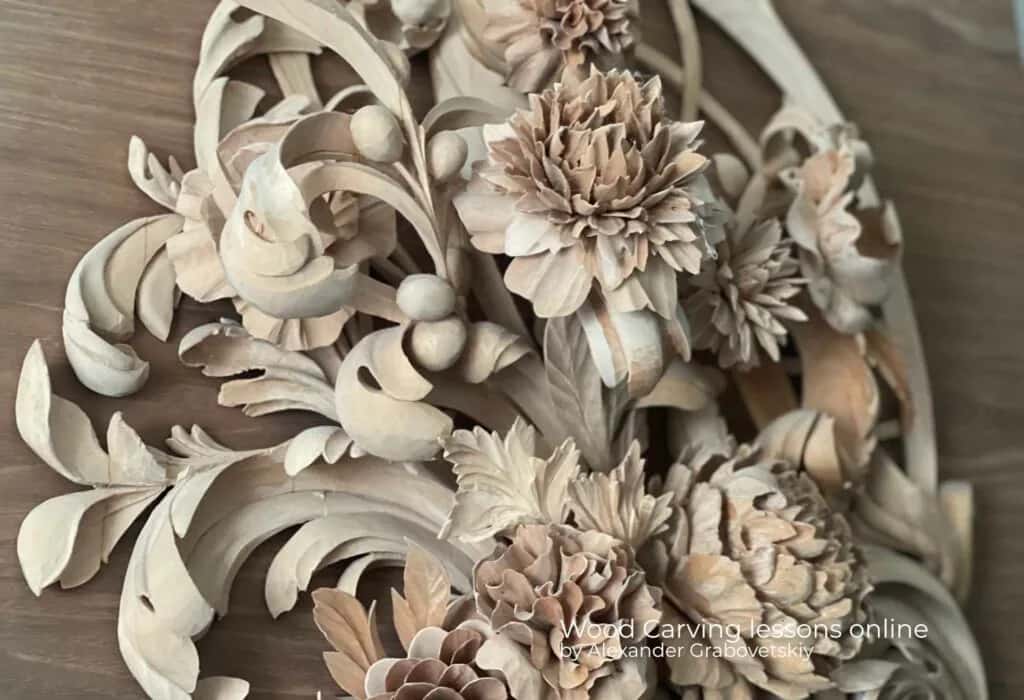
Somebody was paid to carve every inch of that. The trade long predates the question.
Can you really make a living carving wood?
A living is there, and almost nobody earns it by selling carvings singly. The men I know who live on this are doing architectural work, restoration, or teaching, usually two of the three.
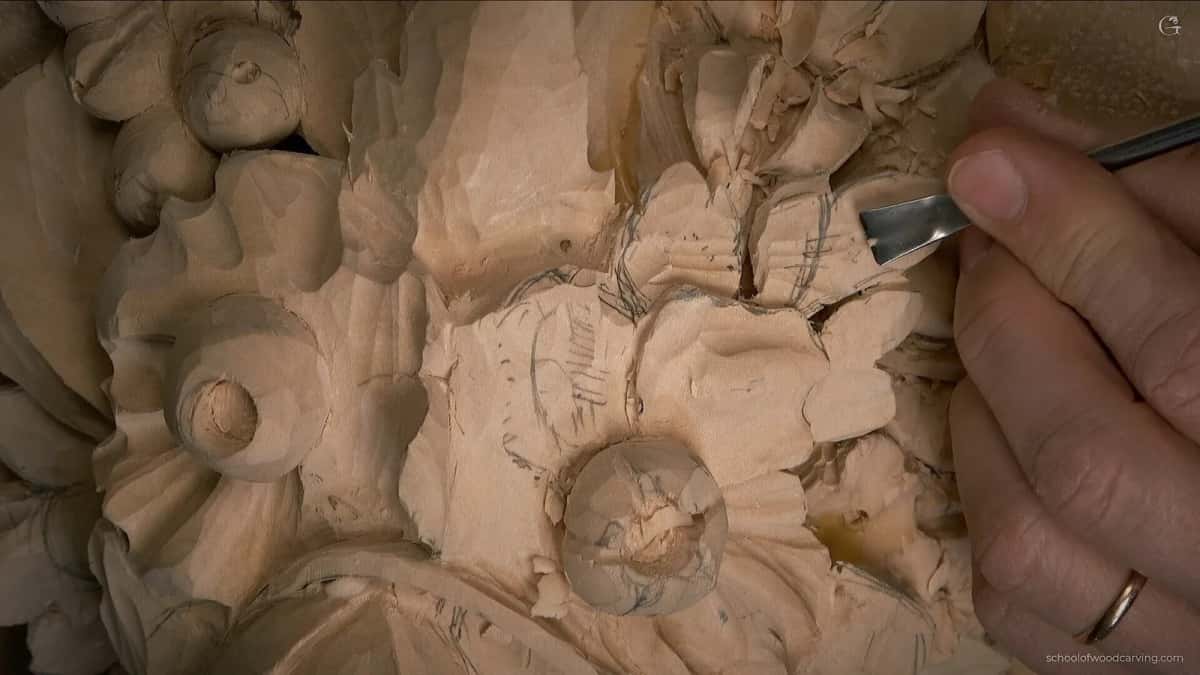
Here is the arithmetic that decides everything. A cabinetmaker builds a chest in a week, start to finish, drawers and all. That same week buys me one carved element, sometimes less. Furniture scales, carving does not, and every business plan that ignores this fails in about a year. Wood carving has always been priced by the hour for that reason.
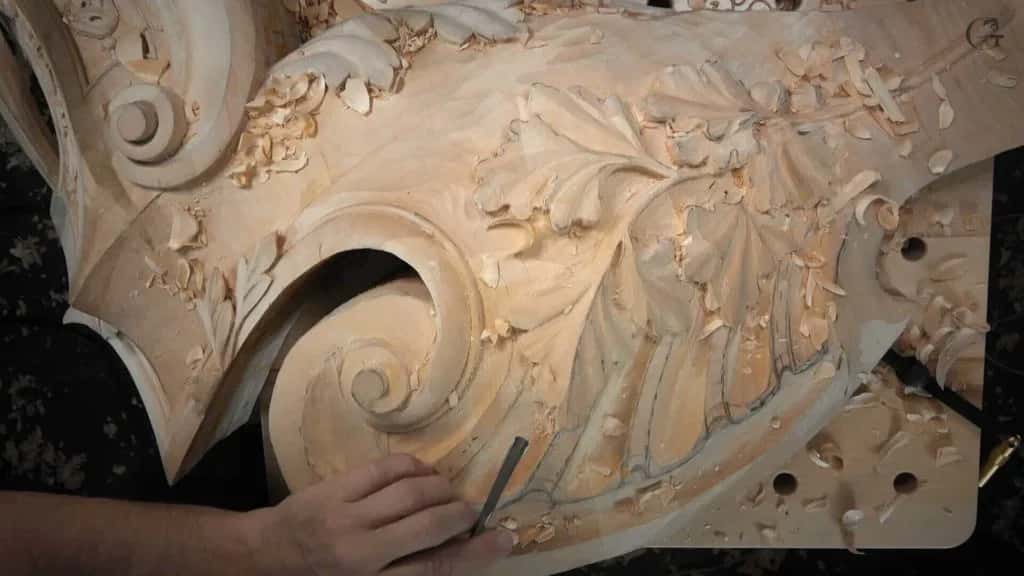
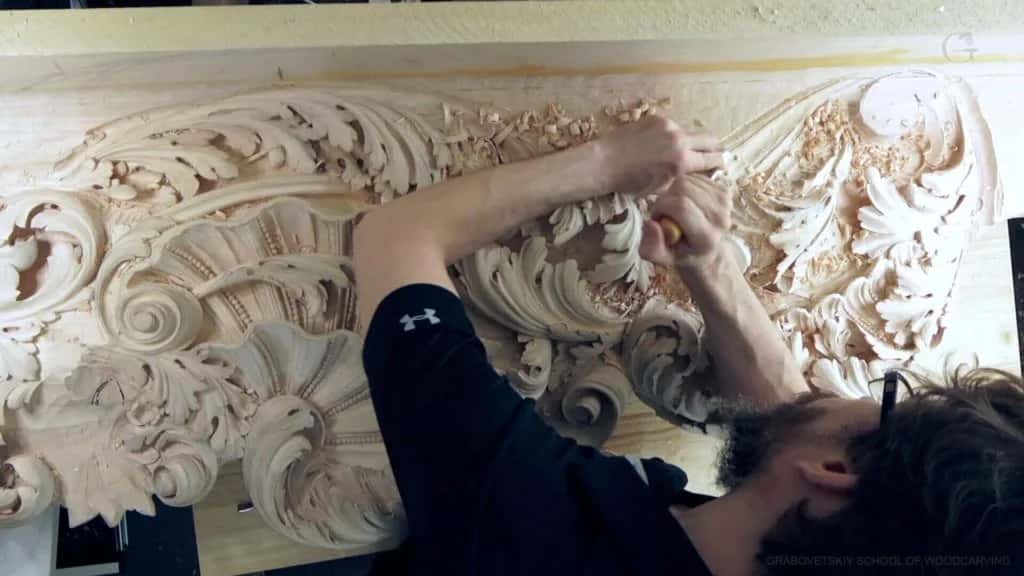
My Venice room makes the point better than I can. Started in 2019, finished in 2022. Almost three years, and I will tell you something the brochures leave out: long stretches of it were repetitive and dull. Same leaf, same depth, forty more times. Repetition is the job.
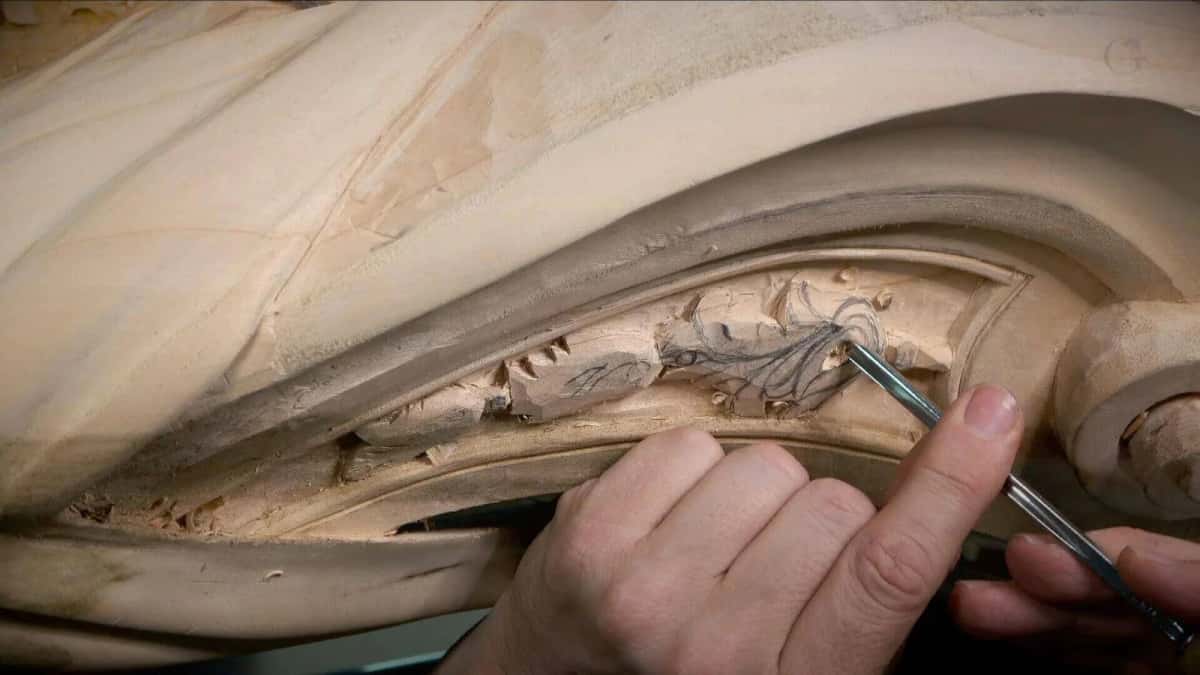
Where does the money in wood carving actually come from?
Architecture, restoration, furniture makers who cannot carve, and teaching. In roughly that order, and the last one is steadier than the rest.
| Source of work | What the client is really paying for | How steady | What the work demands of you |
|---|---|---|---|
| Architectural commissions for buildings | Something that no machine will ever make for them | Lumpy but large | Drawing, scale, and a real deadline |
| Restoration and repair | A missing piece that nobody can tell apart | Fairly constant | You match another carver, not yourself |
| Carving for other furniture makers | The one part of the job they cannot do | Word of mouth | Fitting yourself into somebody else's timetable |
| Teaching the craft | All of your years, compressed into a single week | Steadiest income | Patience, and being able to explain |
| Selling your own work directly | An object that they just happened to fall for one day | Very unreliable indeed | Marketing skills that most carvers plainly lack |
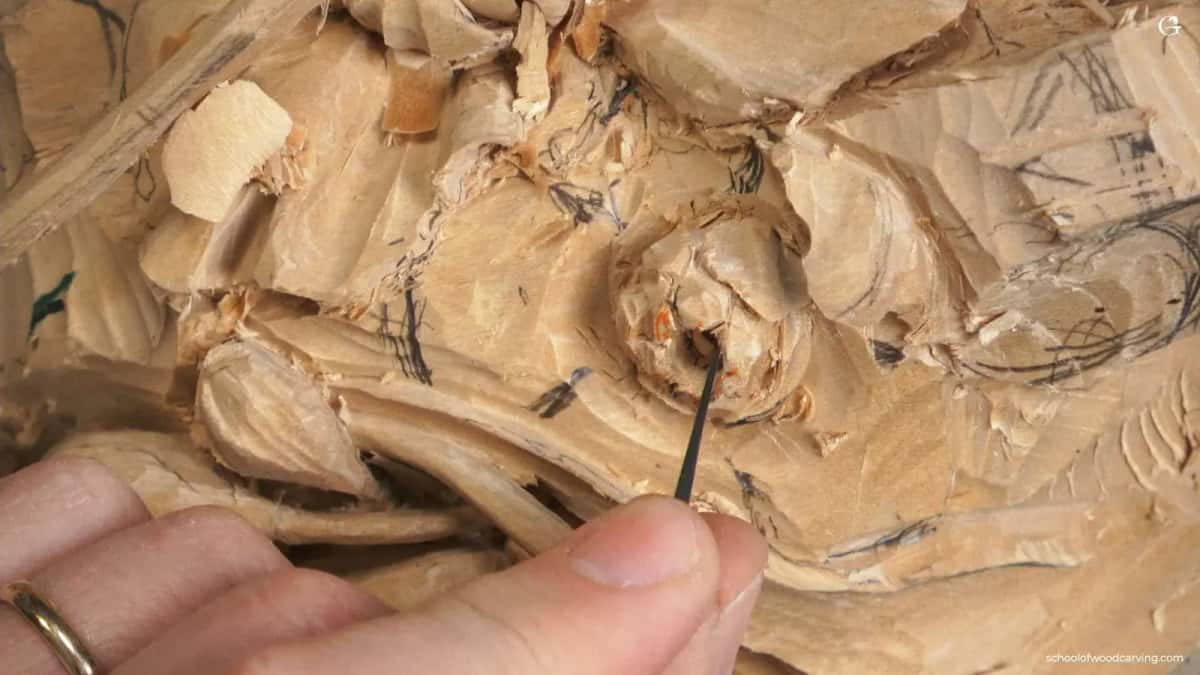
Look at the bottom row honestly. Shifting your own work piece by piece is the road every beginner pictures, and the one that feeds almost nobody. The top of the table is where rent gets paid.
How long does a carving take, really?
Longer than your client thinks, and longer than you thought when you quoted it. This single miscalculation ends more carving businesses than bad carving does.
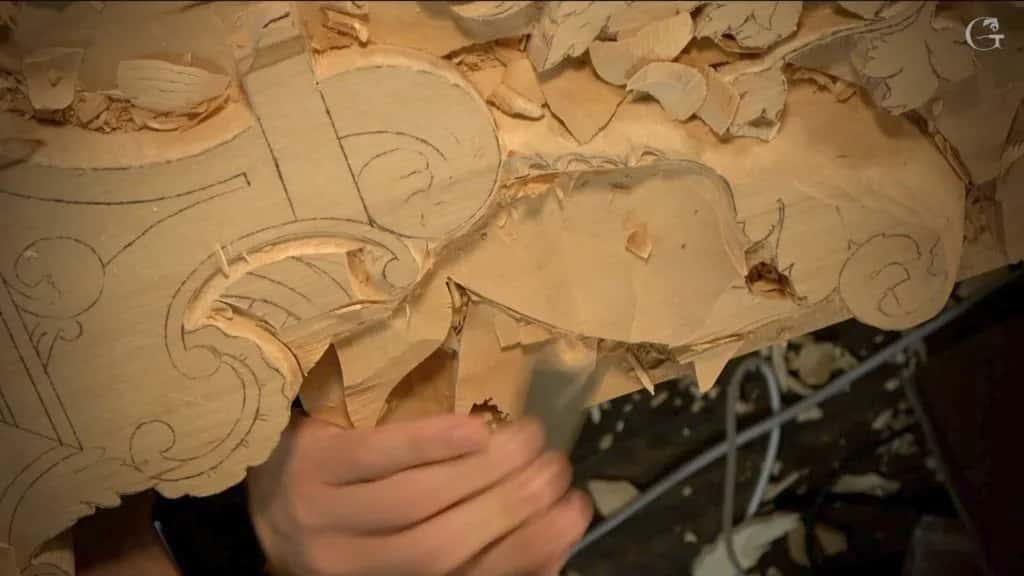
Let me tell you about Joe. I was teaching at Marc Adams School of Woodworking in 2022 and one man in the room built furniture for a living, period reproductions in the eighteenth century manner. Genuinely good work, the sort of thing Fine Woodworking prints.
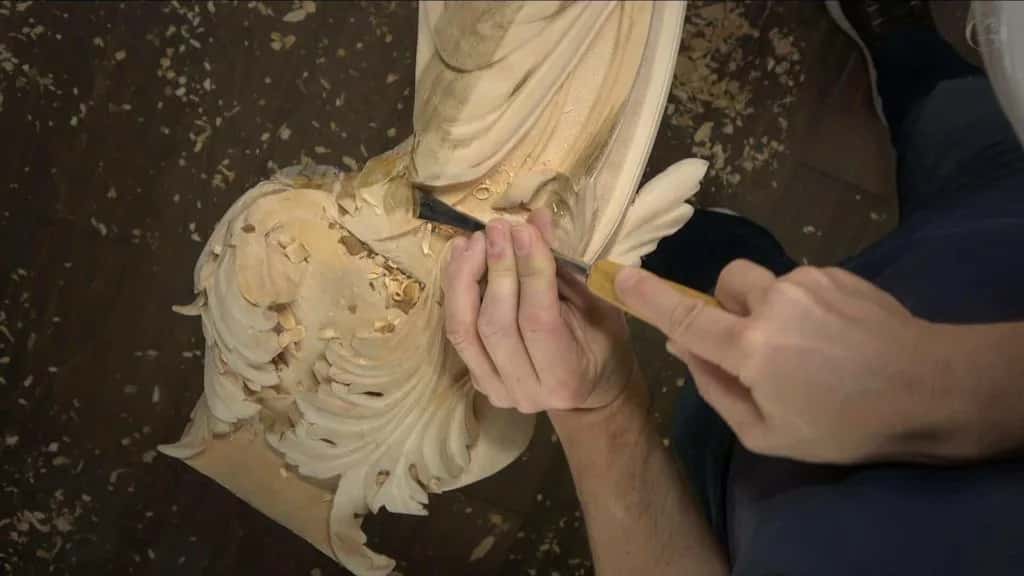
Joe showed me photographs of a piece and said, this is not my woodworking project, it is my woodcarving project. I asked why. He said it took so long to carve that building the whole rest of the furniture was easier.
I looked again and recognised the style of the ornament. I said the ornament looked like Mary May's drawing, and asked whether he had taken it from her site. He said yes.
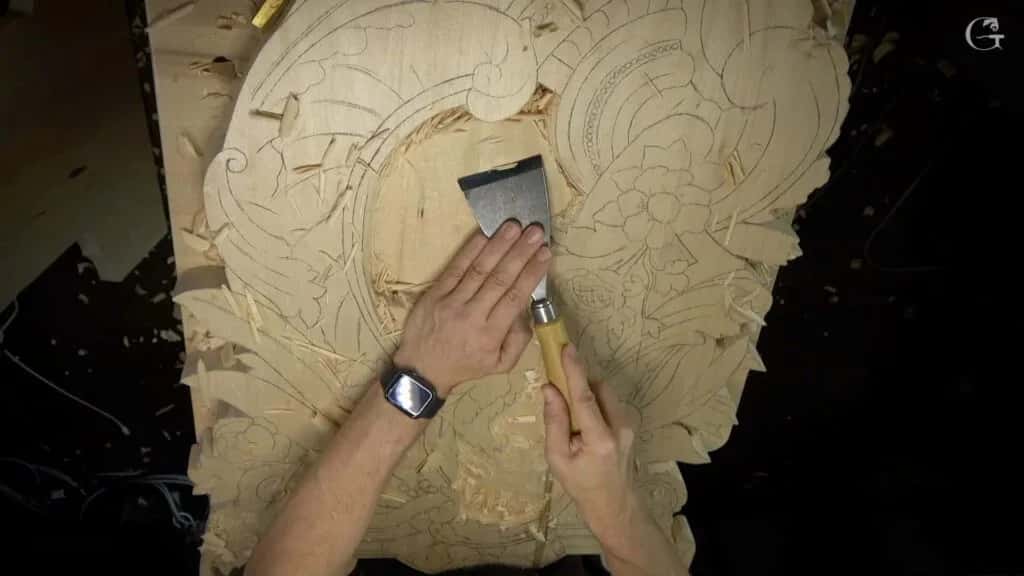
A professional furniture maker, decades at the bench, and the carved embellishments still swallowed more of his week than the cabinet did. Believe him rather than me.
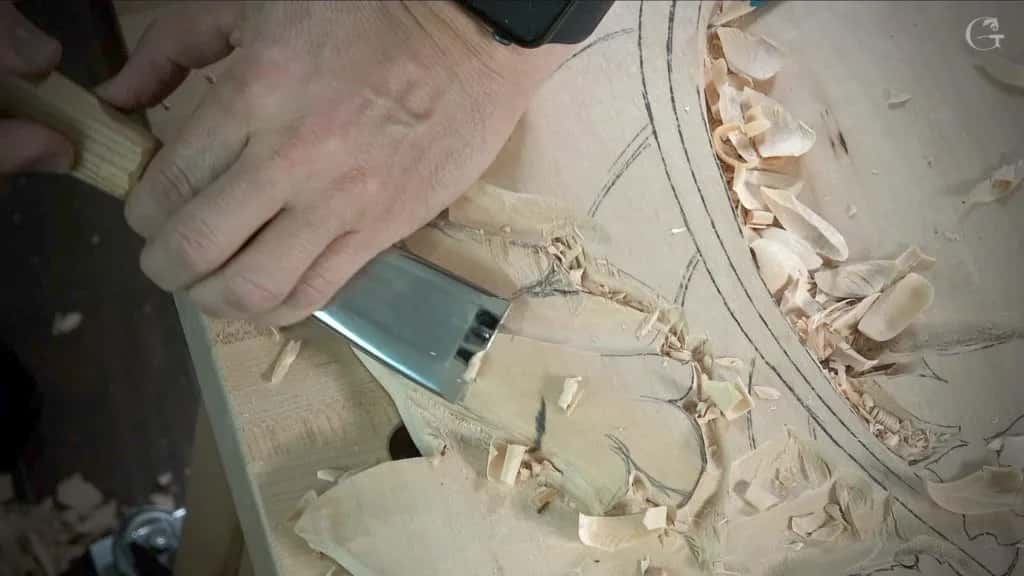
Are you good enough to sell your carving yet?
Probably not yet, and there is nothing shameful in that. Beginner work sells exactly twice, to people who love you, and then it stops.
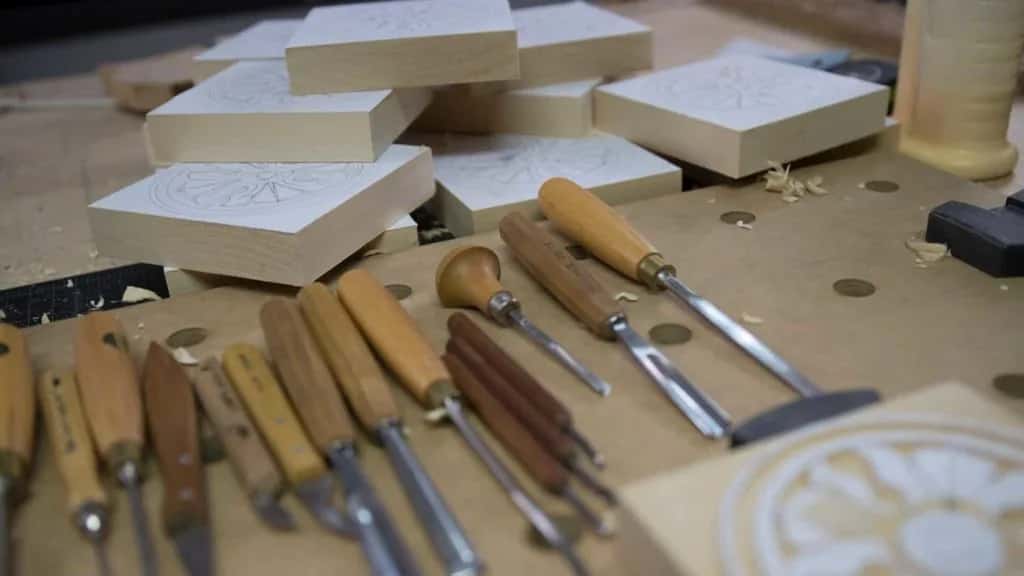
Be hard with yourself here. Your family will praise a panel that a professional would not accept, and they are not lying to you, they simply cannot see what is wrong. Depth is usually what is wrong. Beginners carve everything at one level and the piece reads flat from six feet away.
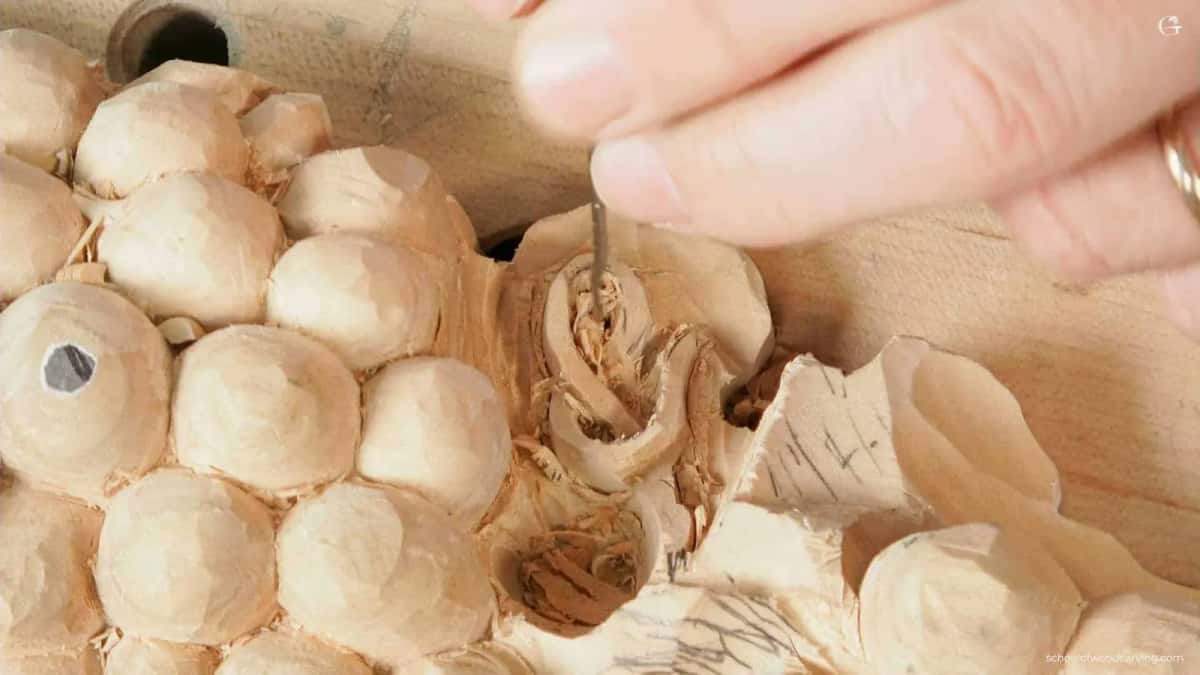
Get one honest opinion from somebody who carves for money. Not a friend. A carver. It will sting for an afternoon and save you a year. I go into what separates the two levels in whether carving is hard to learn.
How do you price carved work without starving?
Count the hours honestly, then price the hours, and never price the object. Every carver who prices by the object goes broke slowly and blames the market.
Step 1, carve one sample and time it properly
Not an estimate. A clock. Carve the element, write down the real number, and include sharpening, setup, and the half hour you spent staring at it deciding where to begin.
Step 2, decide what your hour is worth
Pick a number you could live on and say it out loud without flinching. Woodcarving Illustrated prints what others charge. If saying it makes you uncomfortable, that discomfort is the actual problem and no pricing formula fixes it.
Step 3, add the wood, the tools and the failures
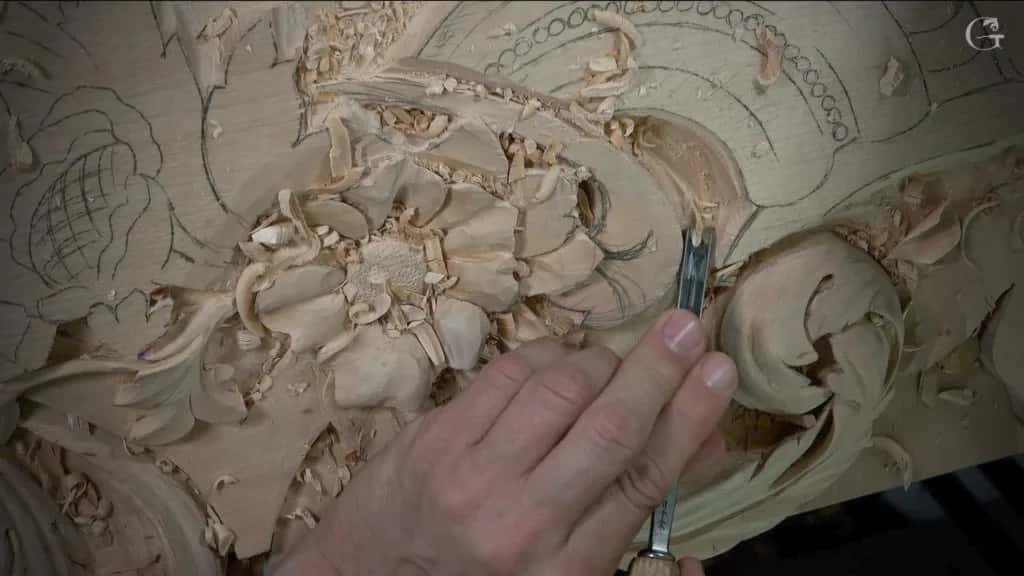
Basswood is not cheap, gouges wear, and one piece in ten splits or goes wrong. That tenth piece is a real cost and it belongs in the price of the other nine.
Step 4, quote the whole number and stop talking
Say the figure. Then be quiet. Carvers lose money in the silence after a quote, apologising and discounting to a client who had already decided to say yes.
Step 5, take a deposit before a chip comes off
A third up front is normal in this trade and protects you from the client who changes his mind in month two. Anybody who refuses a deposit is telling you something useful for free.
What kind of carving sells best?
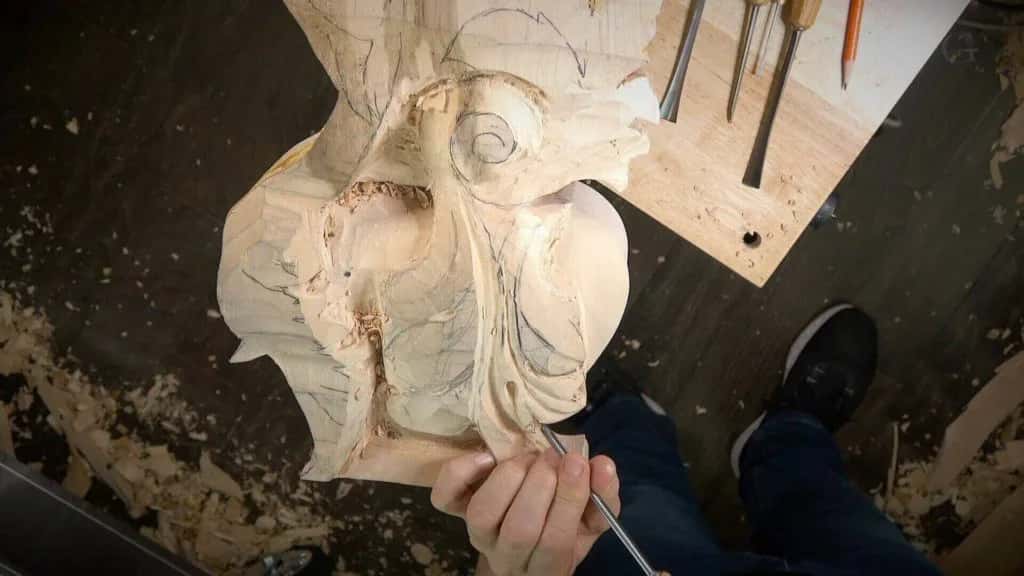
Work that somebody needs rather than work somebody admires. A missing rosette on a client's mantel is a need. A carved eagle you made on spec, hoping somebody walks past and wants it, is not.
Restoration is the clearest example. An old house loses one element off a staircase and there is exactly one way to fix it. Conservation practice is clear about replacing like with like. No machine copies a hand carved original well enough to fool anybody who looks twice, whatever a CNC router salesman promises, and the person paying already knows that.
Next comes ornament for furniture makers. They can build anything and many of them cannot carve, so a reliable carver who hits a date becomes part of their business. Joe found that out in reverse.
Classical vocabulary is what makes you useful for both. Acanthus, rosettes, egg and dart, the Grinling Gibbons manner of foliage. Learn those and half the architectural work in the country becomes something you could quote on. My acanthus course and the antique rosette are where that starts.
What should you do before quitting your job?
Carve for money on evenings and weekends for a full year first. A year tells you what a month of enthusiasm never will.
I built a woodworking company in Michigan and Indiana before I carved full time, and I only sold the machinery when master friends told me plainly that thousands of men can build cabinets and very few carve like this. That was a decision made on evidence, not on hope.
Keep a real record for that year. Hours carved, money in, wood bought, jobs turned down. At the end you will have arithmetic instead of a feeling, and arithmetic is what you need when you tell your family what you are about to do.
And learn the design half while you wait. Tool control gets you hired once. Knowing why a leaf turns where it turns gets you hired again, which is the whole difference between a job and a trade. The design course exists for exactly that, and there is more in what to carve as a beginner and how long learning takes.
Read what other people did with it on the reviews page, and the whole catalogue sits on the course list. Dates for bench weeks are on the in person page.
So. Do you want to sell a carving, or do you want the skill that makes people come looking for you? Tuition here also feeds orphans and widows, because this is a 501(c)(3) school. Begin here, whenever you are ready.
Frequently asked questions
How much can a professional wood carver earn?
It varies more than almost any trade, because it depends entirely on whether you hold architectural or restoration clients or are selling pieces singly. Carvers with steady building work and teaching income do fine. Carvers relying on craft fairs mostly do not, and I have watched several of them stop.
Is wood carving a realistic full time job?
For a small number of people, yes, and nearly all of them combine two income streams. Commissions plus teaching is the common pairing. Relying on one alone leaves you exposed the first quiet quarter, and quiet quarters arrive.
How do I find my first paying carving client?
Go to furniture makers and restoration contractors, not to the public. They already have the clients. One reliable carver who hits a deadline becomes part of their business very quickly.
Should I sell on Etsy or at craft fairs?
You can, and understand what you are choosing. Both reward small quick items, which is the opposite of what carving does well. Many good carvers try this route, find out their hourly rate is dreadful, and move toward commissions instead.
How long before my carving is good enough to sell?
Two years of steady work before the quality holds up to a paying stranger, in my experience of watching students. Some get there sooner. Anybody who tells you six months is either unusually gifted or has not yet met an honest critic.
Do I need a business licence and insurance to carve for money?
Rules differ by state and by country, so ask locally rather than trusting anything you read online, including this. What is universal is a written agreement with the client covering price, timeline and deposit. Verbal agreements end carving businesses.
Filed under