
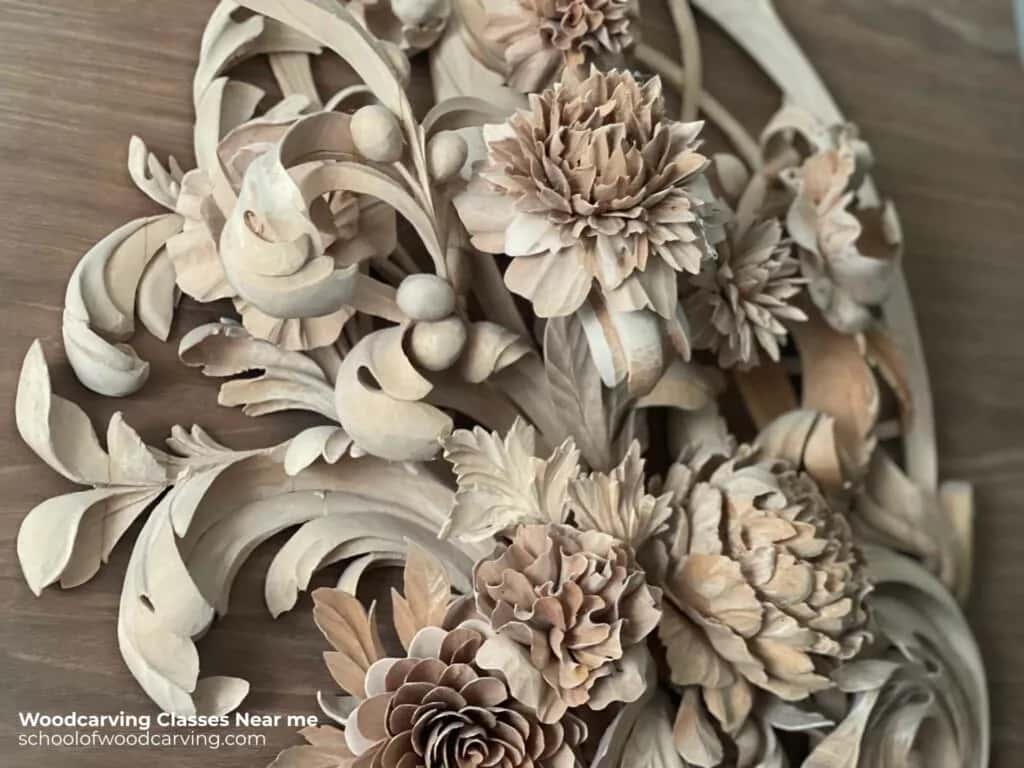
February 22, 2023 · Updated August 15, 2026
By Alexander Grabovetskiy — Master Woodcarver · Founder, School of Wood Carving · 12 min read
Carving wood wall art that reads from across the room
Key Takeaways
- Hold a paper mock against the plaster before you buy the board. Almost nobody guesses right the first time.
- A lamp carried around after dark tells you more about placement than a tape measure ever will.
- Ornament for a corridor answers to whoever walks past it, so plan for the angle they arrive from and not for a straight view.
- Shallow relief dies under a ceiling fixture. Dig the ground down and let the undercut do your arguing.
- Steam, grease and low sun each ruin a panel slowly, which is one reason a hallway beats a shower room.
Carving wood wall art is a size and light problem before it is a carving problem. The wall decides how big the piece has to be. The window decides which way every shadow falls. Get those two wrong and the finest leaf you ever carved will vanish from ten feet away.
I grew up in the Soviet Union. Same furniture in every home, same dining table, same chairs. Even the thing hanging over the bed was the same thing.
My uncle Yuriy and aunt Valya had a condo unit with plumbing and we did not, so my brother Volodya and I walked over every week to take a bath. Their son Slava had a small bedroom. Above his bed hung a piece of carved wood, white strokes on a black ground, nothing clever about it at all. I stared at that panel every week while I waited my turn, and it is the reason I became a carver.
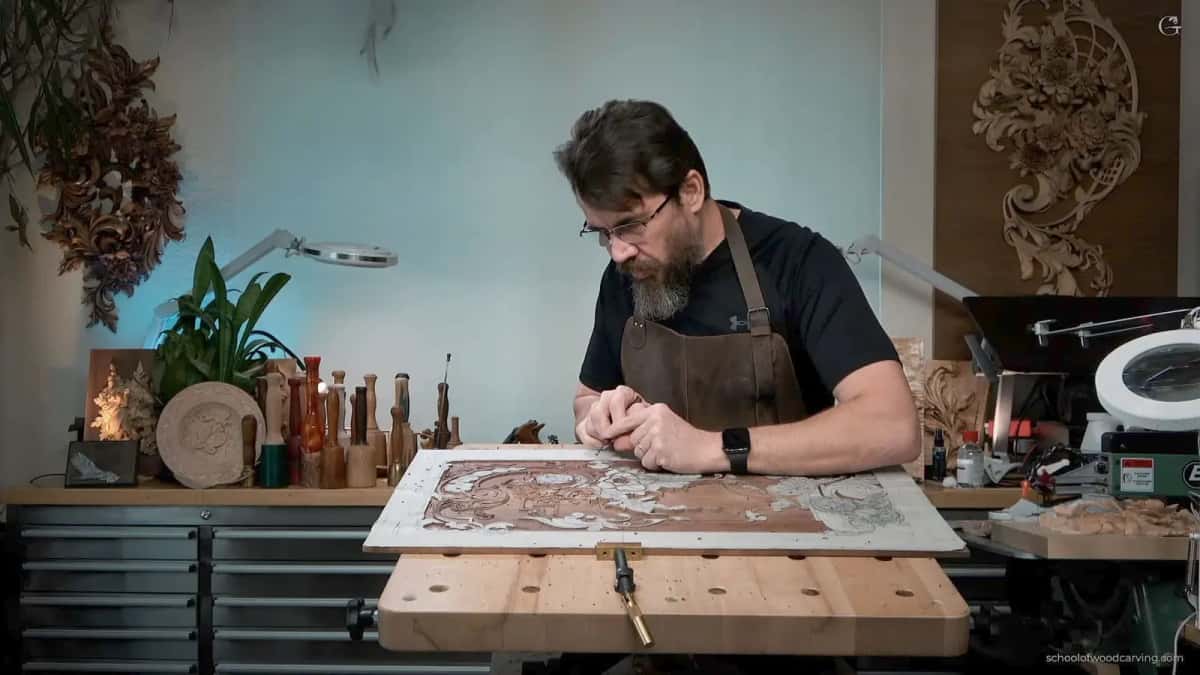
We ended up in Florida in a house with white walls in every room. The powder room had been painted red, then painted white over the red, and the red bled through anyway. My wife put it to me straight. She wanted to know why everybody else got a carved panel and we got drywall.
She was right. Forty years covering other people's walls and my own were bare. So I started thinking about our living room the way I think about a commission, and that is what this post is.
How big should a carved panel be for the wall behind it?
Bigger than feels comfortable, and measured against the wall rather than against your bench. A piece looks enormous clamped down in front of you and turns into a postage stamp the moment it goes up.
| The piece | Where it actually earns its place | How deep | How it goes wrong on you |
|---|---|---|---|
| Rosette, six inches square | Beside a door, or repeated along a run | A quarter inch | Floated alone on a wide empty wall |
| A panel about two feet across, give or take | Over a fireplace | Half an inch, sometimes rather more | Hung so high the room sees only its underside |
| Garland, or a hanging drop | The narrow strip between two tall windows | Three quarters, or more | Made wide when the wall really wanted it tall |
| Full height paneling | A whole wall, and then two more walls | An inch and upward, honestly | Two years |
| Molding over a doorway | Above head height, and always seen from below | Deep along its lower edge | Carved flat, so it reads as nothing |
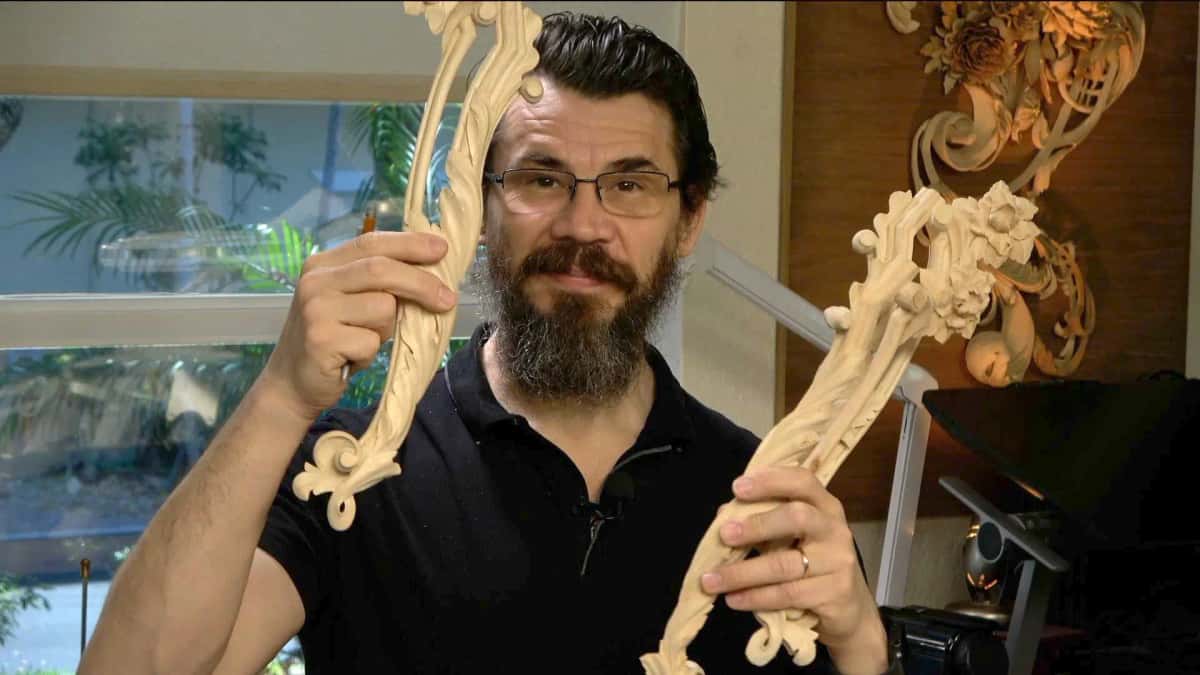
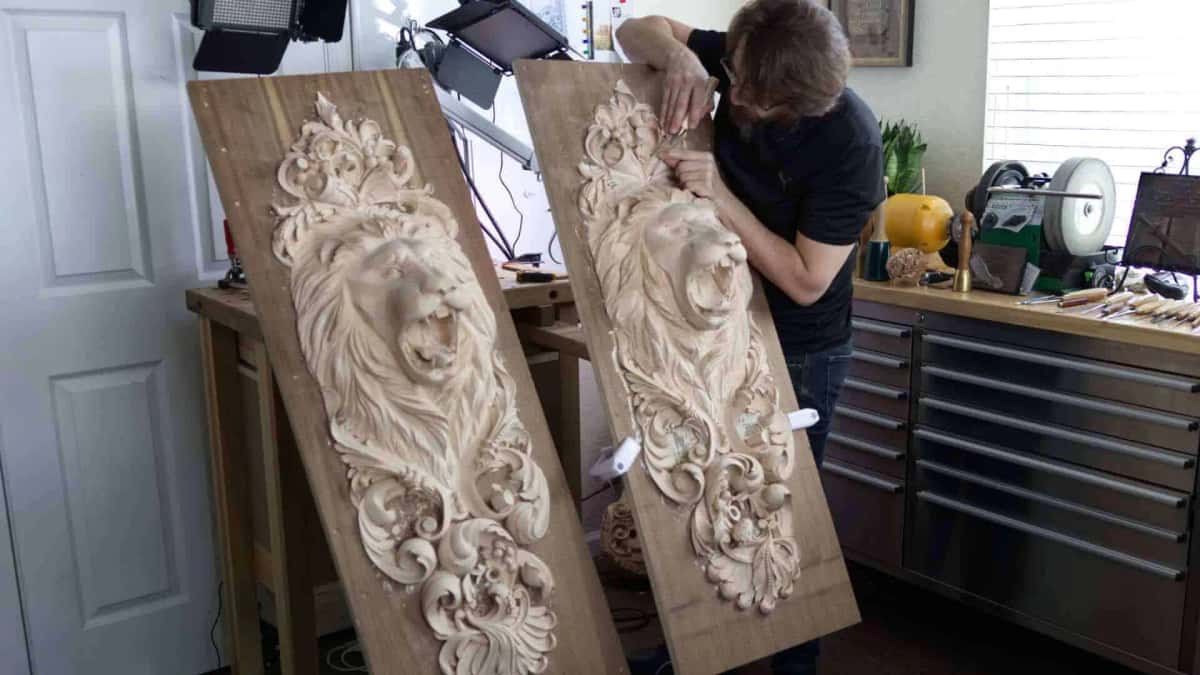
Those two lion panels standing on the trestles are taller than my bench and they looked absurd in the shop. On a wall they were about right, which is the whole lesson in one photograph.
The worst version of this mistake I ever watched was not mine. A designer on the Venice room wanted something modest for walls that ran ten feet up to the ceiling. I asked her why not plaster then, and the answer came back that the client wanted solid wood because of how it feels in a room. Fine. Then every panel goes floor to ceiling. Three walls of it and part of a ceiling, in limewood, the same timber the original Venice shops used, on a design out of the end of the fifteenth century. Two years of my life.
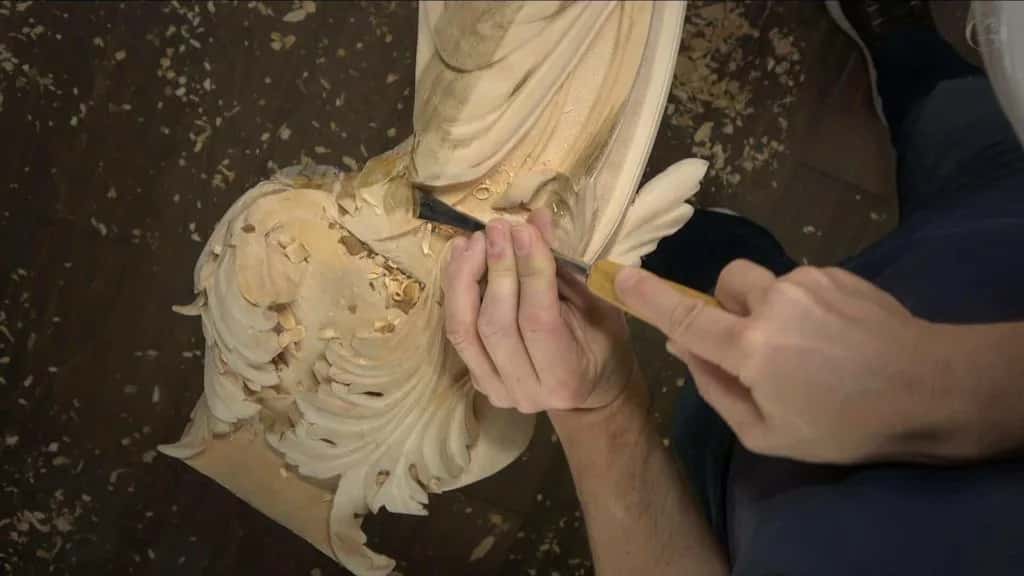
In workshop 65 of the Venice room course I turned the camera sideways so people could see what they were actually looking at. "I want to show you just to feel the scale of this work, how big that piece is." You cannot judge scale from a video and you cannot judge it from a bench either. Hold cardboard up on the wall first.
Which wall in the room should it hang on?
The wall the light crosses, never the wall the light hits square on. Face a carved panel into a window and you flatten it. Turn it ninety degrees to that same window and the thing wakes up and starts throwing shadow at you.
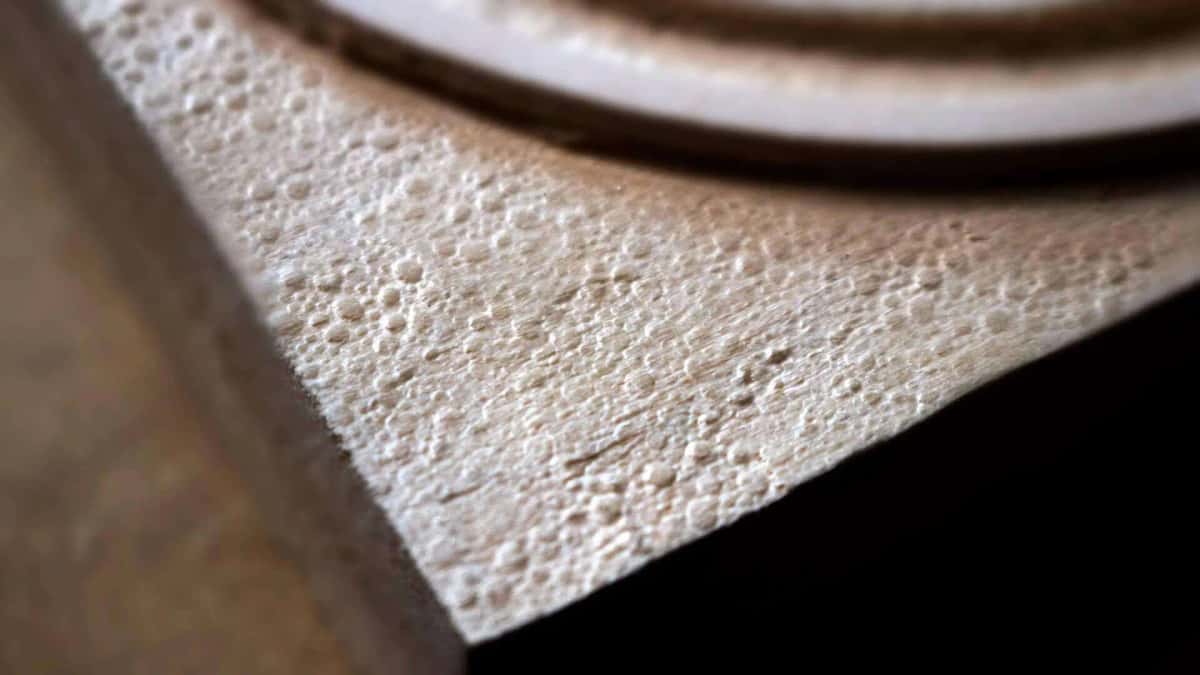
Every hollow you open is a little bowl that holds darkness. Light arriving flat across the surface fills one side of each bowl and leaves the rest black. Straight on, the same light fills every one of them, and your panel turns into a photograph of itself.
I say this in class more than people want to hear. Finishing a leaf in the Roman acanthus course I stopped talking and moved the lamp around instead, because it explains itself better than I do. "different light angles, so it just creates beautiful shadows."
Do that in your own living room tonight. Switch off the ceiling fixture, walk a table lamp along the wall you have in mind, and watch where the shadow runs longest. That is your wall.
Why does a carved panel look flat from the sofa?
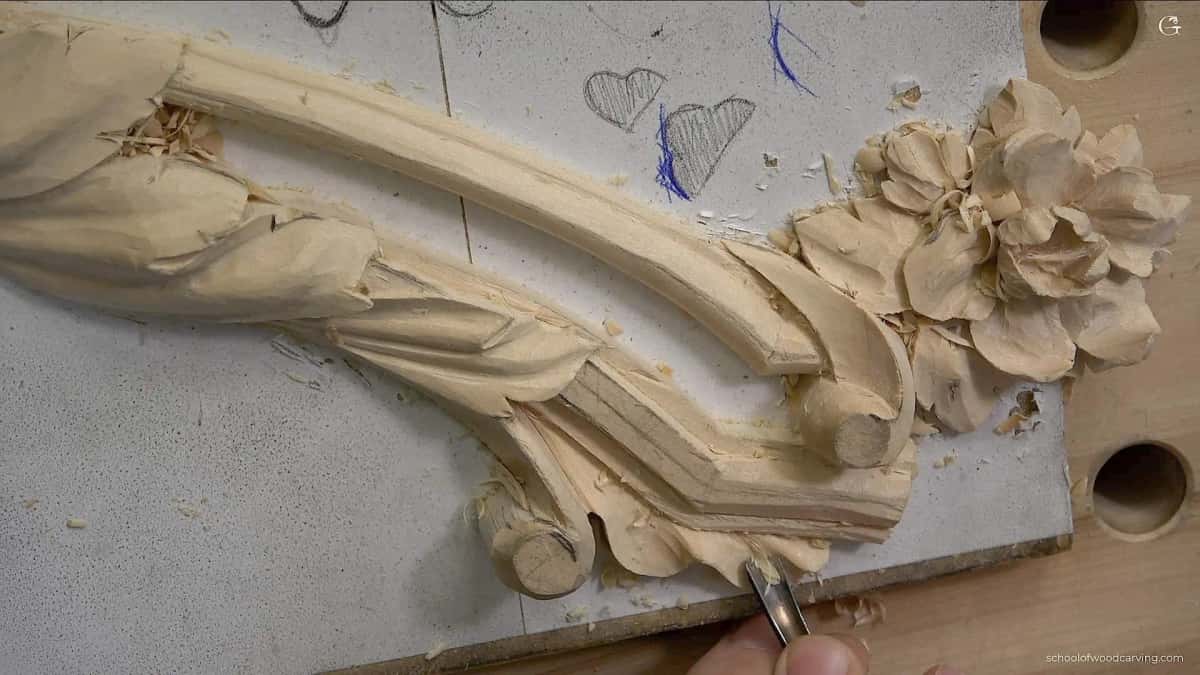
Your sofa is twelve feet back and you designed the piece at arm's length. At twelve feet a room reads big shapes and dark holes. Vein lines and hair work are simply not there, not at that range.
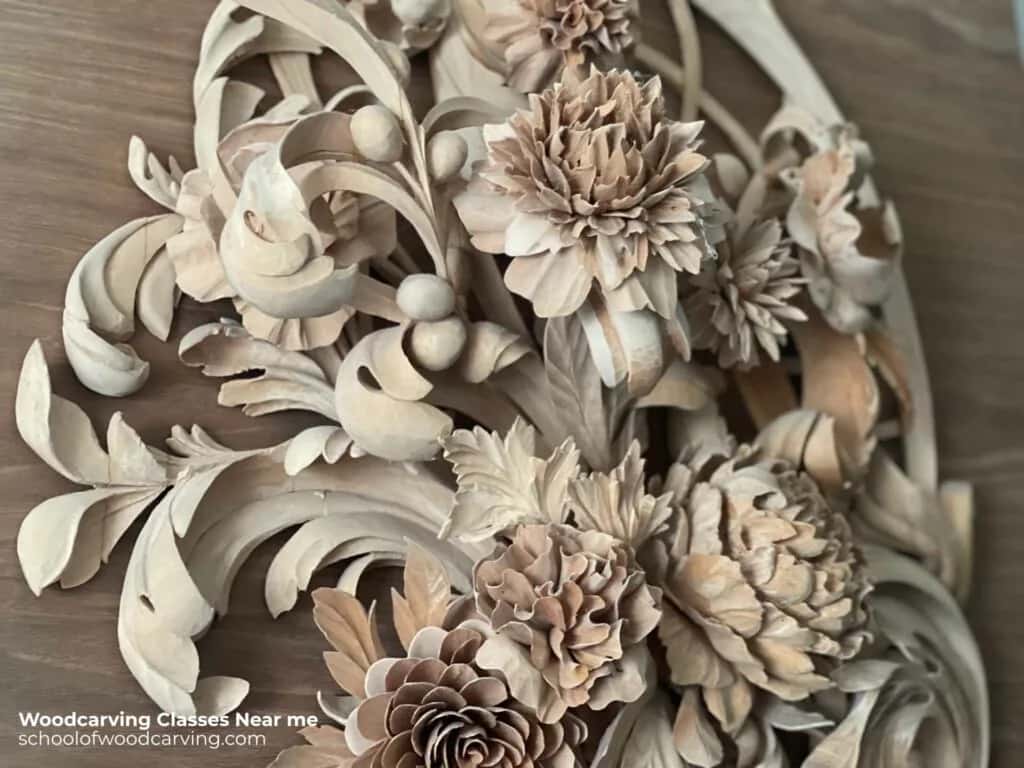
A relief works by dropping the field so the design seems to stand up off it. Wall ornament answers to two distances at once, and the far one comes first. Big masses that still hold together from the doorway, then small work as a reward for whoever leans in.
Direction matters as much as distance. In workshop 7 of the same Venice course I was carving a side nobody at the bench would ever notice, and I said out loud that it had to be clean because it would be "visible from that direction". Steal that habit. Decide where a person stands before you decide anything else.
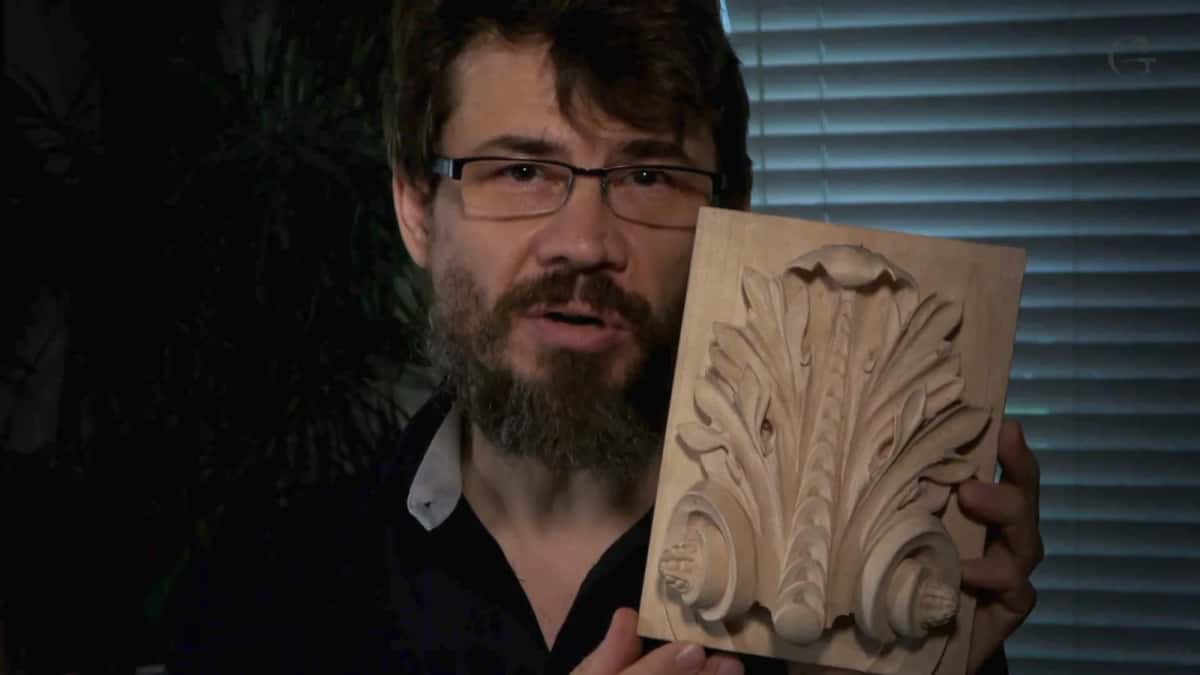
Stand your own work up somewhere and walk backwards until it stops working. Whatever that distance is, that is how far your sofa can sit. If the answer is four feet, go deeper. Nobody warns beginners about this, and it costs whole panels every year.
Should wood wall art be painted or left bare?
Paint is not a crime and never was. Wall paneling is a wall covering built out of rigid pieces fitted together, and plenty of it has gone up under color for centuries.
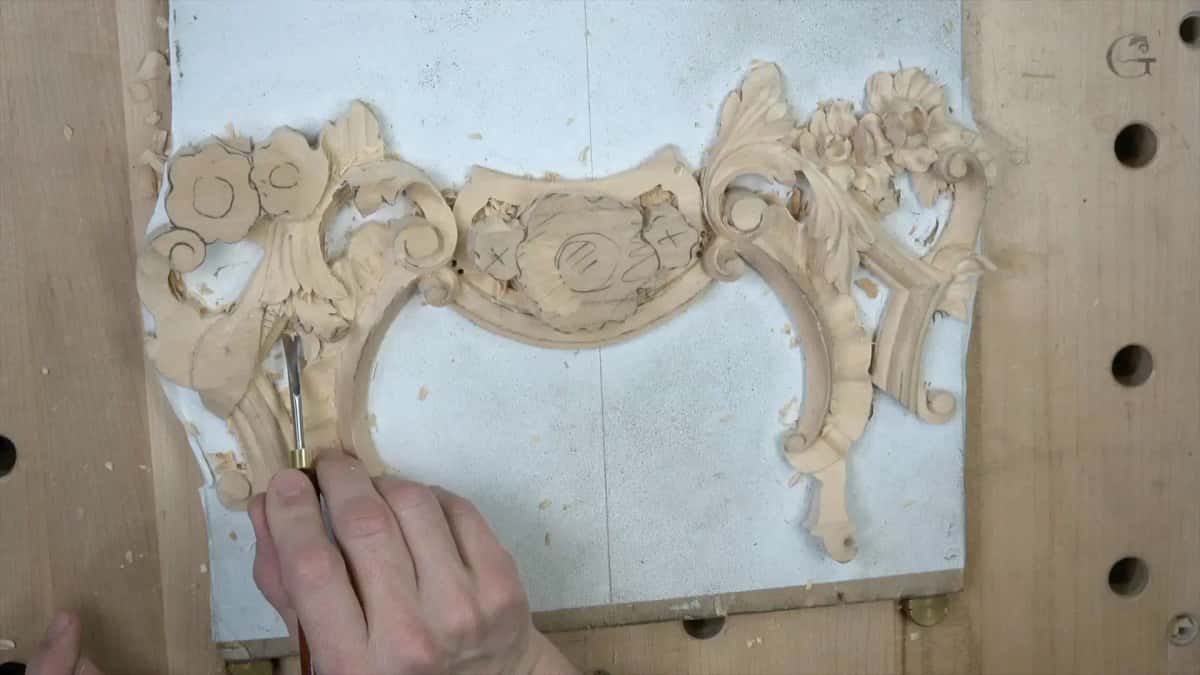
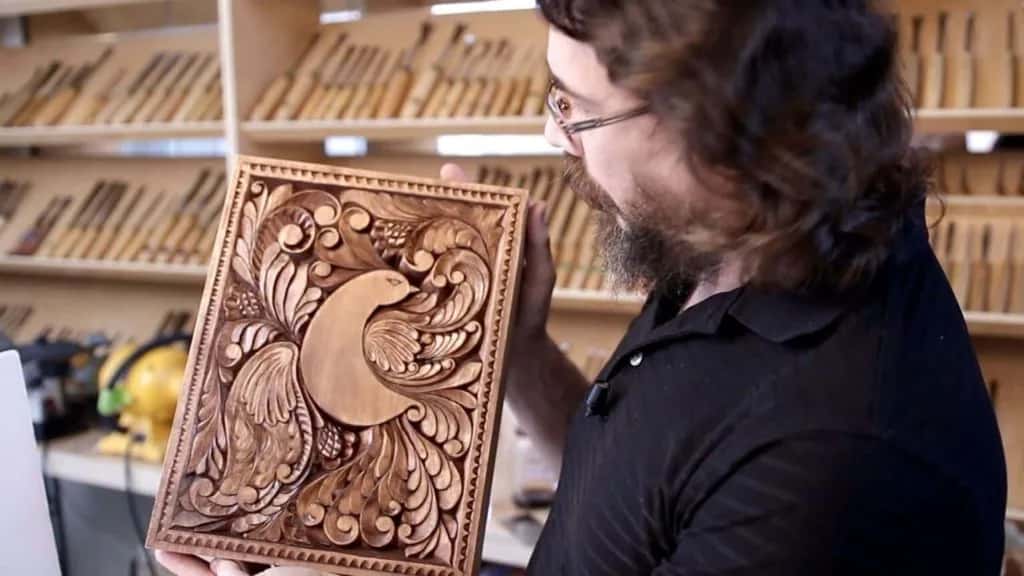
One Venetian panel of mine went under chalk paint. I was explaining it on a livestream that now sits in the techniques course, and my audio kept dropping so badly that I had to reconnect four times before anybody could hear me. I told them straight out that it was going under paint. "It's going to be painted with chalk paint." That was good news, not an apology. Paint hides tearout, tool tracks and any corner you were lazy in, and shadow reads harder afterwards because a plain white surface stops competing with it.
What you cannot do is skip the undercut because paint is coming. Keep opening the shadows underneath exactly as you would on bare limewood, or you end up with a white lump on a white wall.
Bare wood is the other road and I love it too. Grinling Gibbons hung limewood on the walls at Windsor Castle and Hampton Court, and people still walk into those rooms to look at it.
Where should a carved panel never go?
Over a stove, and on any wall that takes the low afternoon sun. Grease finds every hollow you carved and settles in. Sun bleaches one half of a leaf and leaves the other half the color it started.
Wood breathes. It pulls moisture out of the air and gives it back, and where it settles depends on the humidity and the temperature around it, which is the plain meaning of equilibrium moisture content. A bathroom that steams up twice a day asks a lot of a wide panel. So does the wall right above a heating vent.
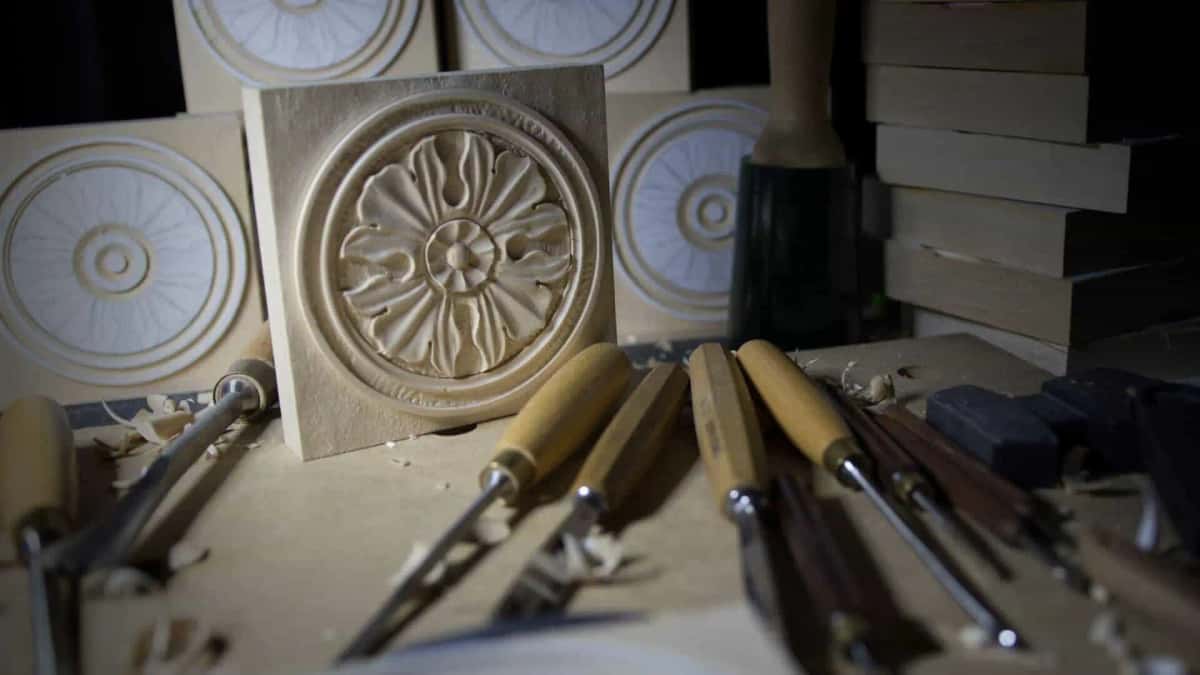
Hallways are underrated. A carved cartouche, which is an oval or oblong panel edged with scrollwork, does good work in a corridor because you pass it at an angle and the shadow moves as you walk.
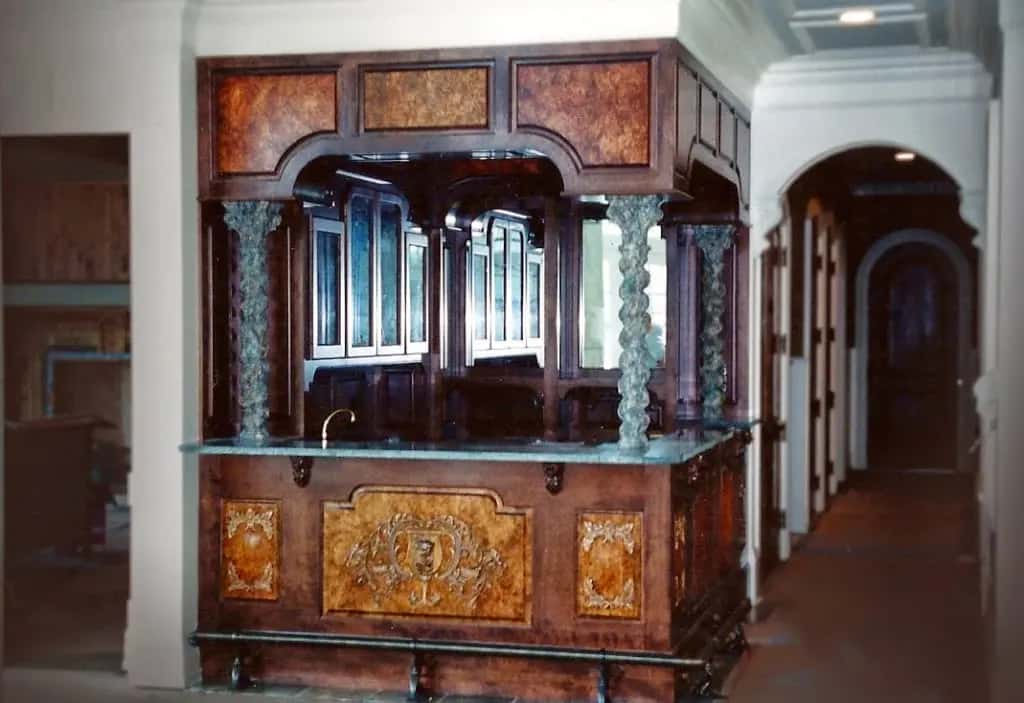
Fit matters more than anybody expects once a piece is going up high. Filming the Venice room I said the same sentence over and over. "I want to make sure everything is just perfect when it's going to be applied on the walls." A panel that fits badly at the top of a ten foot wall cannot be rescued with a caulk gun from a stepladder.
How do I carve the first one for my own wall?
Start with a piece the size of a dinner plate and pick its wall before you draw a line. That order is backwards from how everybody does it and it is why most first panels end up in a drawer.
Step one, measure the wall and tape a paper rectangle to it
Butcher paper, painter's tape, actual size. Leave it up for a week. You will change the size twice and it costs you nothing.
Step two, find the light
Walk a lamp along the wall at night. Note which way the shadow runs longest, then carve so your deepest hollows face that way.
Step three, draw it flat and at the size it will really be
No shrinking it down to fit a sheet of paper. My big layouts get printed at a shipping shop, and a ten foot layout cost me $27, which beat the plotter I nearly bought. The design course is this whole step.
Step four, carve it deeper than feels sensible
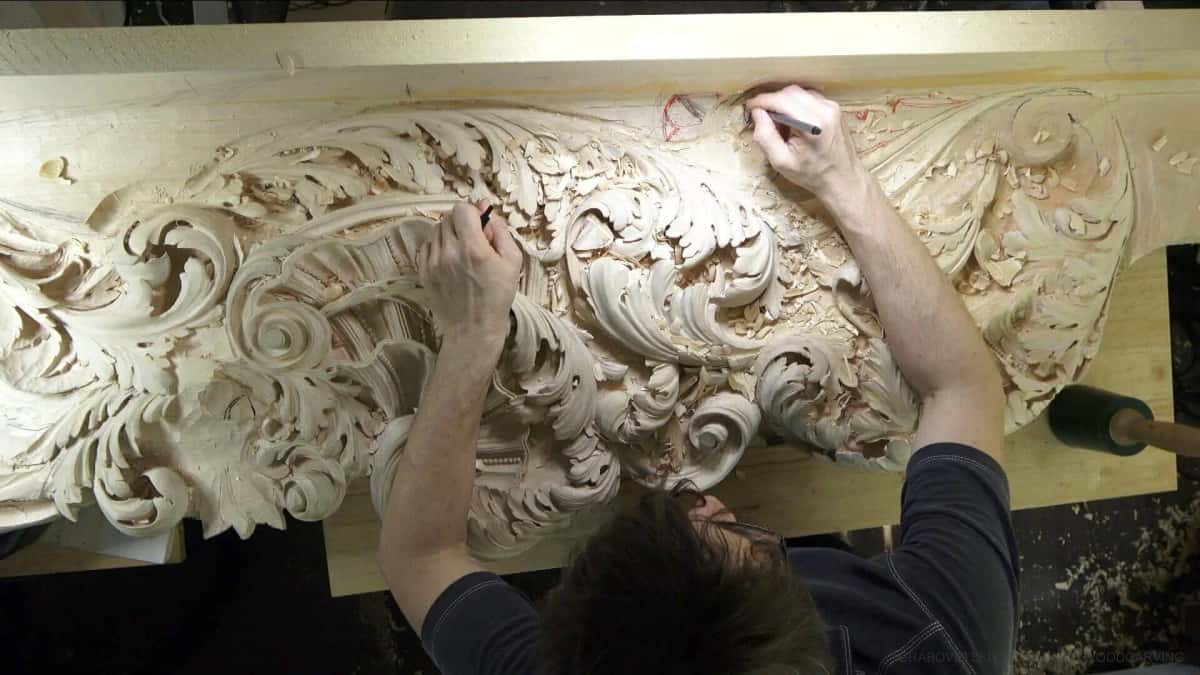
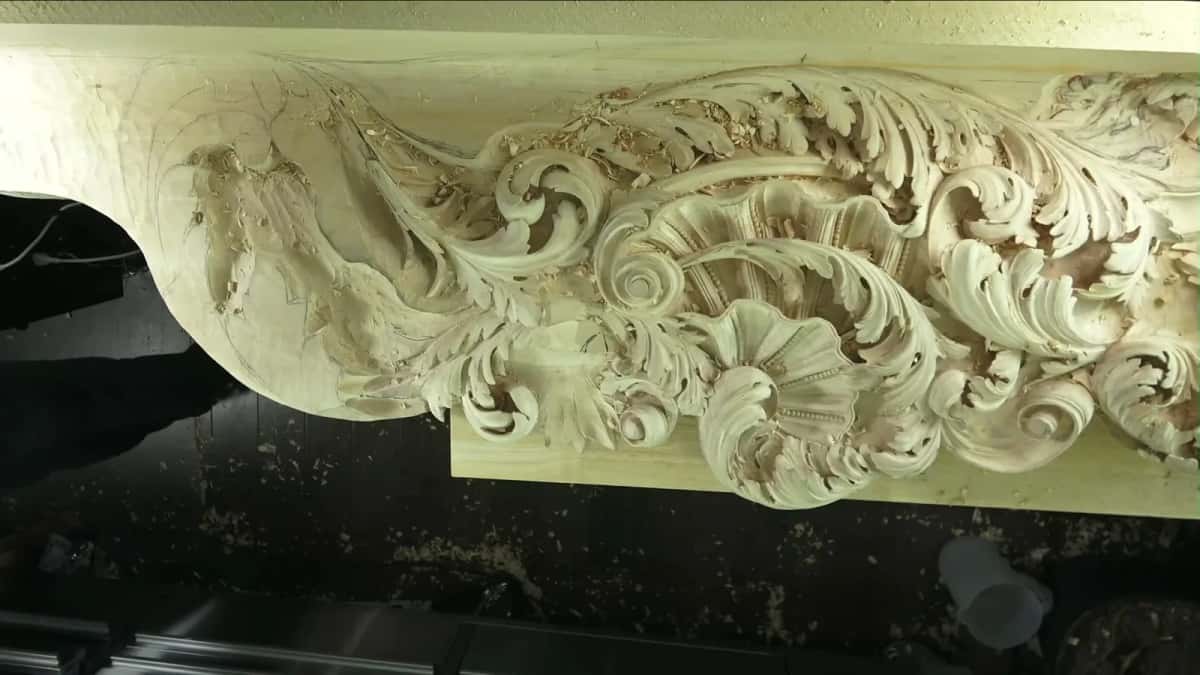
Take the ground down a full half inch on a two foot panel, and undercut the leaf edges so they throw a hard line. Shallow is the one mistake nobody can correct later.
Step five, hang it and then go stand in the doorway
Then move it. The first spot is almost never the right one, and two spare screw holes in drywall cost you nothing.
Wood first, if you are wondering: basswood for a first panel, every time. Where to begin is in carving for beginners, blades are in the knives post, edges are in sharpening, and Pfeil is the steel I hand people. The Venice panels are in the Venice room course and everything else sits on the course list.
There is a short one on the channel about how I walk up to a piece of furniture, and a wall panel wants the same thinking: how do you approach a carving. If you would rather stand next to me while you learn it, the bench weeks live on the in person page.
So. Do you want another print that everybody's cousin also owns, or a wall your grandchildren will argue over? Tuition here also feeds orphans and widows, because this is a 501(c)(3) school. Yearly Access costs $200 and renews automatically every 12 months. If you would rather try me for one month first, that is $25, and it also renews automatically until you stop it.
Frequently asked questions
What size should wood wall art be?
Roughly two thirds the width of whatever furniture sits under it, and taller than it is wide when it hangs between windows. Tape a paper rectangle up for a week before you commit. Everybody goes too small first time.
What is the best wood for a carved wall panel?
American basswood for a first panel, because it carves cleanly and takes paint well. Walnut and cherry look better bare and fight you more. European limewood is the traditional choice for this work, and it comes off the same tree genus as basswood, Tilia.
How do you hang a heavy carved panel?
A French cleat screwed into studs holds far better than wire on a single hook, and it lets you slide the panel sideways once it is up. Drywall anchors let go eventually. A big panel that falls face down loses its most delicate edges.
Can carved wall art go in a bathroom or kitchen?
A hallway near either is fine. Directly over a stove or inside a shower room is asking for trouble, because grease settles into the hollows and steam twice a day keeps moving the wood. A finish slows both of those down without stopping them.
Does carving on a wall panel need to be deep?
Deeper than most people expect. About 12mm of ground on a panel around two feet, with undercut edges so the shadow reads as a hard black line from across the room. A shallow panel disappears under ordinary ceiling light.
How long does a carved wall panel take?
A dinner plate sized piece runs a few evenings once you can sharpen. Give a two foot panel of flowers and acanthus about two months of weekends, assuming you are not carving for a living. The Venice room took me two years.