
Alexander Grabovetskiy, woodcarver, School of Woodcarving · Published 2017
What makes a Corinthian acanthus leaf different?
Quick answer: Corinthian came first, and it is the plainest of the family to identify. Every tip finishes in a sharp point, no curls appear anywhere on it, and each leaf is hollowed across its face so that shadow gathers there.
Corinthian acanthus is the oldest form of the leaf and the easiest to identify. Every tip finishes in a sharp point, there are no curls anywhere on it, and each leaf carries a concave cut into its face that throws the shadow. Built on three movements, five points to a section, with the pipes aimed inward.
Looked at an acanthus capital and had no idea how anybody draws one? Tried to copy a leaf off a photograph and ended up with shapes that fight each other? Start at the beginning of the family and the rules are few enough to hold in your head.
Key takeaways
- Sharp points everywhere, and no curls at all. That is Corinthian.
- Each leaf face is hollowed, and that hollow holds the shadow.
- One centre line, then three movements. Nothing else structural.
- Each section subdivides into five points, all aimed at the centre.
- Eyes read as holes. Pipes are raised ridges, all aimed inward.
- Block of eight inches by five and seven sixteenths, cut in deep relief.
What makes a Corinthian acanthus leaf different?
Points, and the absence of curls. Anything you have seen on furniture with volutes and swirls in it belongs further along the family, because the acanthus developed for two thousand years after this form appeared.
Every edge ends sharp here. Not rounded, not softened, not turned over into a curl. A sharp point is the signature of the Corinthian type and you will find it on every genuine example.
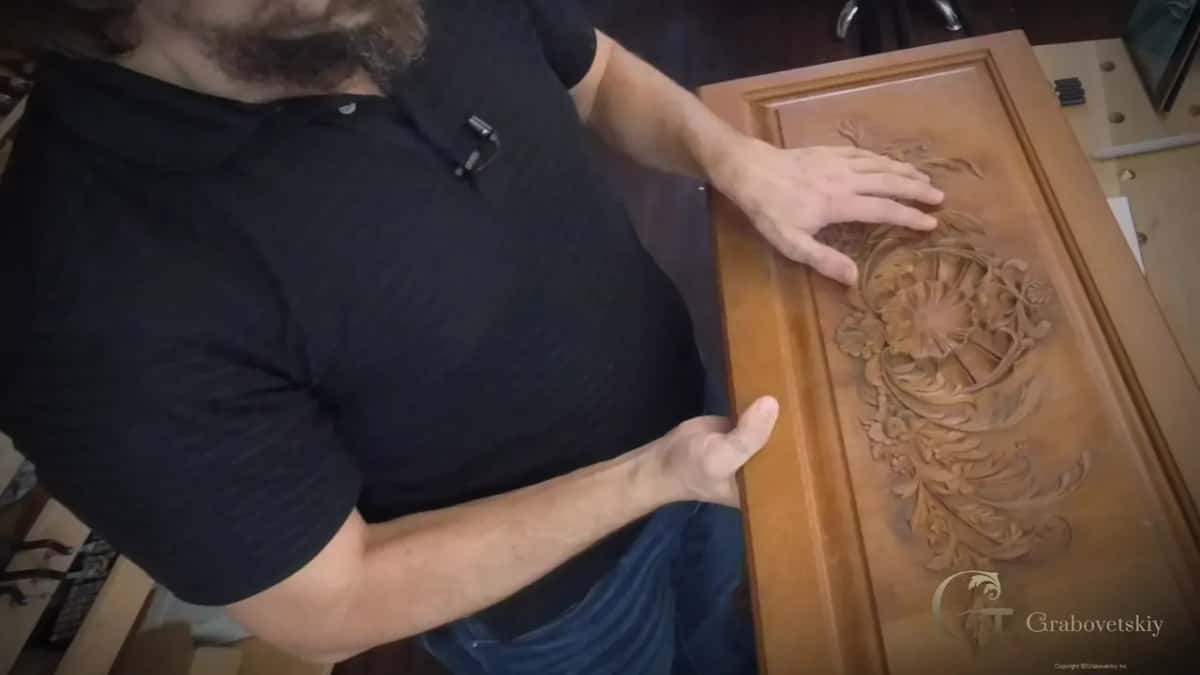
Then there is the incut. Each leaf on this design is hollowed across its face, unlike most of what carvers meet today, and that dish is where shadow gathers.
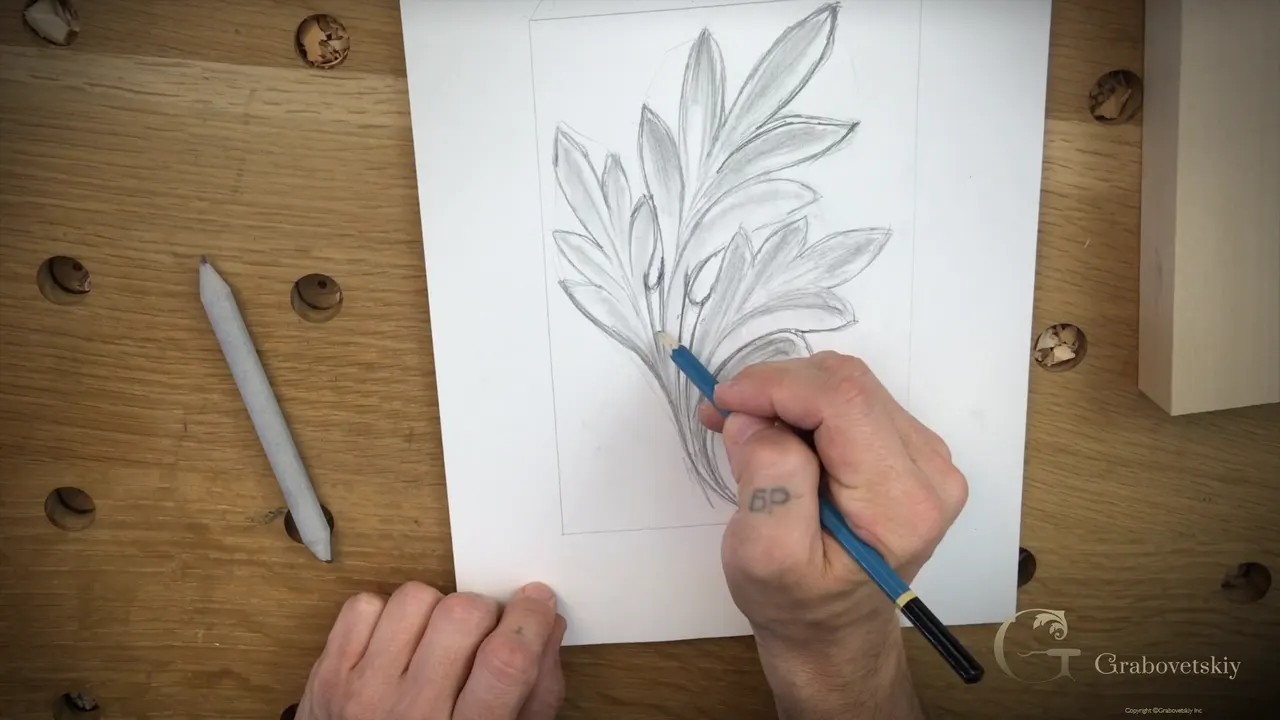
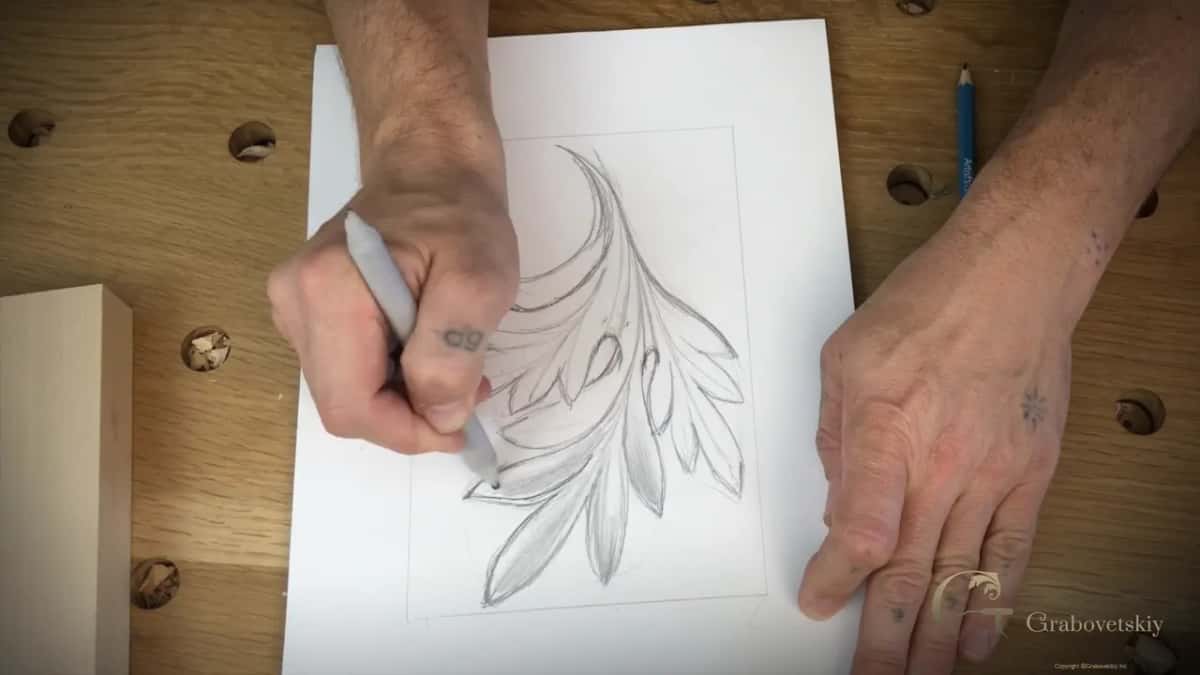
Shade is the point. Pale timber has no colour of its own to work with, none at all. The incut does the job paint would do elsewhere. On the drawing I shade it in, so the shape reads before a tool touches wood.
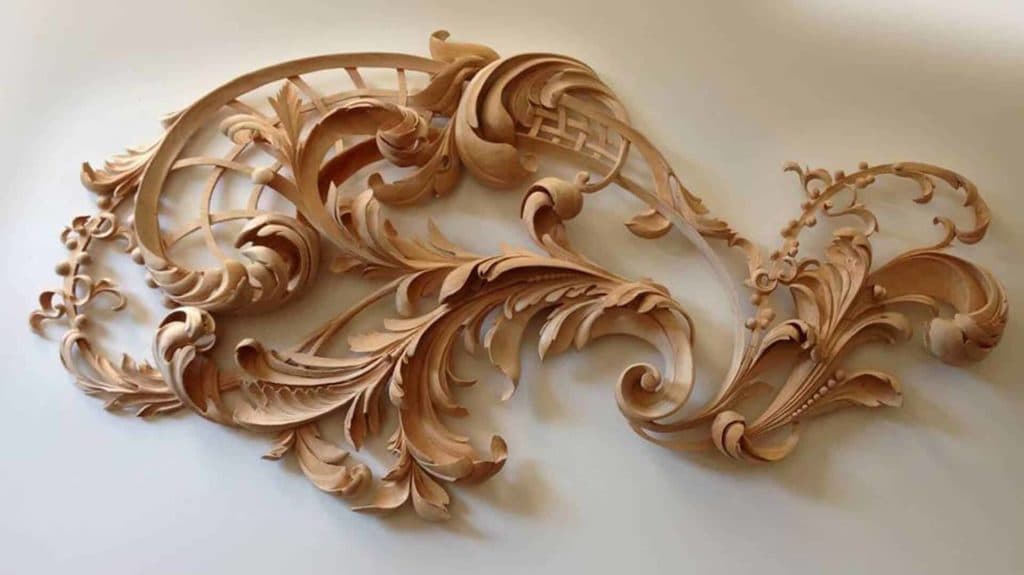
You cannot avoid this leaf once you start looking. Architectural carving, ornamental carving, furniture carving, and sculpture as well, especially the ancient sculpture. Walk round any building with decoration on it and the acanthus is there somewhere, usually in several places at once.
It goes into almost everything I carve, too. The panel I brought home from teaching at the Marc Adams school has acanthus worked down one side, unfinished at the time of filming. A furniture panel beside it carries the same leaf in its corners, and in details small enough that most people never notice them.
Drawing them is a pleasure in itself. I draw acanthus for the sake of it, for furniture schemes and shelving and things that may never get cut. Those swirls are still the same plant, however far a design wanders from a capital.
One small mercy about the Corinthian form is that it forgives a shaky hand more than later types do. Straight lines running to sharp points are easier to draw convincingly than a volute, which has to spiral evenly or it looks broken, so a beginner's first acanthus comes out better here than it would anywhere else in the family.
Where did the Corinthian order come from?
A basket on a grave, according to the story. An architect and sculptor named Callimachus lived around five hundred years before Christ in Corinth, and like most designers he was always hunting for something new.
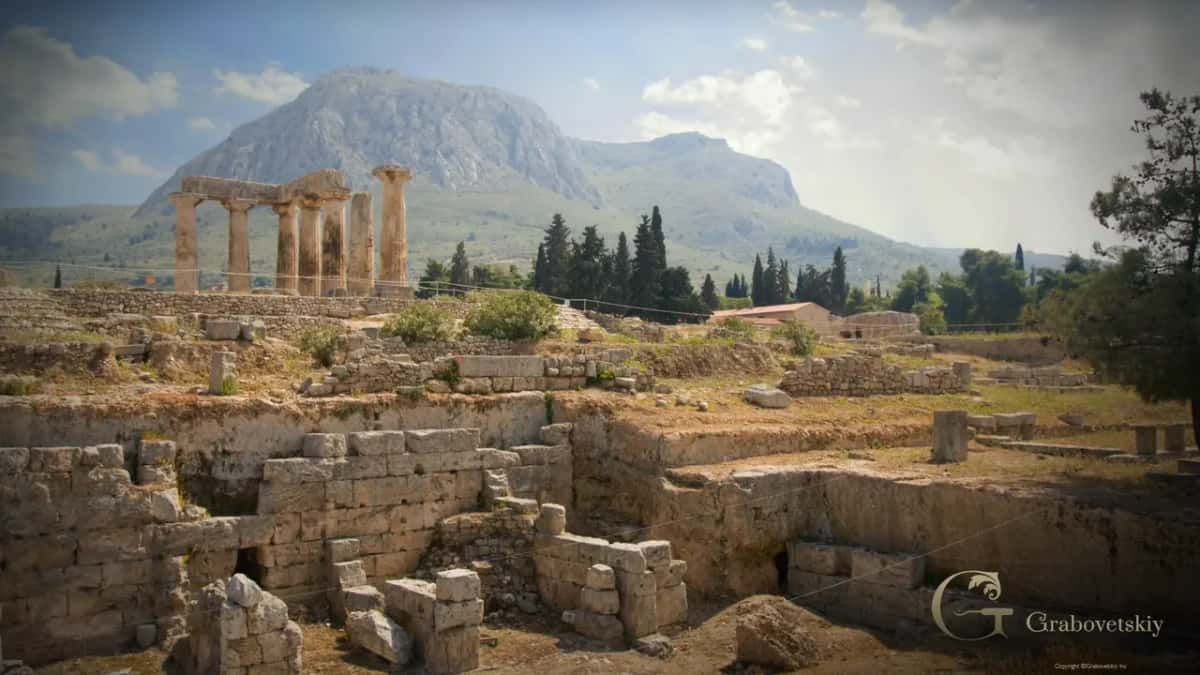
He was walking through the cemetery there. On the grave of a young girl somebody had left a basket with cloth in it, put there by the nurse who used to feed her, and nobody had disturbed it.
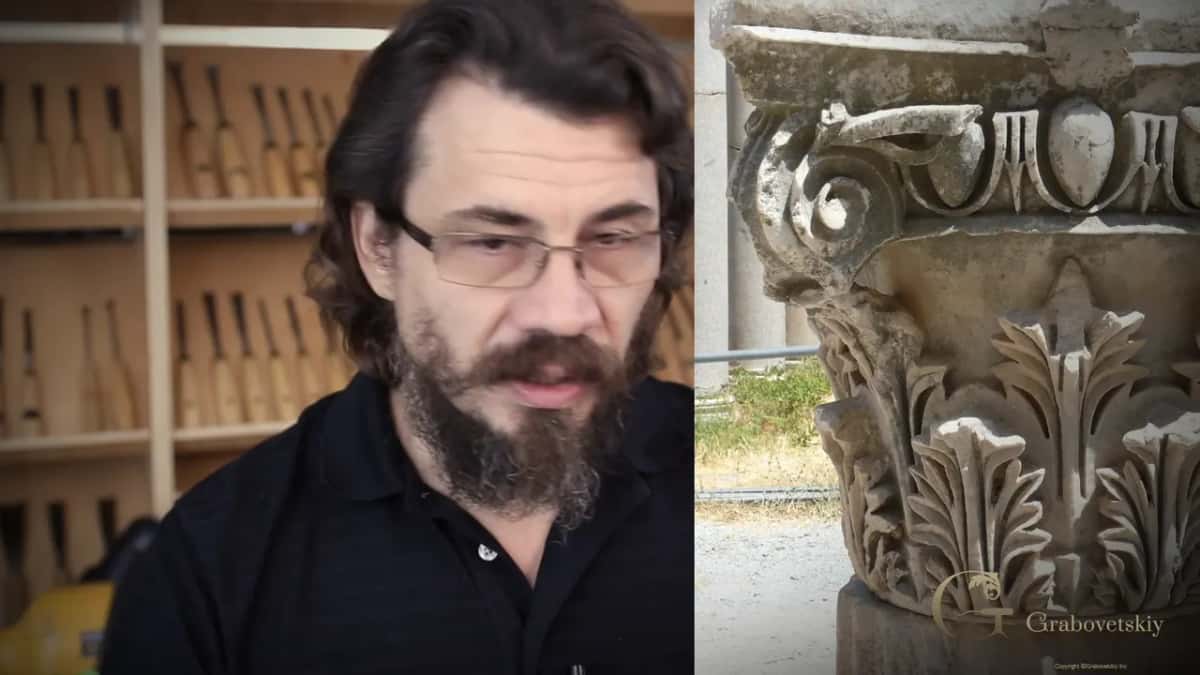
An acanthus plant was growing underneath. Rather than pushing straight through the basket it had woven itself around the sides, making movements nobody would have thought to draw, and Callimachus stopped and looked.
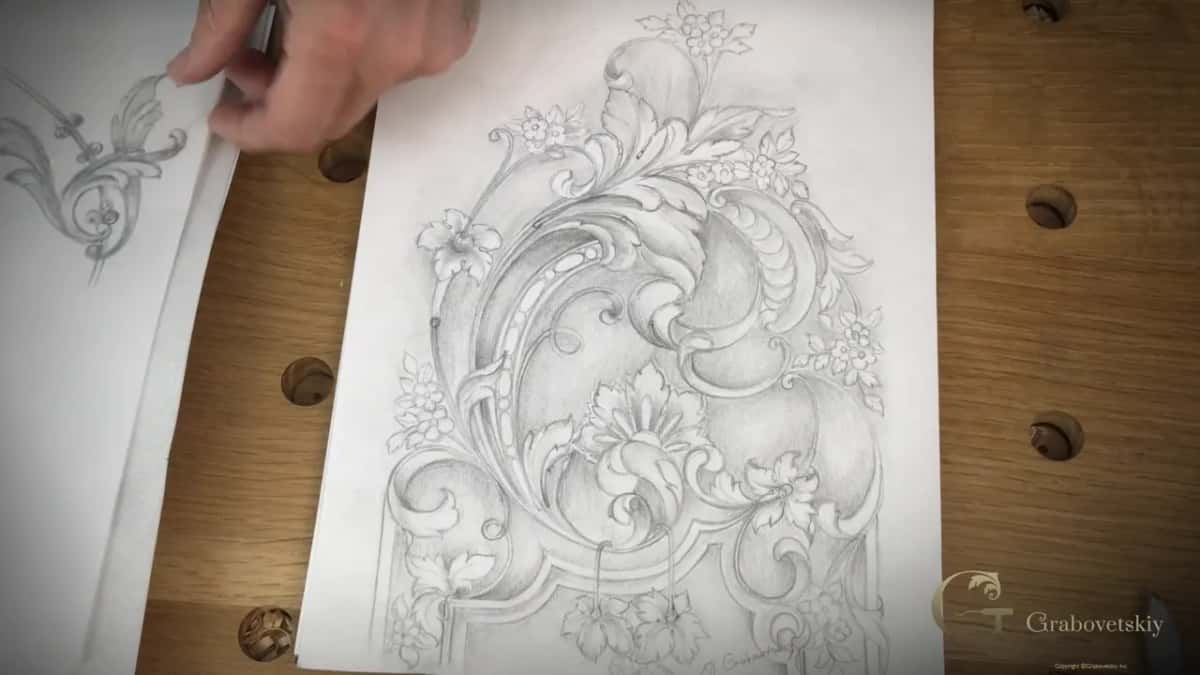
That was the birth of the Corinthian order. The column tops we still call Corinthian come from one man noticing a weed around a basket. True history, or a very good tale. I have never once been able to settle which of the two it is.
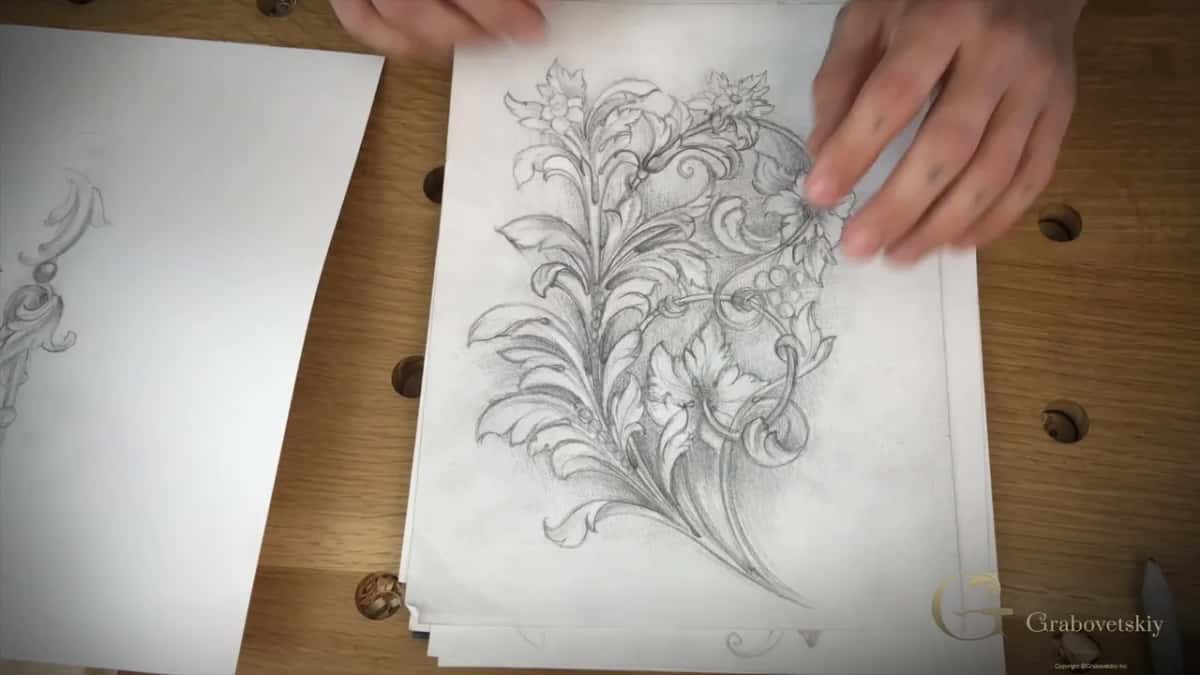
Romans read meaning into it as well. To Roman eyes the acanthus stood for endurance, resistance and triumph, which is a considerable weight for a plant whose name simply means a bear's claw.
| The element | What it does on a Corinthian leaf | Where it goes | What happens to the drawing when you leave it out or get it wrong |
|---|---|---|---|
| Centre line | Holds both halves in agreement | Straight down the block | One side grows heavier than the other and nothing later corrects it |
| The three movements | The skeleton everything else hangs from, drawn before any outline exists at all | Springing away off the centre | Flat |
| Eyes | Looks like a hole punched clean through | In the space between two movements, never sitting on one of them | You lose the small dark accents that give a leaf life at a distance |
| Pipes | Raised ridge, convex on top, concave down either side | Always to the centre | Nothing points anywhere |
| Five points, every one sharp and every one turned inward | Subdivision | Per section | It reads as a later type, or as no particular type at all |
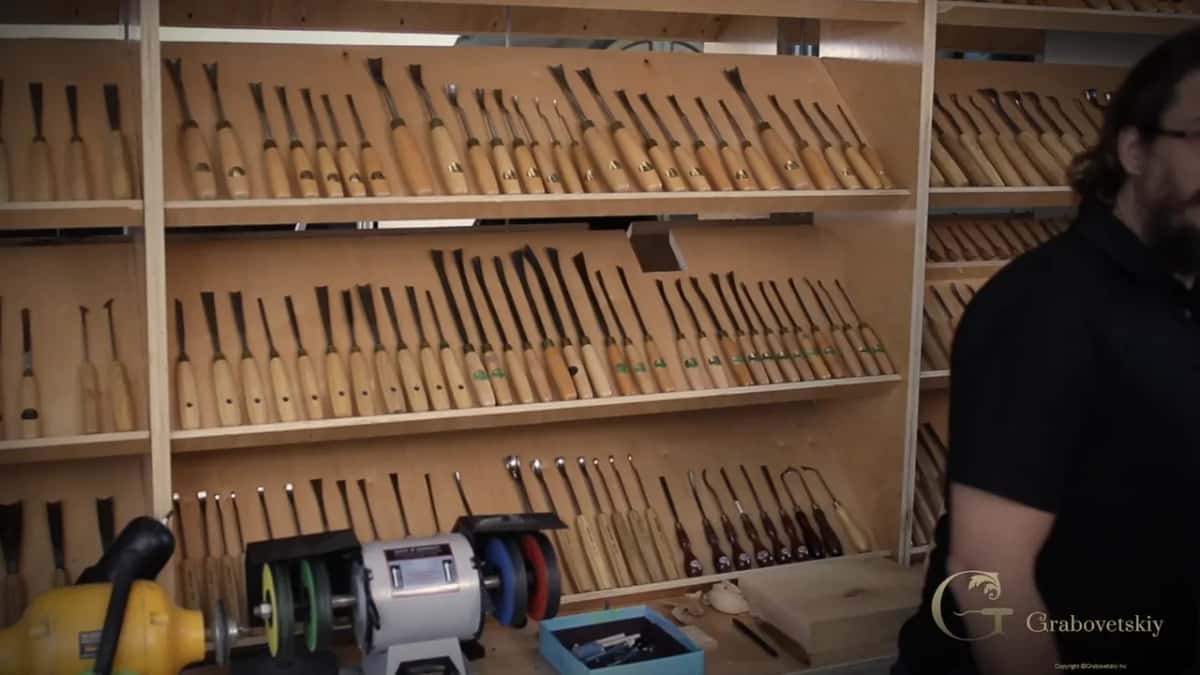
Simplicity here is deliberate as well as historical. This leaf asks less of you than what comes later in the course does. That is exactly why it goes first. Every rule you learn on it survives into the elaborate forms unchanged.
Later types do not replace these rules. A Renaissance leaf still has movements, still has eyes, still runs its pipes to a centre. What it adds is elaboration on top, and elaboration understood is a great deal easier to carve than elaboration copied.
Roman writers gave the leaf a character as well as a shape. Endurance, resistance, triumph: that is a great deal to load onto a spiky weed, and yet it explains why the acanthus ended up on arches and monuments rather than staying a decorative border. A plant that survives being trodden on was a useful thing for an empire to put over a doorway.
What is an eye, and what is a pipe?
Nearly every acanthus carries both. One is a small feature that looks like a hole through the leaf, and it always sits between two main movements rather than on one of them.
A pipe is exactly what it sounds like. A raised strip running along the leaf. Convex across the top, with a hollow falling away each side. Carvers have called it that for as long as anybody has written this down.
Direction is the rule that matters. Every pipe runs in to the centre line, without exception, and that single discipline does more to hold a symmetrical design together than any amount of careful outlining.
How do you lay out the movements?
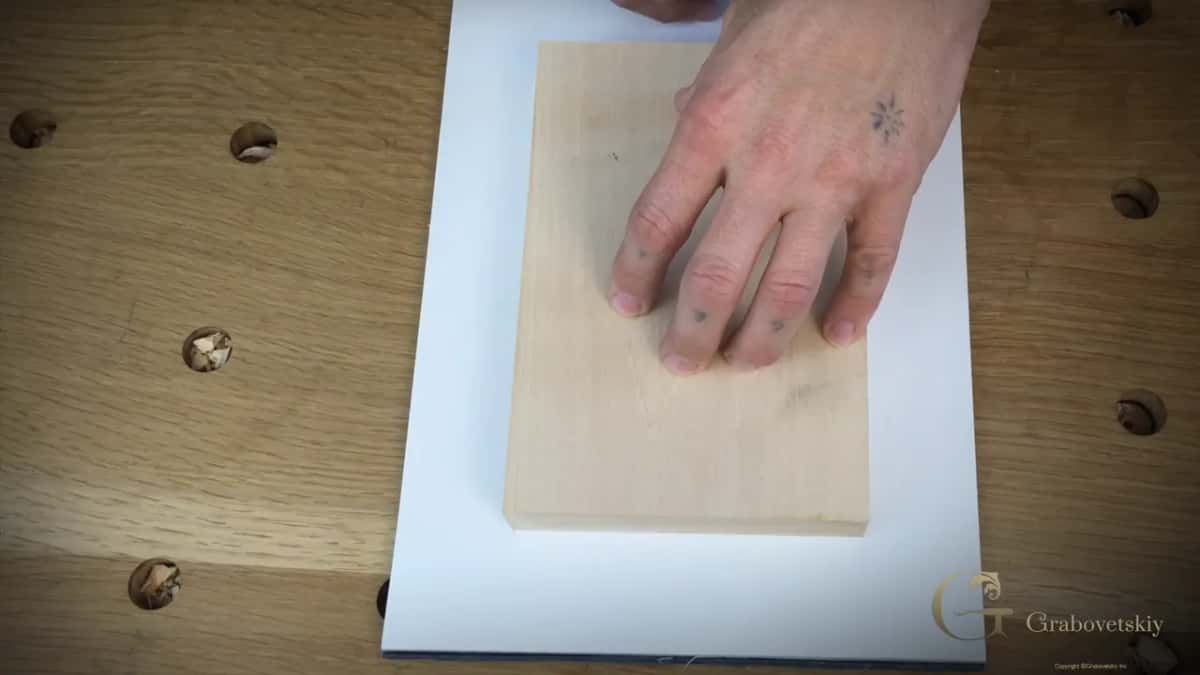
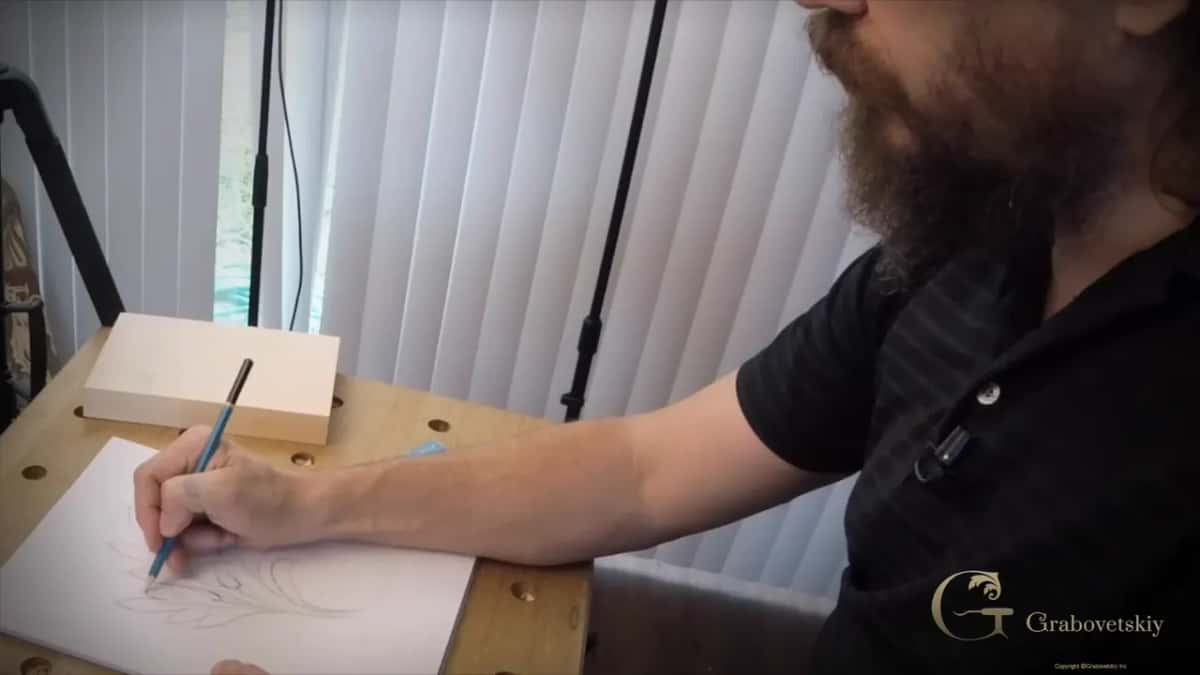
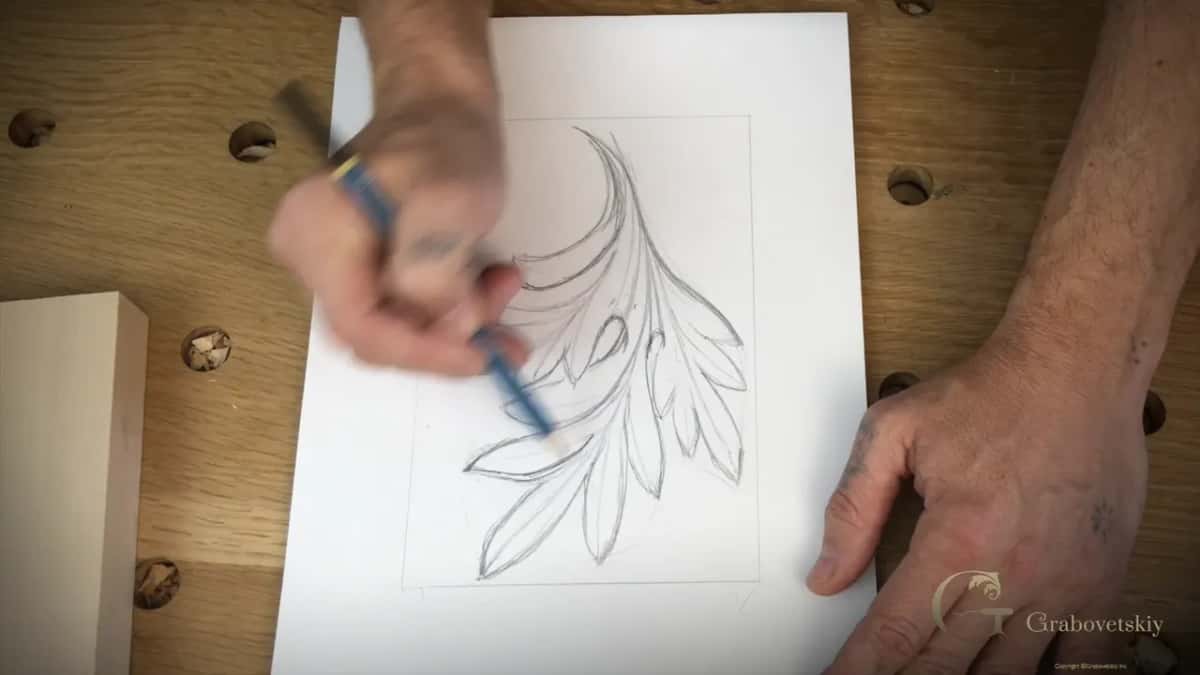
Block on paper, pencil round it. My stock runs eight inches long by about five and a half across, five and seven sixteenths if you want the true figure, and the drawing starts life at exactly that size.
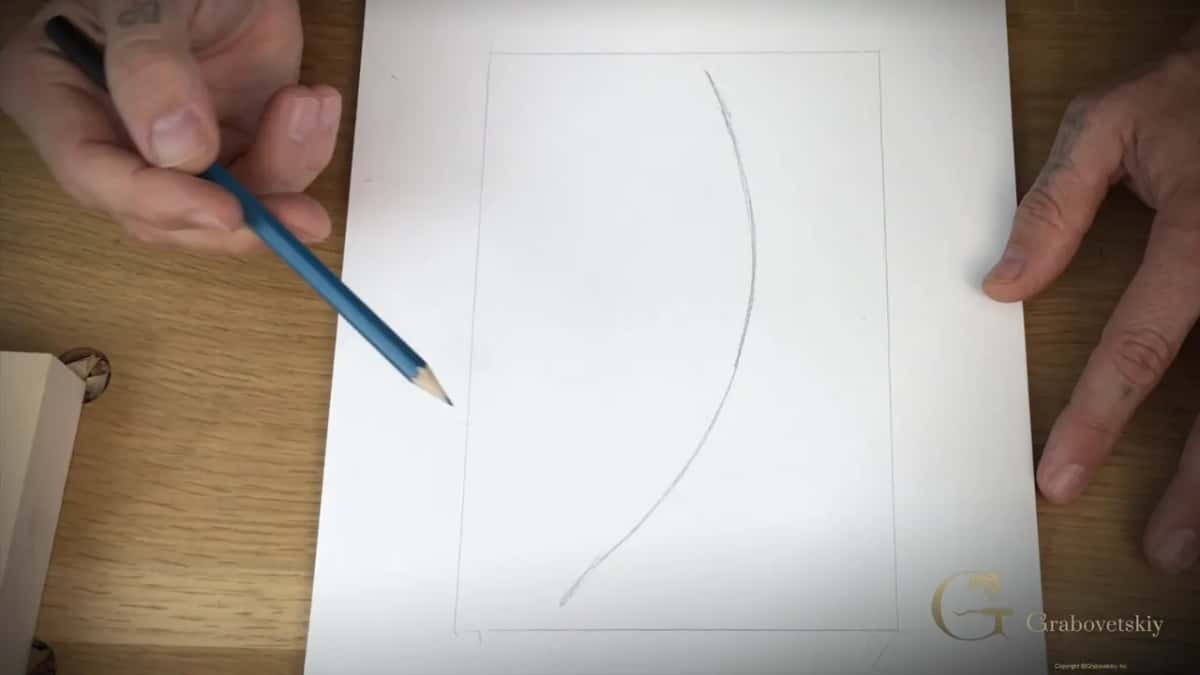
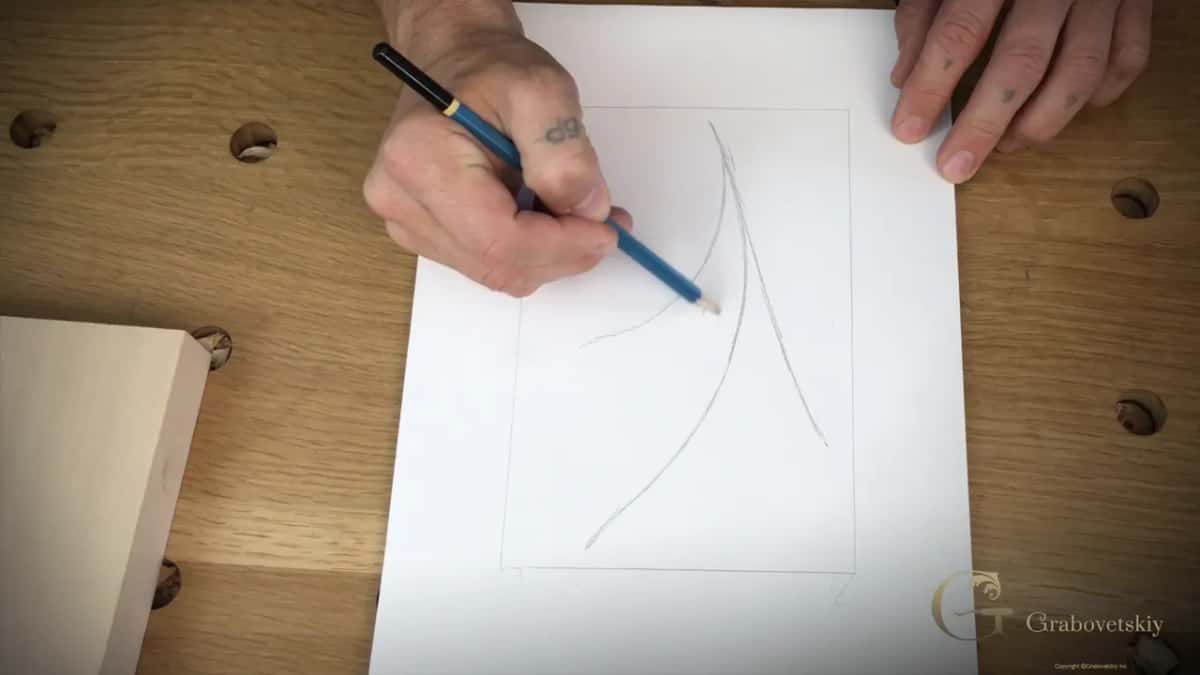
That centre line goes first, always. Then the leaf divides into three movements, which is deliberately simple compared with what later types demand, and those three carry everything that follows.
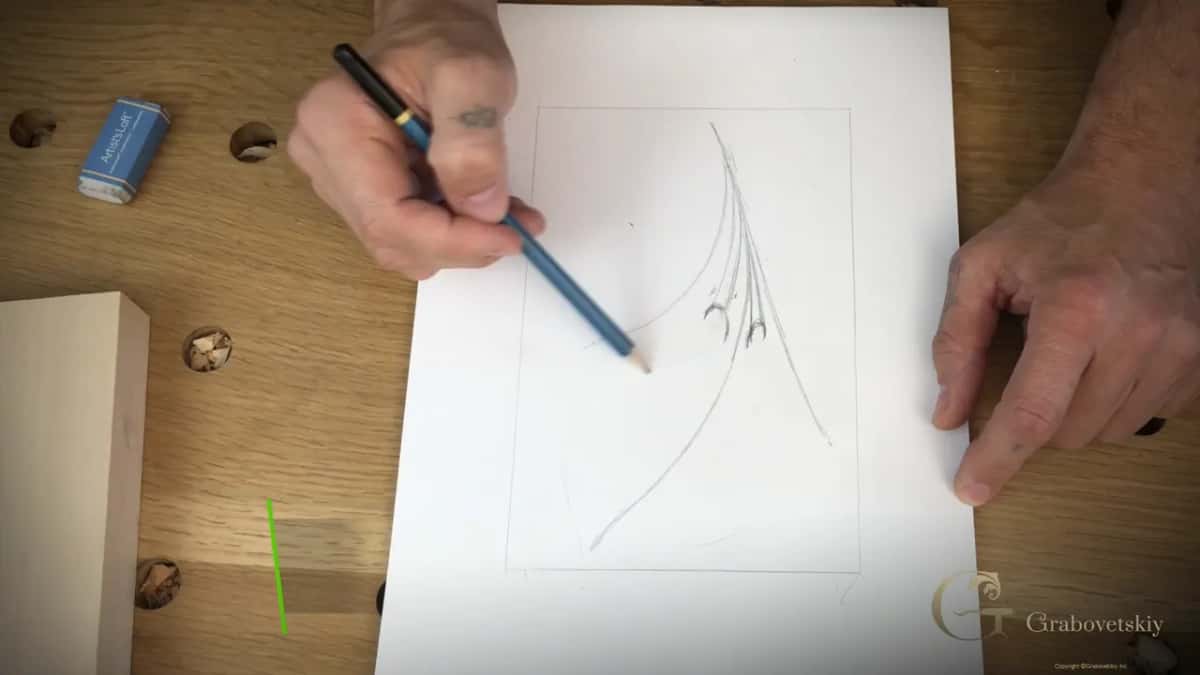
Movement is not optional on any acanthus. Drawn without it you have a botanical study rather than ornament, and the difference shows immediately once the piece is up on a wall and being looked at from across a room.
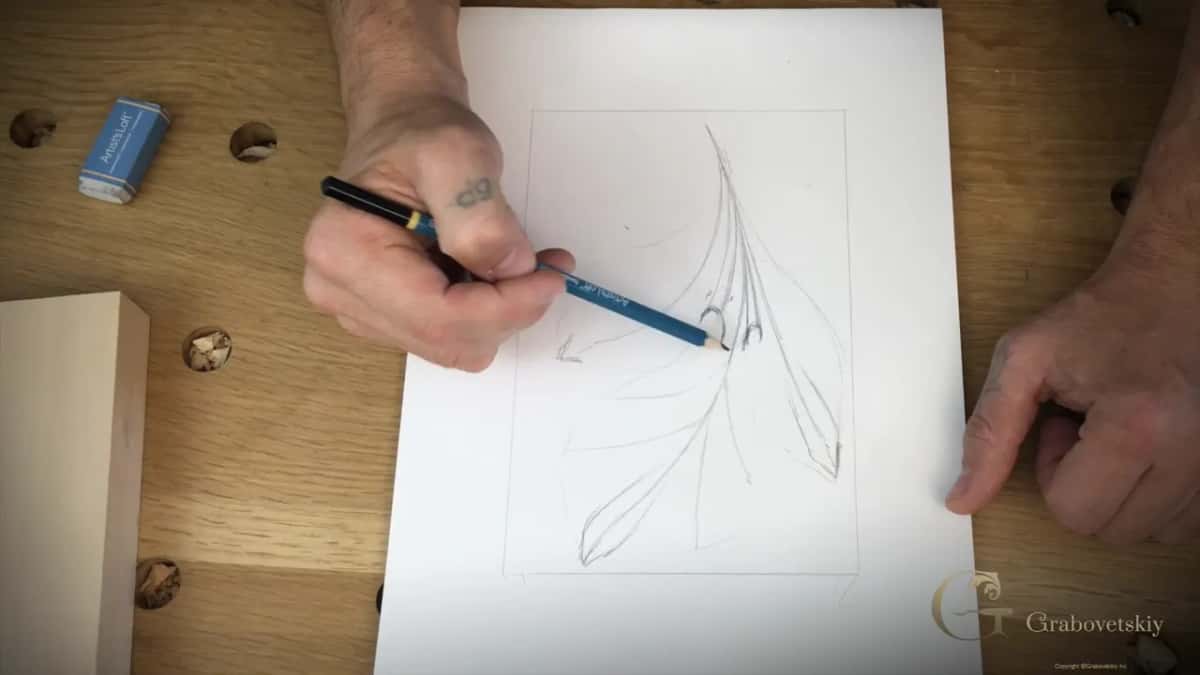
The download exists so nobody is stuck at the drawing stage. Print my version, glue it down, and carve this weekend if that is what you want. There is nothing wrong with that and the file is on the lesson page for exactly that reason.
Ruling your own will teach you more. Draw the centre line yourself, work out your own three movements, place your own eyes and count your own five points, and the leaf that results will not match mine. Getting close is enough. Understanding why each line sits where it does is the whole purpose.
Why five points on every section?
Count them on any capital and there they are. Each main section divides again into five separate small leaves, each finishing in its own sharp point, and each point aims at the centre or at its own movement.
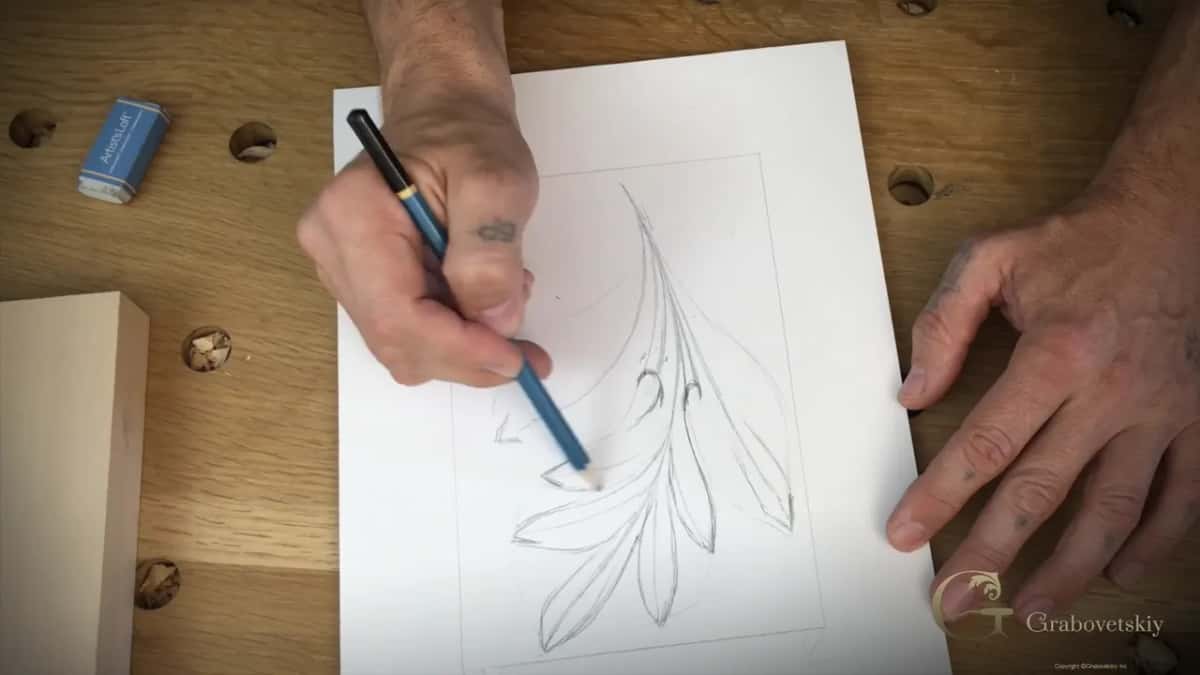
Five is what the old work does. No mathematical reason has ever been proved, and I will not pretend otherwise. The surviving examples subdivide this way. A leaf drawn with four or six reads subtly wrong.
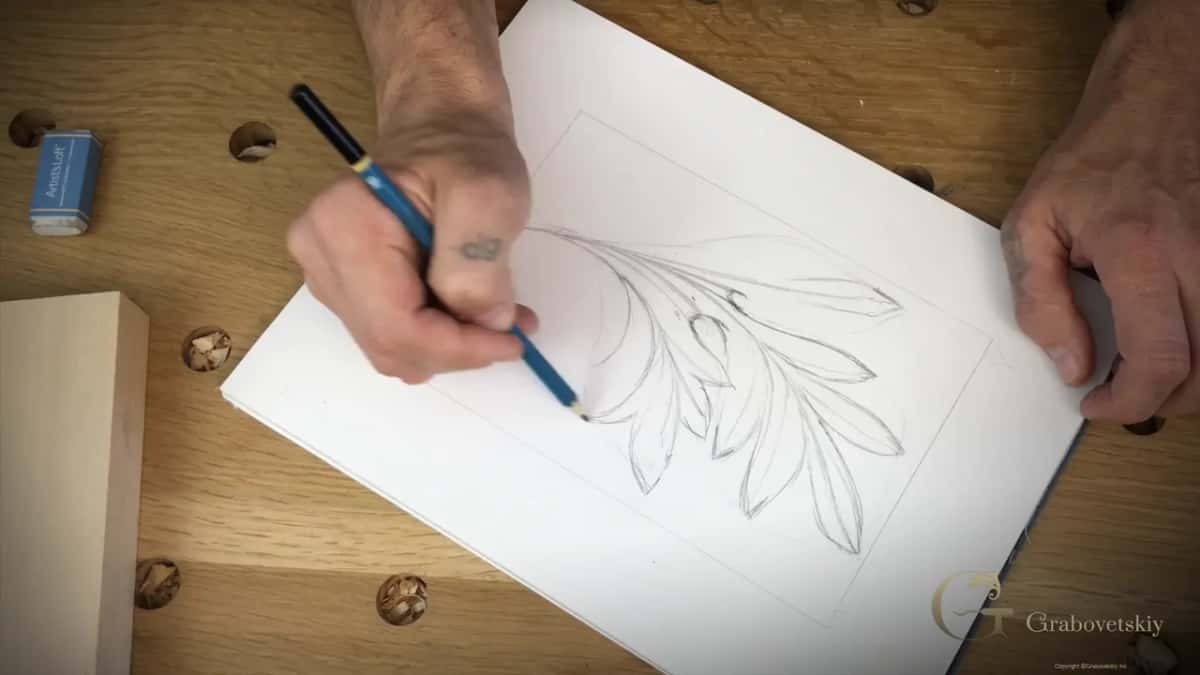
Aiming them inward is the harder discipline. Left to itself a hand draws points that splay outward like fingers, and the leaf falls apart visually, because nothing is pulling the eye toward one place any more.
Is Corinthian really the oldest acanthus?
Probably, and I will not swear to it. It is the oldest form I work from and the one this course begins with, but acanthus decoration turns up in more than one ancient culture.
Egypt has drawings that predate it. Ancient Egyptian decoration includes acanthus found before the Corinthian examples, so the honest position is that Corinthian is the oldest form in the line I am following rather than the oldest anywhere.
The family runs a long way after it. Greek, of which there are two kinds, then Roman, Byzantine, Moroccan, and afterwards into Europe as Gothic, Renaissance, Belgian and French, all of them still the same plant.
Working through them in order is the point of this school. Start at the simplest, add one layer of elaboration at a time, and by the time you reach a French leaf you understand why each swirl on it exists rather than merely copying it.
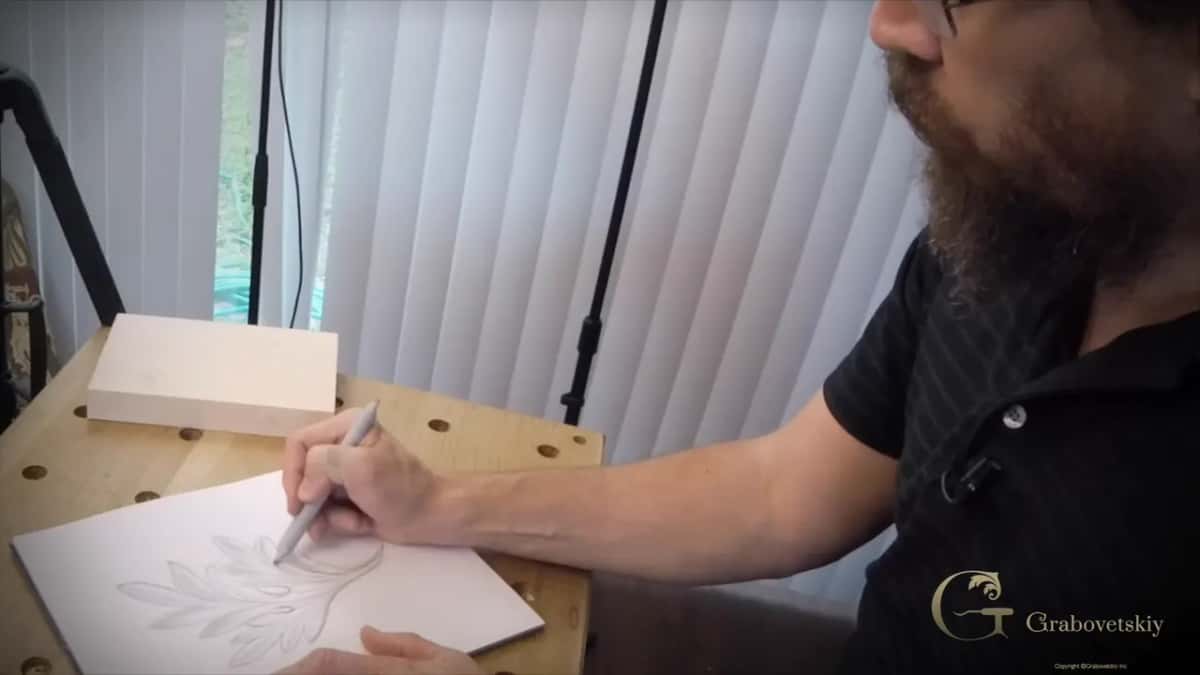
One more habit worth taking from this lesson, even if you never carve a capital. Draw the thing before you cut it, at the size it will be cut, on paper you can throw away. Twenty minutes with a pencil costs nothing and it settles every argument the wood would otherwise make you settle with a gouge in your hand.
Corinthian is a good place to build that habit because the rules are so few. Three movements, five points, pipes inward, eyes between. You can hold all of it in your head while you draw, which is not true of a French leaf and never will be.
Where will you actually see this leaf?
On column capitals, first of all. The Corinthian order is the one everybody can picture even if they cannot name it, and the leaf wrapping round it is this leaf, cut the way this lesson draws it. A capital cut this way sits under the entablature of a great many buildings you have walked past without looking up.
Then it spreads everywhere else. Roman builders carried the form across an empire and put it on temples, arches and public buildings, after which every European century borrowed it again for furniture, panelling, mirror frames and door surrounds.
Which is why a carver learns it early. Whatever ornament you end up cutting, somebody will one day ask for an acanthus, and knowing the oldest form means the later ones read as variations rather than as unrelated puzzles.
What tools does this actually take?
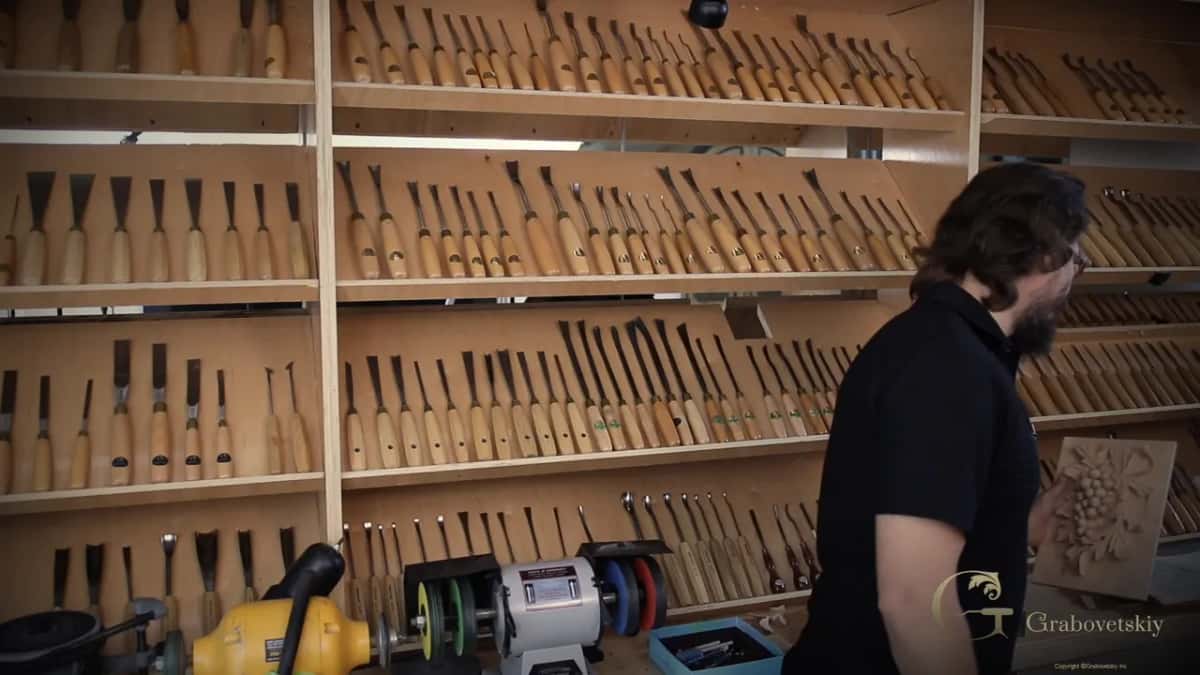
Gouges and a chisel. Nothing else is required for the whole leaf, which surprises people who expect a specialist kit for architectural work, and the block is thick because this is deep relief rather than a shallow panel.
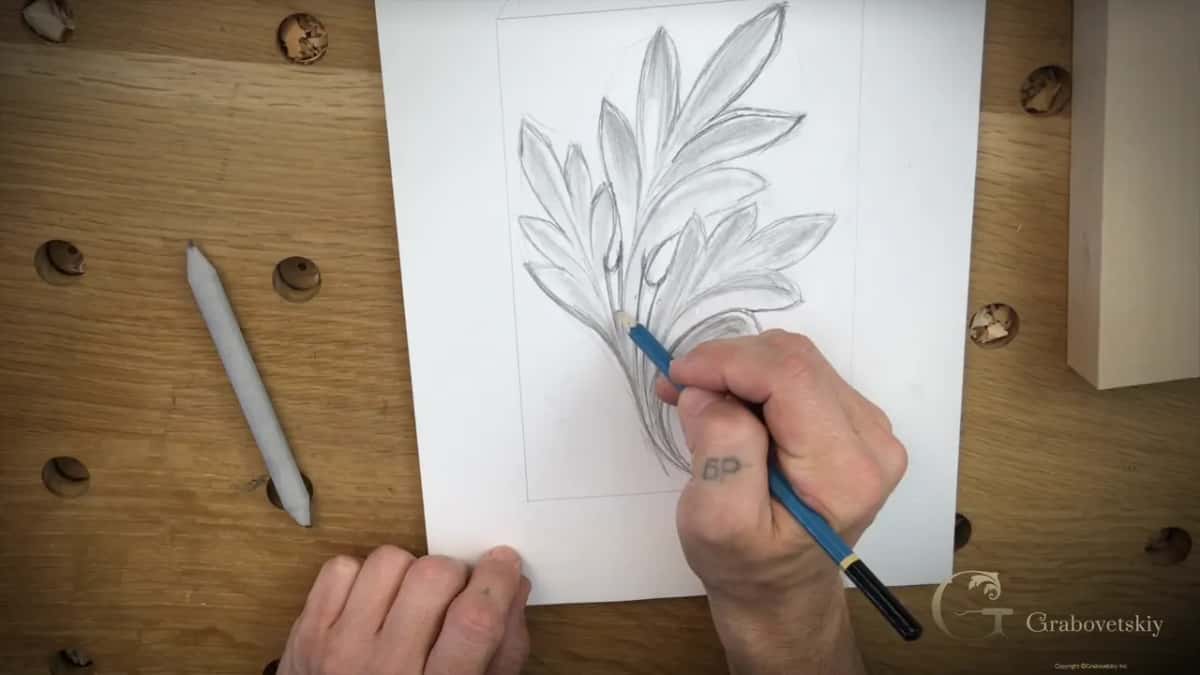
Solid stock, never glued up. My grape panel was cut the same way, from one thick piece, and carving deep into solid timber behaves differently from carving a laminated board where a glue line can appear halfway down a hollow.
Depth is what makes the shadows possible. A shallow panel gives you a drawing in wood. Cut half an inch into solid stock and one leaf can pass behind another. That overlap is where a carving stops looking like a picture.
Thickness also buys you room for mistakes. Cut a hollow slightly too deep on a thick block and the piece survives. Do the same on a three quarter inch board and you are looking at the back of your own carving.
Would you rather watch the centre line go down, the three movements follow it and the five points land in order, at full speed with the camera over my shoulder? Shall we carve?
This opens the Corinthian acanthus series, and tuition opens every lesson in it. Lesson two glues the drawing down and sets the outline in, the Greek leaf is the next step along the family, the Roman one adds the returns and the volutes, and Byzantine pushes elaboration further than any of them. Design principles explain why the movements sit where they do, the tools course covers the gouges, and sharpening decides whether a point stays sharp. Want me beside you? We teach in person, and a beginner starts here.
How it's done
- Lay the block on paper and draw round it. About five and a half by eight inches. The drawing begins at the size of the wood it will be glued to.
- Put the centre line down first. Everything on a symmetrical leaf is measured off it, so nothing else can be placed until that line exists.
- Divide the leaf into three movements. Three is all this form needs. Later types demand more, which is exactly why this one comes first in the course.
- Place the eyes between the movements. An eye reads as a hole through the leaf. It belongs in the space between two movements, never sitting on one.
- Run every pipe to the centre. Raised on top, concave down each side, and aimed inward without exception. That rule holds the whole design together.
- Subdivide each section into five. Five small leaves, five sharp points, every one turned in toward the middle or toward its own movement.
- Shade the incut on the drawing. Mark where the concave falls so the shadow is decided on paper. Deciding it with a gouge in your hand is too late.
Frequently asked questions
What does the word acanthus mean?
A bear's claw. The plant behind two thousand years of carved ornament is a spiky weed, and the carved versions are considerably tidier than anything growing in the ground.
Who invented the Corinthian order?
Tradition credits Callimachus, an architect and sculptor working in Corinth around 500 BC. He is said to have seen an acanthus growing around a basket left on a child's grave and built a column capital from what he saw.
Corinthian acanthus, how do you recognise one?
Sharp points on every tip, and no curls at all. Later forms bring in volutes, swirls and rounded ends. A leaf that finishes in points throughout, with each face hollowed, belongs to this family.