November 26, 2020 · Updated August 15, 2026
By Alexander Grabovetskiy — Master Woodcarver · Founder, School of Wood Carving · 8 min read
Is cedar a good wood for carving?
Key Takeaways
- The label lies. Four unrelated trees share the name on an American rack.
- Stripes beat detail. Scale everything up.
- Soft wood needs a keener edge than hard wood, which catches nearly everyone out.
- Slice at a slant.
- Spoons, signs and garden pieces suit this timber. A carved face does not.
Cedar is a good wood for carving when the piece is big and the shapes are broad. It cuts easily and it smells wonderful. The problem is the grain, which runs hard and soft in stripes and will swallow any small detail you put across it, so an eye or a lip disappears.
Before we go further, one question. Which cedar?
Almost nothing sold as cedar in an American lumberyard is a cedar. The western red kind is a relative of cypress. Its aromatic red cousin, the closet wood, is really a juniper, and Spanish cedar sits closer to mahogany. The cedar the Bible talks about, the one Solomon shipped in for the Temple in Jerusalem, is a different tree from all three.
That matters, because these woods behave nothing alike under an edge.

Any board starts the same way, with a line and a plan, and what the board actually is decides everything that happens after that.
Which wood is actually being sold as cedar?
Four different trees, from four different families. Only one genus is a true cedar, and you will almost never carve it.
True cedar is Cedrus. That covers the Lebanon cedar, the Atlas and the deodar. The Lebanon cedar is the timber Solomon procured to build the Temple, and the Phoenicians built ships out of it. Everything else on the rack borrowed the name because it smelled right.
| Sold as | What the tree actually is | Janka hardness rating | How it treats a carver in practice |
|---|---|---|---|
| Western red cedar boards | Thuja plicata, which is a relative of cypress | 350 pounds, very soft indeed | Splits right along the growth rings if you rush |
| Closet wood, the aromatic red one | Juniperus virginiana | 900 pounds force, hardest of these | Knotty but fragrant |
| Spanish cedar, mostly a plantation timber now | Cedrela odorata | 600 pounds, quite soft and light | Fuzzy unless perfect |
| Siberian cedar, which Russians grow up calling that | Pinus sibirica, a pine | Soft, and I have no number here | Rich warm color |
Those hardness numbers come from the western red cedar, aromatic red cedar and Spanish cedar entries in the Wood Database. Look at the spread. One board is softer than basswood and another is harder than cherry, and both get called cedar at the till.
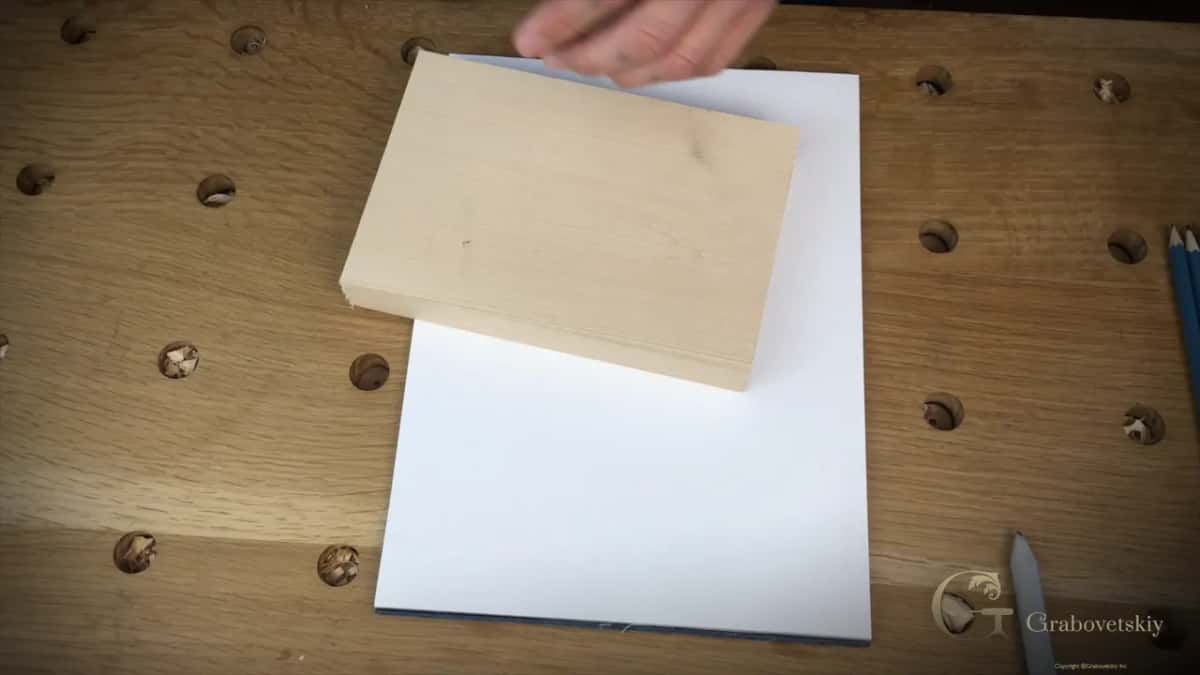
A block and a sheet of paper. Half the decisions on any piece are already made by the time these two meet.
How does cedar behave under a gouge?
It cuts easily, and it forgives almost nothing at the edges. Softness is not the same as workability. These woods give way so readily that a dull tool crushes fibers rather than shearing them, and you get a torn face.
Growth rings are the real story. Cedar lays down a soft band and then a hard band, over and over, and your gouge speeds up through one and stalls at the next. Across a broad sweeping shape you never notice it. Put the same tool on a small curve and it wanders every time it crosses a ring.
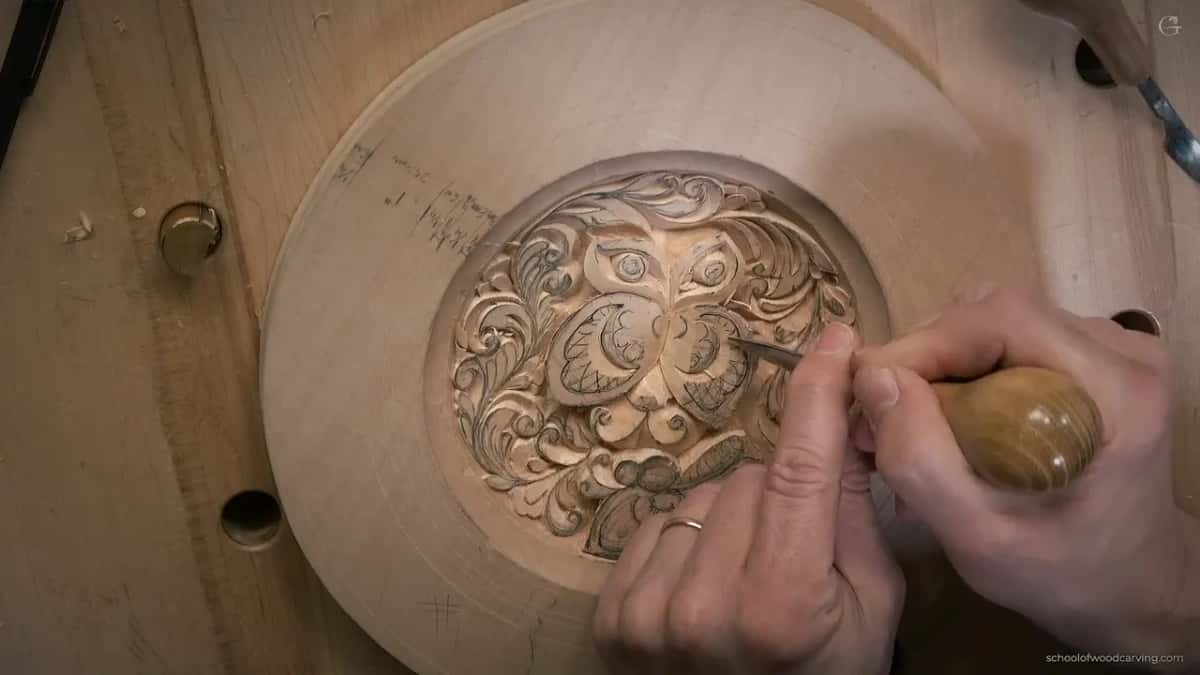
Where the grain turns, the tool has to come at it from the other side. On striped wood that happens constantly.
Thuja plicata in particular will split straight along a ring line if you lever a chip instead of slicing it. Take smaller passes than your instinct says, and keep the bevel low.
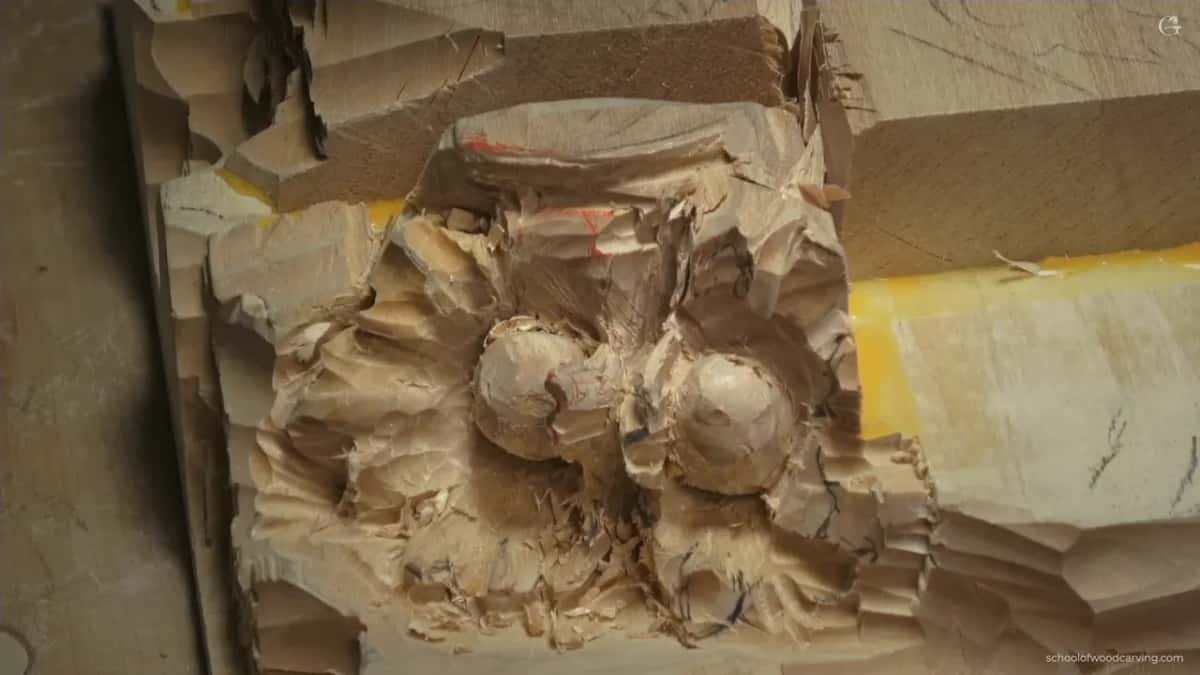
End grain wants barely any pressure at all. Small passes, and let the edge do the work.
Why does cedar ruin fine detail?
The grain is simply louder than your carving. This is the part I wish somebody had told me before my first cedar panel.
Put a carved eye across three dark stripes and the stripes win. The viewer reads the wood, not the face. At small scale that pronounced grain will destroy an eye, and no amount of careful tool work fixes it, because the problem is in the board rather than in your hands.
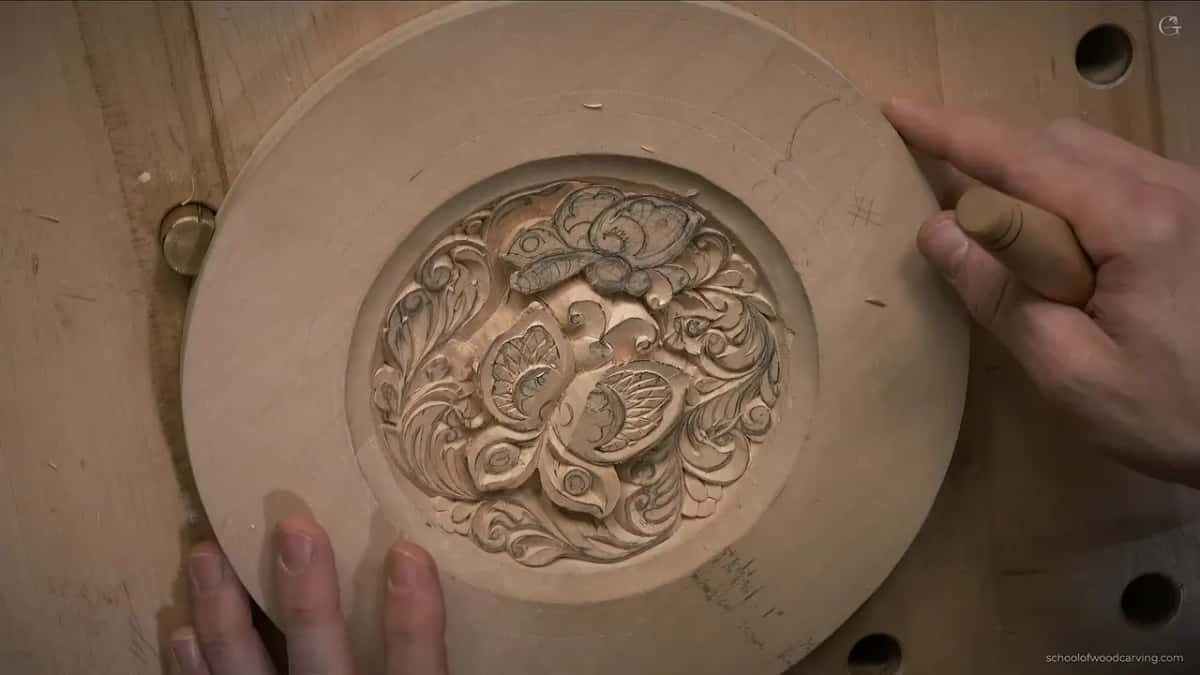
Grooves this fine only read on a quiet board. Try them across cedar stripes and they vanish.
Basswood is the opposite. Pale, almost patternless, and every line you make is the only line on the surface. That is why I teach on it and why my notes on carving wood keep coming back to it, and why walnut sits in between.
What should you actually carve out of cedar?
Big shapes, kitchen pieces and anything living outdoors. The same grain that ruins a face is beautiful across a broad surface, and the Siberian pine Russians call cedar is prized for exactly that.
Spoons and kitchen work suit it. Signs suit it. A chess set in the caricature style, where the forms are chunky on purpose, suits it perfectly. And because these woods resist decay, a garden piece in cedar outlasts the same piece in basswood by years, which is most of what I say about weatherproofing an outdoor carving.

Hooking a chip out of a small panel. This wood takes that kind of work if the shapes stay bold.
How do you carve cedar step by step?
Five stages. Two of them are about reading the board before anything else happens.
Step 1, read the growth rings before you draw
Turn the board over and look at the end. Note where the tight bands run and where the soft summer wood sits. Then lay your design so the important shapes do not straddle a hard stripe.
Step 2, scale the design up
Whatever you were going to carve, make it bigger. A leaf that works at two inches in basswood wants four in cedar. Bold shapes and generous radii, and the wood behaves.
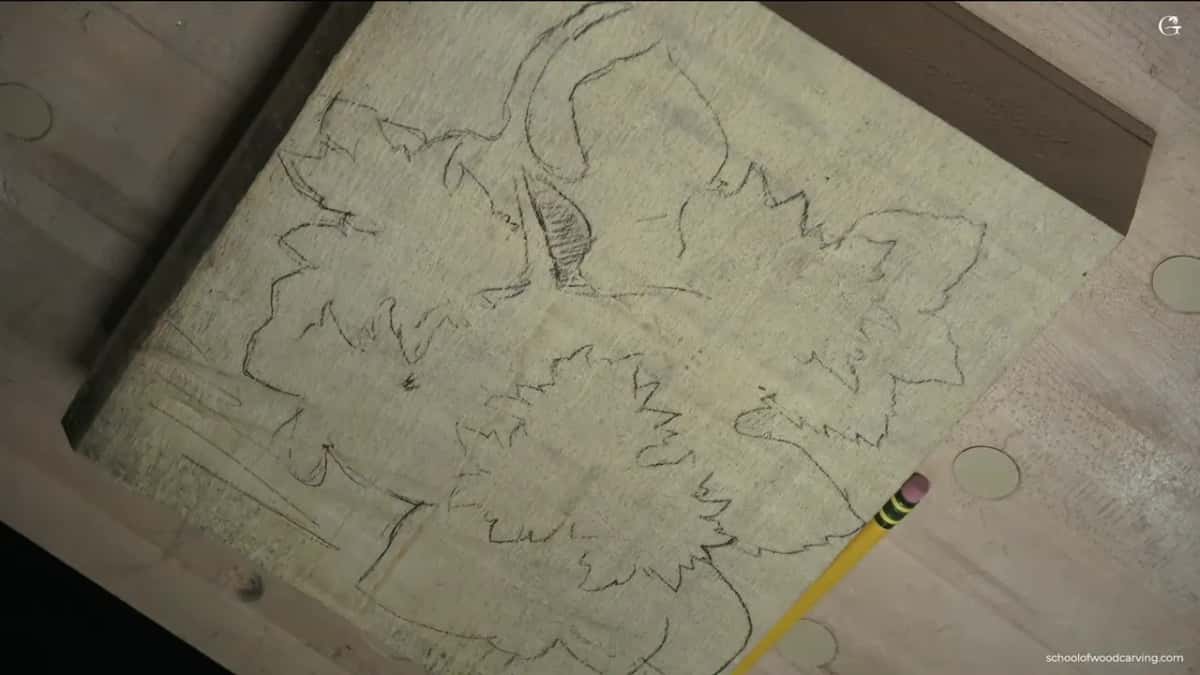
Drawing comes first, and on this wood the drawing is where the grain gets outvoted.
Step 3, sharpen past the point you think is enough
Soft timber wants a sharper edge than hard timber does, which surprises people every time. A really sharp edge shears the soft band cleanly. A dull one tears it and leaves fuzz you cannot sand away without rounding the shape. The sharpening course exists for exactly this.

Let it ride on the middle finger while the thumb steers. Control matters far more here than power does.
Step 4, slice, never lever
Come in at a slant so the edge shears the fibers along their length. If you push straight down and twist, the chip goes and takes a ring line with it, and that is the split you cannot undo.

A clean curl lifted while working against the grain, which is possible when the edge is right.
Step 5, finish light
Oil brings the color up dramatically on all of these woods. For a kitchen piece, food safe oil, renewed. For outside, read the whole weathering question first, because no finish is permanent.
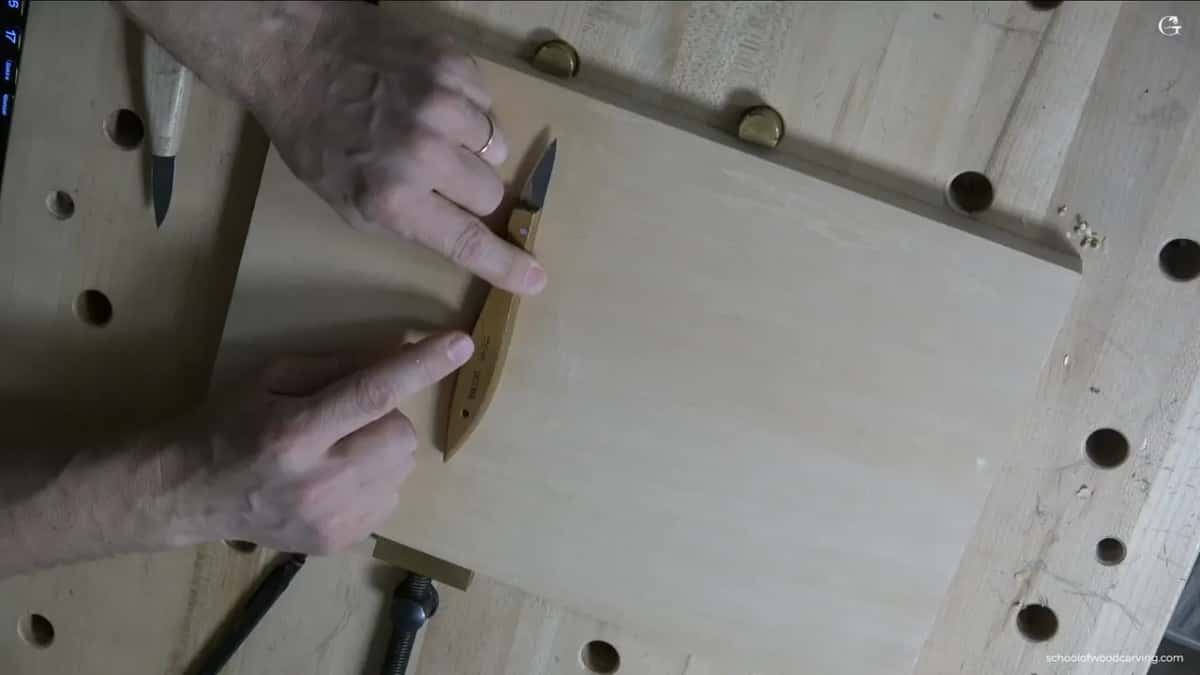
Working the edge of a board with one blade. Most of a project like this needs less kit than you would guess.
Is cedar dust safe to breathe?
Treat it with respect, especially the aromatic one. The juniper sold as aromatic red has been reported to cause skin and respiratory irritation, and Spanish cedar dust is listed as a respiratory irritant too.
Severe reactions are uncommon, but a shop full of that dust on a closed winter day is not clever. Open a window and run a fan. Wear a mask when you are cutting rather than carving. Hand carving throws chips rather than dust, which is one more quiet argument for the gouge over the machine.

Hand tools make chips you can sweep up. Machines make dust you end up breathing.
Here is my own bias, offered plainly, for whatever it happens to be worth to you. I carve architectural work and furniture, where the ornament has to read from across a room and the surface has to stay quiet behind it, so I reach for lime and basswood and the best wood for wood carving. Cedar is not on that list. For a spoon, a sign or a garden piece, it is a fine choice and it will outlive you.
If you want to learn the shapes properly first, on a wood that does not argue with you, the school starts at the first passes and goes on through acanthus and panel work. There are notes on what tools to buy too. Access renews automatically every 12 months and you can stop it from your own account page.
Frequently asked questions
Is cedar easier to carve than basswood?
Easier to push a tool through, harder to carve well. Basswood is more uniform, so the tool behaves the same everywhere. Cedar alternates soft and hard bands, and that difference is what a beginner feels as the tool wandering.
Which cedar is best for carving?
For hand work, Spanish cedar takes detail best of the three common ones, though it can leave a fuzzy surface. The western red kind is softest and splits easily. Juniper is the hardest and the knottiest of them, and it smells like a chest in your grandmother's spare room.
Can you carve a spoon out of cedar?
You can, and people do. Choose a straight grained blank without knots and use a food safe oil. Bear in mind that aromatic red cedar has a strong scent and some people would rather not eat off it.
Does cedar need a finish outdoors?
It lasts longer bare than most woods, but a finish still buys you years and keeps the color. Left unprotected it goes silver, which some people actually want on a garden piece. Read the weathering guide first.
Why does my cedar carving look fuzzy?
Your edge is not sharp enough, and that is nearly always the whole story. Soft timber wants more from a blade than hard timber does, and a tired tool crushes those pale bands rather than shearing them. Strop, take a lighter pass, and the fuzz stops appearing.
Is the cedar in the Bible the same cedar I buy?
No. The Bible means Cedrus libani, the Lebanon cedar, which Solomon brought in for the Temple. What sits in an American lumberyard is a juniper, a thuja or a mahogany cousin wearing the same name on the label.