
November 26, 2020 · Updated August 6, 2026
By Alexander Grabovetskiy — Master Woodcarver · Founder, School of Wood Carving · 13 min read
What Is the Best Wood for Wood Carving?
Key Takeaways
- Basswood is the best wood for wood carving, for beginners and skilled carvers alike.
- Yellow pine is close to basswood but has a more stubborn grain.
- Basswood works for any type of woodcarving project you put on the bench.
- Basswood is a pure pleasure to cut.
Quick answer: The best wood for wood carving is basswood, the linden wood that Europe calls limewood and botany calls Tilia. I have carved oak, walnut, cherry, and mahogany for clients for over forty years, and basswood still goes on my bench first. The grain stays quiet, the gouge slices clean, and a dry board almost stops moving.
You want to carve something that lasts. The lumber store has other plans, and the cheapest board wins. A construction 2x4. Carve a 2x4 and you are going to get so frustrated, and you will kill your tools.
Then somebody at the woodworking club tells you the opposite, that basswood is beginner wood, soft and cheap, with no character worth showing. Real carvers, he says, graduate to oak.
Both voices are wrong. The second one bugs me more.
I am going to show you what basswood really is, and I am bringing witnesses. Not carving blogs. Museums, churches, a book from Yale, and the wood scientists of the US government. My own credentials are simple. Over forty years of commissions, and the International Woodcarver of the Year award. Five hundred years of carved proof, some of it still standing in the church where the master left it. After that I will show you how I buy boards for my own commissions, so you skip twenty years of guessing.'
Need the whole answer in five lines?
American basswood and European limewood are the same tree family, Tilia. Germany says linden, Russia says lipa.
Masters across five centuries picked it for the quiet grain. Nothing pulls your eye off the design.
Tilman Riemenschneider, Veit Stoss, and Grinling Gibbons did their finest work in lime.
Dry basswood nearly stops moving. Their carvings hold while oak work cracks.
Buy it dry and clean, skip spalted boards, and never carve construction lumber.
The bench view first, five woods side by side.
Wood | Grain on the finished piece | Under the gouge | Cracks with age | Proof over time |
|---|---|---|---|---|
Basswood, limewood (Tilia) | Quiet, almost invisible | Slices clean, holds deep undercuts | Movement nearly stops once dry | Limewood altarpieces, 500 years old |
Oak | Loud rays that talk over the design | Crunchy, chips out on fine detail | Cracks badly over centuries | Gothic church stalls, many split |
Walnut | Dark and handsome, very visible | Cuts well, harder push | Moderate | Furniture and gunstocks |
Cherry | Strong figure, turns red | Hard, slow, dries slowly | Keeps cracking for years | Furniture |
Pine 2x4 | Wild bands of hard and soft grain | Tears and splinters | Twists and checks as it dries | Nothing hangs in a museum |
Why does one carving wood carry five names?
Basswood, limewood, linden, lipa, and Tilia are five names for the same family of tree. In America the sawmill says basswood, Tilia americana. England says limewood. Germany has linden, Russia, where I was born, has lipa, and Romania calls it the tea tree. Botanists just say Tilia and call it a day.
The United States Forest Products Laboratory settles the family question in one line: basswood is also known as lime in England and Europe, and under a microscope the species cannot be told apart. One tree, one pale, even wood under your gouge. That same government sheet calls basswood a premier carving wood.
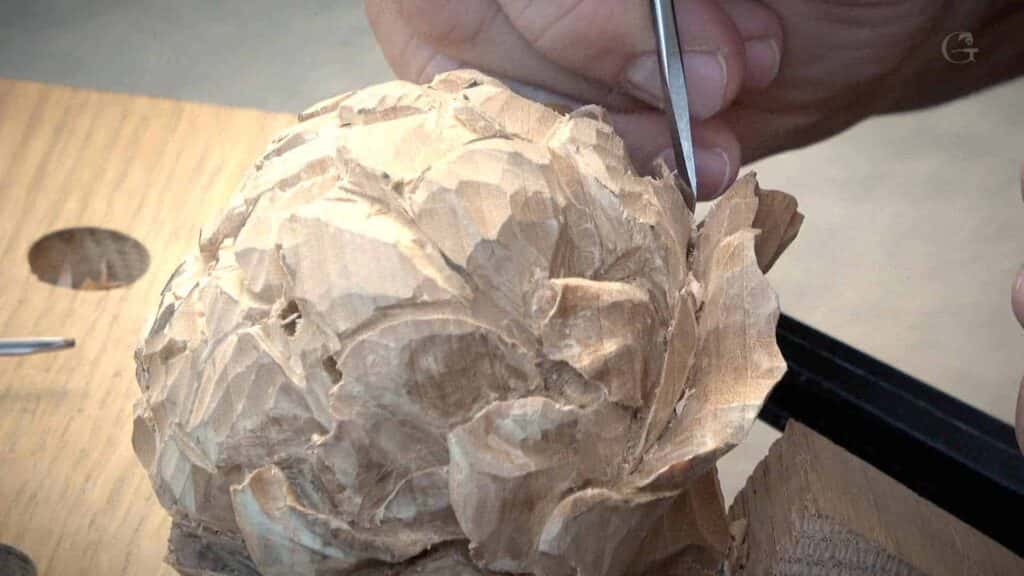
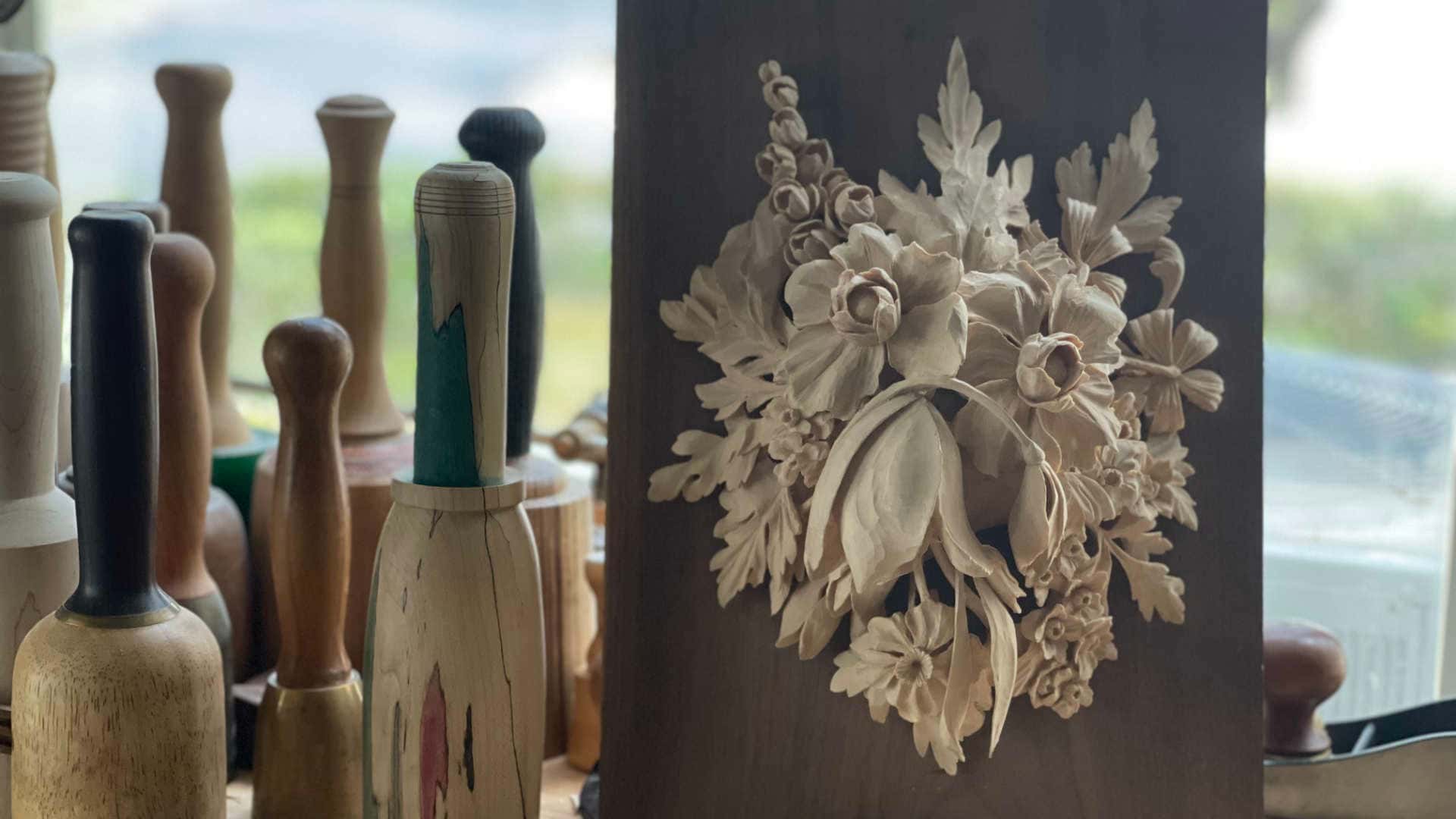
A peony flower on basswood on my bench. The form does all the talking.
The color runs from cream to nearly white, and over the years it warms into a light pinkish tone. It is a true hardwood, by the way. Soft under the tool, but a hardwood. And if somebody tells you it is cheap wood, they have not bought a truckload lately. My wood guide entry on basswood goes deeper into the boards themselves.
One more thing almost nobody tells beginners. Even inside America basswood is not one wood. Eastern, northern, and southern boards each cut a little differently, so I pick through every load myself.
Is basswood really the MDF of wood carving?
Last year I taught a class at Marc Adams School of Woodworking in Indiana. We carved a shelf in the 19th century style. One of the men there is a good friend, I have known him for at least eight years, and on Wednesday he leaned over and said, on Friday I will tell you what is wrong with your basswood.
I bugged him all week to just tell me now, and the answer never changed. Wait until Friday.
Friday came, and he delivered his verdict with a straight face. Basswood is like MDF for woodworkers. Cheap, no grain, not a serious wood.
I laughed. It also bugged me, and it still bugs me a little, because I grew up inside that insult. I was born in the Soviet Union, and in Russian we say sdelano iz lipy, made from lipa. It means a fake. Fake papers, a fake excuse, anything not worth your trust. A whole language decided this tree is junk.
So the man has half the world on his side. And he is right about exactly one thing. You can barely see the grain in a basswood board.
Hold that thought. It means the opposite of what he thinks, and the greatest carvers who ever lived are about to explain why.
I told this story on camera, in my own shop:
Which masters staked their names on limewood?
Tilman Riemenschneider, Veit Stoss, and Grinling Gibbons all chose limewood, the same Tilia as American basswood, for their finest work. Not beginners on a budget. The most celebrated carvers in the history of this craft.
Start with a book. In 1980 Yale University Press published The Limewood Sculptors of Renaissance Germany by Michael Baxandall, and universities still teach from it. Now go find The Cherry Furniture Makers of Renaissance France. Or The Mahogany Masters of Great Britain. Those books do not exist. Cherry is a wonderful wood. Mahogany is a great wood. Yet only one carving wood ever earned its own scholarly book, and it is the one that got called MDF in an Indiana workshop.
Riemenschneider ran his workshop in Würzburg around 1500. The Metropolitan Museum in New York keeps three of his figures at The Cloisters, and the Met catalog lists the material for each one: limewood. His Holy Blood altarpiece has stood in St. Jakob's church in Rothenburg for five hundred years of visitors. I wrote about why he left his limewood unpainted if you want to go deeper.
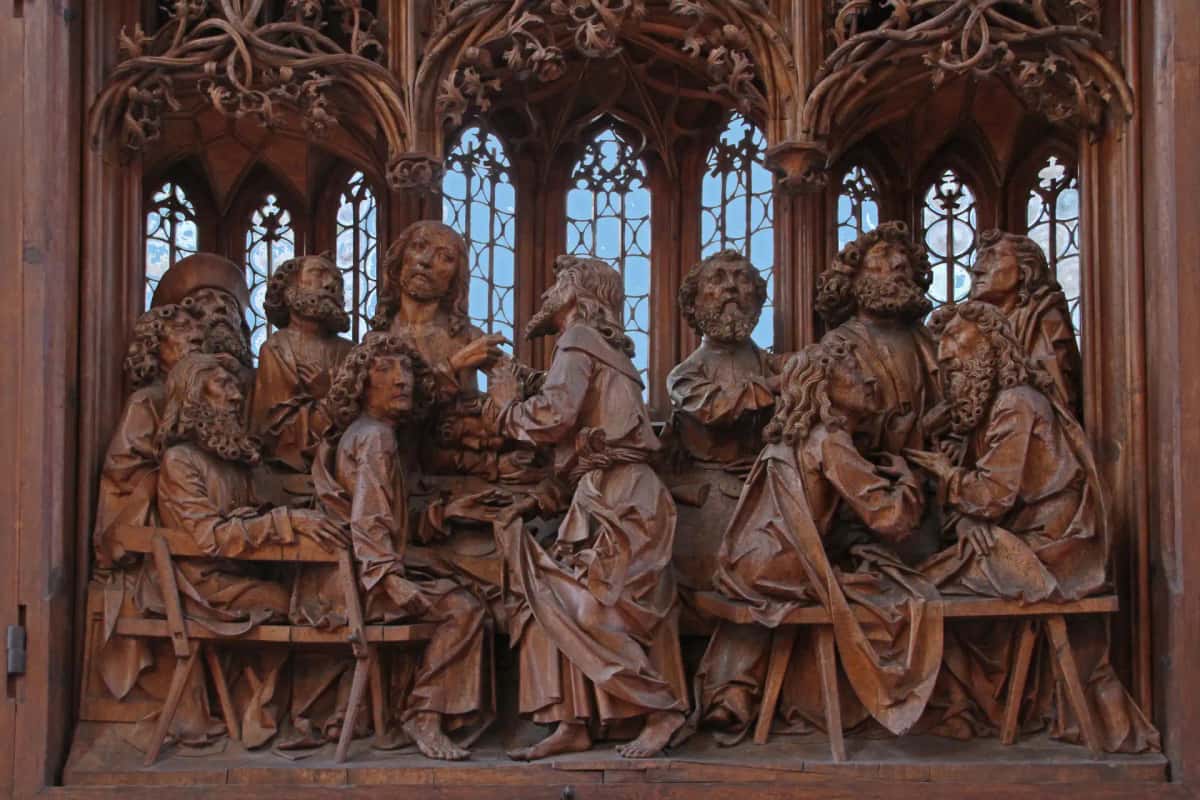
The Holy Blood altarpiece in Rothenburg. Limewood, carved around 1505, still on duty.
His Marienaltar in Creglingen tells the same story, and it is still in its church.
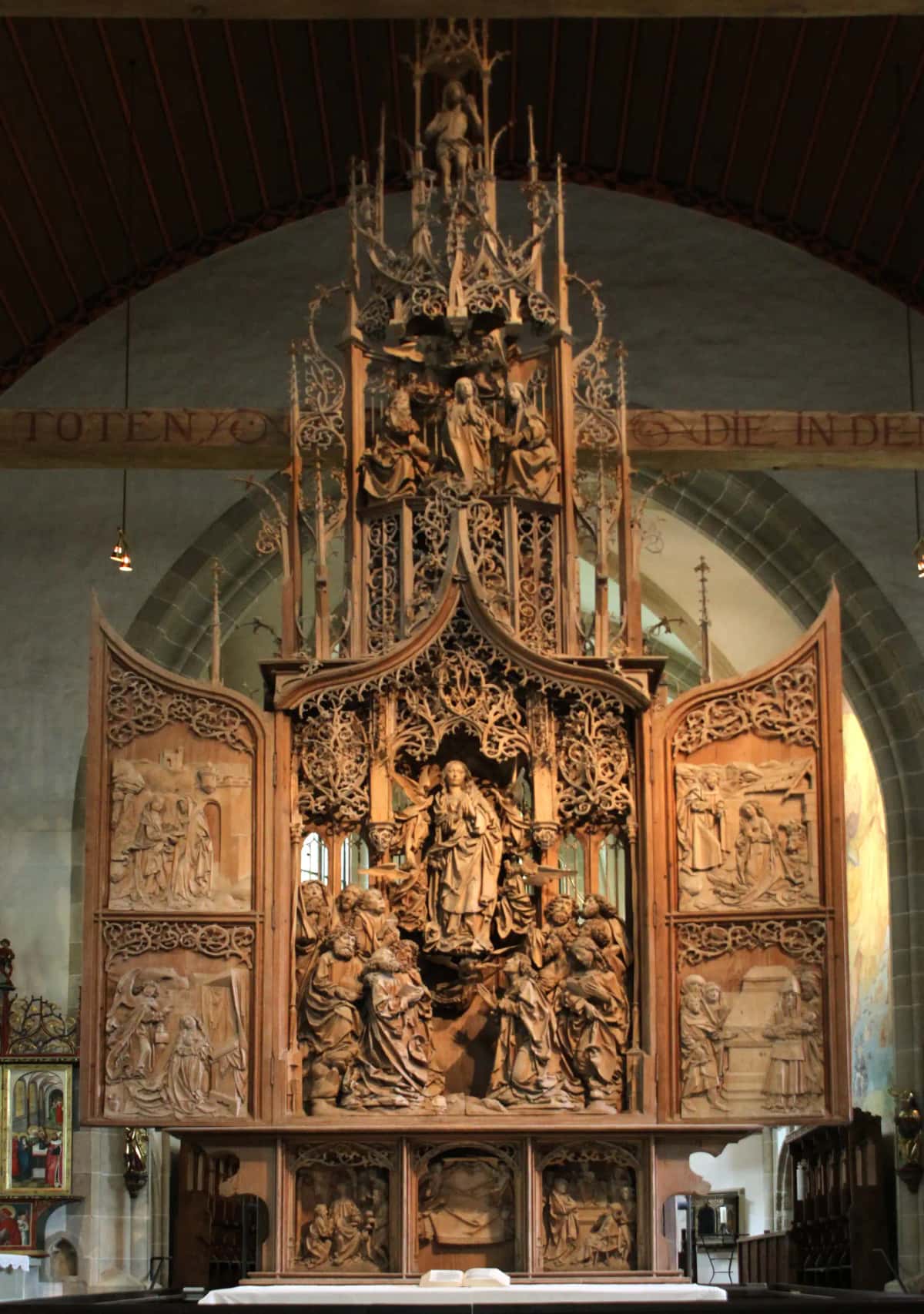
The Marienaltar in Creglingen. Unpainted lime, the way he left it.
In Krakow, Veit Stoss spent the years from 1477 to 1489 carving the great altarpiece of St. Mary's Basilica. The church will tell you itself what it is made of. The figures are soft, flexible linden. The frame behind them is oak. Oak for the box, lime for the art.
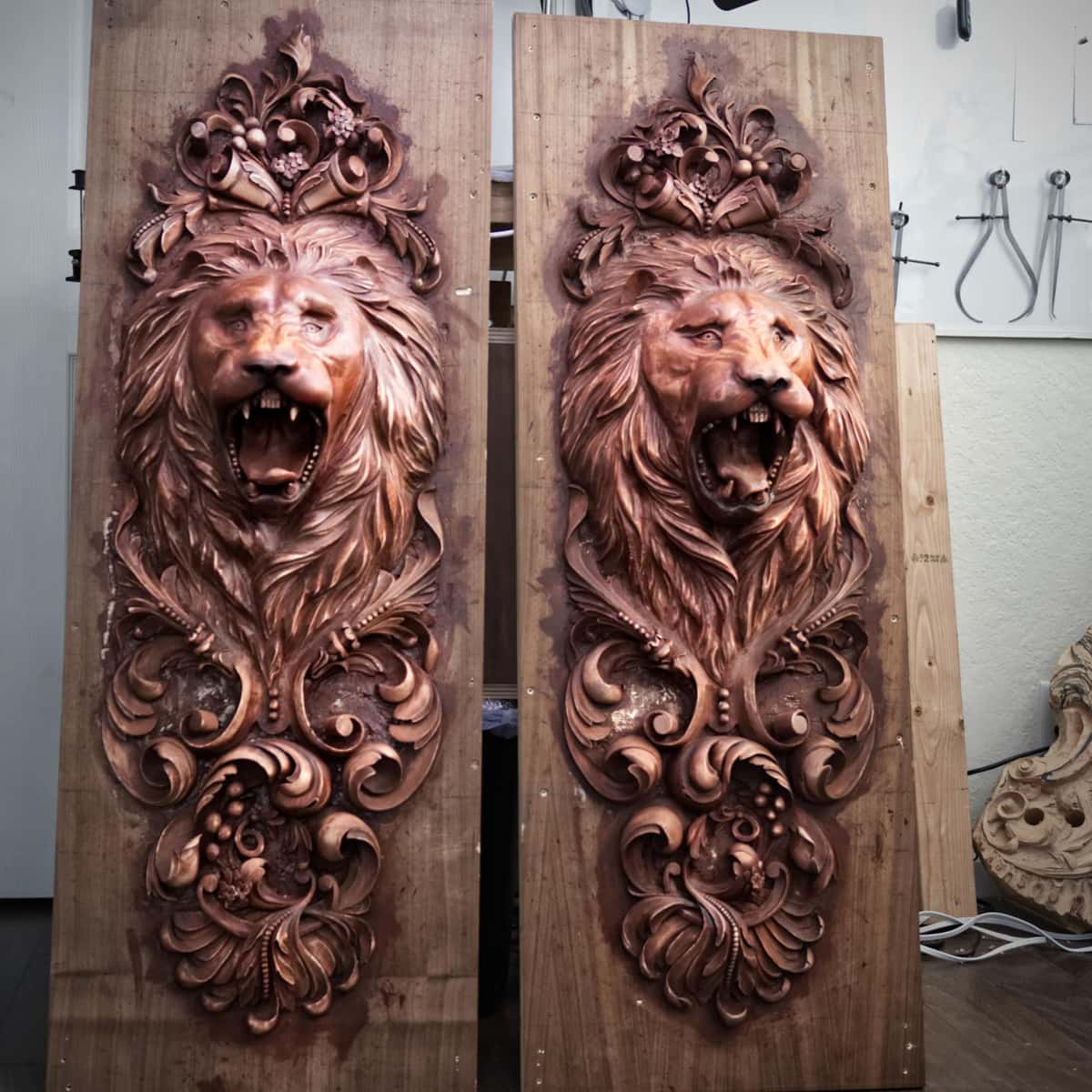
Then England. Grinling Gibbons was born in Rotterdam in 1648 and became the most celebrated carver England has ever had. Now the strange part. England sat on mountains of beautiful brown oak. I have carved English brown oak, and it cuts nicely. But when Gibbons built his cascades of flowers, fruit, and lace, he passed over the national timber and worked limewood. For one showpiece he carved a full lace cravat from it, so fine that Horace Walpole later wore it to receive his guests. The Victoria and Albert Museum keeps that cravat today and states plainly that limewood was his preferred material. His carving still hangs at Hampton Court and in St Paul's Cathedral.
David Esterly, the American carver who spent a year recarving Gibbons' work at Hampton Court after the fire there, wrote a whole book about this wood, The Lost Carving. His verdict on limewood:
The queen of carving woods, in all its pale glory.
In Russian, lipa means fake. In Rothenburg, lipa means five centuries and counting. Fake against lasting. Pick which language you believe.
How old is the proof?
The written record for lime as a working wood runs back about twenty-four centuries.
Almost two thousand years ago, portrait painters in Roman Egypt painted faces on thin lime panels. The Getty examined 180 of those mummy portraits and found nearly seven of every ten panels were European lime, Tilia europaea, shipped across the sea into a country that had trees of its own. A British Museum scientist, Caroline Cartwright, put slivers of two portraits under an electron microscope and confirmed it. Lime again.
Herodotus goes back further. In the fifth century BC he wrote that Scythian soothsayers told fortunes with strips of lime bark braided in their fingers. Pliny the Elder called the linden's wood white, excellent, and safe from worm. Even the bark kept working through the ages. Rope, baskets, and mats come off the same layer of the same tree that Herodotus watched the soothsayers braid.
Every age reaches for this tree. Then somebody calls it fake.
What makes quiet grain worth more than pretty grain?
Quiet grain wins because the eye follows your design instead of the stripes in the wood. That is the whole secret, and almost nobody says it out loud.
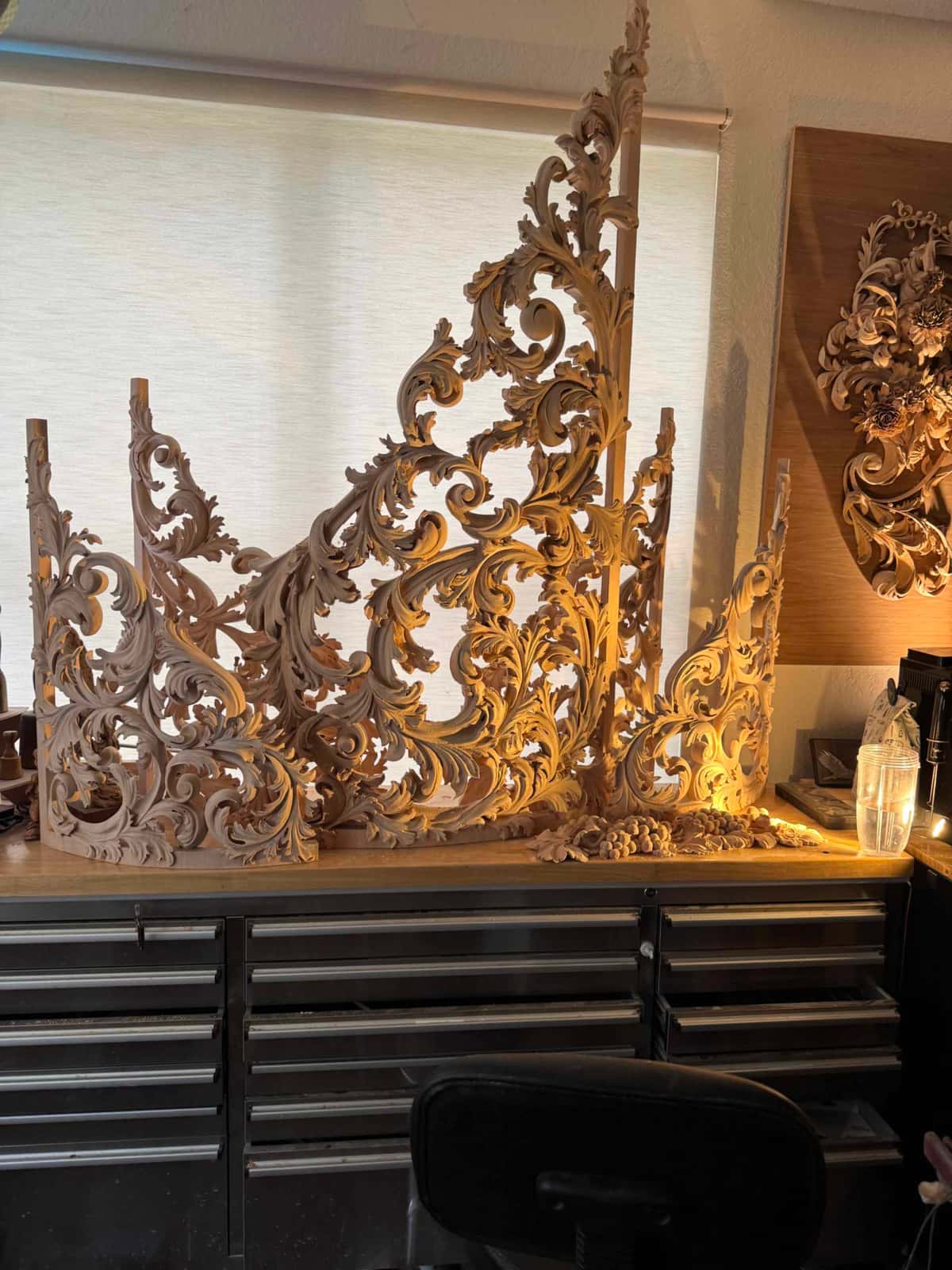
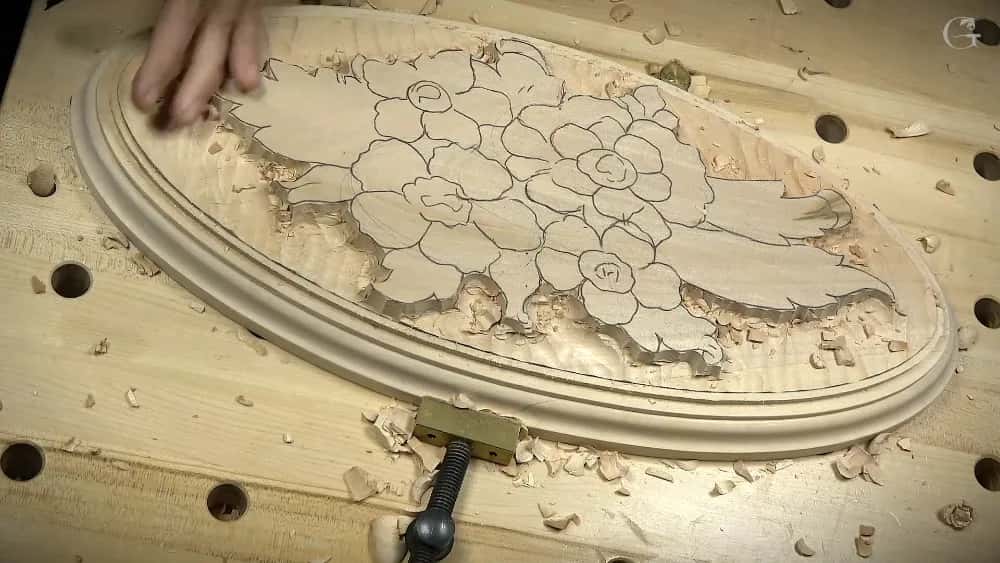
Look at a carved acanthus scroll. The leaf rolls, turns over, dives under itself, and every one of those movements is a line the eye rides along. Now put loud cathedral grain underneath all of it. The wood shouts over the carving. On a clean basswood panel there is nothing going on but your design, so the shadow and the curve do the talking.
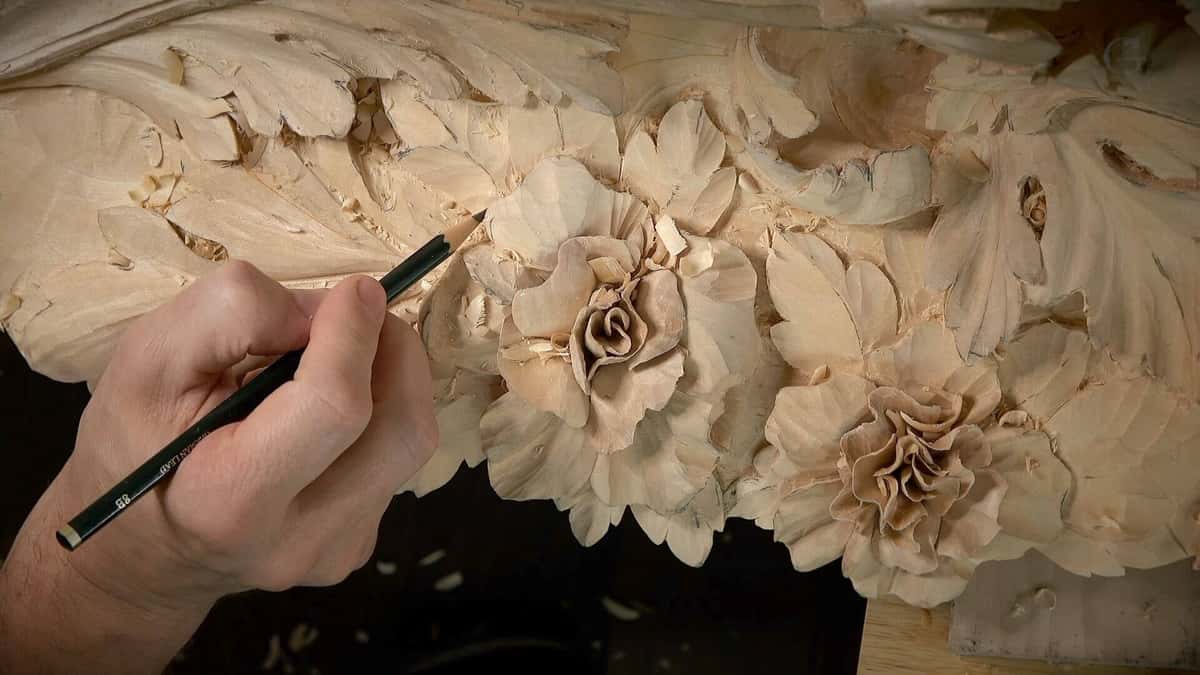
Laying out design lines on basswood. Nothing in the wood argues with the pencil.
Walnut is beautiful. I love the look of it and how it ages, and my great-grandfather, a famous cabinetmaker, worked mahogany in the Chippendale style, so I grew up respecting the loud, rich woods. For a tabletop, a gunstock, a panel where the wood itself is the show, give me walnut all day long.
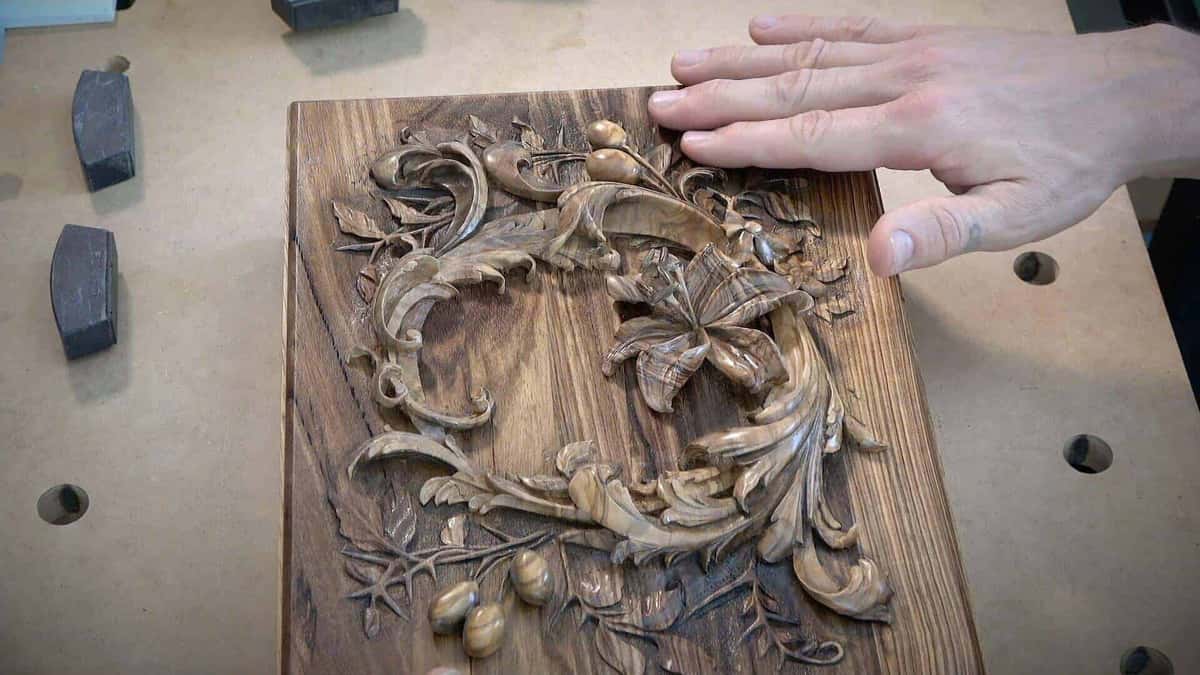
A lily in figured wood. A gorgeous board, and watch how the grain talks over the leaves.
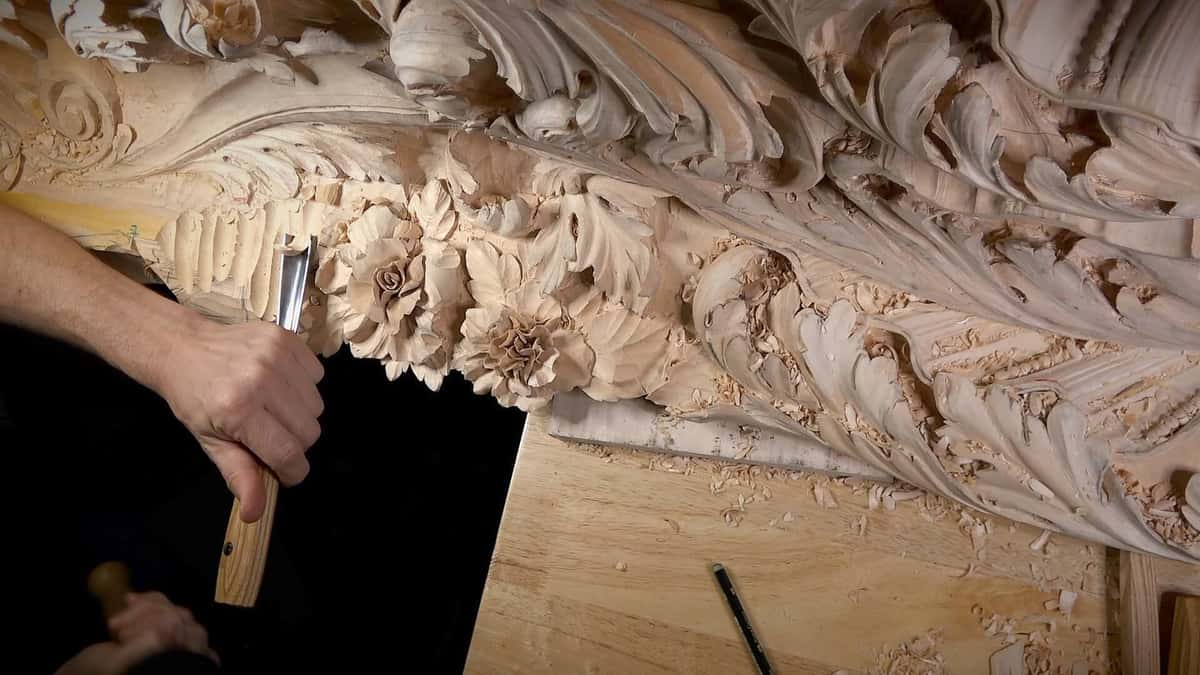
Ornament is a different animal. Form is everything there. When I carve a running leaf or a rose window, the curve and the shadow carry the whole design, and basswood keeps quiet and lets them work.
The softness pays you a second time. Esterly wrote that limewood is firm enough to be undercut radically, and he is right. You can cut under a leaf and come out the other side, and the chip releases clean instead of crunching out the way oak does. You break fewer tools. There is no limit in this wood. None. The only limits are your sharpening, your drawing, and how much patience you bring.
The man in Indiana was right that you can barely see basswood's grain. He just never asked why every master in this story wanted exactly that.
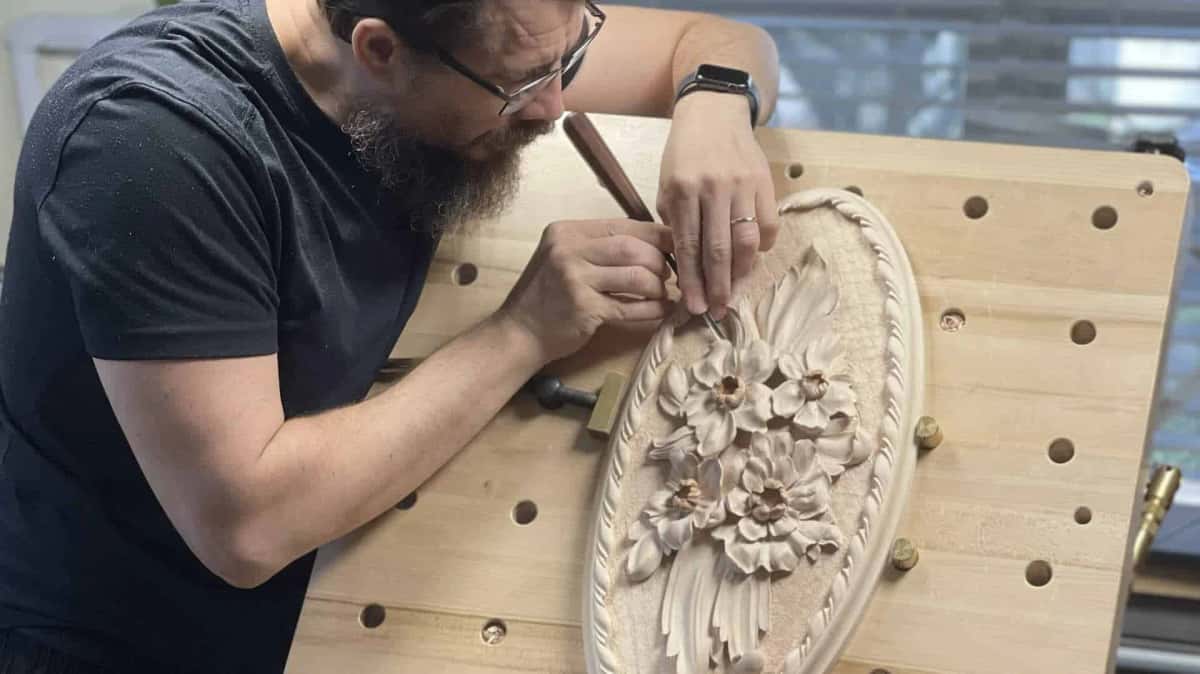
Why does basswood outlive oak?
Once basswood is fully dry it nearly stops moving, and a carving that stops moving stops cracking.
Walk through the royal houses of England and look close. The old oak carving there is full of cracks. Gibbons' limewood, most of it, is still tight after three hundred years. Same buildings, same air, different wood.
In my own shop it goes like this. A basswood board dries, and dries, and dries, and then one day the big movement simply stops. Give a thick board about ten years and the seasonal push is nearly gone, down to a few percent. I cannot hand you a laboratory paper for that number. It is what a lifetime with this wood has shown me.
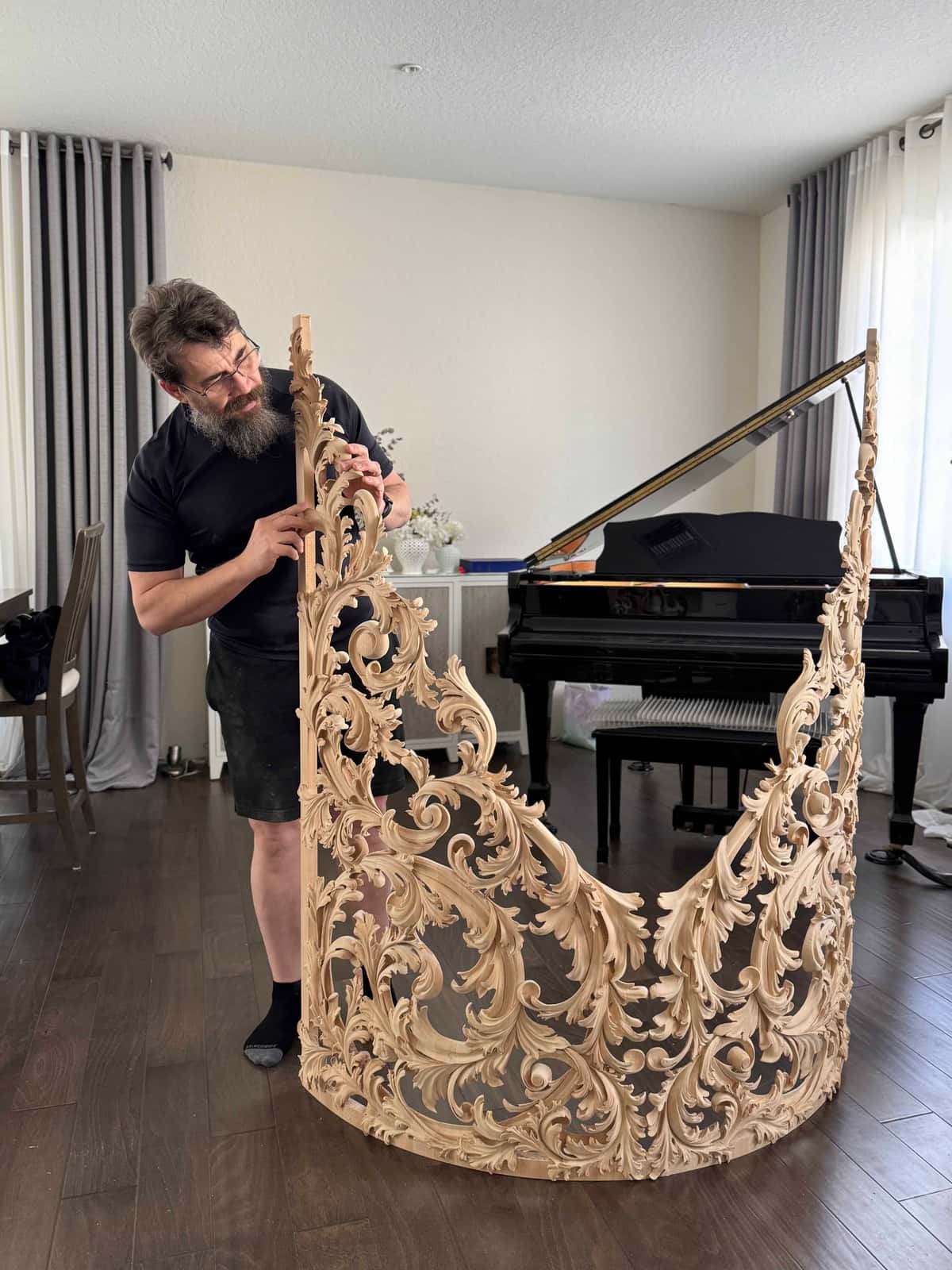
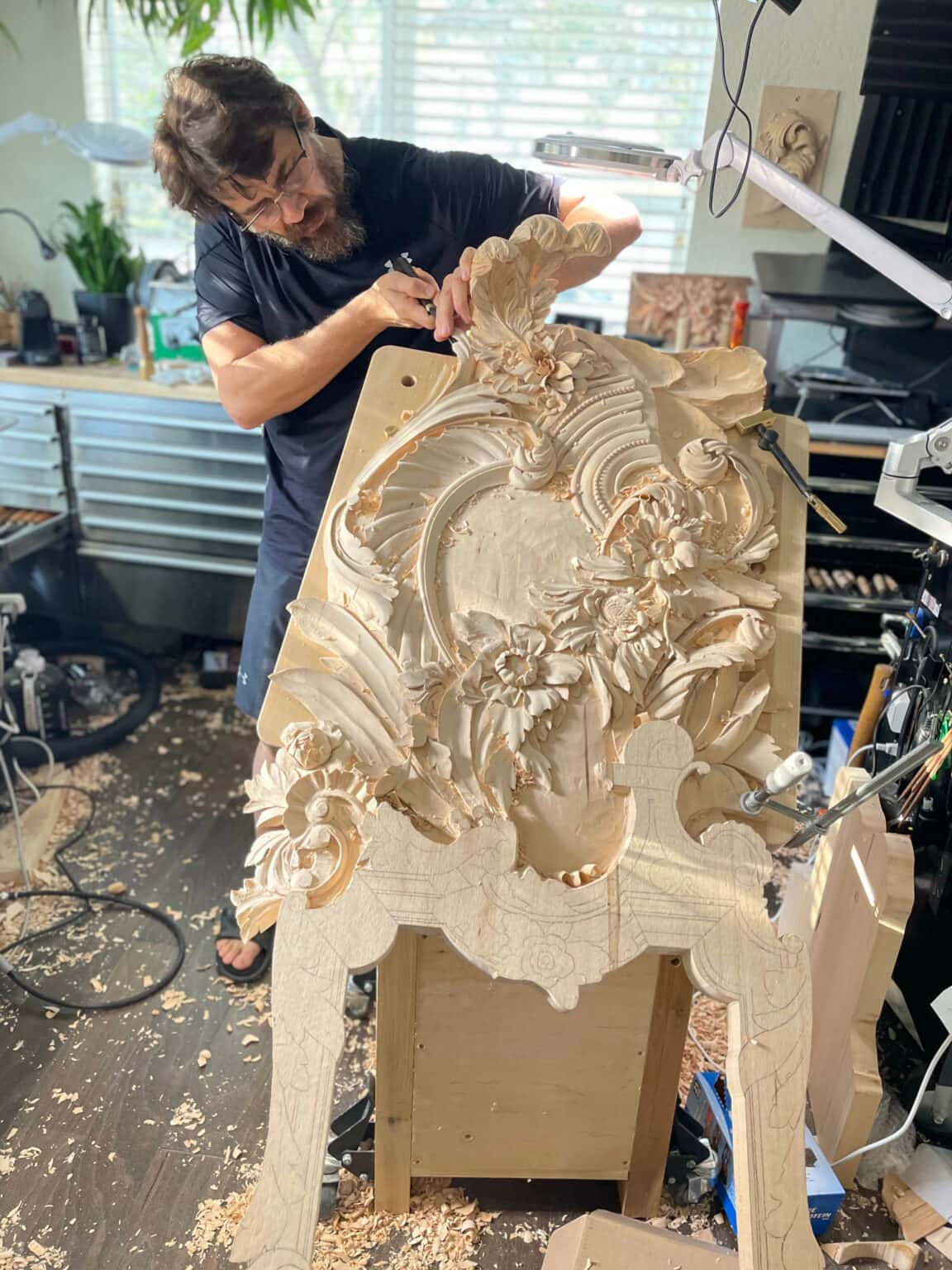
I carved my Venice Room panels between 2012 and 2014, and there is not one crack in them today.
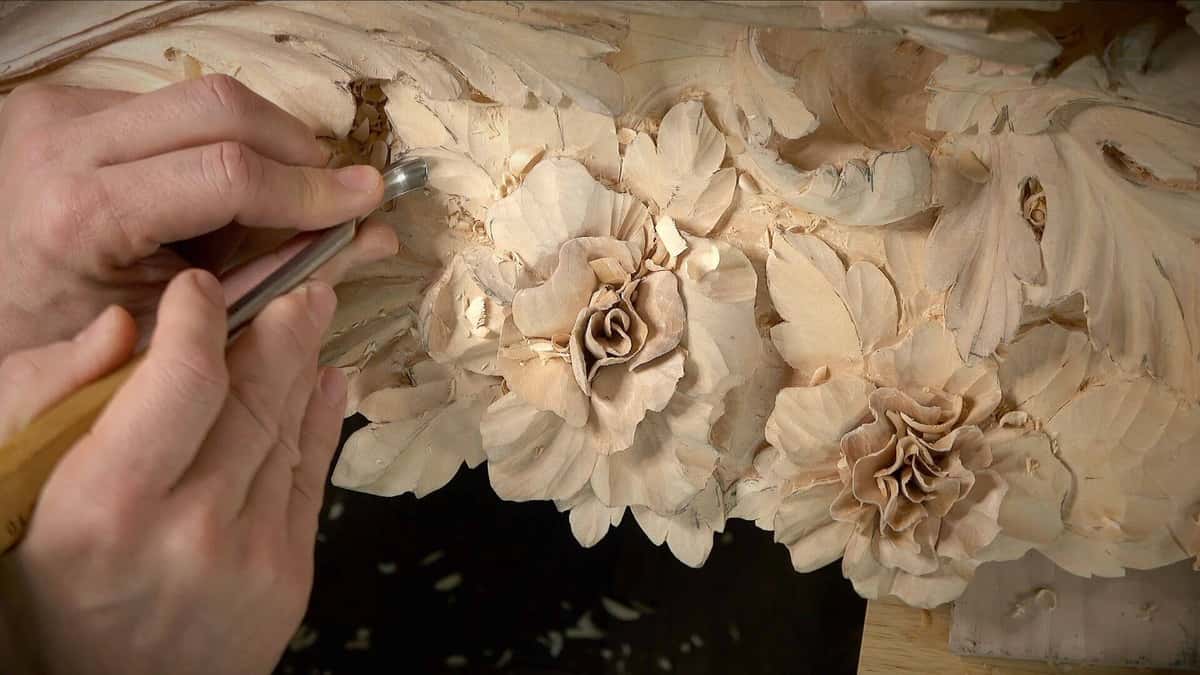
Working the Venice Room panels in basswood. Those panels have not one crack today.
The shops of 1500 already understood this. Their carvers hollowed out the backs of the big lime figures so the wood could relax, and those figures still stand in their churches. I wrote more about how boards move in my post on wood warping and cupping.
The soft, humble, fake wood turns out to be the durable one. The hard woods crack their way through the centuries. The quiet one holds.
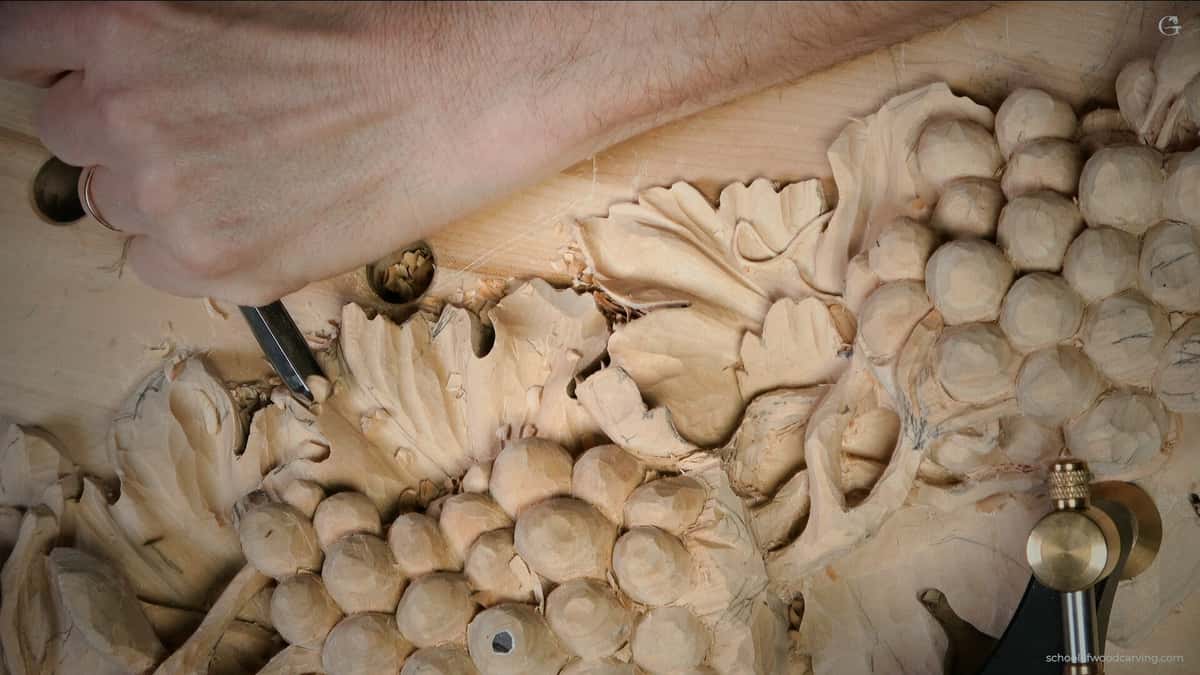
How should you buy basswood?
Buy dry, clean stock, as thick as your budget allows.
My own system, the one behind my commissions, is simple.
Dry comes first. I use only dry wood, and I love natural, air dried stock. I buy by the semi truck and stack it for years. Some of my boards are twenty years old, a few are close to thirty. You do not need my patience. Kiln dried basswood from a good hardwood dealer is done moving and ready to carve.
Clean comes second. I skip anything with gray streaks, spots, or spalting. Spalted maple is pretty. Spalted basswood is mush under the gouge.
Thick comes third. I buy 16/4 stock, about four inches, and resaw it so the growth rings stand upright through the board. Quarter sawn basswood barely cracks at all.
And never a construction 2x4, not even to practice. It tears and splinters, and it will take the edge off your gouge in an afternoon.
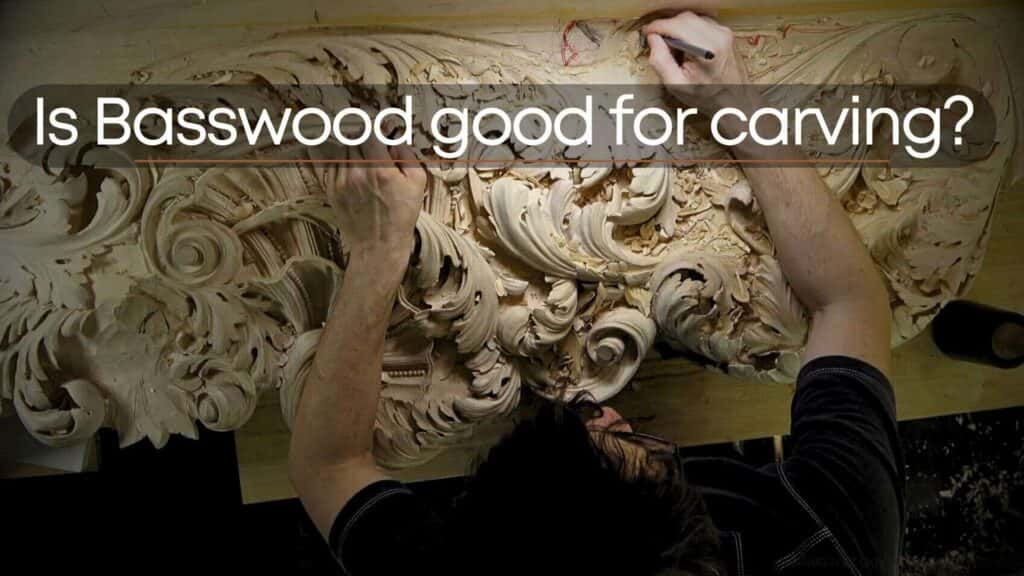
Working a thick basswood panel. Thick stock lets you resaw your own quarter sawn blanks.
There is no such thing as expensive wood or cheap wood, only the wood that fits what you want to build. If all you want is a weekend of shavings, any board will do. But a carving your grandkids will hand to their own grandkids starts with the wood the masters trusted, and you now have an answer ready for the next man who calls basswood MDF.
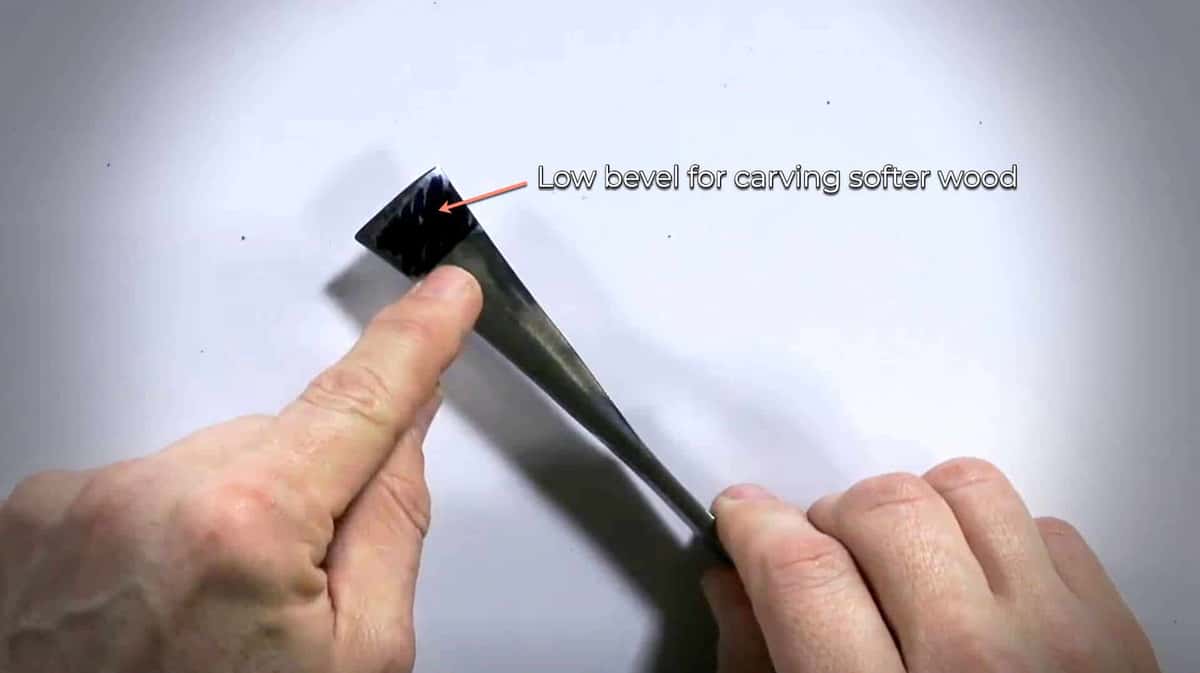
I grind a lower bevel for soft woods like basswood. Sharp beats expensive.
Your gouge matters as much as your board. I put everything about choosing and sharpening tools into my tools course, and if you are brand new, the beginner course starts you with a clean basswood blank and a drawing.
Ever picked up a pale, quiet board and felt the leaf hiding inside it? Want your gouge to slice this weekend instead of tear?
Frequently asked questions
Is basswood good for beginner wood carvers?
Basswood is the best first wood for carving because it cuts clean under hand pressure and forgives mistakes. You spend your energy learning the tools instead of fighting the grain. Buy it dry and knot free, and a simple relief or rosette is within reach in your first month.
What wood did Grinling Gibbons use?
Grinling Gibbons carved almost all of his famous work in limewood, the European Tilia, the same family as American basswood. England was full of oak, yet he worked lime for his showpieces at Hampton Court and St Paul's Cathedral, and the Victoria and Albert Museum lists limewood as his preferred material.
What is the difference between basswood and limewood?
The difference is geography, not the wood. America grows Tilia americana and sells it as basswood, while Europe grows its own species of the same family and calls them limewood or linden. Wood scientists cannot tell them apart under a microscope, so good basswood puts the material of Riemenschneider and Gibbons on your bench.
What woods should a beginner avoid?
Skip construction pine, any board with knots, spalted or gray streaked basswood, and hard species like oak, hard maple, and the exotics. They tear and crunch, and they punish tools that are not perfectly sharp. Come back to them once your sharpening can keep up.
Should you carve basswood green or dry?
Carve it dry, always, for relief and ornament work. A carving cut from wet wood keeps shrinking after you finish, and it will check and twist as it dries. Green carving suits spoon carvers with an axe and a hook knife, not detailed work that has to stay flat for a hundred years.
Filed under