
Alexander Grabovetskiy, woodcarver, School of Woodcarving · Published 2025
Why carve grapes on the back of a wood tray?
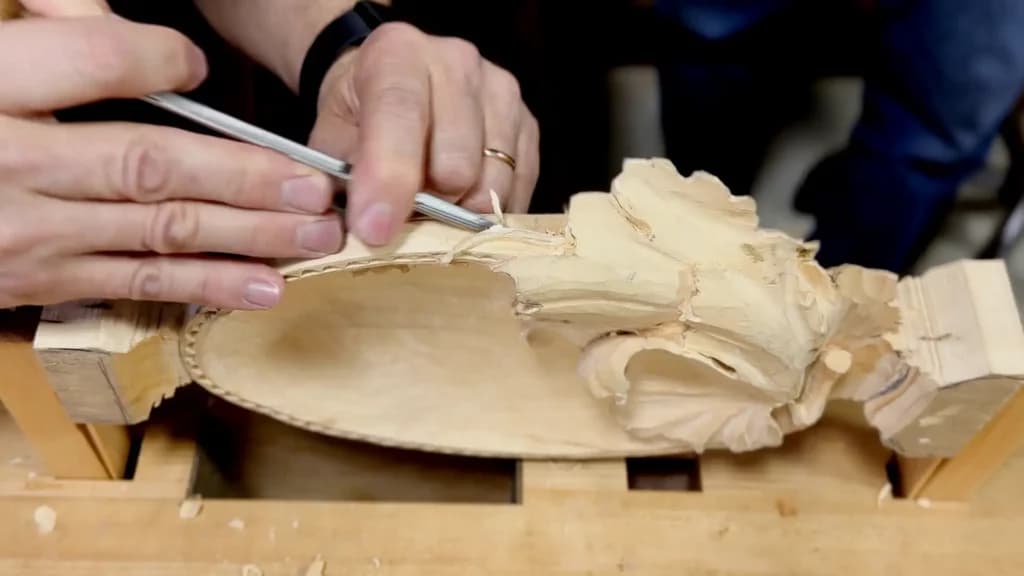
Quick answer: Carving a bunch of grapes under a wood tray is what I did in the last lesson of my Cabernet Sauvignon tray. Only somebody who flips it over will see that bunch. I kept the grapes at their full height so they stand in for a leg, and the wood I had left decided how many went in.
Grapes on the back of a wood tray are a small bunch for whoever flips the tray over, and on mine I kept them at full height so they could stand there as a leg. That's how wood carving grapes went in the last lesson of my Cabernet Sauvignon tray. It was lesson 8 of The Tray of Blessing, carved in a class, with people asking me things as I went.
Have you ever picked up a carved tray and turned it over? Did you look for a maker's mark or anything carved under there? Then you're the person this bunch was carved for.
I'll give you each choice I made under that tray, in the words I used at the bench. Why the grapes went underneath, how tall they stayed, what told me how many, and why the grapes have no stem.
The bunch under the tray at a glance
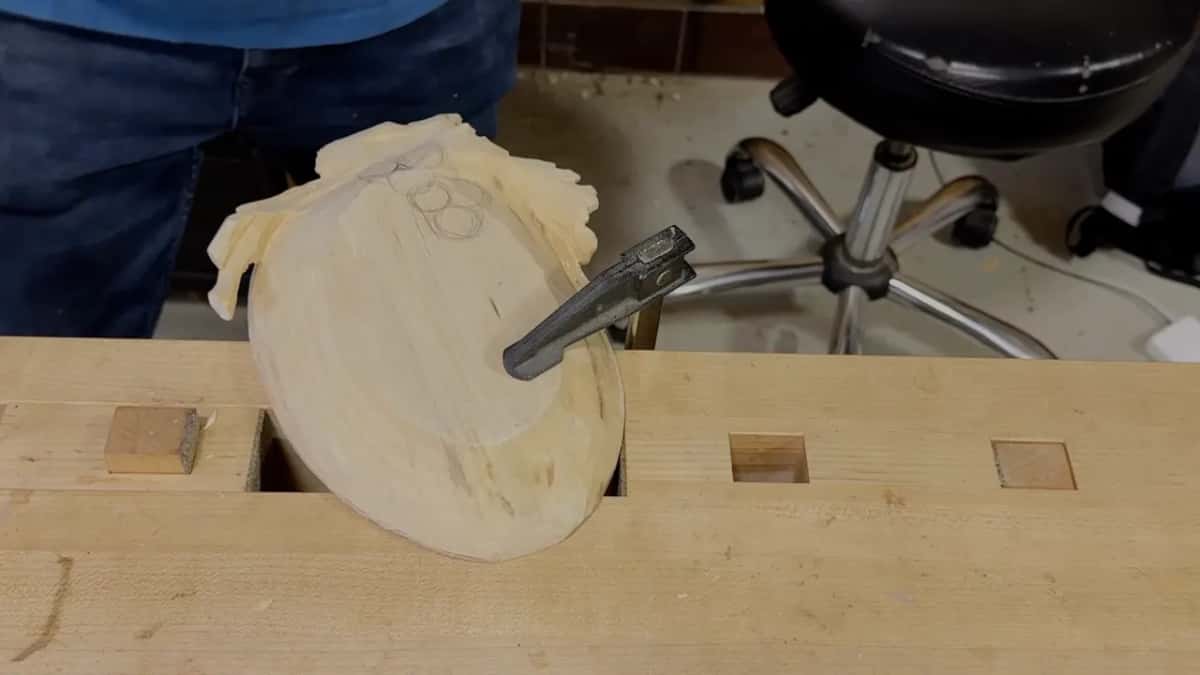
The grapes went on the back side, where only someone who turns the tray over will find them.
Nothing came off their tops, so the bunch could do the job of a leg.
Three fit in one spot, and the wood there allowed no more.
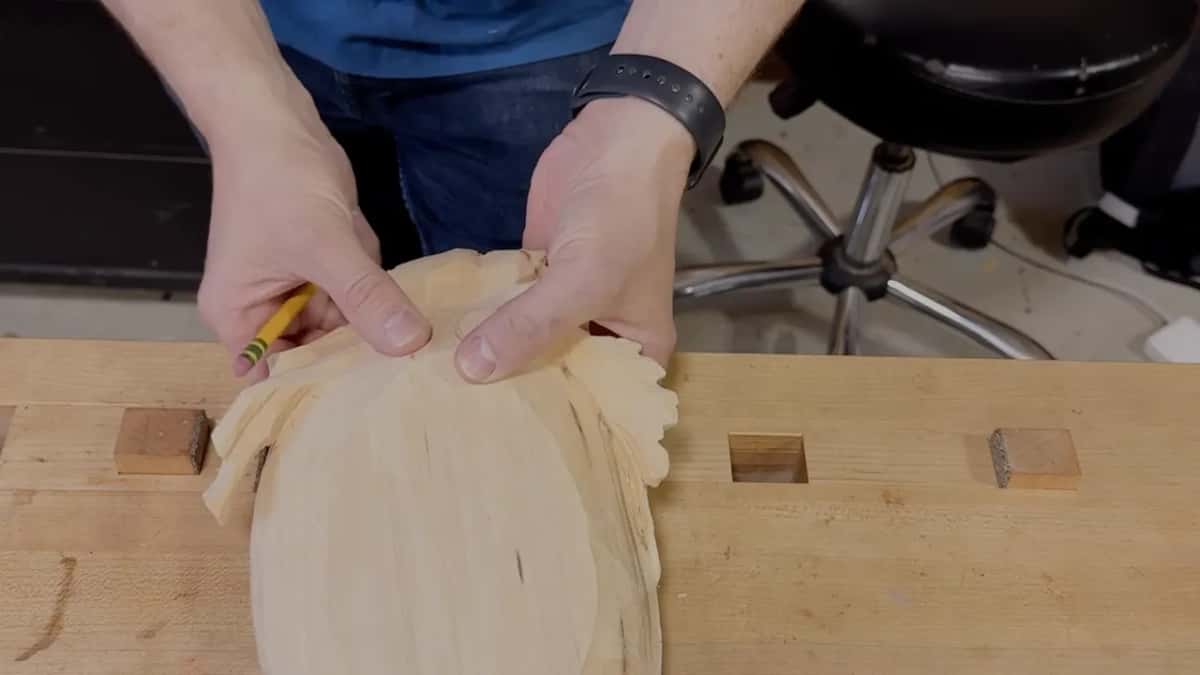
Before a single grape went down, I checked how much wood was left under it.
No stem runs to them. On a piece people use at the table, a link that tiny is too fragile.
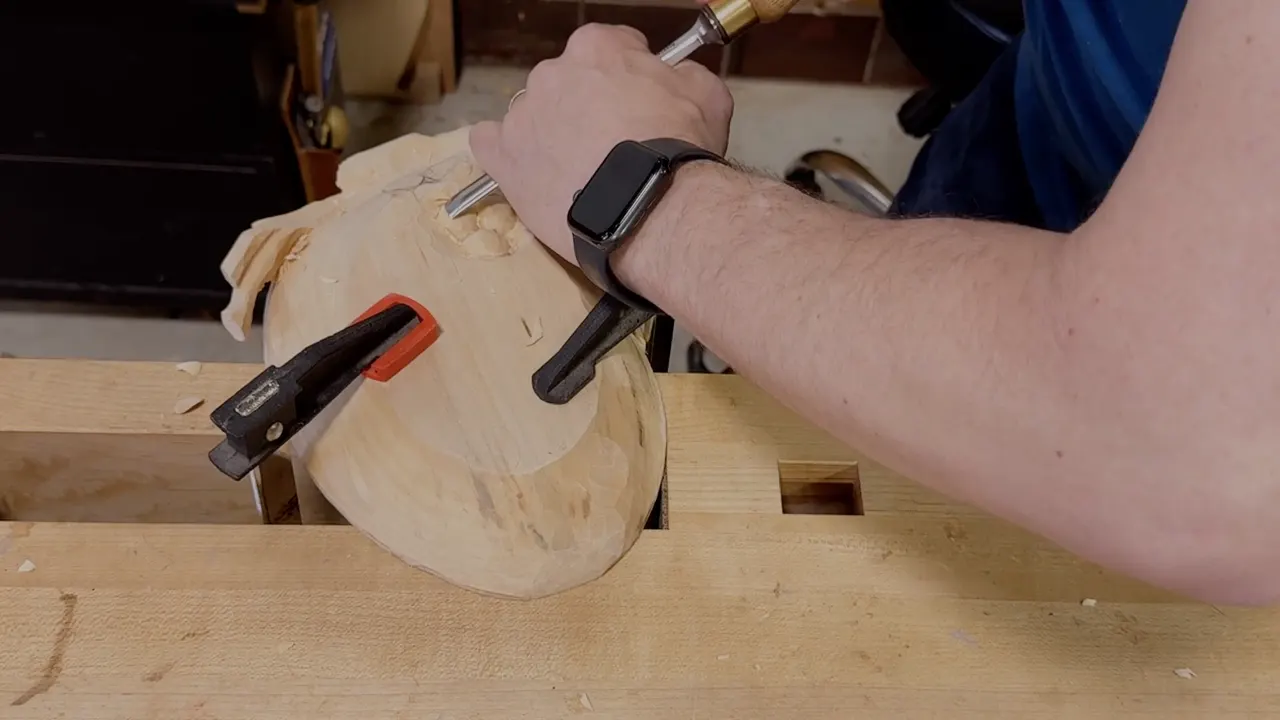
While I dug around each grape, I stayed off its sides and changed the angle of my tool as I went.
Why put a bunch of grapes underneath a tray?
For the nosy ones. It won't be visible every day, I told the class, and then I said who it's for, those nosy people who are going to flip that and look at it.
One student wanted to know where the grapes come off from. Well, in this case it's the back side, I said. The back, back, back side.
On the front the grape leaf and its vine were already carved. For the rim I'd said there were a couple of ways to dress it up, more vine or some kind of furniture style embellishment, and I picked what I call a curly style, because it's a grape, a lot of curls. The underside was still bare. That's where the bunch went.
Earlier in the same lesson I'd made one part airborne with a number 11 at 3 mm (1/8 in), and I said I'd keep that one a little thicker, because it's a longer area to be airborne.
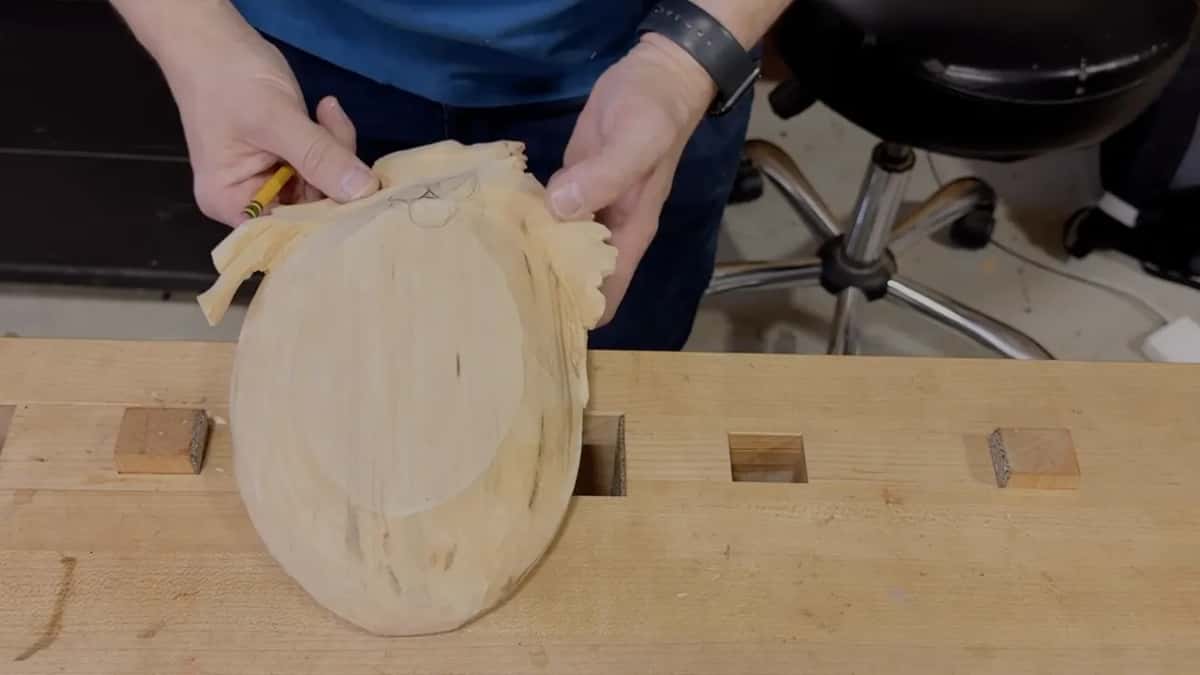
While the grapes were going in I talked about Tilman Riemenschneider and the backs of his carvings, the work people never get to see once a piece is installed. And I said the other side of it. Not like a French piece, I told them, where the front is good, but the back of all the furniture is just so rough and bad.
Why carvers undercut where nobody will ever look is a page of its own, from the Byzantine acanthus course.
So nobody passing the table sees these grapes. A person who's curious enough to pick it up does, and that's who I carved them for.
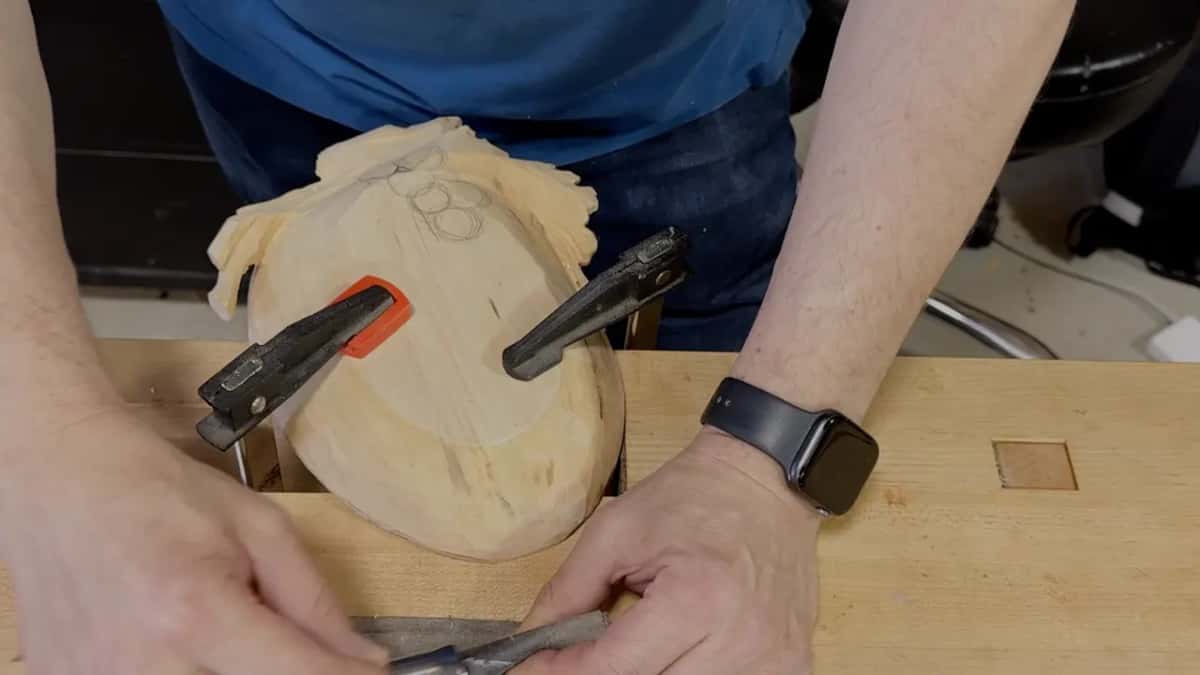
Can carved grapes hold up a tray?
On mine they're meant to. Watching me, a student asked if I'd kept the height because I didn't take anything off the top of the grapes.
It's going to be like a leg, pretty much, I said.
So the tops stay at the height they started with, and the digging goes on around them.
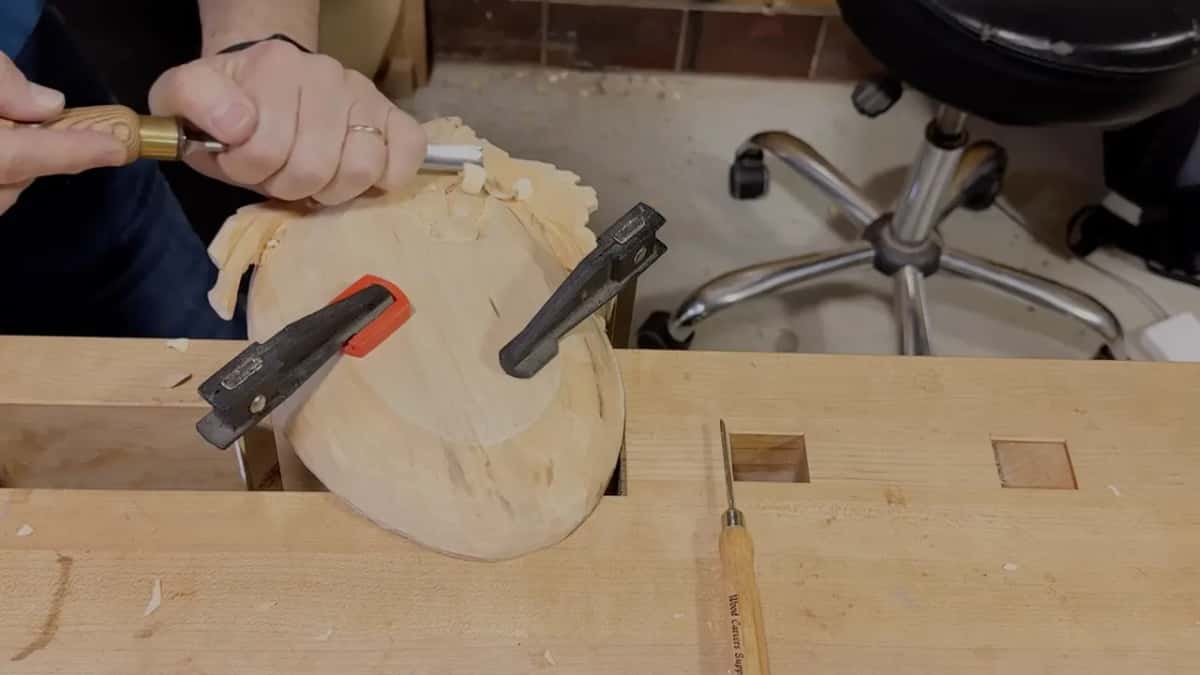
And the wood for this isn't the same on every tray in the room. It depends how deep you got the material, I told them. Some of you got a little deeper excavation, some of you shallower.
If your tray has thin parts underneath, back cutting a fragile carving without breaking it is a lesson of its own.
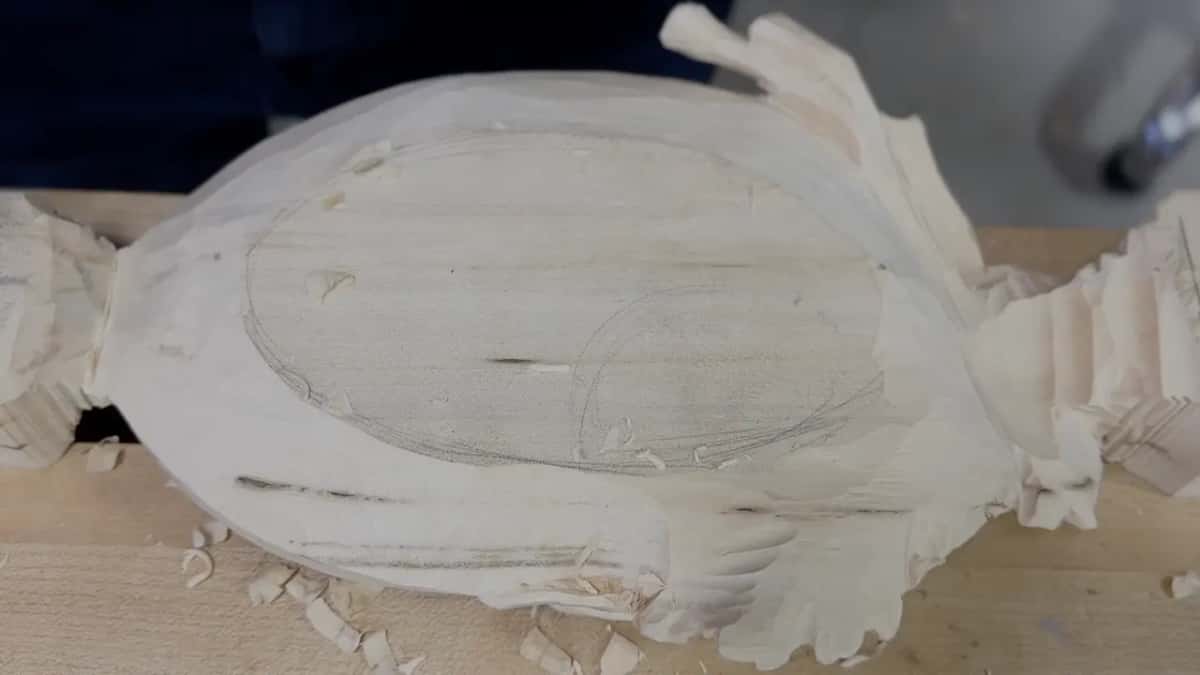
How many grapes go under a carved tray?
Three, on this one. Someone in the class asked if there's some style rule that you always have three, and I said Fibonacci.
You could put one, I said. But if it's a bunch of them, estimate what the next number would be. A lot of people have no idea about Fibonacci, but it'll make you happy, so you'll know. A certain number of grapes showing in that bunch is more pleasing to your brain, I said.
Somebody tried prime numbers on me, one, three, five. It's about what's pleasing to the eye, I told them.
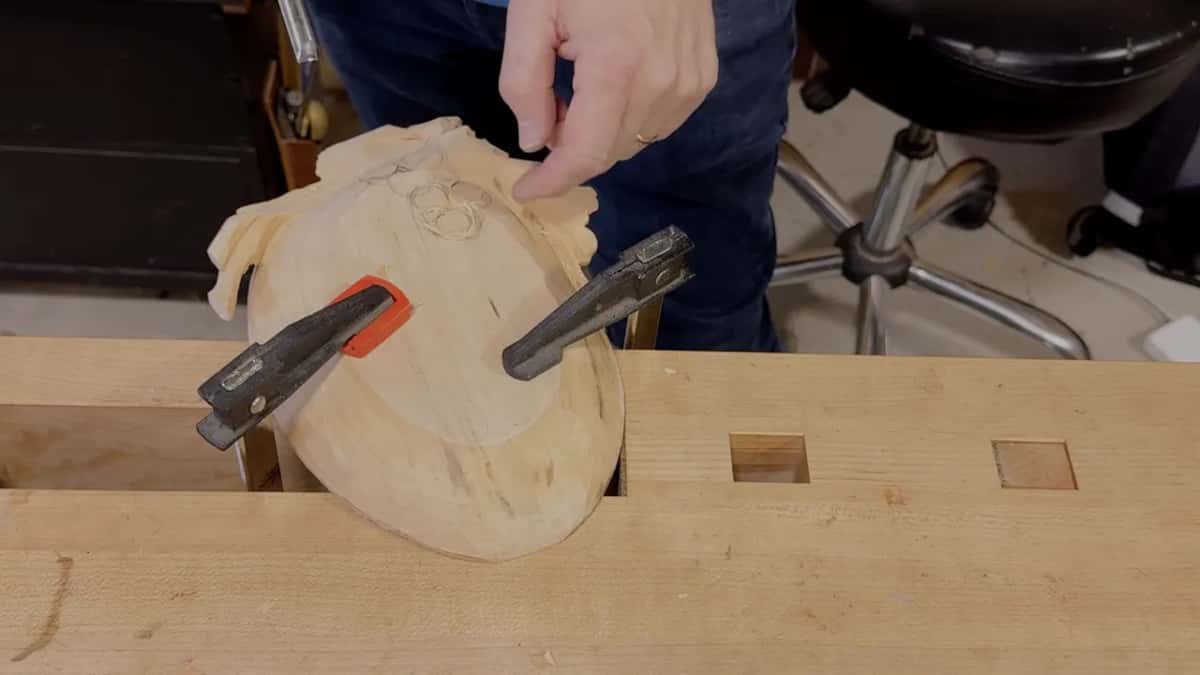
The thickness had the last word, though. I would probably put a couple right there, I said, if I had the thickness. But I don't have the thickness.
Later I said you could continue, because I had plenty. Add a couple more if you want, even eight of them, and make a bunch, since you do have the space for that. But first of all, I said, a bunch down there stays out of sight most days.
As far as design goes, you could just do a bunch of those grapes on this side and blend everything to that. I was just showing them how it's done.
The rules behind those numbers fill a whole course, Principles of Design in Wood Carving.
Here is every choice under the tray with the reason I gave for it.
Choice | Reason | Factor |
|---|---|---|
Grapes go underneath | Only the curious flip a tray and look under it | Who looks |
Tops left whole | Nothing taken from them, so the grapes stand as a leg | Its job |
Three in one spot | A couple more would fit there with more thickness | The wood |
No stem at all | Practical pieces on the table make that link too fragile | Daily use |
Sides left alone | Damage the side of a grape and it's hard to clean | Clean wood |
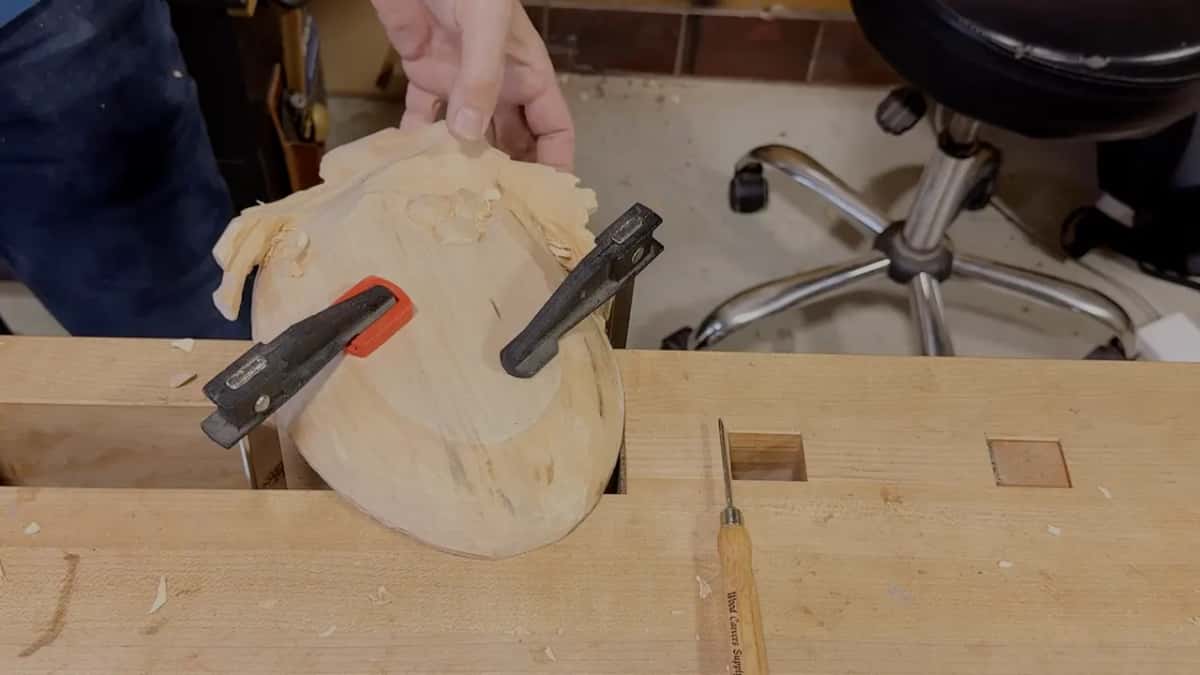
How do you check the wood before wood carving grapes on a tray?
You check it first, and then you keep checking. Let me check how much thickness I have, I said at the start of the grapes, and up to that point I had plenty. No problem there.
After that I went spot by spot. Keep an eye on how much thickness you have, I told them. Right here I don't have too much, so I've got to be careful how much I'm going to excavate. Here I'm okay, and right there I'm okay, so that's how I'm going to position it.
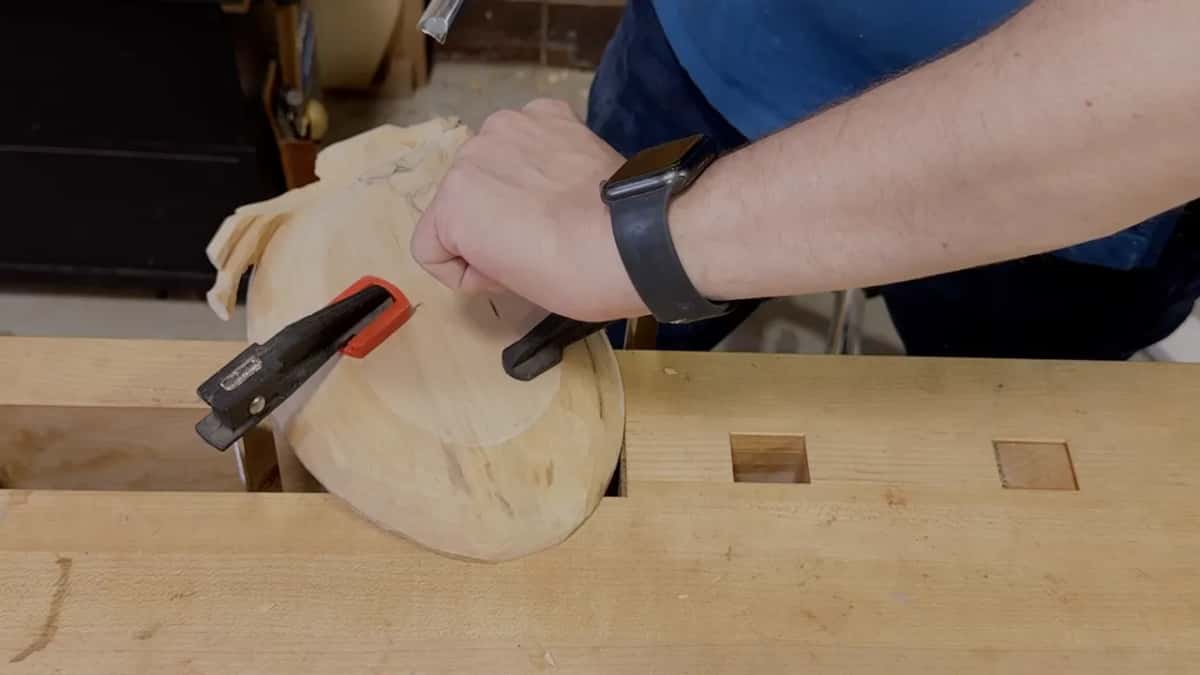
The wood picked the place for the bunch.
Later, digging around them, I said I was constantly, constantly checking how much material I had left. That is important for me. I could still probably take out more, but I said I didn't need to, absolutely not. Just for practice, though, I thought it was a good idea for them.
One more thing about the bench. When you dig, make sure the tray is solidly placed, because you're going to push on it, and it's overhanging.
Earlier, on that airborne part, I showed them my own hand placed in front of the edge and said that's too dangerous, don't do that, even though I do it once in a while myself. Never place the hand at the front of the blade, I told them. You think you're controlling it, but you never know.
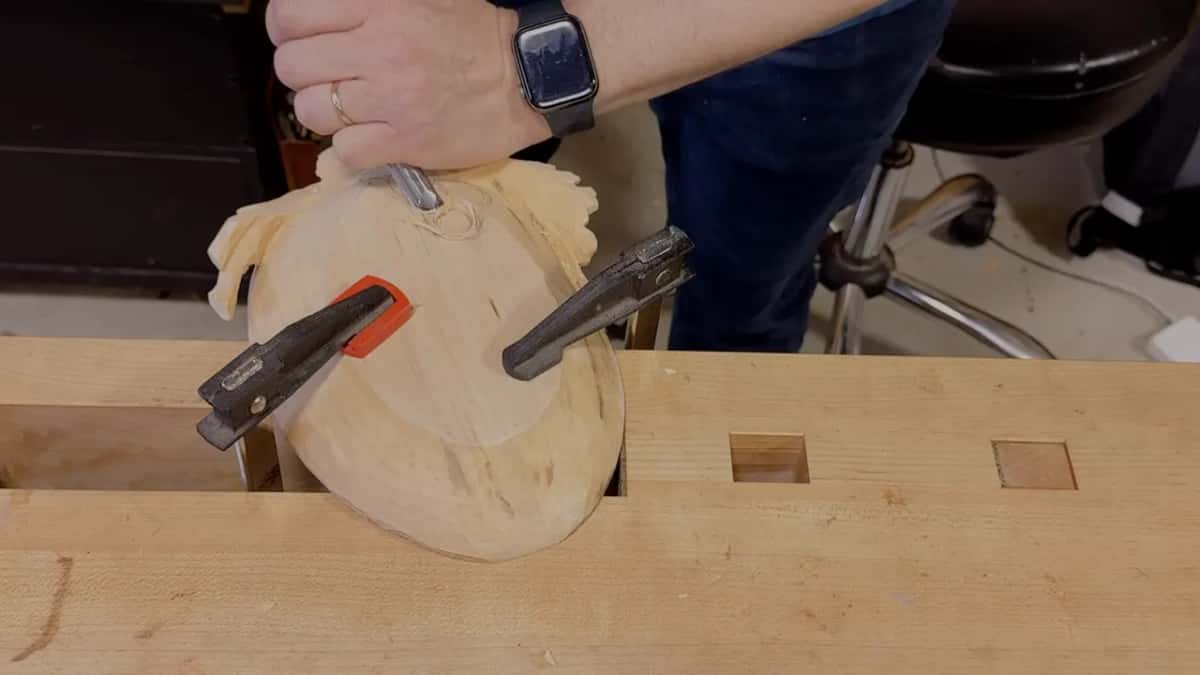
Do carved grapes need a stem on a tray?
Mine don't have one. The thickness wasn't there, and the tray lives on a table.
Then came a second question, whether they come off the leaves or just hang there. From the inside, I said, with leaves covering the grapes, pretty much. In nature it still goes off the vine itself, and the leaf kind of covers both sides.
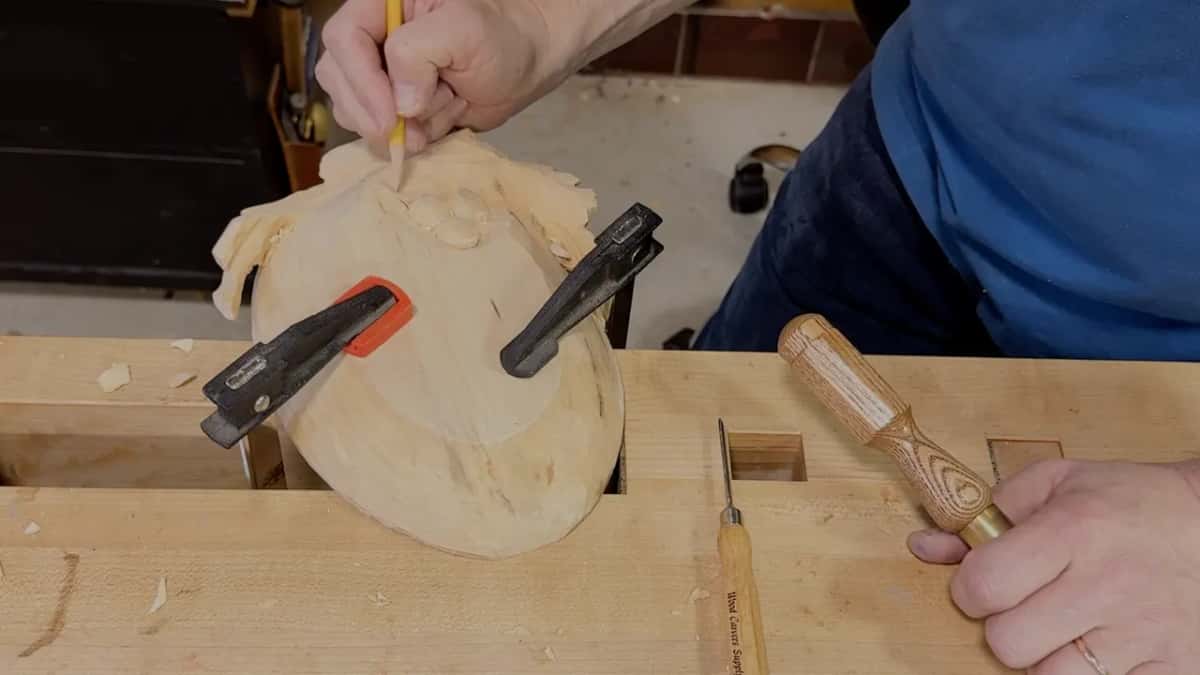
If you'd like to connect them, there's a way. Right in the middle of a grape you get a little connecting point, and then you cover it with a couple of other grapes. Those grapes will be lower than this one, and that way you can carve in.
I do have those connecting points on another project. Here I didn't have enough thickness for it anyway.
And this one is a practical piece on the table, so it'd be too fragile. They're really tiny. You don't want a snake-size connecting thing.
I wasn't even sure what to call that little thing, and in the end I said you'd still call it the stem.
Search online any time to see how it connects, I said, but make sure you don't go all the way through.
What happens to the vine when grapes go in?
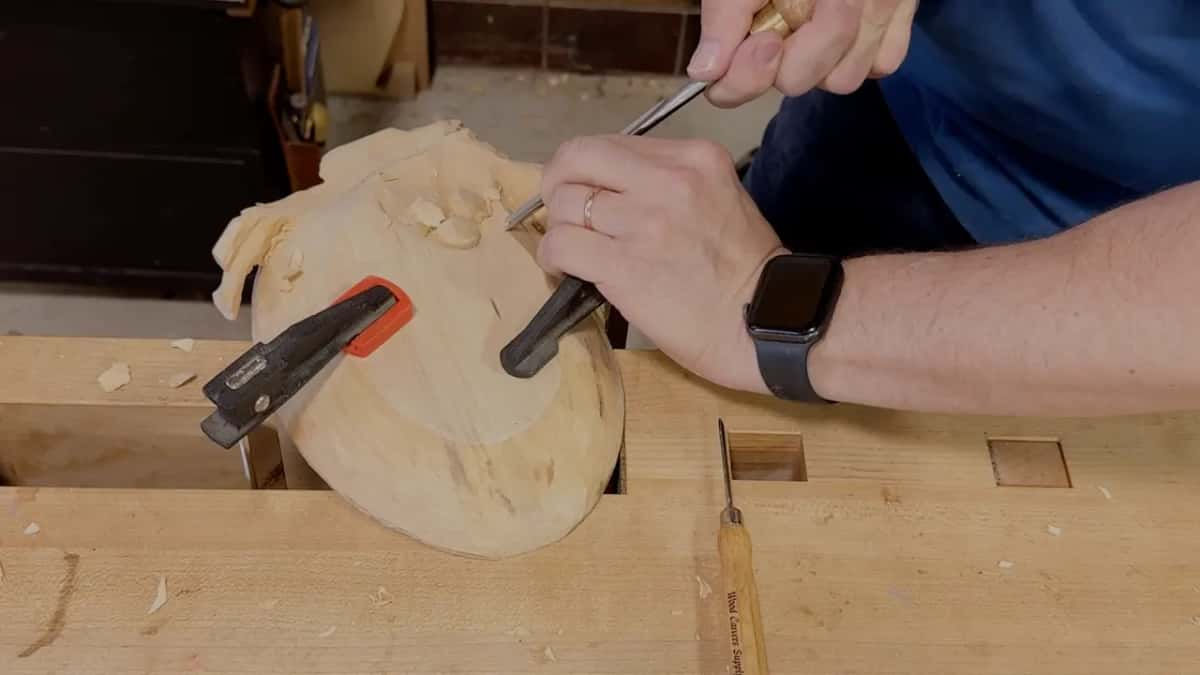
It has to make sense. Put the grapes in and you have to do something with those vines, I said. Kind of hide them somehow, or put more grapes and hide that stuff. That's also a possibility.
It has to be logical why you have that chopped off, I told them, and still have those details in.
Someone asked if a spot was a vine. No, I said, the vine itself goes on top. But you have to hide the spots, how it connects to the grape. Then again, you don't really have to.
How a vine rides over the leaf on the front is lesson 4 of this tray.
How do you keep the sides of carved grapes clean?
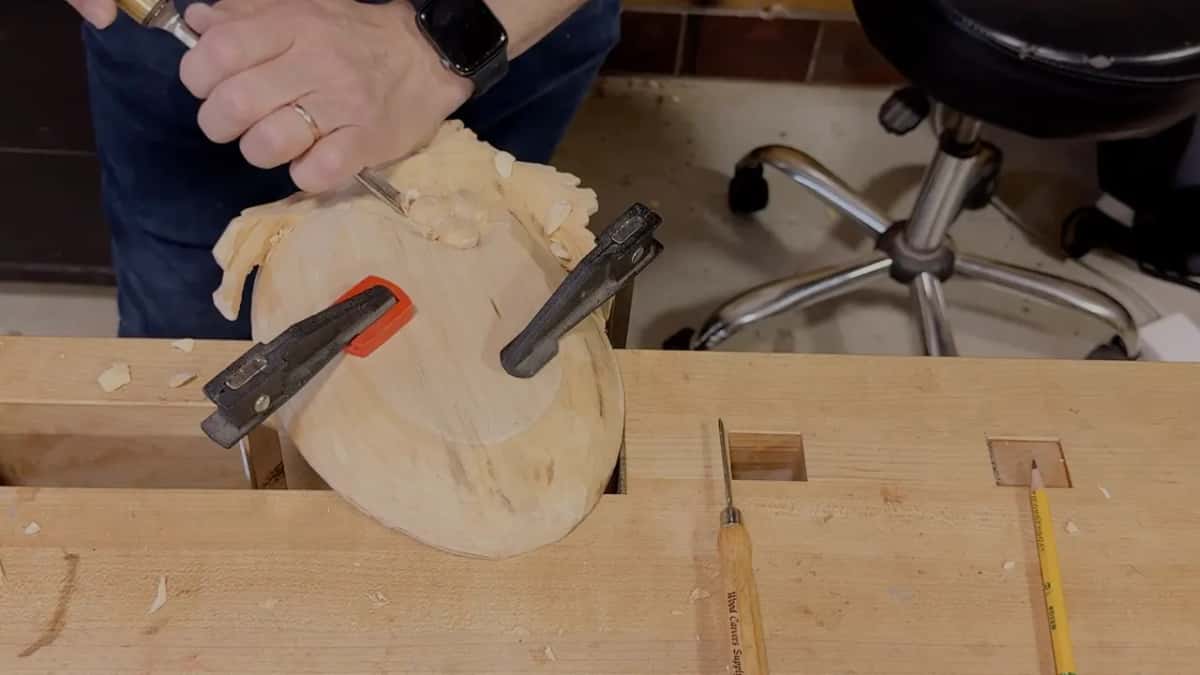
Stay off them while you dig.
I have to caution you, I said. When you're removing the material, don't dig too close to the grape itself. Damage its side and it'll be hard to clean. A mark like that is a different tool mark, I said, not the mark of hand work.
So keep some material, and don't press too hard. Go around, go around.
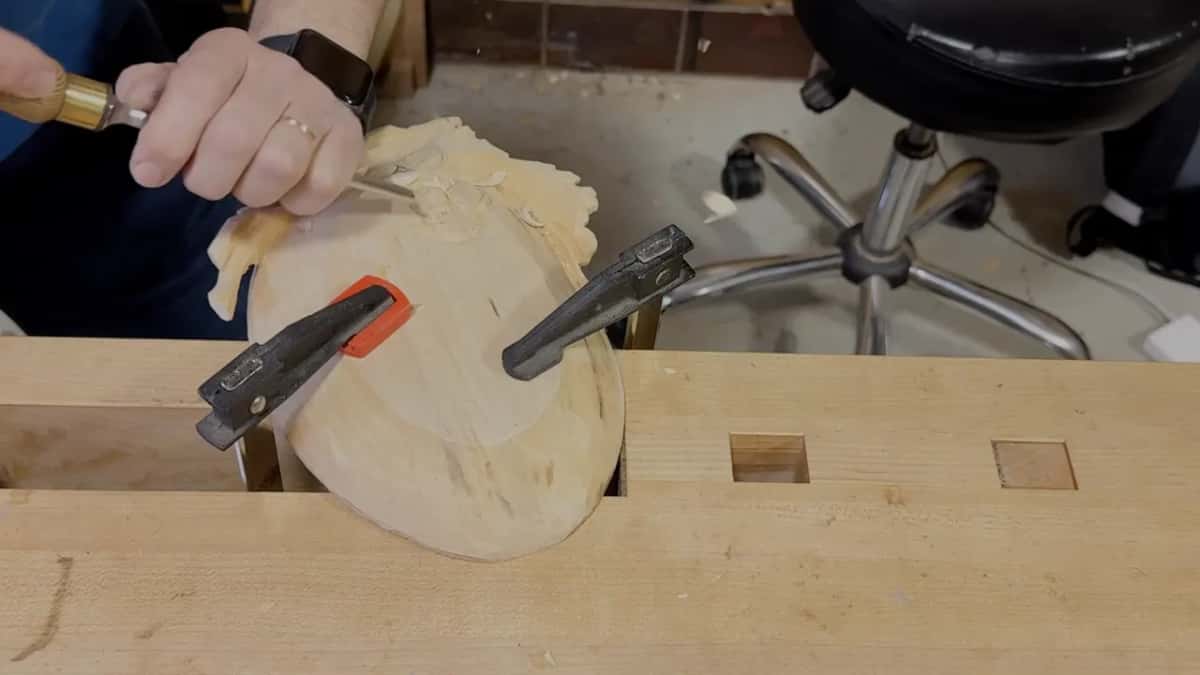
I had a lot of wood there, so I knew I could dig and excavate deeper. But watch what I'm doing, I said, I'm changing the angle. My first angle was almost flat, pointing outward. Next I pointed slightly inward, still with only the corner of the tool. Attack it with the right angle, I said.
Sometimes you can go against the grain if the tool is sharp, and that isn't a problem. If you follow the rule of the grain, you can make it really nice and really clean, I said while one grape was turning round.
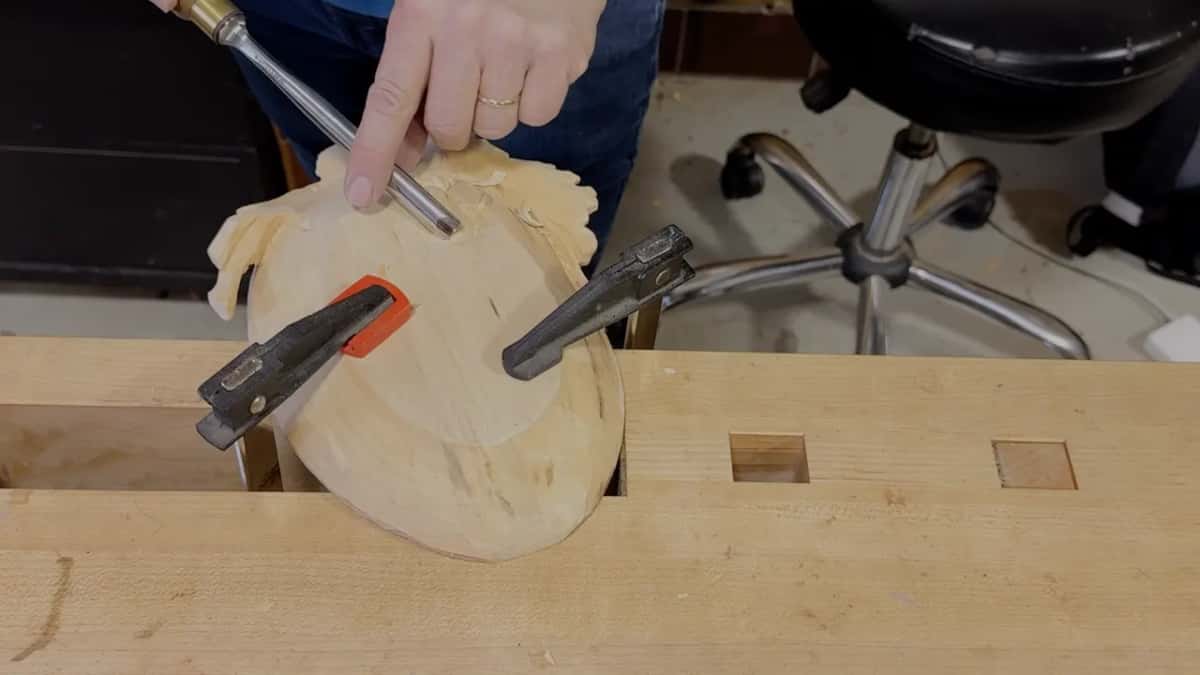
In the tight meeting spots I said to keep it somewhat clean. If a spot gives you trouble, get a half millimeter tool. Sometimes I use dental tools too, picks and so on, just to get rid of the stuff.
The way you do your grapes is actually not complicated at all, I said. I usually use just the number 7 gouge. I wasn't forcing it, and I wasn't going grape by grape either. I went around the whole bunch and removed the waste just a little by little. I can always make it deeper a little later, I said.
Even in this case I was still kind of trying to keep it clean, I said.
Whether to finish one grape before you start the next is a question lesson 2 of Carving Grape Onlay answers on its own.
What shape is a Cabernet Sauvignon grape?
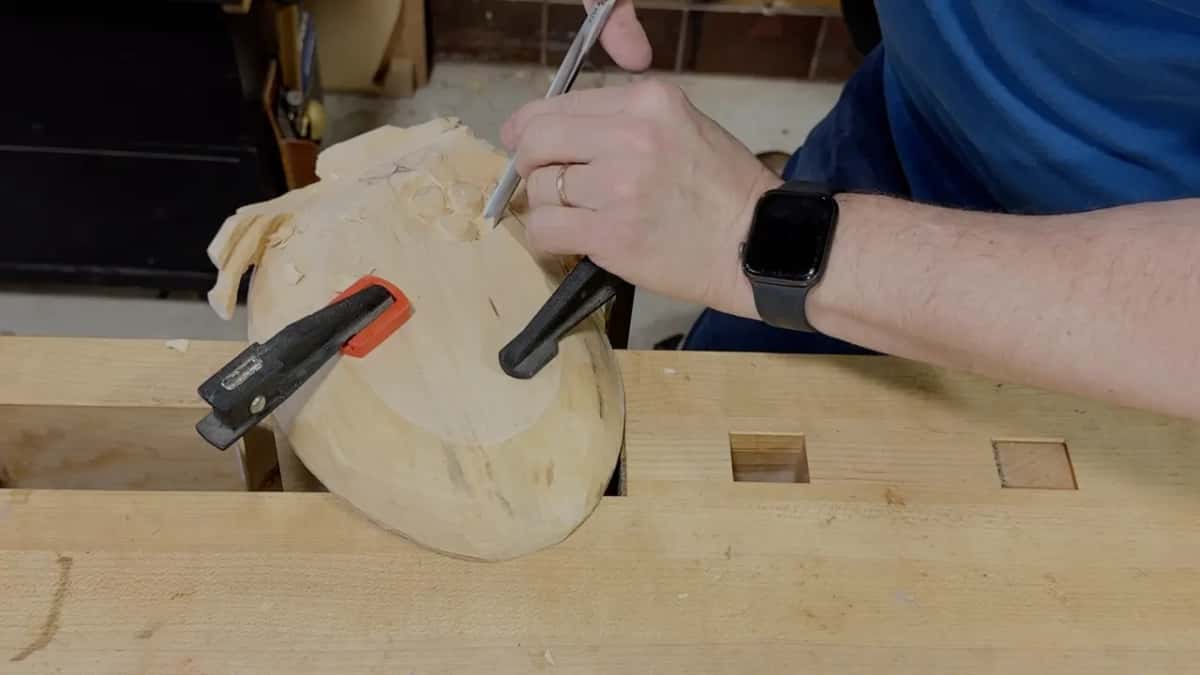
Round, or so my class told me. Before the first grape the question came up, how a Cabernet Sauvignon grape is supposed to look, long or more roundy. Round, came the answer.
Size had come up first. I wanted to make sure I got an extra large one for now, I said, because I can always make it smaller later. A bit after that, looking at the overall composition, I told them to try not to make those small berries, because they won't look like grapes.
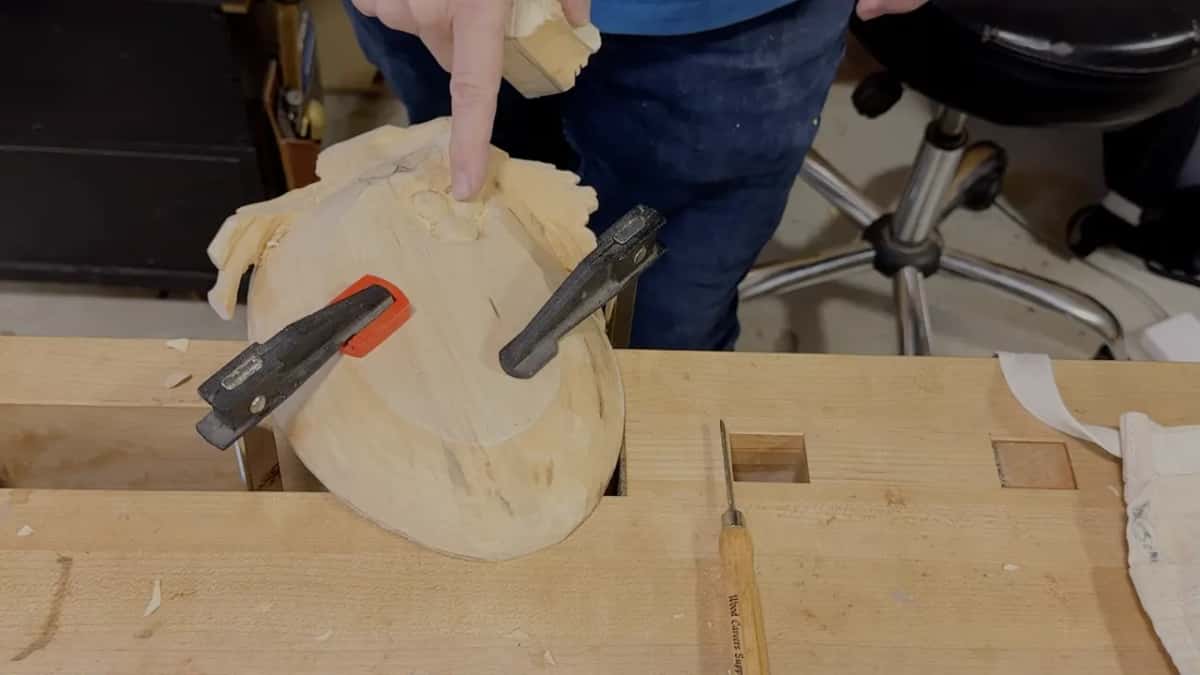
Later, excavating around one, I said I was taking my time and making them round just because they'd told me they're supposed to be round ones. Of course we're doing a round version of Cabernet, I said, which I doubt. I don't know if it's round or not, or anything about those names. Just in liquid form.
Grape leaves on a turned piece are a different job, and they have a course of their own, the vase with grape leaves.
Can you carve grapes under your own tray?
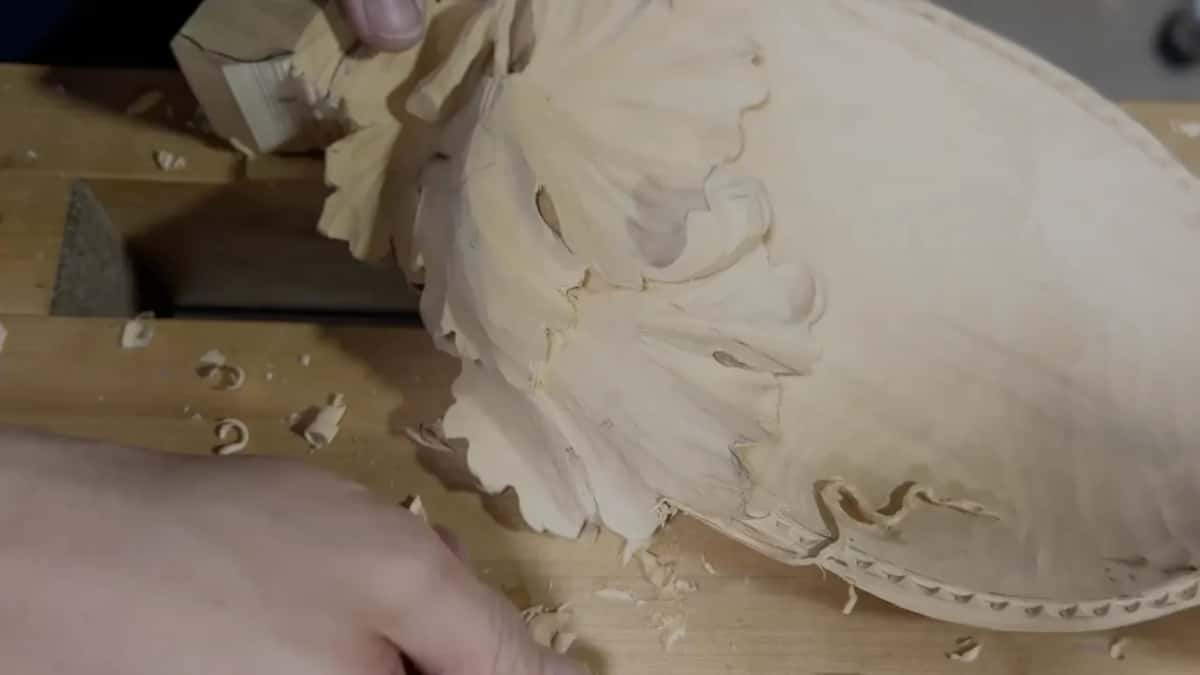
You can, if the wood is there. Would you like the back of your own piece to hold something too? Want to watch each grape go in, pass by pass? Then come and watch lesson 8, with the class asking their questions as I go.
Every lesson of The Tray of Blessing opens with Access, monthly or yearly, renewing automatically until you stop it. If you're starting from the beginning, the inside of the bowl comes first in lesson 1, and the leaf over the rim in lesson 2.
New to all of this? First Cuts for Beginners is where I'd start you, and Carving Tool Sharpening comes right after it.
Lesson 8 is the last workshop, and those grapes are the last thing I carved in it.
How it's done
- Check the wood first. Before you draw a grape, see how thick the wood is in that spot. I checked mine and placed the bunch where the wood allowed it.
- Draw them extra large. Make each grape bigger than you want it at the start, so there's room to bring it down later.
- Leave the tops alone. Take nothing off the top of a grape that has to stand in for a leg.
- Stay off the sides. Dig the waste around each grape without touching its side, and don't press too hard. A damaged side won't come clean easily.
- Turn the angle. Begin almost flat, the corner of the tool pointing outward, then point it slightly inward, still on the corner.
- Look it up, then stop short. Search online to see how a bunch connects to its vine, but make sure you don't go all the way through.
Frequently asked questions
Will anyone see grapes carved under a tray?
Only the curious few. The bunch isn't on show every day, I told my class, and it's for the nosy people who flip the tray over and look. On the table the grapes face down and stay out of sight.
Why leave carved grapes at their full height?
Keeping them tall let the grapes do the work of a leg on my tray. When a student asked whether the height stayed because I took nothing from them, my answer was that it would serve like a leg. What's possible there depends on how much material each tray has.
Does the wood decide how many grapes go on a tray?
On mine it did. Three fit in one spot, and I'd have put a couple more there if the thickness had allowed it. I told the class eight could go in where there's space, but first of all, a bunch under a tray isn't seen every day.
What to carve next