
January 9, 2023 · Updated August 15, 2026
By Alexander Grabovetskiy — Master Woodcarver · Founder, School of Wood Carving · 12 min read
Mathematics for woodcarving, and who this book is really for
Key Takeaways
- Gamwell wrote about how ideas travel between mathematics and art. Worth knowing, and it has never once told a man where to put his flower on a board.
- Two lines down and two across gives you four places worth using. The rest of the surface is quiet ground.
- Step ten divisions along a folded scrap of paper and take the sixth. That replaces every calculation you were dreading.
- A cheap old printed sheet puts the frame of a leaf in front of you. A coffee table volume shows the finished thing instead.
- Reading about proportion all winter is the most comfortable way there is to avoid a bare board.
Mathematics for woodcarving is the golden ratio, the rule of thirds, and one board divided into ten parts. It fits on a single chalkboard. Lynn Gamwell's Mathematics and Art will not teach you any of that. The book is a 576 page cultural history, and it is beautiful. Buy it for your eye, not for your bench.
This book gets handed to carvers a lot, usually by somebody who has not carved. It is heavy, it costs real money, and this very page on my own site used to tell you the wrong thing about it.
So here is the answer I would give you at the bench, followed by the geometry I actually teach, so you can weigh what the book leaves out.
Is Mathematics and Art a good book for a wood carver?
Good for your eye. No help at your bench. It will make you notice proportion in things you have walked past for thirty years, and it will never tell you where your leaf goes.
Here is what you are buying. Mathematics and Art, a cultural history, by Lynn Gamwell, foreword by Neil deGrasse Tyson. Princeton University Press published it in November 2015 and still lists the hardcover at $74. It runs 576 pages at nine and a half by twelve inches, with 444 color plates and another 102 in black and white.
| What you came for | Gamwell's book | One old printed ornament plate |
|---|---|---|
| The one spot an eye lands on first | Traced from antiquity to now | Printed right there on the page, big enough to copy |
| Proportion you can copy tonight | Almost none of it | All of it, ready to trace onto your board |
| Why any of this matters | Very strong, and worth the shelf on its own | Silent |
| Pictures | 546 plates, 444 of them in color | One good page |
| Price | Princeton lists the hardcover at $74 | One penny halfpenny when it was new |
| On the bench | No, it is nine by twelve inches and 576 pages | Tape it to the wall and carve |
Read the last row twice before you order anything.
What is actually inside the book?
Ideas, people, and 546 pictures. Princeton's own description starts with mathematics from antiquity through the Enlightenment, taking in Greek, Islamic and Asian work, then turns to the modern era.
The modern half is where a carver starts skimming. David Hilbert treating mathematics as an arrangement of meaning free signs. Aleksandr Rodchenko and his monochrome paintings. Jasper Johns asking what art is, in the vocabulary of art.
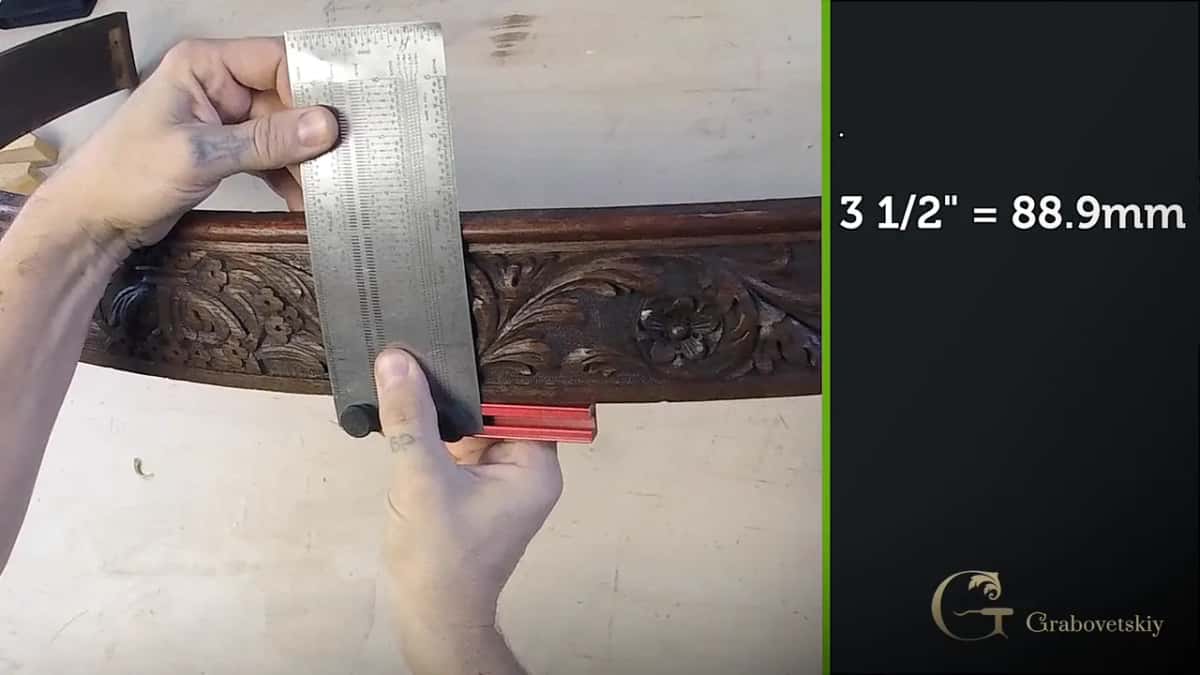
I am going to be honest with you, because that part gets under my skin, and none of it is Gamwell's fault. Here is what I told my students in the design course, on the day I was carrying a line across a panel with a scrap of paper instead of a ruler:
Since 1950s, since 1960s, the true art was minimized to just some kind of soul therapy. Like it makes you feel good. But in reality, the true art is the real math, the real geometry.
Then I told them about my youngest daughter. She wanted to be an artist. We found a teacher here in the United States, expecting composition rules and color palettes. No. The teacher told her that if it feels good then it is good, and she did not have to know anything. That still annoys me.
Where does the book let a wood carver down?
It never tells you what to do on Monday morning. There is nothing in it about tools or sharpening, and not one word about the order you take the wood away in.
Be fair to Gamwell. Princeton calls it a cultural history and that is exactly what it delivers. The trouble is who recommends it, and to whom. Somebody tells a beginner this is the wood carving math book, so the beginner spends $74 and receives 576 pages of Greek mathematics and modern painting.
My own site did that. The old version of this page told you the book explores how math has been used in wood carving through history. It does not. I have taken the line out, and if you bought the book because of it, I am sorry.
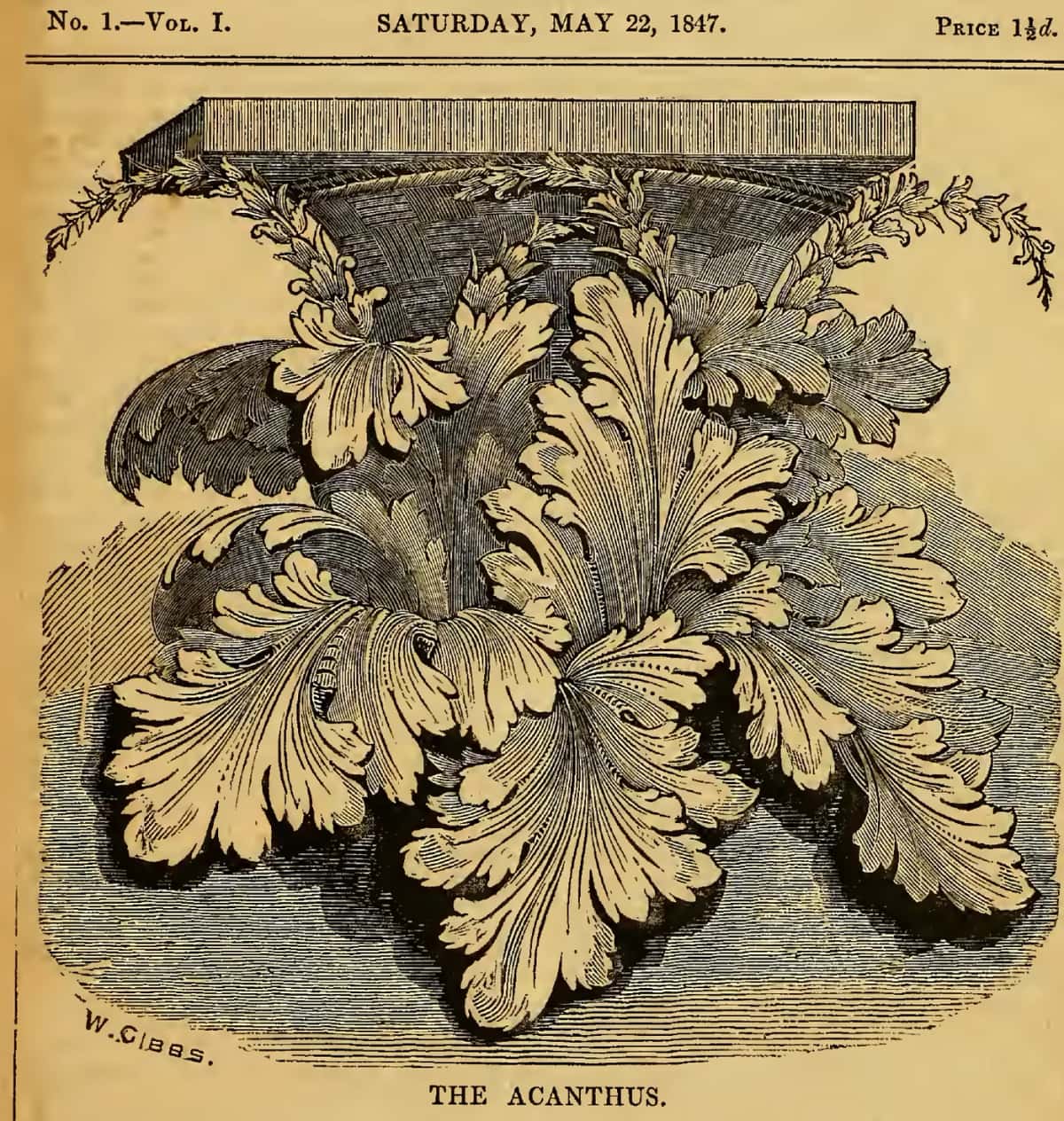
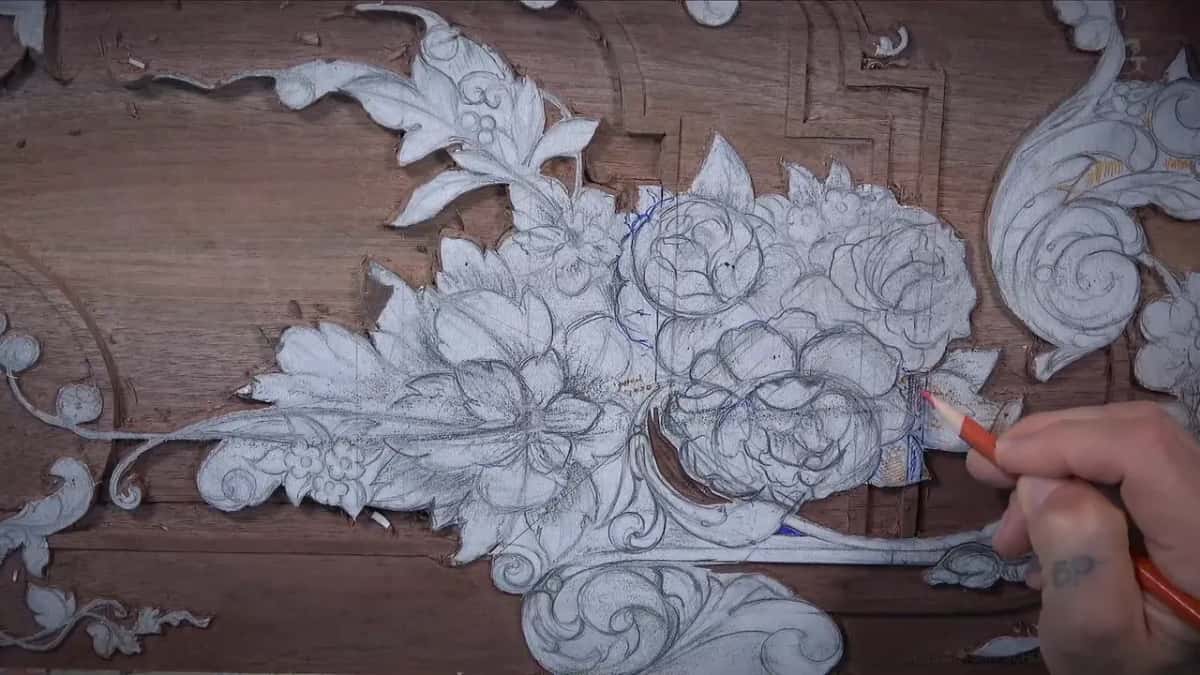
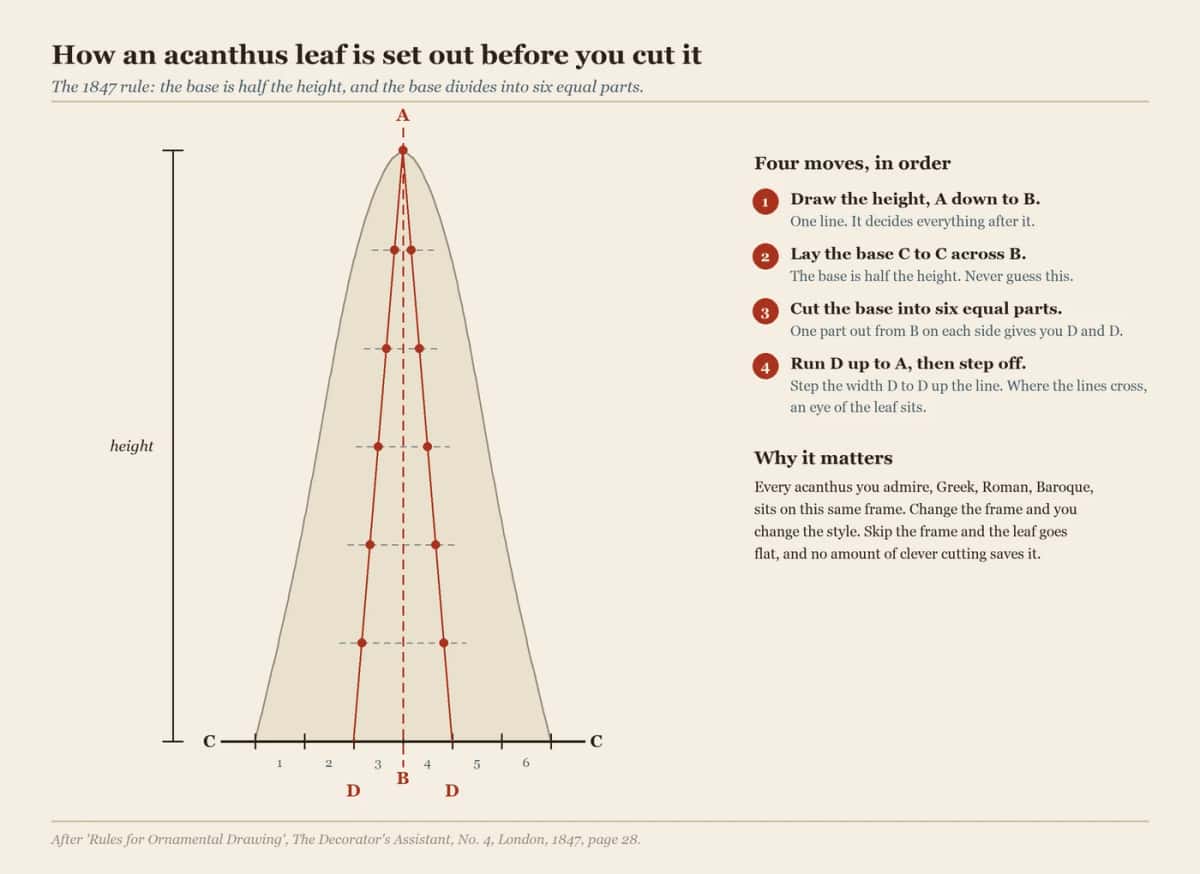
Now hold $74 up against that page. Somebody in 1847 decided the thing to put on page one of issue one was an acanthus, and if you want to know why that leaf keeps coming back, I have written about the Greek and the Roman versions. The leaf itself, drawn big enough to copy, for a penny halfpenny.
What geometry does a carver actually need?
Less than you fear. Where the strong points fall on your board, and which way an eye crosses it. The rest is drawing practice, and drawing practice is only slow.
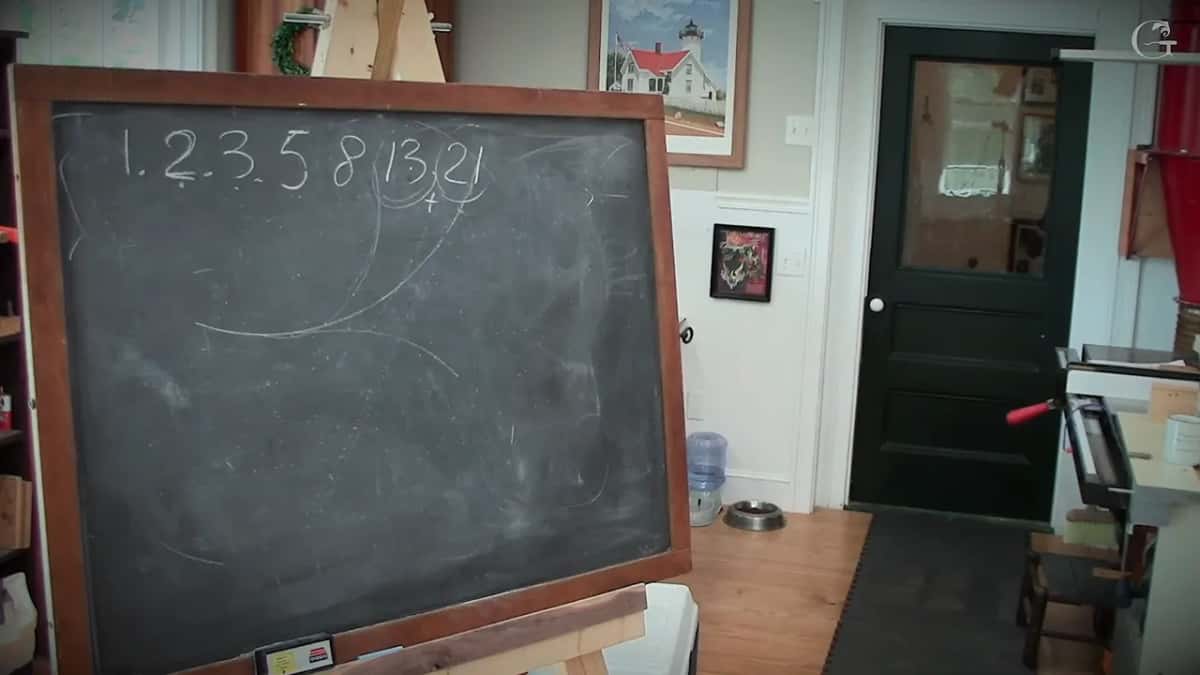
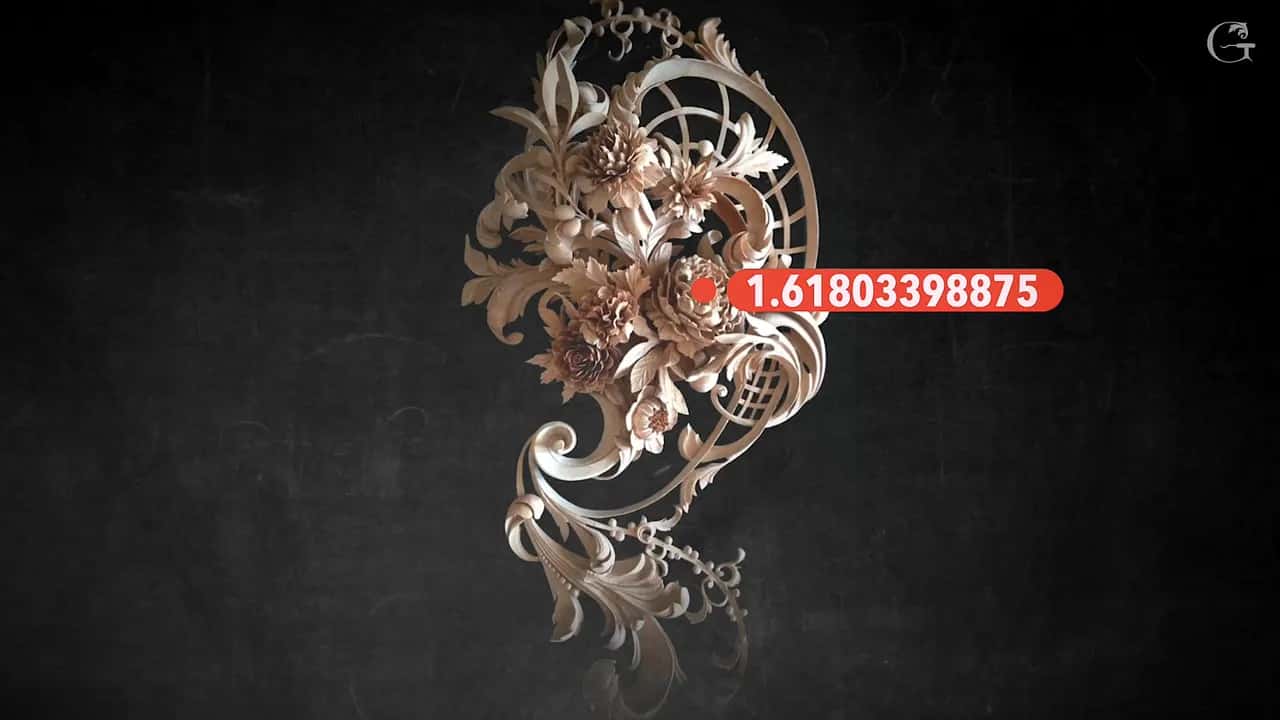
The golden ratio is one irrational number, 1.618033988749 and onward forever. Euclid called it the extreme and mean ratio. Luca Pacioli, the friar who worked alongside Leonardo, called it the divine proportion. On my chalkboard it is shorter than any of that. In workshop 72 of the Venice Room course, laying a middle line across a slope, I put it this way:
When I establish my middle line, I'm also trying to be authentic to golden ratio. So which means if I take approximately this point right here and take that point right there, and let's put a line across, invisible line. You divide that in 10. Five parts on one side, five parts on another side, and you move six parts out of 10.
Ten parts. Move six. That is the entire method.
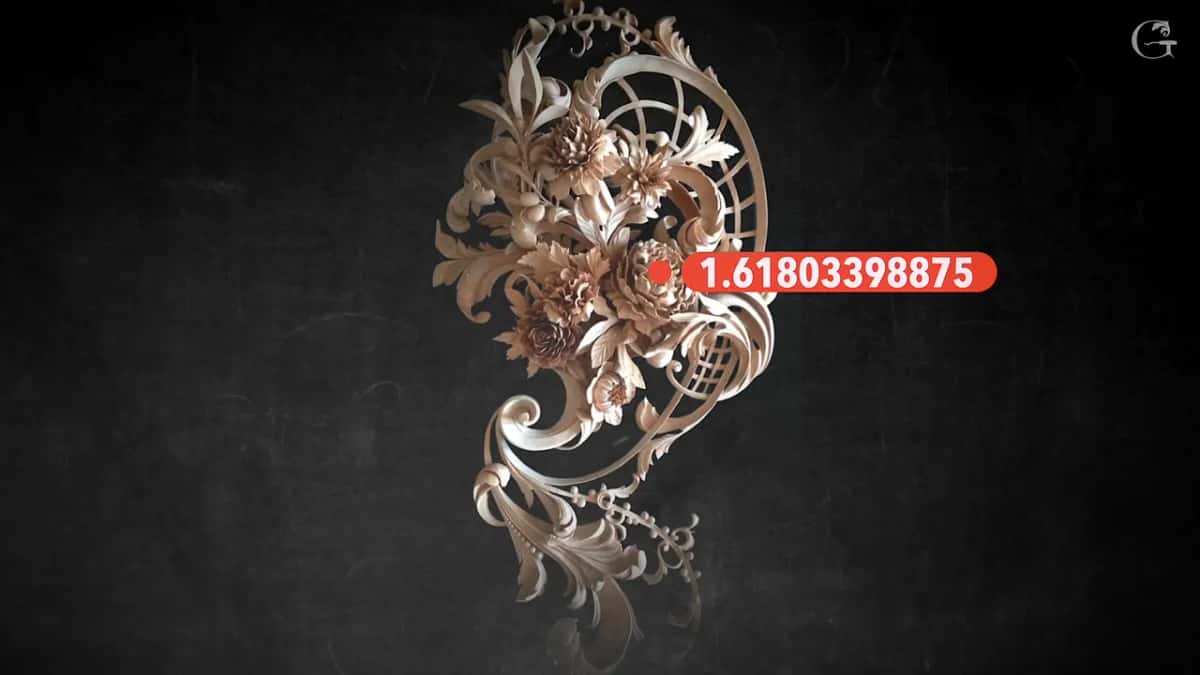
Later in that same workshop I said the half that matters more, and I would rather you took this away than anything else here:
I am not after perfection. I'm not going to estimate with the ruler am I really on a golden ratio or not.
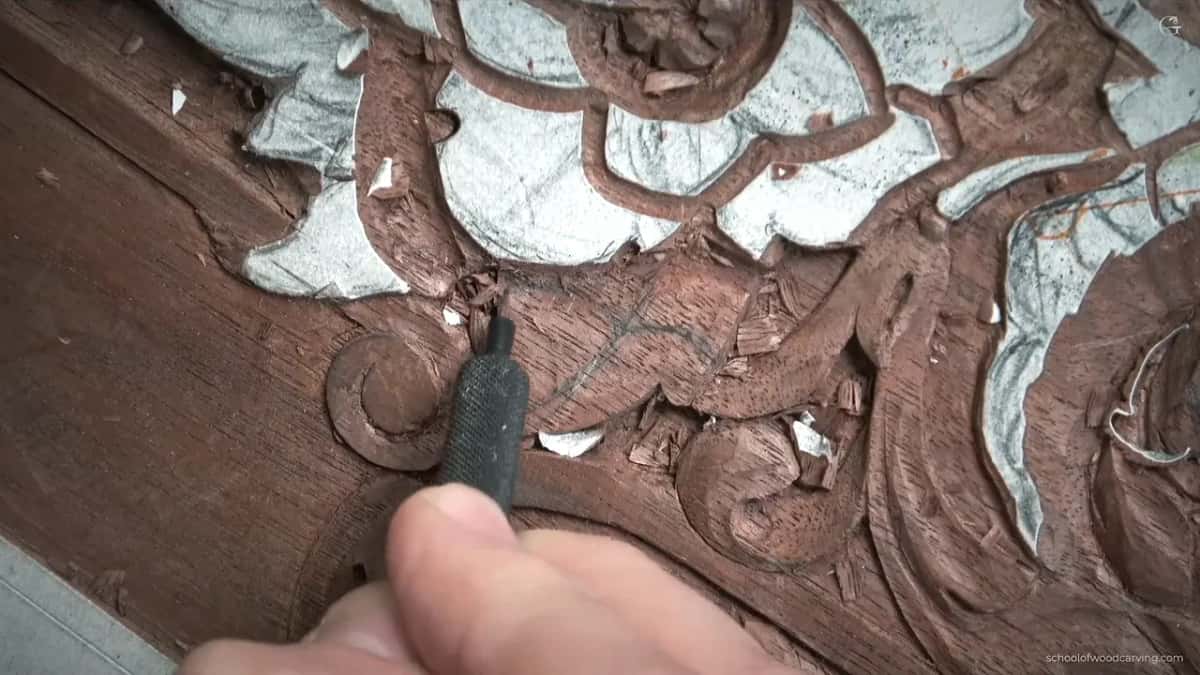
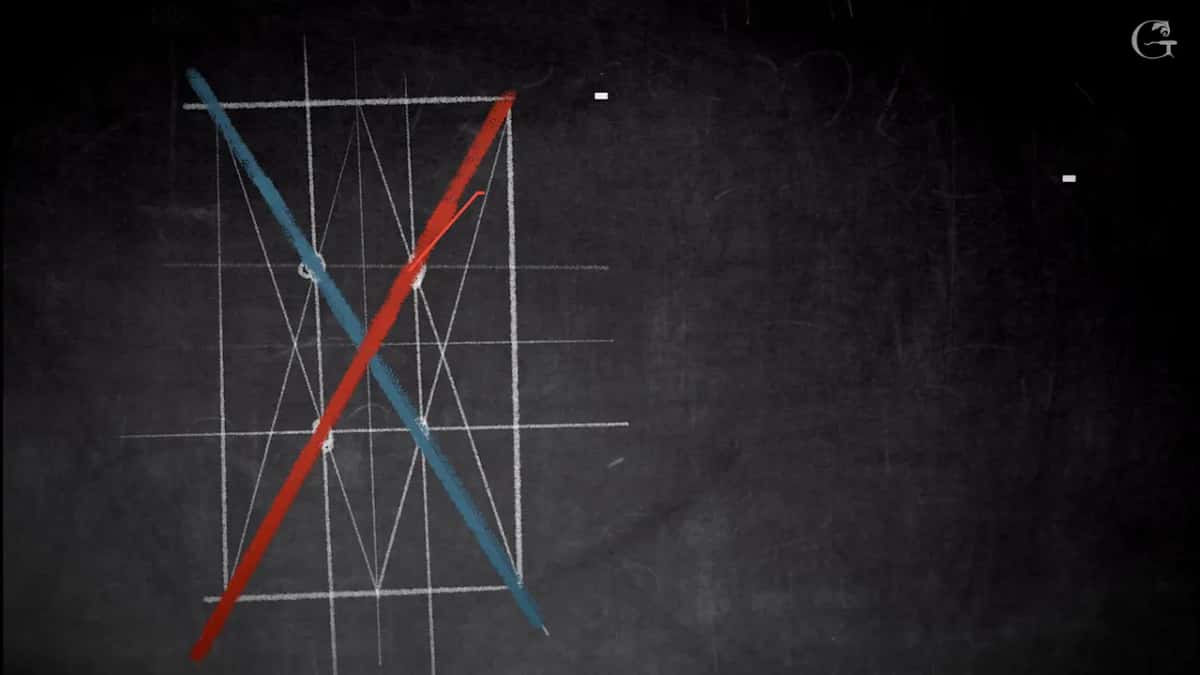
The rule of thirds gets you close enough to begin. Two lines down, two across, nine boxes, and the four crossings are your strong places. It is the first thing in the furniture panel design course, because it is the simplest road to the golden points, and I say so on the recording.
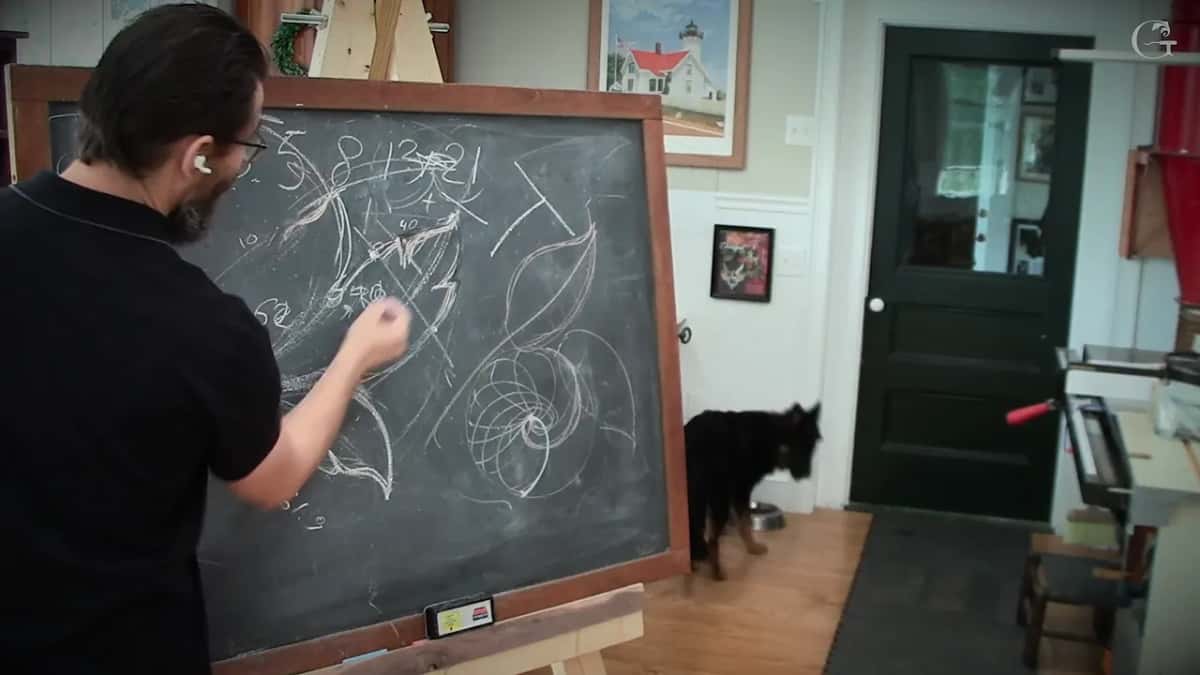
Then Fibonacci. Every number is the two before it added together, so 1, 2, 3, 5, 8, 13, 21, and my board carries that row in chalk. I use it for sizes. If a detail on one side sits at two centimeters, its partner goes to three, never to another two, and the panel stops looking like wallpaper.
Last comes the direction of reading, which hardly anybody teaches and which decides everything. A Western eye enters at the top left and rolls down to the right. Somebody who reads right to left comes at the same board from the opposite corner, and that moves where your hero has to sit.
How do I lay out a panel without doing any math?
Six moves with a pencil, and you can do all six tonight. This is what happens on a blank board before a single tool leaves the rack.
1. Decide which way the eye comes in
Stand the board up and look at it cold. Whichever bottom corner your eye keeps sliding toward is the exit, and your hero belongs away from it.
2. Divide the board in three, both directions
Pencil, and no ruler if you can help it. Four crossings appear, they are the only strong places on that board, and you have found them in ninety seconds.
3. Or split a line into ten and count six
Mark two points on a strip of paper, step it into ten, carry six parts across. Same answer as the ratio, no arithmetic, any length of board.
4. Put the hero on one strong point and a smaller answer on another
One flower rules. A second, quieter thing pulls against it from a different crossing. Two heroes on one panel is a fight, and the wood loses.
5. Eyeball it, then leave it alone
Nobody who sees your panel will lay a rule on it. They will only feel whether it sits right. So trust the ten parts and walk away before you start fiddling.
6. Draw the whole thing before you touch the wood
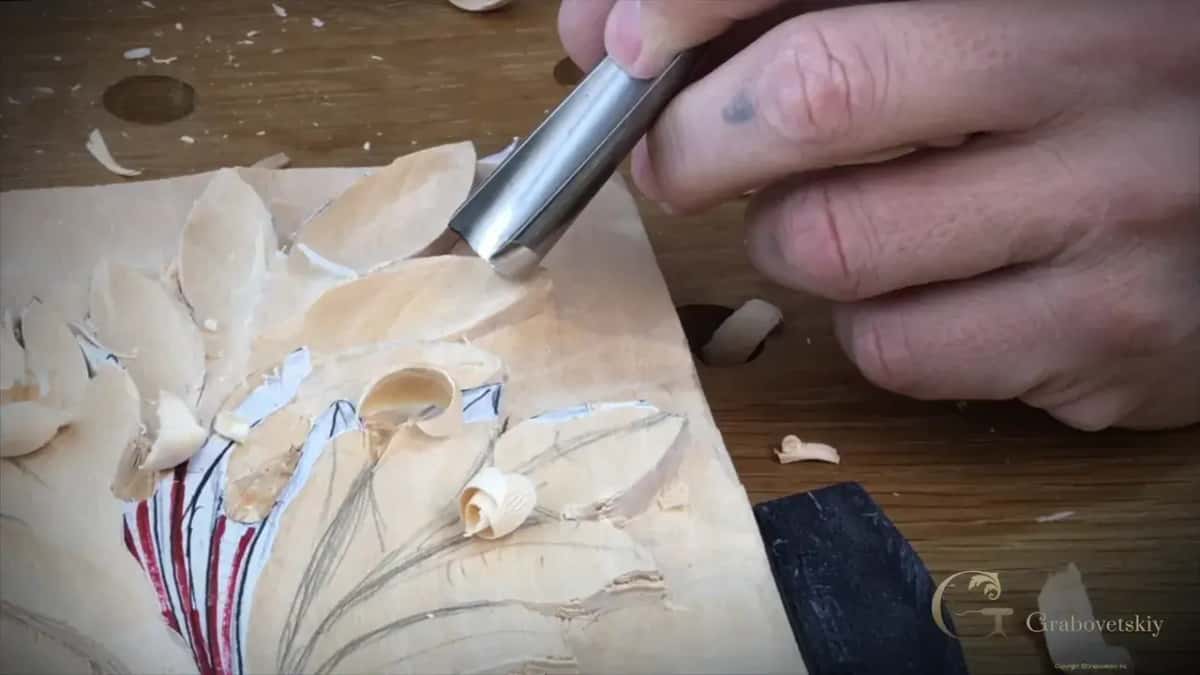
Every leaf, on paper or straight on the board. If you cannot draw it you cannot carve it, and a pencil line costs nothing to erase, while a hollow in the wrong place costs you the panel.
You can hear me work through the whole of it out loud in a talk on design against technique that runs about twenty six minutes. More sits in the design rules post and in the principles of design course.
Who should buy Mathematics and Art, and who should leave it?
Buy it if you already design your own work. Leave it on the shelf while you are still fighting to make one leaf sit right, because $74 buys a lot of basswood.
The right moment comes when your work is technically clean and something about it still looks wrong to you, and you have run out of people who can say why. A wide, patient history of how other minds met that same problem will move you then, and it keeps moving you for years. It also reads well for its own sake. Some people will find the pictures alone worth the shelf space, and that is a perfectly good reason to own a book.
In your first year, though, leave it alone. If you want to be told what to do, this will disappoint you badly. And before any of it, learn to put an edge on a gouge, because the two hard parts of this craft are sharpening and drawing, and no history book ever sharpened anything. Get the sharpening. Then draw the leaf two hundred times. The book will keep.
One more warning. A beautiful book about proportion can turn into a very comfortable place to hide from a blank board. If that is a risk for you, put the money into walnut and into the mistakes everybody makes on a scroll.
So. Do you want to read about the golden number for another winter, or spend one evening this week putting it on a real board? Everything I know about laying out ornament sits in the courses, furniture makers can start there too, and if you have never held a gouge at all, begin with how a person learns to carve wood. Tuition here also feeds orphans and widows, because this is a 501(c)(3) school. Yearly Access is $200 and renews automatically every 12 months. Monthly Access is $25, renewing automatically every month, and either one of them cancels with a single click.
Frequently asked questions
Does Mathematics and Art teach wood carving?
This book teaches nothing about carving. Gamwell wrote a cultural history of how mathematical ideas show up in art, and Princeton describes it exactly that way. No project, no tool advice, nothing about laying an ornament out on a board.
What math do I really need to carve ornament?
The golden ratio, used as six parts out of ten, plus the rule of thirds for finding strong places. That is genuinely it. Everything else that looks like math is really drawing.
Is the golden ratio actually used in old carving?
I use it every working day, and so did the men whose panels I copy, judging by where their centers sit. What a Venetian carver was thinking in the 15th century, I cannot prove. Moving a center to the sixth of ten divisions calms a panel down, and that much I can show you.
Do I need to measure the golden ratio with a ruler?
Never. Step it off with a strip of paper, or eyeball ten divisions and count six across. Nobody looking at finished work checks it with an instrument, and a panel measured to death begins to look measured.
What is a better first book for a wood carver?
An old ornament plate, or any drawing book that shows construction lines rather than finished art. You want the frame a leaf is built on. Most modern books show the finished leaf and hide the frame it grew from.
Is $74 a fair price for this book?
For 576 pages and 546 illustrations on paper that size, yes, that is honest publishing rather than a markup. Whether it is fair for you depends on whether you read it or shelve it. If the price stops you, wait for a used copy.