
Alexander Grabovetskiy, woodcarver, School of Woodcarving · Published 2021
Why do carvers undercut work nobody will ever look at?
Quick answer: Undercutting exists for the shadow and nothing besides. Material comes out from beneath an edge so that edge stands clear of its background, and heavy stock then reads as though its leaves were paper thin. Viewers never see the surface you cut. They only ever see what it does for them.
Not one person ever looks at the surface you cut today. Undercutting happens on the back and underneath, out of sight for the life of the piece, and its entire purpose is to make heavy stock read as though the leaves on it were thin as paper. The shadow does the lying.
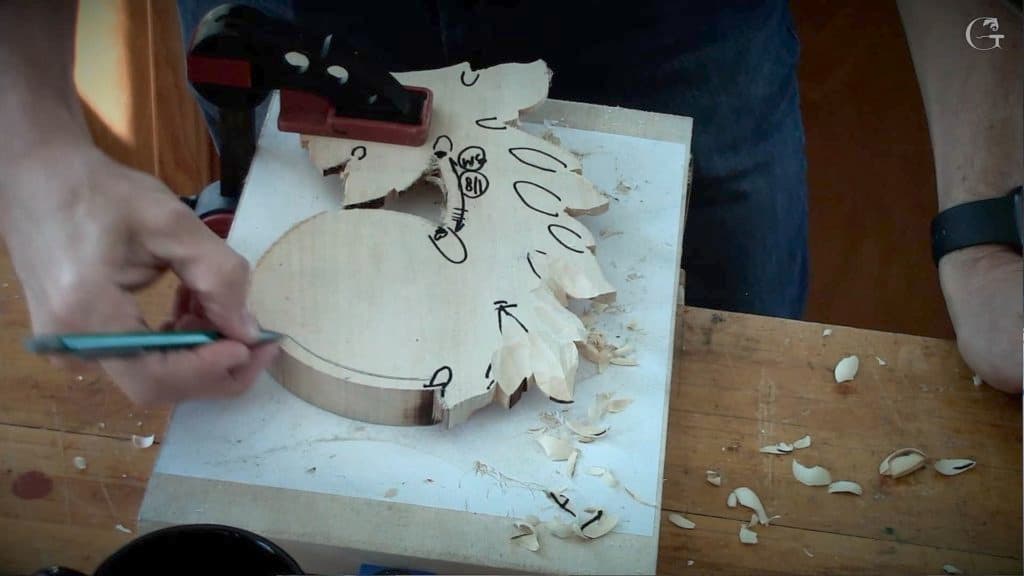
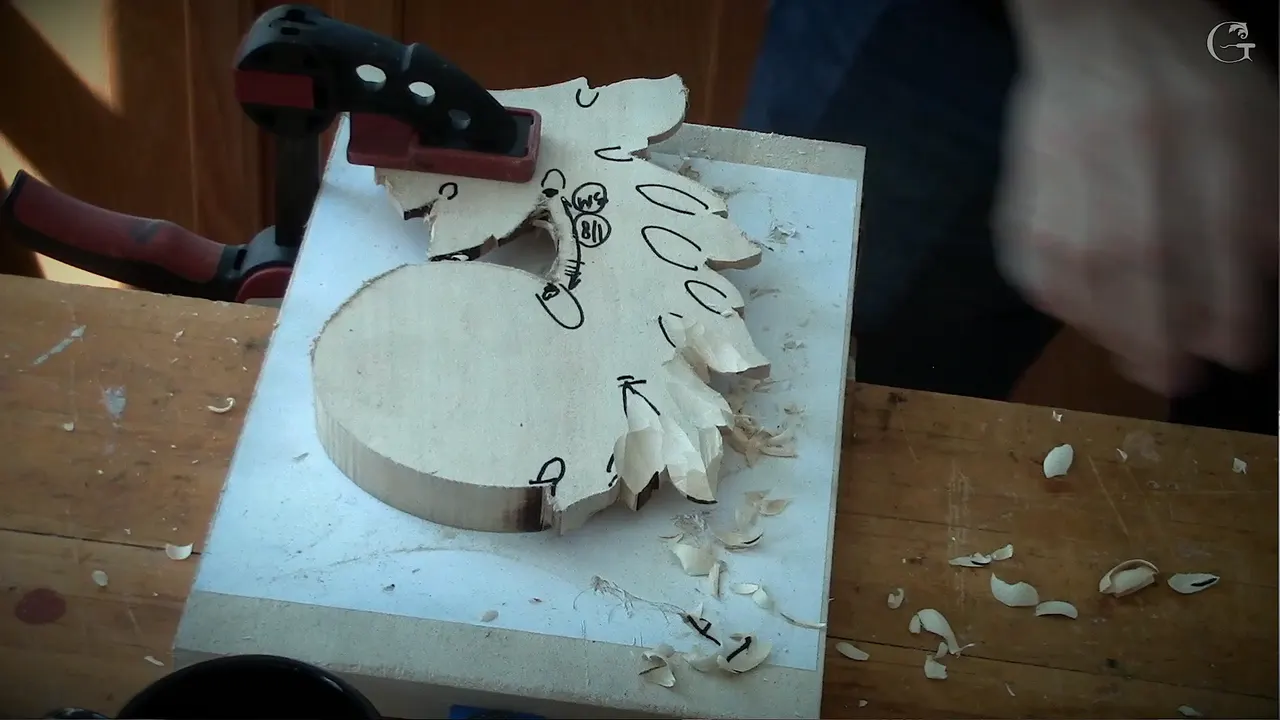
The panel goes face down for this, and it has not left its paper since the opening session. A clamp holds it now. Today is the heavy one.

What comes off is material nobody would miss if you left it. That is precisely why beginners skip this stage, and precisely why their finished work sits flat against a wall while somebody else has leaves that appear to float above it.
Key takeaways
- Undercut from behind, out as far as the outline.
- Leave roughly a sixteenth of an inch standing all along the outline, and never less than that.
- Take material from the sides of a leaf, never its middle.
- A single point of a large gouge becomes a micro tool the moment you use it alone, which saves picking up something smaller every time a tight place arrives.
- The eye is simply the space between two leaves.
- Every decision on this ornament was made by people who knew gold was going over it, and that fact explains nearly every shape on the panel.
What actually is undercutting?
Taking material from beneath an edge so it stands clear of whatever lies behind. Work from the reverse, cut in underneath, and carry the cut right through to the drawn line.
Thickness never changes. The board stays exactly what it always was, and only the way light falls across the finished relief changes.
People will think those leaves are paper thin. They are not, and nobody ever works it out, which after a while stops being a trick and simply becomes how the job is done.
Why cut something invisible?
Purely for the shadow it casts, and that reason is sufficient on its own. An edge sitting flat on a background throws a thin dark line; the same edge with air behind it throws a real shadow that moves as a person walks past.
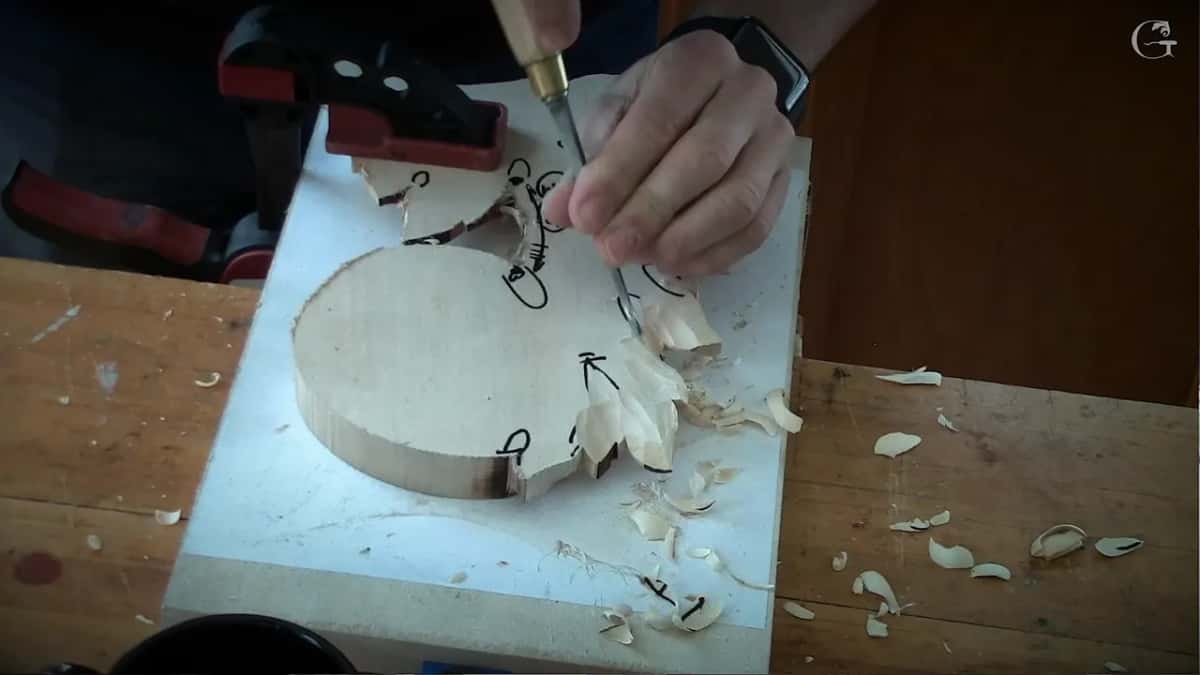
The cut face stays invisible for good. What everybody sees is its effect instead, and that distinction is worth carrying into every stage of a carving.

Pay particular attention where two leaves meet. Those junctions are where the depth reads hardest, and an undercut that runs shallow there undoes the overlap you spent the previous session establishing.
When does a carver stop undercutting?
At the point where more depth stops buying more shadow, and that point arrives sooner than most people believe. Another two millimetres off the back of a leaf changes nothing whatsoever about how the piece reads from six feet, while costing you the strength that keeps the edge intact through shipping and fitting.
Judge it from the front. Turn the panel over every few minutes, stand it upright, and look at it the way somebody eventually will rather than the way it appears while clamped face down on a bench.
How is the piece held for this?
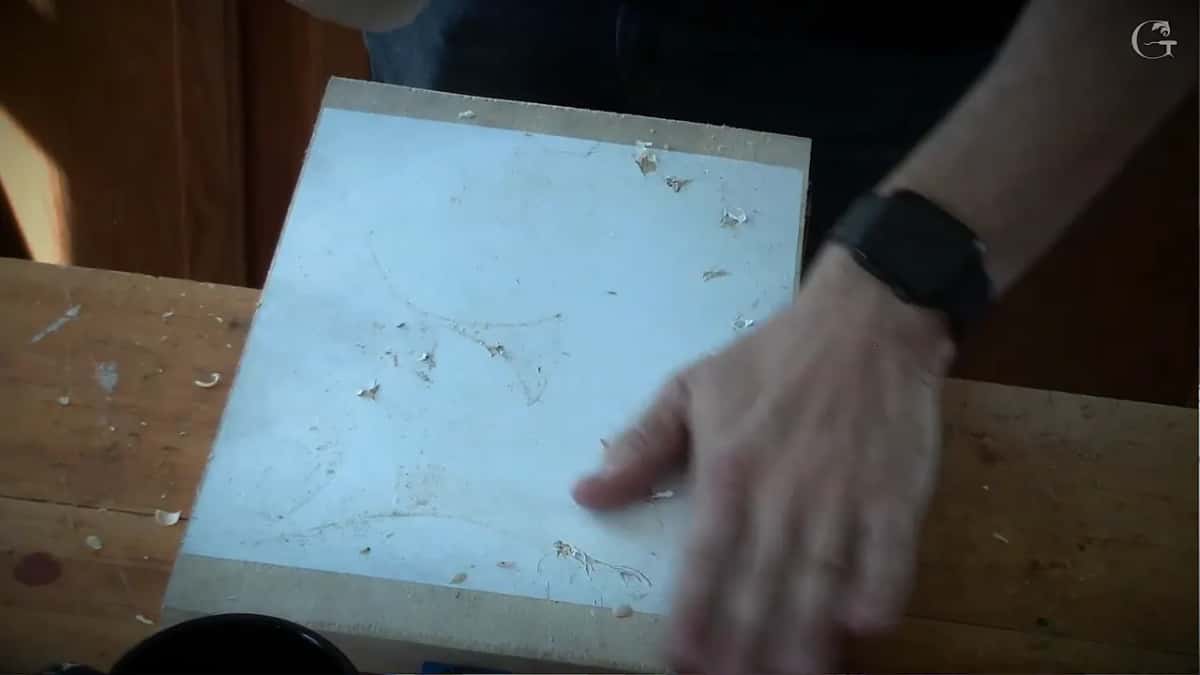
Face down, with a clamp. The paper sandwich that carried it through every earlier session holds the work against a board from underneath, which is useless once the underneath is what you want to reach.
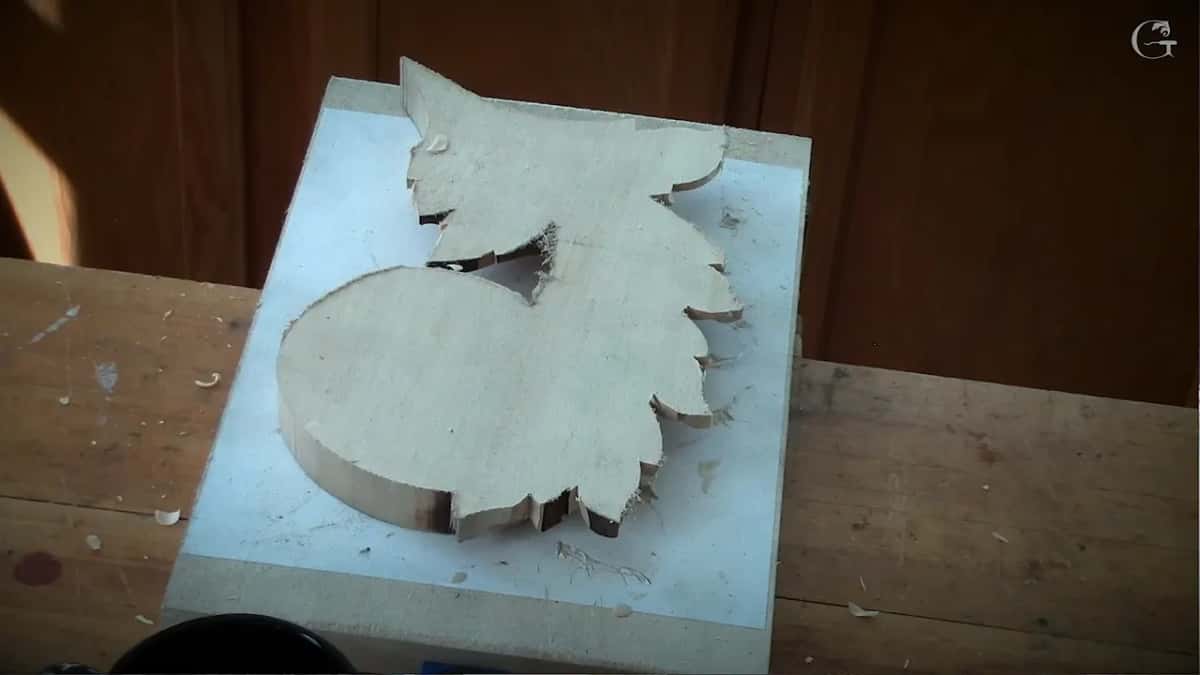
Any quick action clamp will do. Nothing about this needs an expensive fitting, and a piece that shifts while you are cutting blind under an edge is the one thing worth preventing properly.
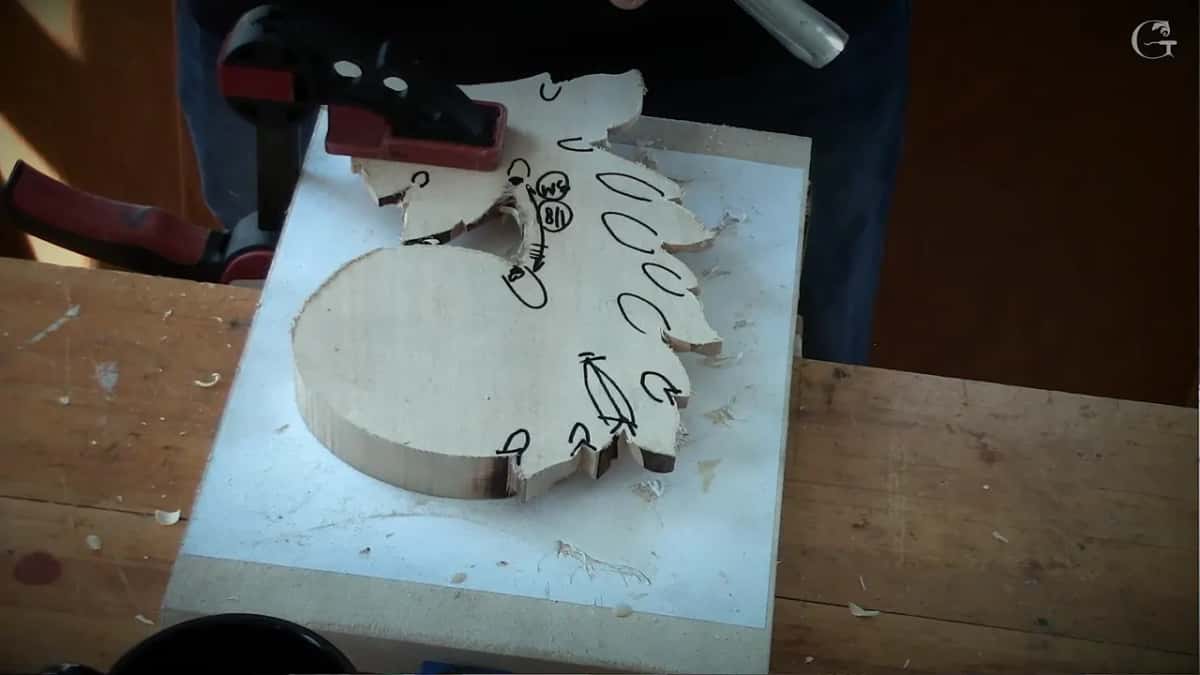
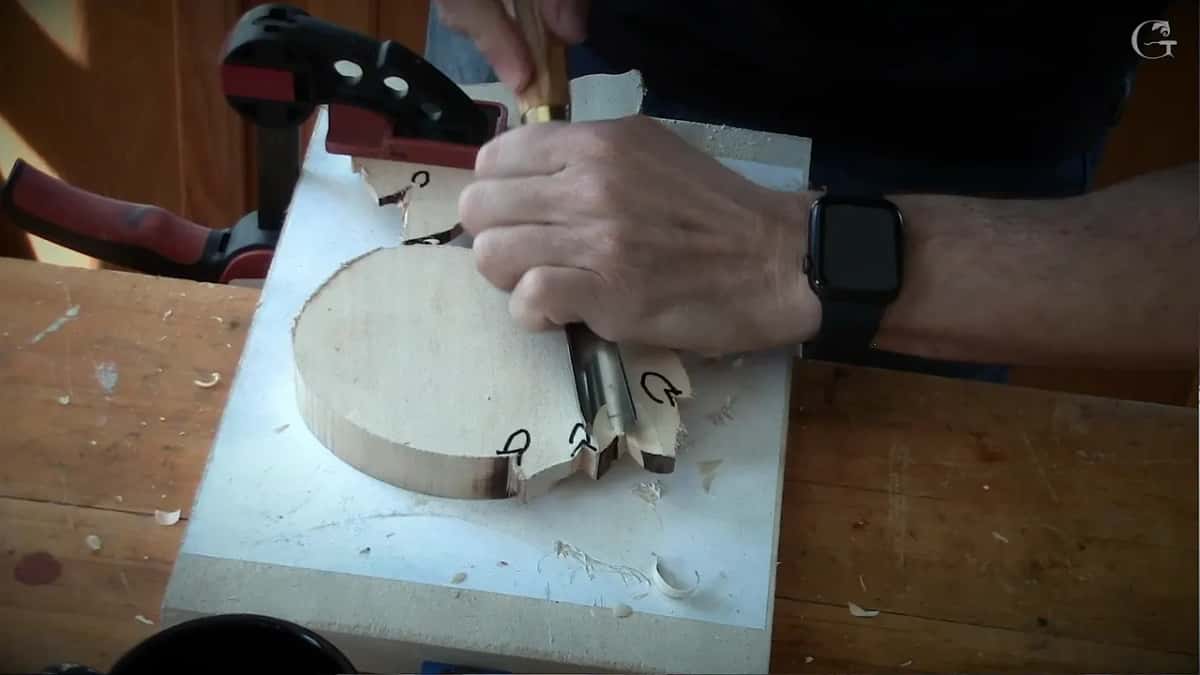
A number nine does the cutting and the bigger the better. Smaller works, slower, and there is no virtue in a small tool here that outweighs the extra passes it costs you.
How much wood stays at the edge?
Around one and a half millimetres, close to a sixteenth in inches. I said one millimetre first and corrected myself out loud, because one is the point at which a knock during installation takes the edge off entirely.

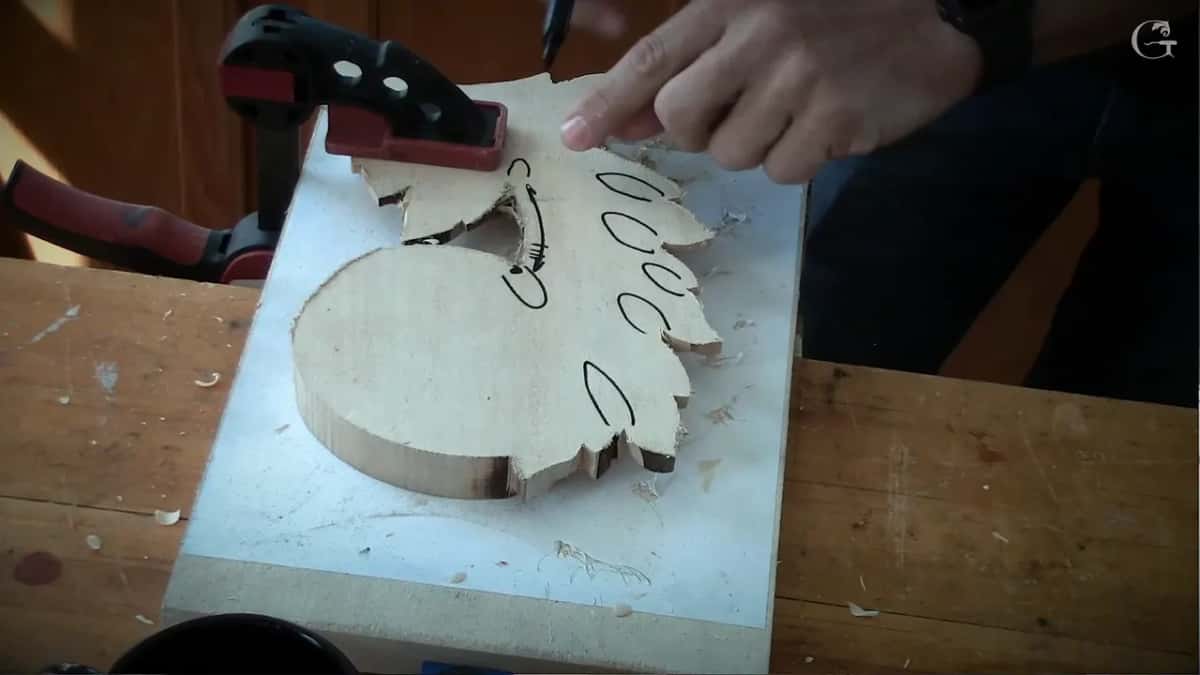
Three millimetres stays on the inner side, an eighth of an inch in old money, and no more than that. It gets looked at again later, once the shapes around it are finished.
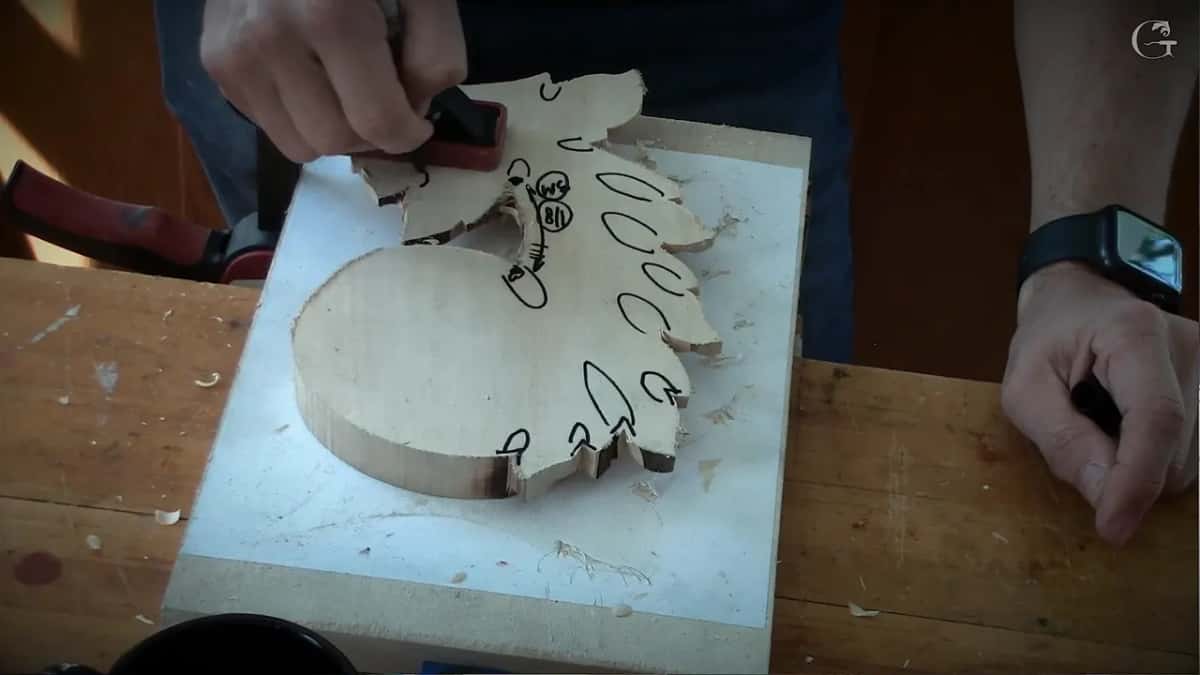
Work triangle by triangle right round the panel. Here, then there, then the next one, rather than taking any single area down to its final state while its neighbours are untouched.
Where should the material come from?
The sides of a leaf, and not its middle. Hollow out the middle from behind and you will meet your own modelling coming the other way, which on a three quarter inch board happens sooner than anybody expects.
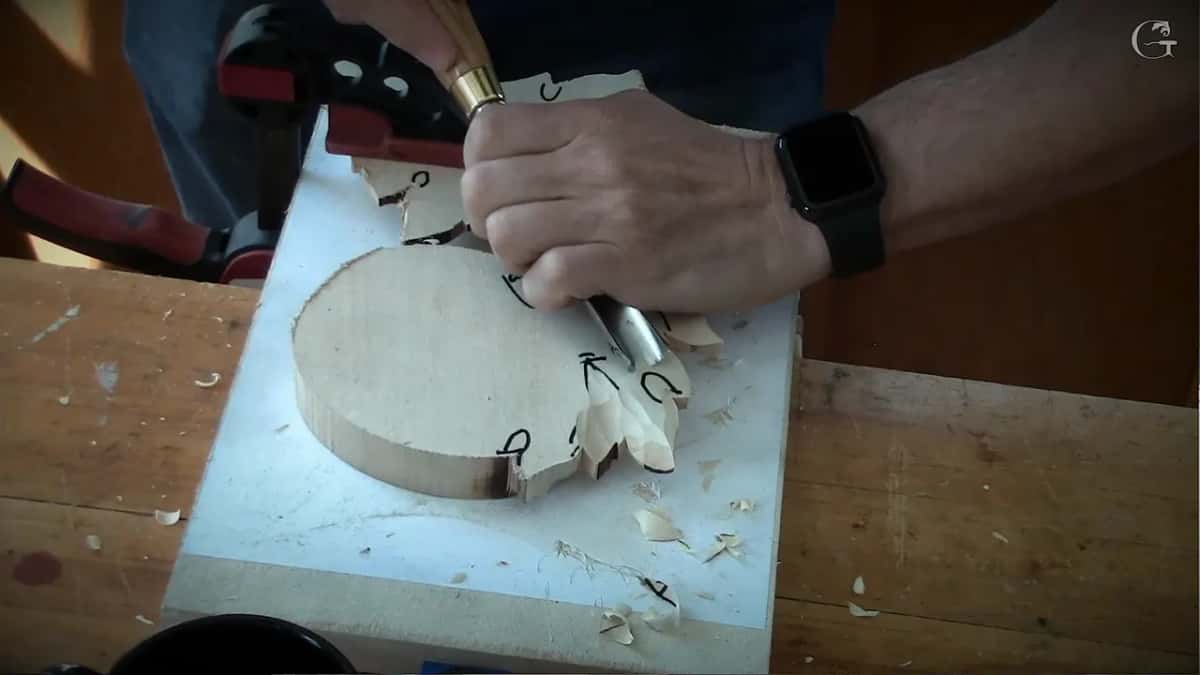
Sides are where the shadow needs the air anyway. A leaf edge standing clear along its flanks reads as lifted from any angle in the room, while a thinned middle reads as nothing at all.

How do you reach a tight place with a big gouge?
Use just one of its corners. A wide sweep carries two points, and working with a single one turns a twenty millimetre tool into something that behaves far smaller for as long as you need.
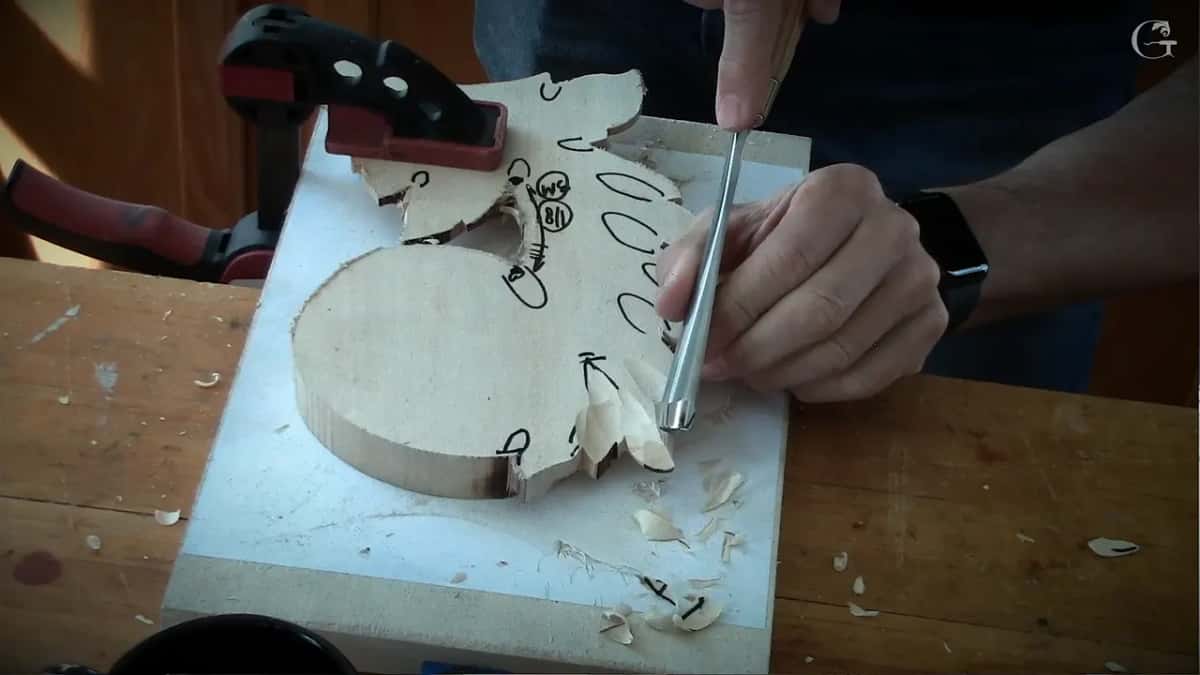

That saves a great deal of swapping. Put a big gouge down to fetch a small one twenty times in an afternoon and you have spent real time walking to a rack rather than carving.
Sweep rather than push. The movement across the back of the work is a long sweeping one, and describing it that way tends to fix it in a student hand faster than any amount of demonstration.
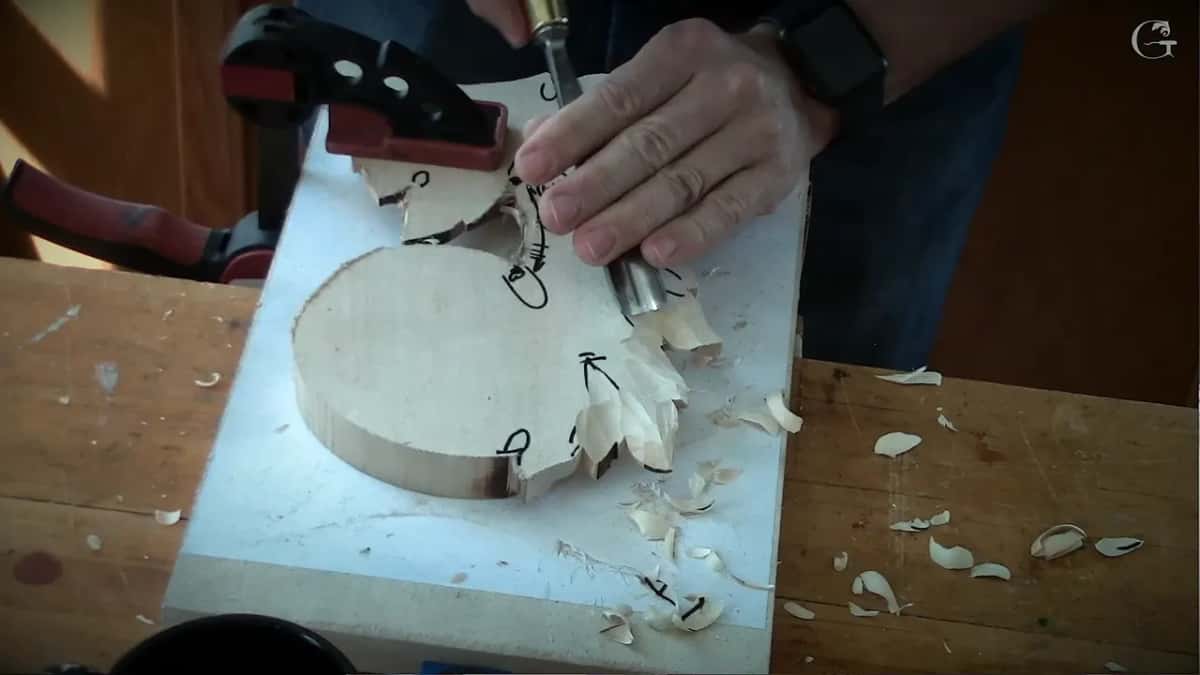
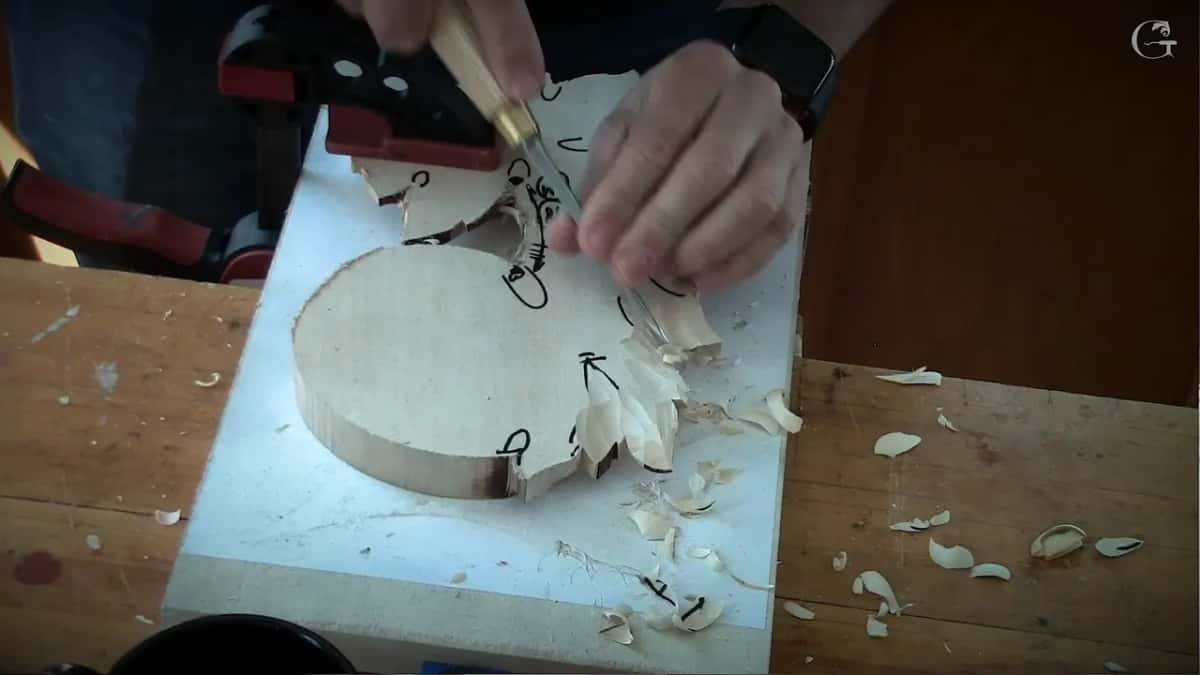
A knife or a skew is quicker in places. On the round part especially, where a curved sweep fights the shape, a straight edge simply goes where you point it.


| Where | What is left standing there | Reason |
|---|---|---|
| Outer edge | A millimetre and a half | Thinner and one ordinary knock while it is being fitted takes that edge clean off |
| The inner side of the piece | Three millimetres | It gets revisited in a later session |
| The circle | Six millimetres of setback | Then out to an eighth of an inch deep and no further at any point |
| Middle of a leaf | Everything | The front face is coming toward you already |
Does the circle get the same treatment?
Set in about six millimetres from its edge before anything comes out, and then no deeper than that same eighth anywhere across it. Those figures are not arbitrary, nor are they sacred.
A knife handles it faster than a sweep does. The curve of a gouge fights a round shape, while a straight edge simply goes where it is aimed, and on this one detail that difference is worth the tool change.
How were the two layers joined?
Dowels, in the original work. Small pins of wood driven through from the back rather than adhesive, which meant a damaged upper layer could be lifted off and replaced without touching anything underneath it.
Mine is glued, and I have said before that I do not intend to take it apart. Seventy seven adhesive on a sheet of paper is what has been holding this blank to its board since the opening session, and it will come off with a chisel when the time arrives.
Either method works and one of them is reversible. Worth knowing before you commit, particularly on anything destined for a place where somebody might knock it.
Which part is the eye?
The space between two leaves, and it is simpler than people assume. Sometimes a leaf genuinely laps over its neighbour. Sometimes the gap sits open instead, and the name holds either way.
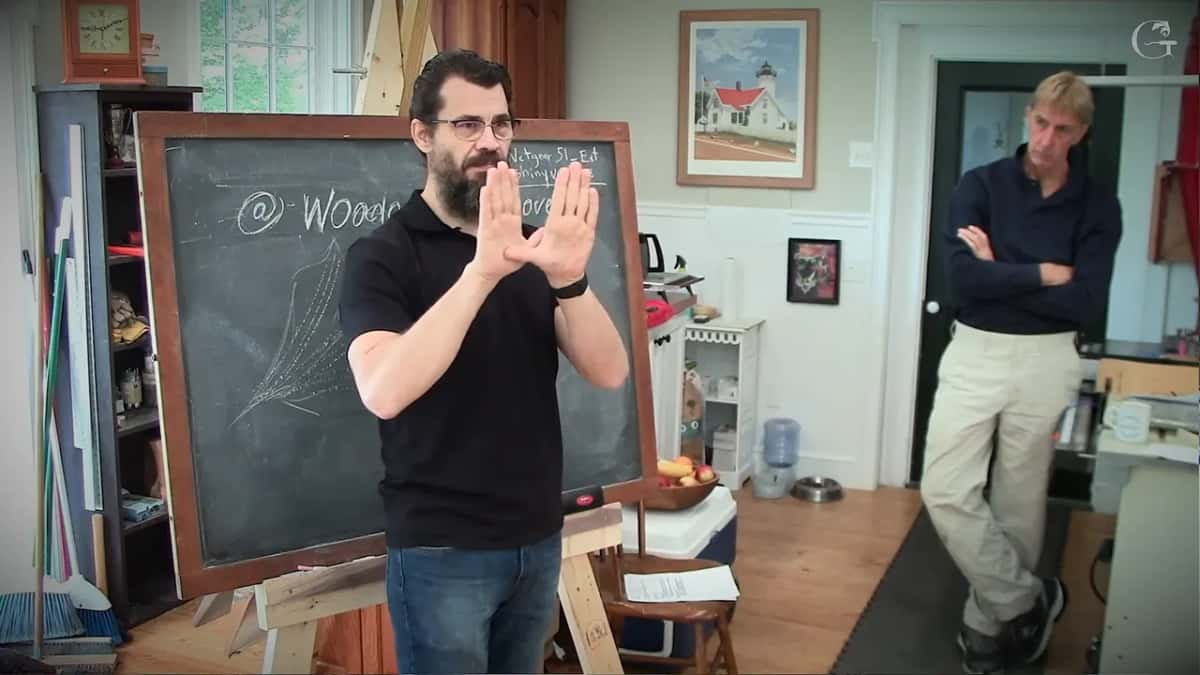
A raised run travels down the middle of every leaf with hollows either side, and a dome goes in as well. Naming these matters. A room of carvers needs one word per shape or half of every instruction lands somewhere it was not aimed.


What did carvers hide in there?
Whatever amused them. A small bird tucked inside an eye where the two layers close over it, invisible from every angle once the piece is assembled.

People look into an eye and find secrets. The panel appears to be cut from one solid block, nobody can work out how anything got in there, and the carver who did it has been dead three hundred years.
Feel beats sight for this kind of thing. A human hand detects a thousandth of an inch and an eye cannot, which is why so much of what makes carved work good gets found by running a palm over it.
How long does a piece like this take?
Longer than any client ever wants, and nothing shortens it. I carve for a living, which means deadlines, which means a constant low tension that people outside the trade seldom consider when they think of a carver at a bench.
Carving cannot be expedited. You can work longer hours and you cannot work faster, and every attempt to do the second thing shows up in the finished surface within a week.
Restraint belongs in the same discussion. Few details, few facets, and not many movements inside any single leaf. No details at all was my first phrasing on camera and it needed correcting, since that swings too far the other way.
Why was this always gold leafed?
A Byzantine acanthus was never left as bare wood. Not stained, not shellacked, not finished in any way we would recognise, because gold leaf was always the destination.
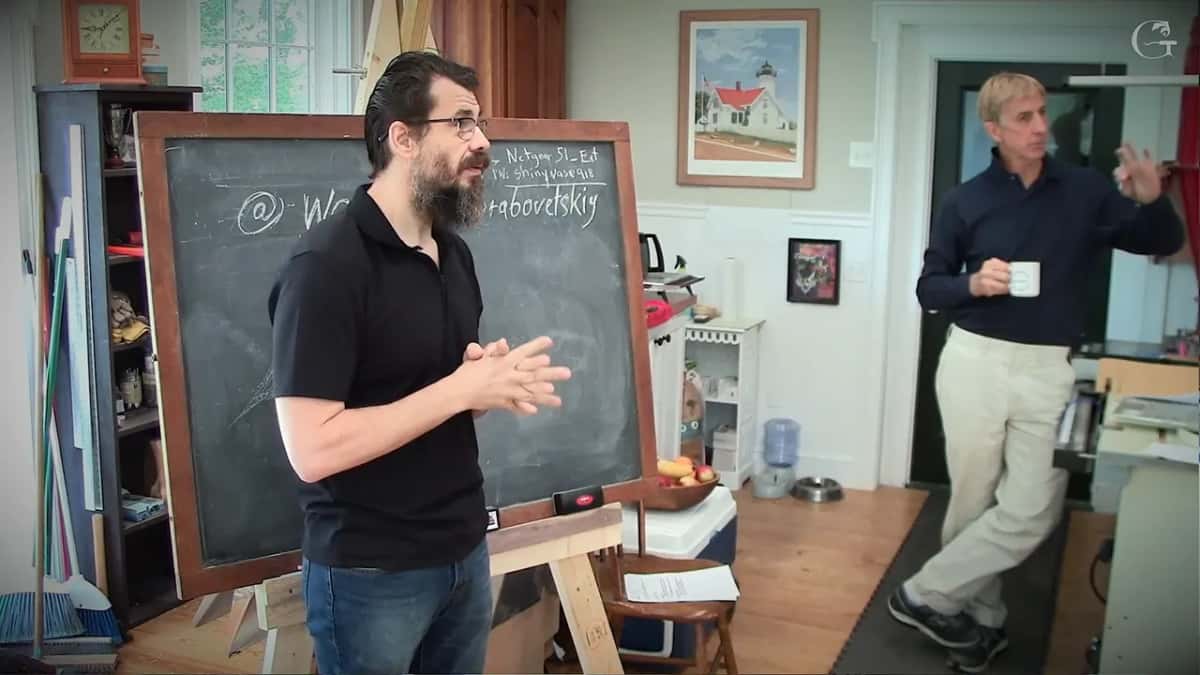
Channels caused real problems for that. Cavities and hard stripes give gilding nowhere to sit evenly, which is exactly why this leaf has a raised middle where other traditions cut a groove.
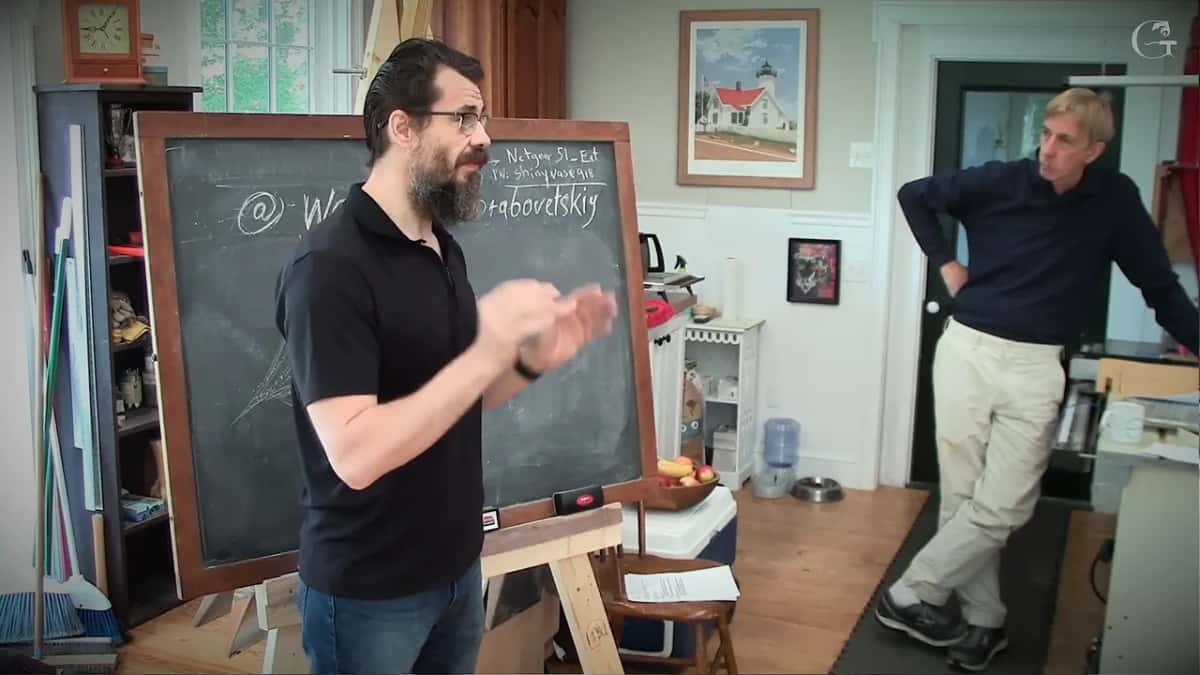
Compare it with furniture work carrying stripes down its sides. Lovely in its own right, wrong for this, and a sketch of the two side by side settles the argument faster than a paragraph does.
How did the gilding actually work?
Red clay came first, before Italian gesso existed. It went on thick, which is not what anybody expects from a ground.
Then it was smoothed with pumice stone rather than sand. Another thin coat of the same clay followed, then oil, and the gold went on to that.

Four operations before a leaf of gold appears. Knowing that sequence changes how you cut, since every one of those layers softens detail a little and a channel that was crisp in wood is a smear by the end.
Could you take it further than this?
Considerably further, and a week is what stops us. Scroll openings can be cut right through the head of a leaf so that daylight passes behind it, which turns an already deep panel into something closer to sculpture.
One class has no room for it. It is worth naming anyway, so that nobody finishes this course believing they have seen the ceiling of what the technique can do.
The French took exactly that liberty. They broke the rules while somehow staying inside them, and the results are peculiar in a way I enjoy without ever wanting to copy.
Is this high relief or medium?
High, and a student asking the question is a reasonable mistake. The upper layer here is only three quarters of an inch where two inches would be normal for this kind of work.
Thin stock is a compromise with a week long class. On a commission it would be far thicker, cut in French lime, and the undercutting that follows would go correspondingly deeper.
Master this one and every other leaf gets easier. The Byzantine is the most complicated carving of the family, so the ones that follow feel straightforward afterwards, which is the reason it sits in the middle of this school rather than at the end.
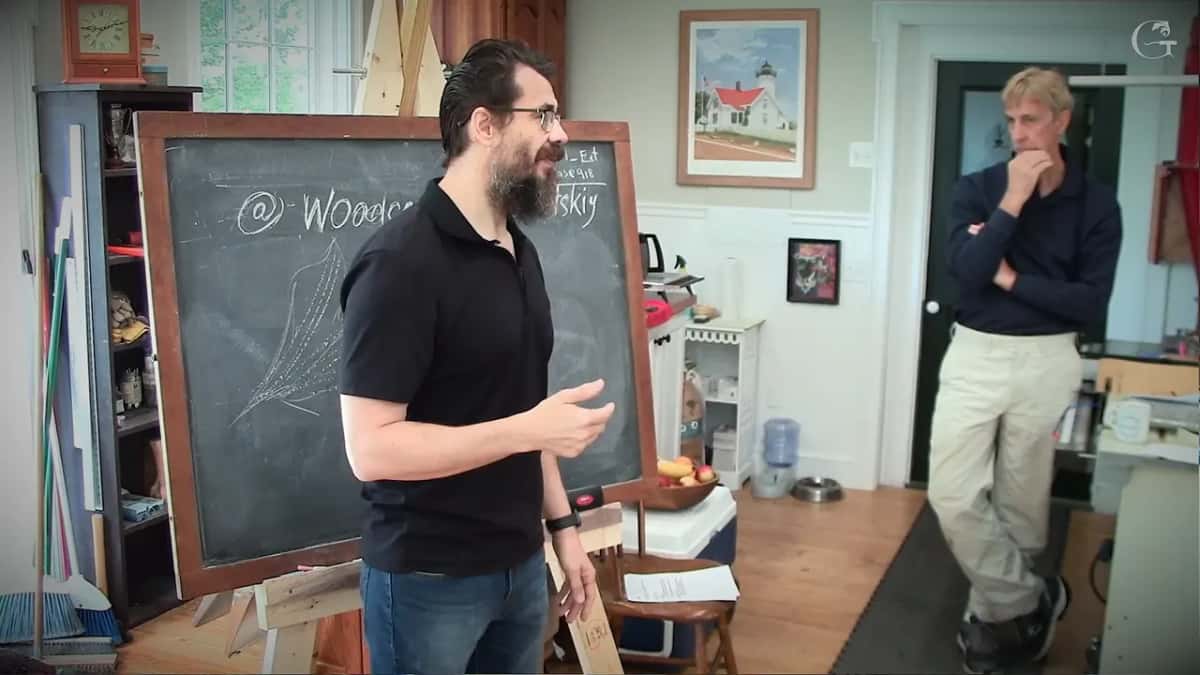
Fifth of ten workshops. Workshop one draws and glues, two roughs to ten millimetres, three maps every rise and fall, and four models the surfaces without a sheet of abrasive in sight. Ahead lie six, seven, eight, nine and ten, with the course holding every one. Other centuries are carved in the Greek acanthus, the Roman, the Corinthian and a modern reading, and the same leaf bends round a curve in acanthus over moldings. Why a shadow decides everything belongs to the design course, gouges get chosen in the tools course, and none of these sweeps cut without sharpening. Starting with nothing? First cuts needs one knife.
A sixteenth of an inch, a clamp, and work nobody will ever look at. Access to the school opens the other nine workshops.
How it's done
- Flip the panel and clamp it. Paper held it from underneath all week, which helps nobody once underneath is where you need to reach. A quick action clamp does the job.
- Pick up the widest nine in the roll. Smaller works, and works slower. No virtue lives in a narrow sweep here that pays for the extra passes it costs you.
- Cut in beneath, through to the line. Thickness never alters. Only the way light falls across the panel changes, and that change is the whole return on an afternoon.
- Stop at a sixteenth. Roughly a millimetre and a half where the piece ends. Thinner, and one ordinary knock while it is being fitted removes that for you.
- Take it from the flanks. Never from the centre of a leaf, where the shapes already cut on the other side are travelling down to meet you.
- Work a single point of the sweep. One corner of a wide tool behaves like a much smaller one, which saves walking to the rack twenty times an afternoon.
Frequently asked questions
What does undercutting do?
It lifts an edge clear of whatever sits behind, so the edge throws a real shadow instead of a thin dark line. Thickness stays exactly what it was. Only the light changes.
How much should stay along the outline?
Around one and a half millimetres, near enough a sixteenth in inches. One millimetre was my first figure and I corrected it on camera, since one is the thickness at which fitting a panel removes its own outline.
Should I thin the centre of a leaf?
Leave that alone entirely. Shapes already cut on the other side are travelling down toward you, and on thin stock the two meet far sooner than anybody expects.