
Alexander Grabovetskiy, woodcarver, School of Woodcarving · Published 2017
Part of Carving Antique Style Rosette
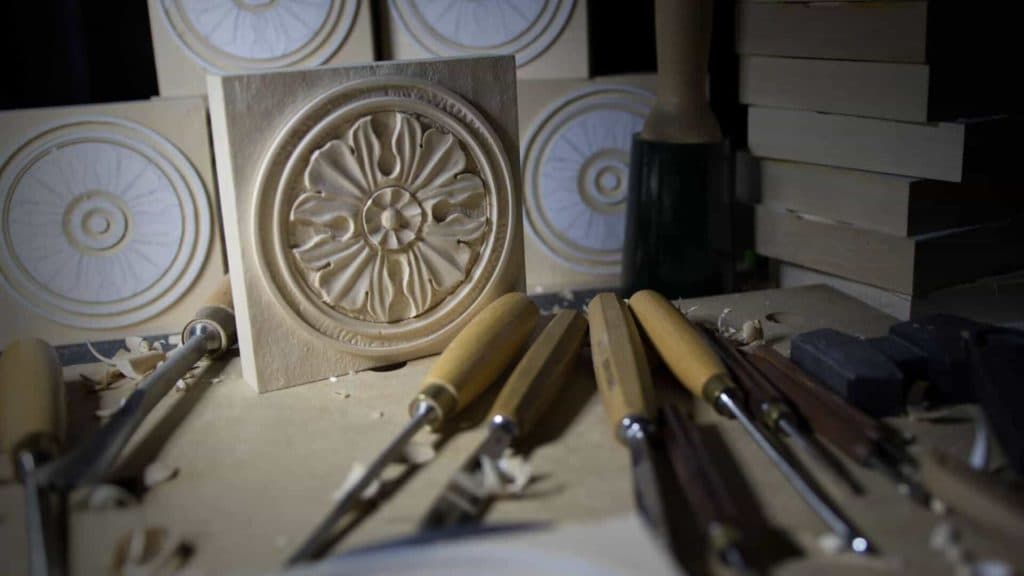
The full video lesson is inside the school.
Alexander Grabovetskiy, woodcarver, School of Woodcarving · Published 2017
Quick answer: Those shapes need unusually small tools. A palm gouge little wider than writing lead sets each eye in one push, and an eleven veiner runs down either flank of a pipe, leaving the ridge standing proud between the two cuts.
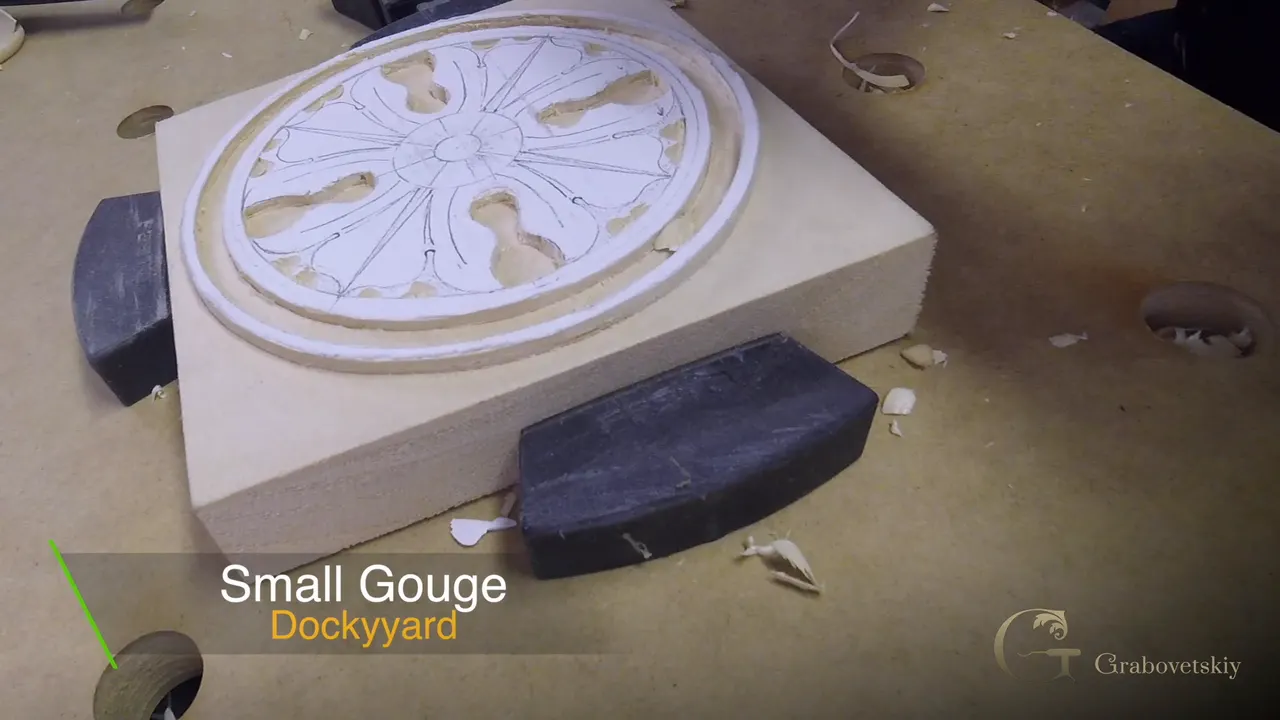
Small shapes inside a rosette leaf are cut with tools most carvers never buy. A palm gouge the width of a matchstick tip sets the eye. A veiner outlines the pipe. Both get held against the drawing first, and the one that drops in is the one that goes to work. The specification on a piece like this is simply the drawn line, and everything the tools do is answerable to it.
Got the outline of a leaf cut and then stalled on the small shapes inside it? Reached for your smallest gouge and found it still too big for the corner? This session is nothing but little tools, and two of them are not sold as carving tools at all.

One tool per shape, chosen by fit. Each leaf on the face of this rosette carries a small half round where its pipe begins, and that little dome is what carvers call the eye.

My first reach was a dockyard gouge. Barely wider than a pencil lead, made for model work rather than architectural carving, and it dropped into the drawn eye as though somebody had ground it for this rosette specifically.

Outside the eye the shape opens out. Number seven took that line, and it sat in perfectly, the whole width of the edge meeting the pencil at once with no gap anywhere along it.
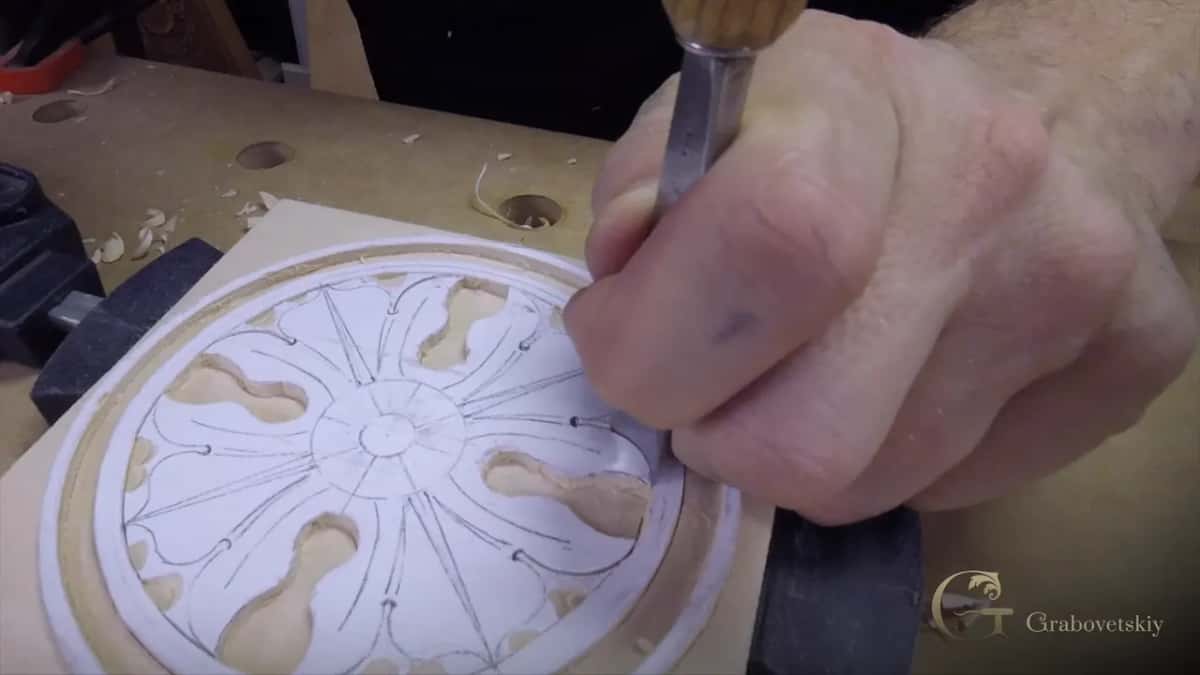
Then it goes in. Straight down, either driven with a mallet or pushed by hand depending on the wood and the day, and using one tool consistently through a run of shapes is most of why the finished piece looks deliberate.
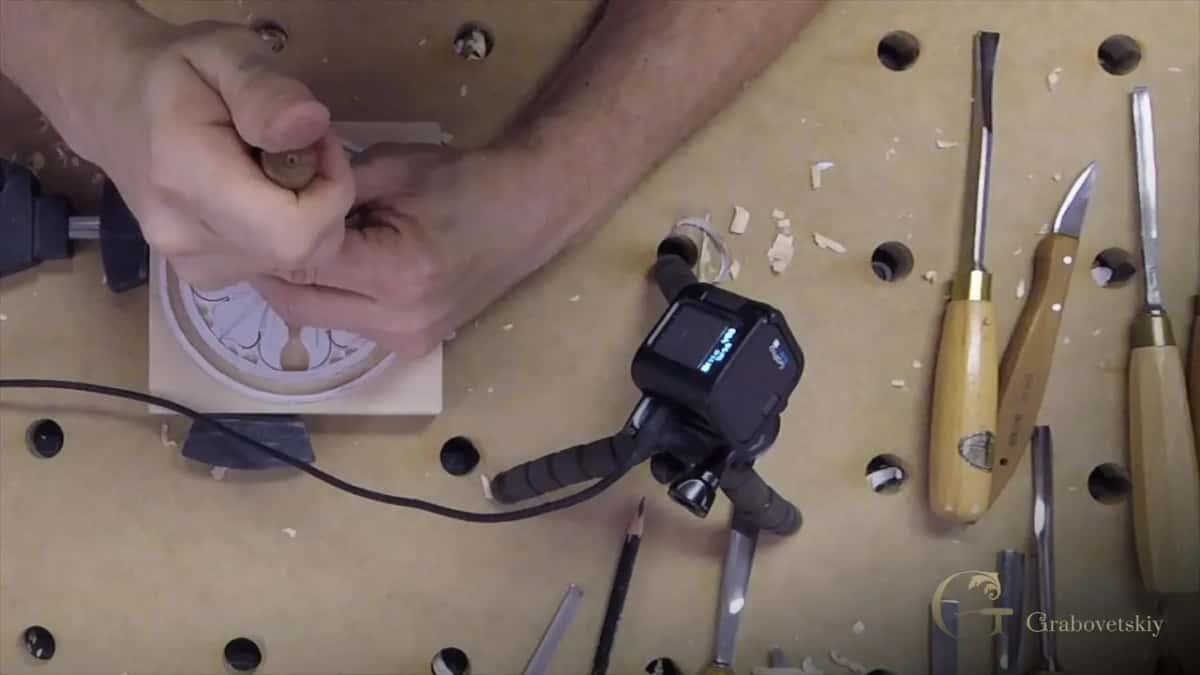
Being satisfied is a different matter. I looked at that middle section on the recording, said out loud that it looked good, and about twenty seconds later admitted I was not happy with it. Both statements were true. A shape can be correct against the drawing and still not sit right to the person who cut it, and saying so on camera is more use to anybody watching than pretending every cut lands.
What I did about it was nothing, that day. Some faults are worth chasing and some are worth leaving until the whole piece is up and you can judge whether the eye goes to them. On a run of fifteen the answer is almost always to carry on and see.
Steadiness, bought for nothing. Watch my hands on the small cuts and one finger is always parked hard alongside the steel, close enough to the edge that it sometimes hides the tool from the camera entirely.
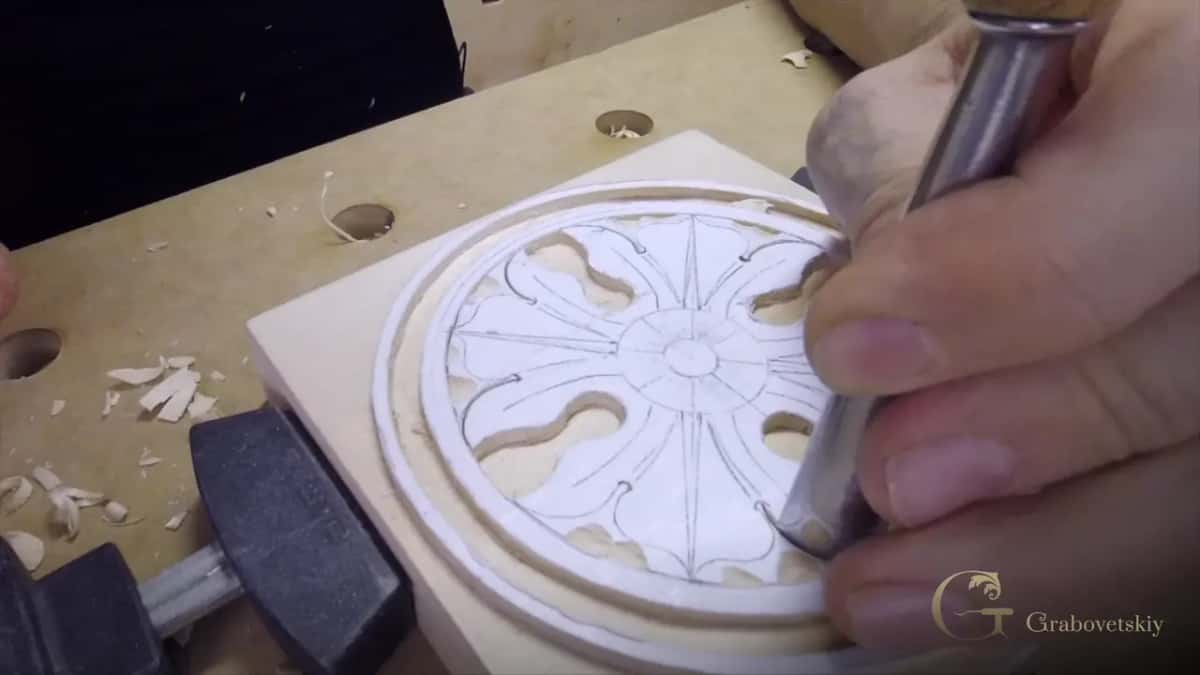
That finger fixes the position. Without it the tool is held only at the handle and any tremble at that end is multiplied by the length of the blade, which on a cut a few millimetres long is the difference between landing on the line and landing beside it.
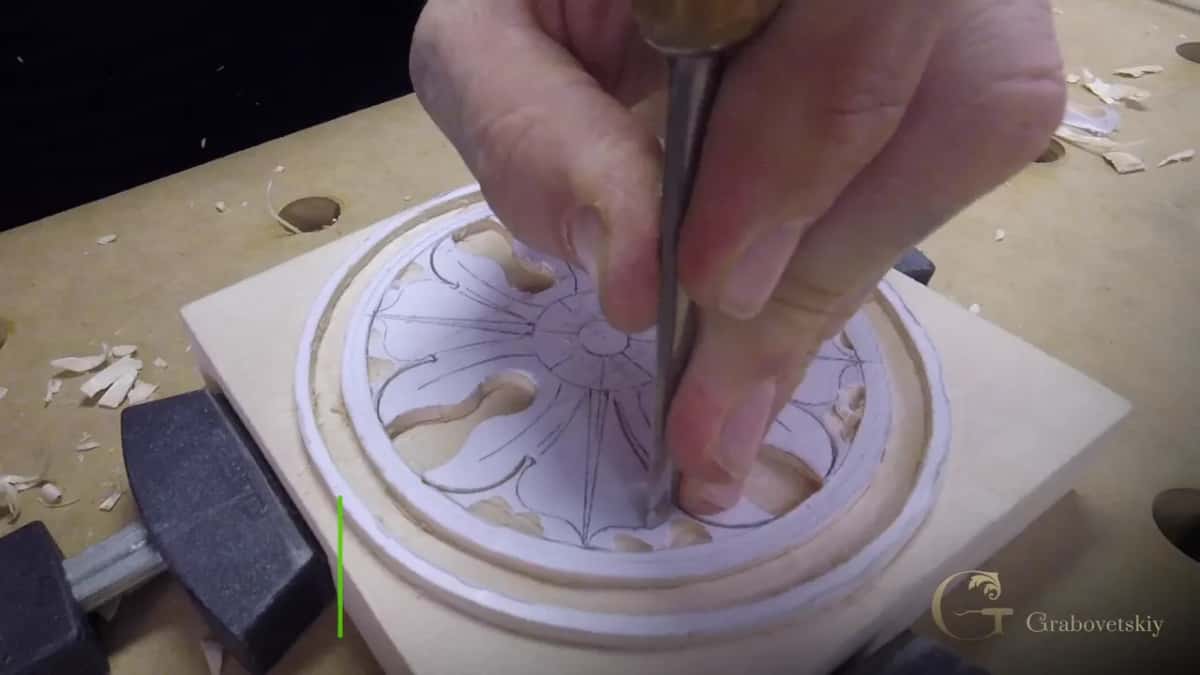
Habit worth building early. Every carver I have watched who works small does something like it, and nobody taught me the trick, it simply arrives once the cuts get fine enough that the alternative stops working.

Sweeps kept coming and going through this section. Ten millimetres of number eight suited one curve. Farther along the seven proved a shade wide, so down I went to a six, also ten millimetres, and that one was exact.
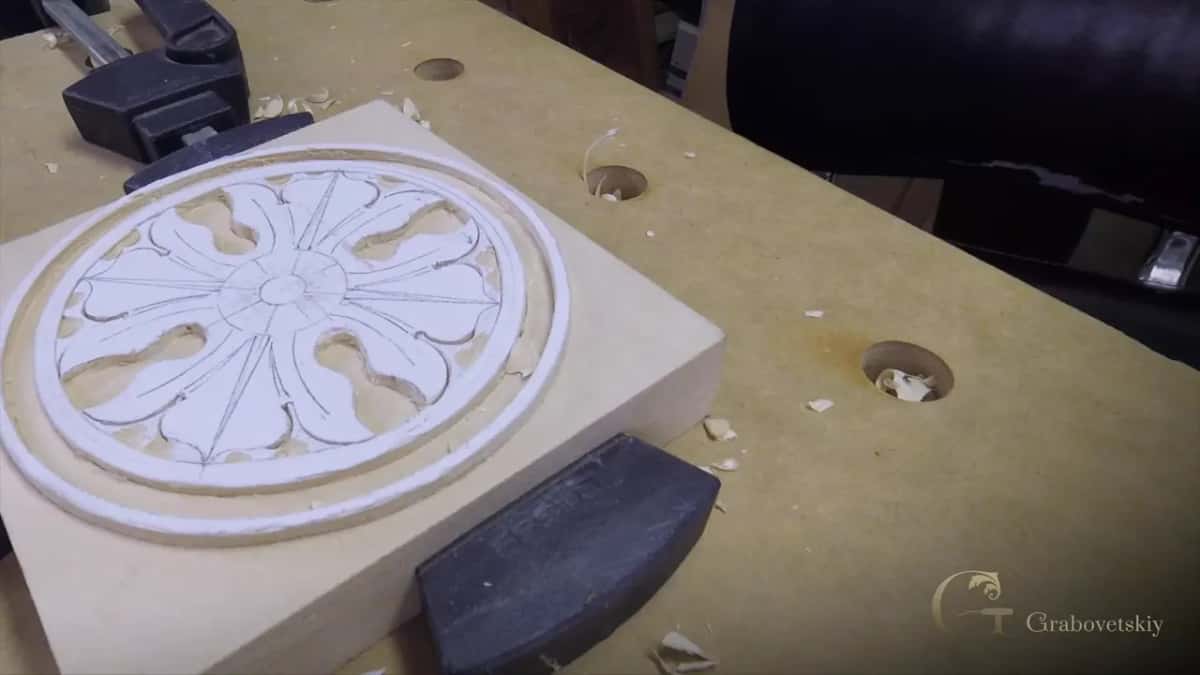
| The shape | What went into it on this rosette | Why that one | What it costs you to force a tool that nearly fits the line |
|---|---|---|---|
| The eye | A dockyard gouge, thinner than writing lead | Nothing else in the rack is small enough | Corner marks flanking a dome that measures only a few millimetres across it |
| Outside line | Number seven, full width on the pencil | Its sweep matched the drawn curve along the whole edge with no gap showing at either end | A flat spot |
| Tighter curve where the seven turned out a shade wide | Number six | Ten millimetres across | Two cuts where one belonged, and a join a fingernail can find later |
| Corners | The 47 grounding tool, narrowed to a sixteenth | Reaches where the rest give up | Waste left standing in the angle, and it shows the moment a lamp comes in low |
| The pipe | An eleven veiner run down both sides | It leaves the ridge | A pipe that sits flush instead of proud, which is the whole point of it |

Tool choice on a run like this settles quickly. By the third rosette I was no longer holding gouges over the pencil at all, because the hand already knew which handle to reach for, and the whole sequence had compressed into something closer to muscle than to thought. That is what a commission gives you that a single practice piece never can, and it is the reason I took fifteen rather than talking the client down to five.
Something narrower than you expect to exist. These are worth owning in quantity, and I use mine constantly, but the ordinary 47 was still too wide for the angles on this leaf.

So a second 47 lives on my bench at a sixteenth of an inch. That one goes round every corner first, before anything wider comes near, clearing the tight angles while there is still room to manoeuvre.
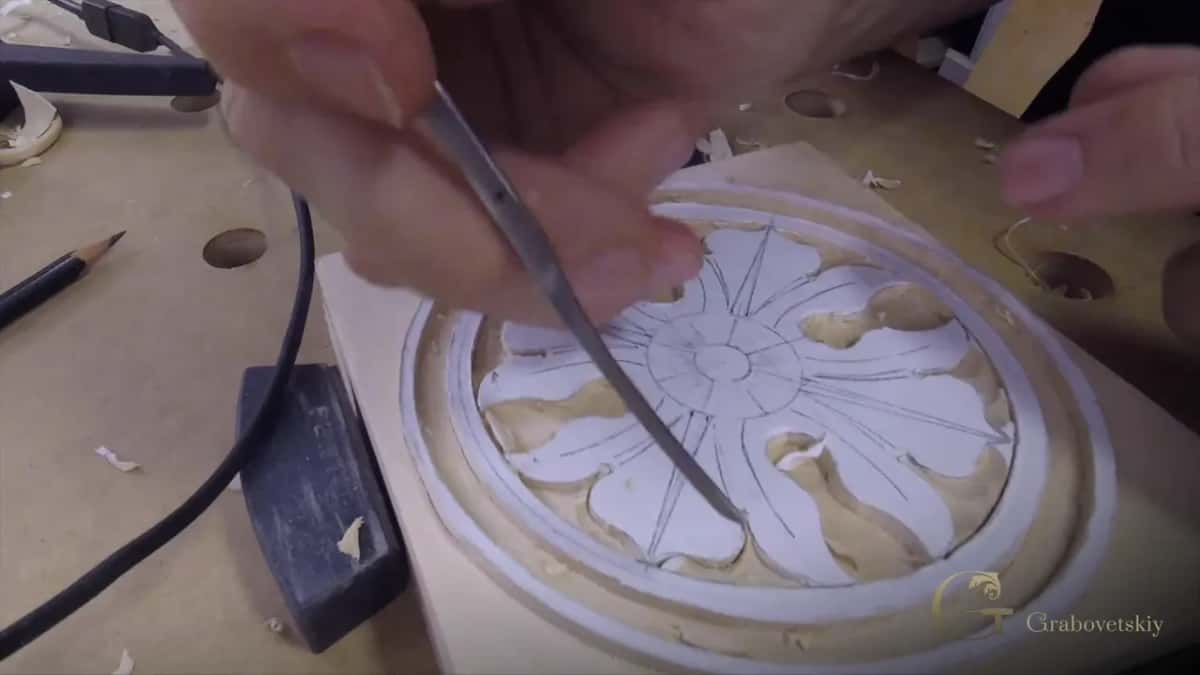
Even that was beaten in one spot. What went in there is made by Lamp in Germany and carries the number 0015, and it is handy in exactly the places where a normal carving tool has run out of ideas.

Corners first, always. Clear them while the surrounding waste is still holding the fibres together, then take the open ground afterwards with something comfortable, and the awkward part of the job is behind you.
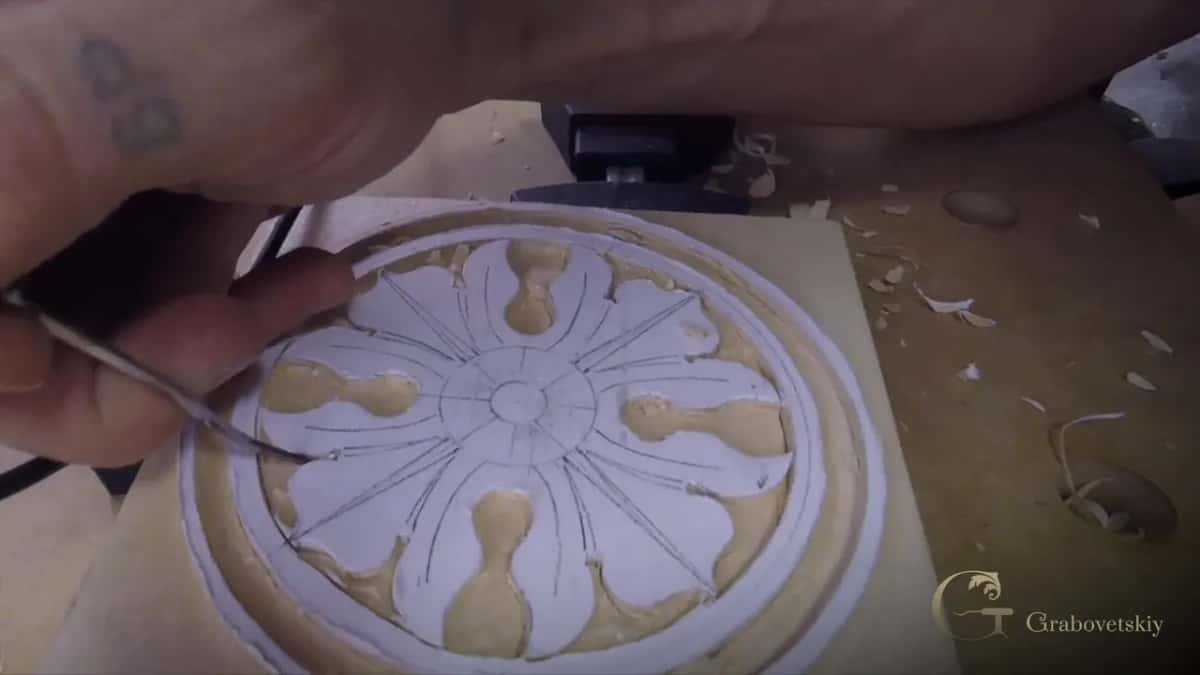
Buy them by the handful if you carve ornament. Grounding tools cost little beside a full sized gouge, they wear slowly because they take such thin cuts, and the narrow ones live permanently within reach on my bench rather than in a rack somewhere behind me.
Width is what you are really buying. Sweep hardly varies across them, so a set is less a set of shapes than a ladder of sizes, and the whole value of owning several is that one of them will always be narrow enough for whatever corner the design has produced.
Three millimetres, which is an eighth of an inch, the same figure as the wide ground outside the ring, and nothing anywhere on this piece is permitted to drop below it.

Keeping that in small pockets takes attention. There is no plane that fits in here and no gauge that reaches, so the eye does the measuring, checking each little recess against the ground it already knows is right.
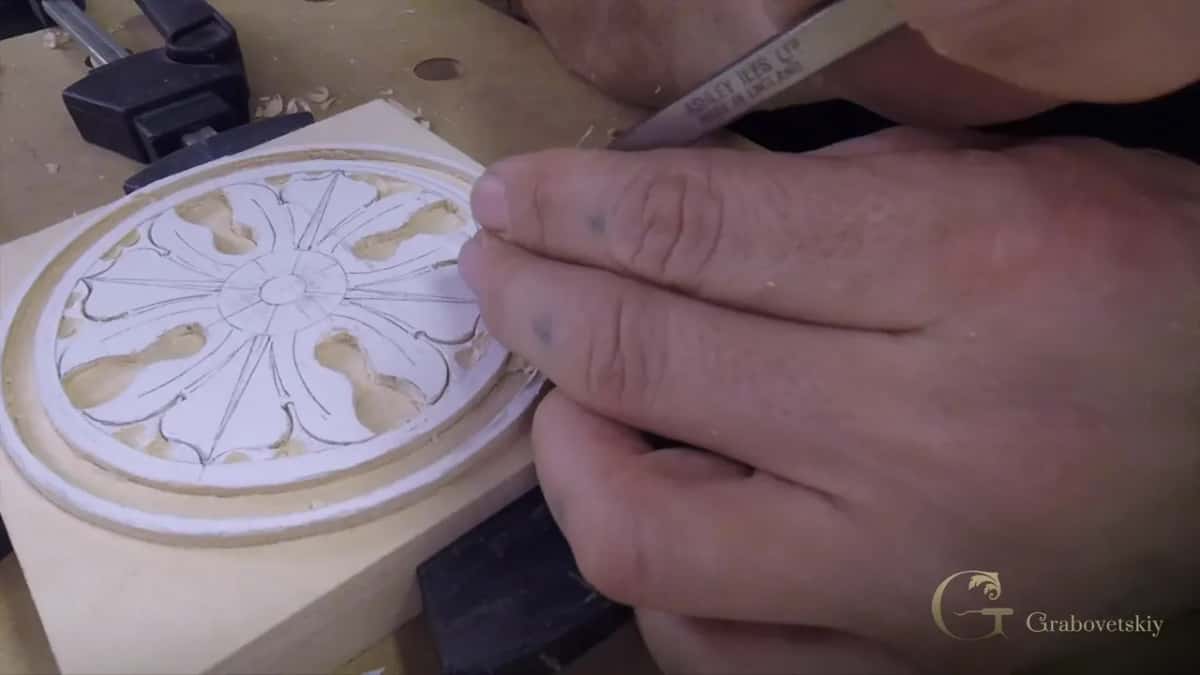
Direction helps as much as depth. I work from outside in, clearing toward the middle rather than away from it, which keeps the fibres supported behind the cut and stops a corner lifting when the tool passes.
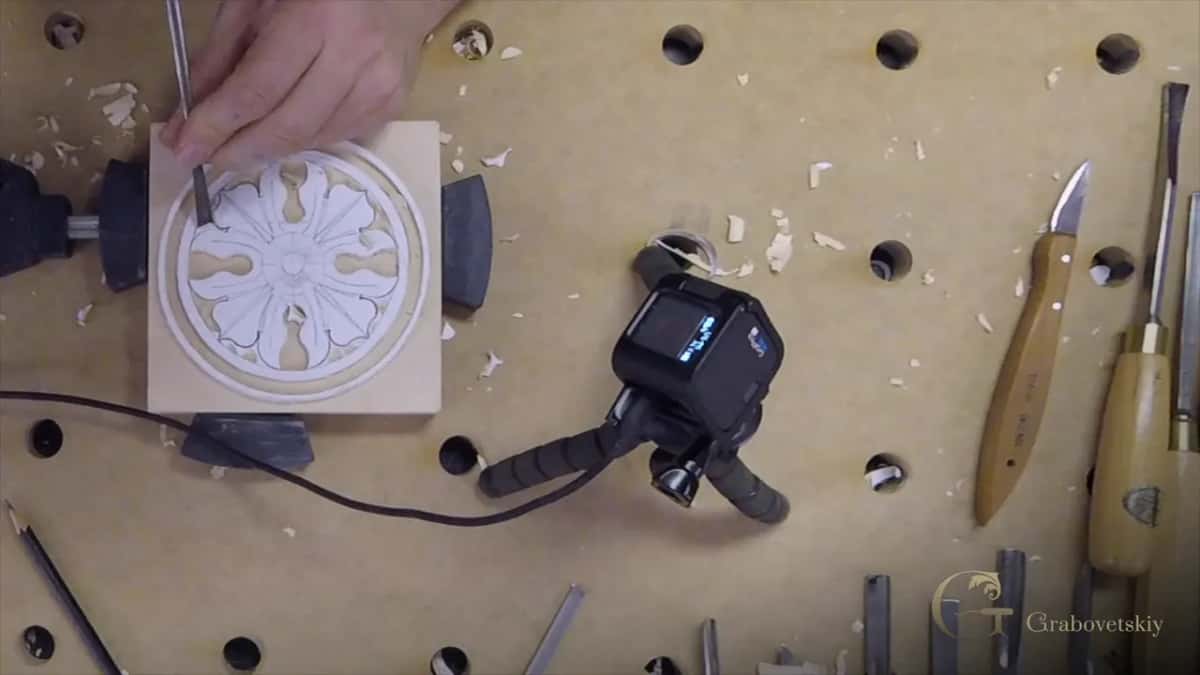
Honesty about the source is worth saying here. My reference is a photograph, and no photograph tells you a depth, so the eighth is my reading of what the original must have been for the light on it to behave the way it does.

Rotation does the rest. The block turns under my hands constantly through this session. Reason never changes: bring the work round until the safe cut is also the comfortable one. Reaching across a piece at an awkward angle puts the edge into rising grain.
Clean out as you go, too. Chips packed into a small recess hide the surface underneath them, and a pocket you cannot see is a pocket you will cut too deep at some point, usually on the last pass when there is no wood left to correct it with.
Walk a small one round the same curve. The gouge I reached for on the middle section is a genuinely massive number seven, the sort of tool most carvers never find a reason to buy, and it matched the sweep in the photograph exactly.
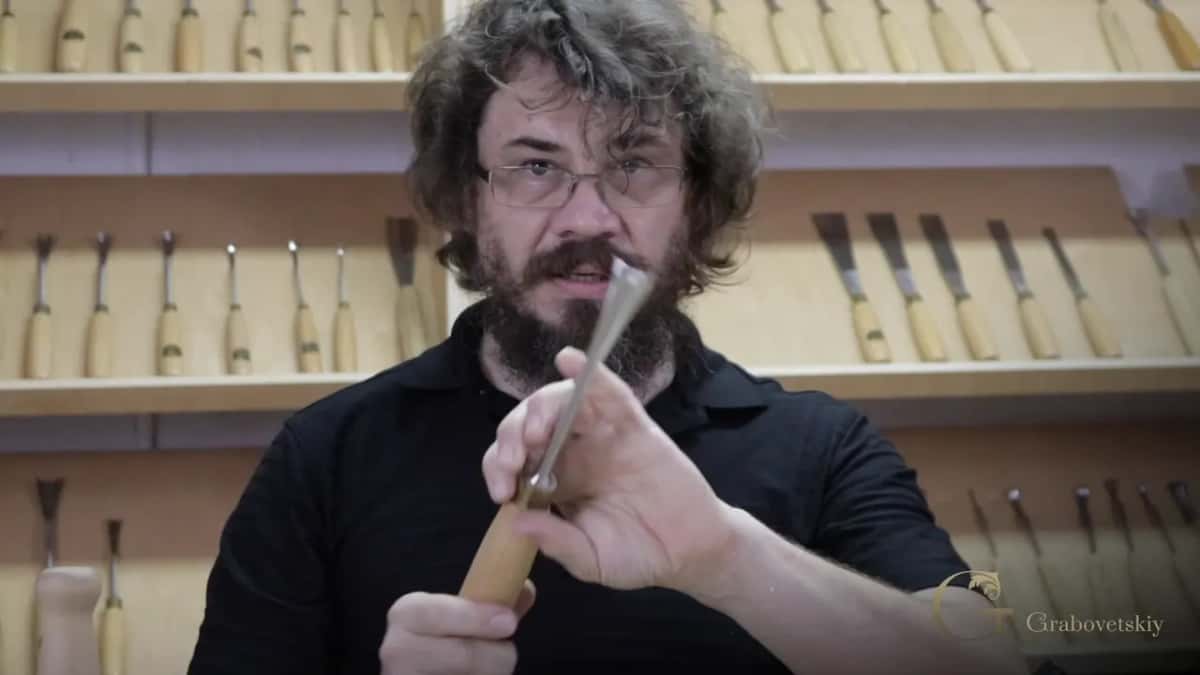
Nobody needs it, though. Lacking one, take the smallest tool whose sweep agrees with part of that curve. Take it along in a series of overlapping cuts. Twelve millimetres of number five did the identical work here.

Results differ a little, and the difference does not matter in the end. A big tool gives one continuous arc. Something small builds the curve from pieces, and after the surface is cleaned up nobody alive can tell you which happened.

A knife finishes what the gouges start. Where the middle section needed a slight relief around its base, nothing beat a plain blade, and that is usually the answer when a shape refuses every sweep in the rack.

Numbers on a rosette are worth stating plainly, since they are the only measurements in the job. Five and three eighths across the face. An inch of basswood left under the ground. Depth of three millimetres, everywhere, and a pipe standing perhaps a millimetre above what surrounds it. Everything else is judgement, and there is a great deal of it, which is why a photograph and a ruler between them cannot get you to the end of this.
Ornament of this kind was never drawn to a specification anyway. Somebody cut the original by eye against a tradition he had grown up inside, and the numbers I am quoting are simply what my own eye, working from a photograph of his result, has settled on as near enough.
A raised ridge running along it, named for what it looks like. Some carvers call the same thing a vein, and both words describe a strip of leaf left standing above the surfaces on either side of it.
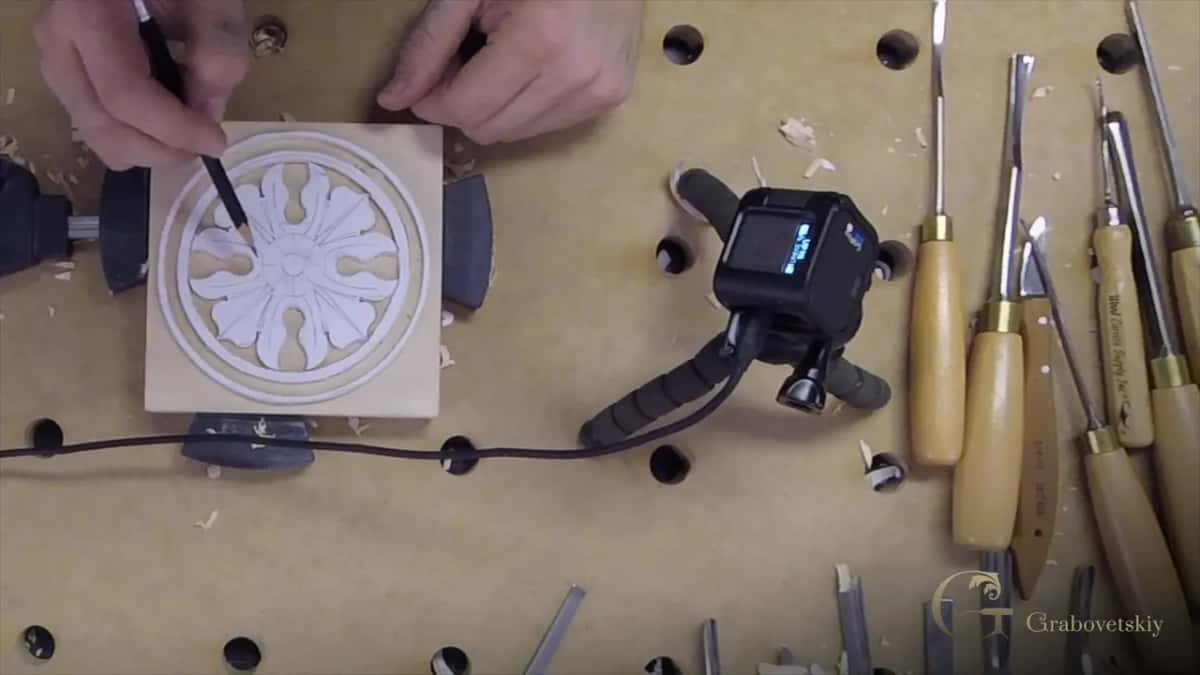
Cutting one is two passes. A small number nine goes round the shape to free it, then an eleven veiner runs down each side, and whatever is left between those cuts stands proud as the pipe.

The same logic repeats across the whole relief. Middle sections of leaves stand above their neighbours, the centre stands above the main flower, and every one of those steps is established by cutting round the higher shape before touching what surrounds it.

Corners, mostly. Corner blocks in the casing round a door or a window, corner blocks on a piece of furniture, or nothing at all beyond a decorative panel somebody wanted on a wall.
Difficulty is lower than it looks. Rosette carving counts as easy work in the trade, which is exactly why it makes such a good first architectural project, and why a run of fifteen was a sensible commission to take rather than a punishing one.
Fifteen was the order and sixteen were made. Working in a run changes the job in ways one piece never shows you. Tools stop being chosen and start being remembered. The sequence settles into something you could do while thinking about lunch, and the fourth rosette takes a fraction of the time the first one did.
That is the case for repetition as training. Carve one rosette and you have learnt a shape. Carve a dozen and you have learnt a method, which is what the trade actually runs on, and it is the thing an apprentice picked up in a workshop without anybody sitting down to explain it.
Would you rather watch a dockyard gouge drop into an eye and a veiner outline a pipe, at full speed with the camera over my shoulder? Shall we carve?
This is the fourth workshop in the antique rosette series, and tuition opens all six. Workshop one squares the blank, workshop three matched sweeps to the petals, workshop five softens the ridges and finishes the pipes, and sharpening decides whether a tool this small cuts at all. The tools course covers sweeps and grounding tools properly, the flower rosette uses the same small tools on a different shape, and design principles explain why the pipes run where they do. Want me beside you? We teach in person, and a beginner starts here.
A miniature carving gouge made for model and ship work, far smaller than architectural tools. It handles details a few millimetres across, which is where a normal palm tool has already become too clumsy to place accurately.
Cutting the narrow channel beside a raised line. Numbered 11, its U shaped profile drops a groove down each flank of a vein or pipe so the strip between them stands proud of the surrounding surface.
A ridge running along the leaf that looks like a length of pipe. Some carvers say vein instead. Either way it is wood deliberately left standing above the two surfaces beside it.
Down to about a sixteenth of an inch across, and specialist makers go narrower again. A Lamp number 0015 from Germany handled corners on this rosette that every wider tool on the bench had to give up on.
A broad rack helps and is never required. Where a big sweep cuts a curve in one arc, a small one walks the same curve in a series of overlapping cuts, and the cleaned surface gives no clue which was used.
Corner blocks in door and window casing, corner blocks on furniture, or a decorative panel on its own. The work counts as easy carving, which makes it a sound first project in architectural ornament.