
September 19, 2023 · Updated August 4, 2026
By Alexander Grabovetskiy — Master Woodcarver · Founder, School of Wood Carving · 15 min read
Is wood carving good for your brain? What the science actually found
Key Takeaways
- Neuroplasticity lets your brain build new connections, and each cut you make with a gouge challenges it like a workout.
- Complex carving projects push your brain harder than passive habits like binge-watching, keeping your mind agile.
- Basswood and a sharp tool are all you need to start building neural pathways at the bench.
- Keep trying designs that feel just out of reach.
- Every chip you remove shapes a sharper, smarter you.
Quick answer: Wood carving is handwork that makes you plan, aim, and feel the wood all at once. I have taught it for thirty years. In one big study of adults past 70, the ones doing craft work most weeks ran 22 percent less risk of memory trouble. The hard part is what helps you.
You have cut the same little leaf twenty times now. It comes out cleaner every time. Your hand finds the angle before your head does.
Most carvers think that means they are getting smarter.
They are getting smoother. Those are two different things, and the gap between them is what this whole page is about.
Four studies matter here. One of them says something you will not expect, and I will get to it.
What is true here, and what is not?
Out of 1,929 folks past 70, the ones at a bench or a sewing table most weeks had 22 percent lower odds of running into memory trouble than the ones who got to it a couple times a month.
Far more lights up upstairs with a pen in your hand than with a keyboard under it. Careful hand movement does it. And a gouge asks more of your hand than a pen ever will.
Thirty nine adults worked with clay and markers for three quarters of an hour, and their stress hormone came down. Beginners got the same drop as old pros.
Your brain pays you for work that leaves something behind. You have to be able to pick the thing up and hold it.
A cut your hands already know teaches you nothing at all.
None of this proves carving stops dementia, because nobody has ever put carving alone in a trial.
Is wood carving good for your brain?
Craft work helps your brain, and carving is craft work, but nobody has ever run a study on carving all by itself. The best numbers we have come out of the Mayo Clinic, where doctors took 1,929 people aged 70 and up, all of them sharp when they started, and watched them for about four years. In that time 456 ran into memory trouble. Doctors call it mild cognitive impairment, and that stage often comes before dementia.
Now here is the part that matters to you. The people who did craft work at least weekly landed 22 percent below the ones who only managed it two or three times in a month. Computer work came out a little better at 26 percent, and time with other people at 21 percent.
Reading books did nothing you could measure. Games did nothing either.
I say that out loud in class and somebody always argues with me.
Study | What they did | What came out |
|---|---|---|
Followed 1,929 people over 70 for about four years | Memory trouble ran 22 percent lower with weekly handwork. Computer work, 26 percent. Books and games showed nothing clear. | |
Van der Weel and Van der Meer, Frontiers in Psychology, 2024 | Put 36 students under 256 sensors, then had them write by hand or type | Handwriting woke up far more of the brain. Typing was nowhere near. |
Tested the spit of 39 adults before and after a 45 minute sitting with clay and markers | Stress hormone dropped. Years of art training made no difference. | |
Went back over the science on effort, reward, and mood | Your reward wiring only pays out when your work makes a real thing. |
Read that table honest. Not one of those studies put a gouge in anybody's hand. Carving got dropped into one bucket with sewing, pottery, and quilting, and nobody pulled it out to look at it. So does the hardest craft in that bucket beat the easiest one? Fair question. The numbers cannot tell you.
What happens in your head when you make one cut?
Six parts of your brain work on one clean cut, and they do it in the same second. The front of your head, right behind your forehead, picks the angle and the depth. The top part then drives your arm and holds the tool at that angle. Your palm is reading the wood the whole time, because wood tells your hand what it is doing before your eye ever sees it. Another part fixes your aim while the cut is still moving. The back of your head reads the light and shadow on the fresh wood and tells you if the shape looks alive or dead flat. Then the chip comes off clean, and the reward part, deep in the middle, pays you for it.
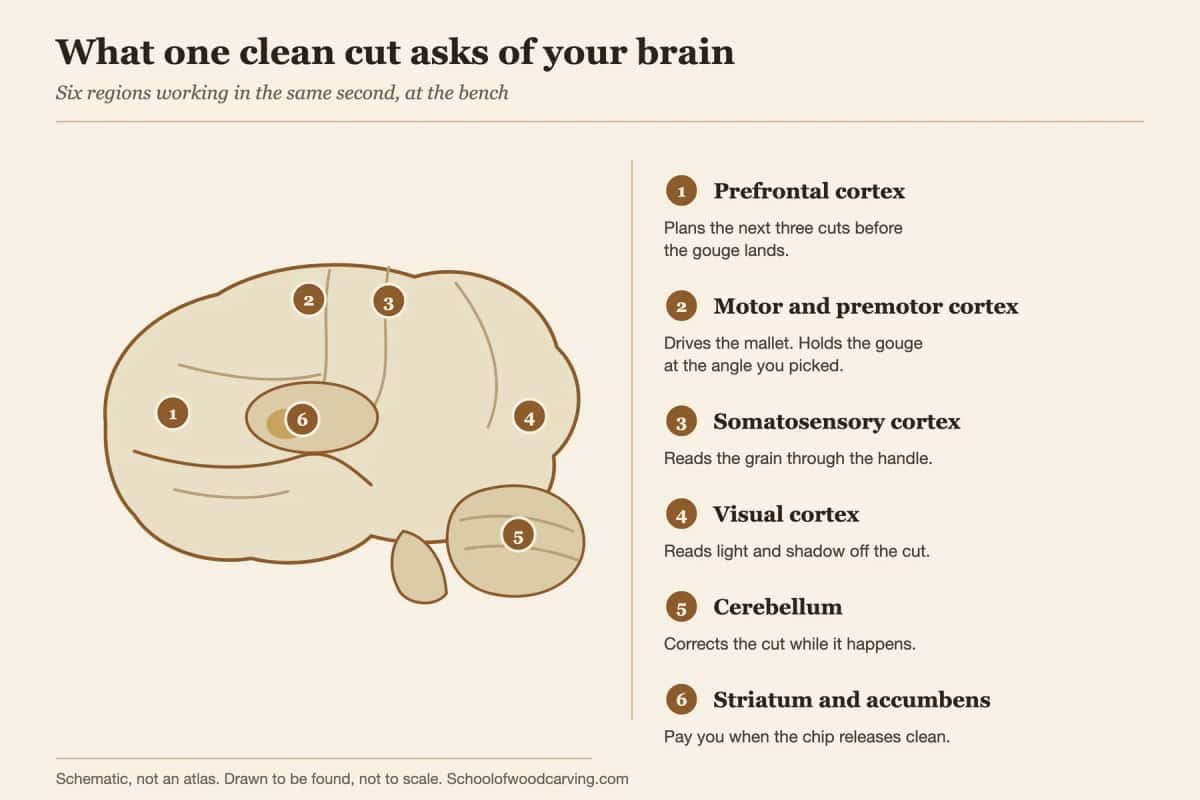
Same six parts, with the doctor names on them. Drawn so you can find them, not to scale.
David Esterly spent a year carving back a lost Grinling Gibbons panel at Hampton Court after the fire in 1986. He counted 130 tools on his bench. This is how he talked about them:
A hundred chisels like a hundred different thoughts, a hundred ideas to propose to the wood.
A #7 gouge is a decision. Grab the wrong sweep and the wood tells you inside two cuts, and by then the chip is gone and you cannot put it back.
Esterly also passed on a trick for bench height, and I still use it. Stand up straight, arms loose. Bend one elbow. Have somebody measure that elbow off the floor, then take away two inches. There is your bench.
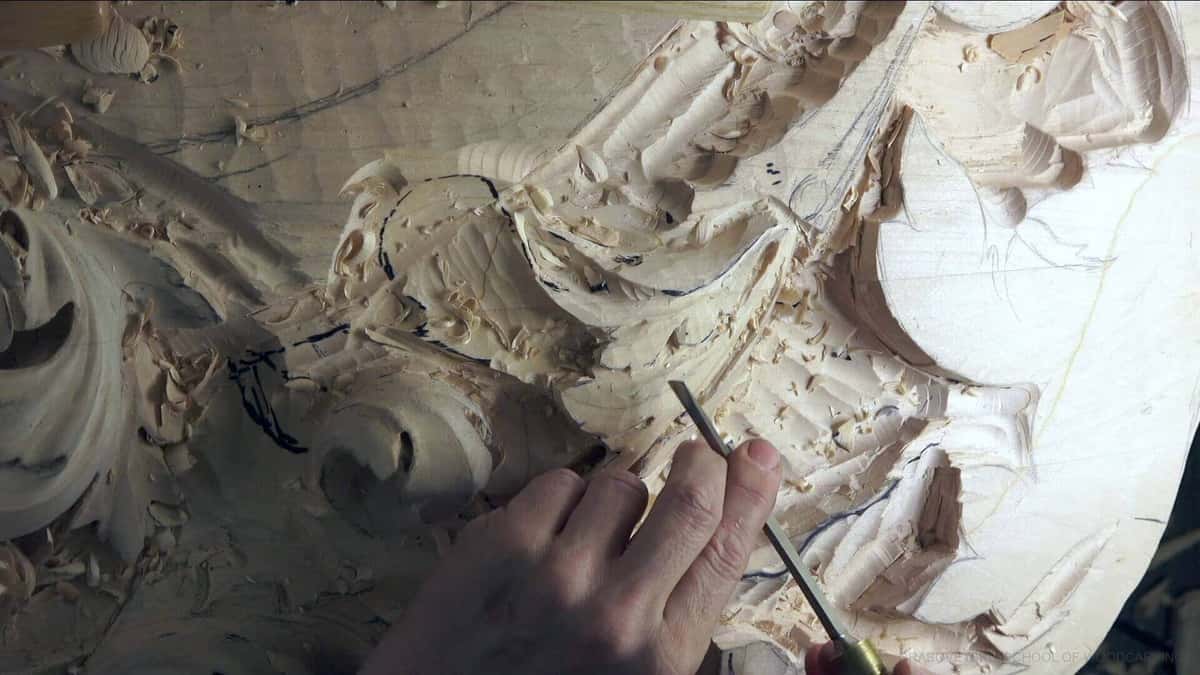
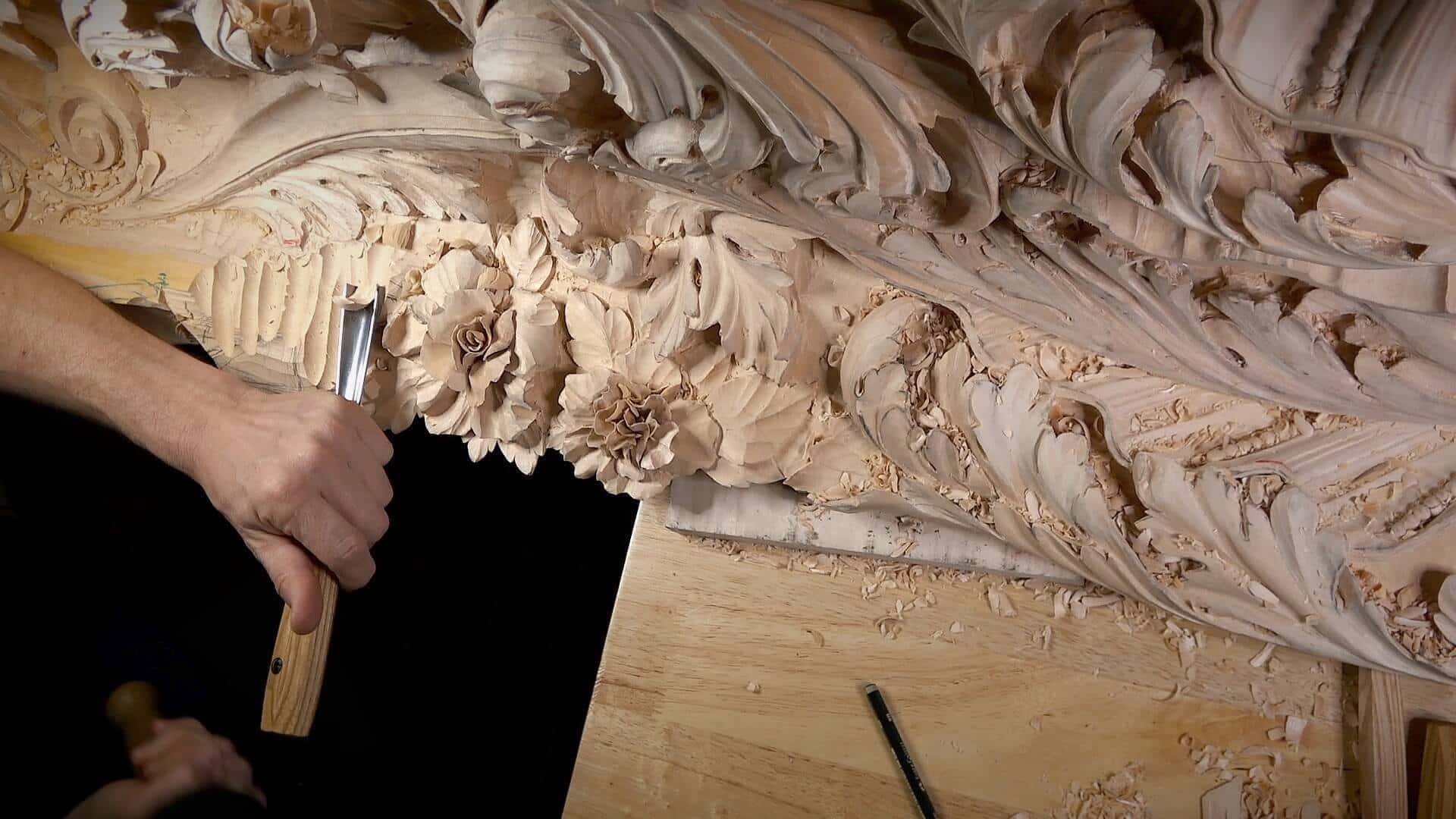
High relief in basswood, from the Venice Room panels.
Why does carving stop working after a few months?
Your brain files a move it has seen a thousand times under habit, and habit asks nothing of you. Practice buys you that. That same habit is how a working carver gets a job out the door on time, and there is no shame in it. New wiring gets built out of mistakes, though, and a solved cut makes none.
Let me be honest with you about my own bench. When the work goes automatic, I put on Mozart. Some days Vivaldi, some days Bach. Other days I put on university courses instead, and I have passed college credit courses that way, carving for clients the whole time.
A man who can sit a college exam with a gouge in his hand is not using the gouge to think.
And I am not going to quit working that way. Automatic is how the commissions get delivered, and most of what I carve for money is work my hands already know cold. Brain work and paid work are two different sessions in my shop. I keep them apart on purpose.
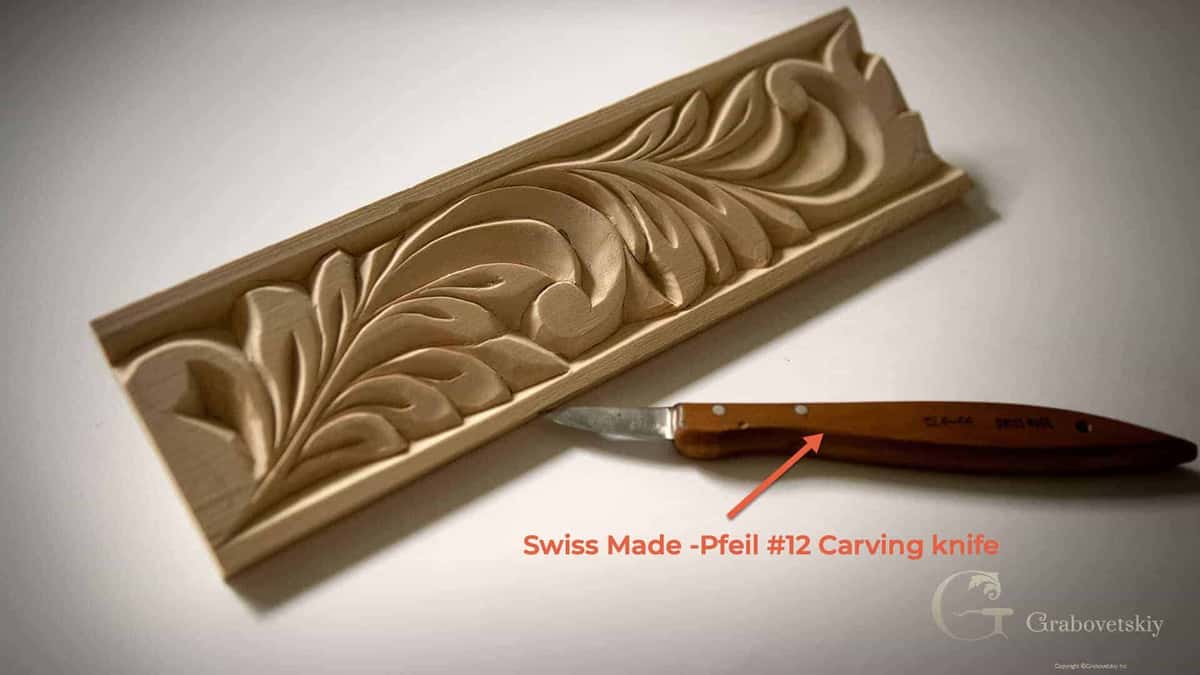
A Pfeil chip knife, Swiss made, and the one I grab first for any small work.
Say a man carves his one good leaf every Saturday for two years. He ends up with a calm weekend and a very good leaf. Does the Mayo number cover him? I doubt it. He put in the hours and never once hit a question he could not answer.
What makes a carving session count?
A session counts when it asks your hands something they cannot answer yet, so you pick the hard thing before you ever sit down. I watch students fall into that hole almost every week. The carving gets easy, they feel it, and their fix is more hours. Bigger panel. Same leaf. They are keeping a skill warm and calling it progress.
What works is narrow and a little annoying. Change one thing per project and leave the other four alone. Could be the wood, or how deep you cut, or which tool you reach for, or which way you run the grain, or the drawing itself.
Pick one.
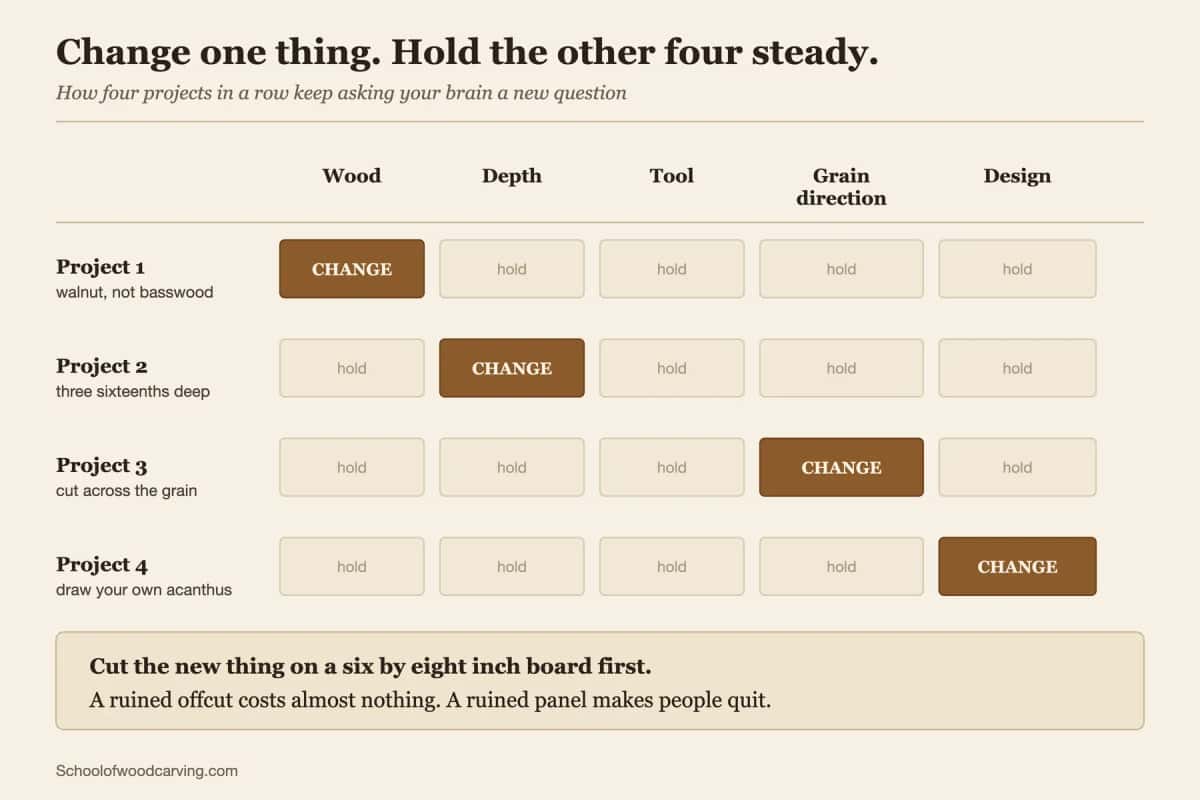
Four projects in a row. One thing moves in each.
Change one thing and you will ruin more wood. Good. Ruining wood is the whole point, and it is also the trouble, because wood costs money. Basswood is not cheap by the board foot. A beginner who kills three panels in a row does not tell himself his brain is growing. He tells himself he is no good at this, and the tools go in a drawer.
So try the new thing on an offcut first. Six by eight inches is plenty, and ruining one of those costs you almost nothing. When the cut works twice on the small board, take it to the real panel, and by then your hands have already met the surprise.
Design is where I send students first. Making a drawing harder costs you nothing at all.
Sharpening stays hard for years, so that is your other honest source of trouble. And I mean stropping, not grinding. About twenty passes a side, light, with no pressure at all, and the bevel laid flat on the leather. Then stand the edge up under a lamp and look straight down it. See any bright line along that edge? You are not done. A dull #7 crushes the fibers ahead of the edge instead of slicing them, and you feel that in your shoulder before you ever see it in the wood. Want the work to keep asking you questions? Then learn to sharpen right, and stop buying another tool to fix what the strop already fixes.
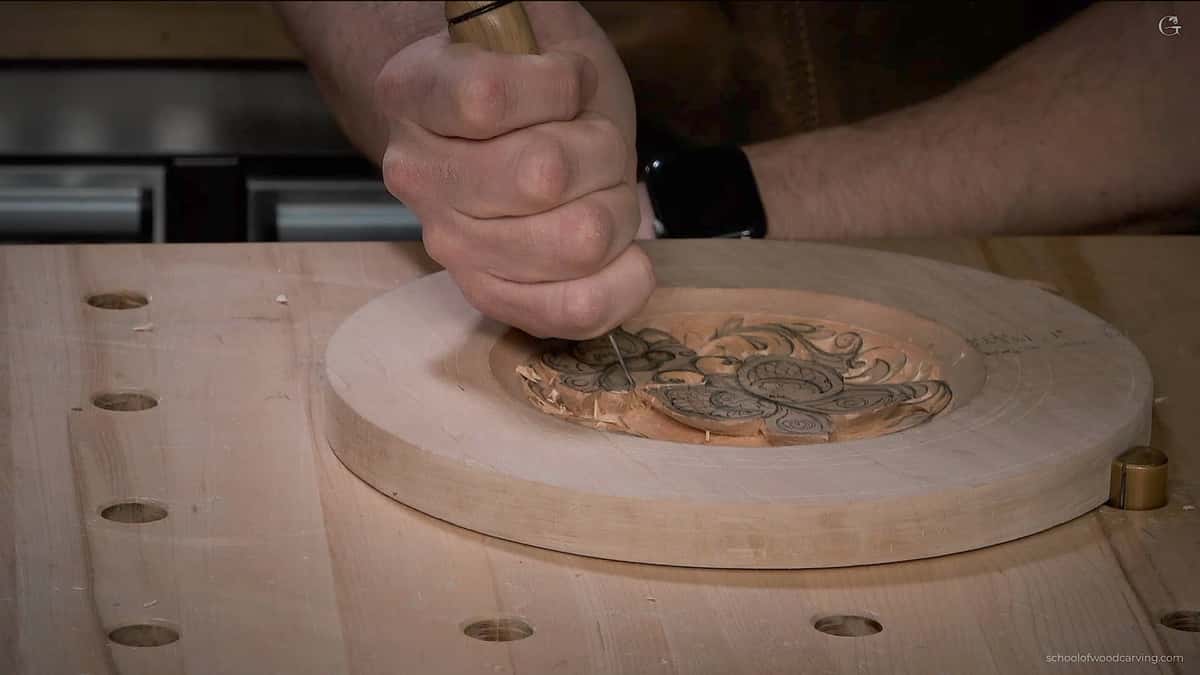
Does carving calm you down?
It does, and that is a separate thing from the brain work. Kaimal, Ray and Muniz tested the spit of 39 adults before and after they spent 45 minutes making things with clay, markers, and paper. The stress hormone went down. It went down for beginners just as much as for people who had made art all their lives.
Forty five minutes, which is one sitting on a small board, and that alone is reason enough to take up the craft before we even talk about memory.
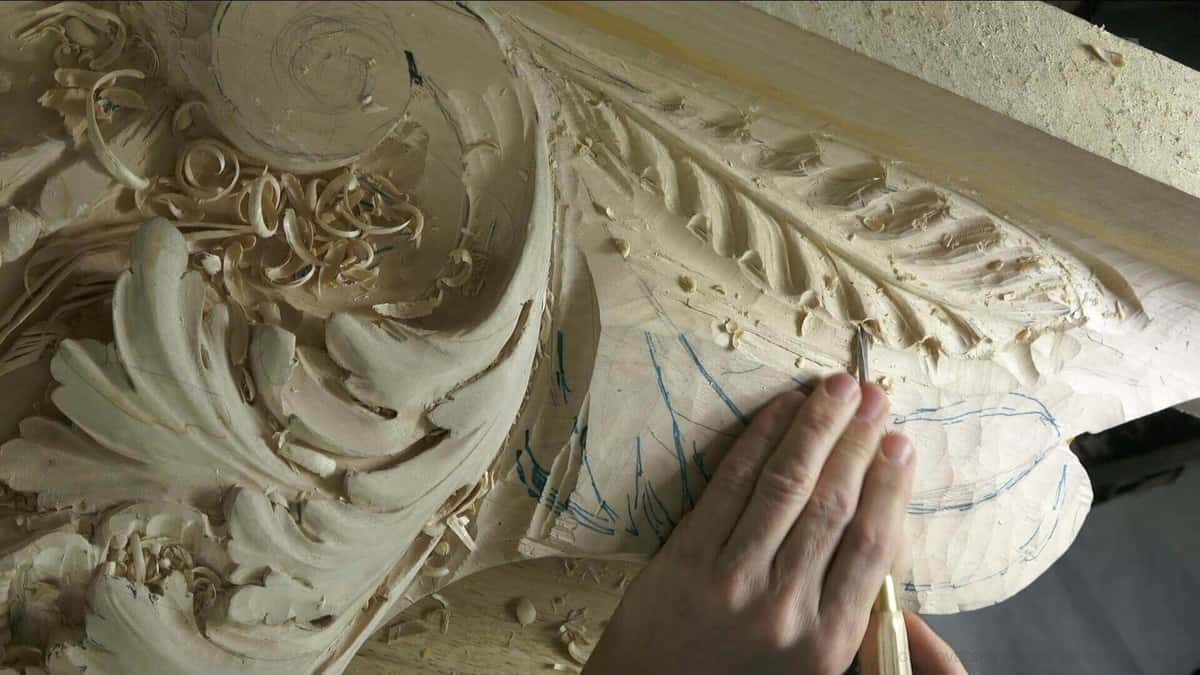
Undercutting an acanthus scroll, same Venice Room set.
Do your hands teach your head?
They do, and the handwriting study is the cleanest proof anybody has put on paper. Van der Weel and Van der Meer sat 36 students under 256 sensors and had them either write a word by hand or type it. Writing by hand lit up far more of the brain. Typing was not close. And what they gave the credit to was the careful hand movement itself, not the letters and not the thinking.
A pen slides over a flat sheet and nothing pushes back. A gouge goes down into stuff that fights you differently every quarter inch, depending on where the grain turned.
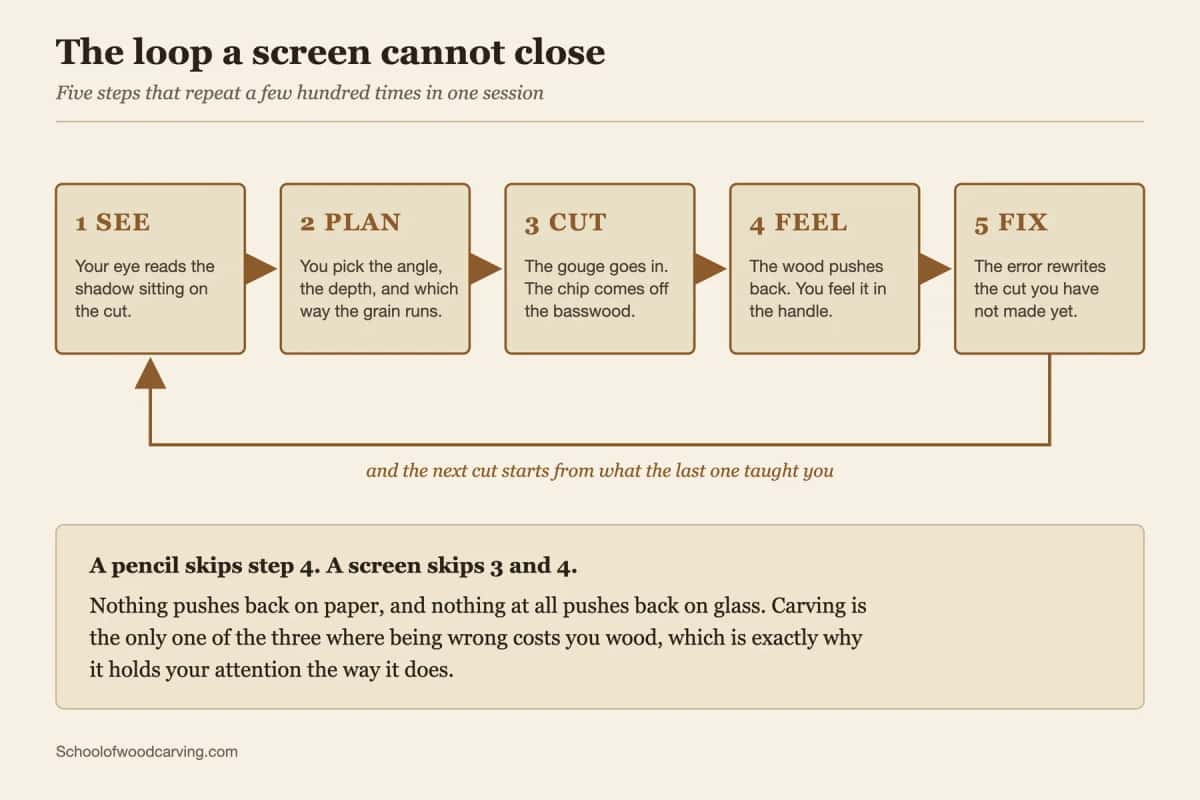
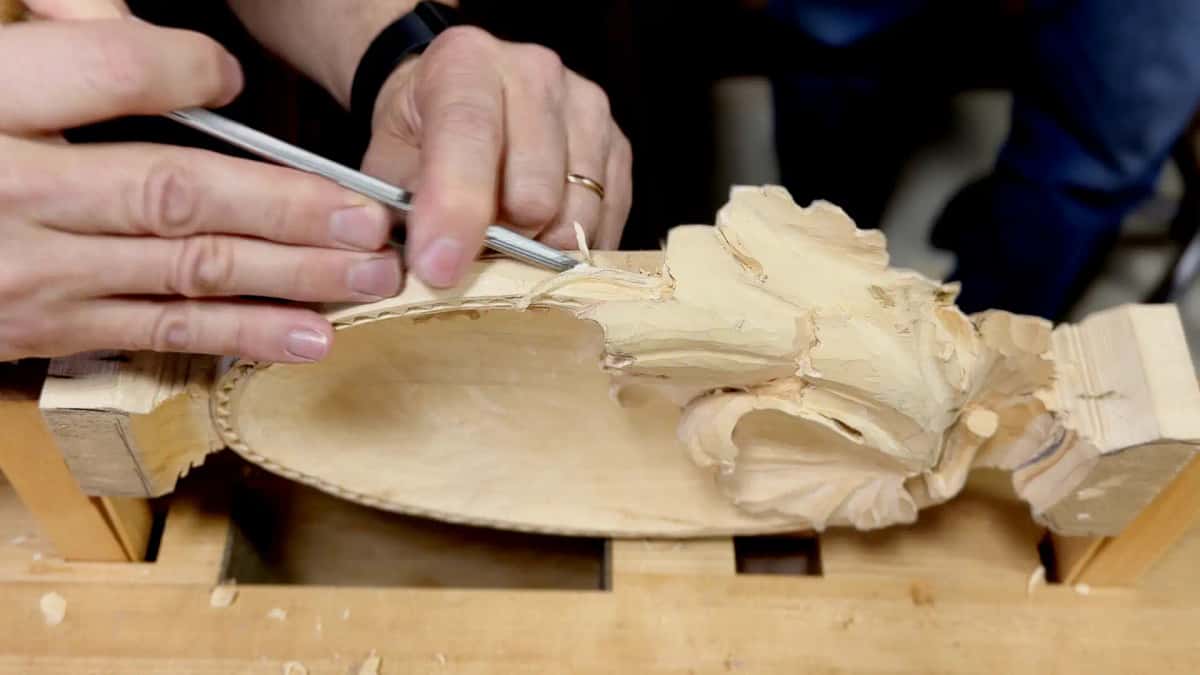
The same five steps, a few hundred times in a session. Paper never gives you the fourth one.
Esterly said it in one line, and he was writing about basswood, not about brains:
Fortunately, carving changes not just the way your muscles work, but the way your mind works, too.
He says it plainer somewhere else in the book. The wood is teaching you about itself, he writes. It is setting up your mind and your muscles for the job you are asking them to do. To carve is to be shaped by the wood while you shape it. That book came out in 2012. Most of the hand and brain science landed after.
What do most people get backwards?
Most people think the calm part is the healthy part. The calm part is the smallest part. Kelly Lambert wrote about wiring that runs from behind your forehead down to the reward parts in the middle, and it only pays out when your effort makes something you can pick up and hold. You plan it, you do the work, you hold the thing in your hand, and then you get paid. Four links, and they only pay out in that order.
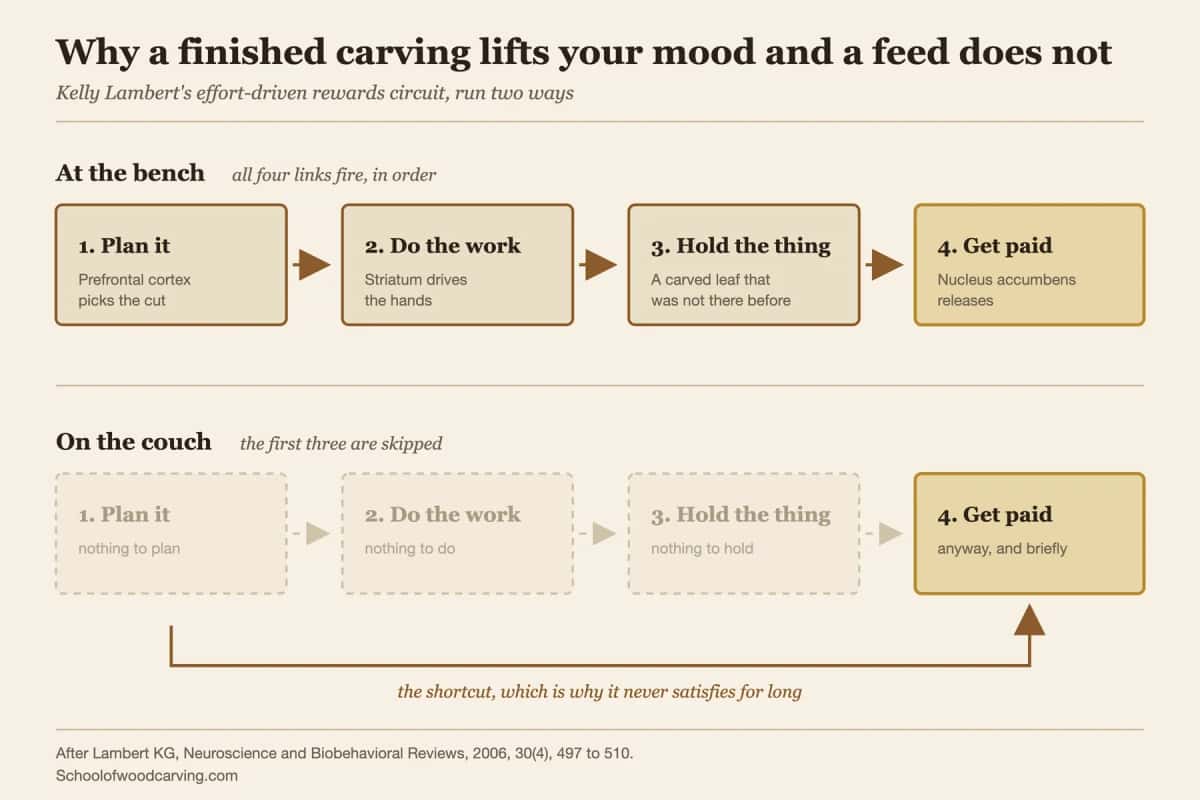
The same wiring, run two ways. Lambert wrote that in 2006, long before anybody worried about feeds.
A screen hands you the fourth link and skips the first three. So an evening of scrolling leaves you flat, and an evening of carving leaves you tired and full. Being tired means the machine ran.
Now the second thing people get backwards, and this one costs them real money. They think the hard part lives in the tools.
Years ago I carved furniture with a 10mm knife I made myself and a little gouge I made out of a nail. I used a staining trick from the fifteenth century, and the finished pieces looked like inlay work to anybody who did not lean in close. The drawing carried that furniture, not the steel.
Those two tools also held me back badly. There were shapes I simply could not cut, and I knew it while I was cutting.
So buy good steel. Good steel is a pleasure and it holds an edge. Just do not buy it thinking your brain gets anything out of the purchase.
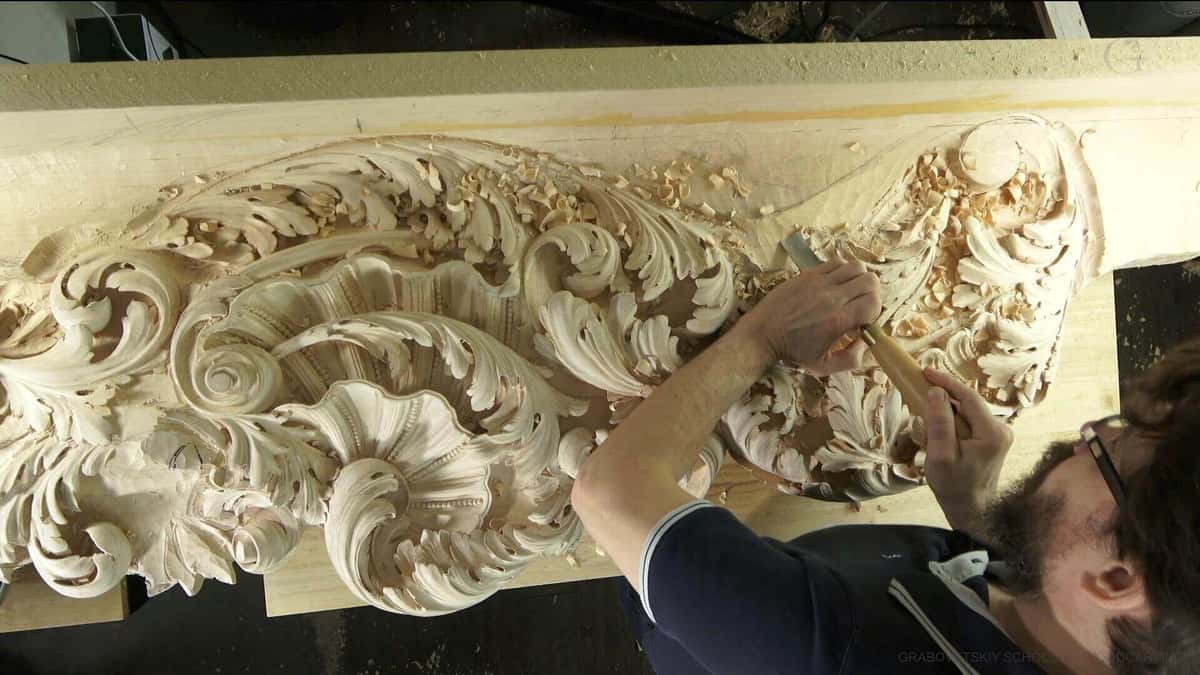
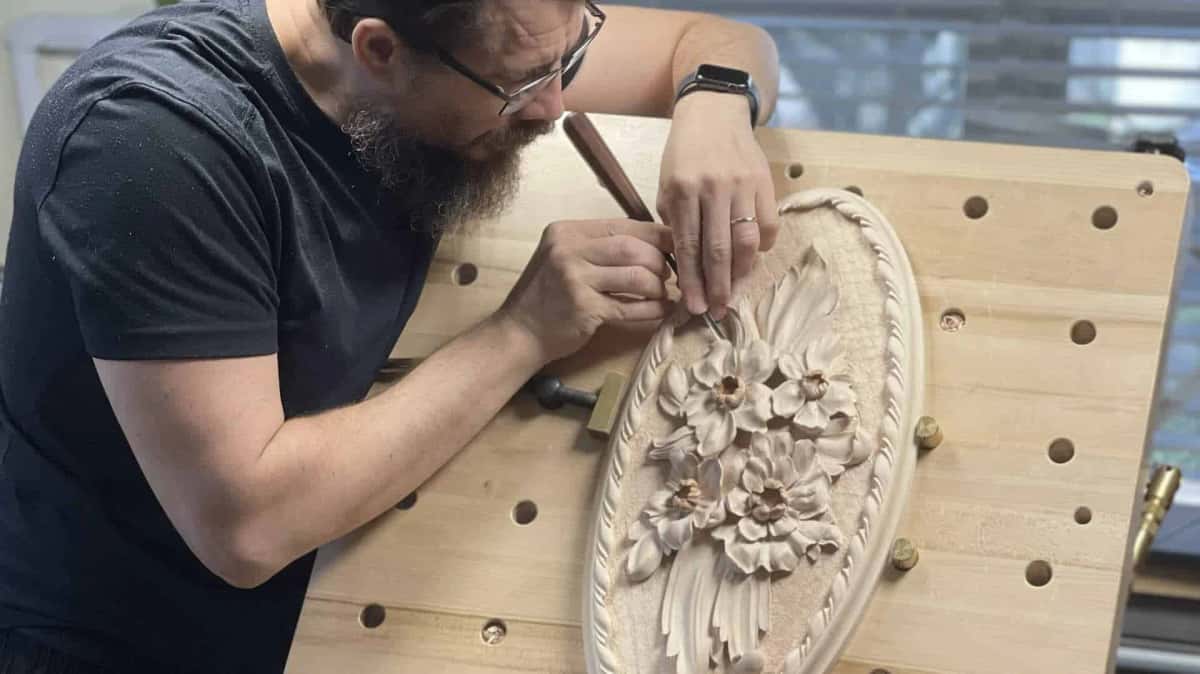
The eye of the leaf, and the turnover behind it. Both are drawing problems before they are cutting problems.
How often, and for how long?
Weekly is the line the numbers drew, and 40 minutes is plenty if those 40 minutes are hard. The Mayo people put weekly or better up against folks doing it maybe twice a month. Never was not one of the groups. The weekly side is the side that came out ahead, and how long each sitting ran was not part of the study at all.
Here is roughly what I would set up for a student.
Step 1. Name the hard thing before you touch a tool
Write one line on a scrap of paper, something like today the grain runs the wrong way across the turnover and I do not know how to come at it. That is the whole line. It should name a thing you cannot do yet, not a thing you plan to make. Cannot write it? Sit there another minute. A sitting with no named problem in it turns into an hour of repeating yourself, and you never notice while it is happening.
Step 2. Sharpen first
Strop the #7 and the V tool before the first cut. Not when they quit cutting.
Step 3. Cut the new problem on the small board
Two clean tries on the offcut, then go to the panel. Hard and cheap at the same time, which is the only way I know to get both.
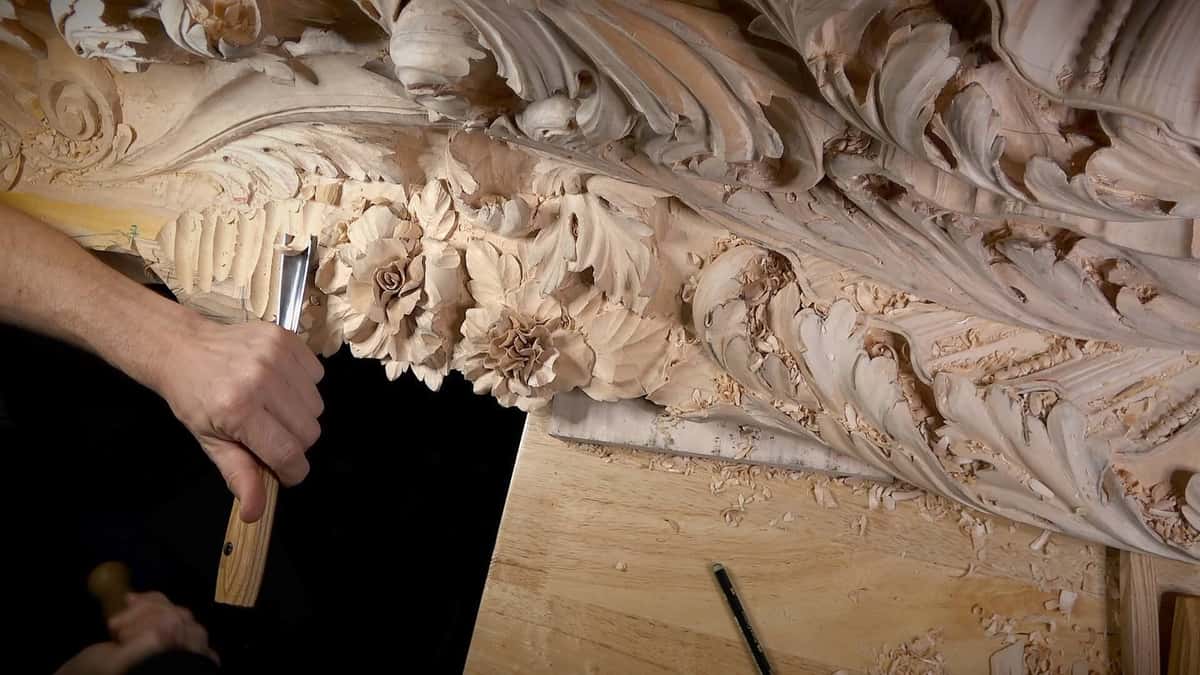
In progress, gouge and mallet, on the practice board.
Step 4. Stop while it is still hard
Forty minutes of real trouble beats three hours of drifting. When you catch your hands running the cut without you, put the mallet down. Pick a harder question for next time.
Thirty years at the bench, and a title as International Woodcarver of the Year, have not changed one habit of mine. Every new drawing goes onto scrap before it goes near a client's oak. My hands do not need that rehearsal. My head does.
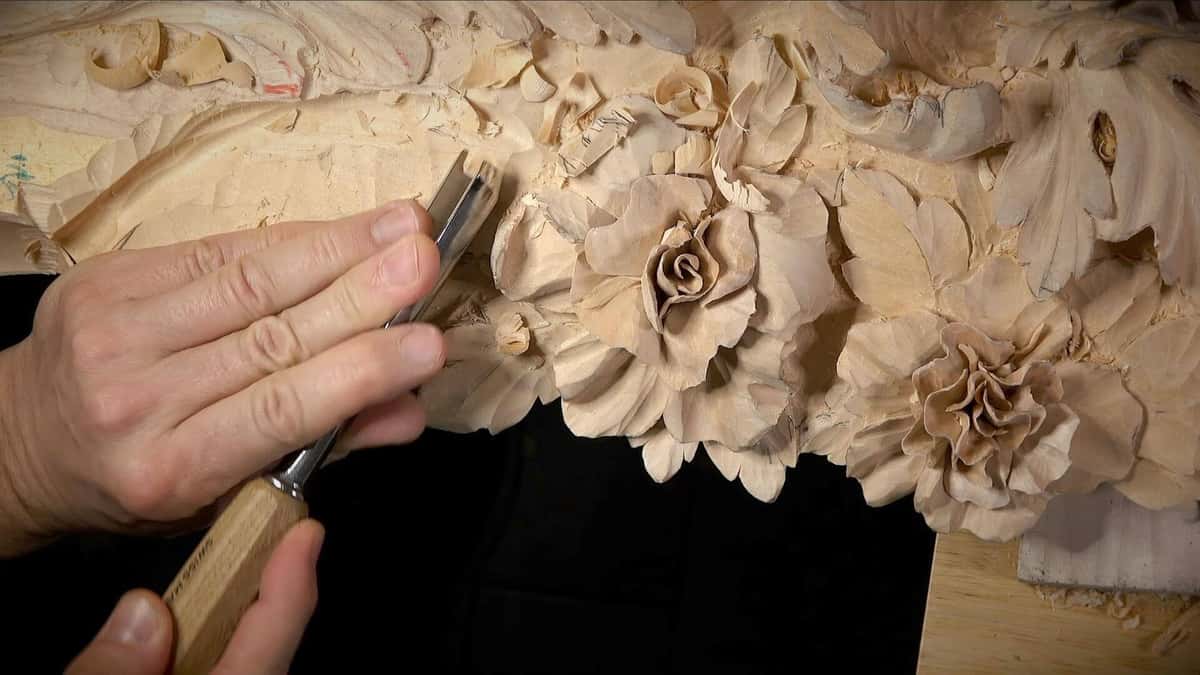
Finished, in basswood. Every bit of depth you are reading there is shadow.
Starting from nothing? Then your first cuts matter less than you think, and the project you pick matters more. The beginner course exists because most people quit in week three, and week three is a drawing problem, not a talent problem.
Do you want a calm Saturday, or do you want to be sharper at 80 than you were at 60? Are you willing to be bad at something on purpose, on a board that costs four dollars?
Then pick the thing you cannot do yet and go cut it.
Frequently asked questions
Does wood carving help with anxiety?
Making things with your hands brings down your stress hormone. The Art Therapy study found a real drop once people had put in three quarters of an hour with clay, markers, and paper, and beginners did as well as folks who had made art for years. They did not test carving, so read it as proof about handwork in general and not about carving alone.
Is carving better for your brain than puzzles or brain games?
In the Mayo study, craft work showed a real drop in memory trouble and games did not. One study cannot settle that by itself. But a puzzle only asks your brain to solve something, while a carving asks it to solve something and then hold a sharp tool steady in stuff that pushes back. So there is a good reason to think craft has the edge.
Do I have to be good at carving for it to help my brain?
Being new probably helps you here. New wiring gets built out of surprise and mistakes, so a beginner meeting basswood for the first time is working the very parts a master on automatic is not. In the stress study, years of training made no difference to who improved. What you do need is trouble you picked on purpose, not trouble that just showed up.
Is it too late to start wood carving at 70 or 80?
The Mayo people were all 70 and up, with a middle age of 77, so this held in the exact group everybody worries about. Some of my students are in their eighties. Grip and eyesight do put real limits on how small and how deep you can work, and you get around both by working bigger and lighting the bench better.
Can wood carving stop dementia?
Science has never shown that, and anybody who tells you it has is selling you something. What the science shows is a link between steady craft work and less memory trouble, and a link is a long way from stopping it. People who carve every week may be different from people who do not in ways no math fully cleans up. Carve because the work is worth doing, and take the link as one more good reason to get to the bench most weeks.
Filed under
- Aging
- art therapy
- Art Therapy
- Beginner in Wood Carving
- brain exercise
- brain health
- cognitive function
- Cognitive Health
- cortisol reduction
- craft hobbies
- Crafting
- Creative Arts
- creativity
- dementia prevention
- Education
- elderly health
- fine motor skills
- hand-eye coordination
- Handicrafts
- hands-on craft
- Health
- Hobbies
- learning by doing
- Lifestyle
- manual dexterity
- Mental Wellness
- mild cognitive impairment
- neuroplasticity
- Skill Development
- skill practice
- stress relief
- wood carving
- Wood Carving
- woodworking
- Woodworking