
October 2, 2024 · Updated August 17, 2026
By Alexander Grabovetskiy — Master Woodcarver · Founder, School of Wood Carving · 16 min read
What are the dangers of wood carving for beginners?
Wood carving is a knife craft, and the dangers of wood carving for beginners fall in a rough order of odds. A cut across the off hand is first, and it is not close. Sharpening is second. Then a piece that slides under the edge, a chip in the eye, wood dust, and slow strain in the hands.

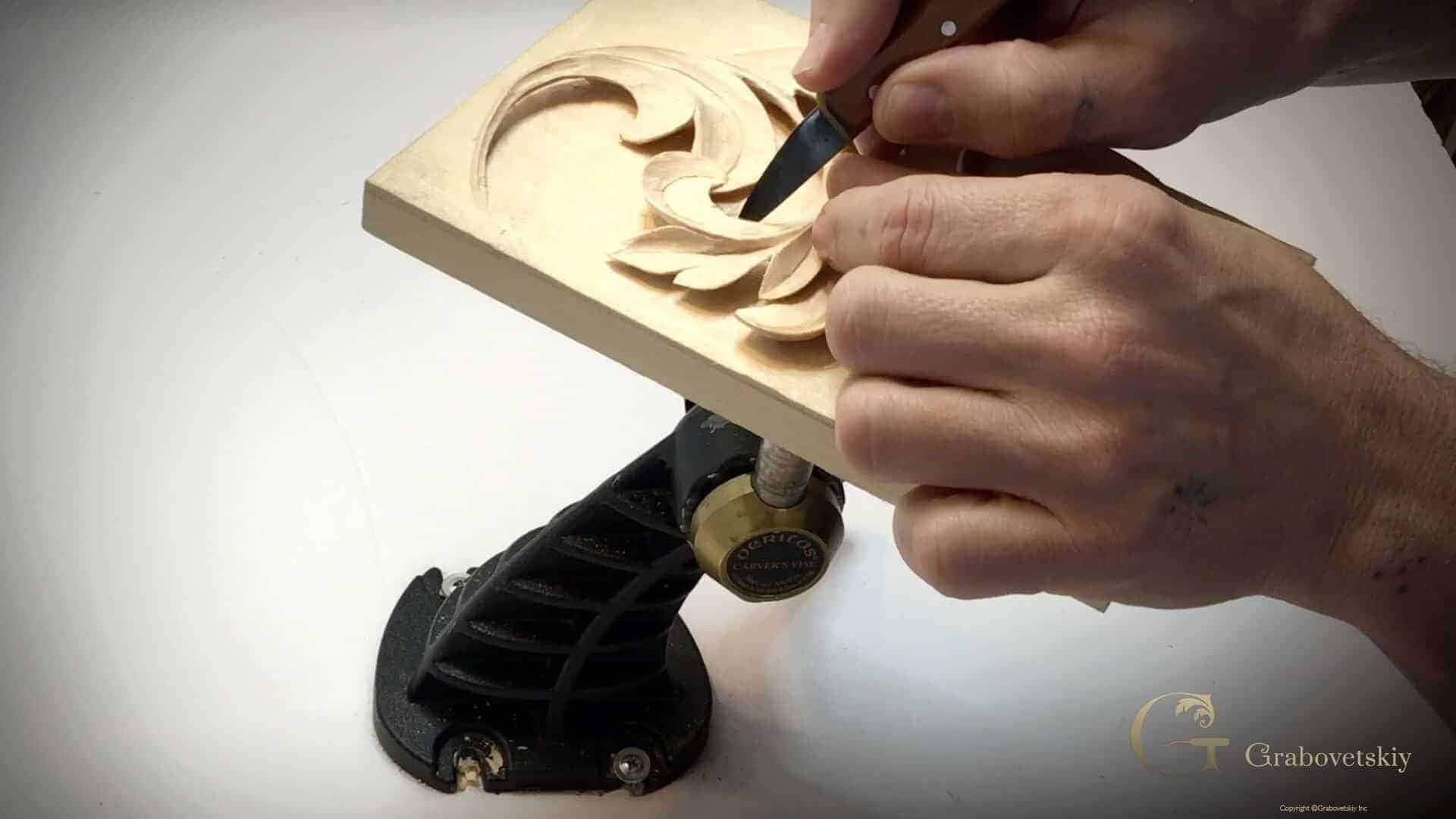
My left hand is pressing the panel down, and the knife is working below my fingertips. Look at how little room there is.
I have carved for over forty years, and I almost never cut myself anymore. It used to be that I cut myself a lot of times, even several in one day. None of that was luck. Nearly everyone who gets hurt at a carving bench does it in the same few ways, and those ways are dull to read about. A gouge skates off a hard spot, the far hand is sitting right in the path, and the evening goes to a bandage.
I say it plainly in my Acanthus over Moldings course. Keep the tools sharp so you do not have to press hard, because when tools are dull you are creating a lot more pressure, you are pushing really hard, and that is when it can slip. The dull gouge is the dangerous gouge.
- Most beginner blood comes from the far hand, never the hand holding the tool.
- Force is what slips, and a dull edge needs force.
- Per hour of use, the sharpening machine worries me more than a sharp gouge.
- Hand work makes chips; sanding and machines make the fine dust that reaches lungs.
- Olive, cocobolo and oak sensitize skin; basswood is on no list.
- Bench height and mallet weight decide your shoulder.
Which wood carving injury happens most to beginners?
A shallow slice across the off hand, the one holding the work. The tool hand is under your control. The other hand is the one you forget, and it spends the session inside the arc the edge travels. Watch a beginner for ten minutes and you will see the thumb wander in front of the blade.
Working a small piece in my palm in the Acacia and Olive Wood Lily Box course, I put it this way. If it is going to slip, it is going to slip forward, but my hand is not in the way, so it is not going to hurt me. That is the whole trick. I never try to stop a slip once it starts. I decide first where one would finish.
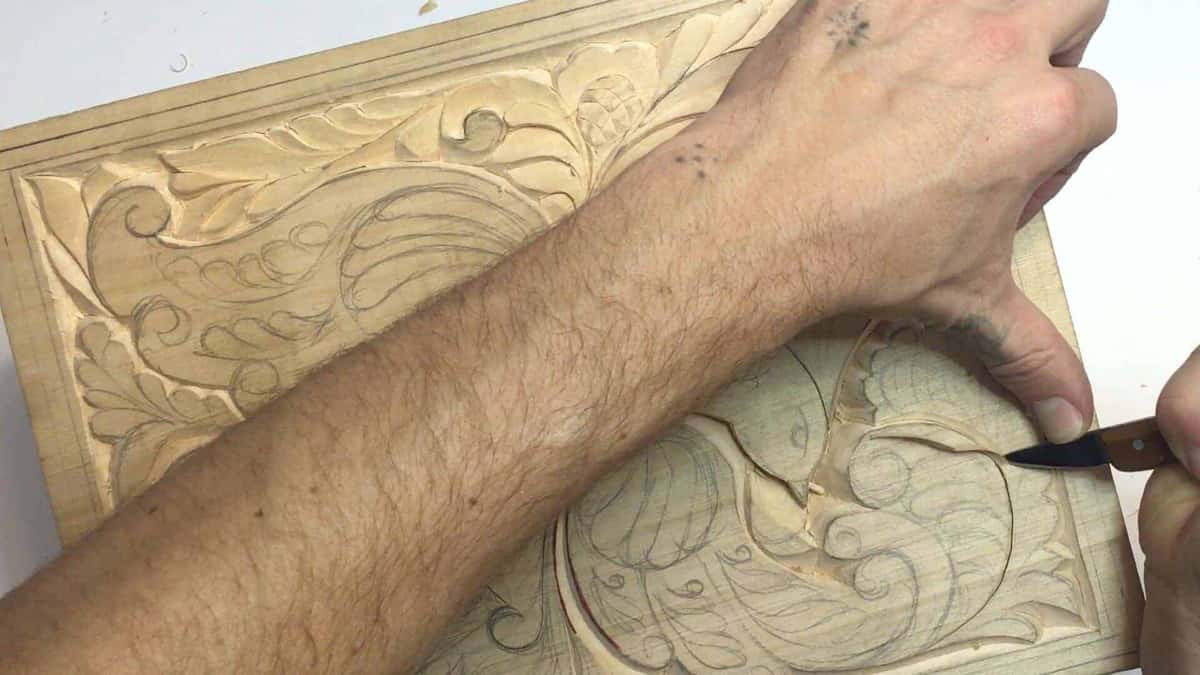
Grip is the other half. Two fingers on the blade, the middle finger pressed against the work as a stop, and the tool travels a known distance and then jams. A carving knife held in the hand is the tool that catches people out, because the work and the blade are both moving.
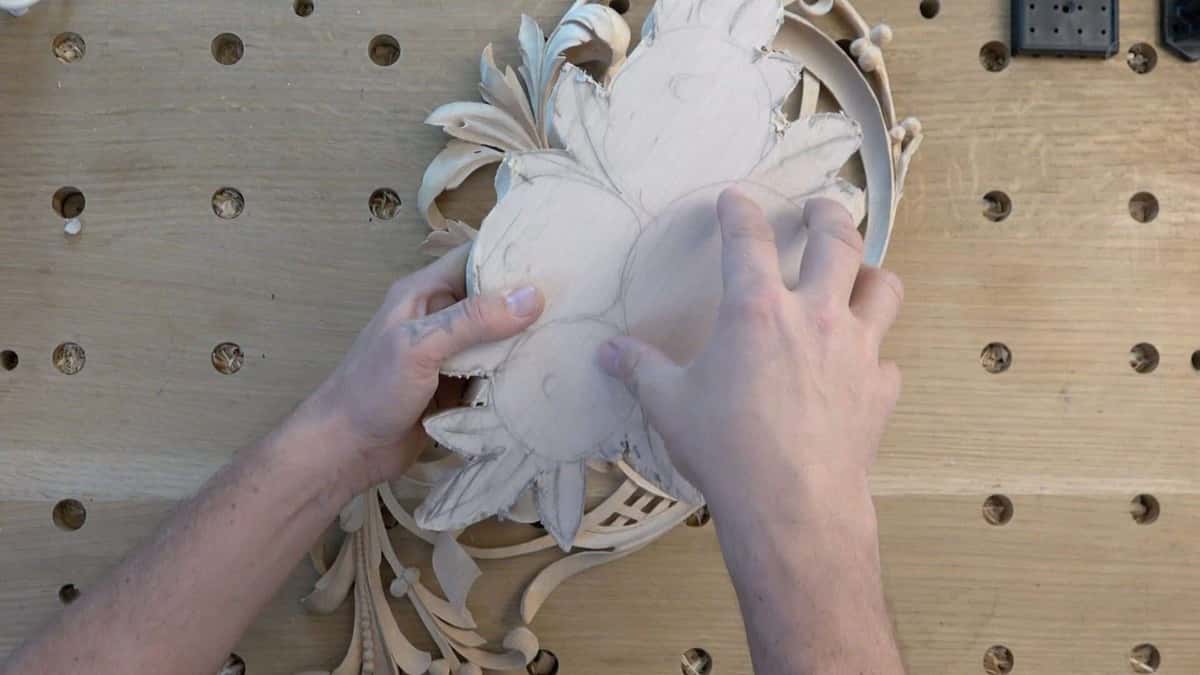
No tool in this frame, on purpose. This is only the grip, fingers under the pierced ground where an edge cannot reach them.
Where should the off hand never sit?
Anywhere on the line the edge would travel if the tool jumped. Draw that line in your head before each pass. It runs from the edge, forward along the bevel, for about the length of your palm. Everything on that line is at risk, and your off hand belongs outside it, usually beside or behind the tool.
Behind the edge is the safest place there is, and the most useful. My off hand goes under thin work as a support, or presses the board as a brake. Both jobs put it out of the path. In my Lily Box lessons I say the quiet part out loud. Do not work like I am doing right now, because you can slip and cut your finger with ease.
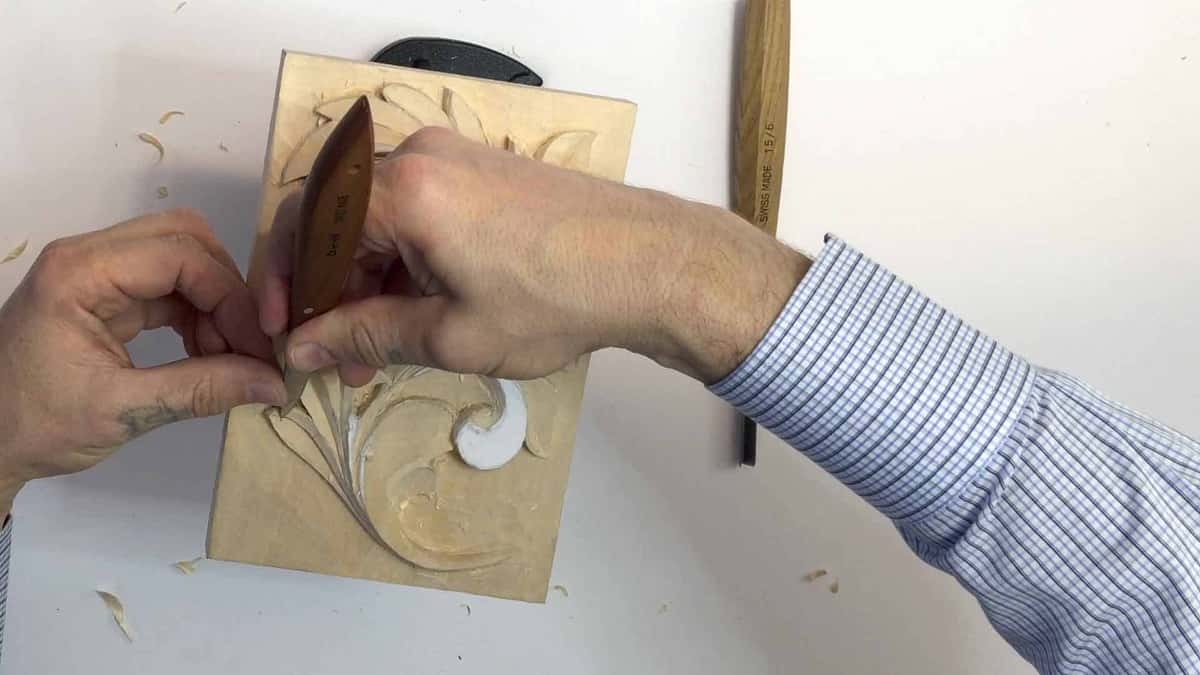
No clamp on this one. Nothing holds it but my grip, and the blade is inches away.
Carving toward yourself breaks the old rule, and the shape of the work sometimes leaves you no choice. In my Venice Room workshops I say it out loud. I am carving toward myself, and I would encourage you not to, because it is not the safest way. When I have to, I lock my hands the way a dentist does, and then it is almost safe.
Why is a dull gouge more dangerous than a sharp one?
A dull edge crushes fiber instead of slicing it, so you push harder to get the same result. All that stored force has to go somewhere. When the edge finally breaks through, it does not stop at the depth you wanted. It keeps going, and your hand is what stops it.
In one Lily Box lesson I said it in a single line. It is a lot more dangerous with dull tools, because you create a lot more force. A sharp Swiss Pfeil gouge lifts a shaving off basswood with nothing but the weight of your hand behind it. The dull one wants your shoulder.
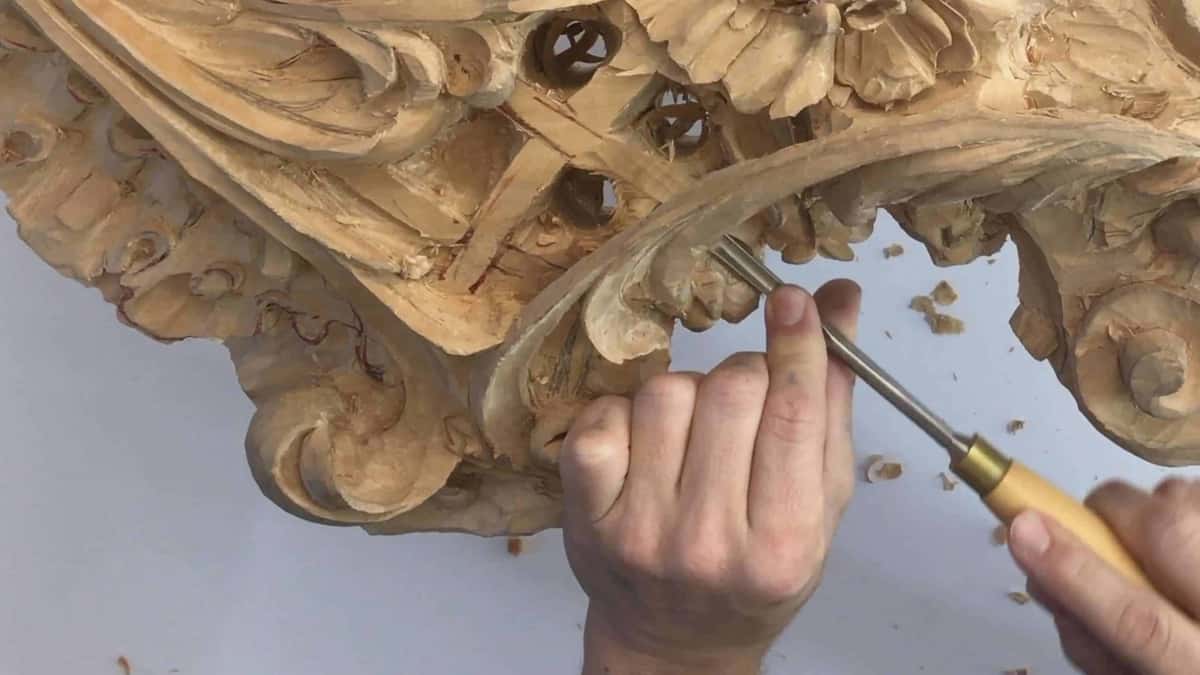
There is a second reason nobody mentions. A dull tool tears the wood, so you get frustrated, and frustrated people take shortcuts. That is where the mistakes that ruin a carving and the mistakes that ruin a thumb start meeting each other.
How do you swing a mallet without wrecking your hand?
From the palm, with a loose grip, and never from the shoulder. I made a livestream about this in April 2020 and called it Wood Carving Mallets, Stop Hurting Yourself, because that is what most people are doing. They grab the handle hard and drive it with the whole arm.
What I say on that stream is this. When you bang on the tool you are not supposed to use the whole body, or even the whole hand. You are really just using your palm. Do that and you are not creating stress on your arm and hand and shoulder, because it gets to you, it gets to you, and it can get really painful if you are using that all day long.
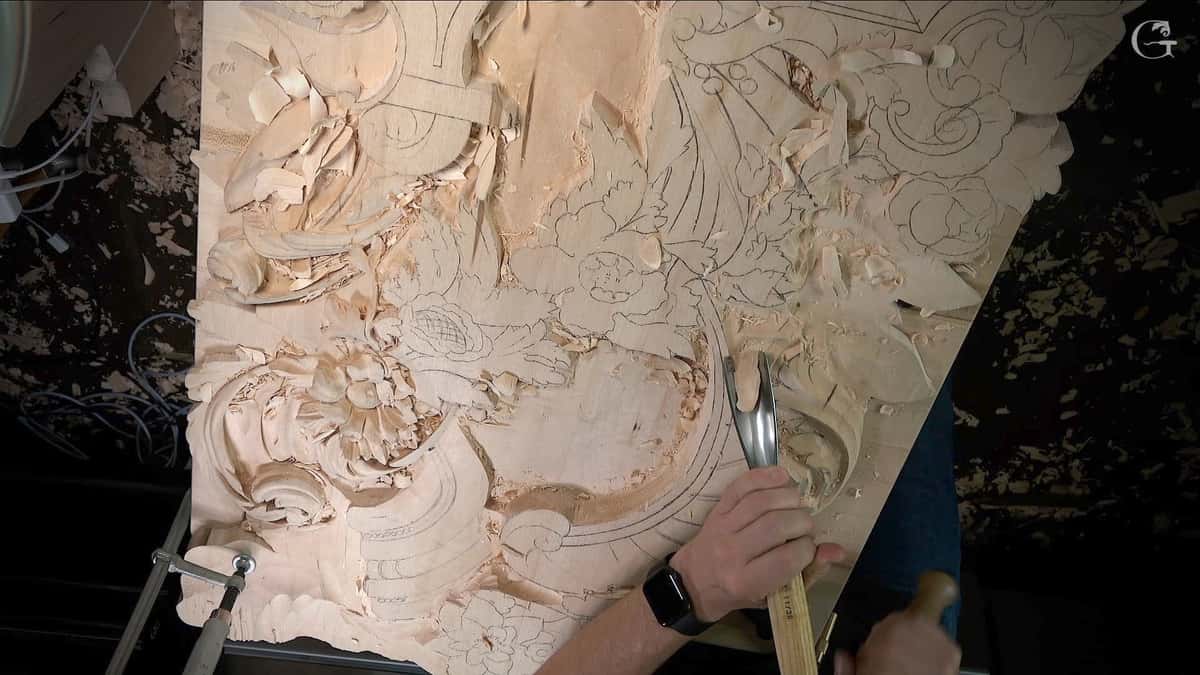
The mallet held short, the stroke out of the palm. Do it this way and by evening your shoulder has nothing to say about it.
Weight matters as much as form. I keep two rubber-faced mallets in daily use, 12 ounces and 32 ounces, plus a brass one at about half a pound for fine work. The rubber head soaks up the stroke before it reaches your hand. A solid maple mallet sends every blow into your palm, and it is louder, which gets to your ears by the afternoon.
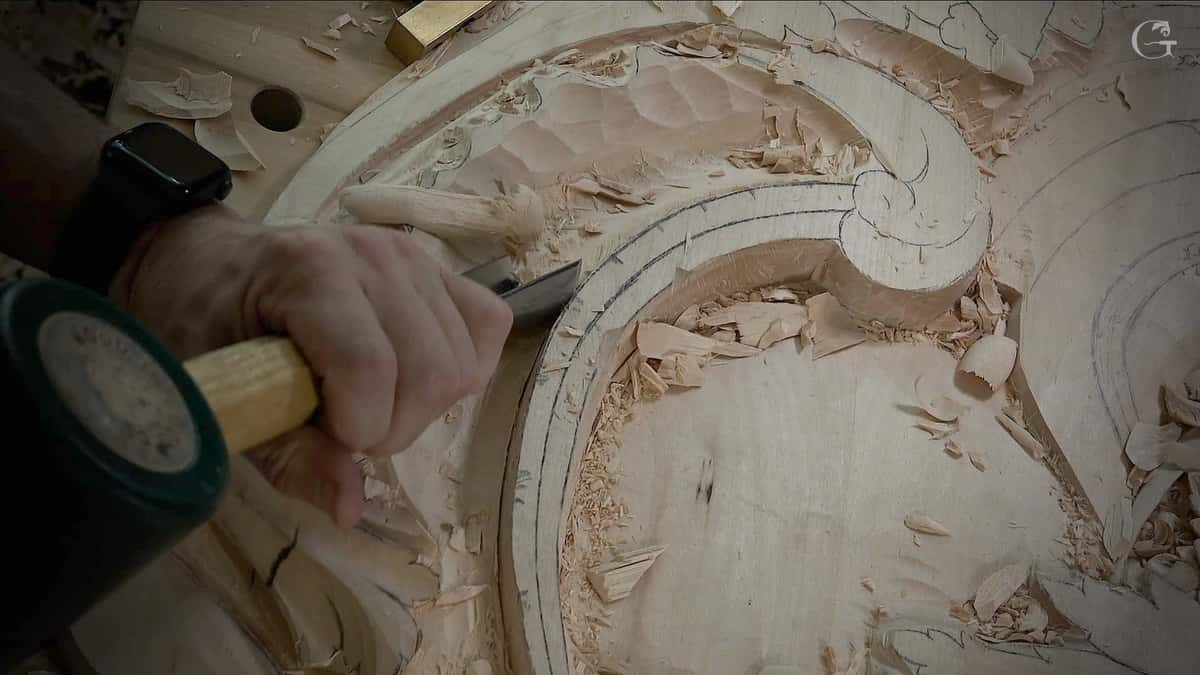
The mallet I reach for is green, and I still have no idea why the makers chose green. Whether you need a mallet at all is a fair question, and the honest answer is that pushing by hand tires you faster.
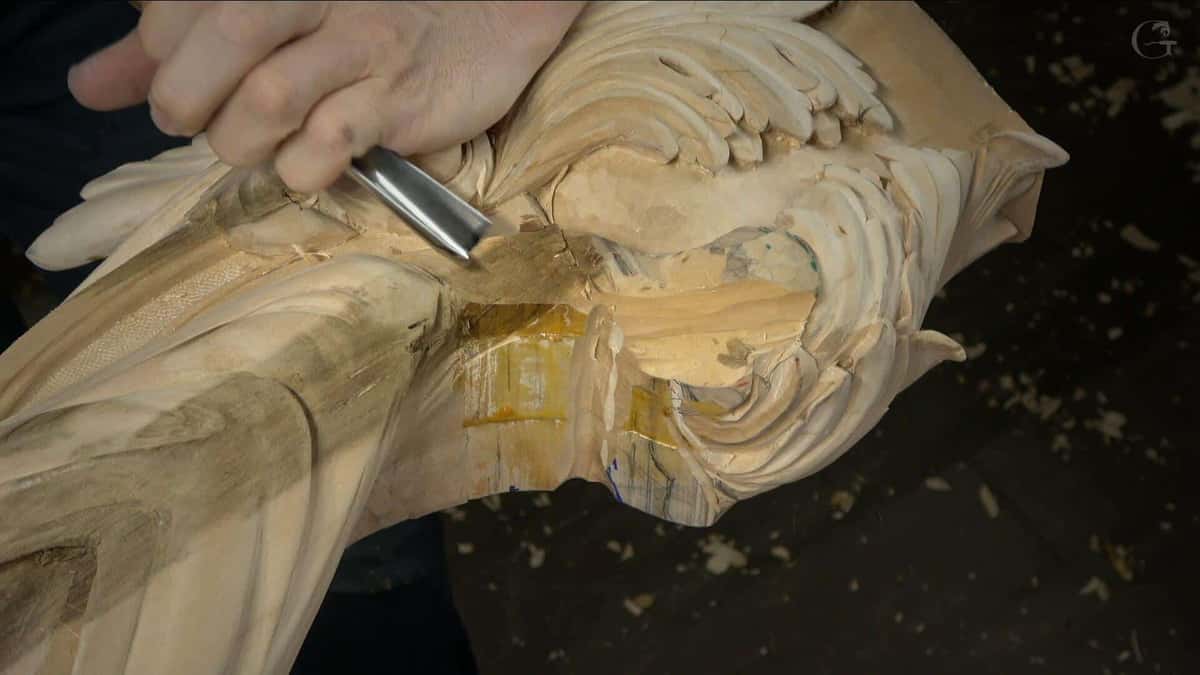
Is the sharpening bench the most dangerous spot in the shop?
Per hour spent there, yes. Your gouge moves at the speed of your arm. A grinding wheel turns a few thousand times a minute, and your bare fingers sit an inch from it.
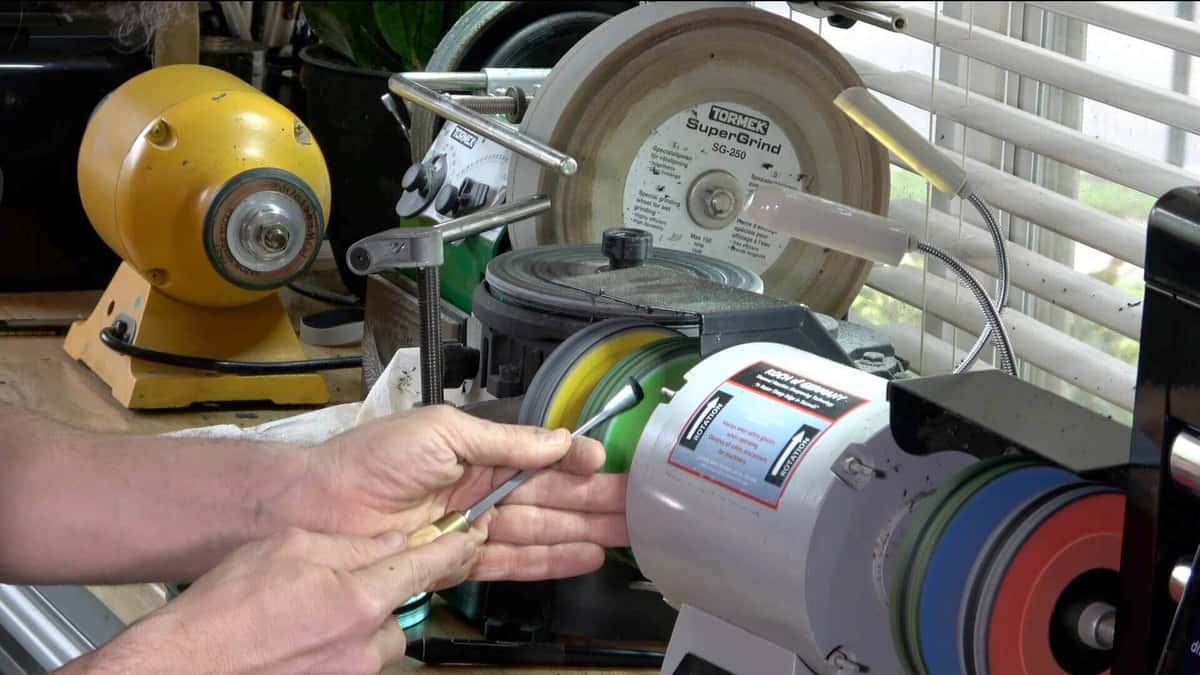
Both hands bare, both close to the stack of wheels. Slow down before you go near one.
Three things go wrong. The wheel grabs the tool and throws it. The steel gets hot enough to burn a finger before you notice. And the buffing wheel catches an edge and flings it. I use a slow wheel and a felt wheel with green paste, and for small tools a machine, because it is a lot safer than any of the grinders. My tool sharpening course works through the shapes one at a time.
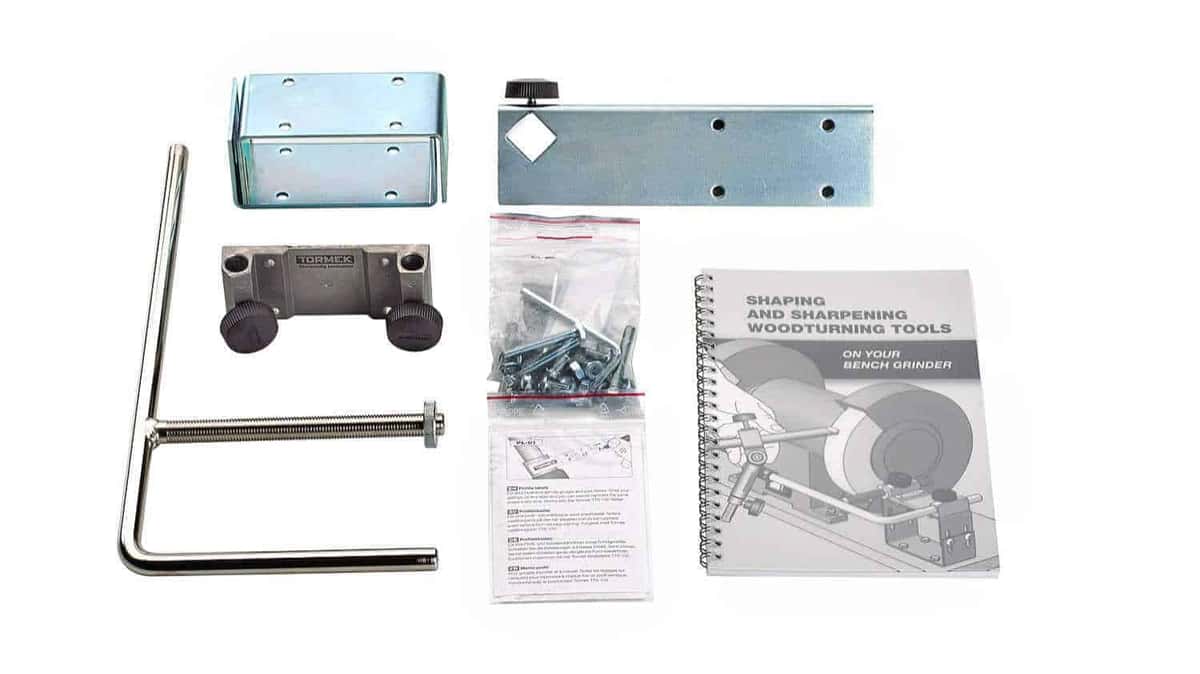
Fresh off the wheel, every gouge on your bench is a hazard it was not an hour ago. Put them away as you finish them. A beginner tool set of six gouges laid loose on a bench is six edges you will reach across.
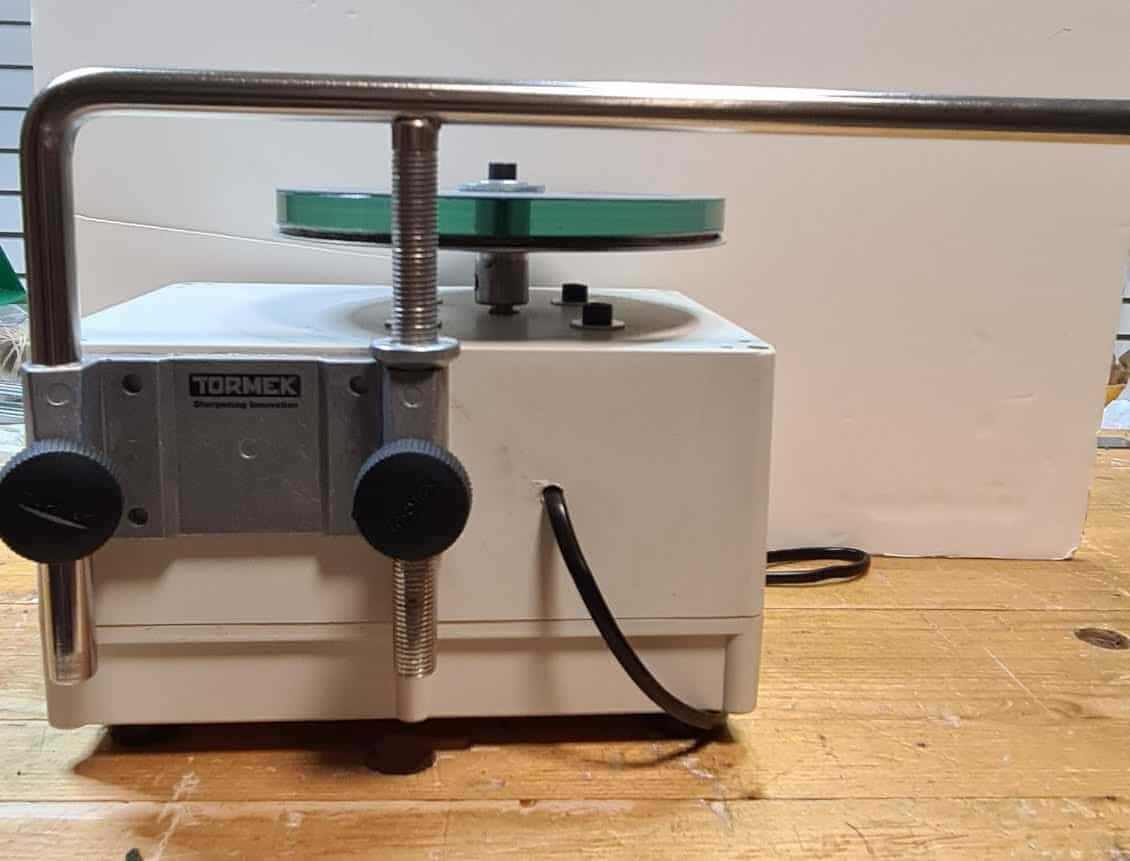
Water instead of speed. The steel never gets hot enough to lose its temper, and nothing here moves faster than you can let go.
Can a chip really get in your eye?
Chips do reach eyes, and the usual route is one nobody expects. Chips coming off a gouge fall down onto the bench. The ones that reach your eye are the ones you send there yourself, by blowing the dust out of a cut so you can see the line.
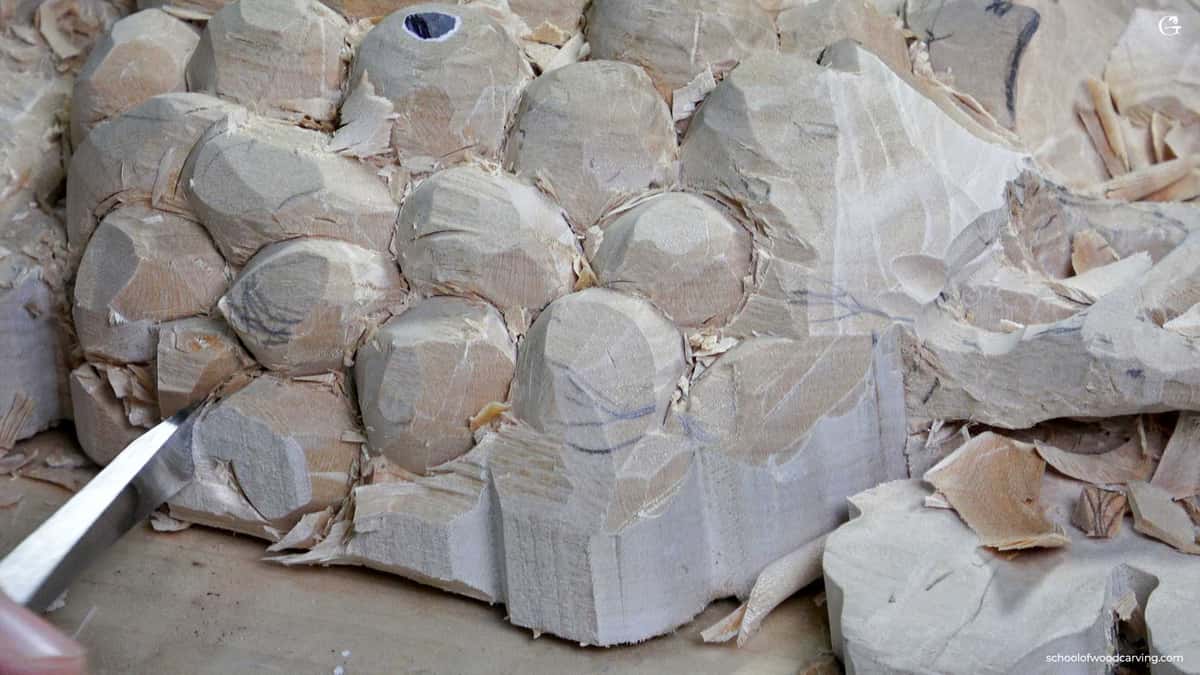
I do it constantly. People ask how I clean the work between passes. I usually just blow on the wood, and then all my chips go flying away. My face is right over the piece while I do it. A brush costs almost nothing and does the same job without putting anything in the air near your eyes.
The other source is the piece itself. Hard, brittle wood can pop a chip off under the tool with real speed, and on thin pierced work a whole leaf tip can let go at once. Safety glasses live in the same drawer as your sharpening kit for a reason.

Every one of those chips left the tool fast. A brush moves them off the bench; your breath moves them toward your face.
Is wood dust bad for you when you carve by hand?
Hand carving makes chips, and chips do not float, so hand work is the mild end of this problem. The dust that harms people comes off sanders, saws and routers.
OSHA puts it carefully. Wood dust becomes a potential health problem when particles from processes such as sanding and cutting become airborne, and breathing them may cause allergic and non-allergic respiratory symptoms, and cancer. The same page adds that the extent of the hazard, and which woods carry it, have not been clearly established.
That last word is not a scare. Wood dust sits in Volume 100C of the World Health Organization cancer monographs, which review agents already called carcinogenic to humans. Eric Meier of the Wood Database, who compiled the best species chart we have, put it in one sentence. All inhaled wood dust is hazardous to your long-term health.

A hand carver needs a shop with moving air, a brush and a vacuum rather than a leaf blower, and a mask on the days you sand. I do not pretend the general wood dust question is settled. Stone carving is easier than wood in some ways, and much harder on your lungs.
Which woods bite skin and lungs the hardest?
The hard, oily, dark ones, and hardness is the part you can look up. The Janka figure tells you how much force a wood will demand, and what a Janka number actually measures is worth knowing. The toxicity chart tells you what it does to skin and airways.
| Wood | Janka hardness in pounds of force | What the Wood Database reports | What that really means for a beginner at the bench |
|---|---|---|---|
| American basswood | 410, softer than anything else on this list | nothing reported at all | Begin here, because it asks almost nothing of you |
| Black walnut | 1,010, over twice basswood | irritant, sensitizer, and a rare nasopharyngeal cancer | Lovely wood to carve, and you will sharpen twice as often as you would on basswood |
| White oak | 1,350, and the fibers splinter when you clean by hand | sensitizer, irritant, asthma, and that same rare cancer | Use a brush. Oak gives splinters, and basswood does not. |
| Wenge | 1,930, nearly five times basswood | septic splinters, nerve effects, abdominal cramps and the usual irritation | Not a beginner wood, and I mean that |
| Olive wood | 2,710, so every pass wants a mallet | also an irritant and sensitizer | Beautiful stuff, and it is murder on an edge |
| Cocobolo | 2,960, and it is the hardest wood anywhere on this list | nausea, asthma and pink eye, plus the irritation | Wear gloves and a mask, and have a good reason |
Basswood is missing from that chart, and the site is careful about what that means. An absent wood only means nobody has reported a reaction yet. Basswood still stays the best wood for carving for a reason.
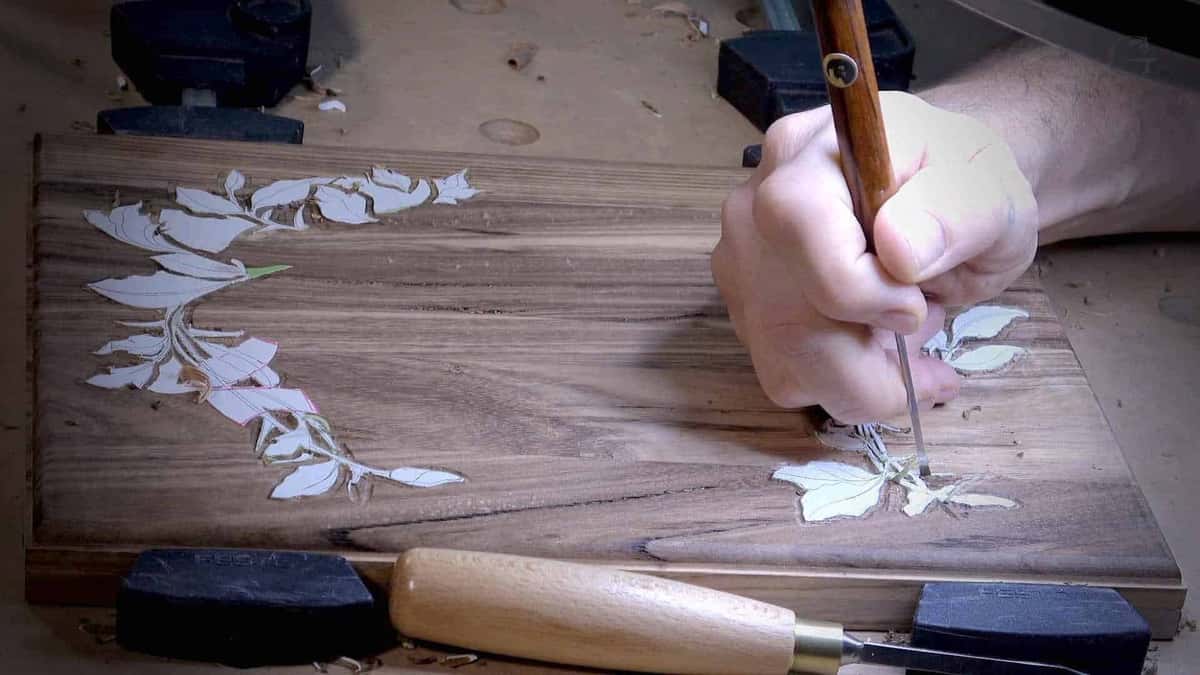
Dark acacia under the gouge. The wood that handed me splinters when I cleaned it with my fingers.
I learned the splinter lesson on a dark, crunchy board. I never got a splinter from basswood, but from crunchy wood like that, and also white oak, you can. My advice was to clean it with a brush rather than with your fingers, and I gave that advice right after doing the wrong thing on camera. The tropical hardwoods a beginner in Botswana can reach include several on that irritant list, and the same caution goes for any wood that is hard to carve.
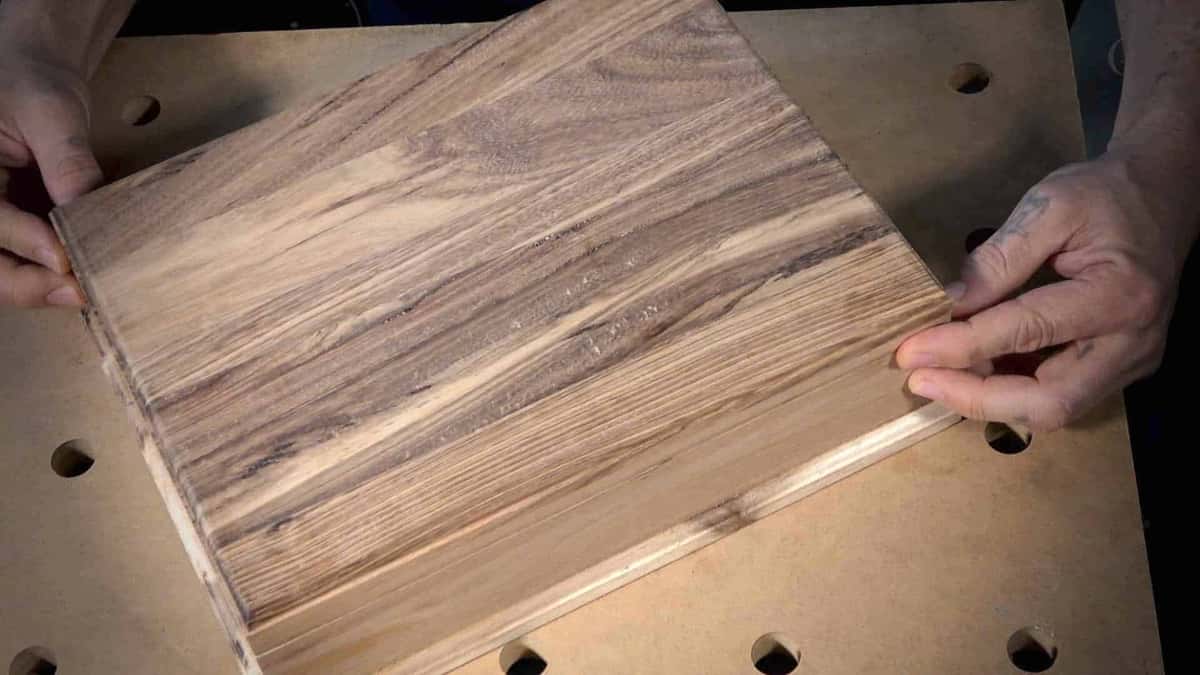
The striped board, olive against acacia. Crunchy stuff, and the reason a brush lives on my bench.
What happens when the piece moves under the tool?
Your gouge goes where the piece was, which is often through your hand. An unclamped board rides up on the bevel, tips, and drops. Your reflex is to grab it, and your reflex does not know where the edge is.
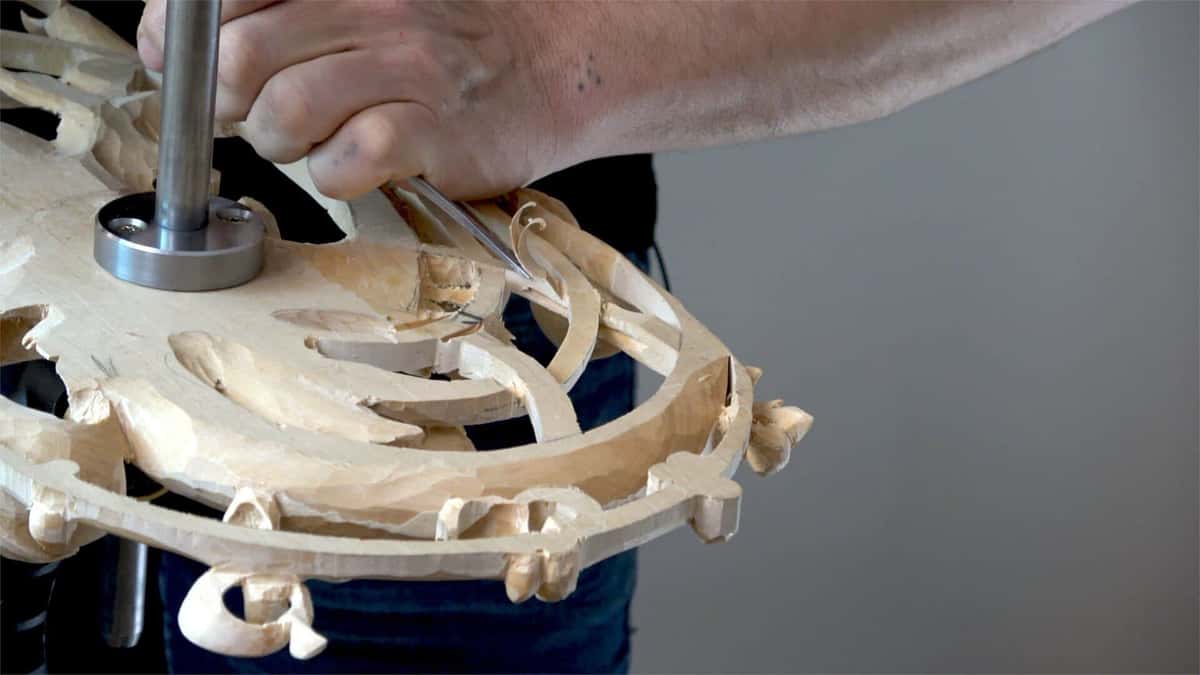
My answer is a sheet of 20 millimeter MDF drilled with 20 millimeter holes about four inches apart, center to center, and Festool clamps dropped into whichever holes suit the work. It took one sheet and a drill. On a big panel I will admit the truth. The one downside of this system shows up there, because the panel is so heavy that I cannot make it tight enough, and it does not hold as stable.

One block alone would let this blank swing. My forearm on the bench is what keeps it from creeping while the gouge is loaded.
Two clamps beat one, because one clamp is a pivot. A board that keeps shifting is telling you something about which way the grain runs. Clamping is part of the first step in wood carving.
What does carving do to your hands and back over the years?
It wears the shoulder, the wrist and the eyes, and bench height causes most of it. The height is not a comfort question. My bench sits so that my elbow touches the top when I stand beside it, and I set it there on purpose.
When the work is too high, I have to raise my elbow, and then my shoulder, and you get really tired when you are raising. Tired is when people get hurt. If I look at my bench and there are more than two or three tools lying on it, that means I am tired. A raking lamp helps too, because a shadow you can see is a shadow you do not lean in to find.
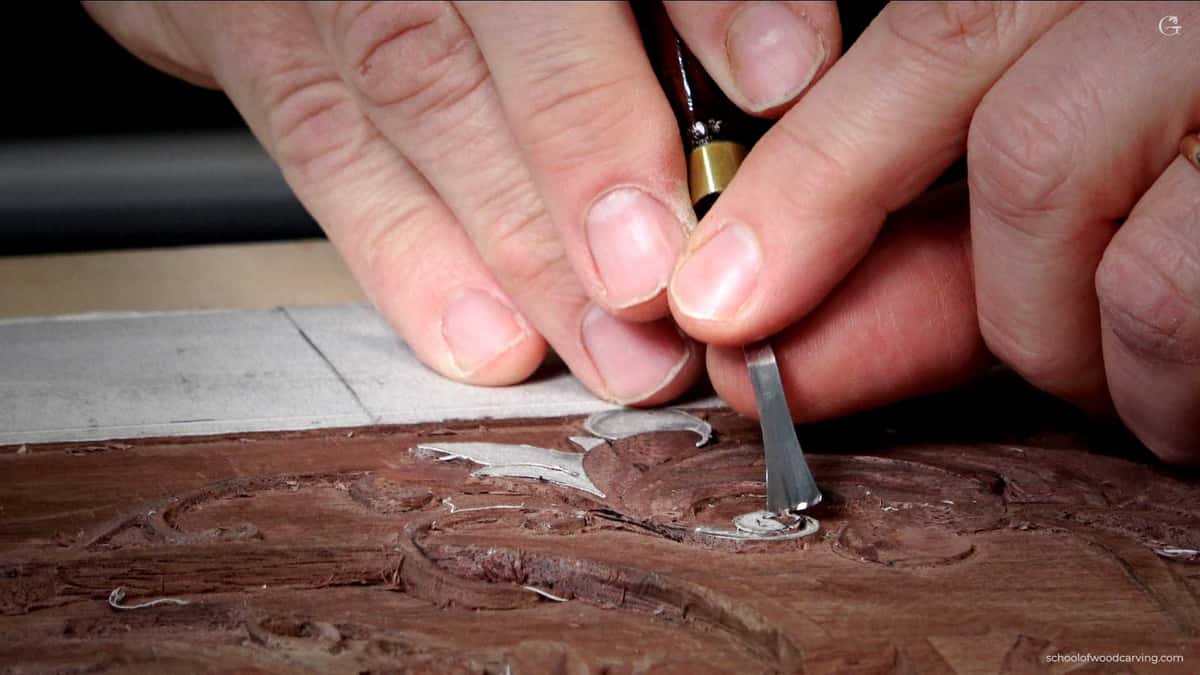
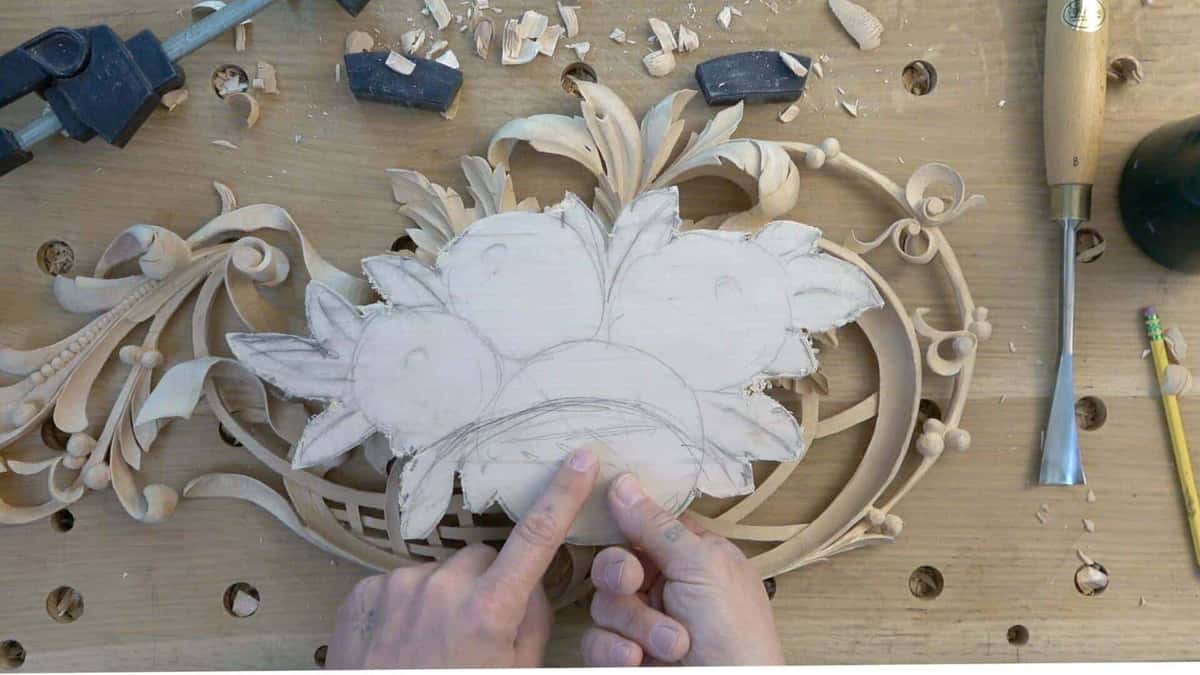
Cuts this small are the ones that tire your eyes. My hands stay down on the wood and only the fingers move.
Gloves are the question I get most. A cotton or rubber glove keeps body oil off pale wood and keeps splinters out of your palm, and I use them for both. Against a sharp gouge they are almost nothing. No glove in my shop changes where I put my off hand. If you want the honest version of how long this takes to learn, count the years it takes for these habits to stop being decisions.
How do you set up a safe first hour at the bench?
Seven things, in this order, before the first pass. The order matters more than the list itself, and none of them takes you long. Each removes a decision you would otherwise make.
Step 1, clamp the piece down before you pick up a tool
Two clamps, not one. If the design covers the whole face, clamp a scrap of the same thickness beside it and bridge across. A board that cannot move cannot take your reflexes with it.
Step 2, sharpen the one gouge you are about to use
Not all twelve. One tool, brought properly sharp, and back on the strop the moment it starts to tear rather than slice. My rule with the kit on the bench is that whatever is out is sharp.

Step 3, set the bench so your elbow touches the top
Stand beside it, drop your arm, and see where your elbow lands. Too low and you bend your back. Too high and your shoulder lifts. A bench built for carving is worth more than another gouge.
Step 4, decide where the edge stops
Look at the pass, find the line the tool would follow if it broke through, and put the off hand somewhere else. Behind the edge, under the work, or braced on the board. Never in front.
Step 5, brush the chips, do not blow them
A cheap brush, clipped to the bench where your hand already goes. This is the one habit on the list I still catch myself breaking.
Step 6, stop when the bench fills up with tools
Two or three tools out means you are working. A bench full means you are hunting, and hunting means tired, and tired is when the edge finds you. Put them away and come back tomorrow.
Step 7, put a first aid kit where one hand can open it
I say this in the Venice Room workshops. Keep some first aid in your shop, Band-Aids and the rest, because most of us work alone with nobody close by, and these tools are sharp enough to cut you really deep.
None of this is the interesting part of carving. Woodcarving Illustrated and the USDA Forest Products Laboratory wood handbook will tell you more about the material. The long history of the craft is full of men who worked into their eighties. My livestreams sit in the livestream archive.
Frequently asked questions
Is wood carving dangerous for a complete beginner?
It carries a real risk. Most injuries are cuts to the off hand, and a gouge driven with force can go deep, which is why the kit matters. Sharp tools, a clamped piece and a decision about the path of the edge remove most of it.
What is the most common wood carving injury?
A slice across the pad of the thumb, or the base of the index finger, on the hand holding the work. It comes from a tool skating off a hard spot with the off hand in the path. Depth depends on how hard you were pushing.
Do I need cut resistant gloves to carve wood?
They are worth having while you learn, and they will not save you from a sharp gouge under force. I wear plain cotton or thin rubber for grip and to keep oil off pale wood. Hand position does the real work.
Can wood carving dust give you asthma?
Several species are listed as causing asthma, including oak, teak, padauk and cocobolo. Hand carving makes far less airborne dust than sanding does. Wear a mask on sanding days and keep the air in the shop moving.
Which carving tool cuts beginners most often?
The knife, because the blade and the workpiece are both moving in your hands. A gouge on a clamped board is far more predictable. Learn the pinch grip with the middle finger as a stop before you carve anything in your palm.
Should a beginner avoid hardwood for safety reasons?
Start on basswood for a year, since a hard block needs force and force is what slips. Hardwoods also dull an edge fast, which makes the next pass worse. Come back to oak and walnut once your sharpening is steady.
Filed under
- avoiding slips while carving
- beginner’s guide to wood carving safety
- best practices for new wood carvers
- choosing wood for beginners
- common mistakes in wood carving
- dangers of wood carving for new carvers
- essential tools for beginner woodcarvers
- grain direction in wood carving
- importance of sharpening tools in wood carving
- inspecting wood for defects
- knots and defects in wood carving
- learning techniques for safe carving
- maintaining carving tools for safety
- preventing injuries in wood carving
- safe wood carving techniques
- sharp tools in wood carving
- slow and steady in wood carving
- understanding wood types for carving
- Wood Carving Basics
- wood carving safety tips for beginners
- workspace safety for wood carving