
August 29, 2024 · Updated August 16, 2026
By Alexander Grabovetskiy — Master Woodcarver · Founder, School of Wood Carving · 14 min read
Should wood be wet before carving?
Wet wood is wood still carrying the water it grew with, and asking whether wood should be wet before carving has one honest answer in my shop. Dry. Water makes the fiber give way sooner, so the edge mashes it instead of shearing it, and the surface you worked comes up woolly.
Nothing here yet but a line. A project is never quieter than this.
You pushed a gouge into a board and it fought you. Then somebody told you to wipe a damp rag over the face first, or to begin on a log while the sap is still in it, and the next pass really did go easier. It does go easier. What I want to show you is the bill that arrives afterward, because it lands about six months later and nobody warns you.
Here is the short version, in case you are standing at your bench with the rag already in your hand.
Water swells the fiber, so it buckles ahead of your bevel instead of breaking where you told it to break.
A woolly face will not carry light, and light is the entire point of relief work.
Damp stock pits carbon steel and packs the flute solid, and a packed flute is how hands slip.
The same board can carve sweet on Monday and feel mushy on Thursday.
Green stock earns its keep in bowls and chairs, never in ornament that has to fit a wall.
Is wet wood easier to carve?
Easier for one afternoon, and being fooled for that one afternoon is the whole trap. Water swells the fiber and leaves it limp, so the gouge sinks in with far less push from your shoulder. You feel strong. The thing under your hand is a sponge.
I get email about this constantly, and one message stuck with me. A student bought basswood online and told me the piece he received was simply not good. In my Roman acanthus leaf course I answered him on camera, because the answer is not the one he expected. My teacher said there is no such thing as not good wood. Sometimes the same piece of wood carves normally one day, and the second day it just becomes mushy, and the third day it could feel absolutely different, like it is not even basswood any more.
Wood is alive. It is a living thing, so it sucks the water in and then it shrinks. There can be more water inside the fibers or less water inside the fibers, and depending on that it is going to be more dense, or softer, or more mushy. Same board. A month apart it can feel like a stranger.
Corinthian acanthus, and the wood is behaving. I was taking about a sixteenth of an inch at a time here.
What does wet wood do to the fiber under a gouge?
Wet fiber bends away from the bevel and springs back, where dried fiber breaks off exactly where you aimed it. A mashed fiber stands up again an hour later. A sheared one stays down forever.
You see it first on an arris, the little sharp ridge along the top of an acanthus lobe. That ridge is where two carved surfaces meet, and it stays crisp only if the fibers broke clean on both sides. Push through damp stock and the ridge comes off furry, then fuzzes worse as the wood dries around it.
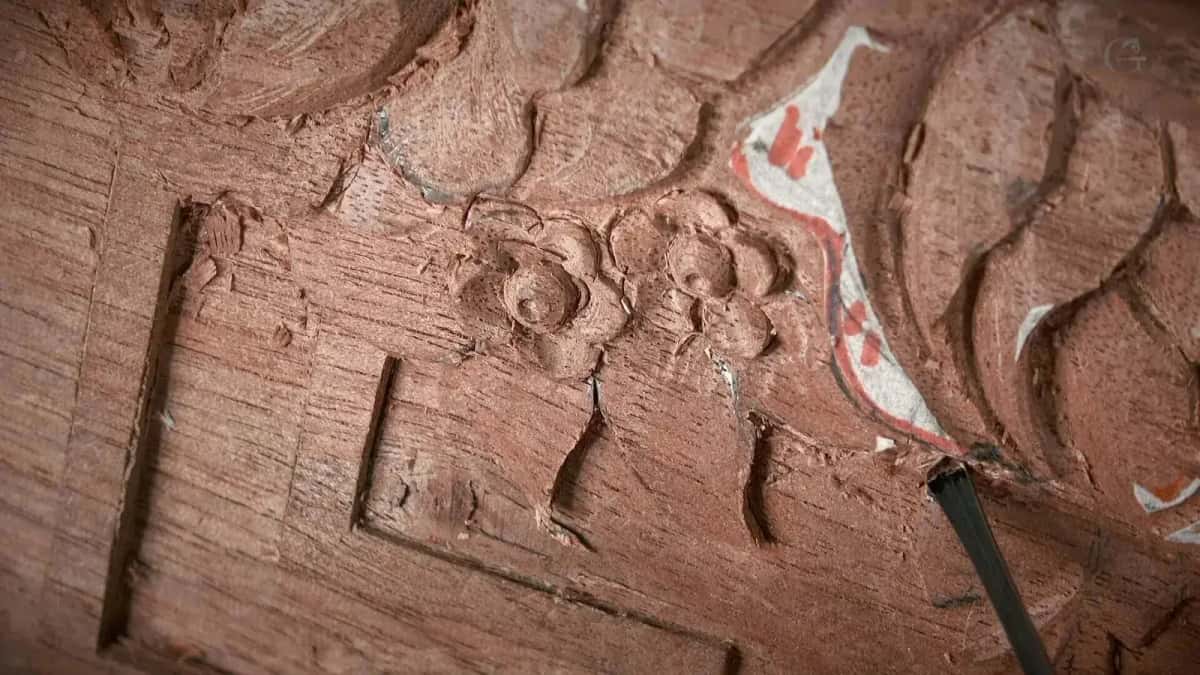
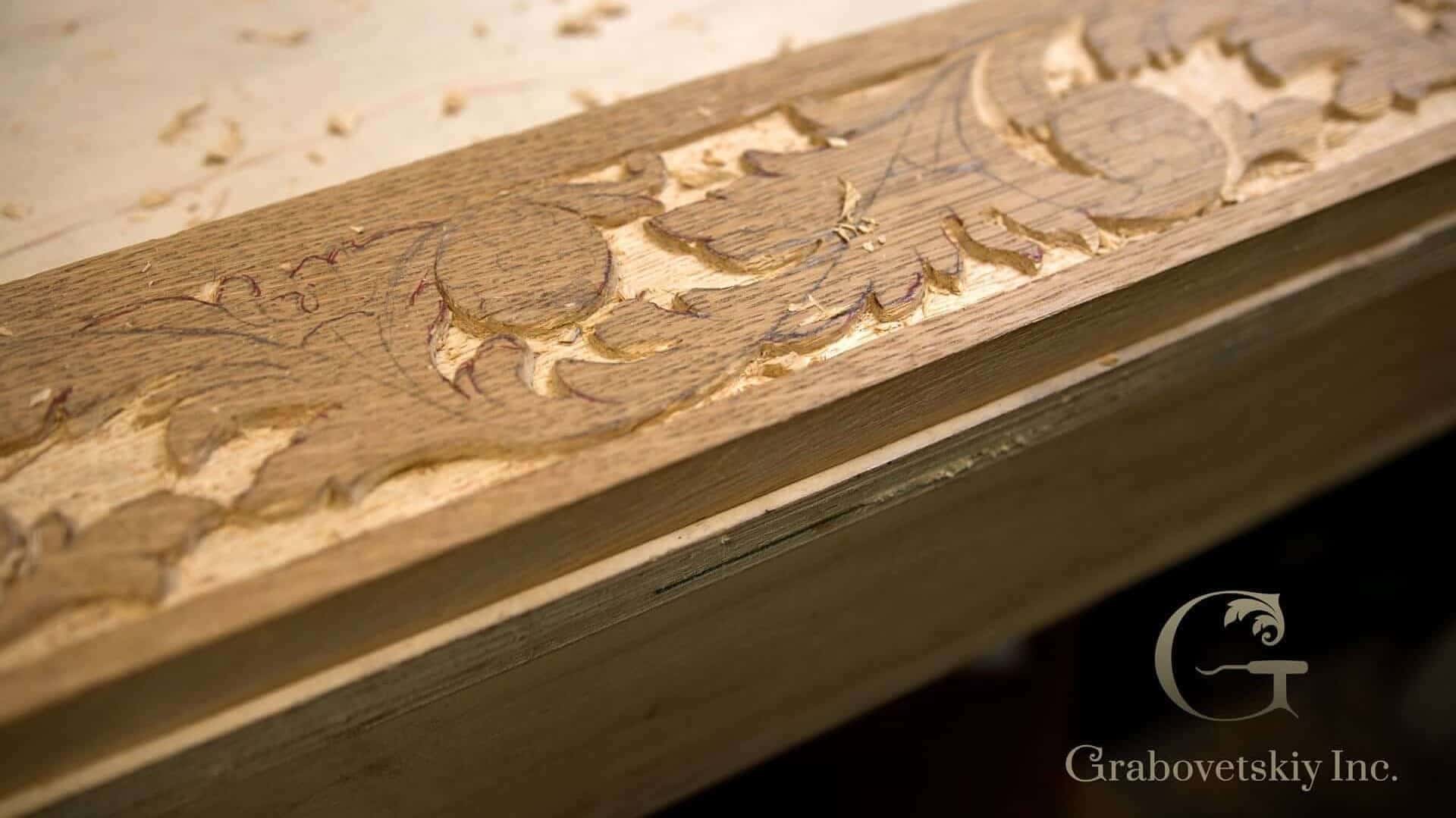
Coarse red hardwood, and I lost that argument. Crumbled petals, no shadow anywhere.
There is a word for the thing you are actually chasing, and it is not smoothness. Light travel. When light lands on a carved surface I want to know how it moves across and where it lays the shadows down. Italian carvers sand everything and it looks gorgeous. Go to England and no sanding is allowed, or you are not the carver. Either way a woolly face scatters light rather than carrying it.

The lobe on the left throws a hard shadow, and that shadow is the only reason the shape reads from across a room.
Does wet wood ruin carving tools?
Rust is the cost everybody names, and the packed flute is the one that gets you hurt first. Carbon steel is what most of us carve with, and rust starts wherever water sits still. Down in the flute. Up under the ferrule where you never look.
This changed how I sharpen. Good water stones run around two hundred dollars each and I keep four, and a Tormek needs water fed to the wheel the whole time you use it. That is also the problem. It is moisture in my shop, and that is close to my tools, and I do not think I like that idea. So I solved it another way, and I teach the solution in the tool sharpening course.
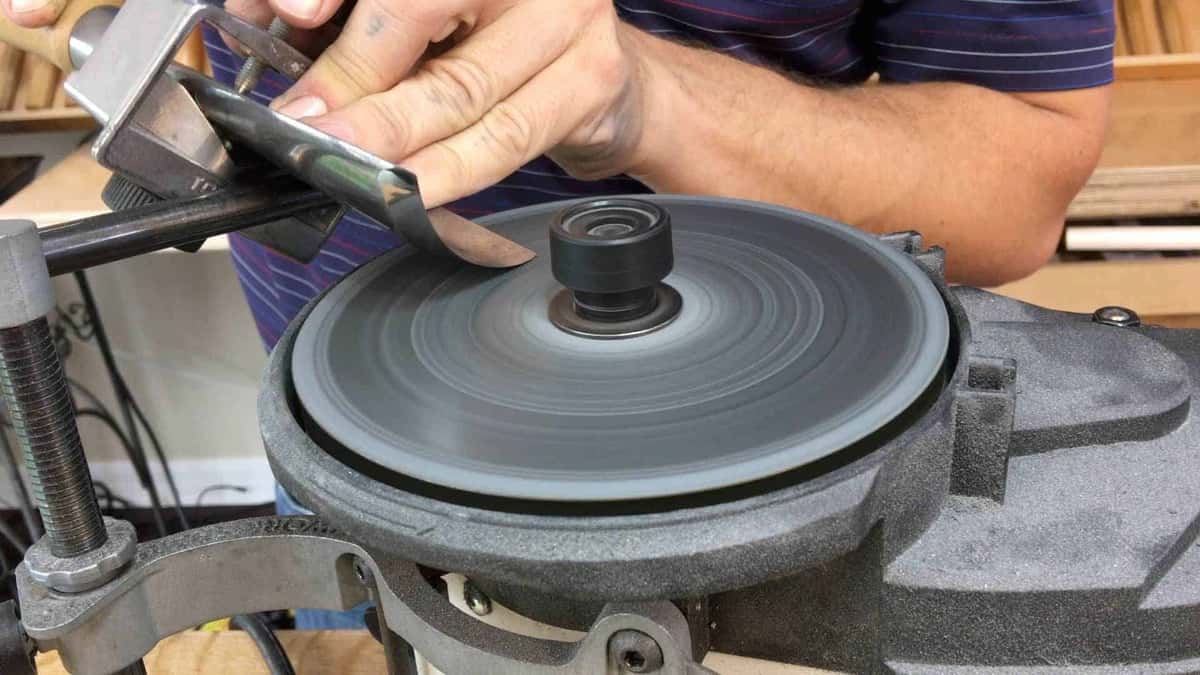
Water fed onto the stone the whole time. Wonderful edge, and a damp bench two feet from my gouges.
Steel pulls water straight from plain air, never mind from a soaked board. I keep tools by different makers on one shelf, and I have watched a brand show rust while the Pfeil gouges lying right beside them stayed clean. One takes moisture into the metal quicker and I cannot tell you why.

Old handles, dark blades. Every one of these outlived the carver who bought it, which tells you something about care.
The second cost is quieter. Damp fiber packs into the flute like clay and stops the shaving clearing, so you push harder for the same distance. Pushing harder is how a tool jumps, and it usually jumps toward the hand holding the work.

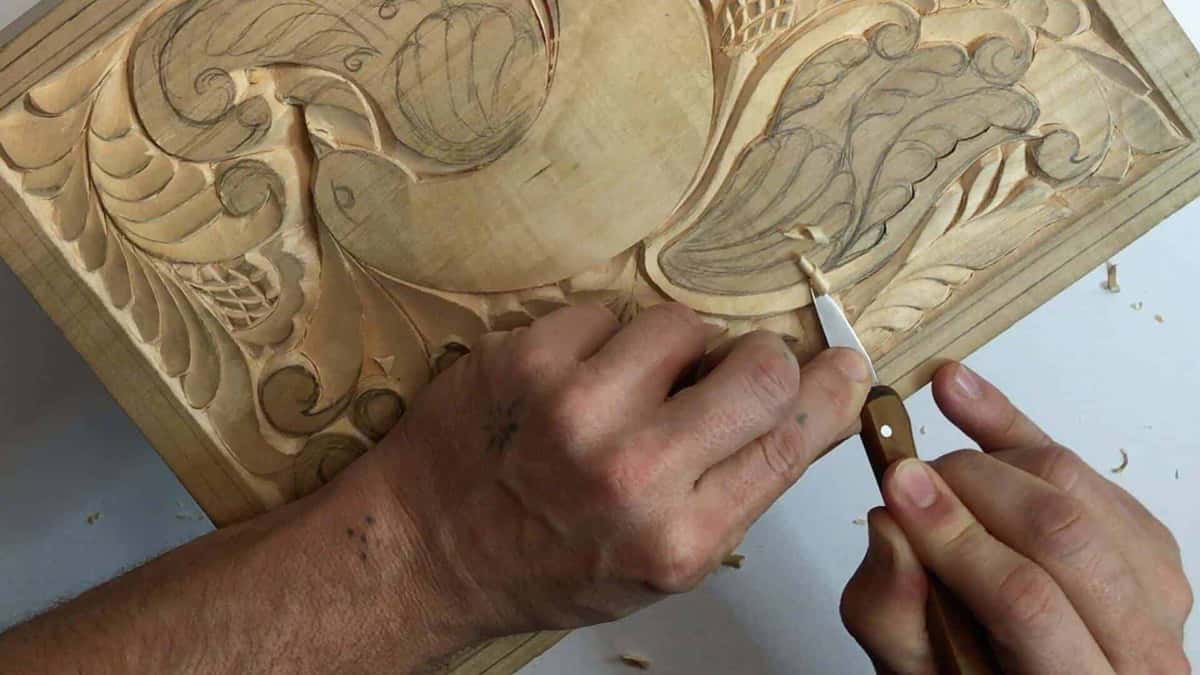
Flute turned to the side on purpose, so I can see the wall I am about to make before I make it.
| What you watch | A board that still holds its own water | Dry wood | What the difference costs later |
|---|---|---|---|
| Your very first slicing pass today | Sinks fast | Shears off clean and leaves the wall standing straight | Sharpness stops teaching you anything |
| Surface afterward | A woolly fuzz that sanding cannot fix | Shining flat facets | Light stops traveling across your finished carving |
| Your carbon steel edge | Pits where the water sits in the flute overnight | Stays bright, sharp | A pitted edge never strops back sharp |
| Shavings coming off the gouge | Damp flecks | Long ribbons that clear the flute by themselves | Pushing harder makes hands slip |
| Six months later | Everything crisp has moved and the tight joints opened | Sits exactly where placed | A capital has to fit its column forever |
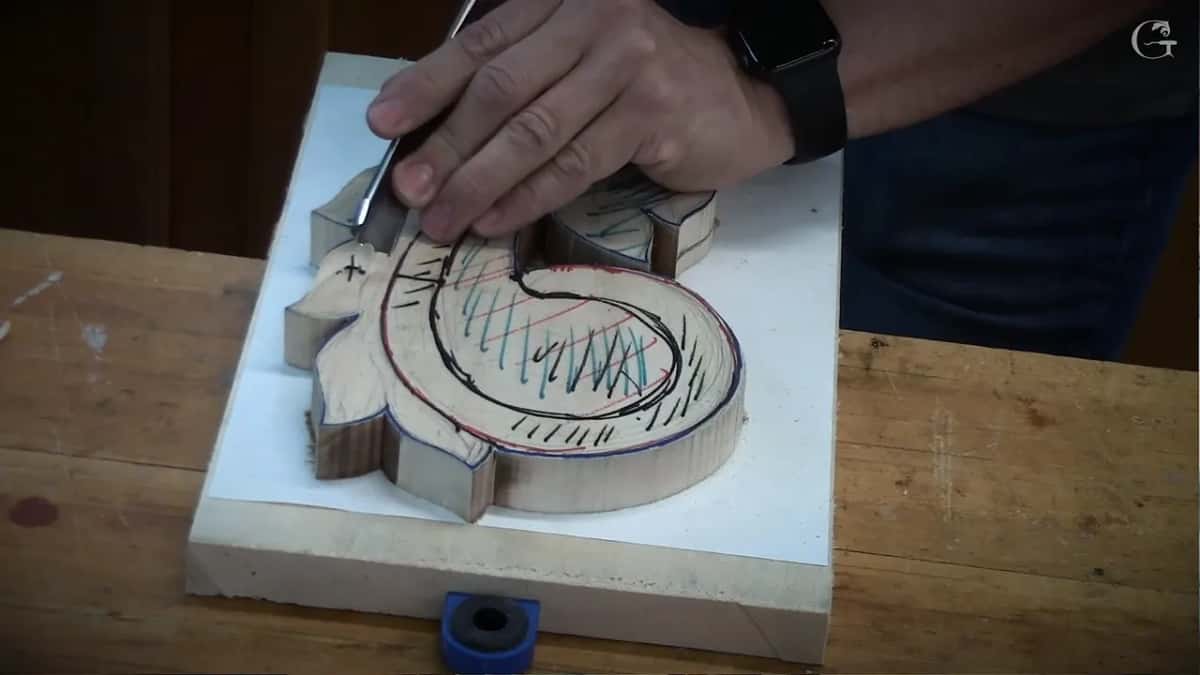
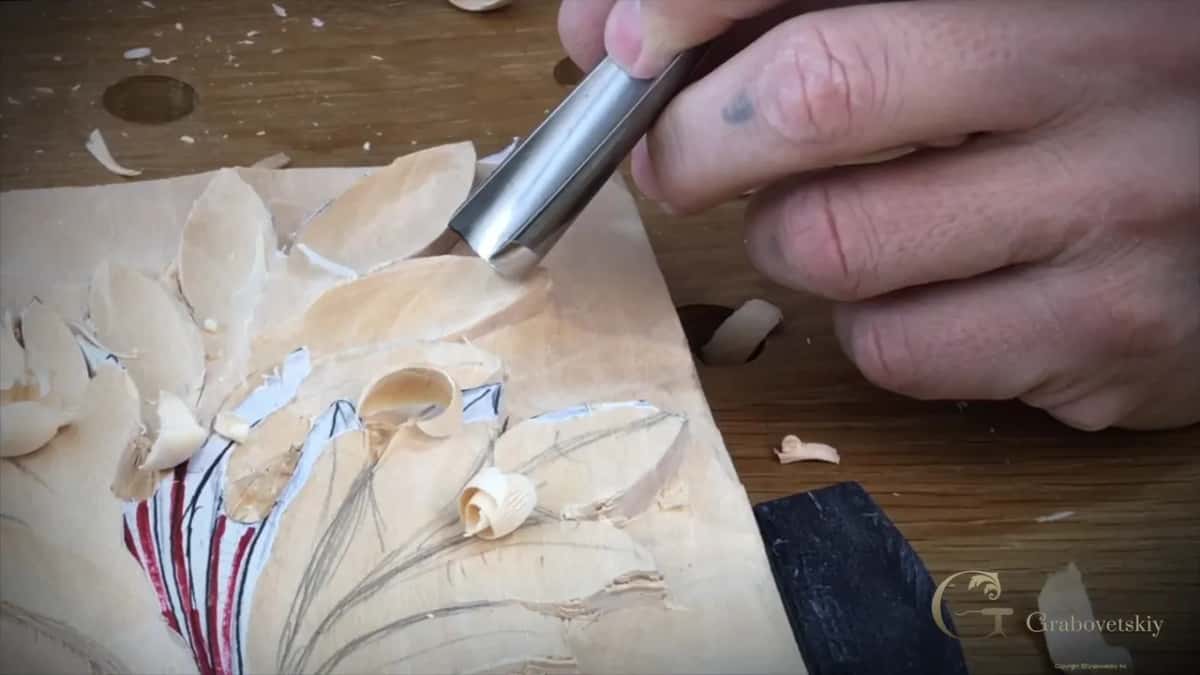
I rotate the gouge through the pass. On damp stock the same motion just smears the fibers sideways.
How can you tell the board under your gouge is too wet?
Four readings answer it, and each one happens in the wood rather than on a gauge. A pin type moisture meter is worth owning and settles an argument in four seconds. Your hands are quicker, and they never need a battery.
Step 1, take one slicing pass in a corner nobody will ever see
Use a gouge you sharpened this morning, not the one you have been fighting with. Drive it about a sixteenth of an inch deep along the grain and watch what leaves the bevel. A ribbon that curls and holds together came off a properly dried board. Damp flecks that crumble did not.
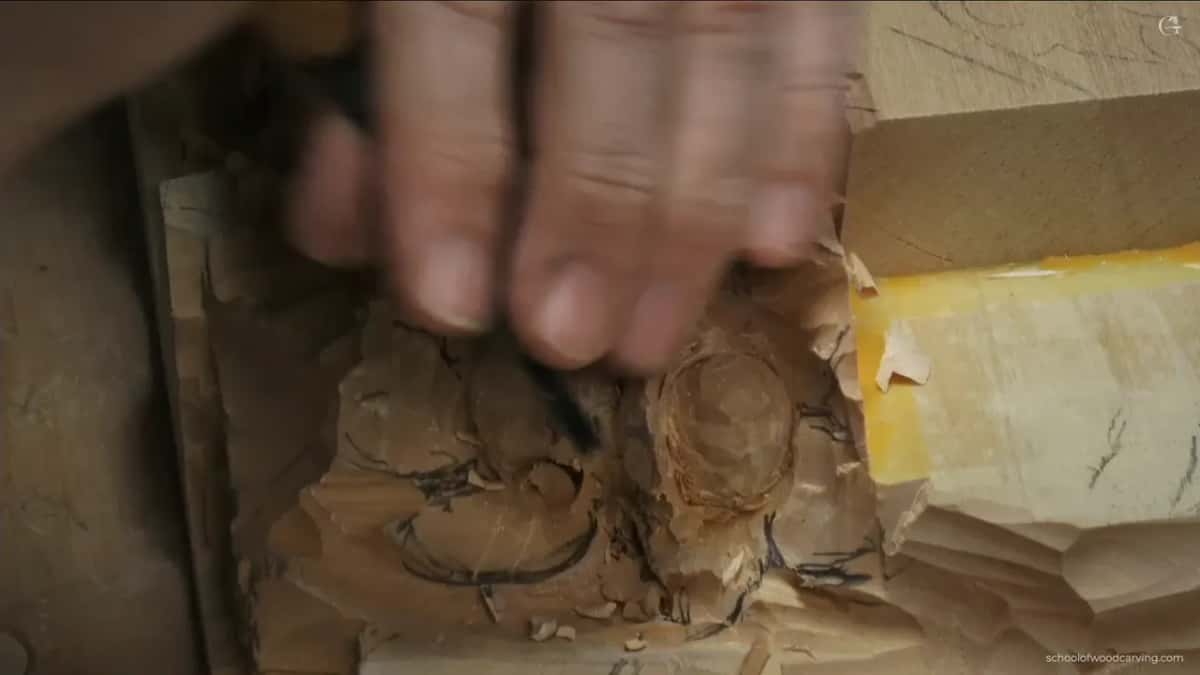
Hazelnuts, roughed out. The chips standing on end are the reading, not the shape beneath them.
Step 2, tip the board until light rakes across what you just carved
Hold it low to a window and turn it slowly. A dry board gives you a facet that flashes as it comes past the light. Wet stock stays dull at every angle, because the broken fiber ends are standing up and scattering everything.

Antique style rosette. Every petal edge is a straight line of light, and that only happens on quiet wood.
Step 3, look inside the flute before you take the next pass
Turn the gouge over. Fiber caked into the hollow that needs a thumbnail to dig out is fiber carrying water. Clean steel with one loose curl sitting in it says the board is ready.

Cabernet tray in progress. Shavings this size mean the flute cleared itself every single pass.
Step 4, come back to the same board a week later and repeat all three
People skip this reading. It taught me the most. If a board carved badly on Tuesday and beautifully the following Tuesday, the wood was never the problem. Water was, and a week in a heated shop took some of it back.
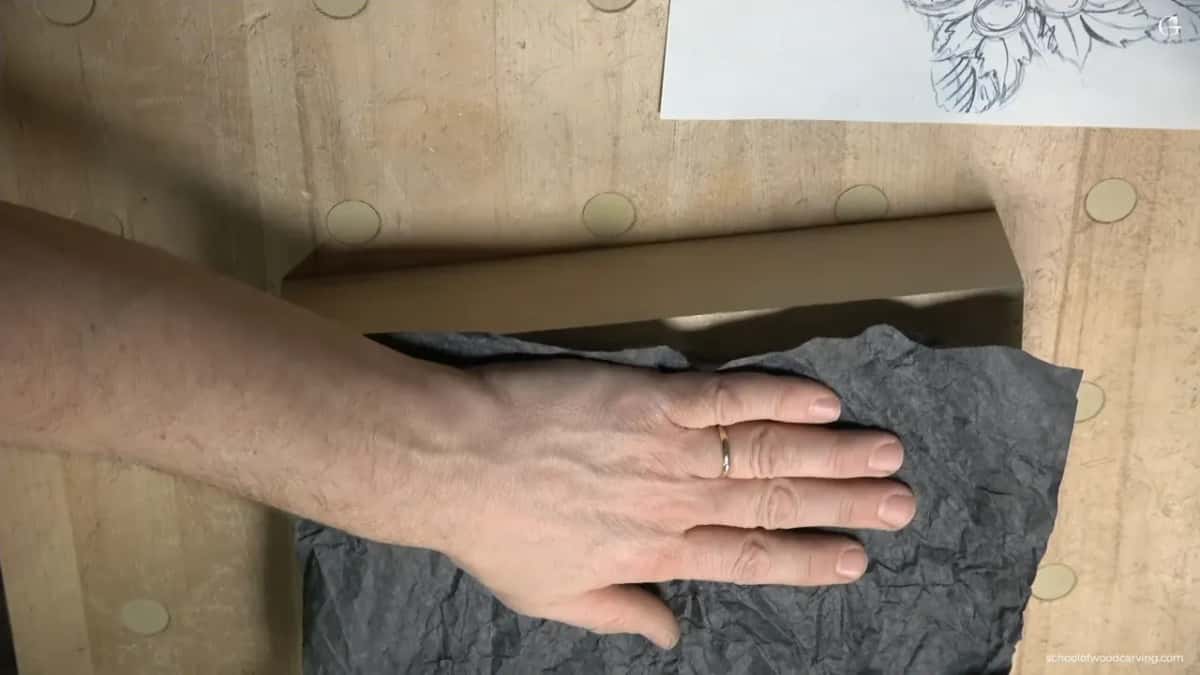
Carbon paper going down on a board I trust. Trace a drawing onto stock that is still moving and it will not fit by spring.
What happens to the carving after the water leaves it?
Every fiber that swelled has to give that water back, and it never gives it back evenly. Wood is just like a sponge. It takes water, and if there is moisture in the air it is going to get that water in, and once it takes the water in it expands. It puffs out.
Then the season turns on you. A really humid summer with a lot of rain, and it is absolutely going to puff, and you cannot prevent that. A dry winter and it shrinks back down. Movement across the grain always runs bigger than movement along it, which is the plain reason a panel splits rather than stretches, and I unpack that in what shrinkage of wood means. The USDA Wood Handbook lists both numbers species by species, and the Forest Products Laboratory has measured them since 1910.
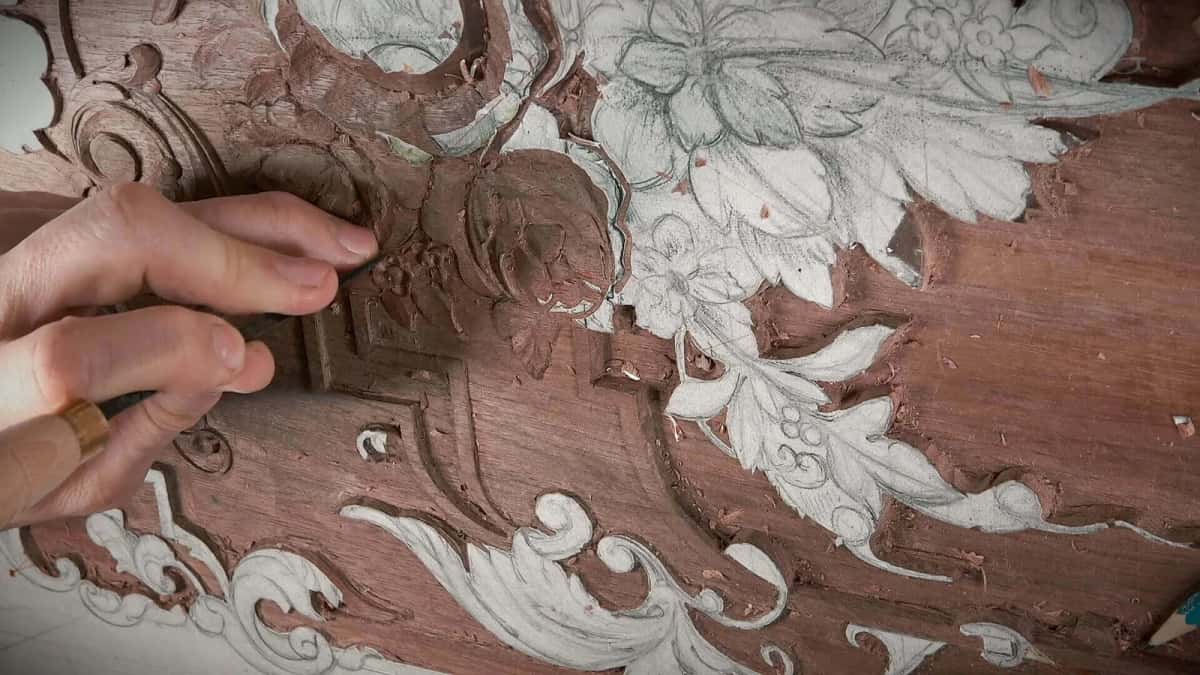
Hardwood that finished arguing years ago. The drawing on the right will still line up tomorrow morning.
Growing up in Russia we used the weather for this, because a board left outside at fifty below has its water freeze, expand and walk straight from the wood. How long any of that takes, and whether kiln dried or air dried is the smarter buy, is a full argument of its own that I settled in do I have to dry wood before carving. If your stock is green right now, begin with drying green wood at home, then read what equilibrium moisture content and the way wood and moisture behave together actually mean.
I drew all of this with a marker on a livestream in April 2020, and the recording is still up. Watch from about nine minutes.
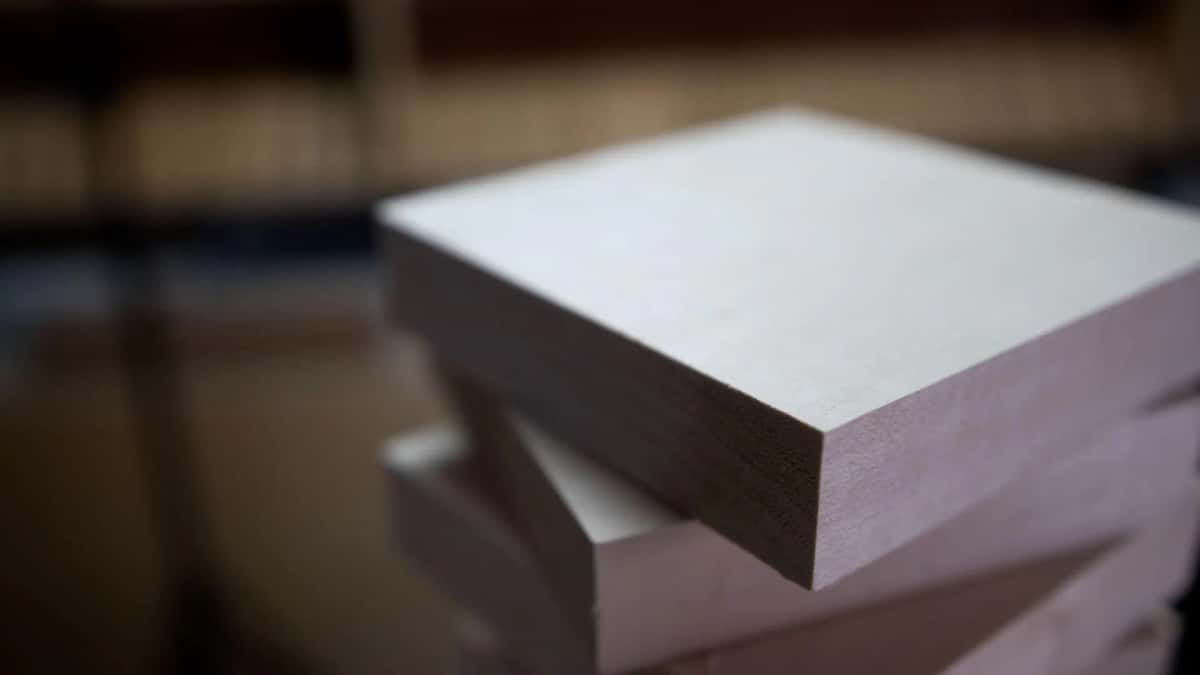
Stacked with air moving between them. Some of these blocks have waited in my shop for over ten years.
Do carvers ever choose wet wood on purpose?
Green woodworkers choose it every day, and their job asks the opposite of mine. A turned bowl is allowed to go oval as it dries, and a chair rung is supposed to shrink tight around a damp tenon. Green woodworking puts movement to work instead of fighting it, and the craft is honest and old.
Architectural ornament cannot borrow the trick. A capital has to still fit its column in ten years, and a replacement apron has to match an antique that finished moving two centuries ago. So I take the water away first, and the movement leaves with it. Deep excavation helps too, since breaking all those fibers means no strength is left inside them to pull on me, though sawing and gluing a blank so it cannot split belongs to preparing raw wood into a carving blank rather than here.
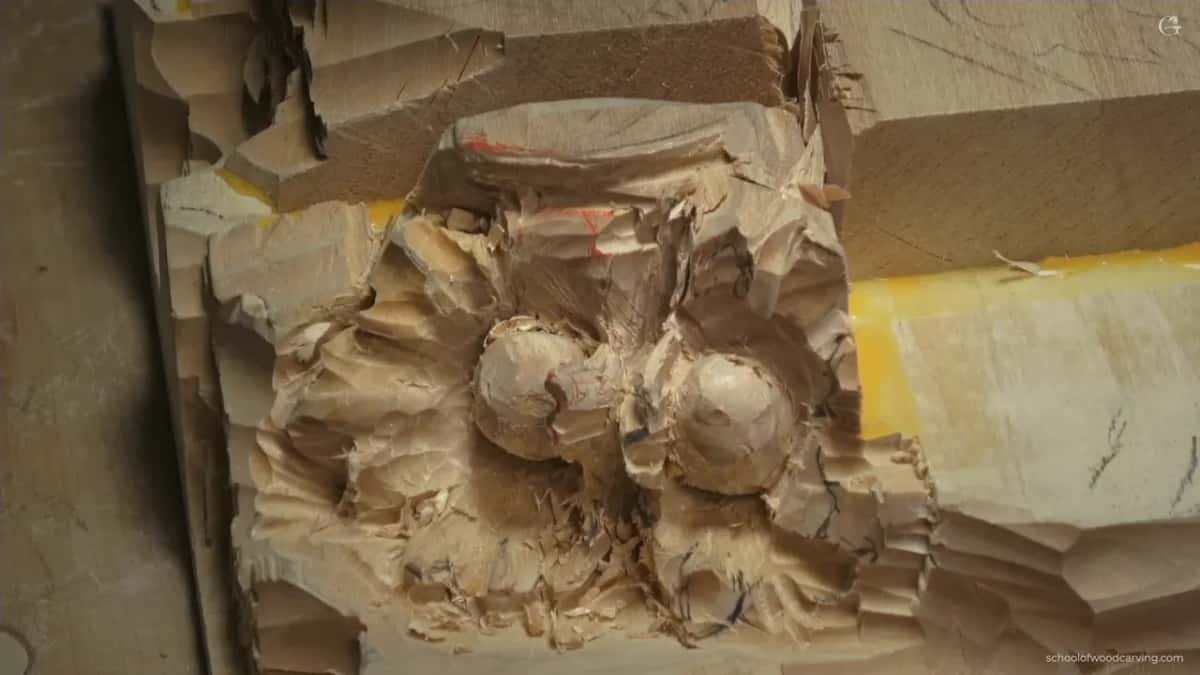
Every hollow like this takes tension from the block permanently. A bonus, never a license to begin damp.
Grinling Gibbons worked seasoned limewood three hundred years ago and his panels at the V and A still hold their detail. David Esterly, who spent a year replacing a Gibbons carving lost to fire at Hampton Court, wrote the best line I know about being answerable to your material, in his book The Lost Carving:
The wood is teaching you about itself, configuring your mind and muscles to the tasks required of them. To carve is to be shaped by the wood even as you're shaping it.
A soaked board teaches you nothing, because it gives way the same for a sharp gouge and a dull one.
Should a beginner start on wet wood?
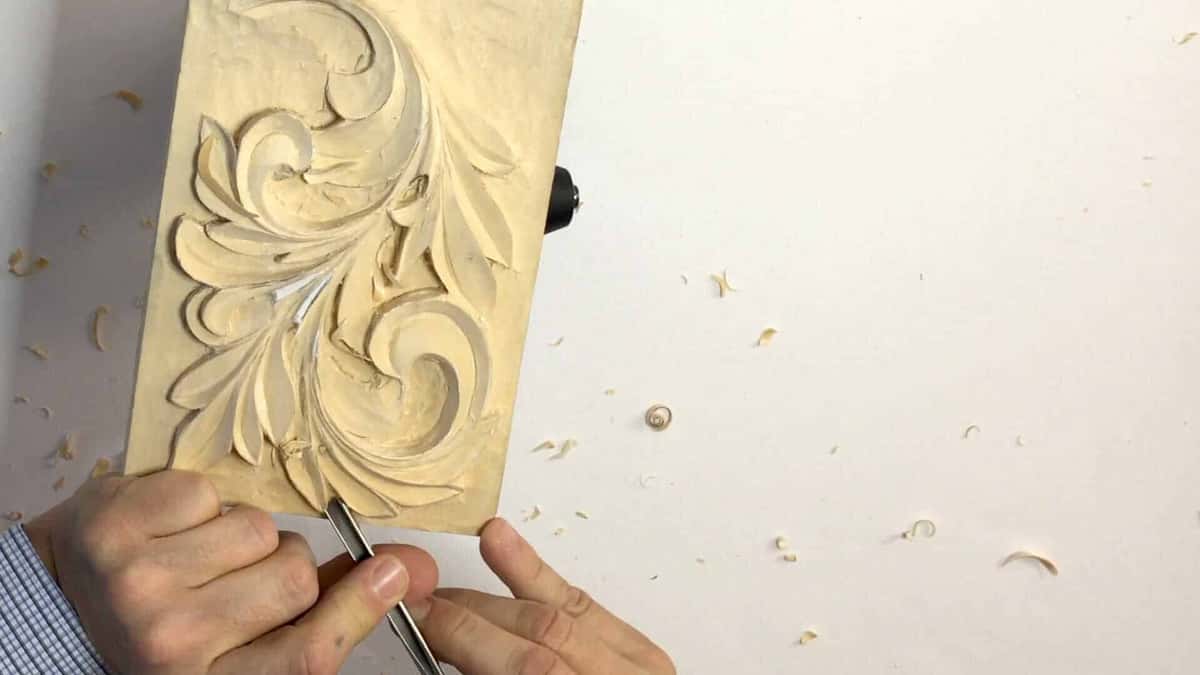
Never, and a beginner has far more to lose by it than I do. You are still building the hand that knows sharp from dull, and with the grain from against it. Mushy wood makes every pass feel identical, so that hand never forms.
Begin on a well dried basswood board around two inches thick and let the wood be the one thing in the room that is not a variable. Then the only things left to fix are your drawing and your edge. The basswood entry in the wood guide explains why it holds fine detail, and the Wood Database puts it at 410 on the Janka scale. Which species suits you after that is a separate question, answered in the best wood for carving.
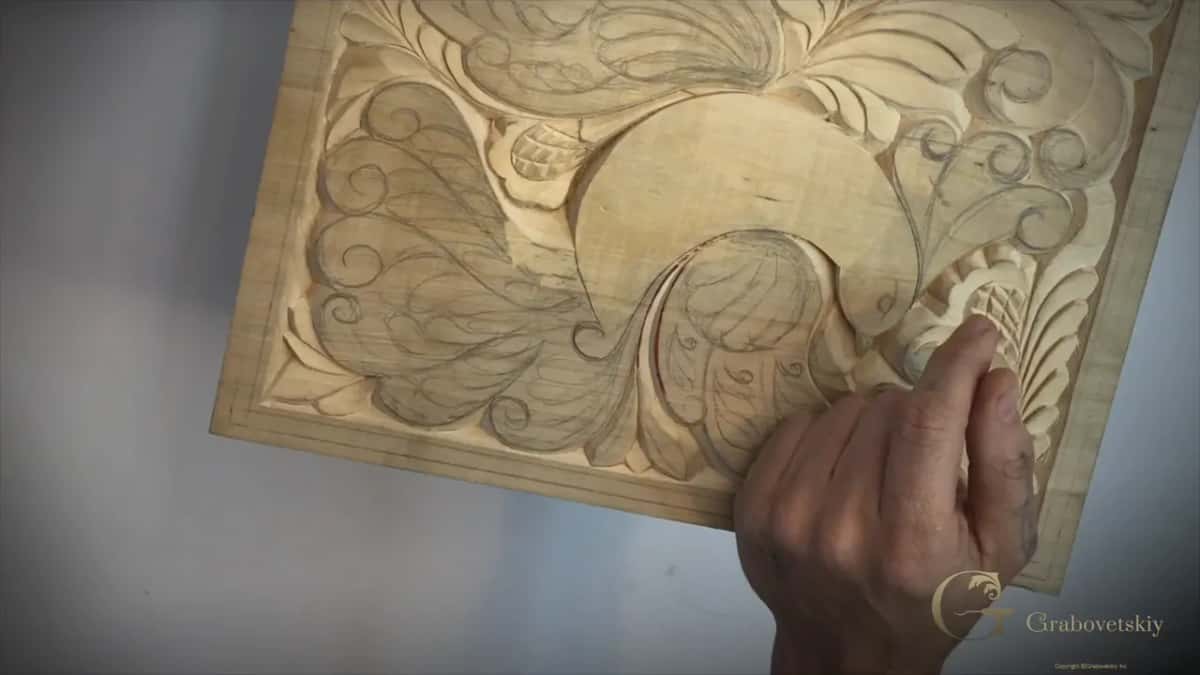
Half carved, half still drawn in pencil. Both halves have to agree about their size for weeks.
Two other roads lead away from dry stock, so you know where they end. Soaking, steaming and oiling a block that feels too hard for you is softening wood before carving, and oil has its own answer in oiling before you carve. Knowing which way to drive a gouge around a curve, which is what most people mean when they say the wood is fighting them, lives in handling different grain directions.
You have a board in your shop right now and a doubt about it. Would you rather keep guessing which boards will betray you, or have somebody stand beside you and show you how to read one before the pencil touches it? Over 3,000 lessons were filmed at this bench, and I put the beginner course and the tools course first for the same reason this whole page circles. Your tuition feeds orphans and widows as well, because that is how this school was built.
Frequently asked questions
Does the same board really carve differently from one week to the next?
Mine do, and I say so on camera. A board that sliced beautifully in January can feel soft and stringy in July, because the fibers drank water out of summer air. Nothing changed about the species or your gouge, only how much water sits inside the wood.
Why does a damp board leave a woolly surface?
Swollen fiber bends ahead of the bevel rather than breaking under it, then springs back up once the edge passes. What you get is a face covered in standing fiber ends. Sanding lays them down for a day, and the next humid week stands them right up again.
Can one session on damp stock rust a gouge?
One long session can, especially inside the flute where you never wipe. Carbon steel starts pitting wherever water sits still, and a pit will not strop out. Dry every tool before it goes back on the shelf, whatever you were carving that day.
Is a freshly felled log ever worth carving straight away?
For a bowl or a spoon, quite often. For ornament, a panel, or anything a client will hang on a wall, it is a slow way to waste good work. The shape you carve today is not the shape that log will hold once its water has gone.
Will a carving started on damp wood move after I finish it?
It will, and it moves most where you carved thinnest. Undercut edges lift, tight joints open, and detail that took a week goes soft at the arris. Which is why I refuse damp stock on any commission, no matter how kindly the stuff carves.
Does shop humidity change how a seasoned board feels to carve?
A little, and you feel it well before you could measure it. Dry stock still breathes with the room, so it firms up in a dry winter and softens slightly in a wet summer. The swing stays small enough that your carving survives it.
Filed under
- advantages of wet wood for carving
- best type of wood for carving
- best wood for carving projects
- can beginners carve wet wood
- carving blocks of wet wood
- carving details in wet wood
- carving techniques for wet wood
- does wet wood make carving easier
- do professional carvers use wet wood
- effects of moisture on wood for carving
- how to carve wet wood safely
- how wet wood affects carving tools
- safety of carving wet wood
- shaping wet wood for projects
- should wood be wet before carving
- tips for carving wet wood
- Understanding Wood for Carving
- Using basswood for carving
- wet wood carving benefits
- wet wood vs dry wood for carving